



Use the directory as a starting map
The worksheet library is arranged so the first choice is not a worksheet file. The first choice is the learning stage. A preschool page, a Grade 1 page, and a Grade 5 page should not ask for the same kind of attention, so this directory keeps them separated before you choose a specific skill. That makes browsing faster for parents, tutors, and teachers who already know the child but not the exact printable they want.
Preschool pages are built for short sessions
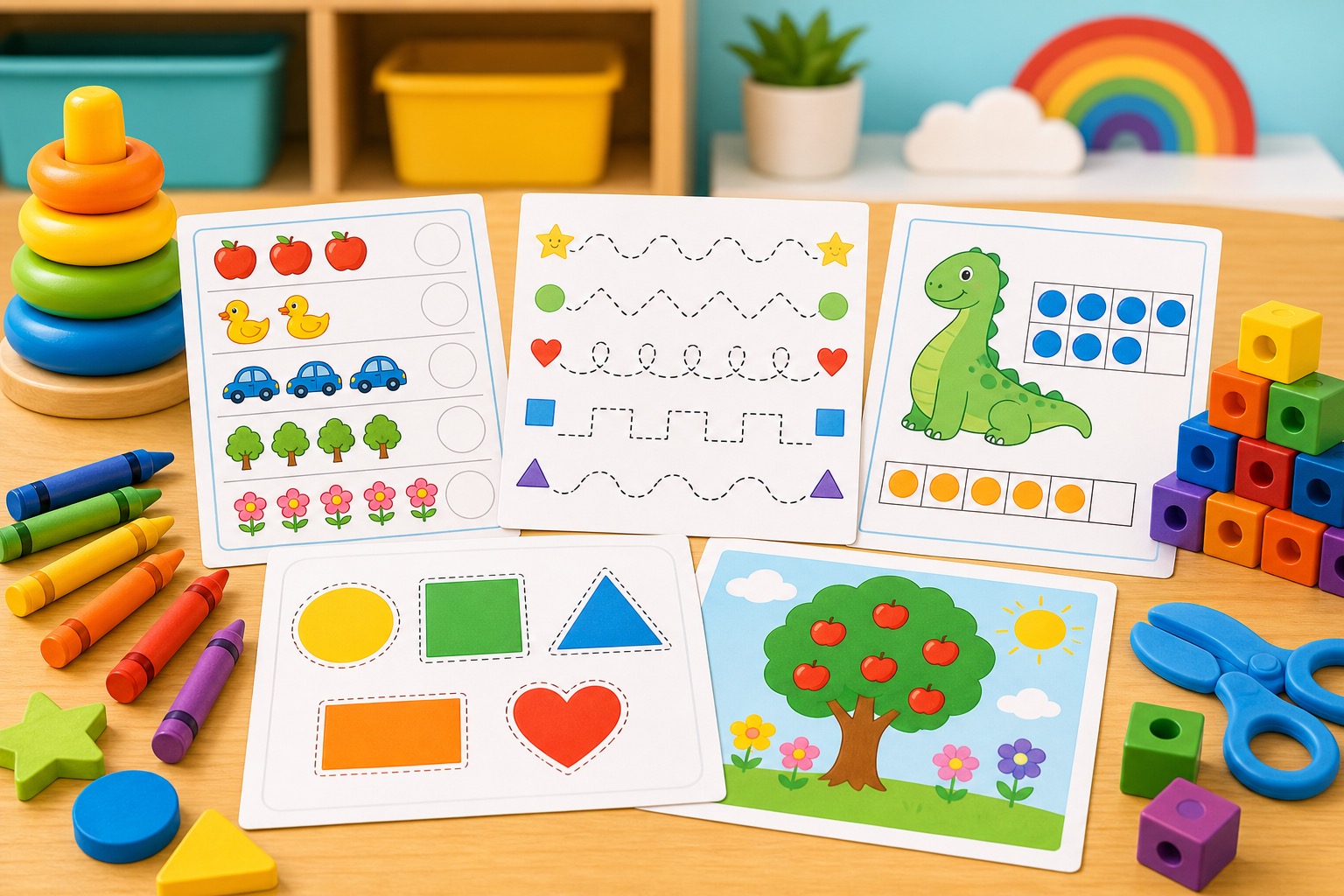
The preschool folders focus on pencil control, counting, shape language, simple comparisons, early matching, coloring, mazes, and picture-based operations. A young learner may only need one page and five quiet minutes. The goal is not a packet. The goal is one clear action, such as tracing a line, circling a group, counting objects, or noticing which item belongs with another.
Grade 1 should feel small enough to explain
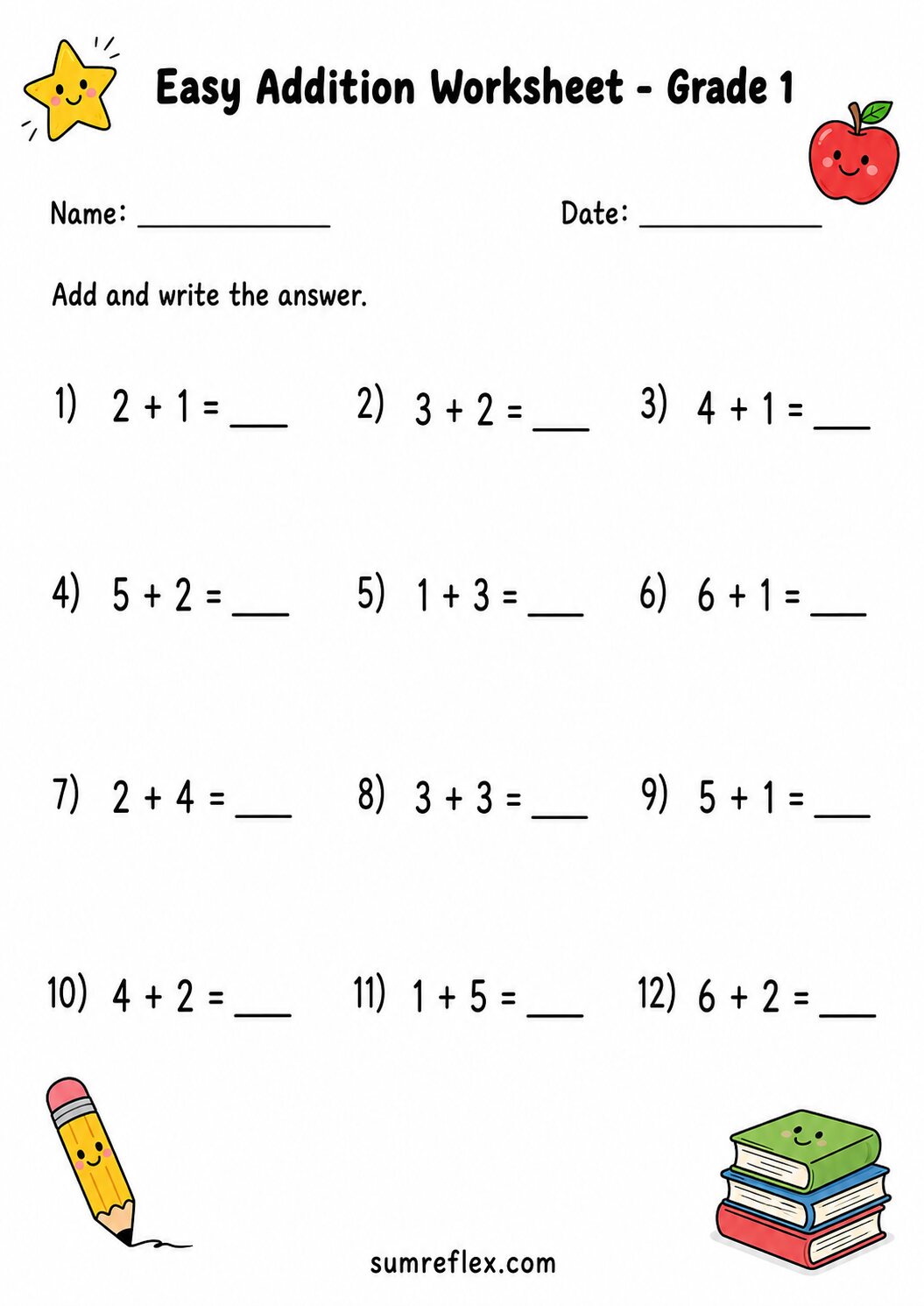
First-grade worksheets work best when the facts are close enough for a child to check. Addition and subtraction pages in this library stay near beginner fluency, where students can count on, take away, compare two related equations, and talk about what changed. If a page cannot be explained in a sentence, it is probably not the right first-grade practice for that moment.
Grade 2 needs both calculation and pictures
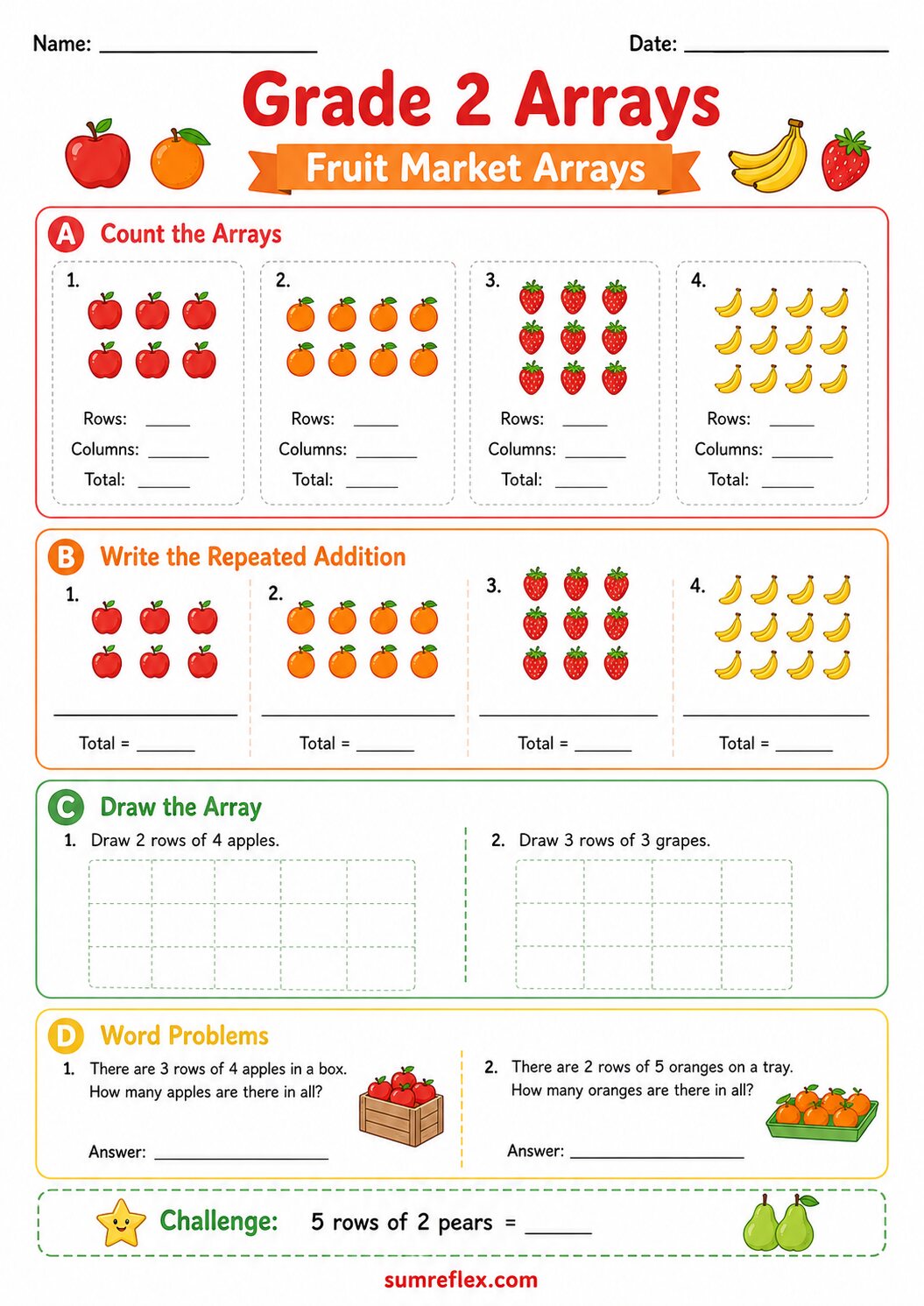
Second-grade learners often stand between early facts and more structured math. They need two-digit addition and subtraction, but they also need models that show equal groups. Array worksheets are useful here because rows and columns give students a visual reason for repeated addition. The directory keeps those choices separate so a lesson can target either number work or visual structure.
Grade 3 is where multiplication becomes a tool
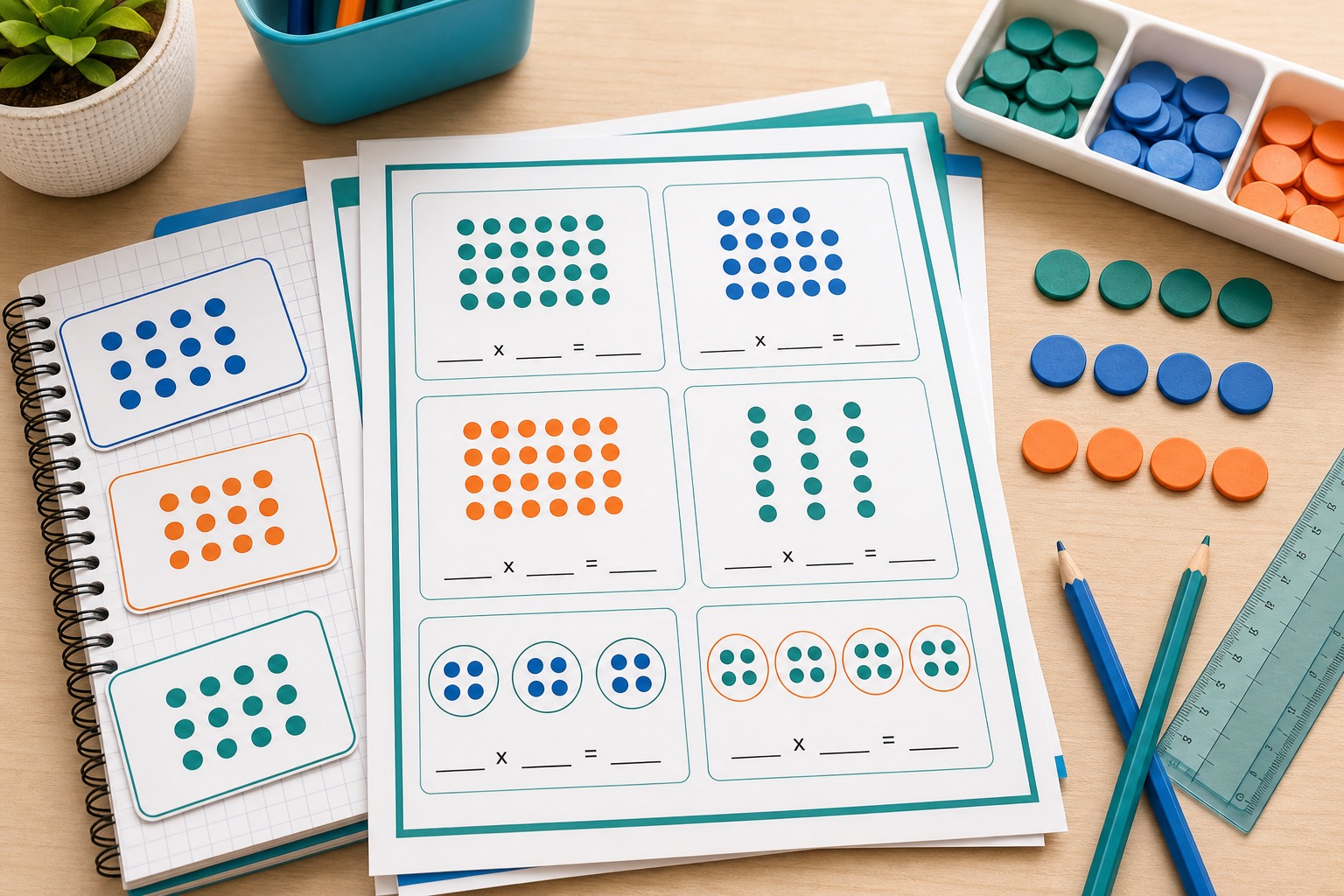
Multiplication pages for Grade 3 should do more than list facts. Students need arrays, single-table practice, color-by-answer review, missing-factor thinking, word problems, and vertical 2-digit by 1-digit products. Those formats build different habits. A child who can recite facts may still need visual arrays, while a child who understands groups may need speed and accuracy.
Upper-grade printables should protect place value
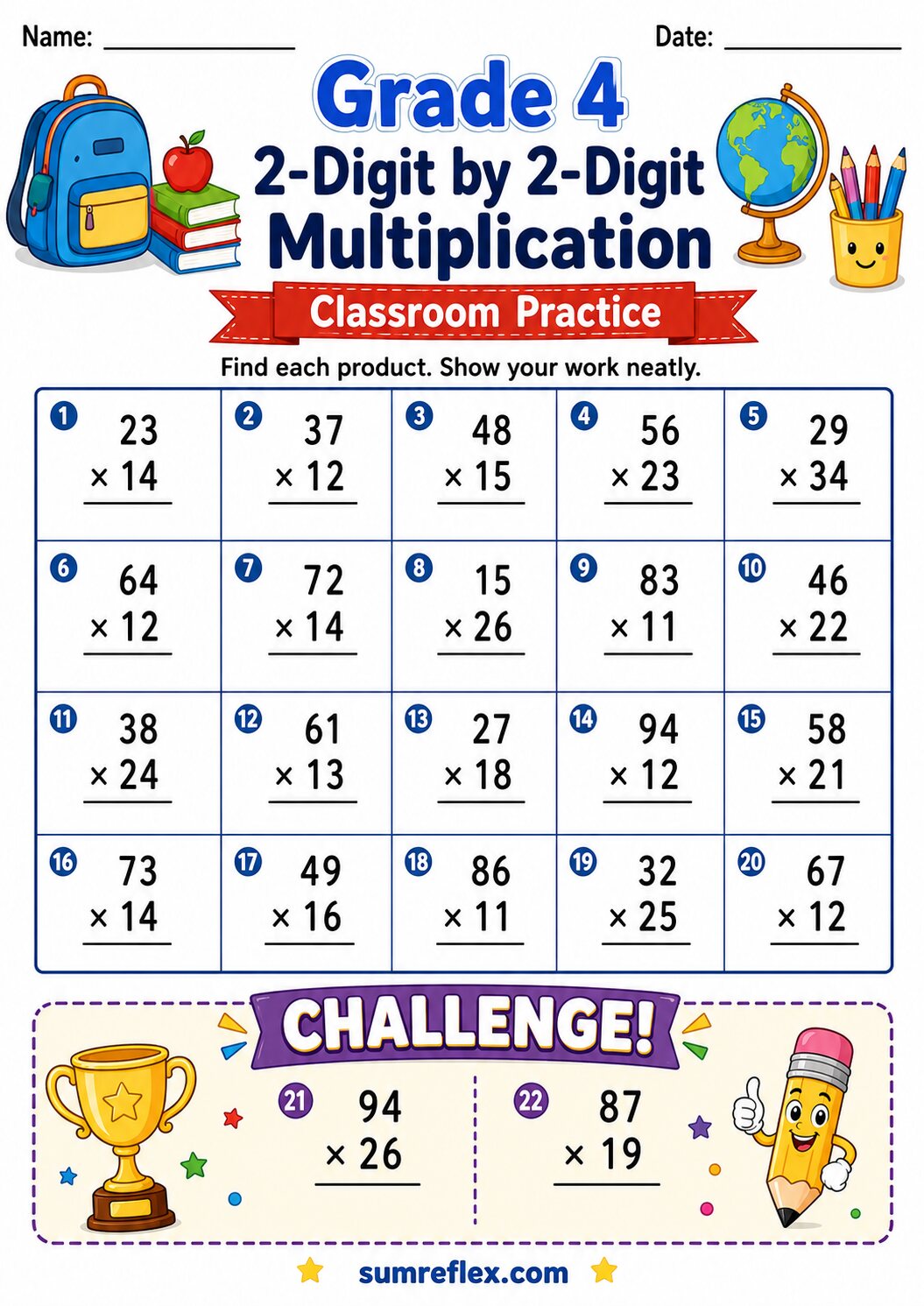
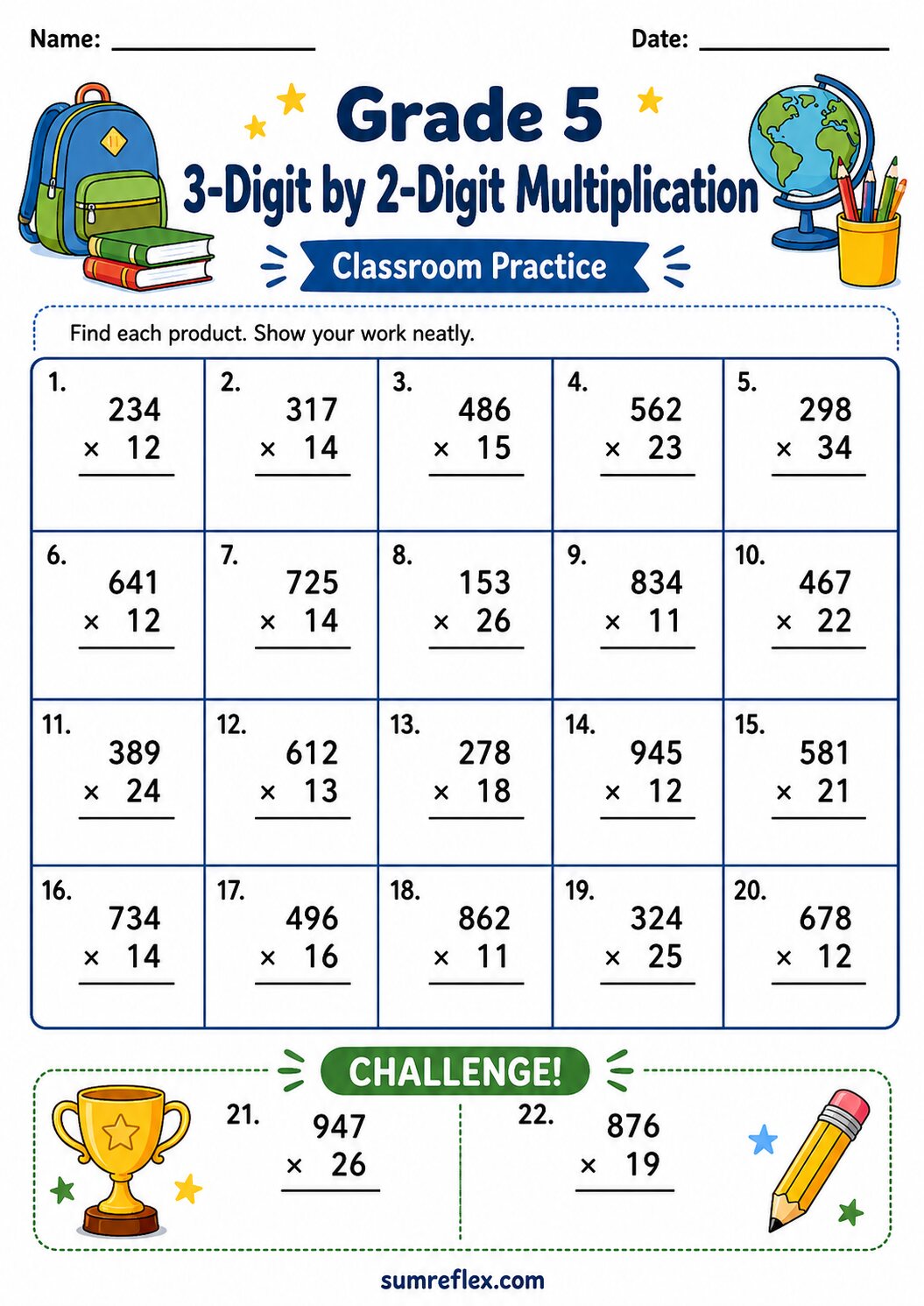
Grade 4 and Grade 5 worksheets in this area move toward larger multiplication and decimal work. Those pages need room for rows, partial products, estimates, and final checks. A longer problem is not automatically harder, but it gives students more places to misplace a digit. The worksheet design should make the structure visible enough for the answer to be reviewed.
Preview images prevent wasted printing
Every category page is meant to show the printable before it is used. That matters because two worksheets with the same skill can still feel different. One may have larger writing spaces, another may use a theme, and another may include a challenge row. Open the category, scan the images, then print the page that fits the actual lesson rather than printing blindly.
A narrow worksheet choice teaches more
A mixed stack can look productive, but students often learn more from one focused page and a short review. Pick one folder, choose one printable, and decide what will count as success before the pencil starts. The review might be as simple as explaining one mistake, circling the hardest problem, or checking whether an answer makes sense.
Return to the directory when the goal changes
The directory is useful again after a skill has been practiced. If the student finishes Grade 2 arrays confidently, the next stop may be Grade 3 array multiplication. If Grade 4 vertical multiplication feels rushed, the area model folder can rebuild the reasoning. Moving between folders should follow the learner, not a fixed packet order.