



First-grade practice should stay explainable
A Grade 1 worksheet should not turn early math into a guessing race. Students are still building the idea that numbers can join, separate, and stay connected. A good page gives enough repetition to build confidence, but the problems remain small enough for the child to explain with fingers, counters, drawings, or a number line if needed.
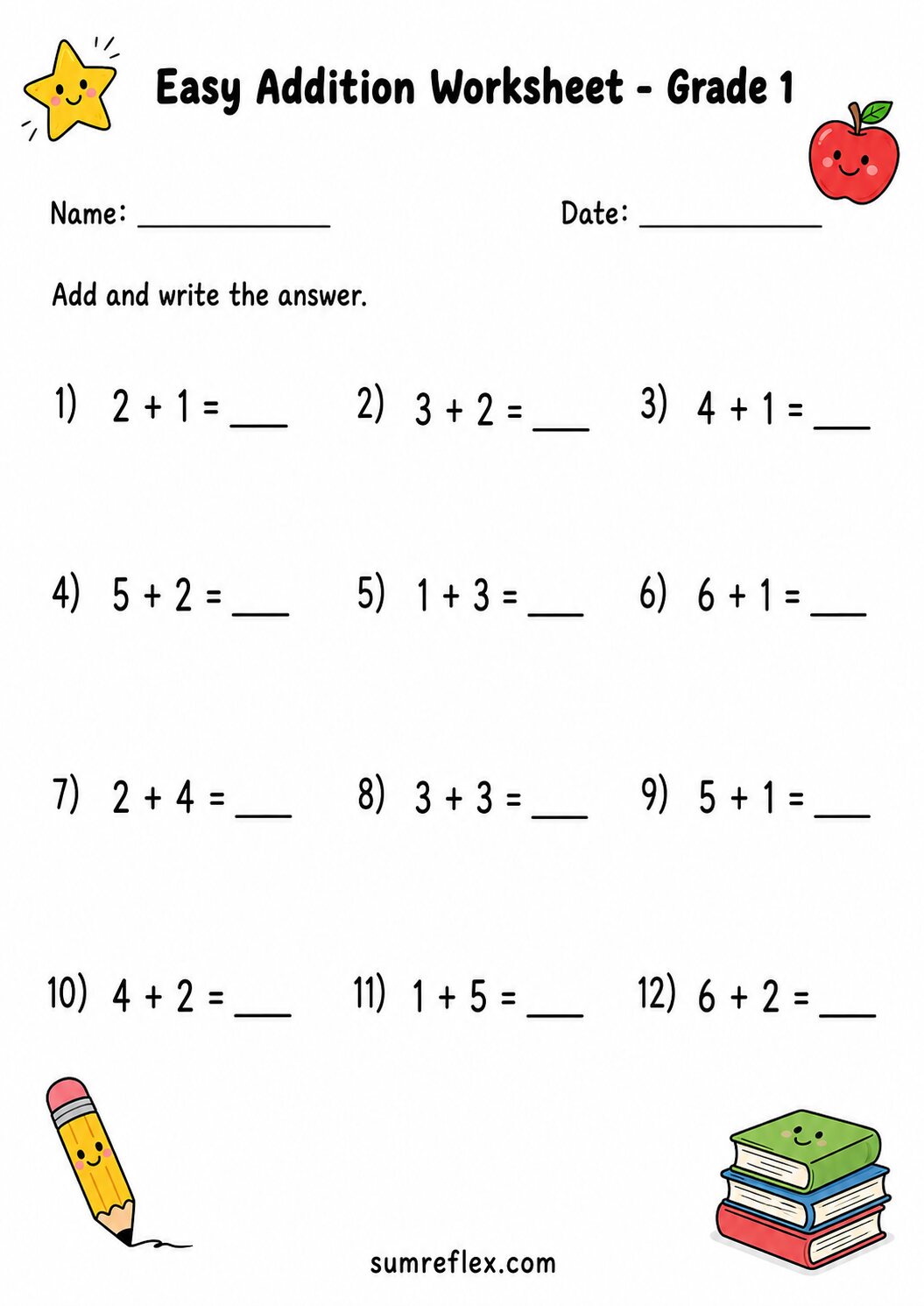
Addition begins with joining, not speed
Addition facts are easier to remember when the child can describe what happened. Two groups came together. A number grew by one more. A double made a familiar total. These worksheets should support that kind of talk before fact speed becomes the main goal, especially for learners who are still counting on from the larger addend.
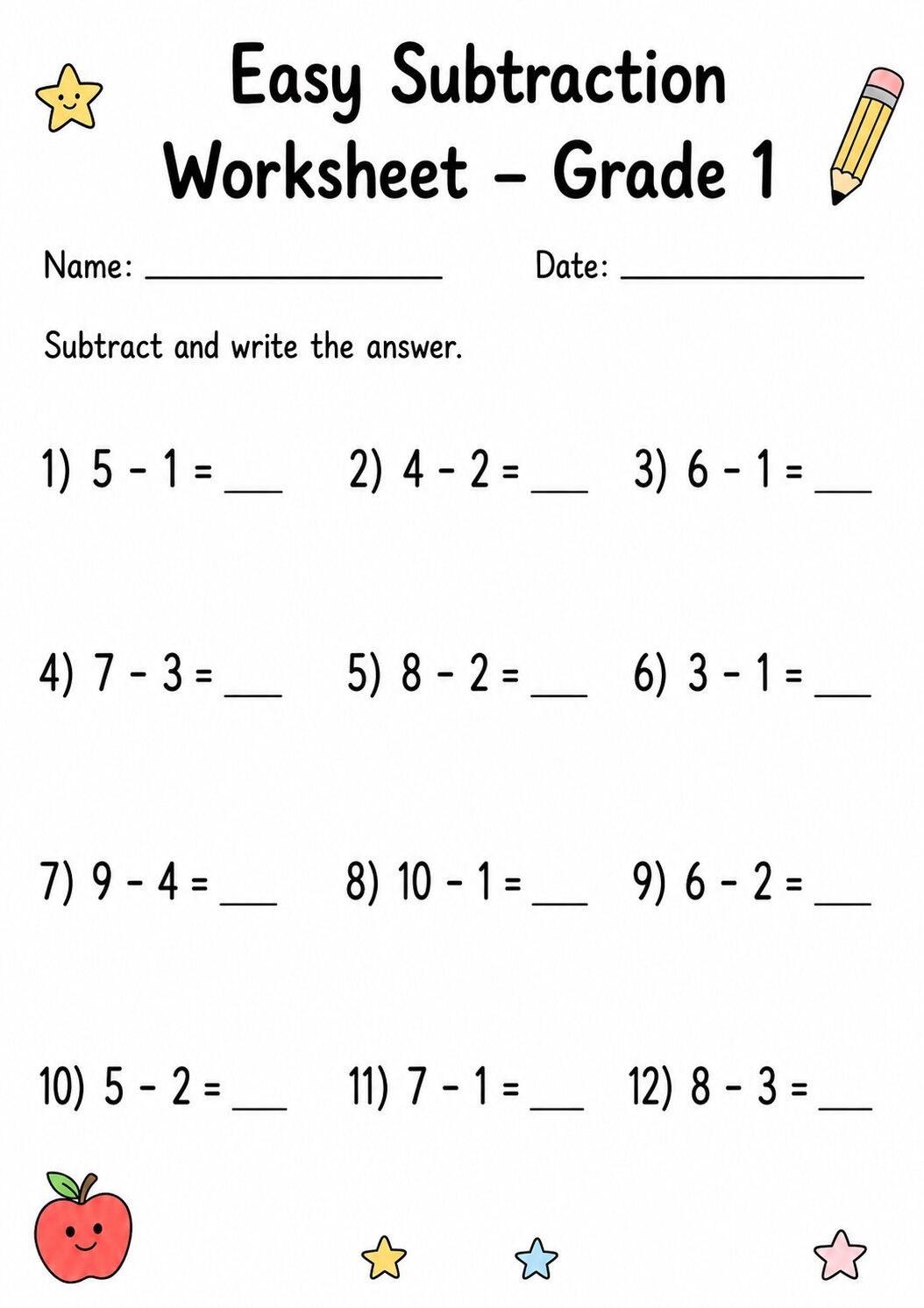
Subtraction needs a clear take-away picture
Subtraction feels harder for many first graders because the starting number gets smaller. A child may need to say what was removed, what stayed, and how the answer can be checked. The subtraction folder is useful when students need repeated practice with small differences and a slower review of what remains.
Related facts make answers less random
When a child sees 5 + 3 = 8 and 8 - 3 = 5, the two facts begin to support each other. This connection helps learners check work without asking an adult after every problem. A short review after the worksheet can ask which addition fact helped with a subtraction fact, or which subtraction fact proved an addition answer. The page becomes stronger when the child can name that connection instead of treating every blank as a separate memory task.
Slow correct answers still tell you something
A first grader may reach the right answer but need a long count every time. That does not mean the page failed. It means the next practice should help the child find a more efficient path. Doubles, near doubles, counting on from the larger number, and recognizing ten can all grow from the same small worksheet when the adult asks how the answer was found. Write down that strategy choice so the next printed page has a purpose.
Choose fewer problems when counting is still slow
If a student counts every item from one for every problem, the page may need to be shortened. Pick a smaller group of problems and ask the child to try counting on, using doubles, or spotting one more and one less. The worksheet still matters, but the goal becomes strategy practice rather than finishing every blank. A half page with a better method is more useful than a full page solved the slowest possible way.
Mistakes should become quick conversations
A wrong first-grade answer is usually a useful clue. The child may have counted the starting number twice, skipped an object, reversed the take-away direction, or written the numeral unclearly. Instead of marking the whole page as weak, choose one mistake and ask the learner to rebuild it with a simple explanation.
One page can close with a confidence check
After a worksheet is finished, ask the child to circle one problem that felt easy and one problem that needed more thought. This short habit helps first graders notice their own learning. It also gives the adult a better next choice: another similar page, a subtraction review, or a return to hands-on counters before printing again. The final conversation should be short, but it should point to the next decision.