



Grade 4 multiplication needs two views
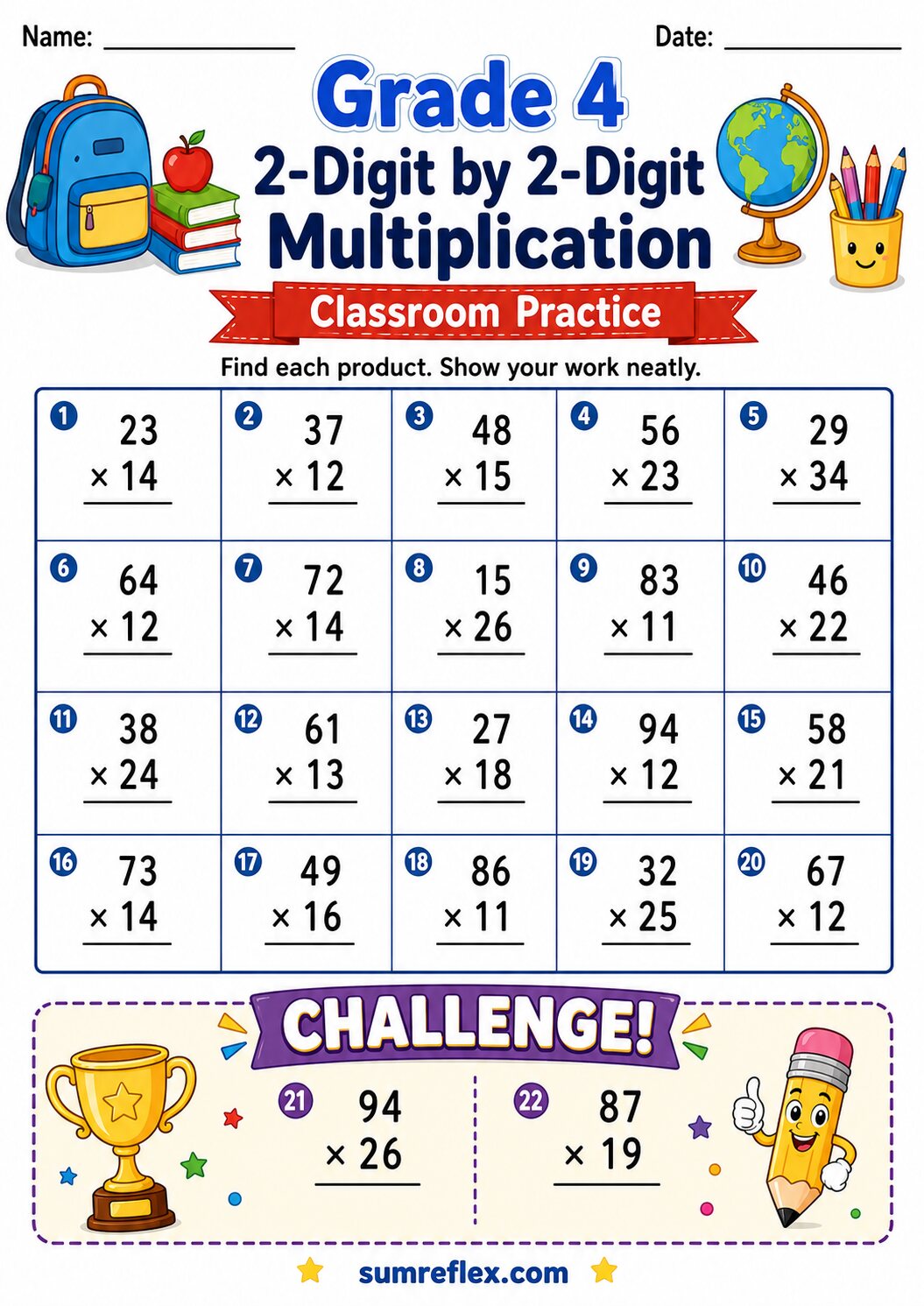
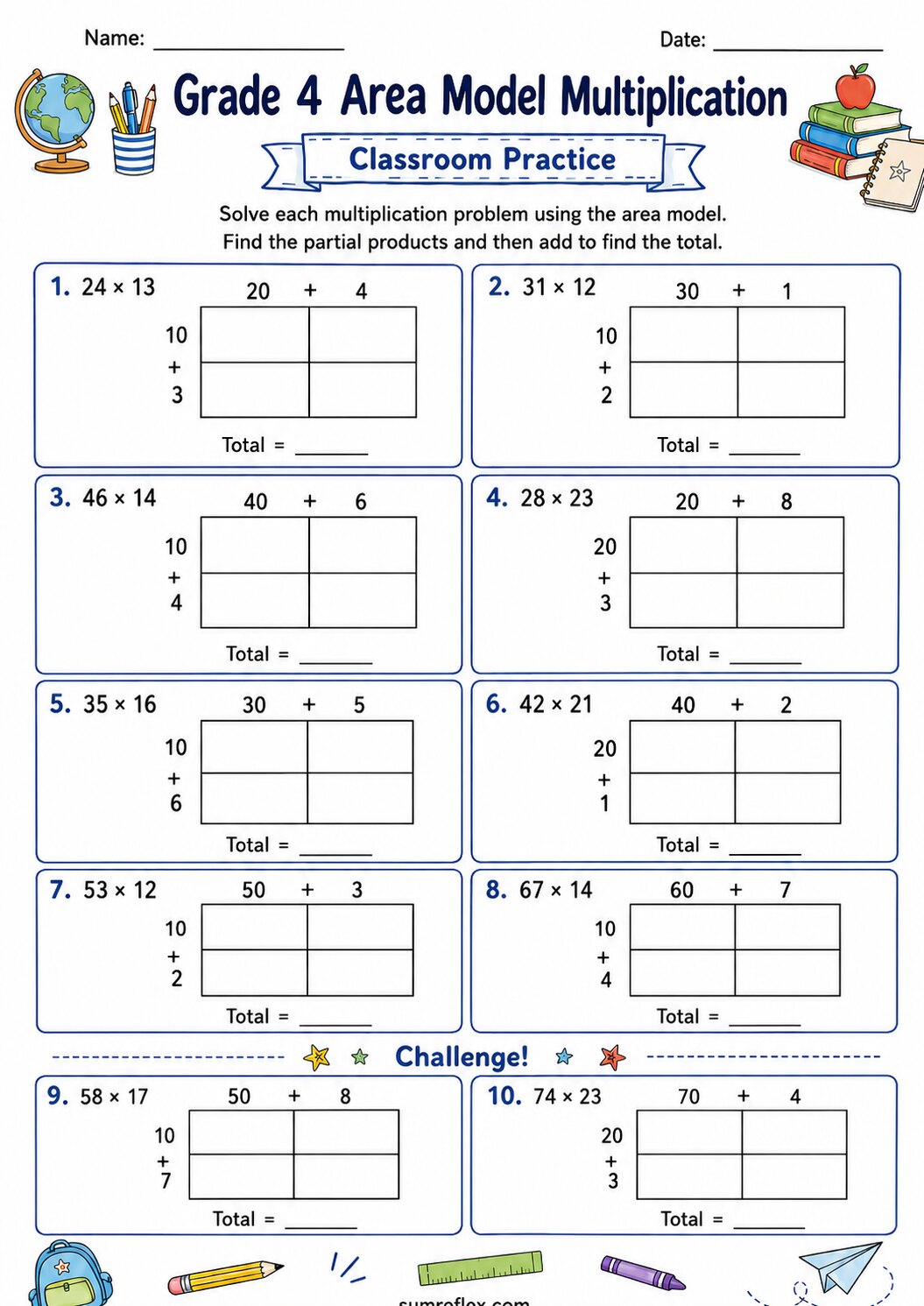
Fourth-grade multiplication sits between visual reasoning and compact written calculation. Students need to see why a product is built from parts, but they also need a method that works neatly on paper. The two worksheet folders here support that bridge. Area models slow the product down into place-value boxes, while 2-digit by 2-digit pages help students write the same thinking in vertical rows.
Area models show the hidden parts
An area model lets students split each factor into tens and ones, fill the rectangle boxes, and add the partial products. This is helpful when the standard algorithm feels like a memorized stack of digits. A learner who can explain each box is better prepared to understand why the vertical method later has separate rows and a final addition step.
Vertical multiplication should not arrive too early
The compact method is useful, but it should not hide place value before the student is ready. If a child writes digits in rows but cannot explain what the second row represents, return to a visual model for a few examples. The goal is not to delay the algorithm forever. The goal is to make sure the algorithm still means multiplication by ones and tens.
Two 2-digit factors require a stable routine
A 2-digit by 2-digit problem asks for several decisions: multiply by the ones digit, regroup if needed, shift for the tens digit, write the second row, and add the rows. The worksheet page should leave enough space for that routine. Students who skip the shift or crowd the carrying marks often know the facts but lose the structure.
Use the Grade 4 2-digit by 2-digit multiplication worksheets
Estimation protects against impossible products
Before solving, students can round the factors to nearby tens. The estimate gives the answer a sensible range. If 48 x 32 is near 50 x 30, the exact answer should be near 1,500. That quick check catches answers that are too small, too large, or missing a place-value shift. Estimation is not extra work; it is a safety check.
Crowded carry marks hide the real mistake
Grade 4 learners often make errors because carried numbers are squeezed into corners or forgotten after one step. Encourage clean marks above the correct column and enough space between product rows. A worksheet with readable work is easier to review. It also helps the student find the exact line where a mistake happened.
Use the folder choice to diagnose the need
If a student cannot split factors, choose area models. If the split is clear but the vertical layout is messy, choose 2-digit by 2-digit practice. If answers are consistently unreasonable, add estimates before the first calculation. The folder should match the problem in the work, not simply the grade printed at the top of the page.
The best worksheet exposes the error
A good Grade 4 printable makes the mistake visible. In an area model, the wrong box can be found. In a vertical problem, the misplaced row can be reviewed. Choose the page that lets the student see where the reasoning changed, because that is how practice turns into correction instead of repetition.
One review question can carry the lesson
After a Grade 4 worksheet, choose one problem and ask what each row or box represents. The answer may mention tens, ones, partial products, or the estimate. That short explanation shows whether the student is only performing steps or actually tracking the multiplication structure. A single clear explanation can be more valuable than another full page.