



Third grade multiplication needs more than memorizing
A Grade 3 learner may know several facts and still not understand multiplication well enough to use it. The worksheet choice should depend on the gap. Some students need pictures of equal groups. Some need focused times-table repetition. Others need to apply known facts inside a vertical problem or a short word problem. This hub keeps those routes separate.
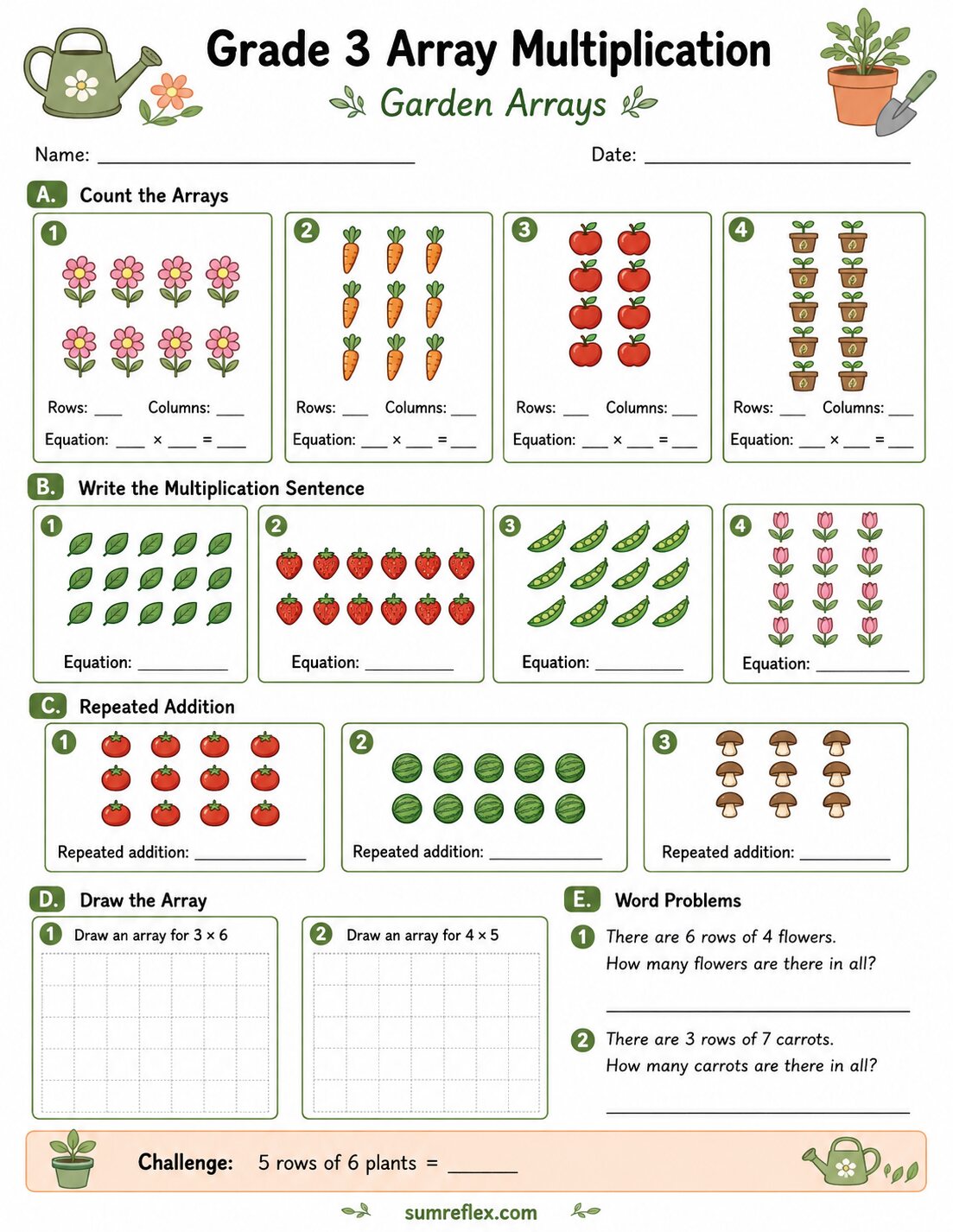
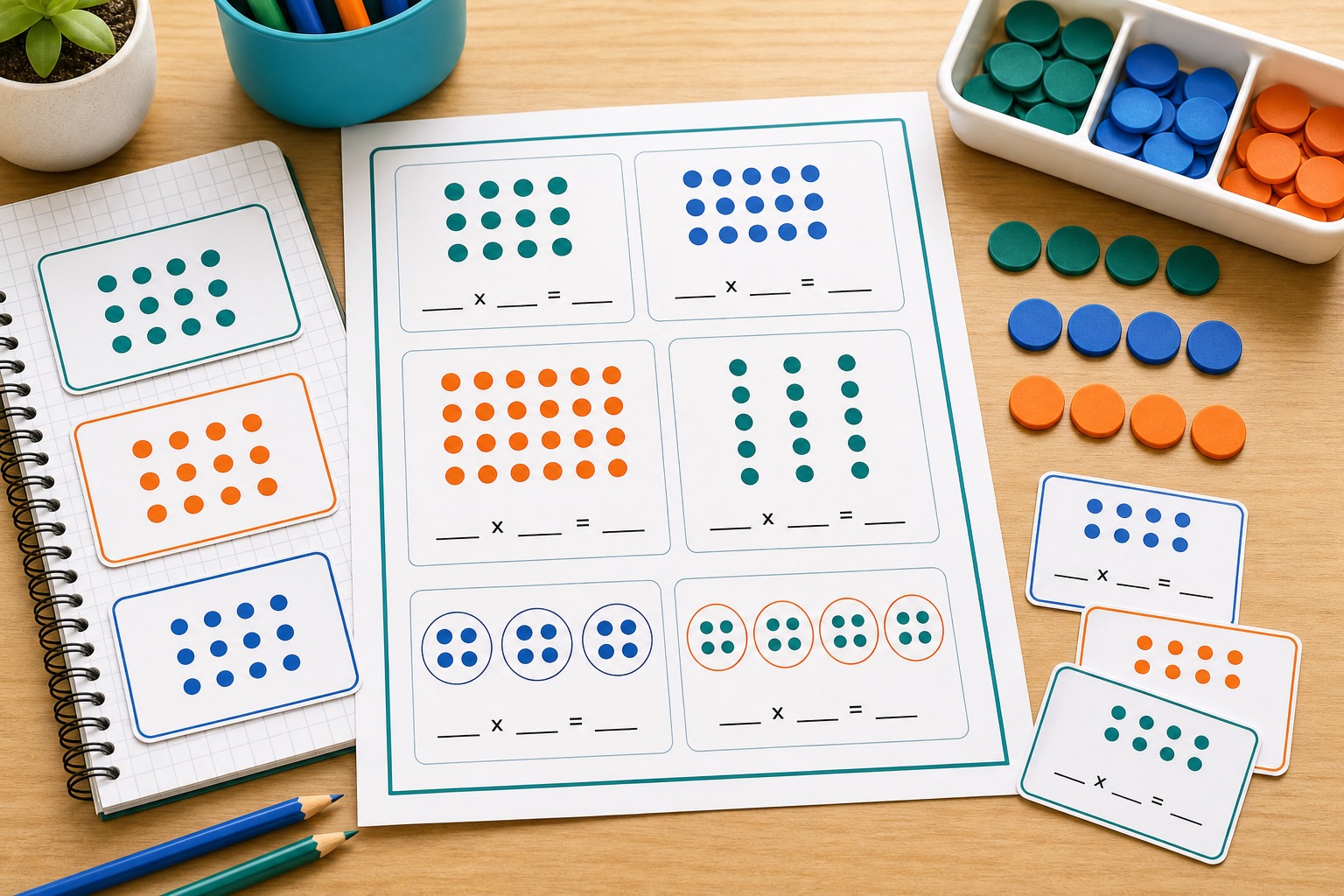
Array models keep the meaning visible
Arrays are the best starting point when a student can count groups but cannot explain a multiplication sentence yet. Rows and columns show why equal groups can be counted efficiently. A child can point to the rows, name the columns, write repeated addition, and then connect that work to a product.
Fact pages should have a narrow target
Times-table practice works better when the goal is specific. A single table lets the learner notice patterns, while mixed review checks whether facts can be recalled without a predictable order. The multiplication folder includes focused practice, missing factors, story work, and review pages so the task can match the lesson.
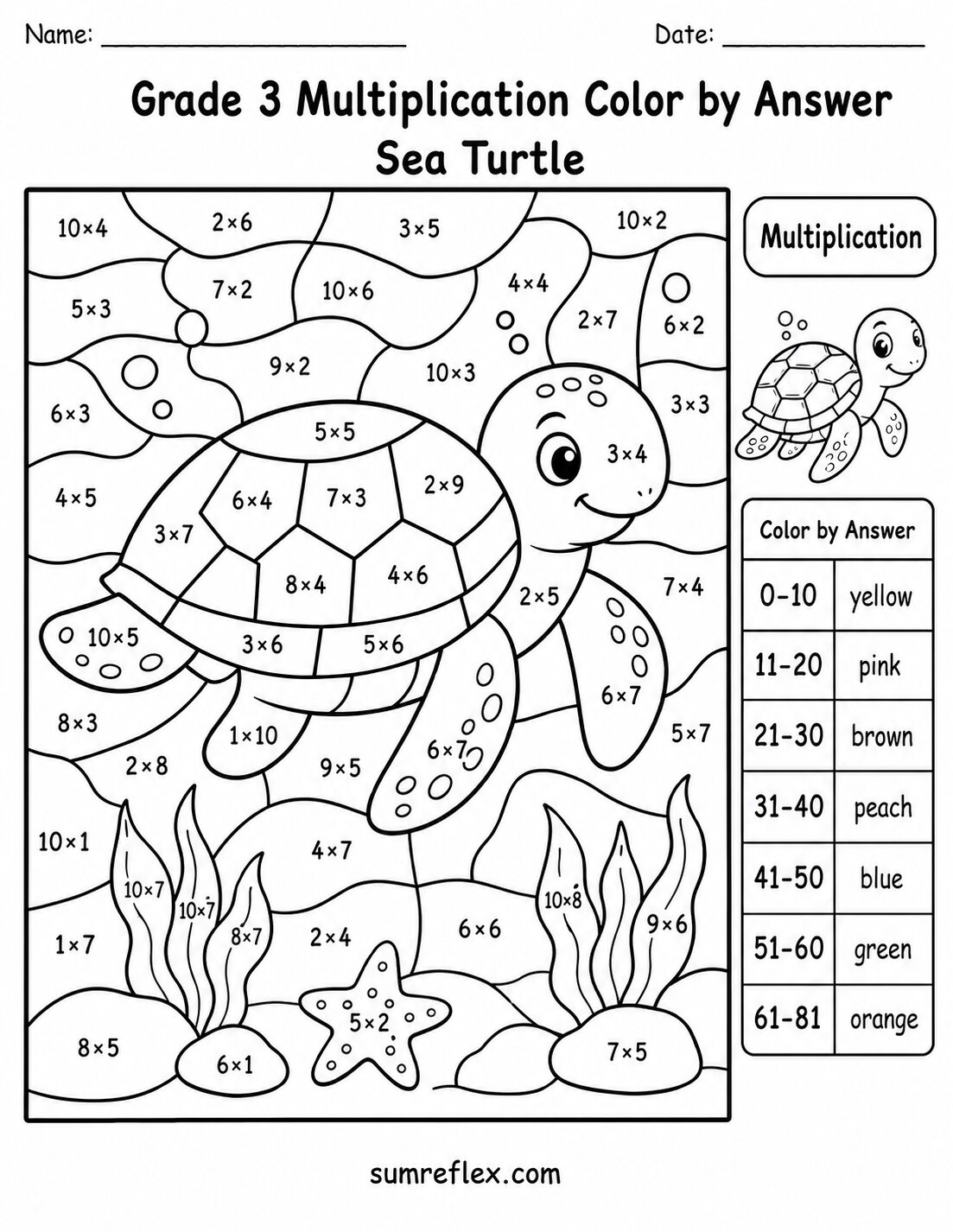
Color-by-answer pages still require real checking
A coloring page can make multiplication practice feel lighter, but the answer still has to be earned. Students should solve first, match the product to the color key, and then color. If the picture looks wrong, that visual feedback gives them a reason to recheck the products instead of waiting for an adult to mark the page.
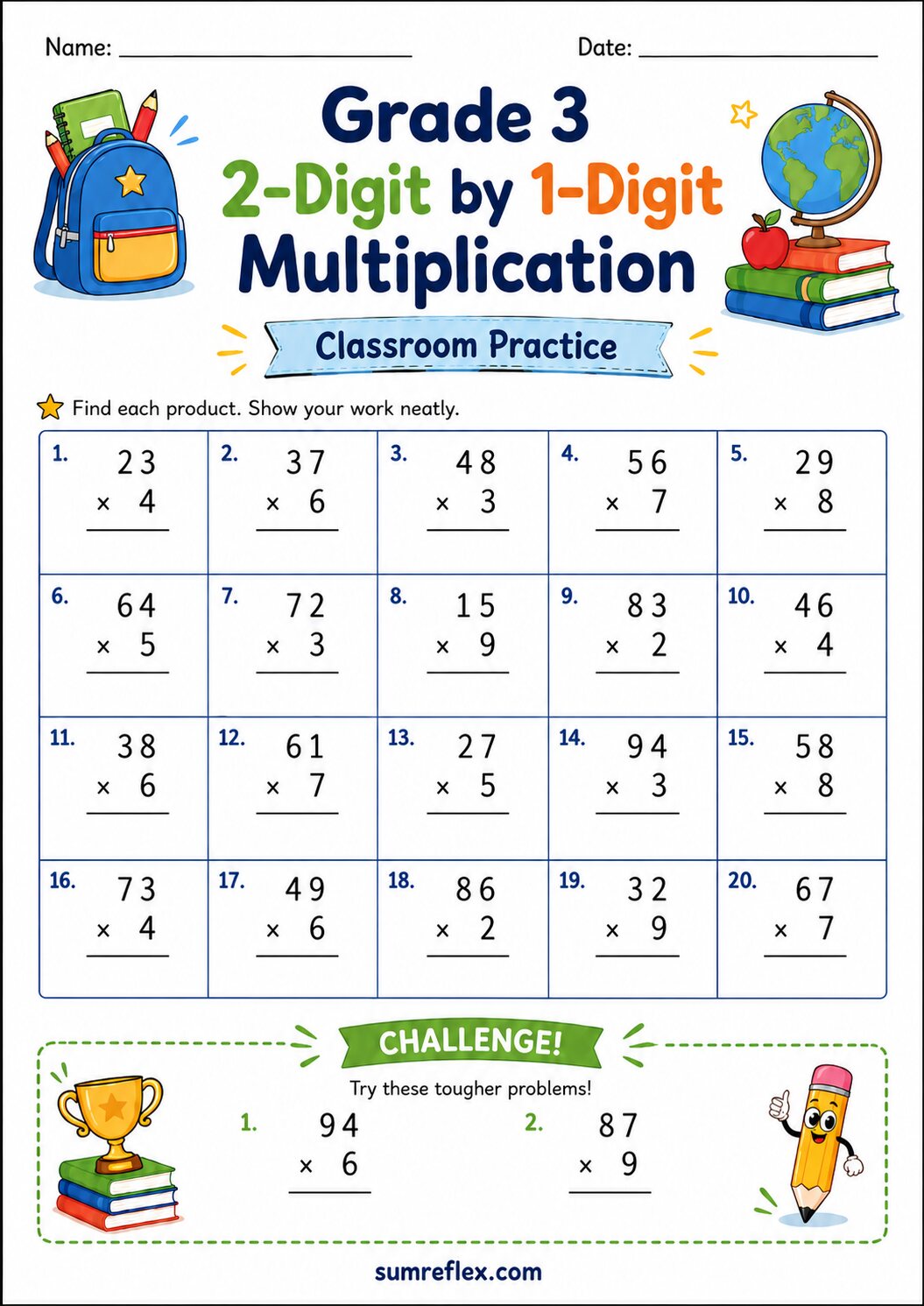
Vertical products use facts in a new way
When a third grader multiplies a 2-digit number by a 1-digit number, known facts are no longer isolated. The student has to multiply ones, handle tens, and sometimes regroup. This is where fact fluency begins to support a written method. The worksheet should leave enough room for that thinking to stay readable.
Missing factors show whether facts are flexible
A student who knows 6 x 7 = 42 may still pause when the blank is written as 6 x __ = 42. Missing-factor work checks whether the child can move around inside the relationship rather than only recite in one direction. That flexibility matters later for division, fractions, and algebraic thinking.
Word problems should be read before numbers are touched
Grade 3 multiplication word problems often fail because students grab the first two numbers and multiply without understanding the situation. Ask what is being repeated, how many groups there are, and what the answer will count. A worksheet with fewer word problems and better discussion can be stronger than a page of rushed products. The student should be able to say the unit of the answer, such as stickers, boxes, rows, or points.
A spoken check helps facts become usable
After a multiplication page, choose one answer and ask the learner to prove it another way. An array, a skip-count, a related fact, or a short story can all work. This does not need to happen for every problem. One spoken check is enough to show whether the fact is flexible or only memorized in one direction. That answer can guide whether the next printout should be visual, fluent, or applied.
Choose the next folder from the mistake pattern
If errors come from counting every object, return to arrays. If errors come from forgotten products, use focused fact pages. If errors come from carrying or row setup, choose vertical multiplication. If the student solves correctly but loses focus, a color-by-answer page may offer a better review format without changing the math skill.