



Grade 5 multiplication adds scale and precision
By Grade 5, students may know the multiplication facts but still need help managing larger products and decimal placement. The work is no longer only about getting a product. It is about keeping rows aligned, deciding where the decimal point belongs, estimating the size of the answer, and explaining why the result is reasonable.
Large whole-number products need row discipline
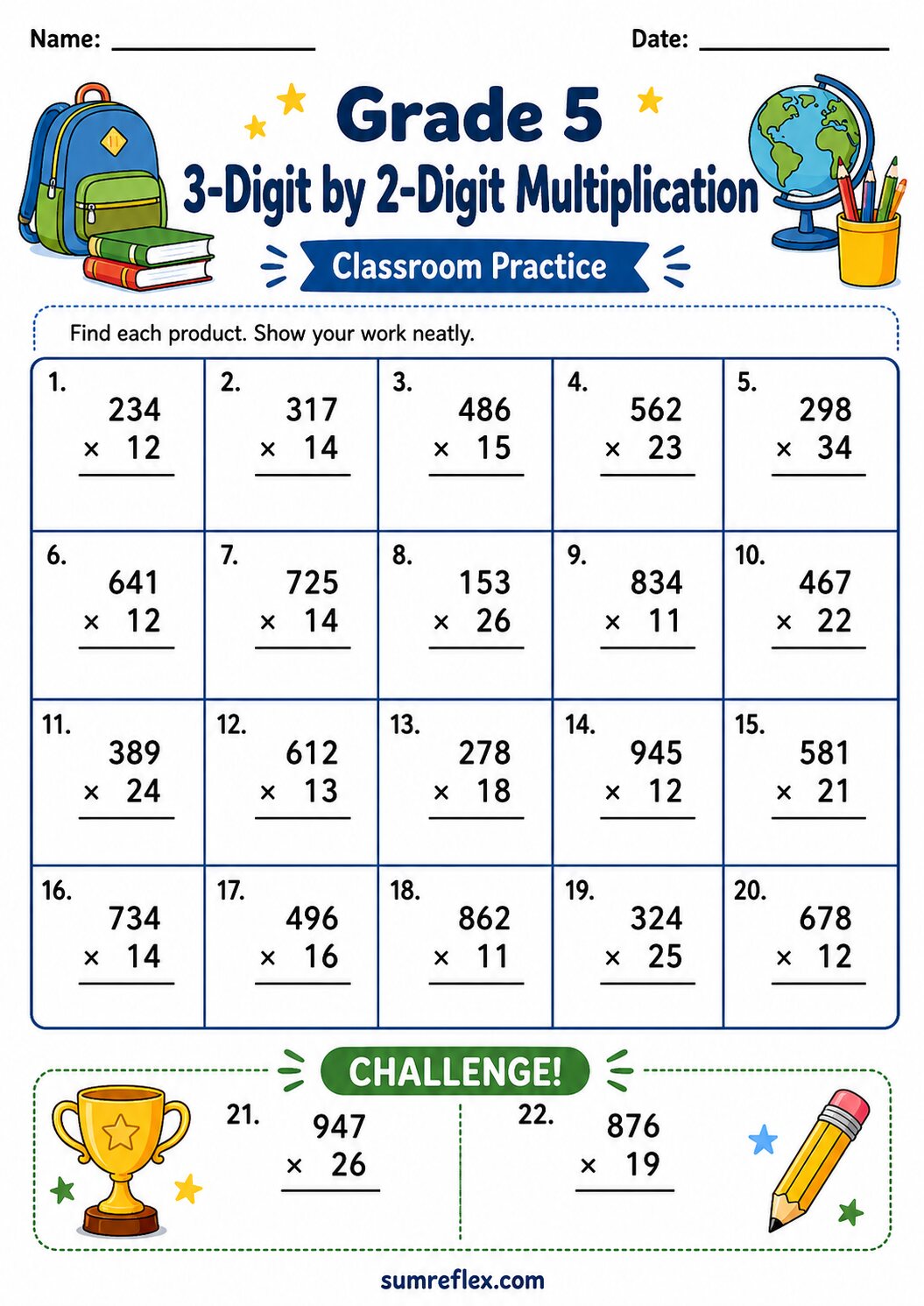
A 3-digit by 2-digit problem gives students more places to lose track than a smaller Grade 4 problem. The first row comes from the ones digit, the second row comes from the tens digit, and the final answer depends on adding those rows correctly. If the rows drift out of place, even strong fact knowledge will not save the product.
Open the Grade 5 3-digit by 2-digit multiplication worksheets
Decimal multiplication needs size awareness
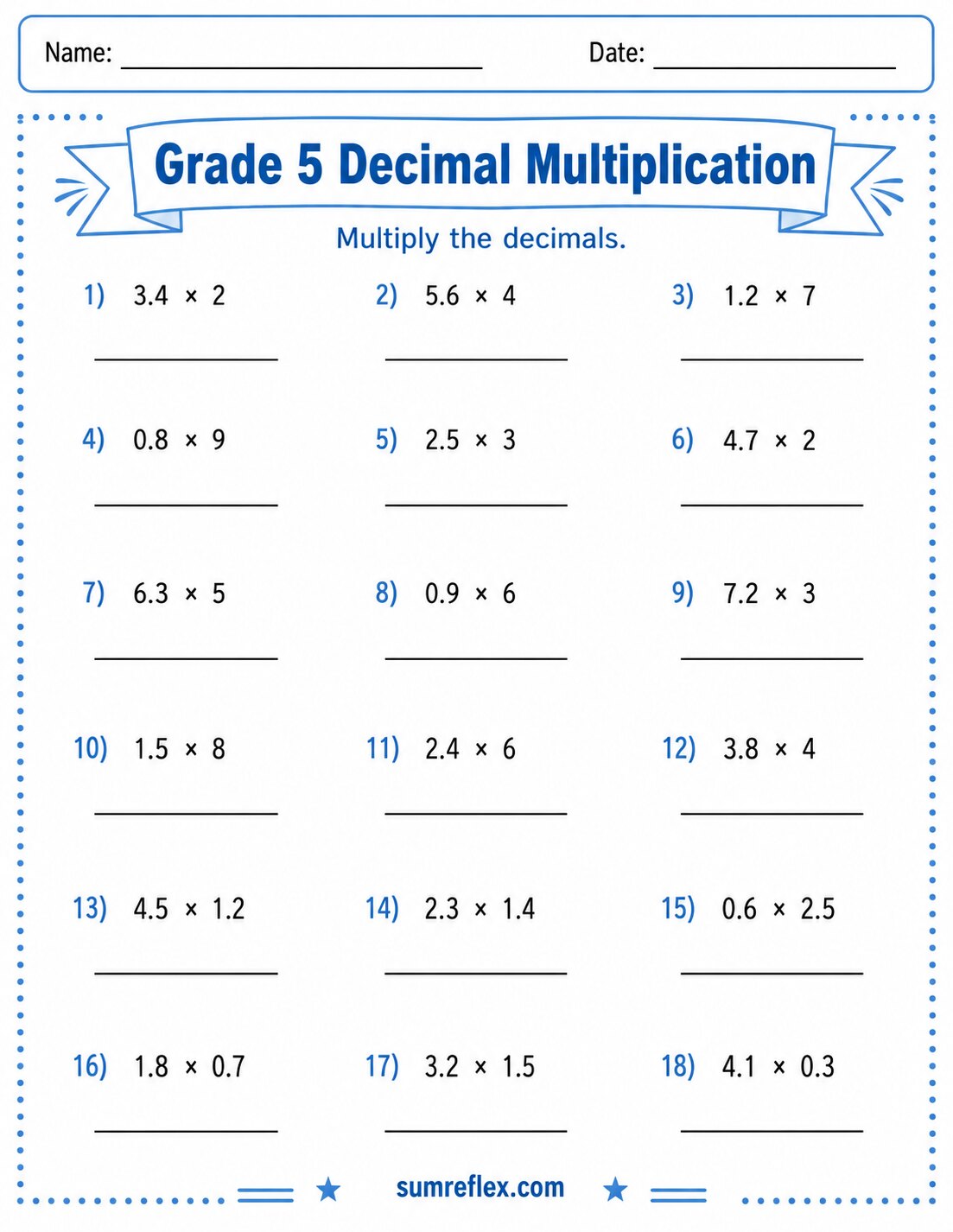
Decimal products create a different challenge. Students can multiply the digits correctly and still place the decimal point in the wrong position. That is why estimation matters so much. A product such as 4.8 x 3 should be near 15, not near 1.5 or 150. The answer has to fit the size of the factors.
Whole-number and decimal folders should not blur together
Both folders involve multiplication, but the review focus is different. In 3-digit by 2-digit work, the main risks are row placement, regrouping, and final addition. In decimal multiplication, the main risks are product size, decimal-place counting, and standard form. Choosing the right folder keeps the practice targeted instead of mixing unrelated mistakes.
Estimates should happen before correction
When a student gives an unreasonable answer, ask for an estimate before marking the exact line wrong. The estimate helps the learner see the problem without depending only on the adult. A rough product can reveal a missing zero, a shifted row, or a decimal point that moved too far. This habit builds self-checking.
Workspace matters more as numbers grow
Grade 5 students sometimes try to solve larger problems in the same cramped space they used for facts. Encourage them to leave room for product rows, regrouping marks, and a final check. Neat work is not just presentation. It lets the student audit the solution and find the exact place where the value changed.
Use errors to choose the next printable
If the product rows are misplaced, return to whole-number multiplication. If the digits are right but the decimal point is wrong, use decimal pages with estimate checks. If the student cannot explain why an answer is too large or too small, choose fewer problems and spend more time on reasoning. The next worksheet should respond to the error pattern.
The checking question changes by topic
For large whole-number multiplication, the strongest check is often about row placement and whether the final sum is near the estimate. For decimal multiplication, the check should focus on product size and decimal-point placement. Asking the right question keeps review precise and prevents all multiplication mistakes from being treated the same way. It also helps students fix the exact habit that failed.
A final explanation should mention value
After a page is complete, ask the student to explain one answer using place value or product size. For whole-number work, they might describe the tens row. For decimal work, they might compare the exact answer with an estimate. This final explanation shows whether the method is understood well enough to transfer to a new problem. Keep that answer brief but specific.