



Second grade sits between facts and structure
Grade 2 practice has a different job from Grade 1. Students still need fluency, but they also begin to manage tens, ones, and organized groups. A worksheet should help them see why a number changes, not only ask them to fill in blanks. That is why this page separates two-digit calculation from array work.
Addition should show tens and ones
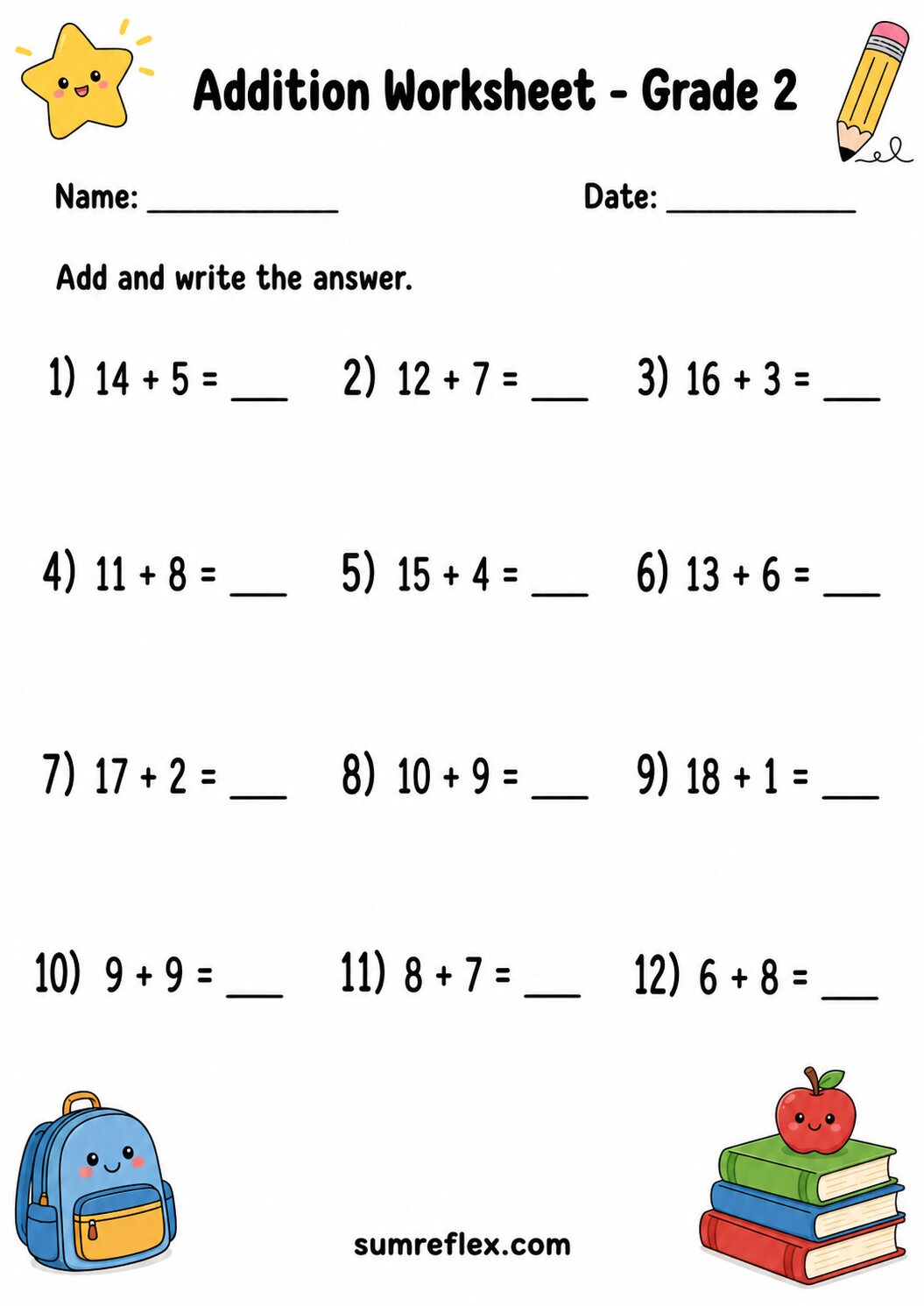
A problem such as 48 + 17 asks students to think about more than a single fact. They need to combine ones, watch when a new ten is formed, and decide whether the total is reasonable. The addition folder is useful when learners are ready to move beyond tiny sums but still need clear written practice.
Subtraction needs careful starting numbers
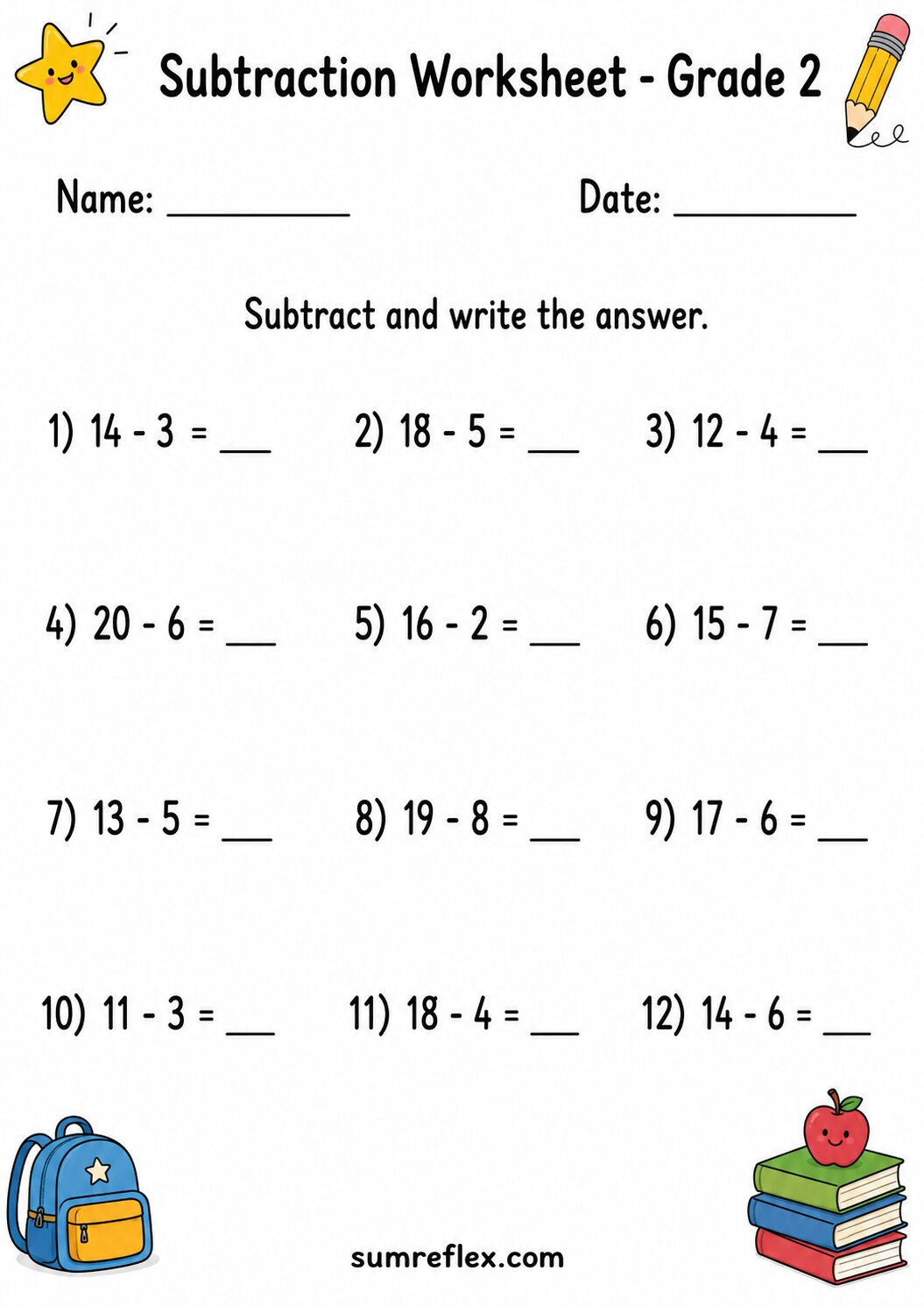
Two-digit subtraction can go wrong when students lose track of which number is being reduced. They may subtract in the easier direction or forget that a ten can be broken into ones. A good subtraction page gives enough space for the child to check the starting number, the amount removed, and the difference.
Arrays turn repeated groups into something visible
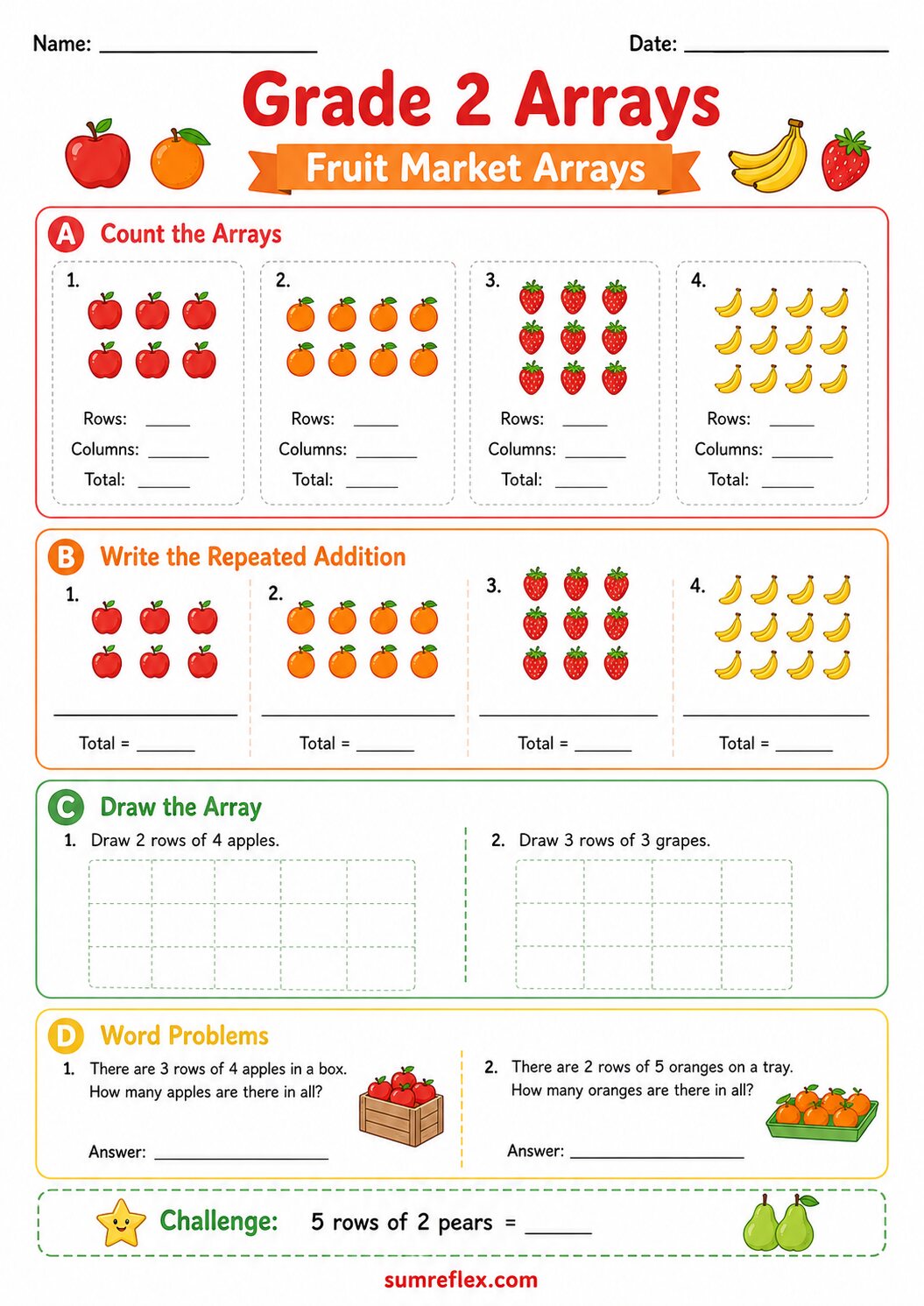
Before multiplication facts become formal, arrays let students see equal groups in rows and columns. A child can count one row, count how many rows there are, and write repeated addition. That visual arrangement builds the language of groups without rushing into symbols the child may not be ready to use independently.
Rows and columns should be named aloud
Array pages work better when students say what they see. Four rows of three is not the same description as three rows of four, even though the total is the same. Naming the arrangement helps children connect the picture to repeated addition and prepares them to understand why multiplication can be written in more than one order.
A worksheet can reveal the next lesson
If addition errors come from regrouping, the next lesson should slow down around tens and ones. If subtraction errors come from reversing the numbers, the next lesson should focus on the starting amount. If array errors come from counting one by one, the next lesson should practice skip-counting or repeated addition from the row size.
Do not mix every skill every time
Grade 2 students can handle more than one topic, but a practice session still needs a clear focus. Choose addition when the goal is combining numbers, subtraction when the goal is finding what is left, and arrays when the goal is equal groups. Mixed review can wait until each separate habit is easier to explain.
The page preview matters for writing stamina
Some students can solve the math but tire when a page has too much writing. Use the worksheet previews to check spacing, number size, and visual load before printing. A learner who needs calculation practice may not need a heavily decorated page, while a learner who needs attention support may benefit from a themed array sheet.
End with one place-value question
After a Grade 2 worksheet, ask one question that points back to structure. Which ten changed? Which ones were left? How many rows did you use? Why is the total reasonable? One careful question at the end can make a printable page feel like a lesson instead of a pile of answers. It also shows whether the child understands the work well enough to carry the idea into the next folder.