



The first step beyond fact tables
These pages are for the moment when multiplication moves past single facts. A problem such as 24 x 3 still uses basic facts, but it also asks the student to understand tens and ones. That is why the vertical layout matters. It gives the learner a place to organize the ones work, the tens work, and the final product instead of trying to hold everything mentally.
Alignment protects the place value
A neat setup is not just about appearance. When the digits are lined up, the student can see which digit is in the ones place and which digit is in the tens place. If the setup drifts, the product can drift too. Encourage students to rewrite any crowded problem before solving. Clean spacing is a calculation tool here.
Basic facts are only part of the work
A student may know 6 x 7 but still struggle with 37 x 6. The larger problem requires the same fact knowledge plus place-value reasoning. Ask students to explain that 37 x 6 includes 30 x 6 and 7 x 6. Even if the worksheet uses vertical form, that expanded meaning should stay visible in the discussion.
Regrouping should be named when it appears
When the ones product is greater than nine, students need to carry or regroup into the tens place. Do not let that step become a tiny mark with no meaning. Say what happened: twelve ones became one ten and two ones. That sentence keeps regrouping connected to place value, which helps later multi-digit multiplication feel less mysterious.
Estimate before accepting the product
Students can catch many mistakes with a rough estimate. If 48 x 5 is answered as 120, the estimate should raise a question because 50 x 5 is 250. The exact answer does not have to be guessed first, but the student should know the general size. This habit matters more as multiplication numbers grow.
Themes give repetition without sameness
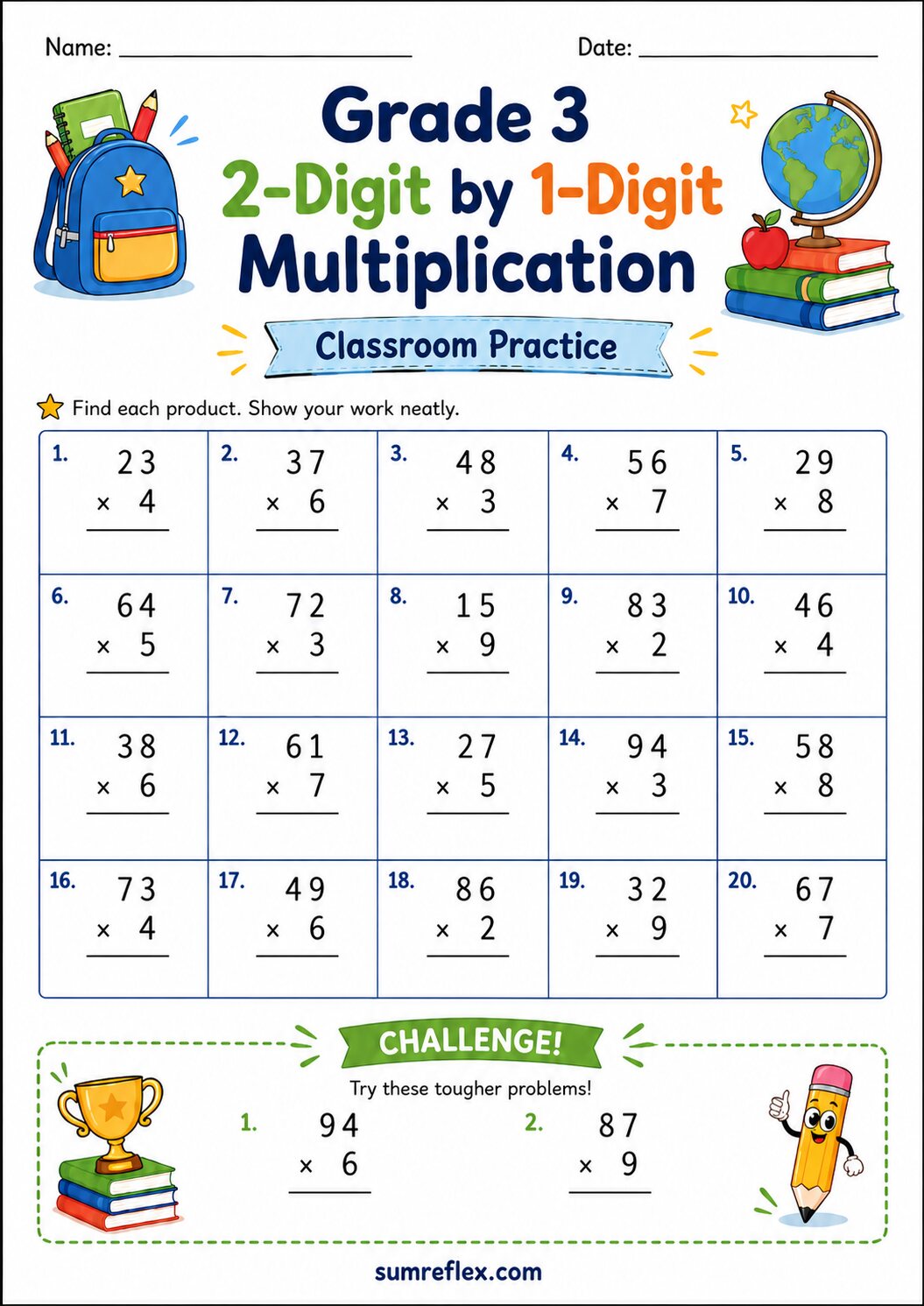
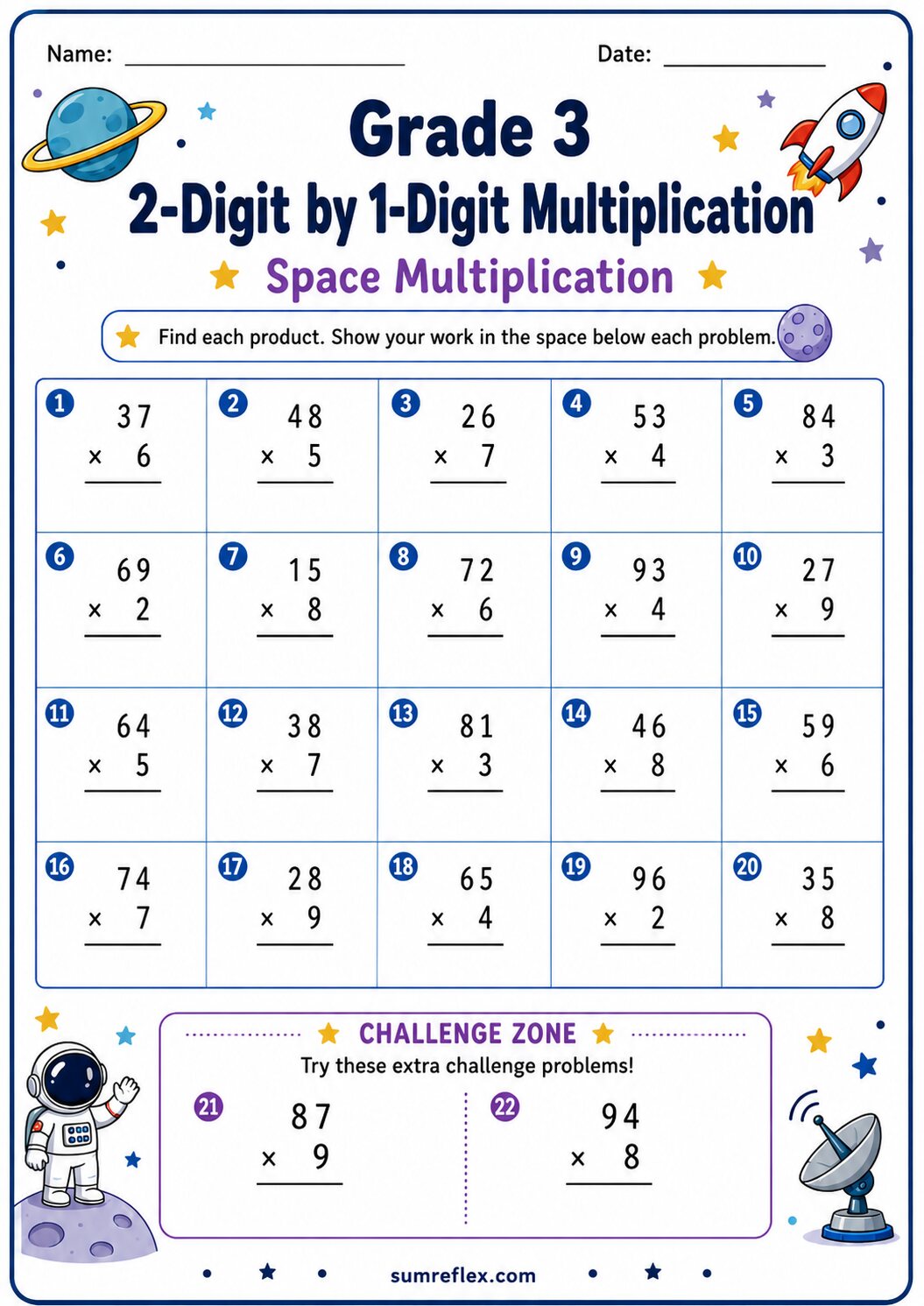
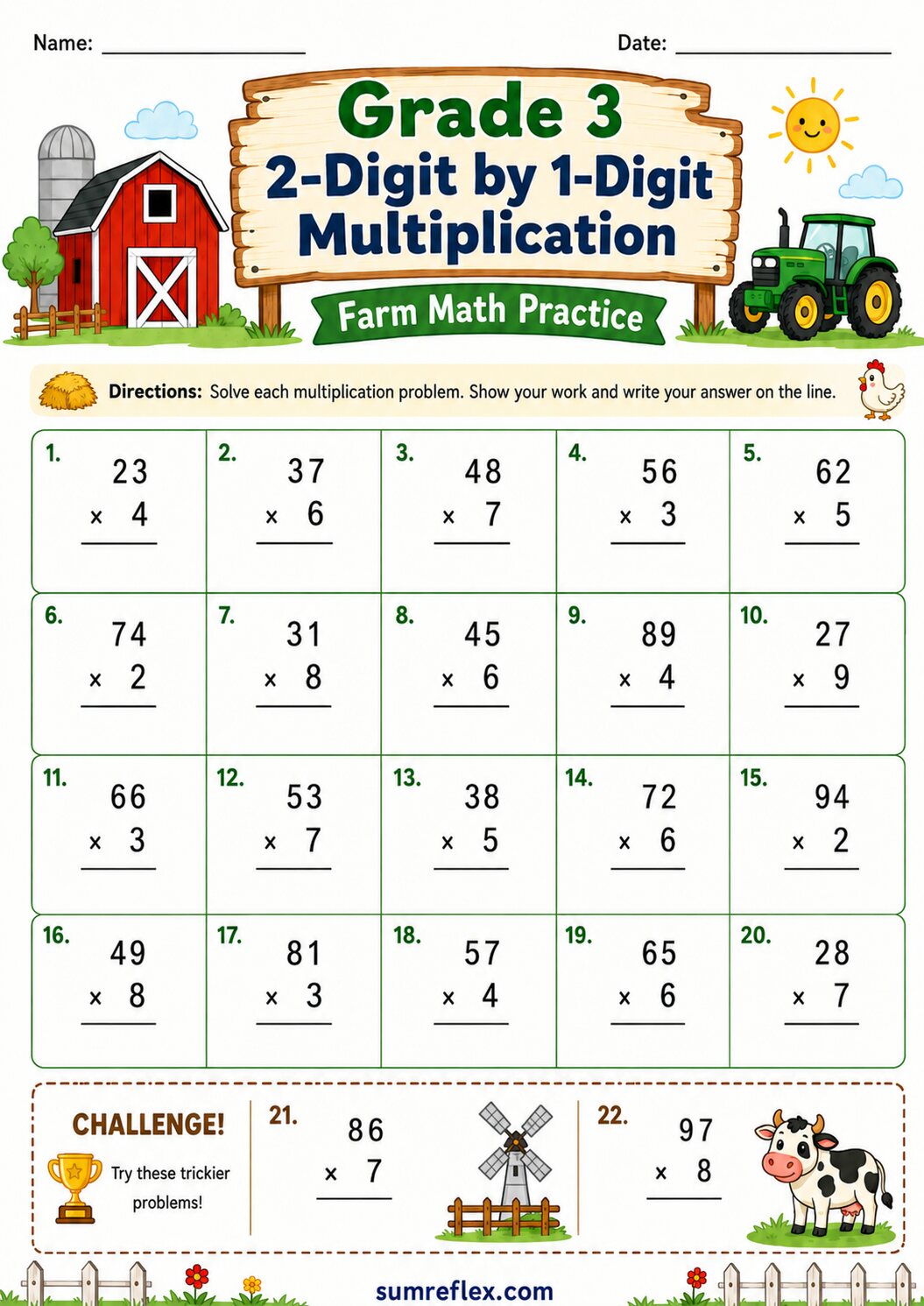
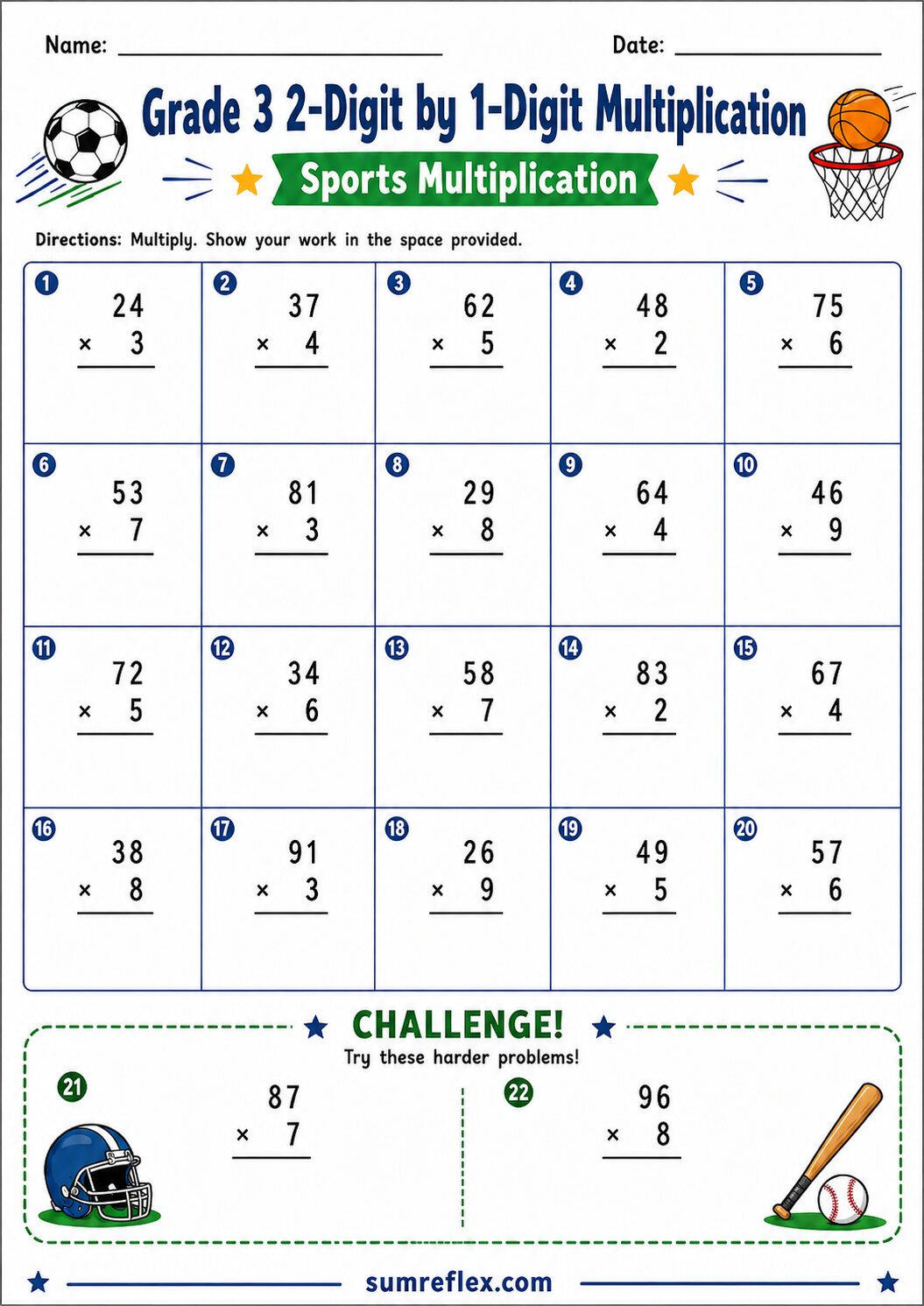
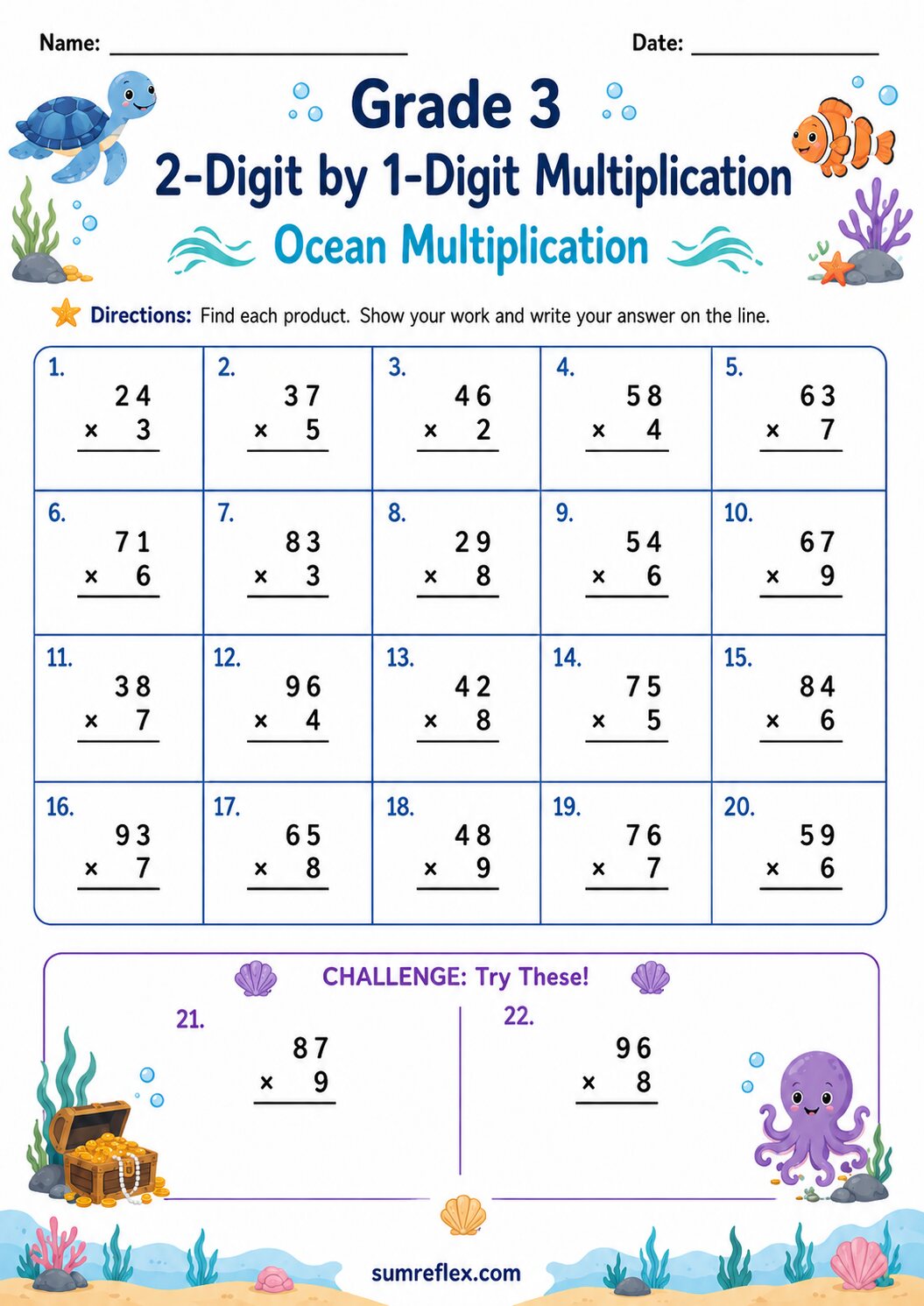
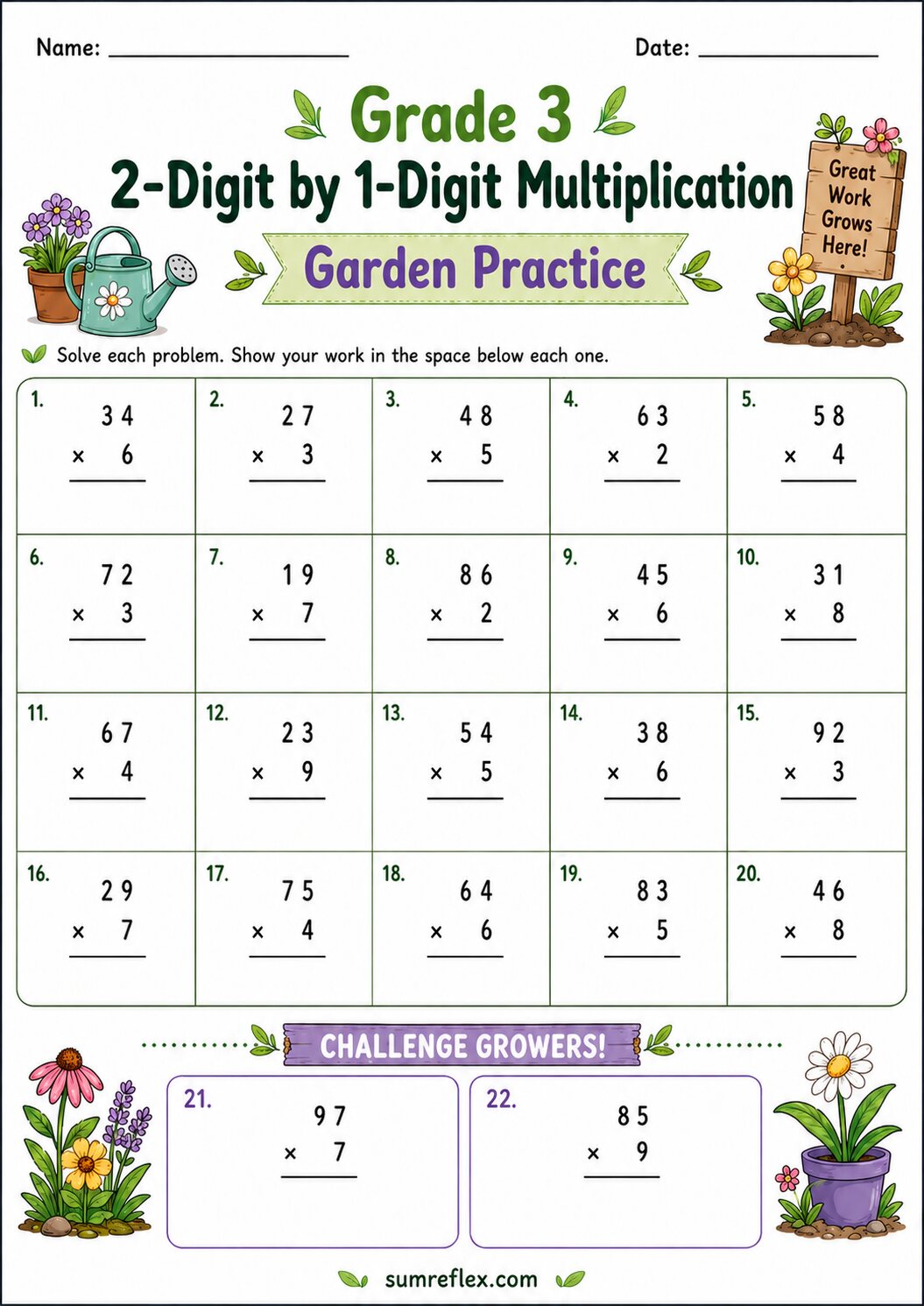
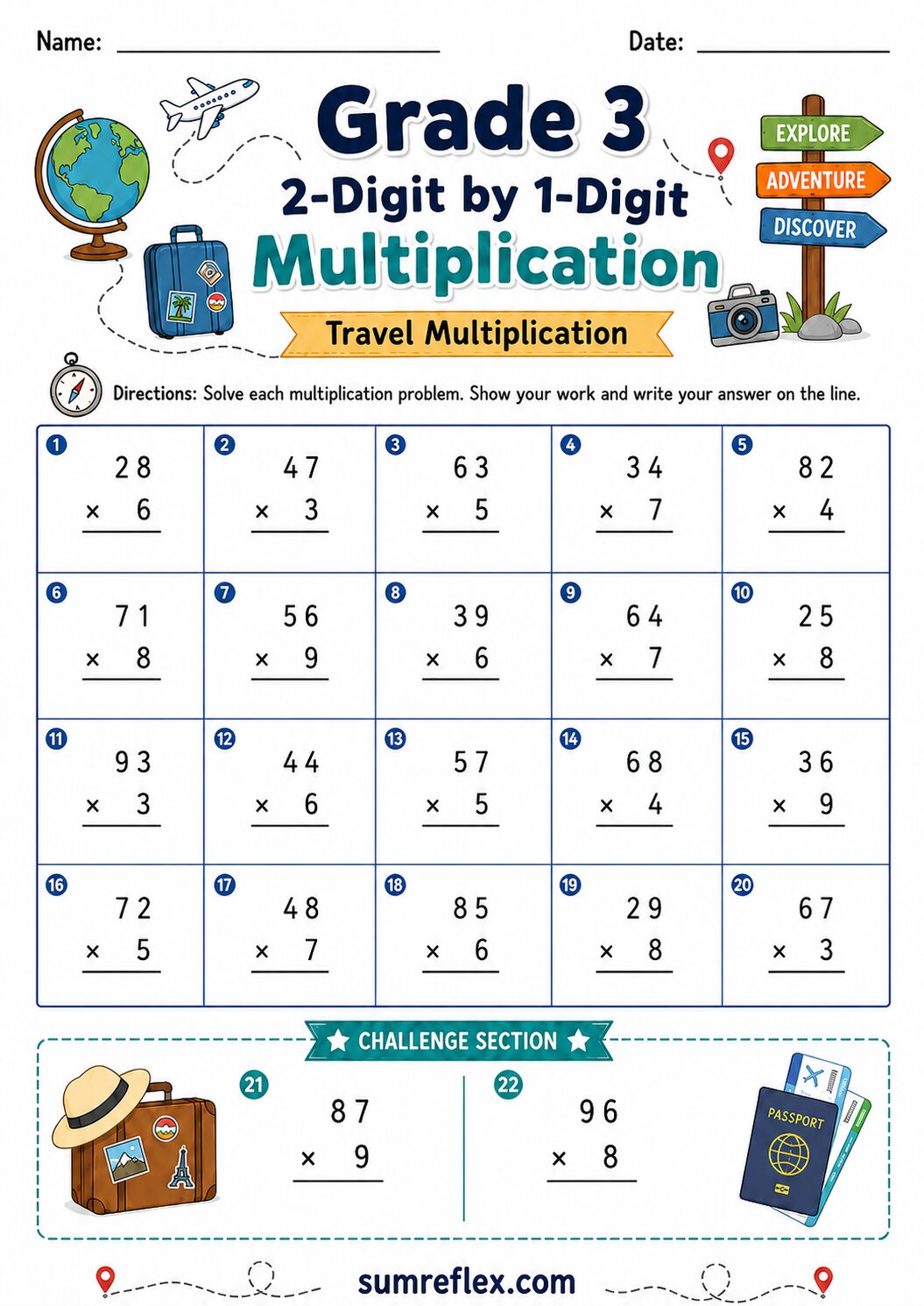
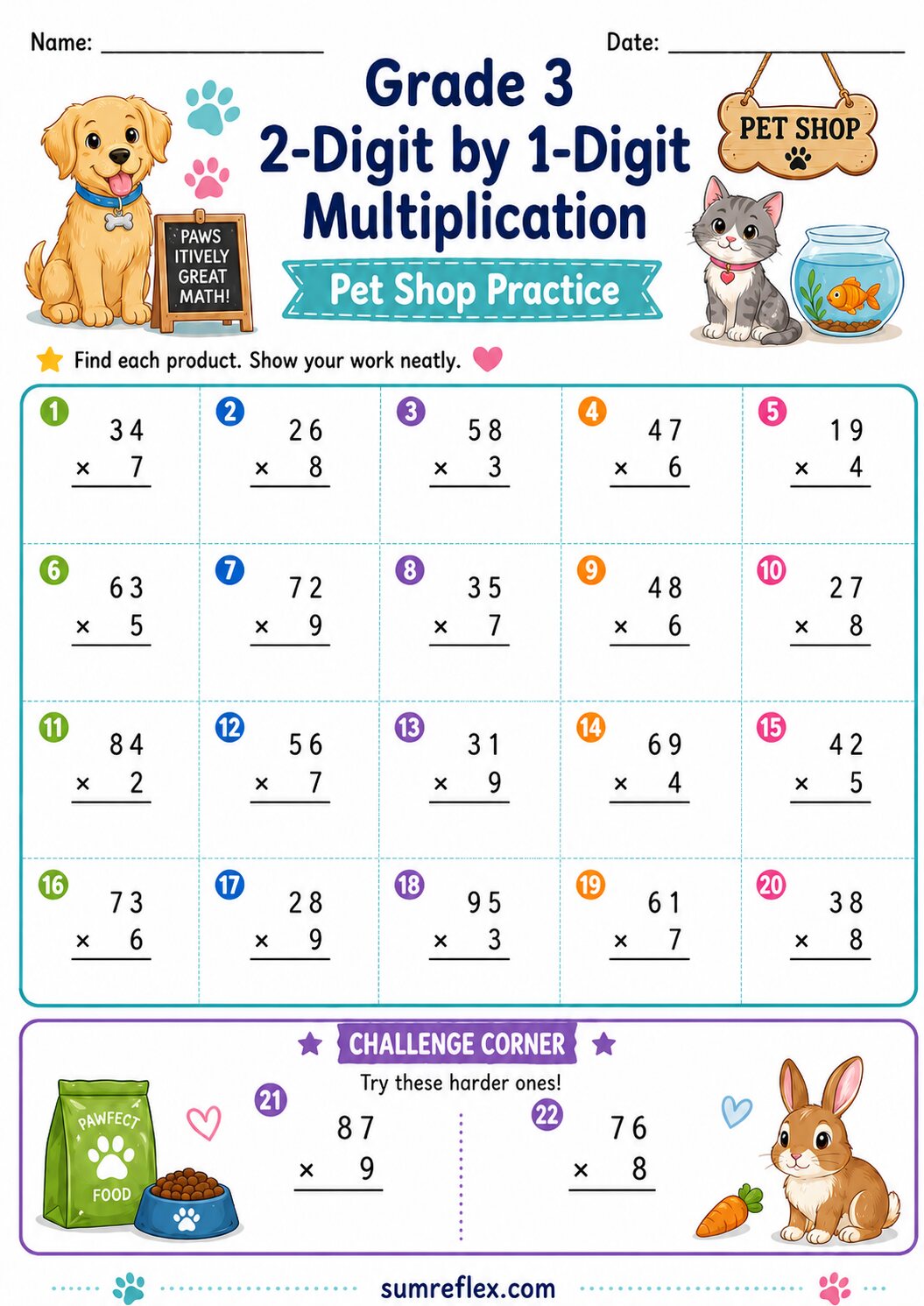
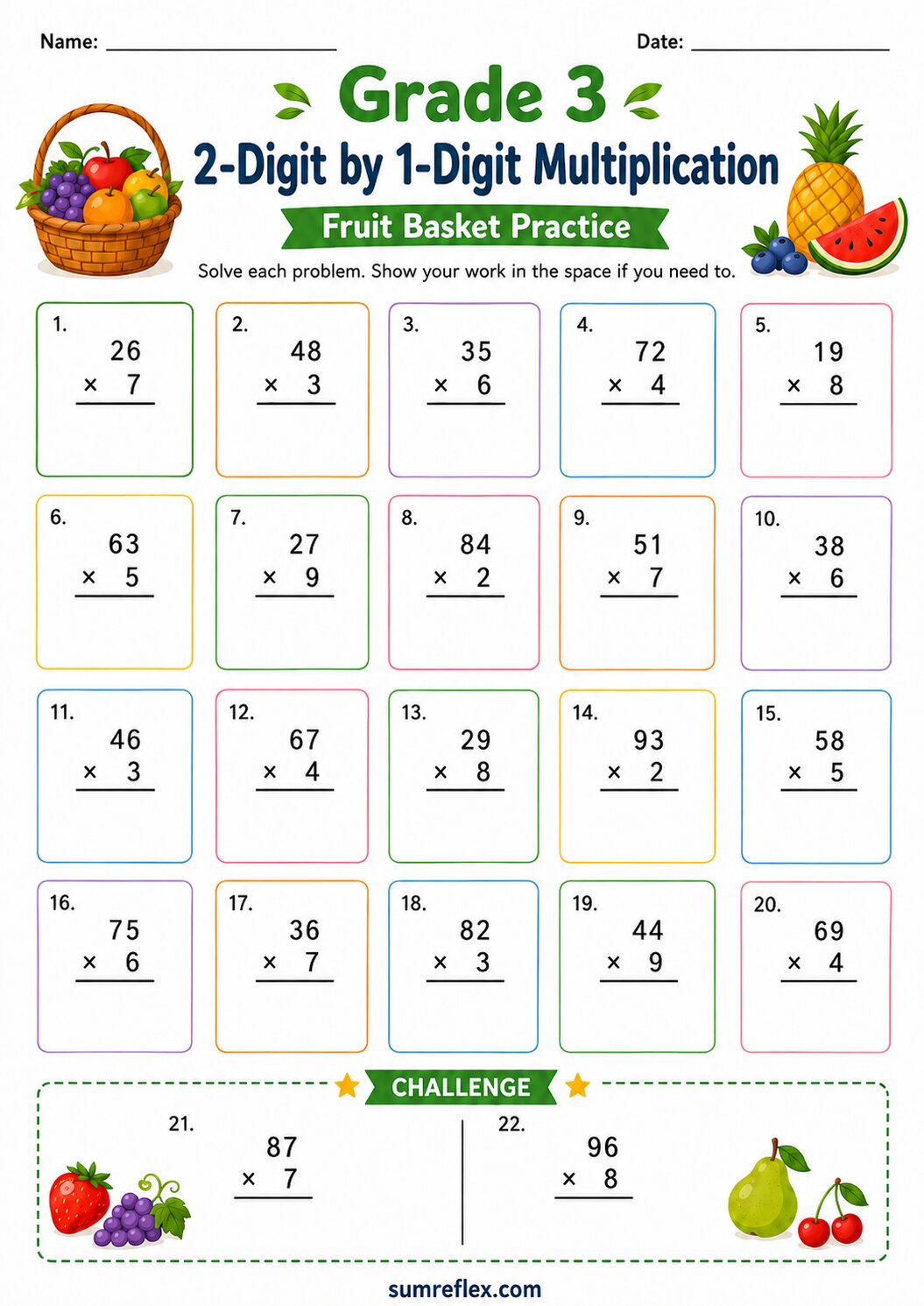
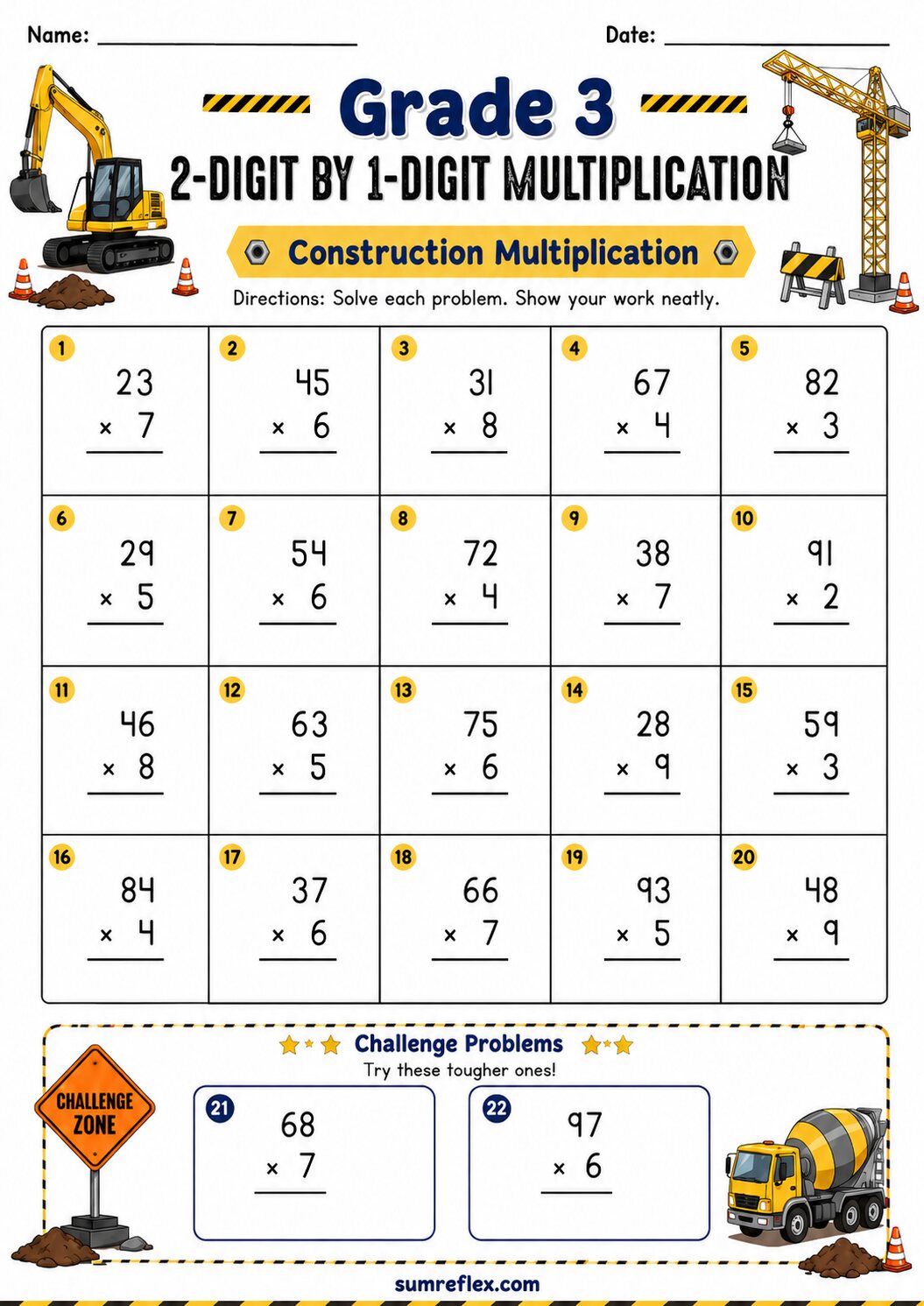
The classroom, space, farm, sports, ocean, garden, travel, pet shop, fruit basket, and construction pages all practice the same core skill. The theme changes the visual mood, not the math standard. This lets students repeat the method enough times to improve without staring at the exact same page design again and again.
What to review after a wrong product
When an answer is wrong, sort the error before assigning more practice. If the fact was wrong, review the single-digit fact. If the tens digit disappeared, return to place-value language. If the carry mark was forgotten, rebuild that one step. A targeted correction is better than handing over another full worksheet with no diagnosis.
When these pages are too hard
If students miss most of the products, step back to array multiplication or one-factor facts. A worksheet should stretch the learner, not bury the method. The best sign of readiness is that the child can solve some problems correctly and explain the setup. If both are missing, use a visual model before returning to vertical multiplication.
Use the challenge row carefully
The challenge area should come after the main problems, not before. It is a quick check of independence. Ask students to solve the regular grid, review one or two products, and then try the challenge row without help. That order keeps the challenge from becoming a frustration point and turns it into a useful readiness signal.
One worked example can reset the page
If several products are wrong in a row, stop and work through one example beside the worksheet. Write the expanded form, solve the ones, solve the tens, and compare the result with the vertical answer. That short reset is usually better than letting the student finish a whole page with the same broken step.