



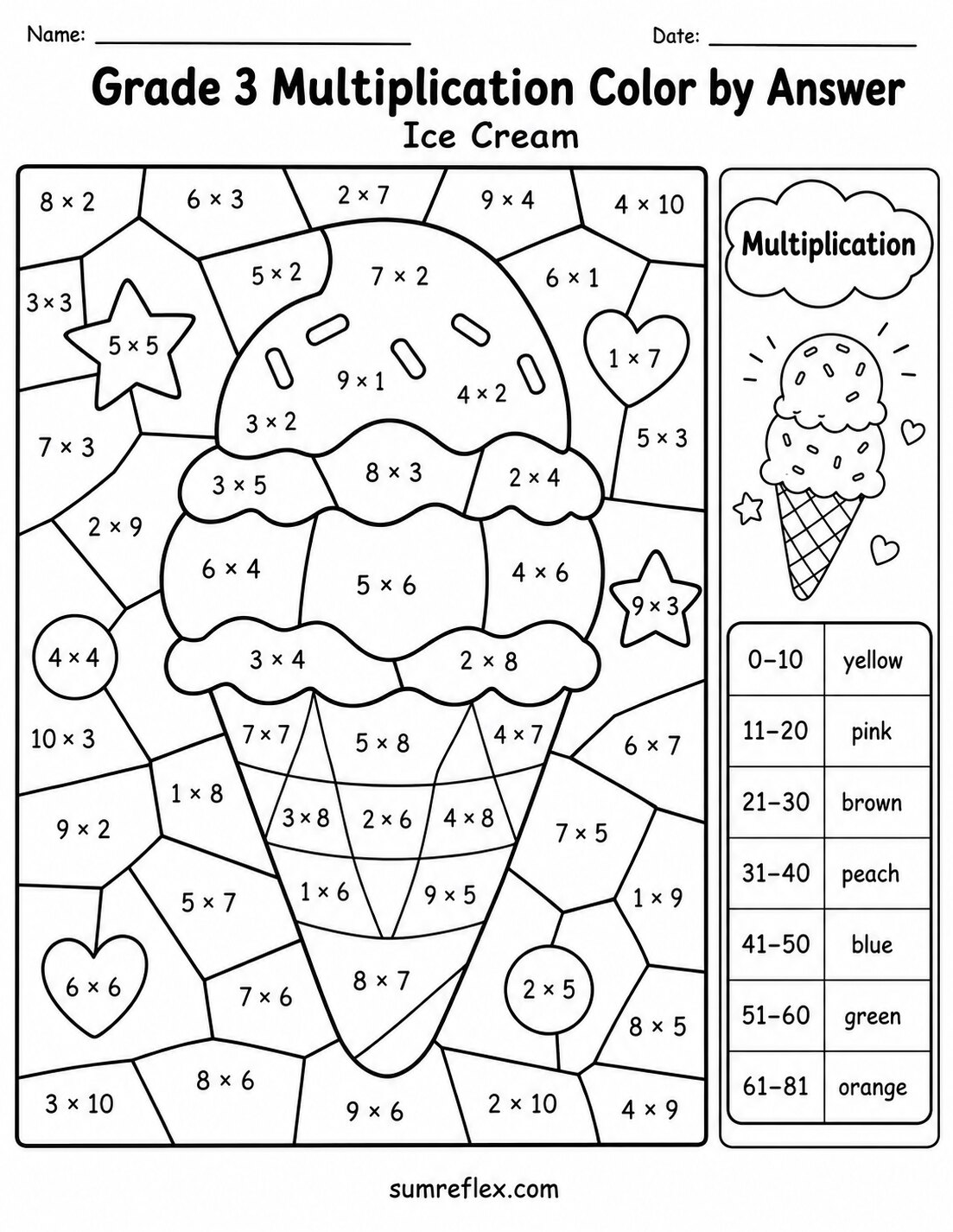
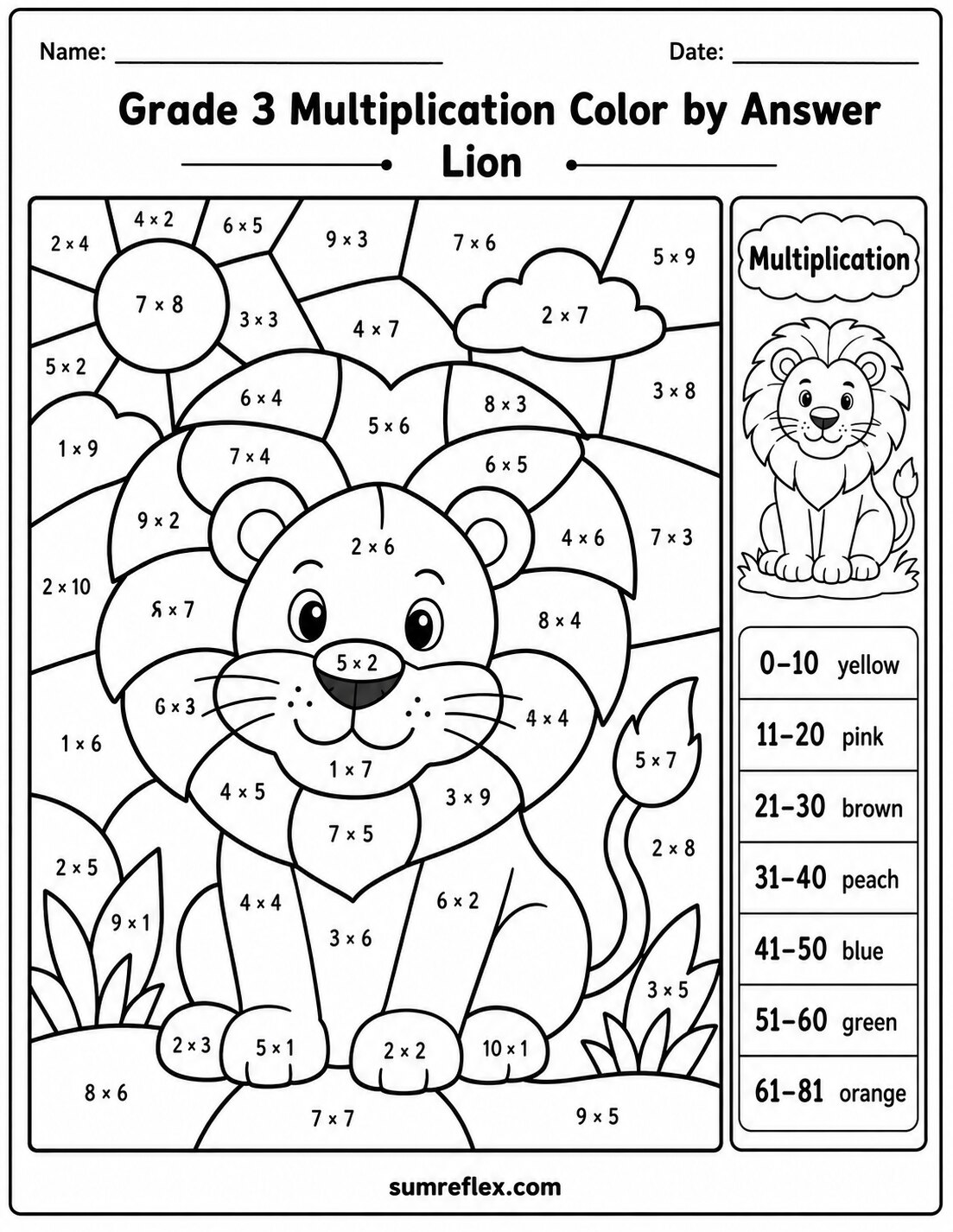
Color depends on the product
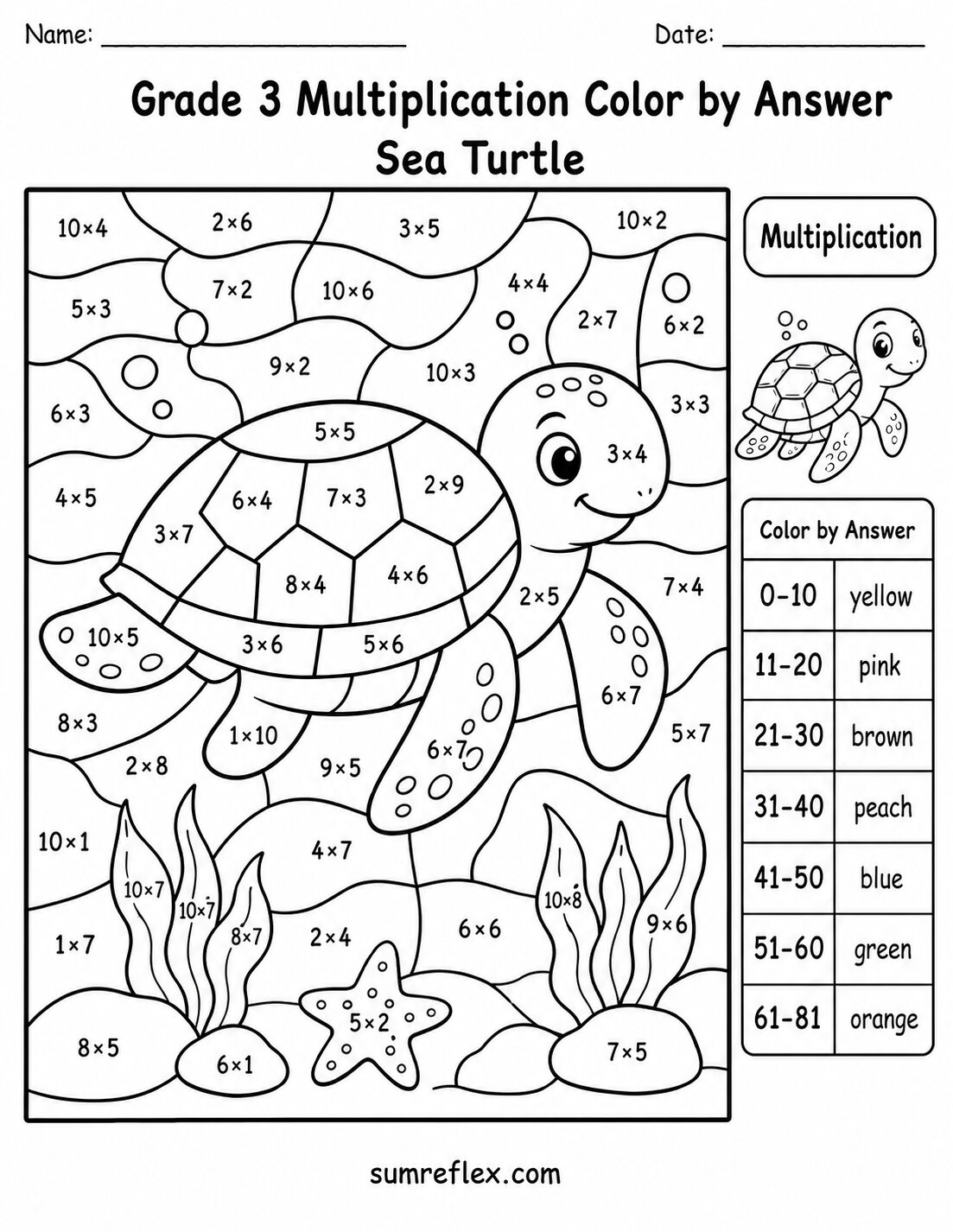
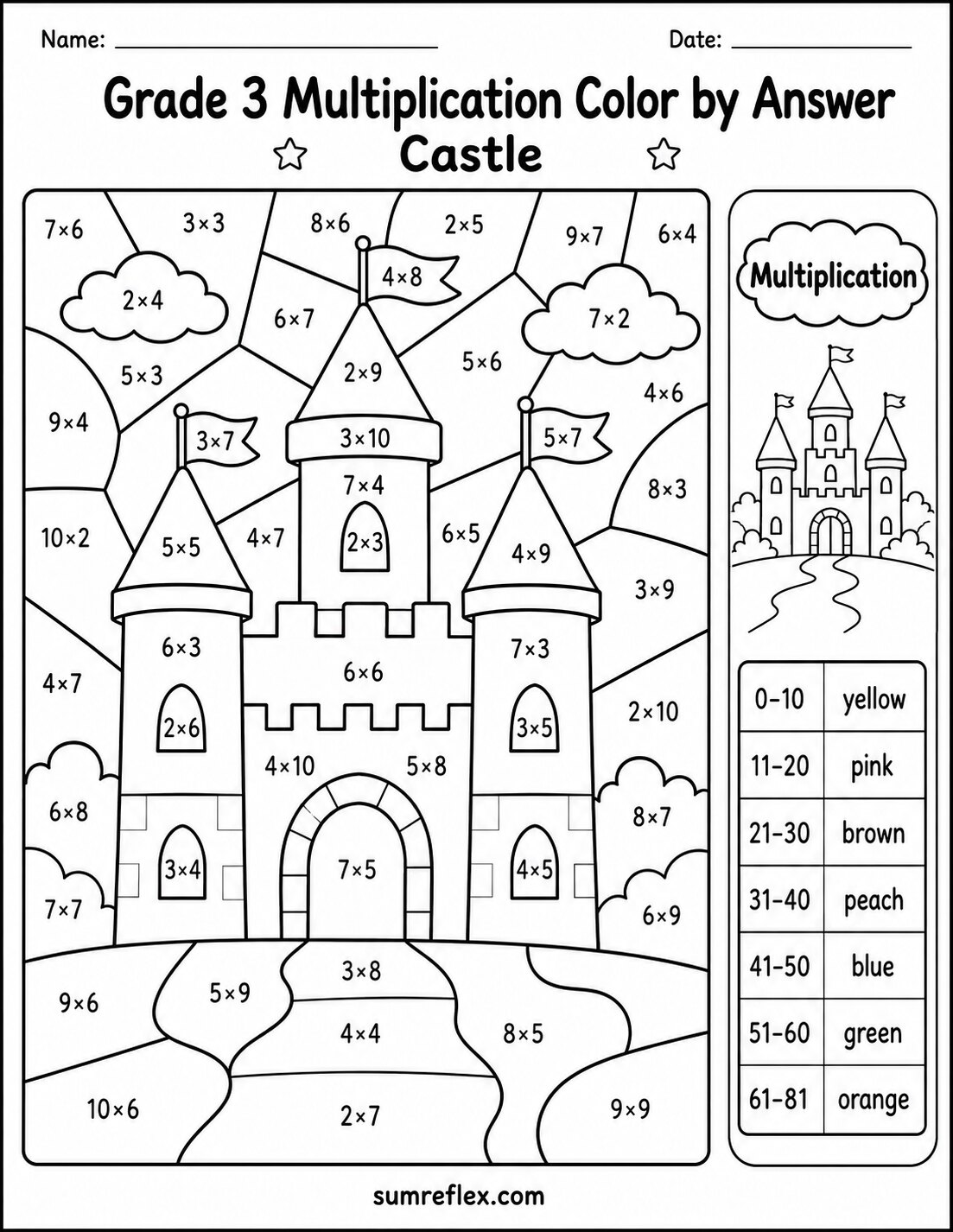
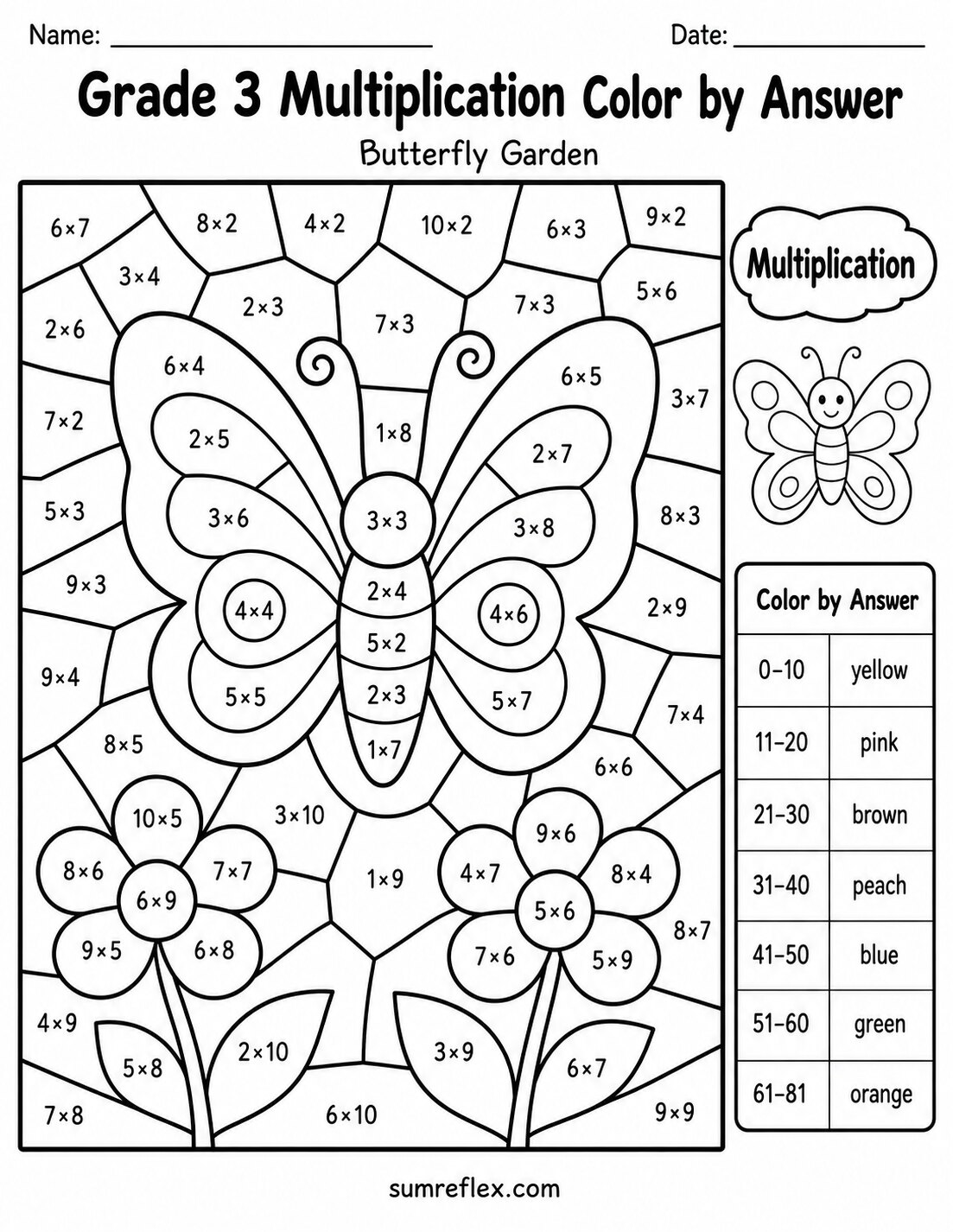
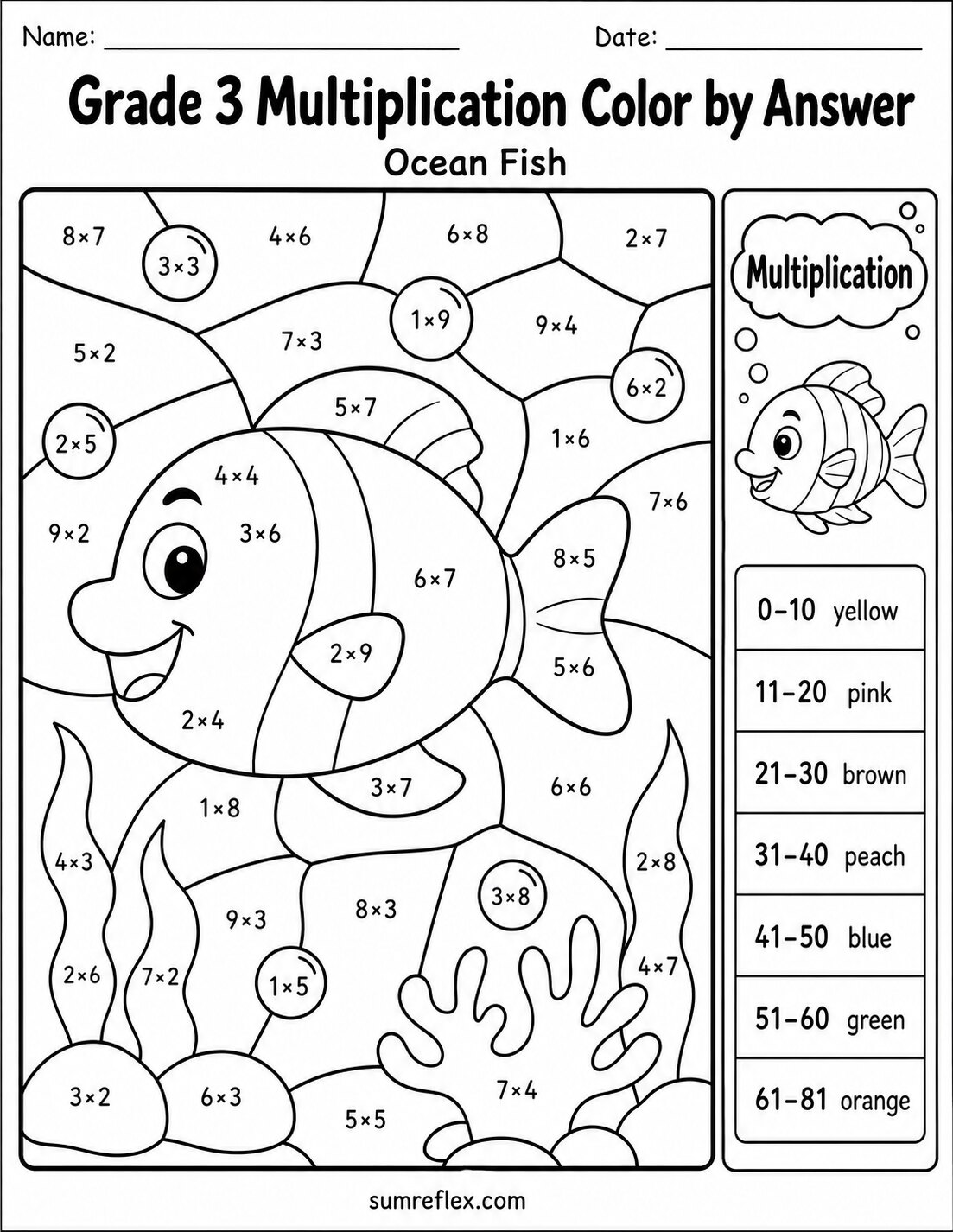
These worksheets are not ordinary coloring pages. Each section should be colored only after the multiplication fact has been solved and matched to the answer key. That extra step gives students a reason to slow down, check the product, and read the key accurately. The picture becomes a built-in response to the math work.
Pencil first keeps guessing down
The cleanest routine is to solve all multiplication facts lightly in pencil before opening the crayons. If a student colors while solving, it becomes easier to guess based on nearby sections. Pencil-first work separates calculation from coloring. After the products are checked, the coloring step becomes a reward and a review, not a substitute for solving.
Answer ranges need careful reading
Many color-by-answer pages use ranges instead of one exact product per color. That means students must decide whether a product belongs inside a range. If the answer is 36, the learner has to find the range that includes 36, not the color that looks most common. This adds useful reading precision to multiplication practice.
The picture can reveal mistakes
A strange-looking finished picture is often a sign that one or two products were matched to the wrong range. Instead of immediately correcting the color, ask the student to revisit the multiplication facts in that area. This makes the finished image useful feedback. The worksheet quietly encourages students to audit their own work.
Use themes as short review stations
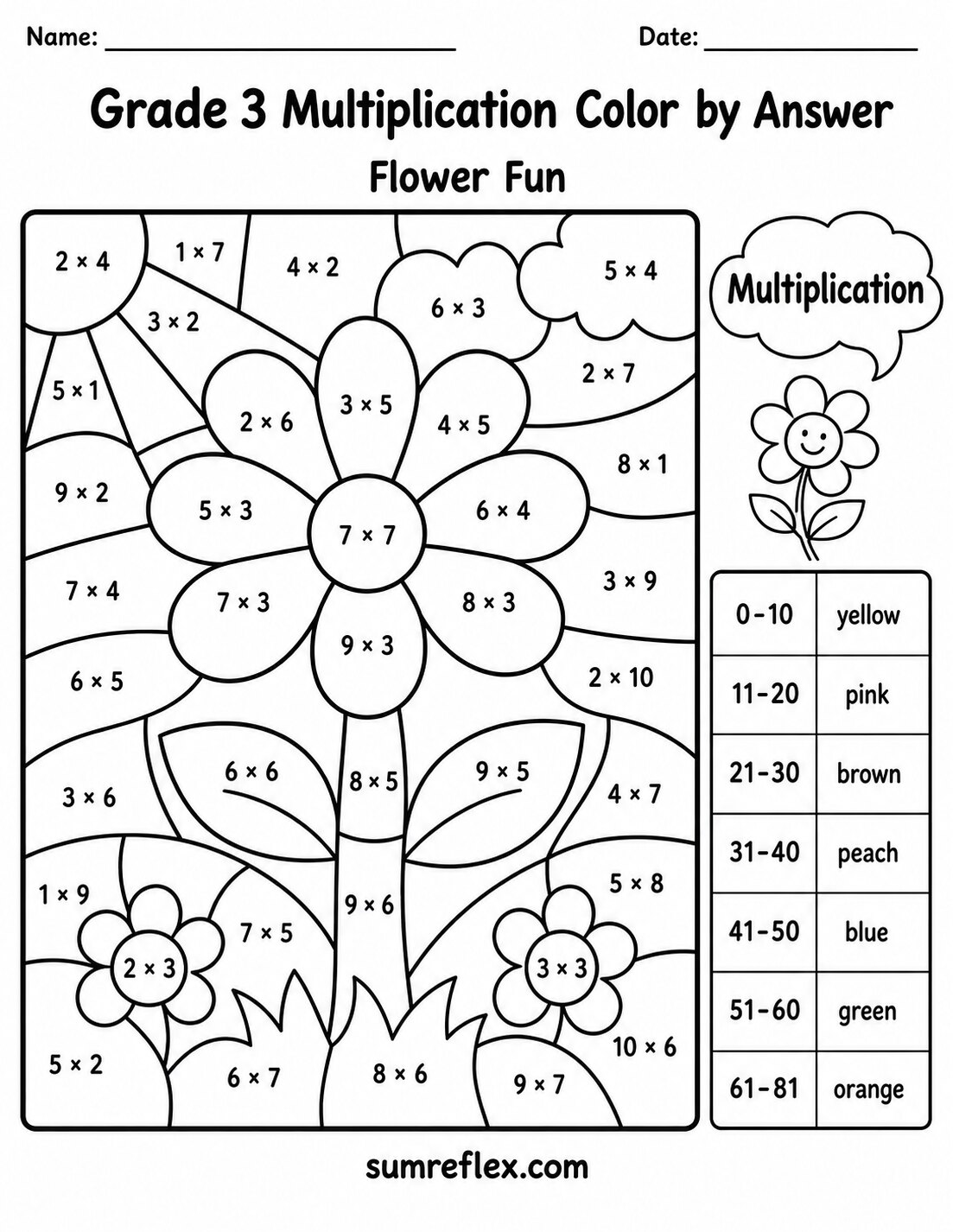
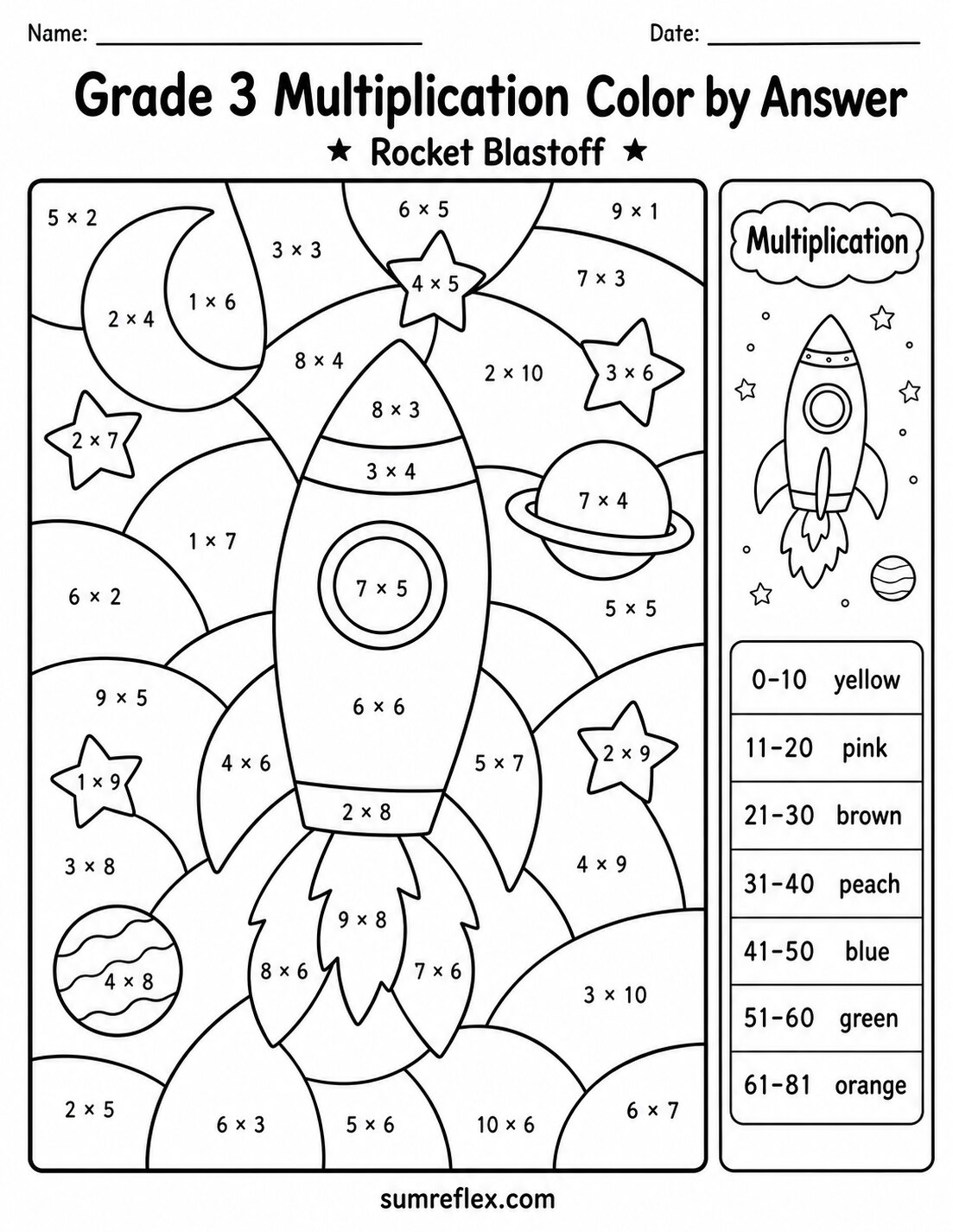
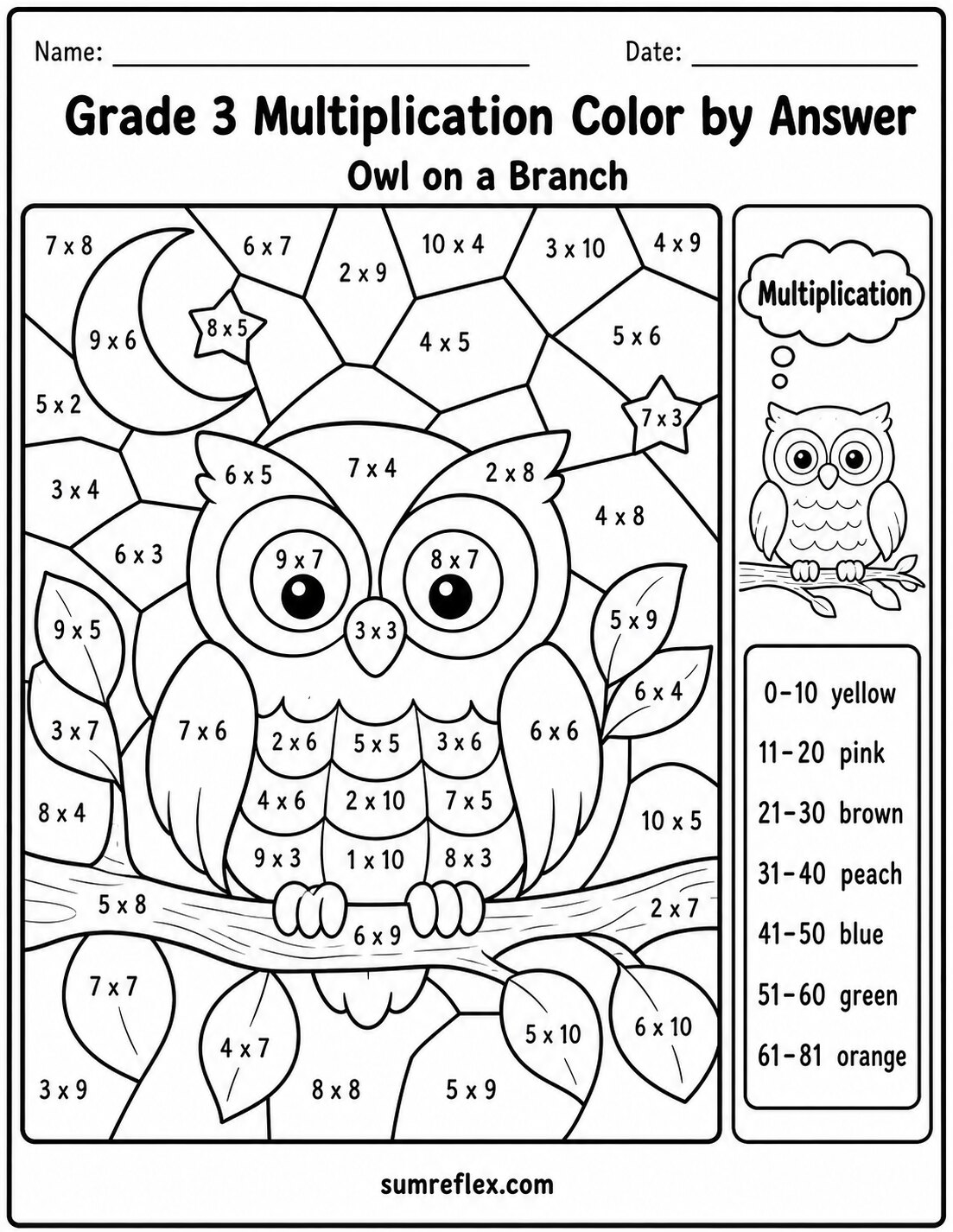
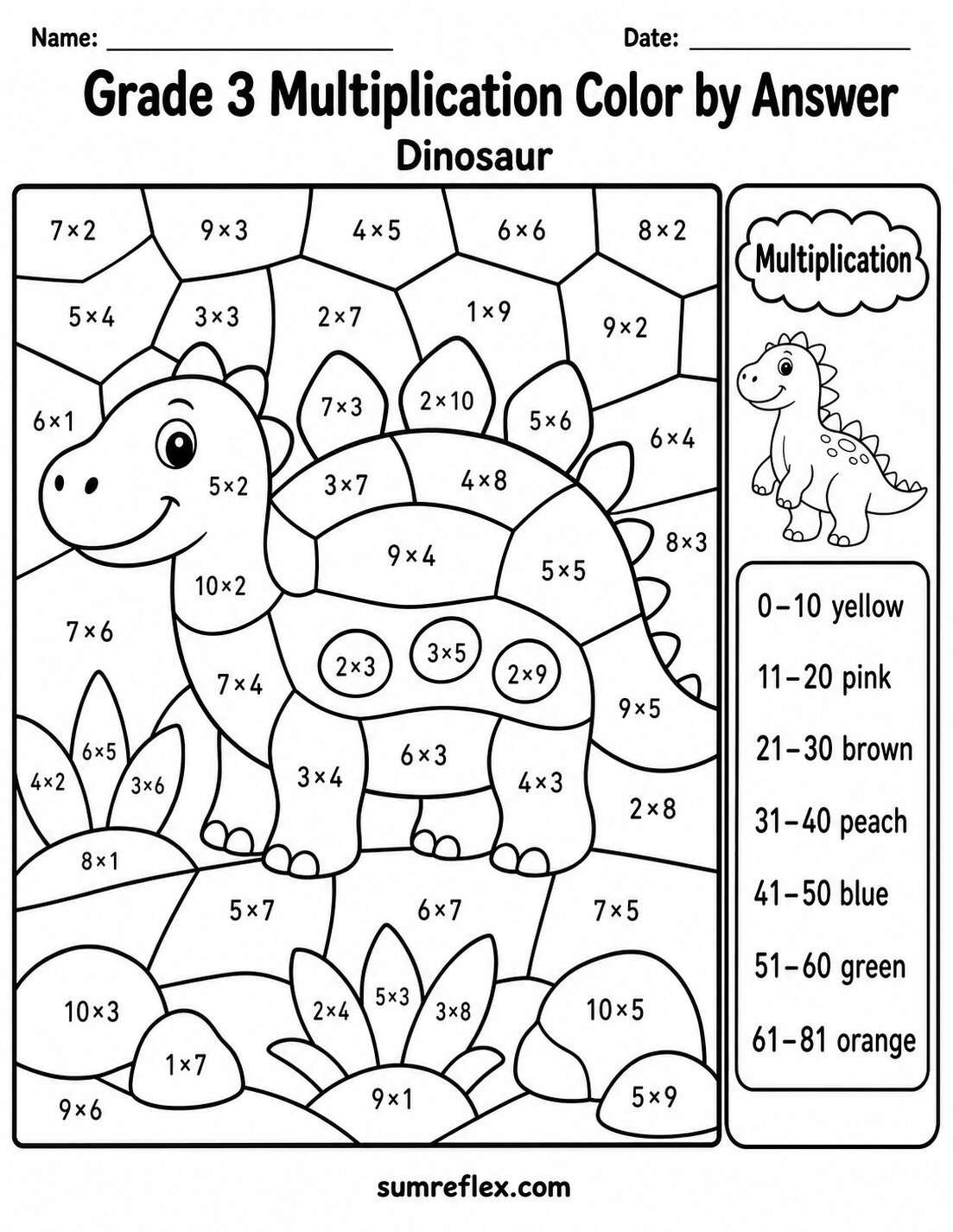
The sea turtle, castle, butterfly garden, ocean fish, flower, rocket, owl, dinosaur, ice cream, and lion pages can be rotated across several days. Because the picture changes, students can revisit multiplication facts without feeling like the exact same page is being repeated. The math stays consistent while the visual task changes.
Good for fluency, not first teaching
These pages work best after students already understand multiplication as equal groups, arrays, or skip counting. A color-by-answer worksheet is a practice format, not the first explanation of multiplication. If a student cannot explain a fact at all, use arrays or counters first, then return to coloring once the fact has meaning.
How to review without spoiling the picture
When checking the page, choose three sections before looking at the whole drawing. Ask the student to read the fact, name the product, and point to the matching range. This keeps review focused on the math. After that, the finished picture can be checked for obvious color mismatches or skipped sections.
When to print another coloring page
Print a second theme when the student made only a few fact errors and stayed focused through the page. If many products were guessed, switch to a smaller fact set before returning to color-by-answer work. The best use of these sheets is steady review, not covering confusion with a more decorative activity.
Color keys build attention to ranges
The color key asks for more than multiplication recall. Students must read boundaries carefully and decide where a product belongs. This is useful for math habits beyond the page because many later tasks require reading a scale, table, legend, or interval. A correct product still needs to be placed in the correct range.
Separate art time from answer checking
If the goal is fact practice, check the math before the full coloring work begins. A quick parent or teacher scan can catch products that would send the wrong color across the picture. After that check, students can finish the art portion more independently. This keeps the worksheet from rewarding a wrong fact with a permanent color choice.
Use one missed section as a mini lesson
When a section is colored incorrectly, pick that one section and rebuild the fact. Ask what multiplication problem was written, what product was found, and which range should include it. This small review is enough for many students. Recoloring the entire page is rarely necessary; understanding the missed fact matters more than making the picture perfect.