



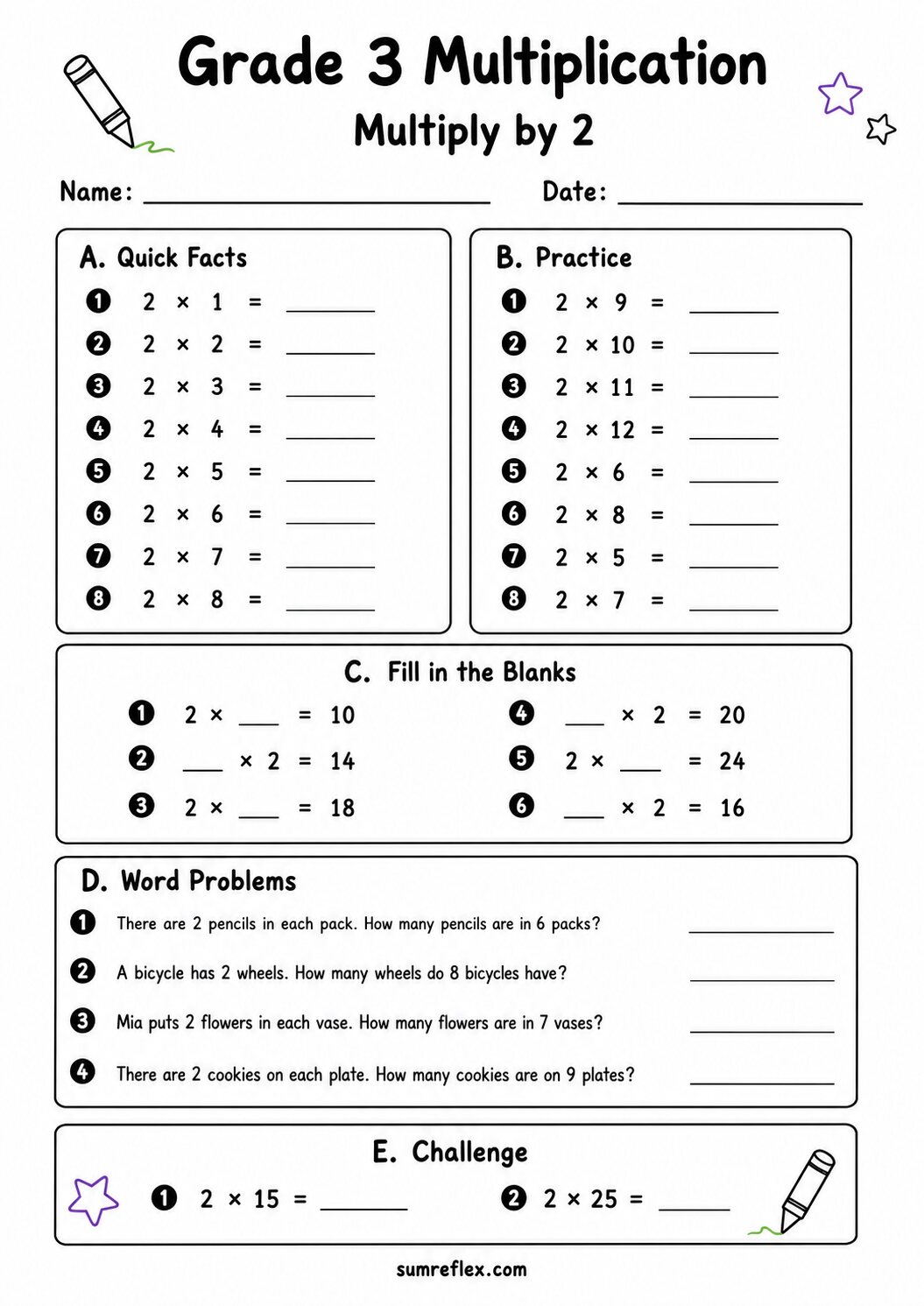
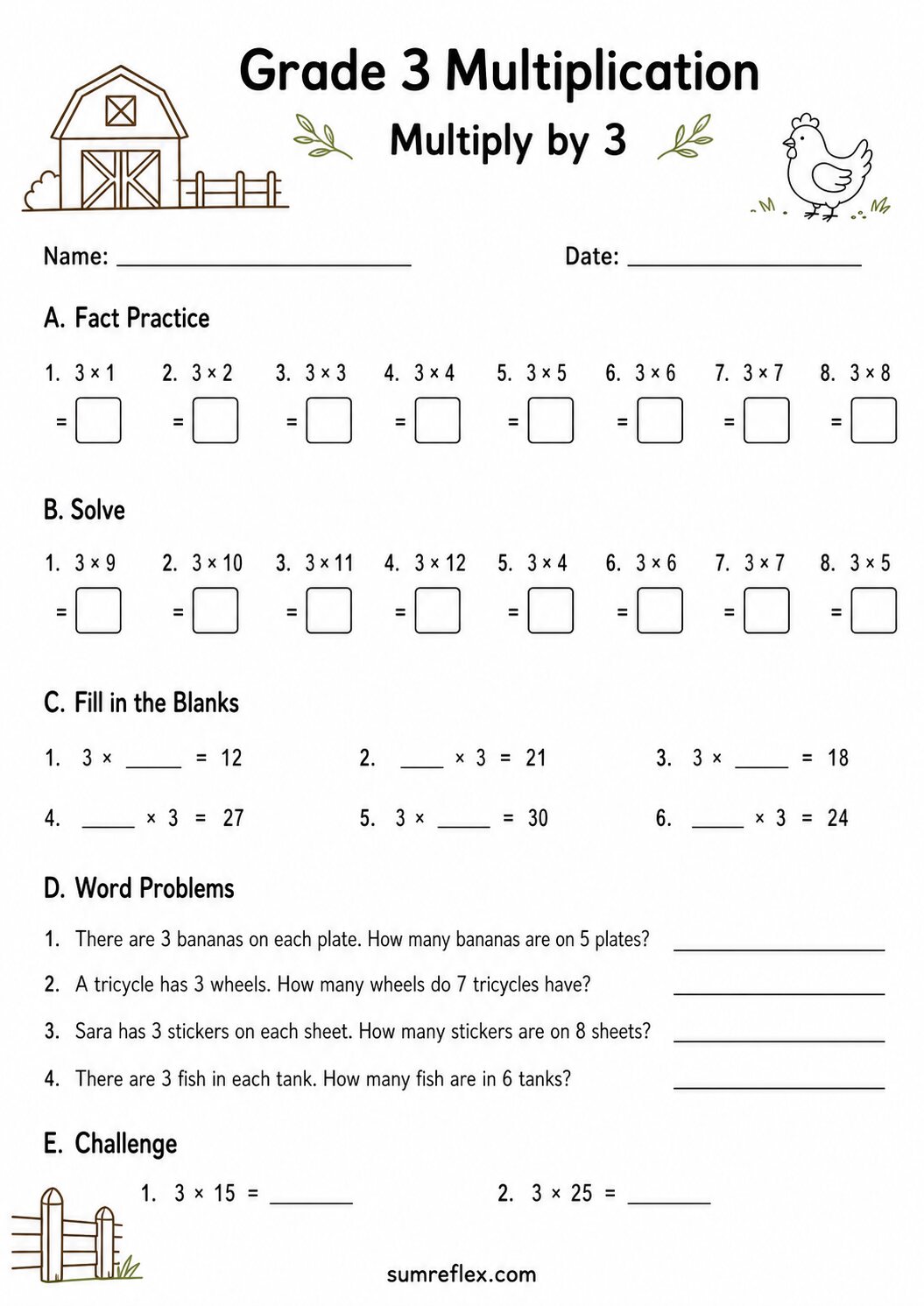
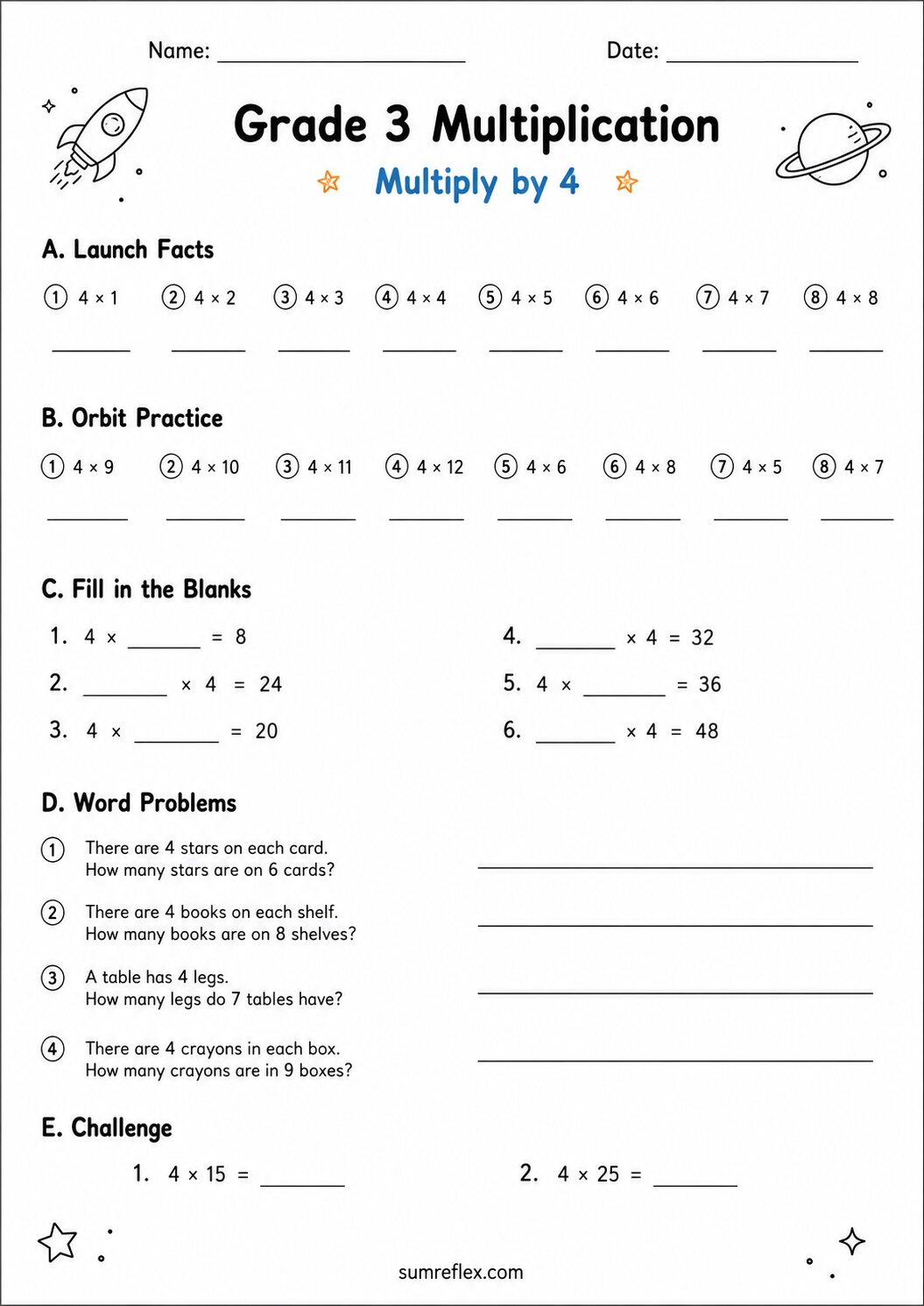
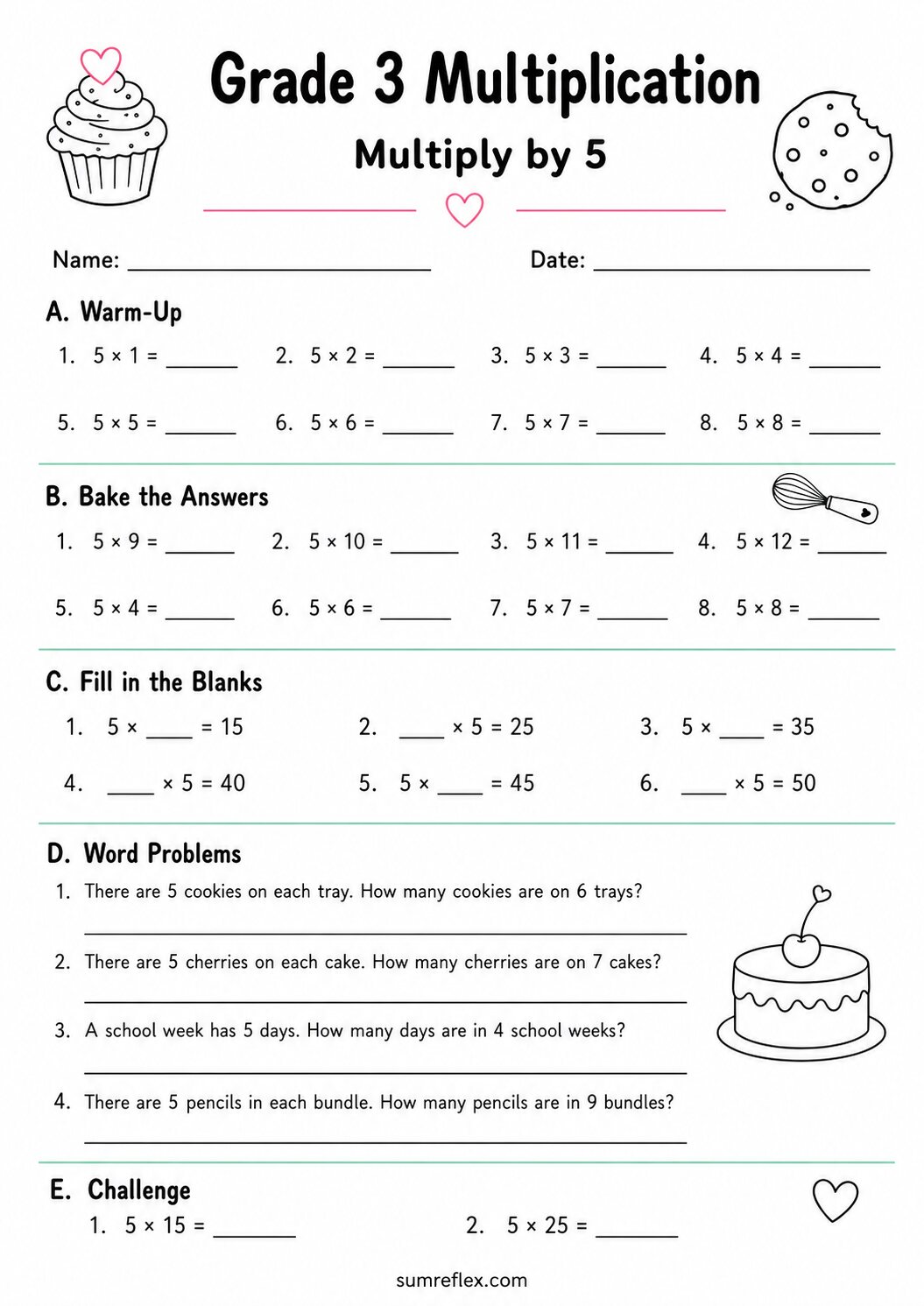
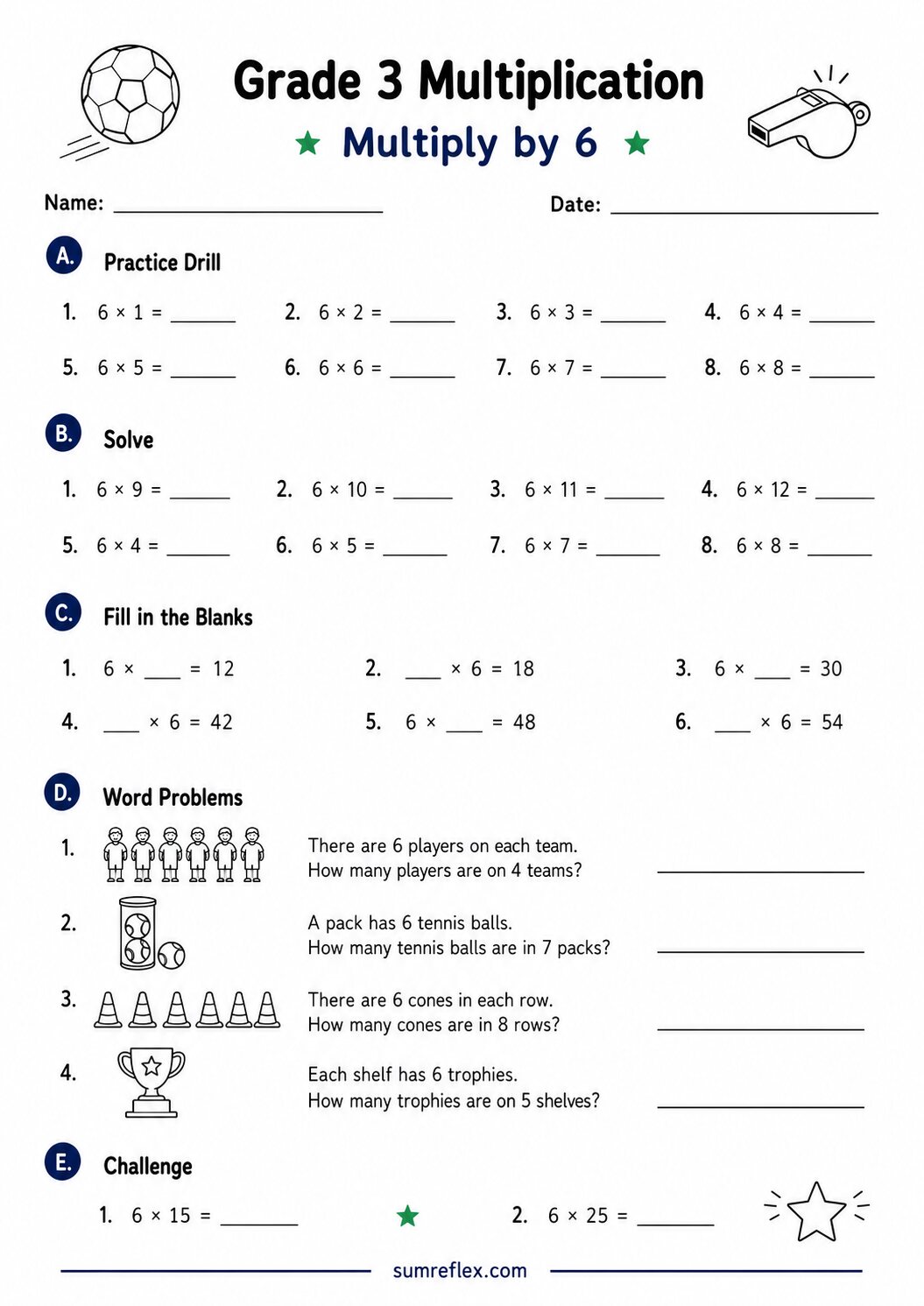
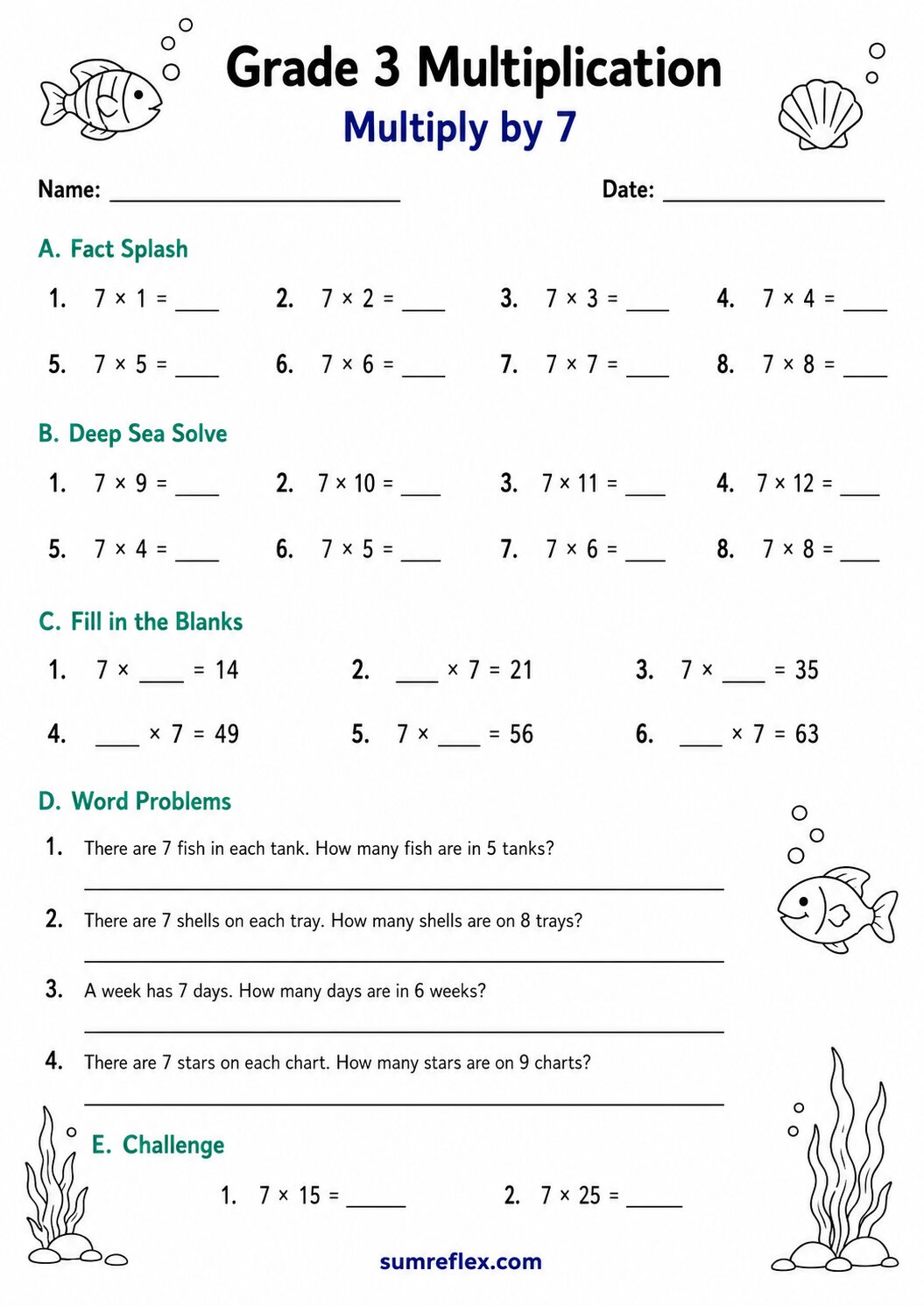
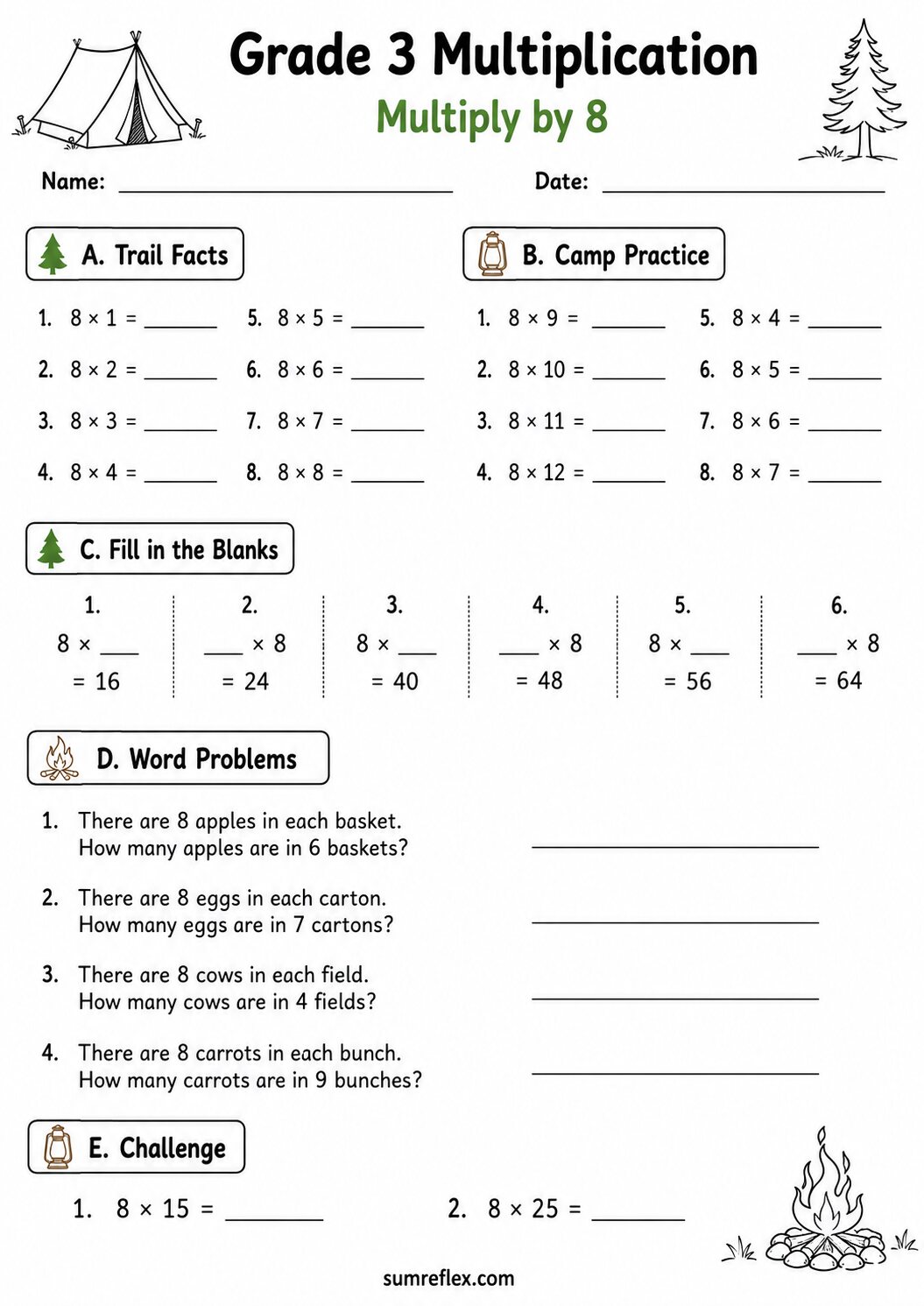
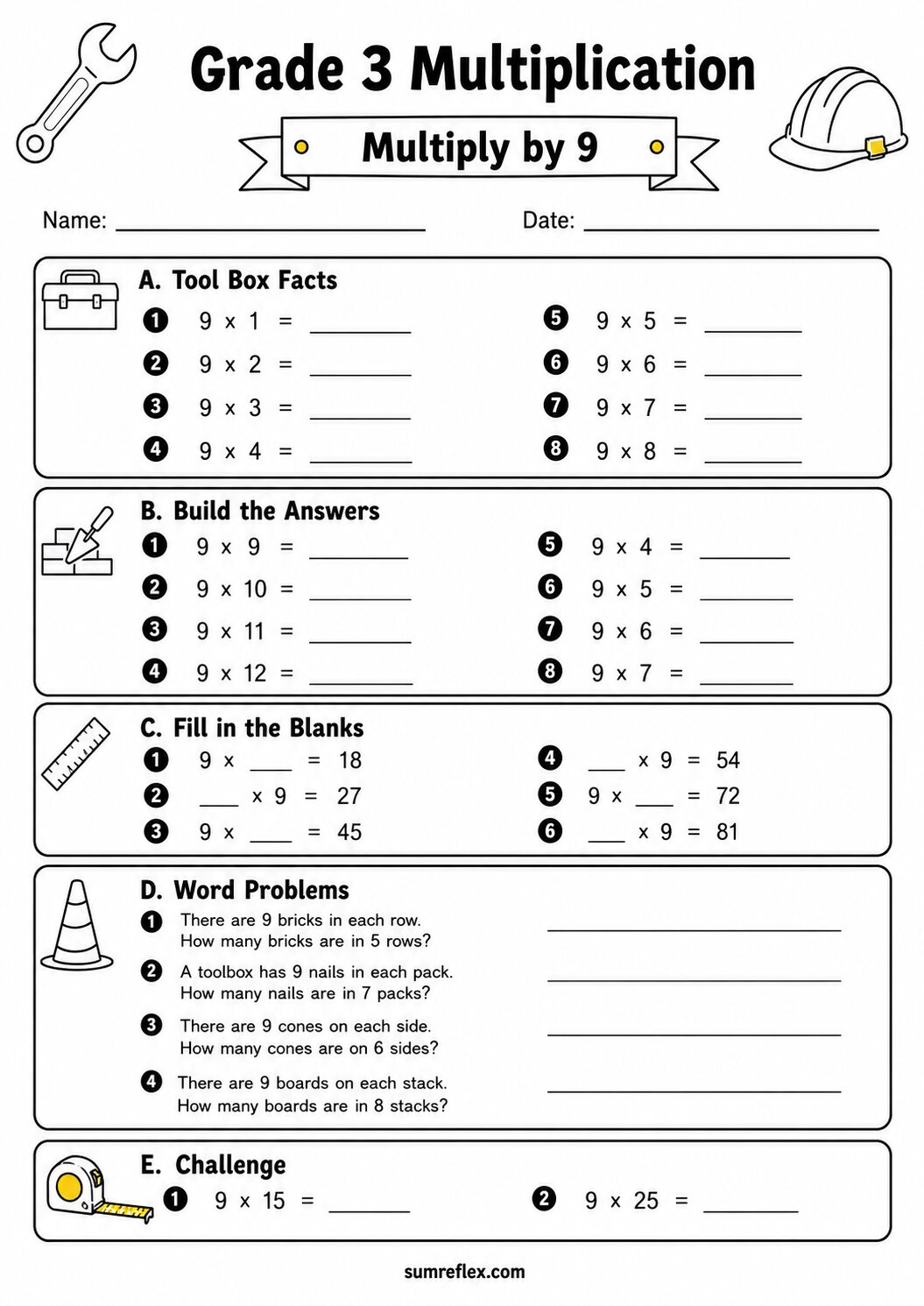
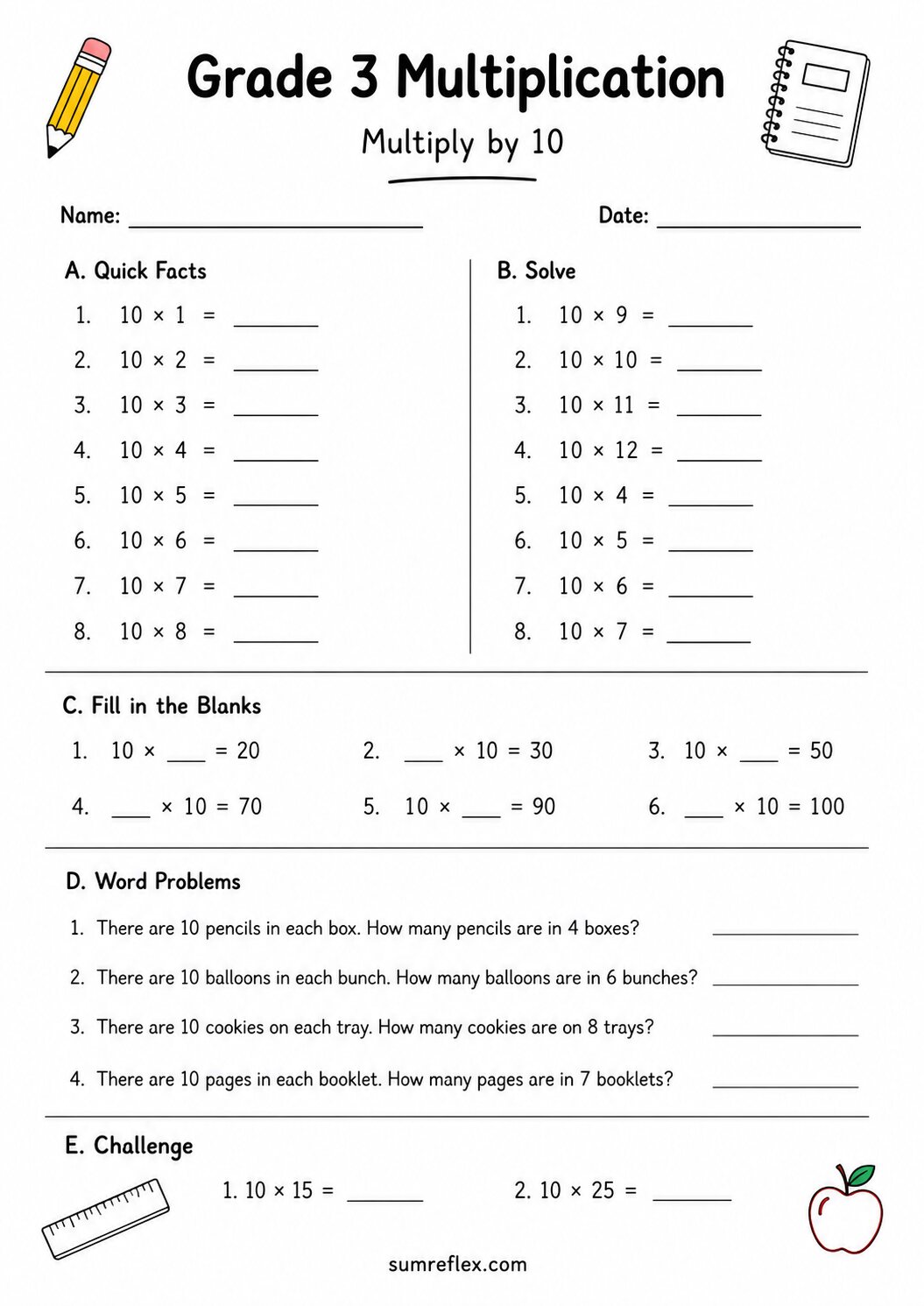
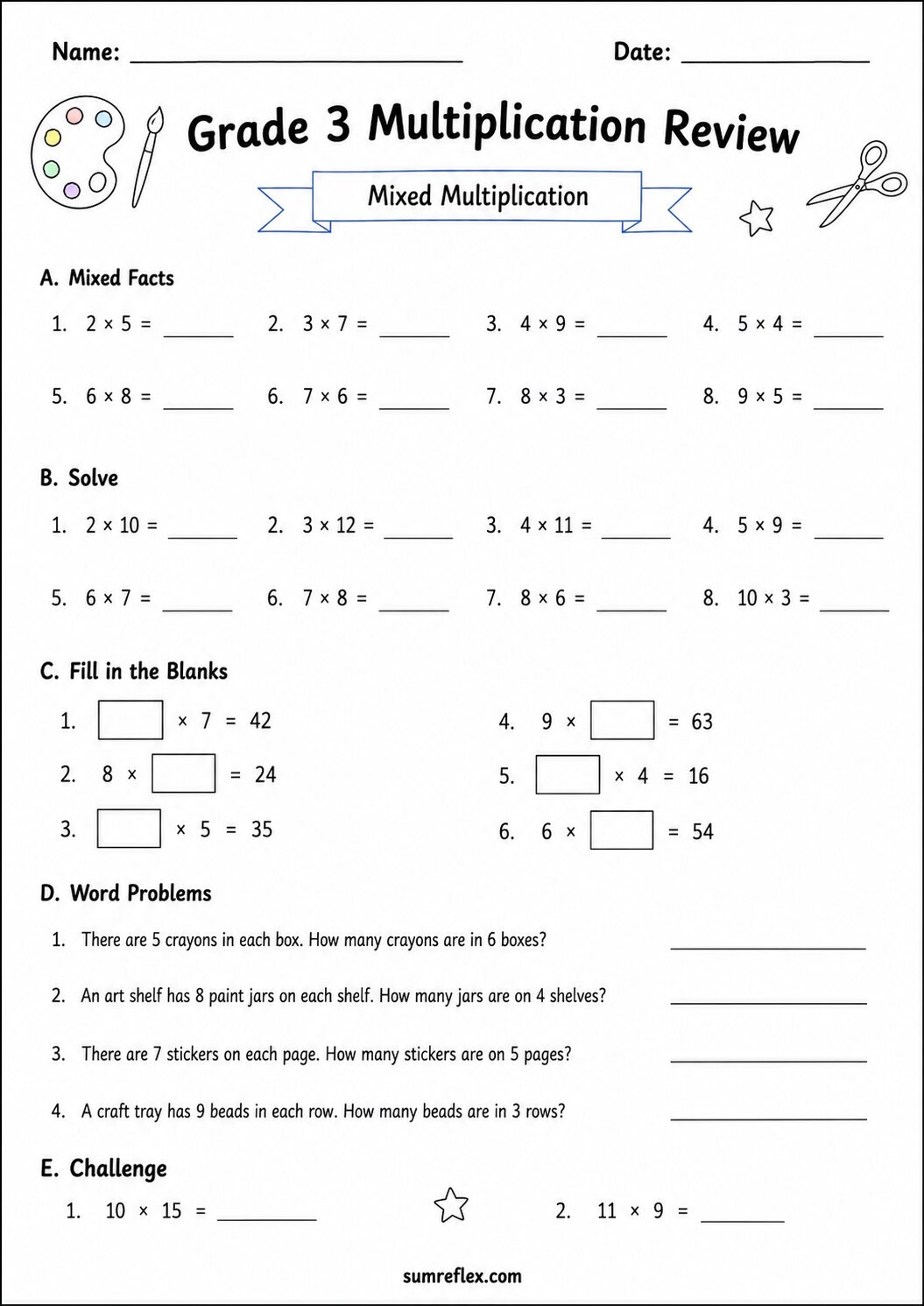
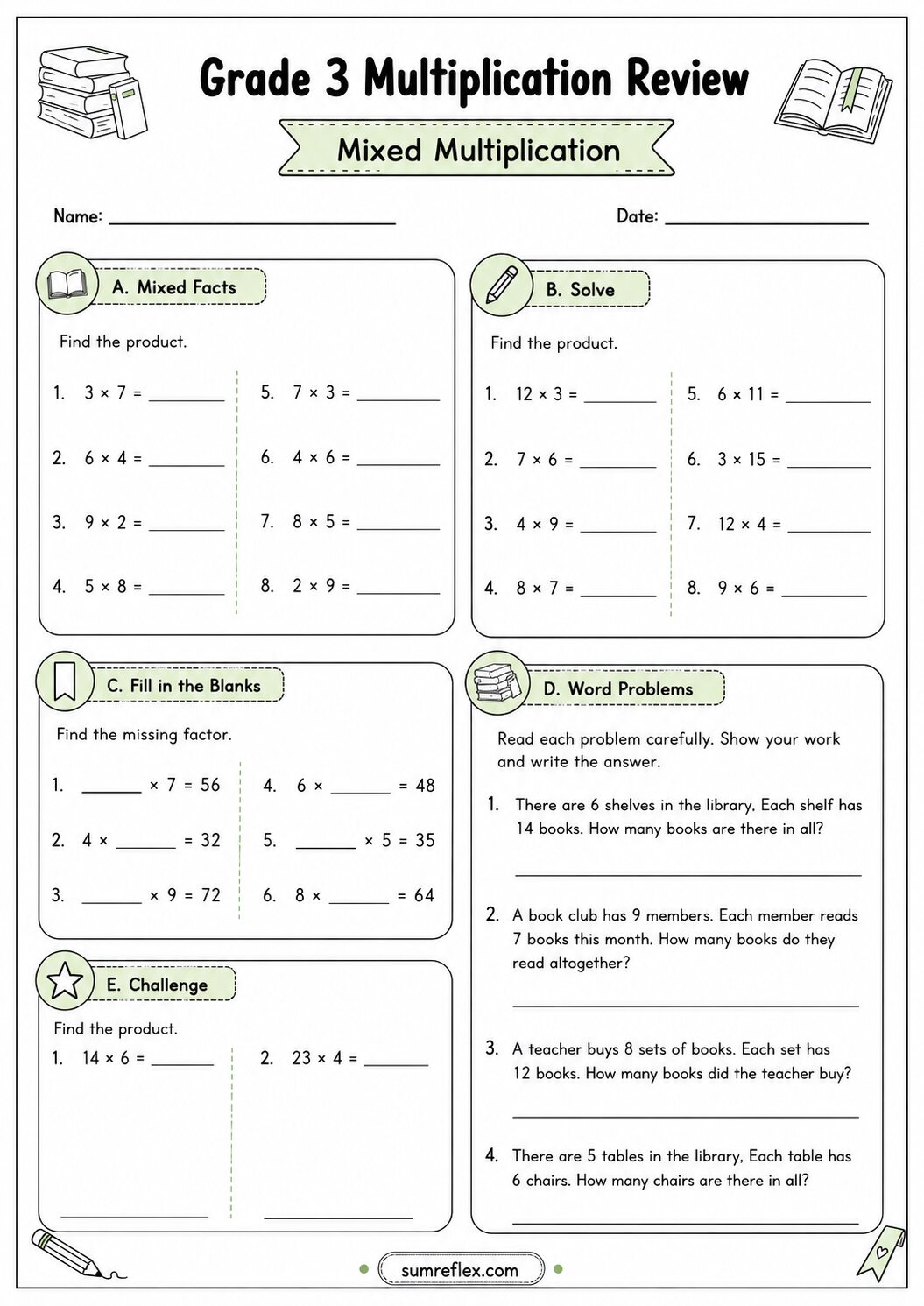
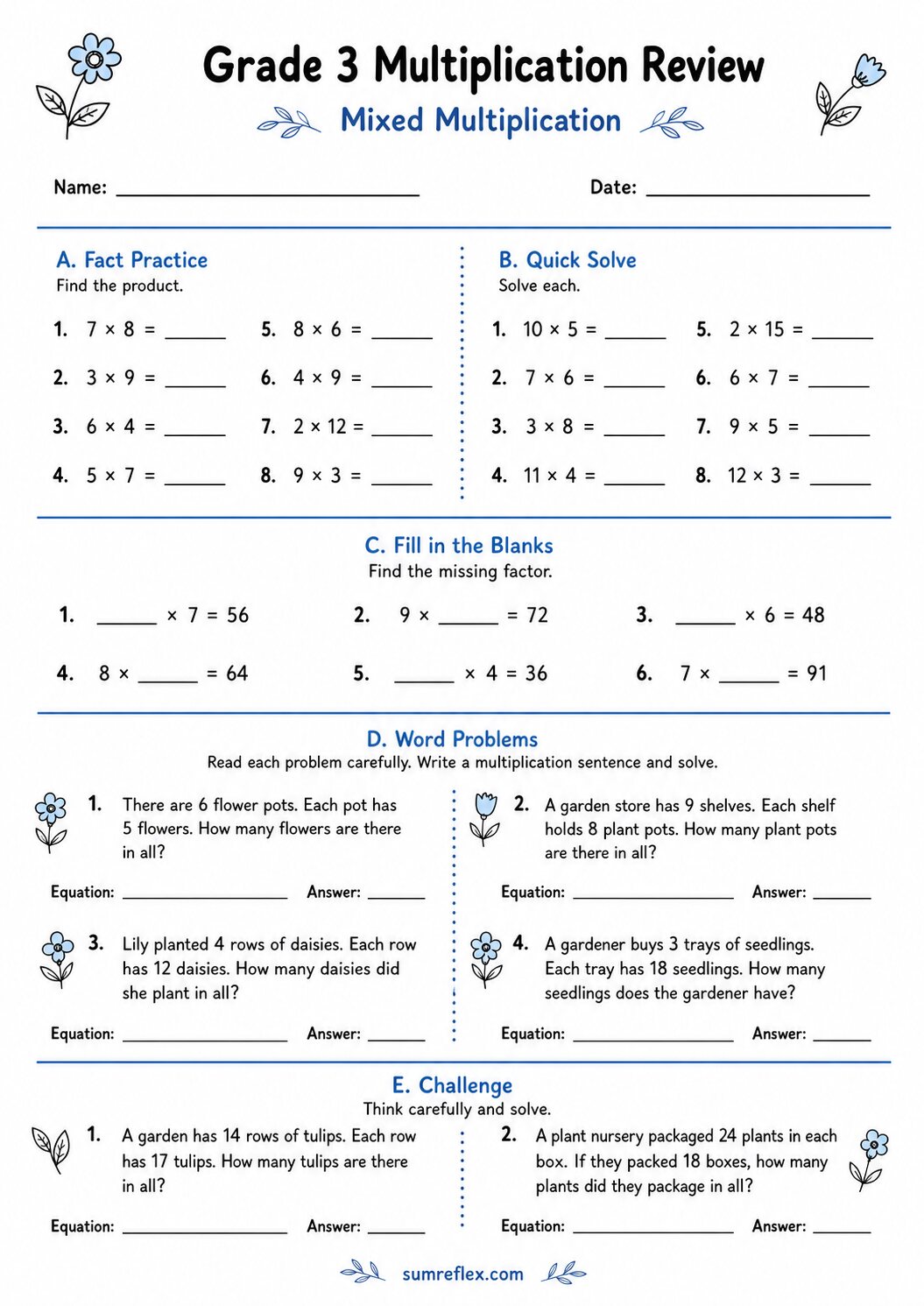
Single tables give the first foothold
The table-specific worksheets are useful because they narrow the mental load. A student working on the 4 table can notice doubles, repeated groups, and product patterns without also worrying about every other table. This does not mean mixed practice should be avoided forever. It means the first pass through a table should give the learner enough space to see how that table behaves.
Each table has its own memory hooks
The 2 table leans on doubling, the 5 table leans on skip counting by fives, the 9 table has digit patterns, and the 10 table connects strongly to place value. Talk about those hooks before the worksheet begins. Students remember facts better when the table has a structure instead of feeling like twenty unrelated answers.
Missing factors change the direction
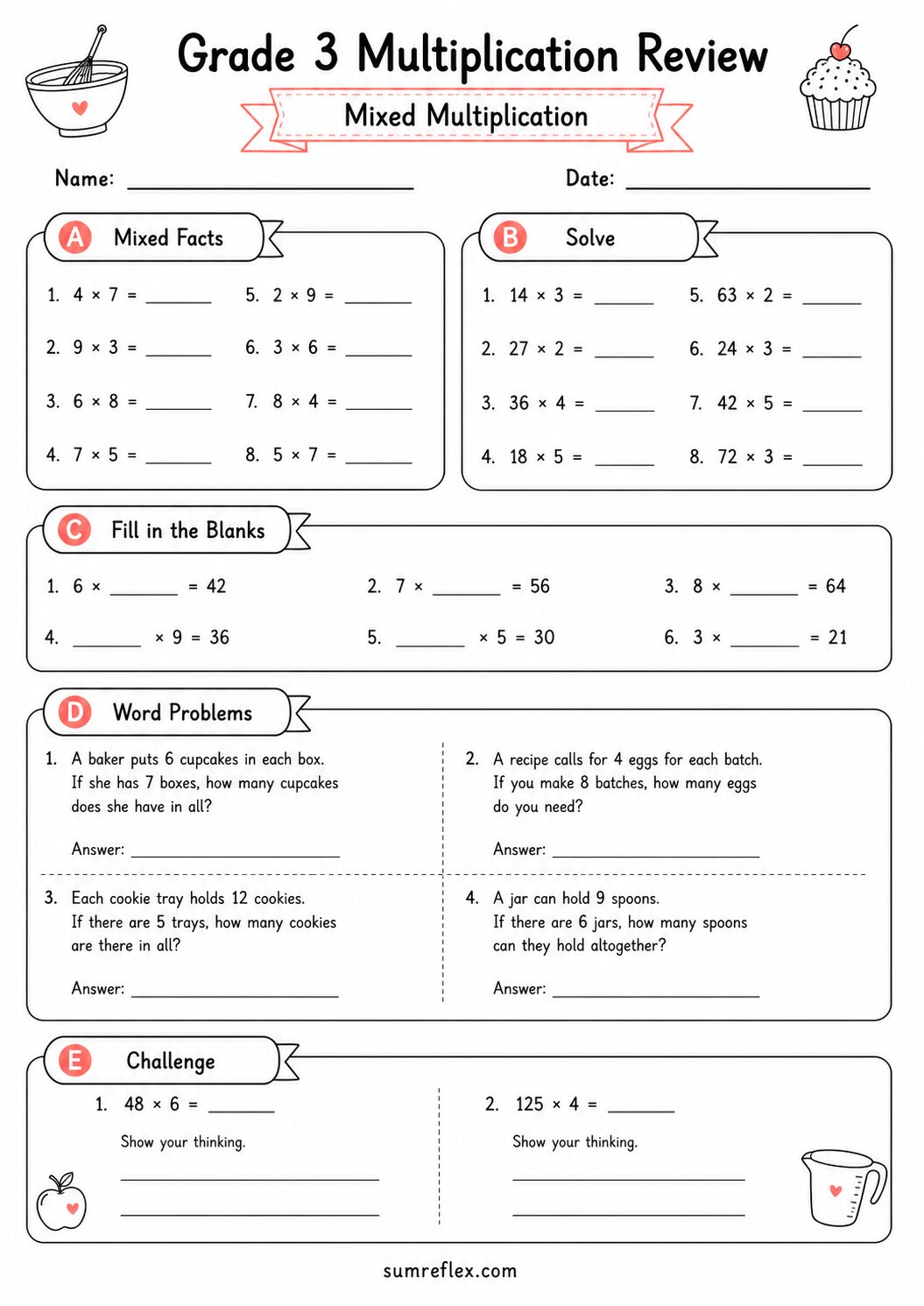
A missing-factor question asks students to think backward. If the page says 6 x blank = 42, the child has to connect the product to the factor pair. That is different from simply seeing 6 x 7 and writing 42. Missing-factor work should be reviewed carefully because it shows whether facts are flexible or only memorized in one direction.
Word problems reveal whether the fact fits
A student may know a product but still miss the operation in a sentence. In word problems, ask the learner to identify the number of groups and the number in each group before multiplying. This keeps multiplication tied to meaning. It also prevents students from grabbing two numbers from the sentence and combining them without reading the situation.
Mixed review should be earned
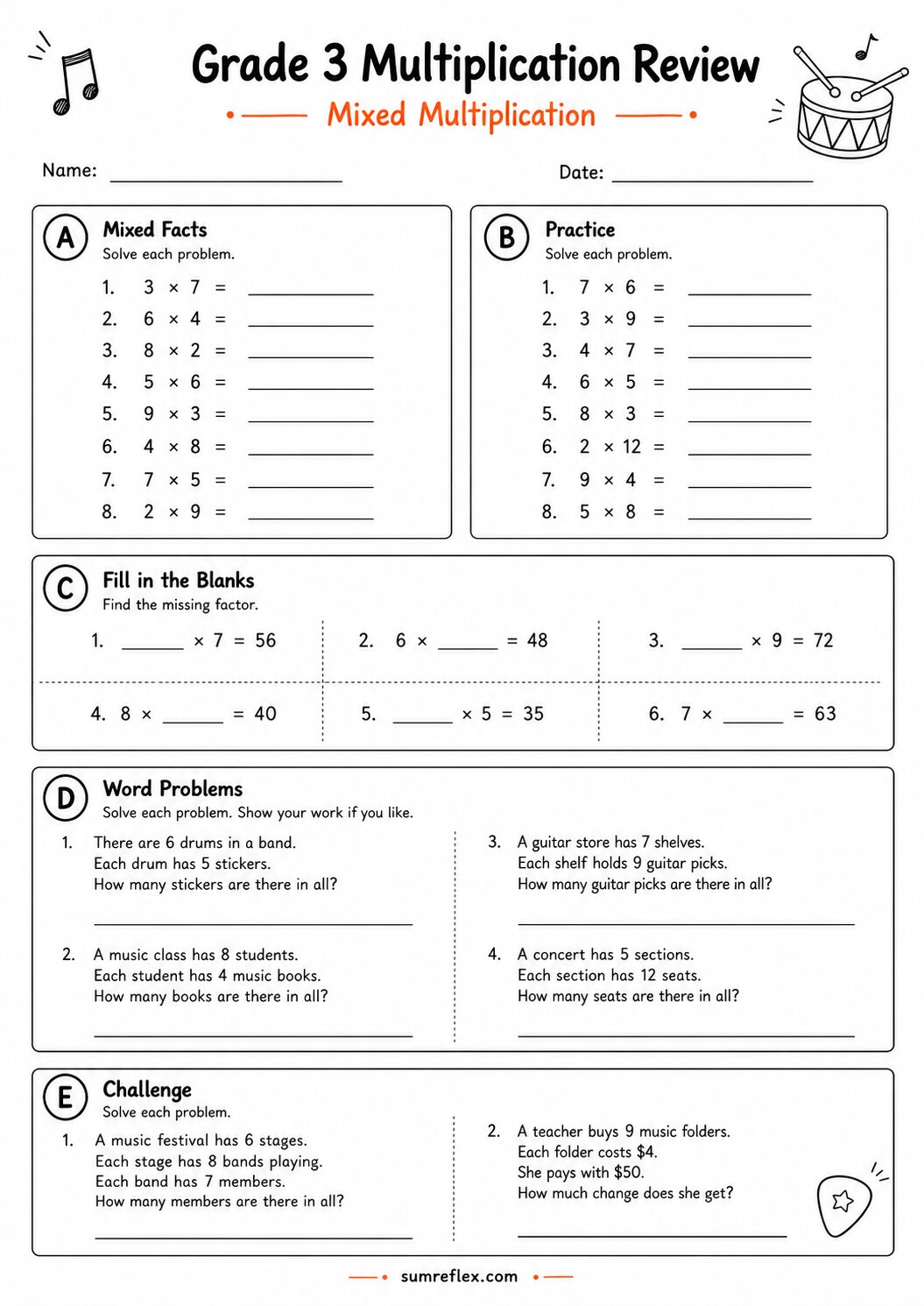
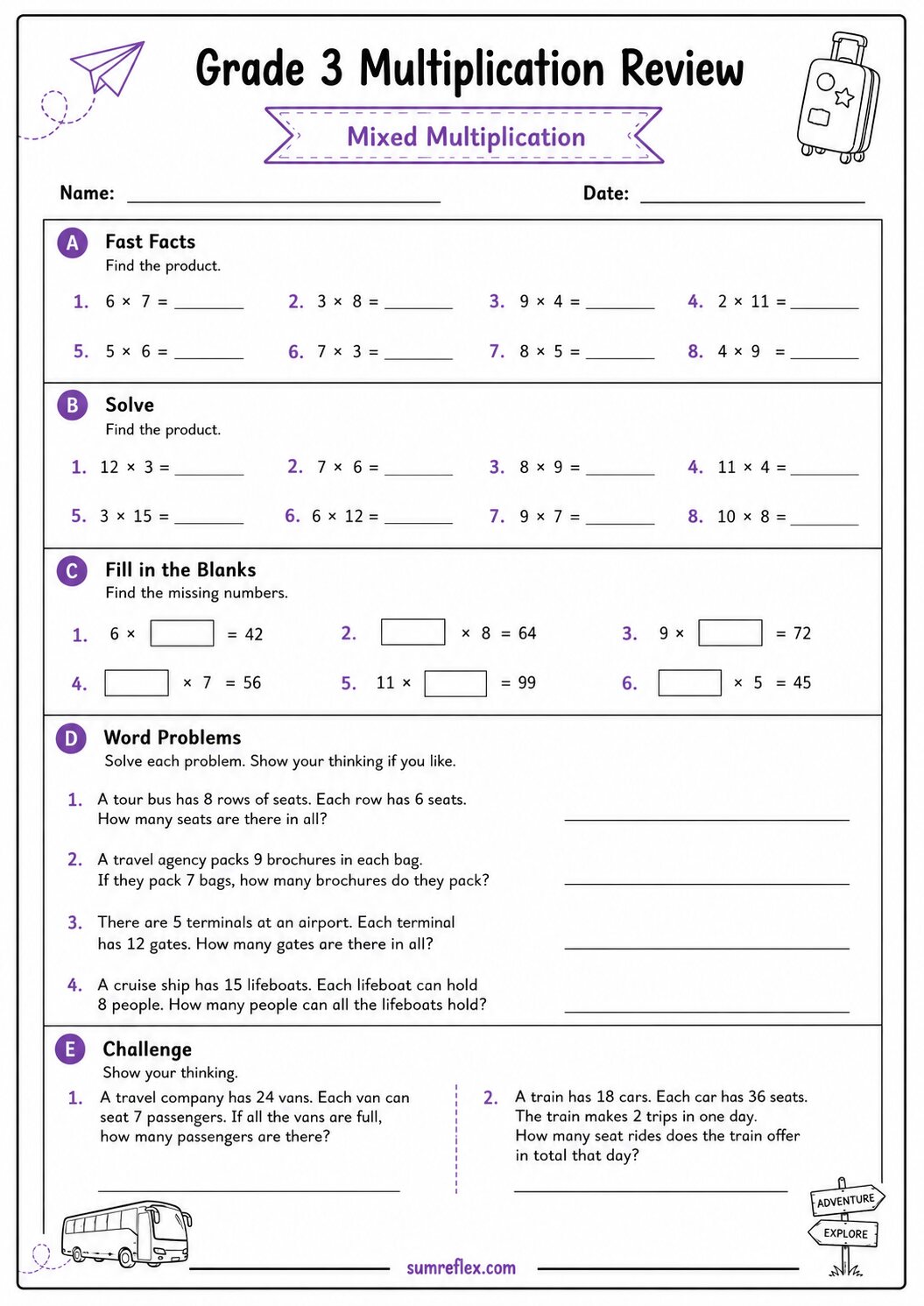
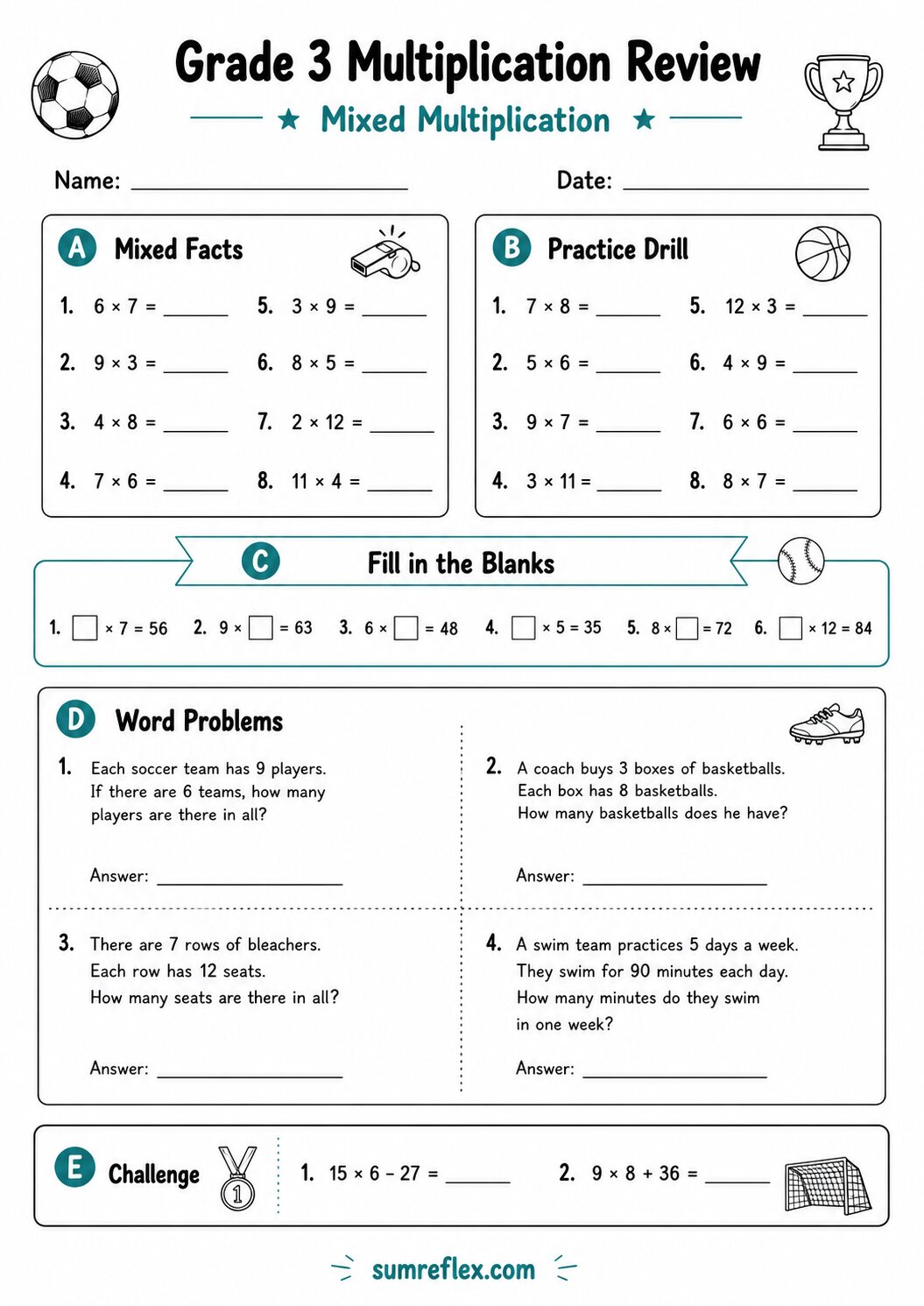
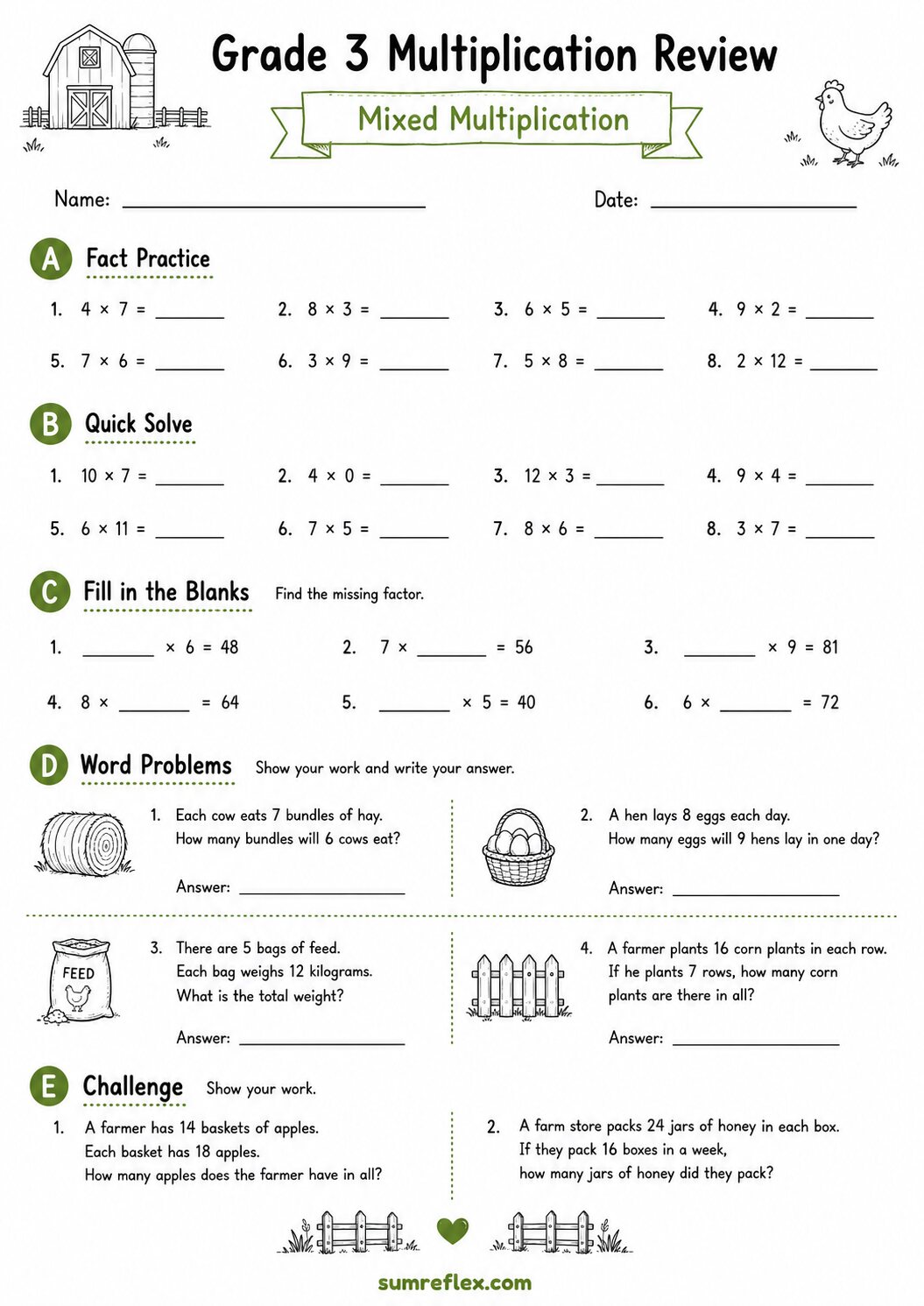
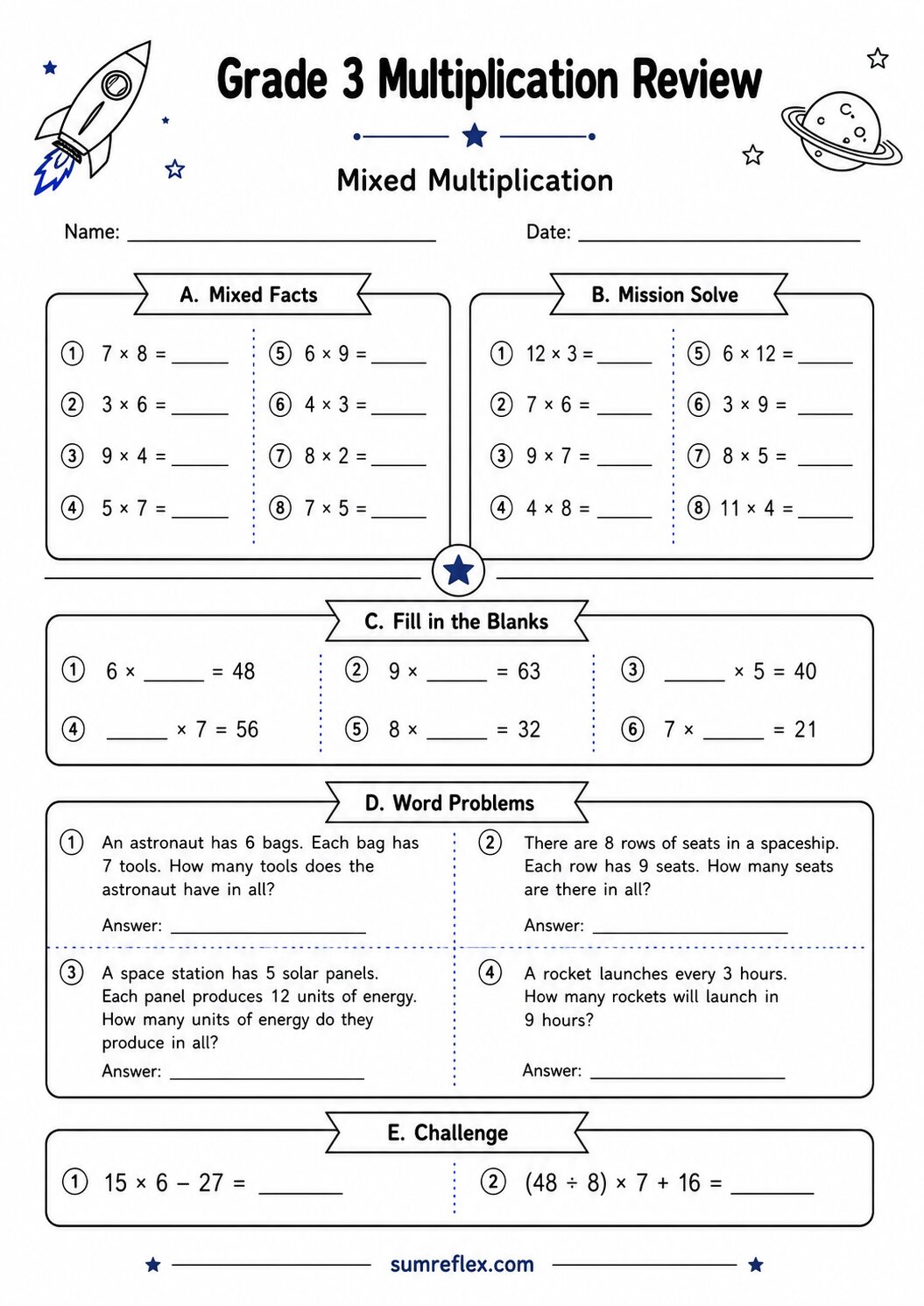
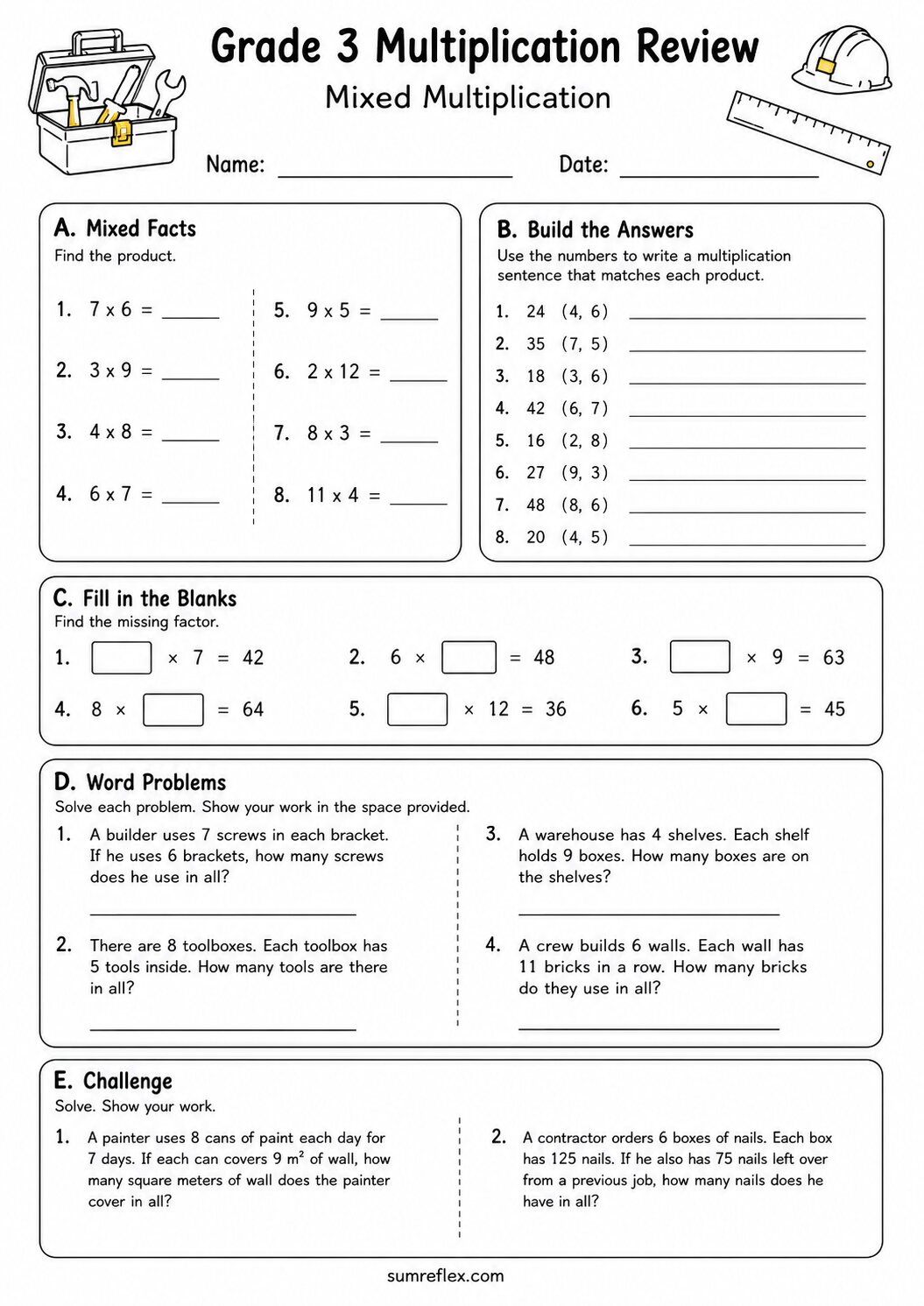
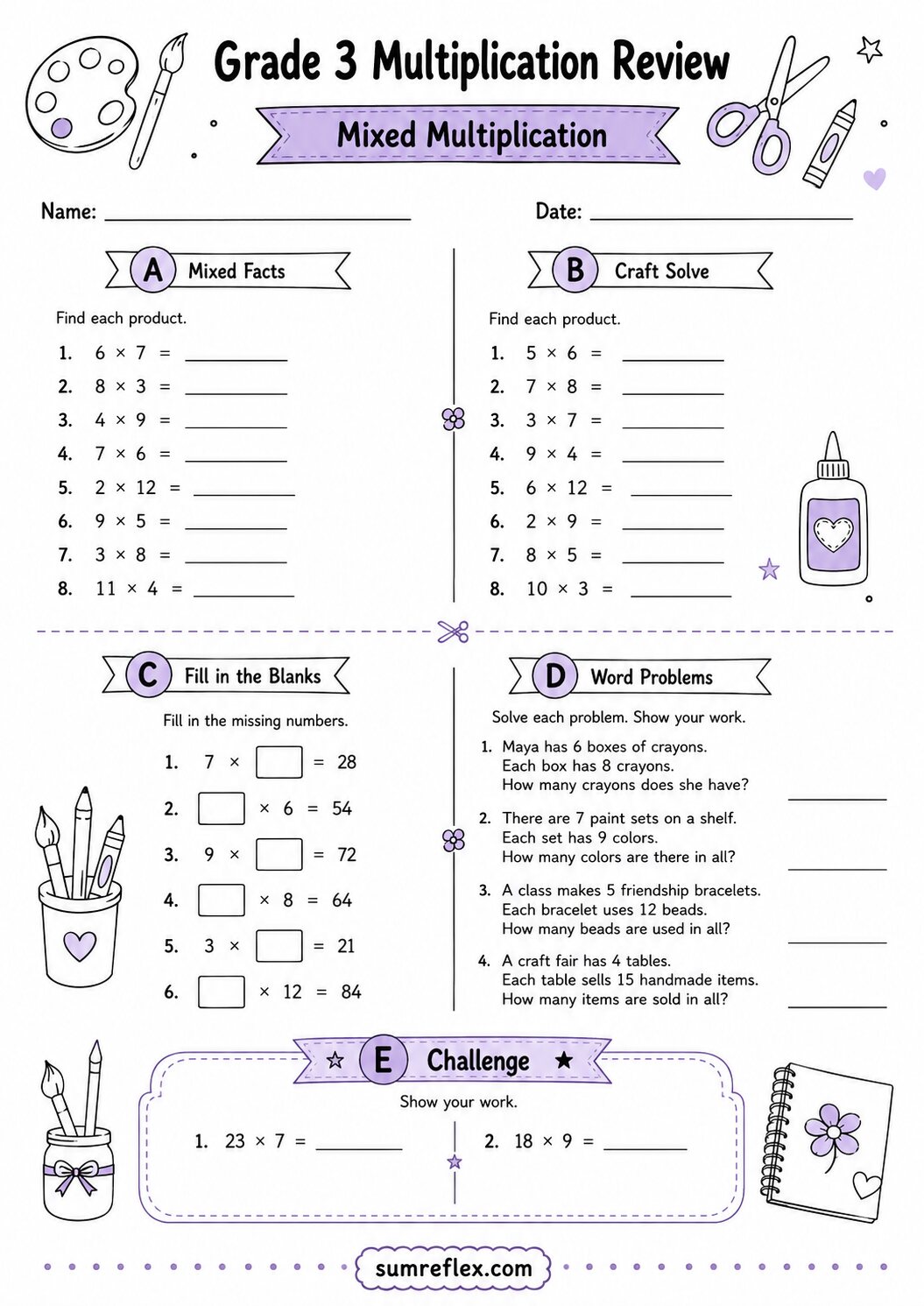
The mixed review sheets are most useful after several single-table pages feel comfortable. They ask students to switch tables, complete blanks, read story prompts, and answer challenge questions. If mixed review produces many guesses, return to the table that caused the most errors. That targeted move is better than repeating a broad review too soon.
Fact speed comes after trust
Fast recall is useful, but speed should not be the first goal. Students need to trust the facts, notice patterns, and understand why products make sense. Once answers are accurate and explainable, short timed rounds can help. Before that point, timing often rewards guessing and makes careful students feel rushed.
Use challenge prompts as a final read
The challenge area should be treated as a final check, not the main lesson. Let students solve the main facts, review one mistake, and then try the challenge. If the challenge is correct, the table or mixed set is probably settling. If it is wrong, ask what part of the problem changed from the regular fact work.
What to do with repeated errors
When the same product is missed more than once, write that fact on a small card and connect it to a strategy. For 8 x 7, a learner might use 7 x 7 plus one more 7. For 6 x 9, they might use 6 x 10 minus 6. The worksheet shows the error, but the correction should give the student a tool.
Choosing between review sets
The first mixed review is a softer landing. Later review pages ask for stronger switching among facts and formats. Choose the page based on the student, not the file order alone. A learner who just finished the 2, 5, and 10 tables may need early mixed review, while a learner preparing for broader fluency may be ready for the later sets.
Keep the session short enough to matter
Multiplication practice works best in focused rounds. One single-table page plus a short correction can be plenty. If students are still attentive, add a few oral facts or one word problem discussion. Pushing through too many pages often lowers accuracy and hides which facts actually need attention.