



Arrays become multiplication evidence
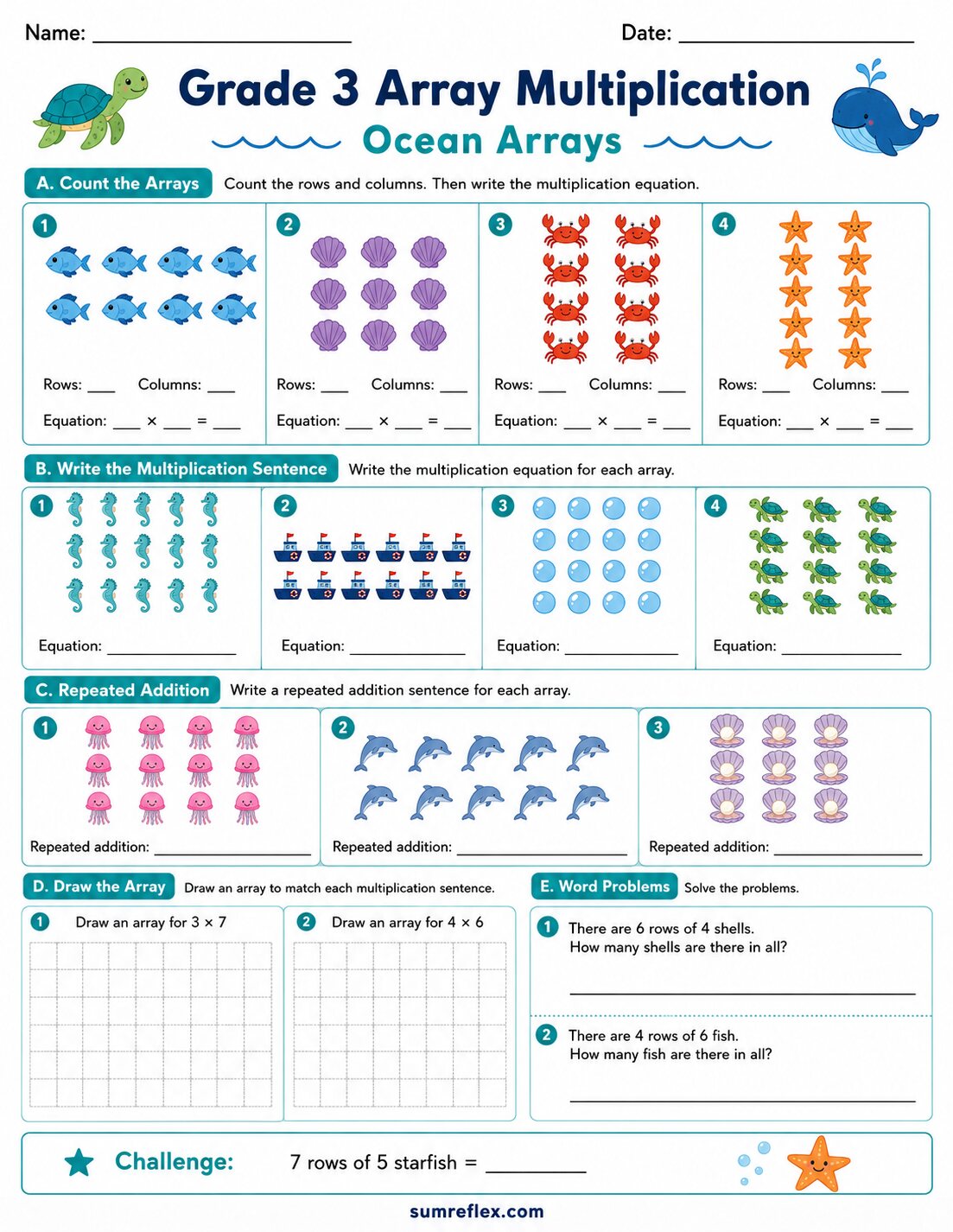
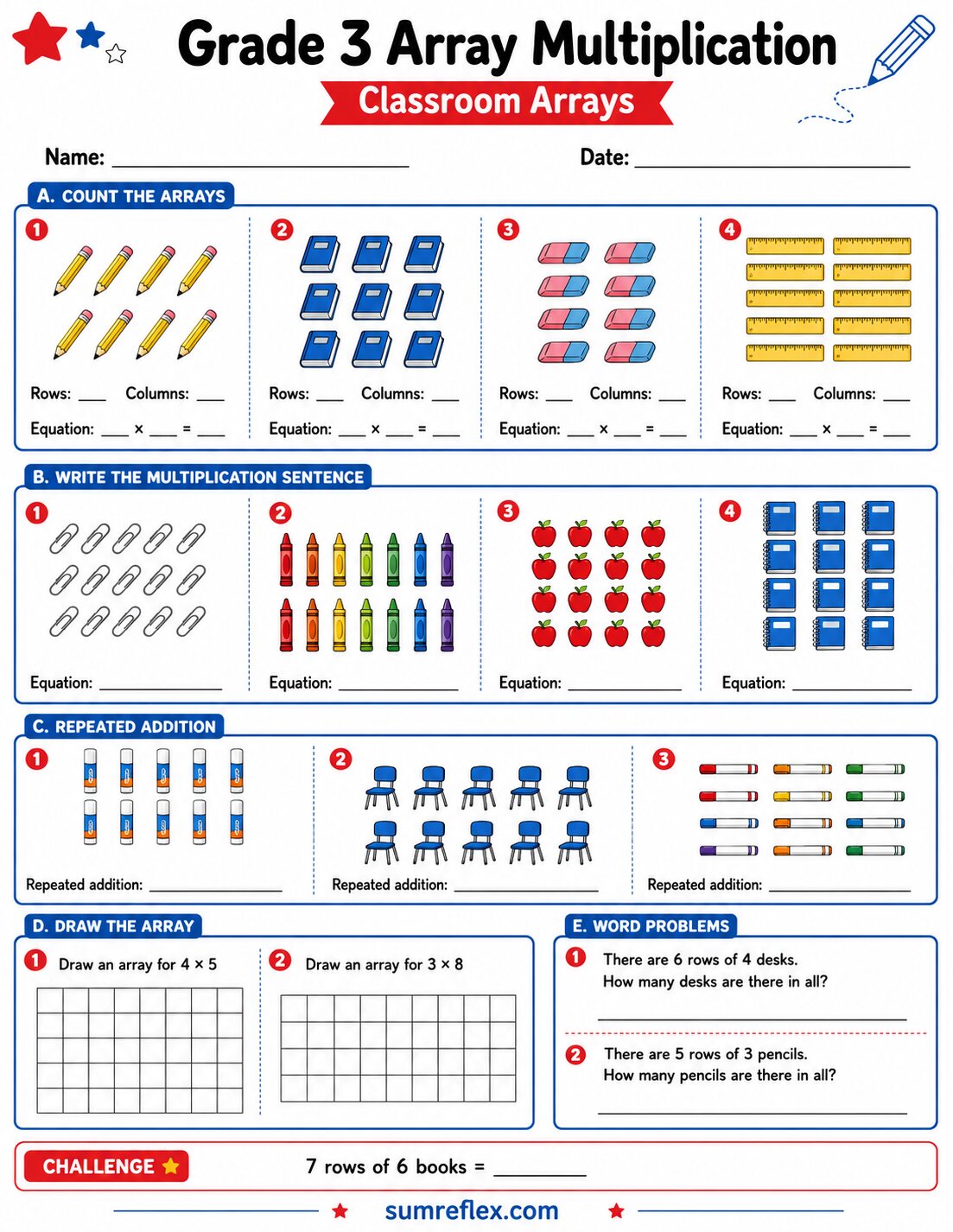
In Grade 3, arrays stop being only counting pictures and become evidence for multiplication. A student can point to three rows, count four items in each row, and then justify 3 x 4 with the picture. That visual proof matters because it gives the equation a reason. The worksheet is not asking for a product from memory alone; it asks students to read the structure before writing the fact.
The row count should be spoken first
Before solving, have students say what the rows show. A sentence such as four rows with five in each row is more useful than a quick answer of twenty. The spoken description helps the learner decide which two numbers belong in the multiplication sentence. It also catches the common mistake of counting every object correctly but writing factors that do not match the picture.
Repeated addition still has a job
Even after multiplication appears, repeated addition should stay nearby for a while. If a learner writes 6 x 3 but cannot explain it, ask for 3 + 3 + 3 + 3 + 3 + 3. The repeated-addition version shows the meaning of the factors. Once that connection is secure, students can use multiplication notation with more confidence and less guessing.
Drawing reverses the demand
Counting a finished array is one skill. Drawing an array from a multiplication sentence is another. When a prompt gives 5 x 4, the student has to choose how many rows to draw and how many items belong in each row. That reversal is valuable because it shows whether the learner understands the factors or only knows how to count a prepared picture.
The theme should be read as context
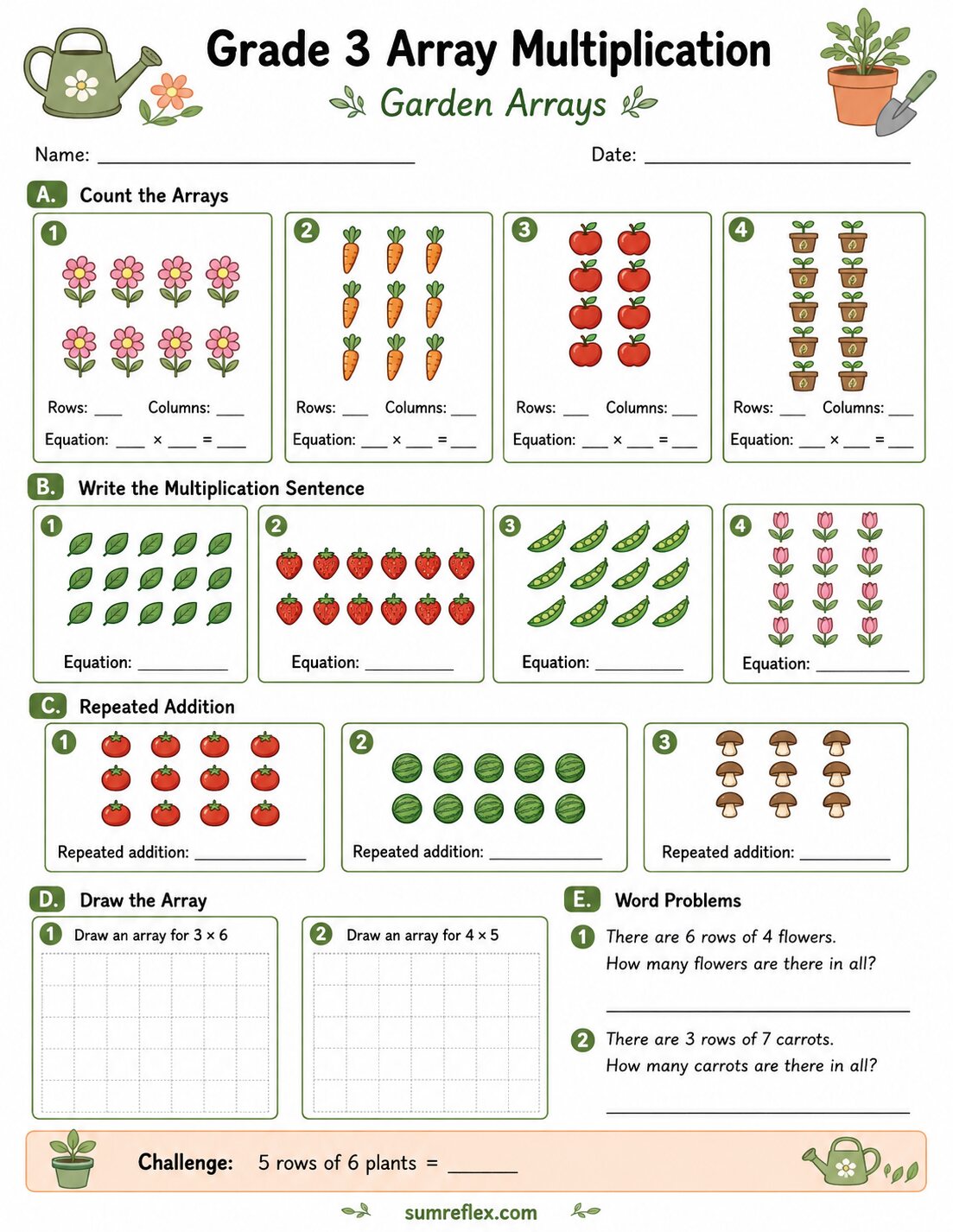
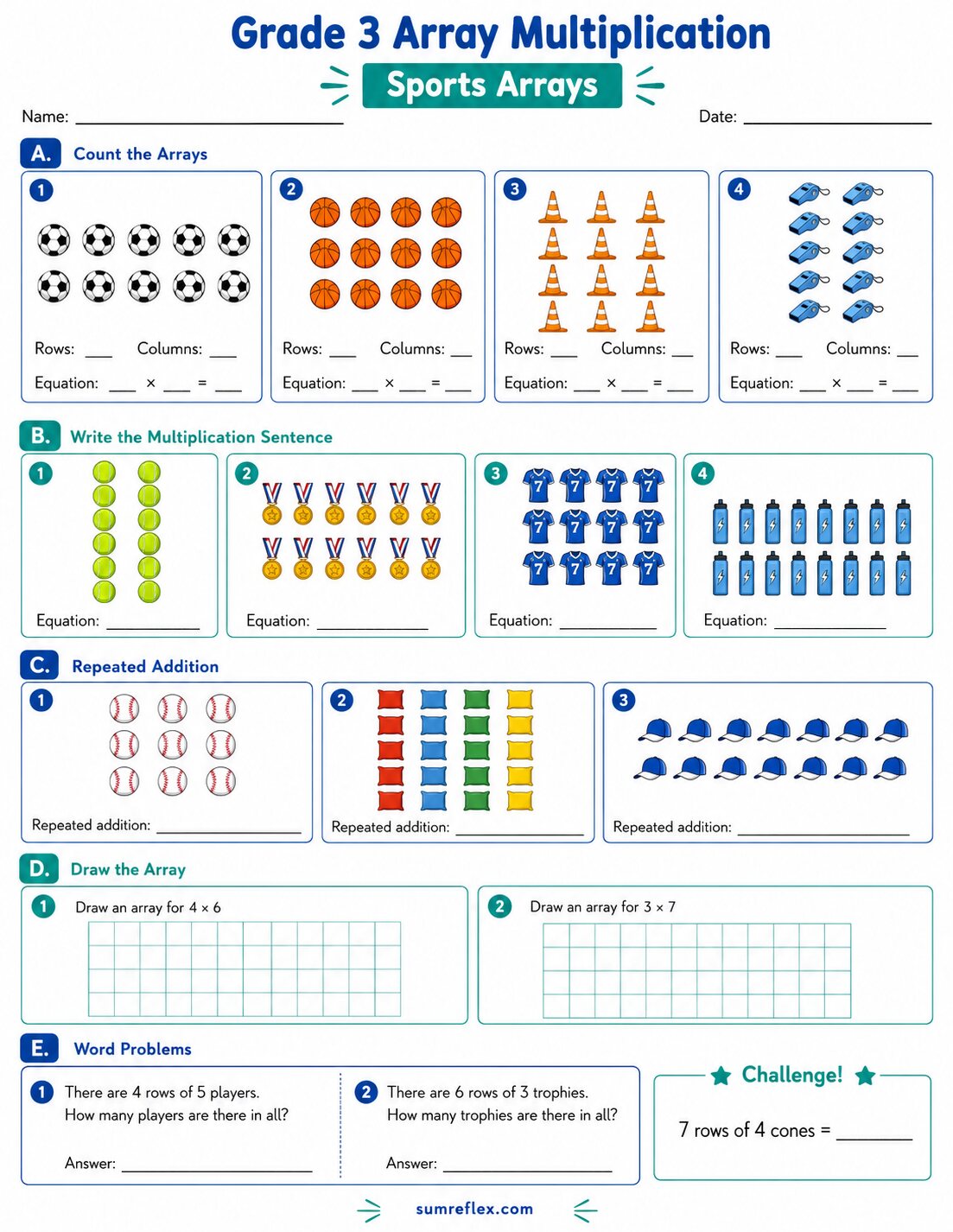
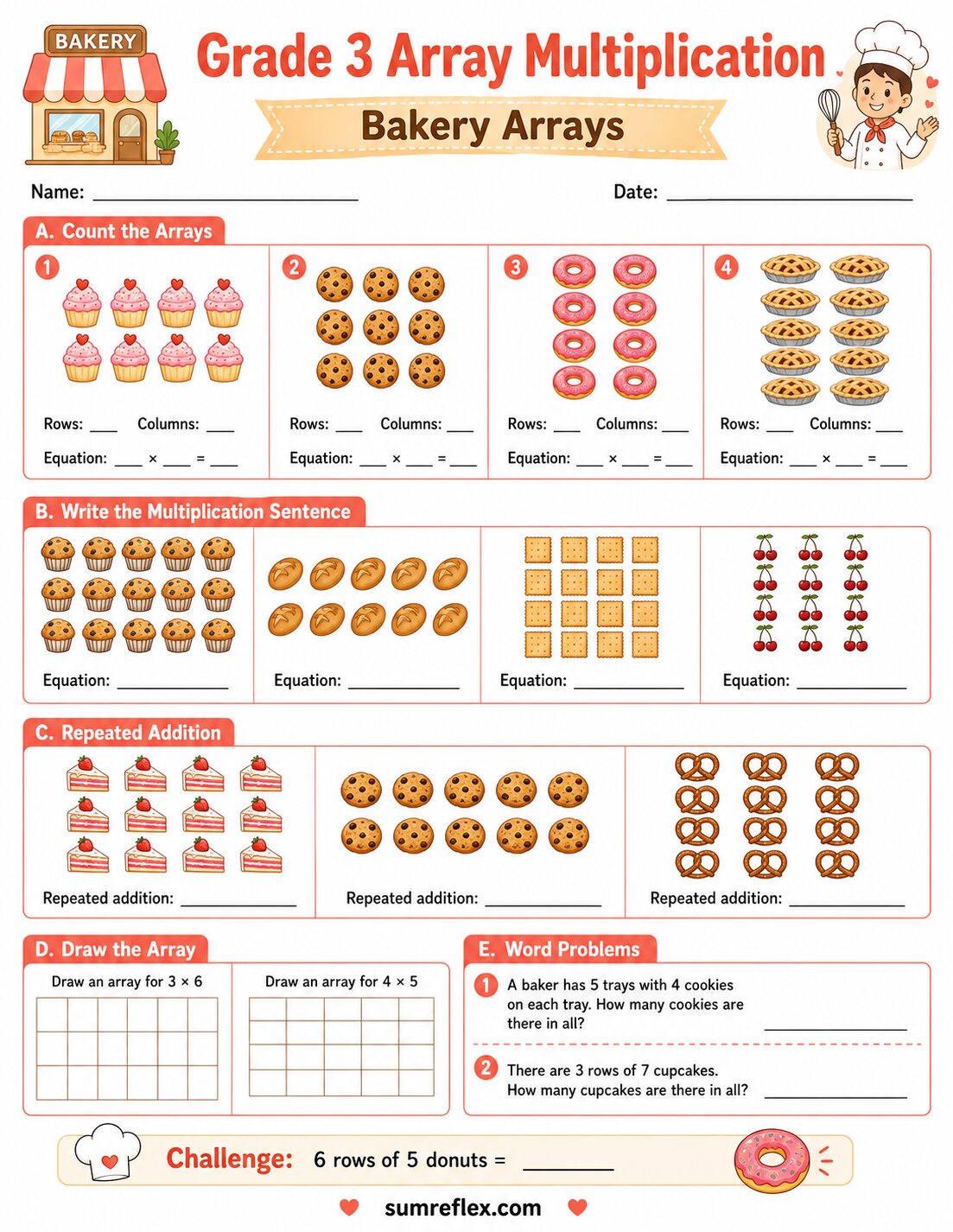
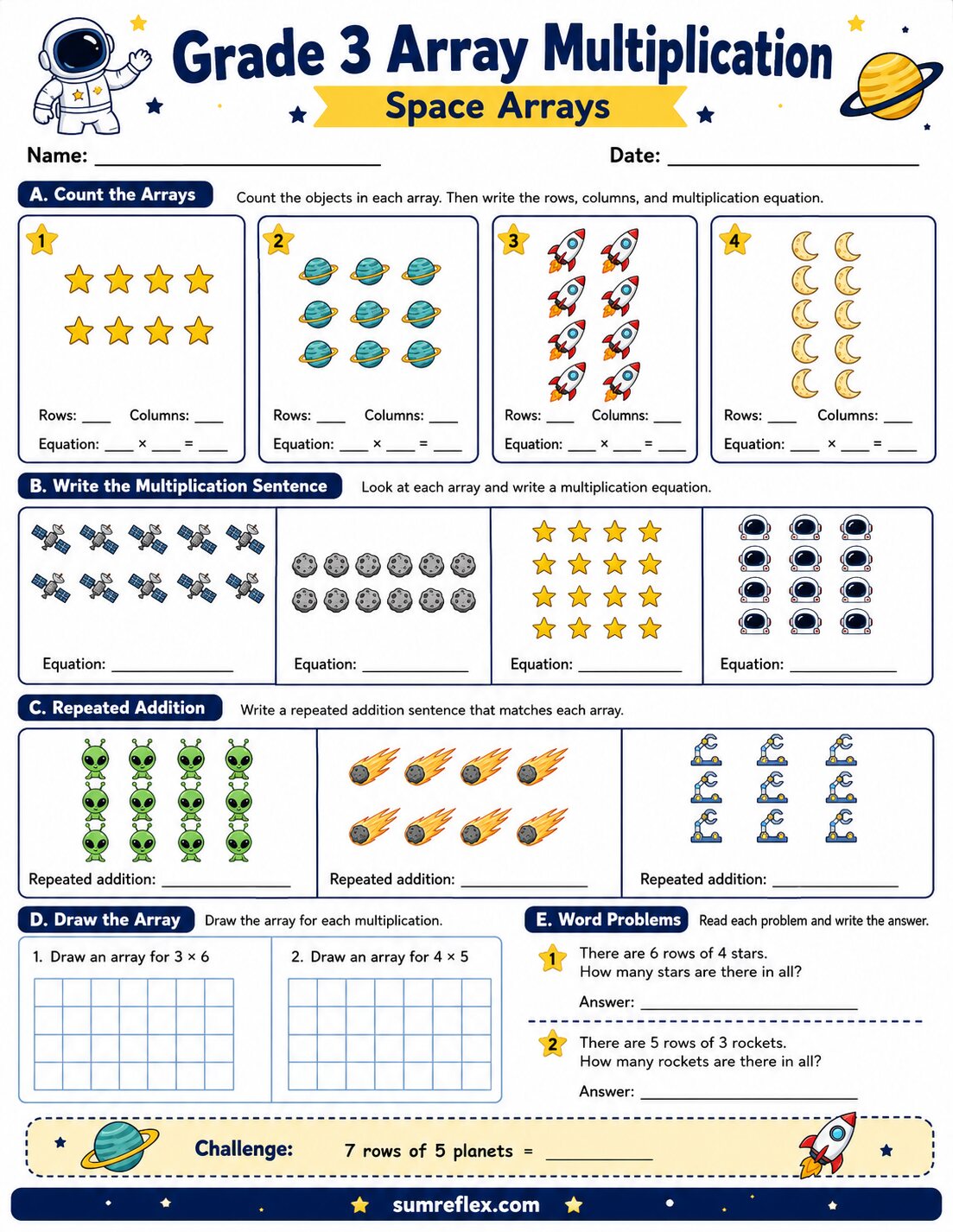
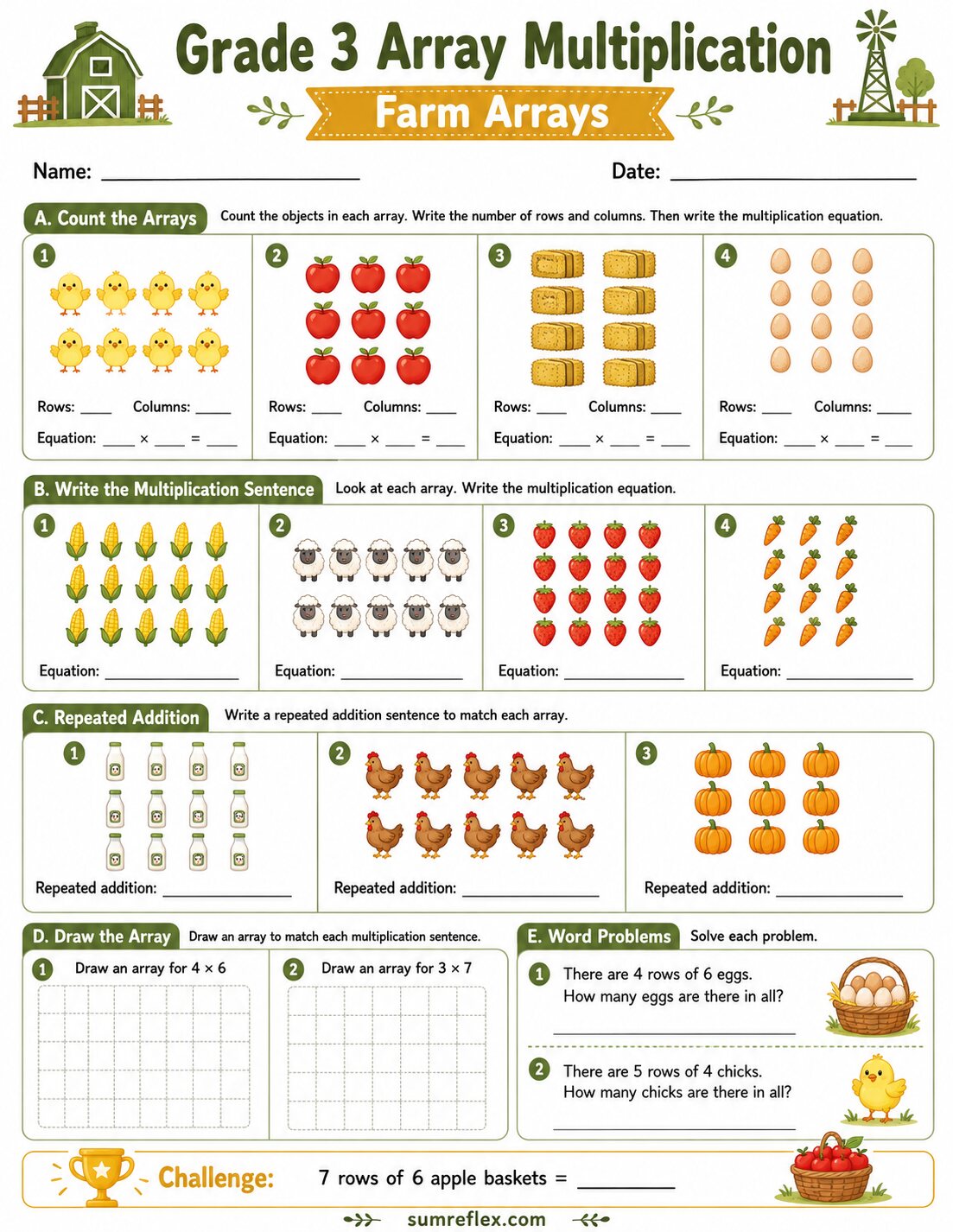
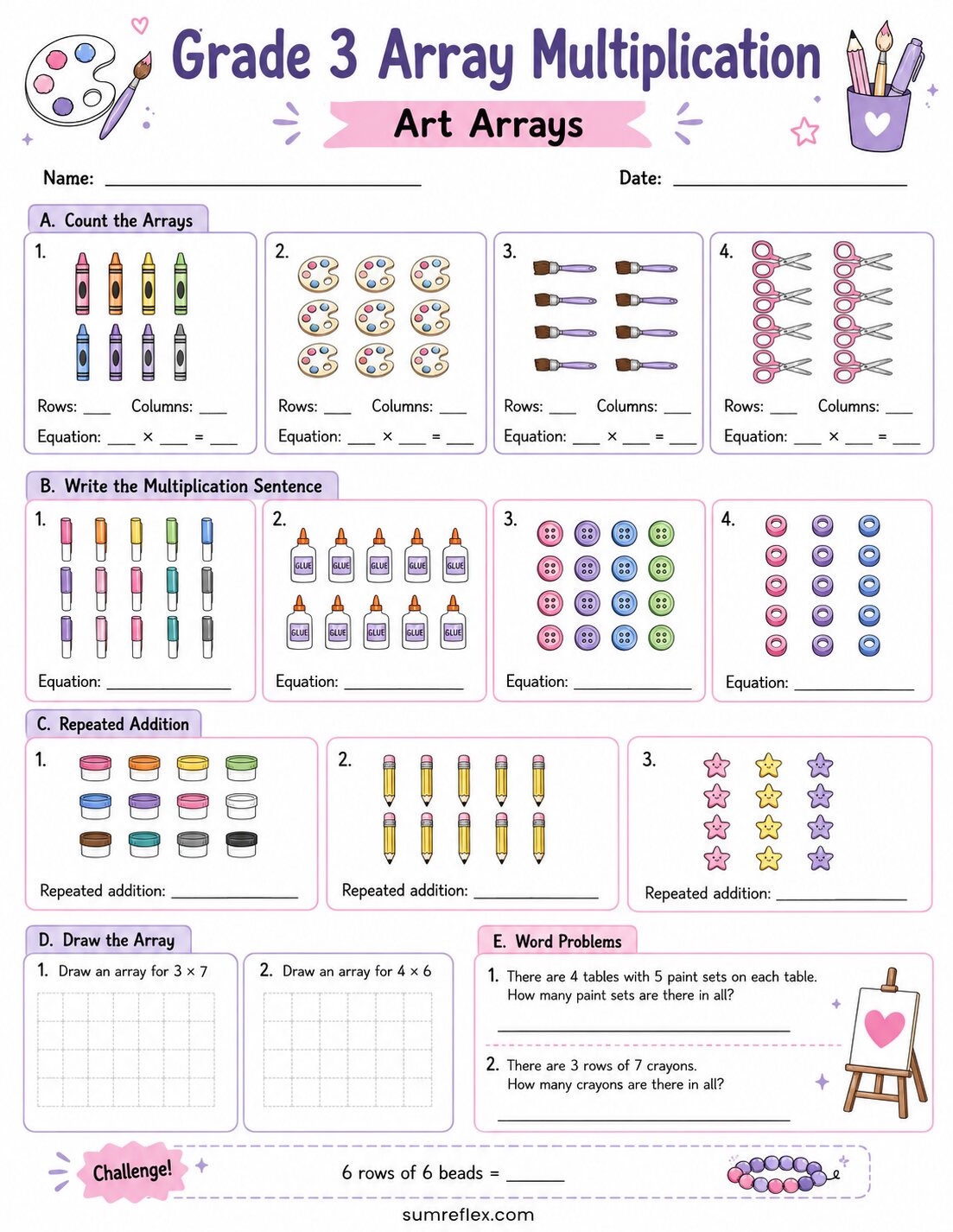
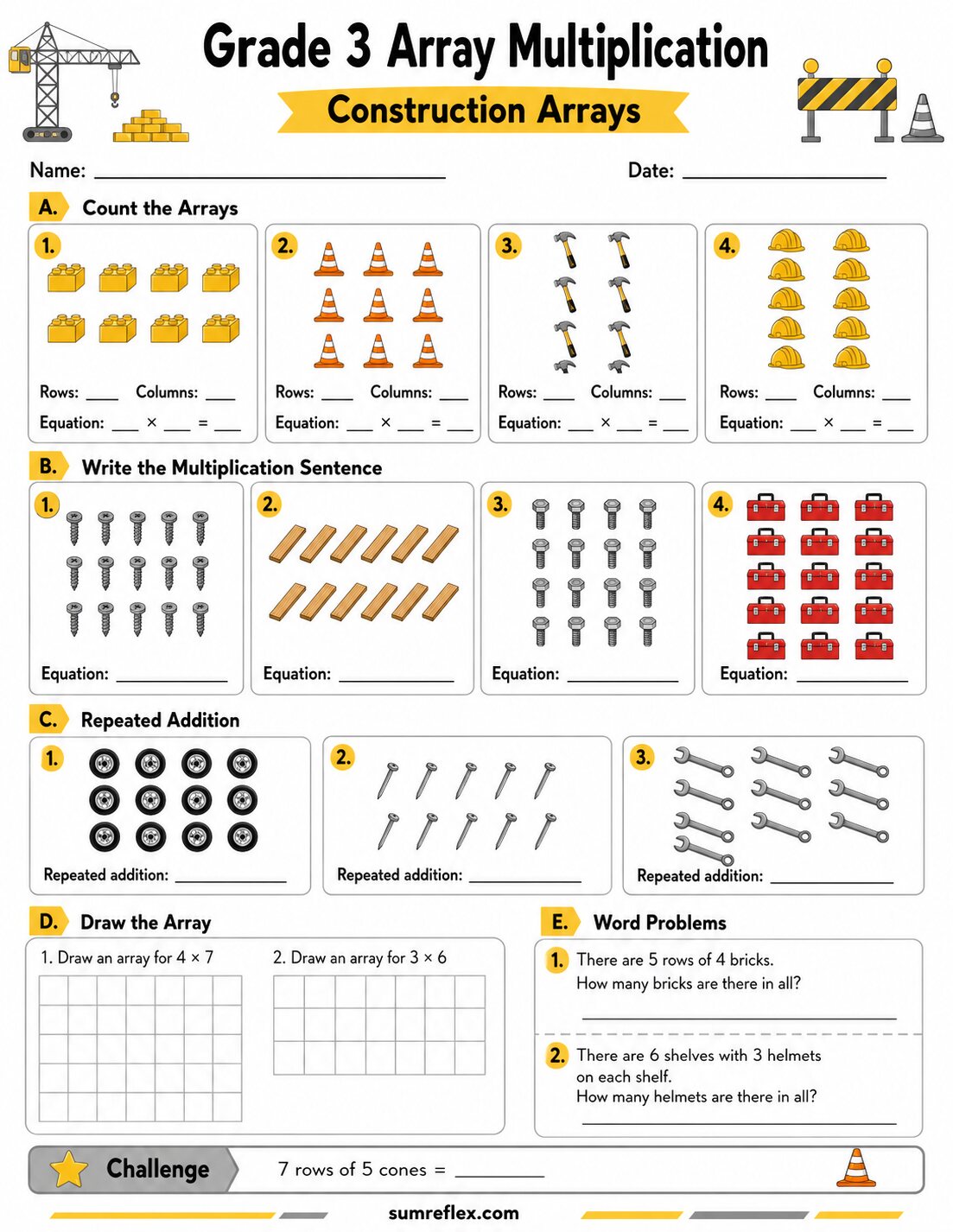
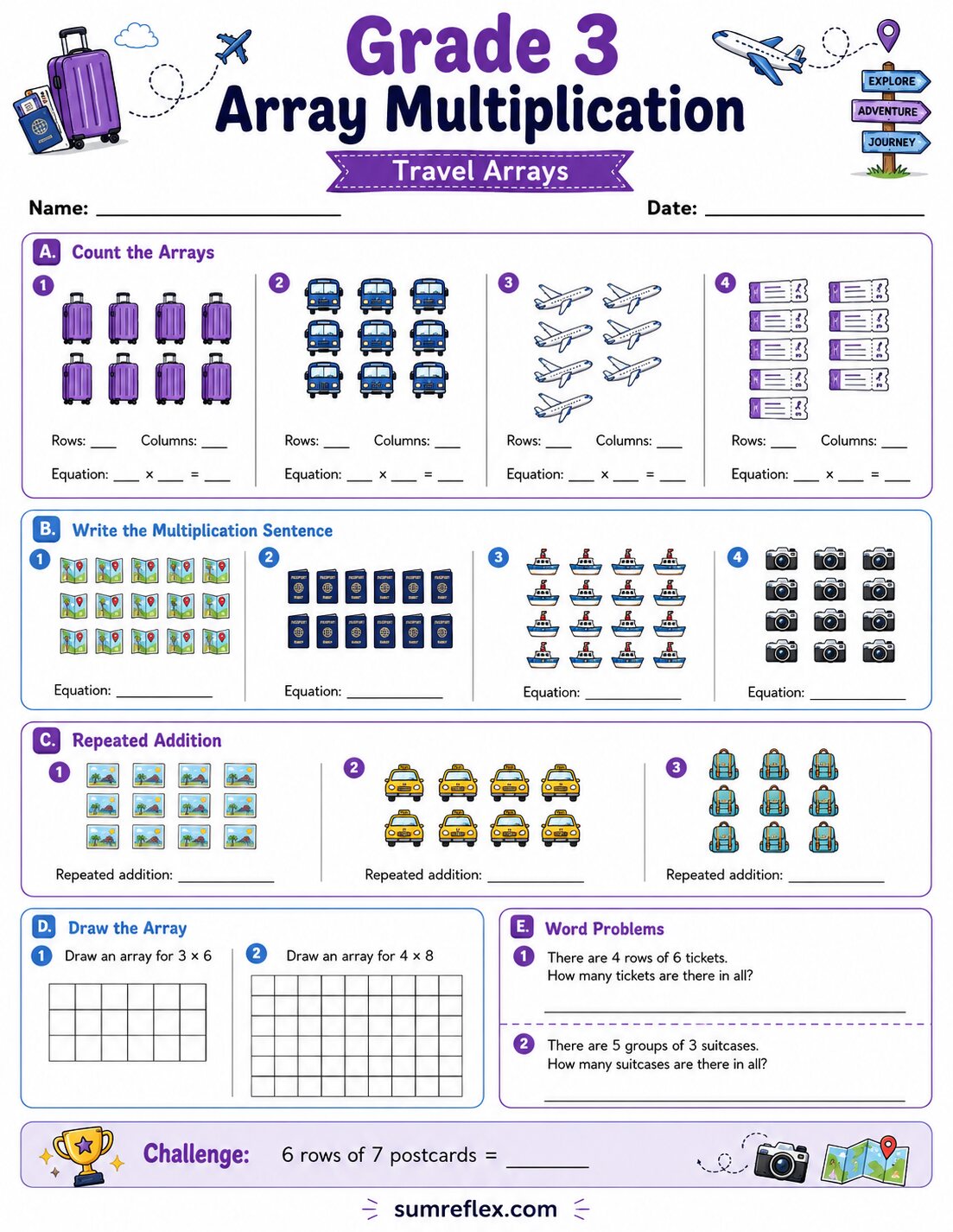
The garden, sports, bakery, space, farm, art, construction, travel, ocean, and classroom pages all use different scenes, but the math goal stays fixed. Ask students to describe the scene in multiplication language. Trays, shelves, rows, teams, and displays are all chances to say equal groups. This keeps the theme useful instead of letting it become decoration.
Word problems test model transfer
A word problem is harder because the array may not be fully drawn. Students have to recognize the equal-group structure from language. Have them underline the number of rows or groups and circle the number in each group. If the story says six shelves with four books on each shelf, the shelf count and book count should both appear before the equation is written.
Fact fluency should grow from the model
Students will eventually know many products instantly, but these worksheets are for the stage where the model still supports the fact. If a student knows 4 x 5 immediately, ask why the array confirms it. If the student does not know it, use the rows to rebuild the product. Both paths strengthen multiplication understanding.
How to review one completed sheet
After the page is finished, choose one counted array, one drawn array, and one word problem. Ask the student to explain each in a different way: picture language, repeated addition, and multiplication sentence. That short review is more valuable than simply marking every product right or wrong because it checks whether the student can move among representations.
A skipped row changes the fact
When an answer is wrong, check whether the student missed a row or counted one row twice. Array errors often come from the picture reading, not the multiplication fact itself. Returning to the model first keeps correction concrete. Once the row count is repaired, the equation and product usually make more sense.