



What Grade 4 measurement covers
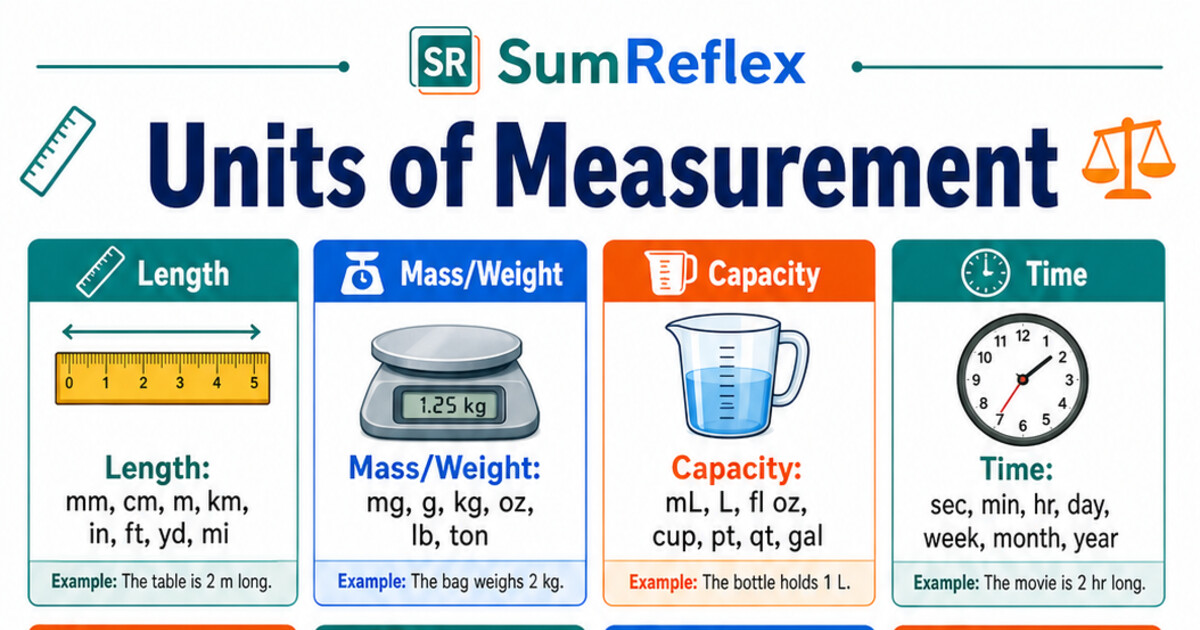
Measurement connects numbers to real things. Students learn how to describe length, weight, liquid capacity, time, temperature, area, and volume with the right unit instead of writing a number by itself.
Why units matter
The number 5 is not enough on its own. A pencil that is 5 inches long, a bottle that holds 5 liters, and a wait of 5 minutes are completely different. Units tell the reader what kind of quantity the number describes.
Metric and customary systems
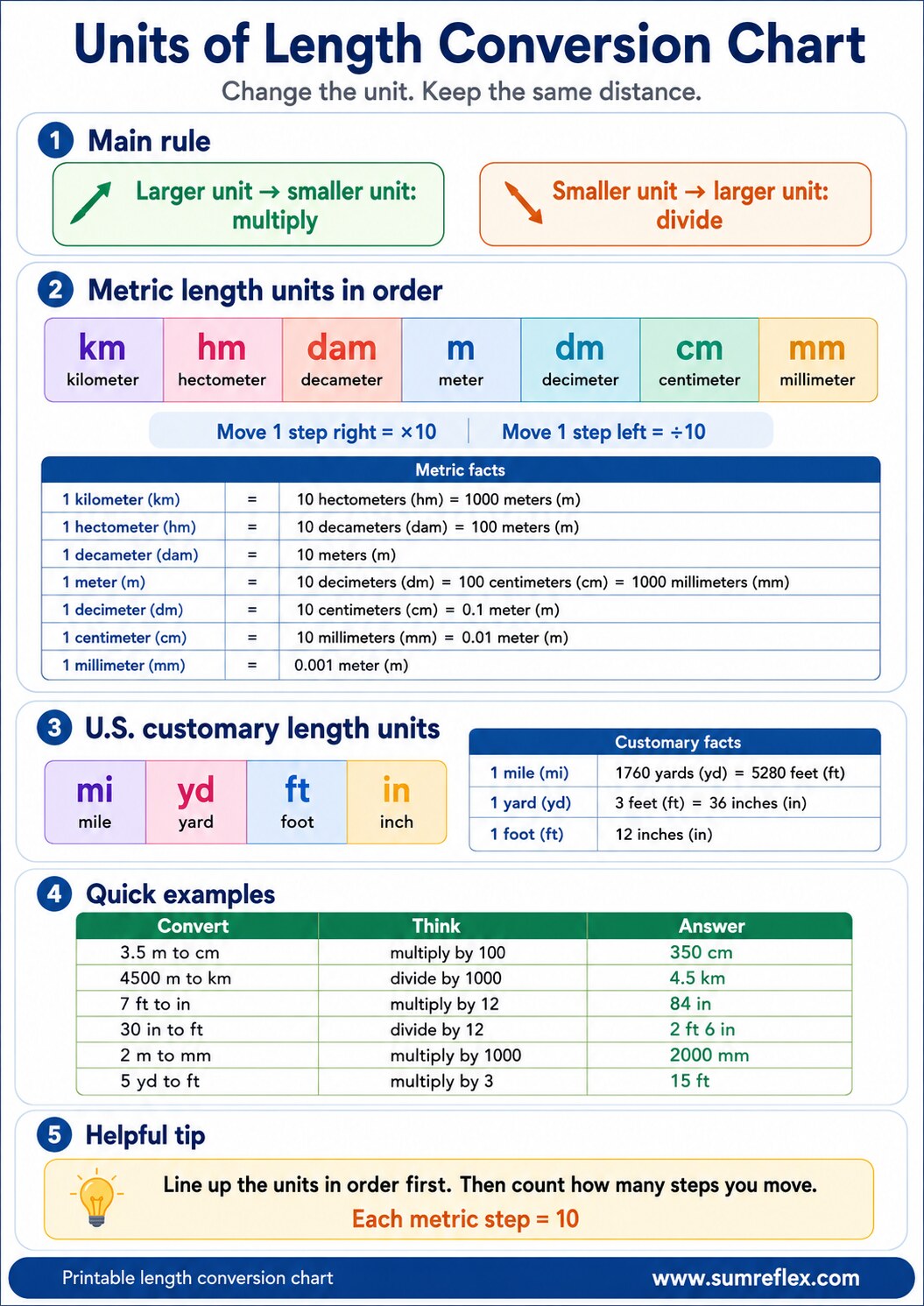
Students often see both metric units and U.S. customary units. Metric length units include millimeters, centimeters, decimeters, meters, decameters, hectometers, and kilometers. Metric mass and capacity units include grams, kilograms, milliliters, and liters. Customary units include inches, feet, yards, miles, ounces, pounds, cups, pints, quarts, and gallons.
Conversions should start with meaning
Before converting, ask what is being measured. If the problem is about distance, stay with length units. If it is about liquid, stay with capacity units. That simple check prevents many wrong-unit answers. For a focused lesson on the full metric length ladder plus inches, feet, yards, and miles, use the Units of Length Conversion lesson.
Use examples from daily life
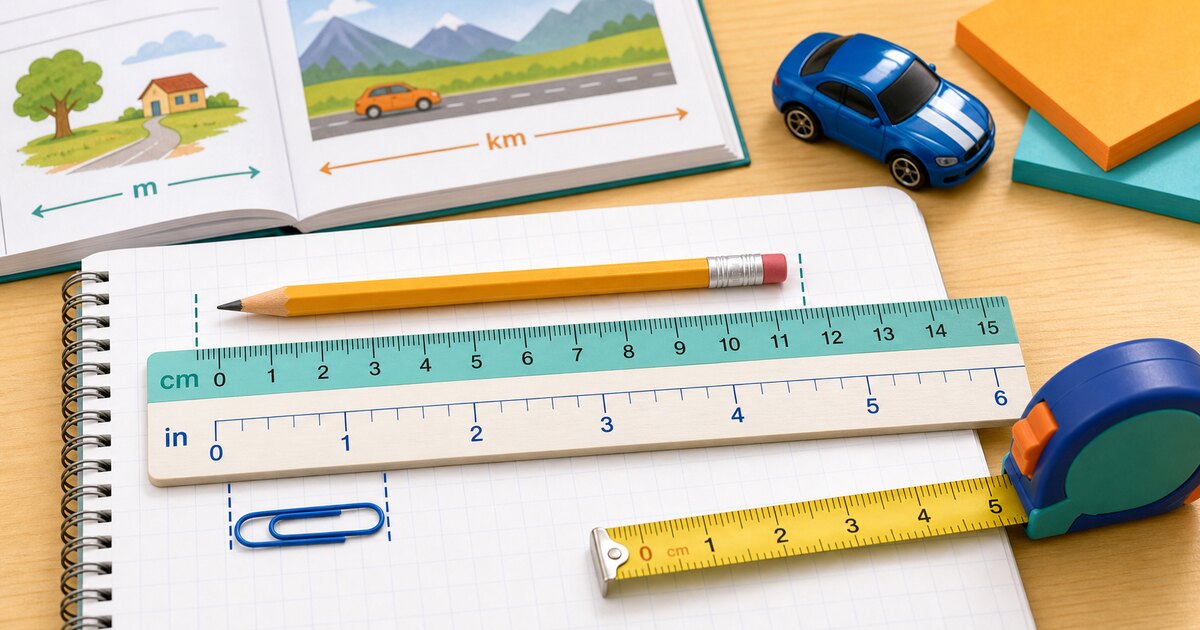
Measurement makes more sense when it is connected to familiar objects: centimeters for a pencil, meters for a room, kilometers for a trip, grams for a snack, kilograms for a school bag, milliliters for medicine, liters for a bottle, and hours for a movie.
Time units still matter in Grade 4
Grade 4 measurement can include time units such as seconds, minutes, and hours, especially when students solve conversion or elapsed-time problems. Basic calendar order and 24-hour clock reading sit in earlier time lessons, while Grade 4 focuses more on choosing units and converting within a system.
Conversions should stay inside one kind of measurement
When converting, keep the measurement type the same. Convert length units with length units, capacity units with capacity units, mass units with mass units, and time units with time units.
Length conversions are a key skill
Length conversion helps students write the same distance in a different unit, such as 3 m = 300 cm or 5 ft = 60 in. Students learn when to multiply, when to divide, and how to check whether the new number makes sense.