



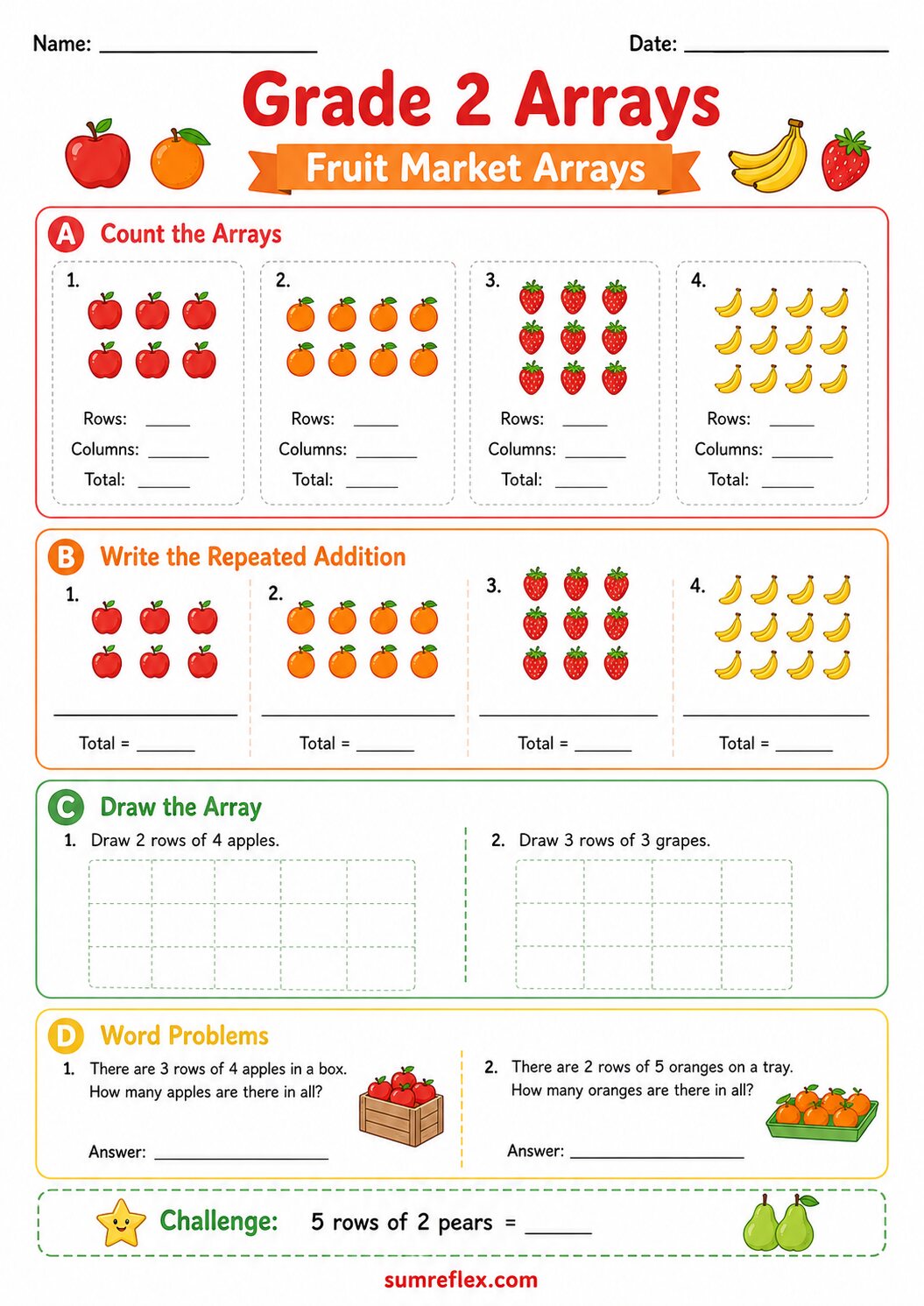
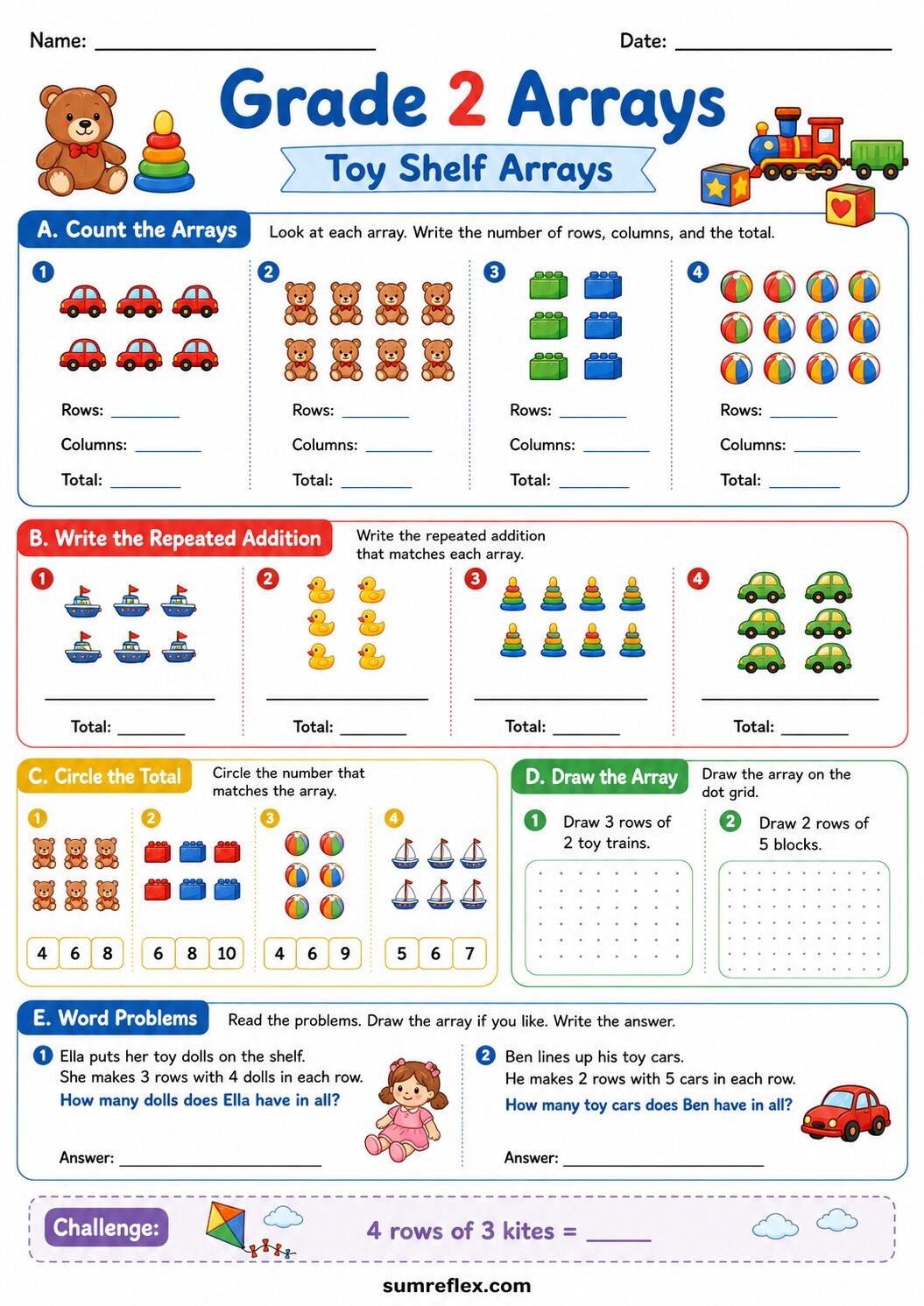
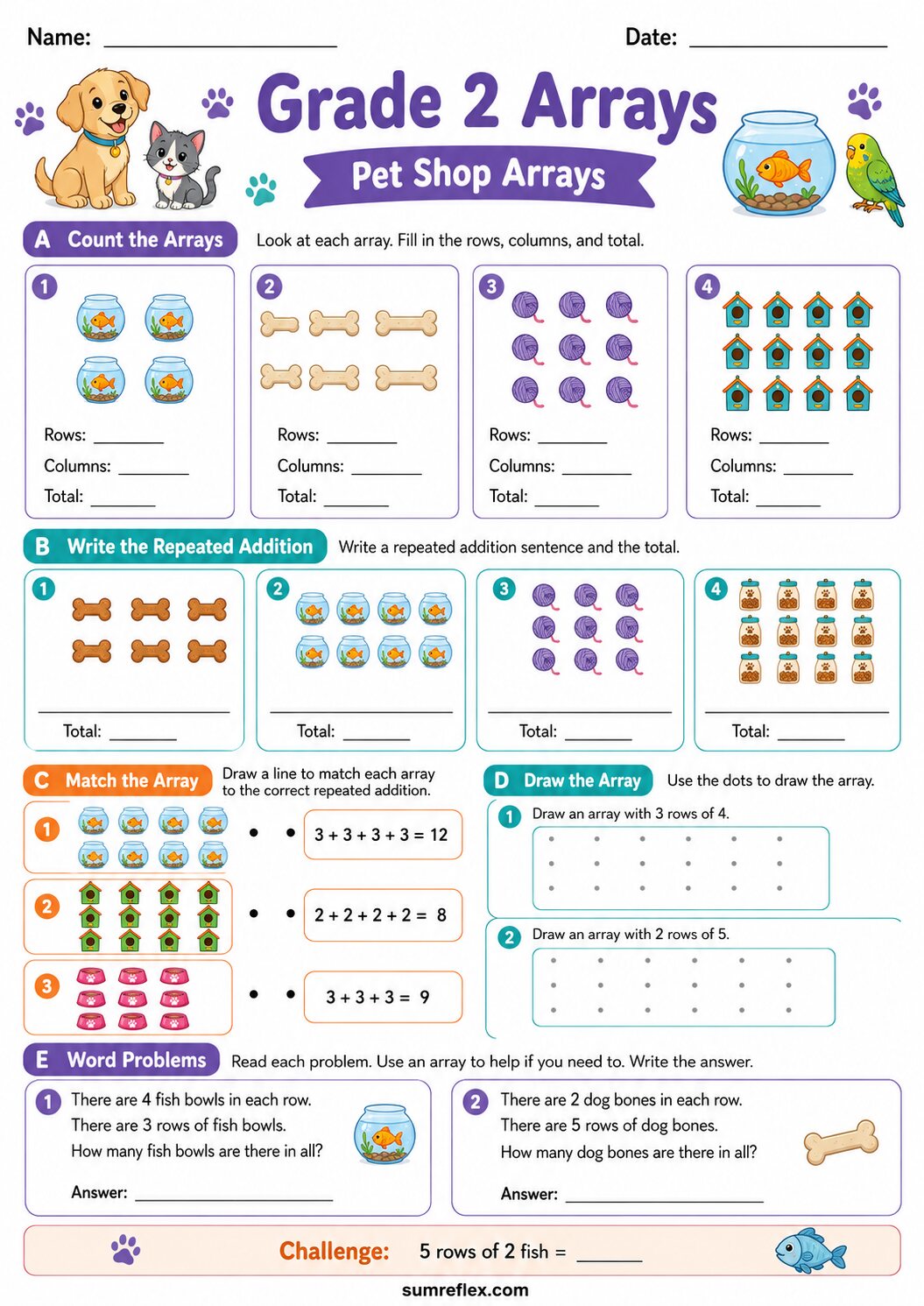
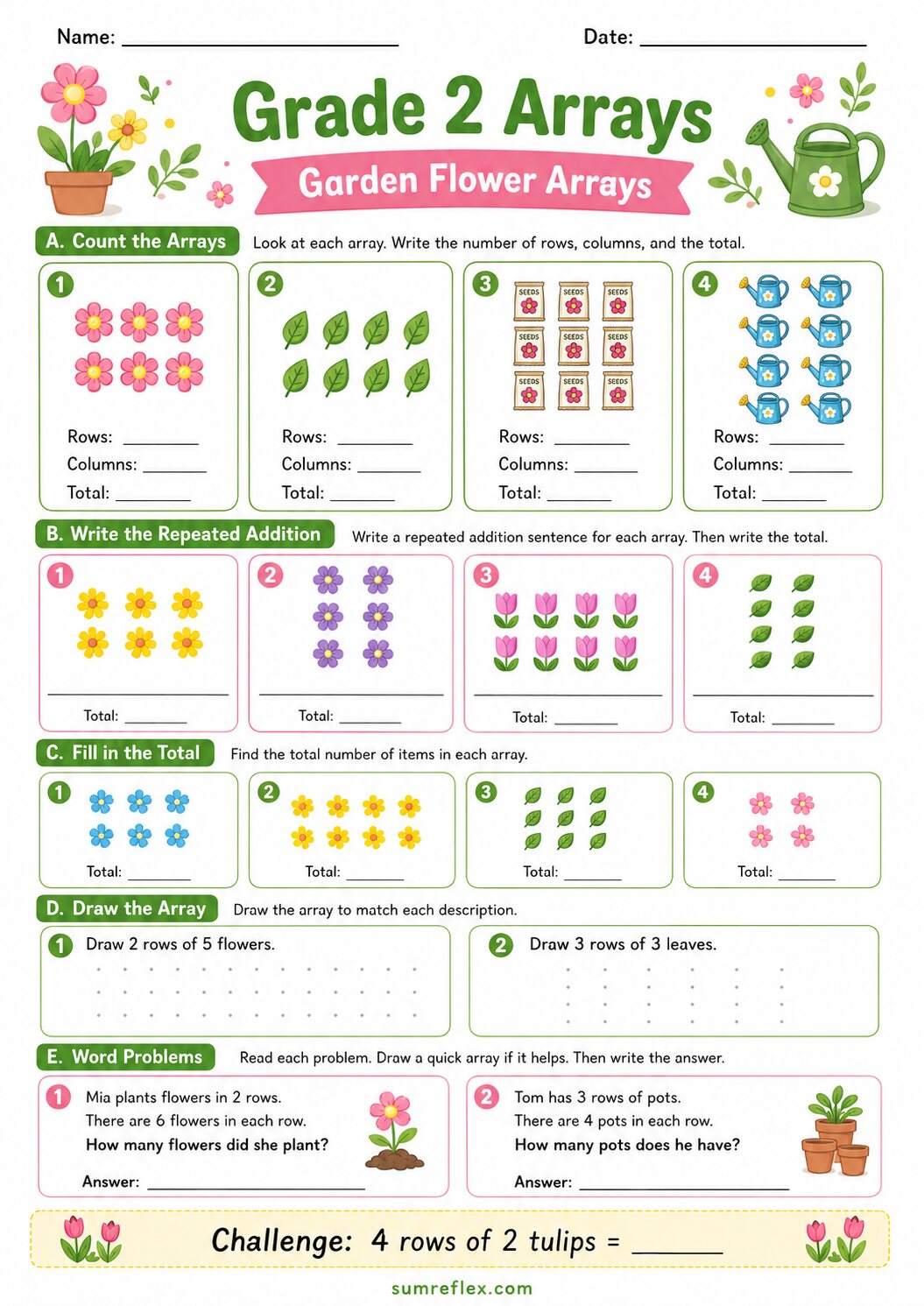
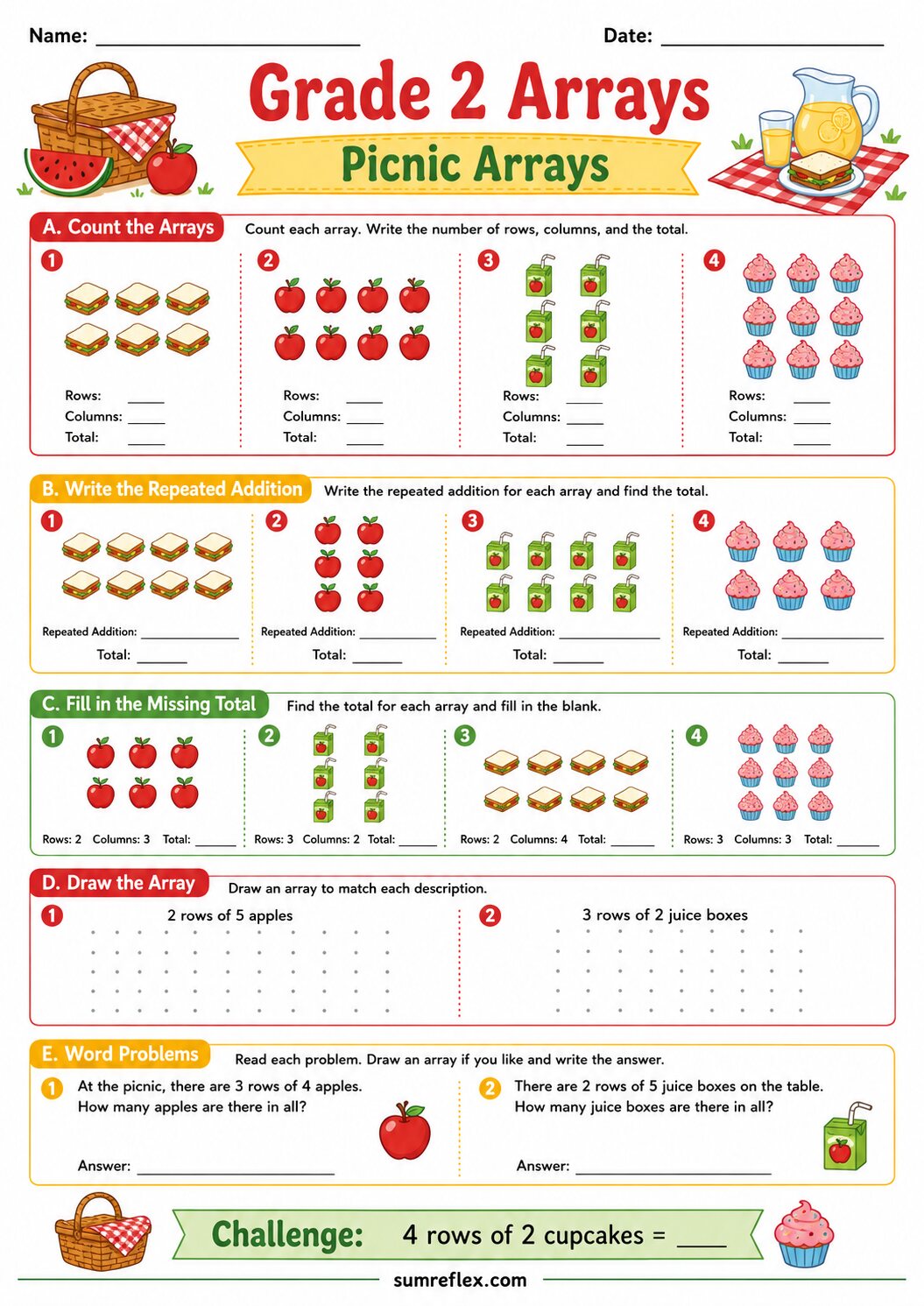
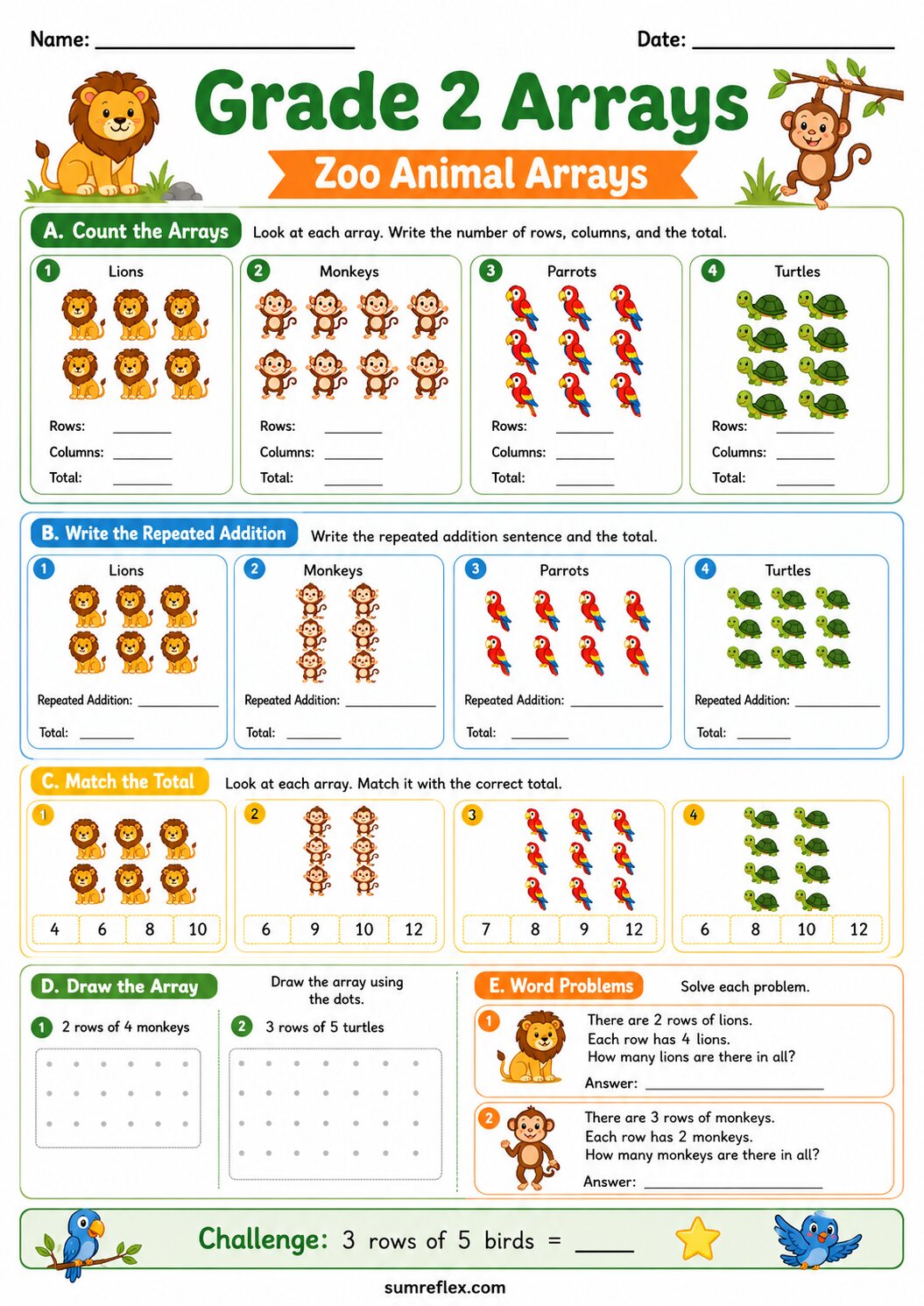
Arrays make equal groups visible
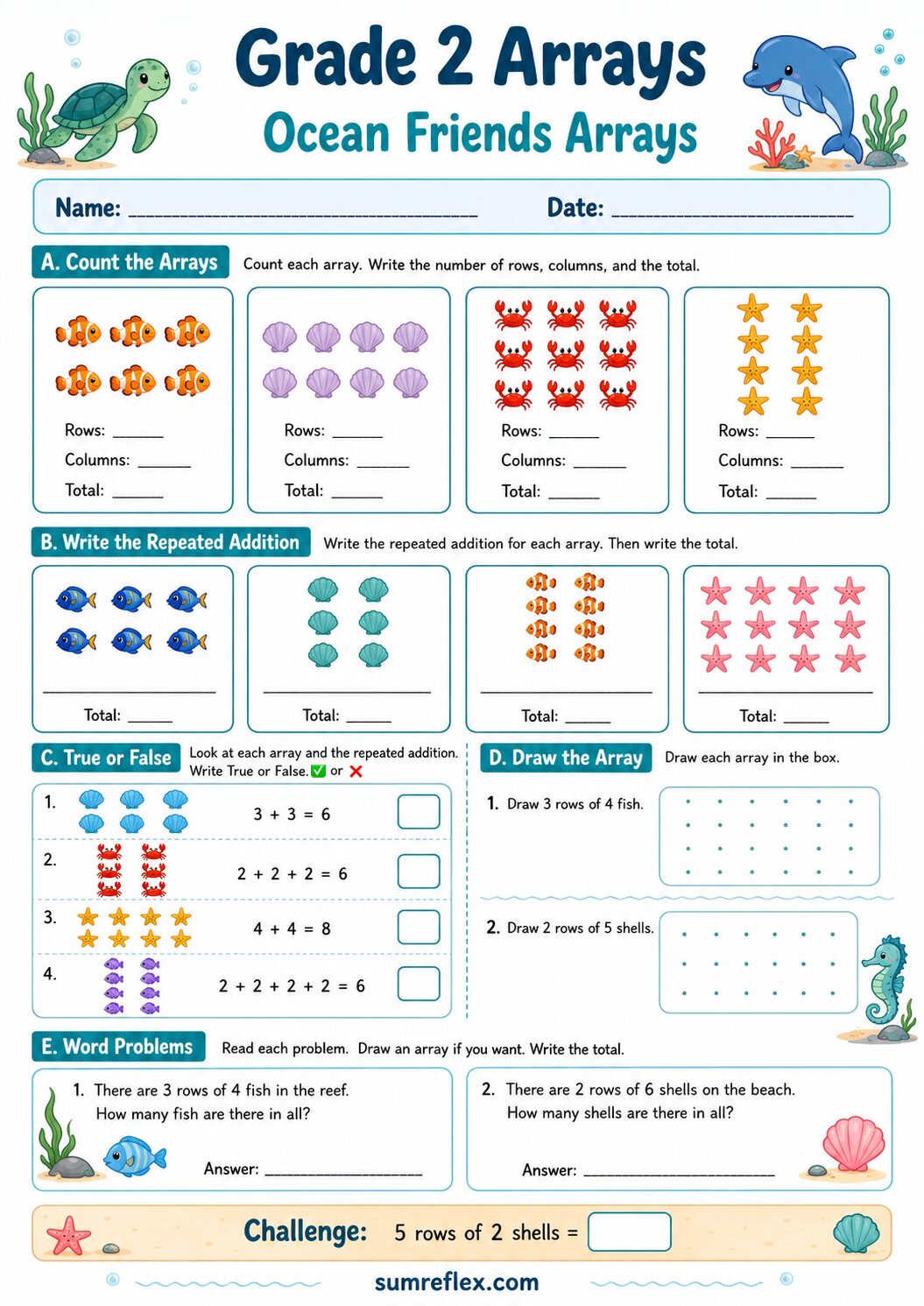
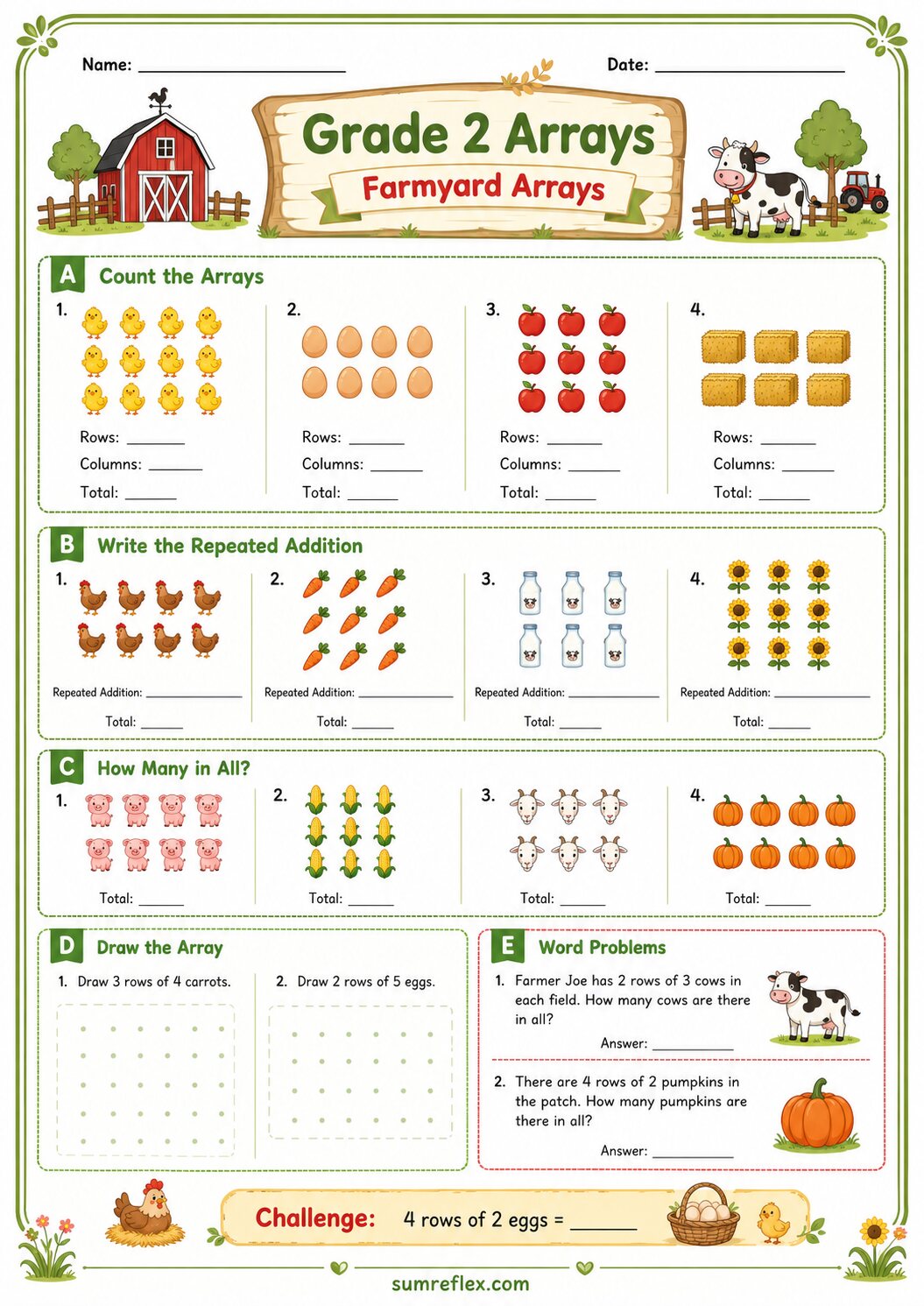
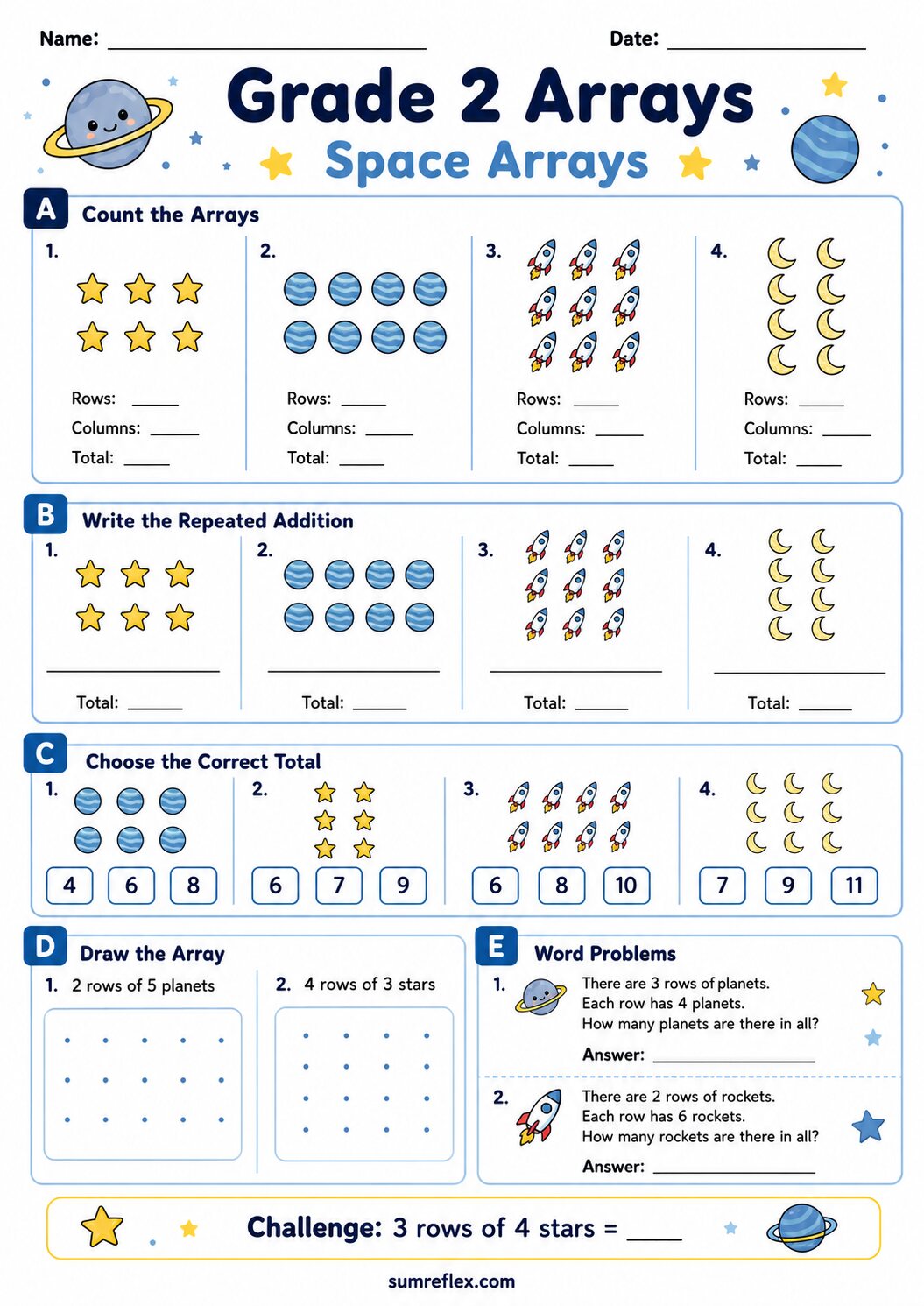
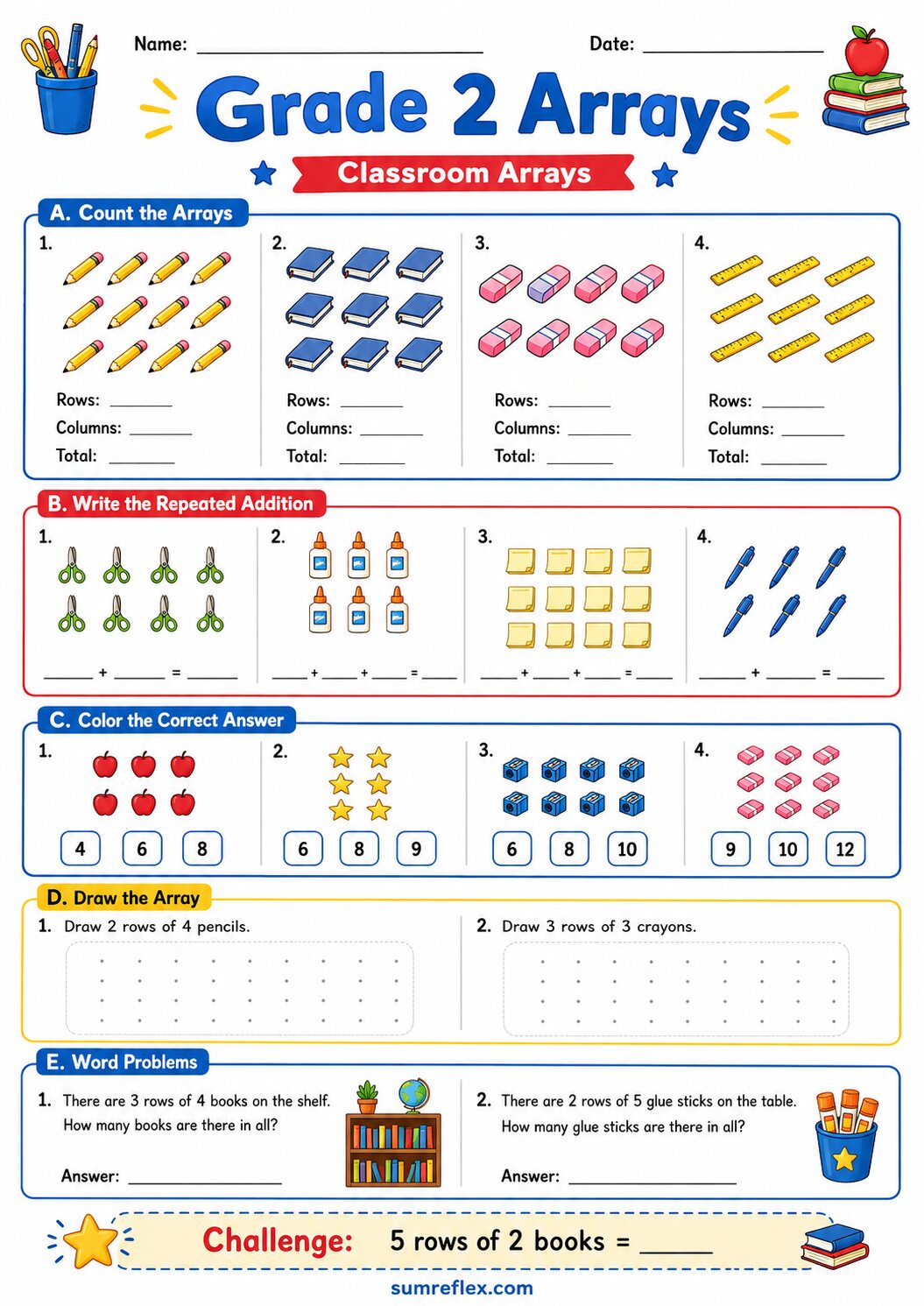
An array shows equal groups in a neat arrangement, which is why it works so well before formal multiplication. Instead of seeing a scattered pile of objects, students see a structure they can count. A row of five repeated three times is easier to discuss than fifteen loose pictures. These worksheets use familiar scenes so the array idea stays concrete while students build the language.
Rows and columns need separate words
Students often count the total correctly before they can explain the arrangement. That is why row and column language matters. Rows go across the page, and columns go down the page. Ask learners to trace one row with a finger, then one column, before solving. The physical motion helps prevent the common mistake of swapping the two directions without noticing.
Repeated addition is the bridge
The goal in Grade 2 is not to rush into times-table memorization. The goal is to see why the same number can be added again and again. If a worksheet shows four rows with three objects in each row, the student can write 3 + 3 + 3 + 3. That repeated-addition sentence prepares the mind for multiplication without skipping the visual step.
Drawing proves more than counting
Counting a ready-made picture is useful, but drawing an array asks for deeper understanding. If the prompt says three rows of two, the child has to decide how many rows to draw and how many objects belong in each row. That work reveals whether the student understands the structure or only knows how to count finished pictures.
Themes should support the math
The fruit, toy, pet shop, garden, ocean, farm, space, classroom, picnic, and zoo themes are not meant to distract from the skill. They give students something concrete to describe while they count. A child can say there are two shelves with four toys on each shelf, or three flower rows with five flowers in each row. That spoken context makes the array less abstract.
Moving from arrays toward multiplication
After a student can count rows, write repeated addition, and draw a matching array, multiplication language can be introduced naturally. The same picture can be described as three rows of four, four plus four plus four, or three groups of four. Keep all three descriptions connected for a while. That connection is what makes later multiplication facts easier to understand.
Do not hide the total too soon
When a child solves an array quickly, ask how the total was found before moving on. Some students count every object one by one, while others count by rows or skip-count. Both can produce the right answer, but they show different readiness levels. The teacher or parent should listen for the strategy because that strategy tells whether the student is ready for multiplication language.
Ask for both a sentence and a sketch
A strong array response can include a drawing and a number sentence. For example, the child might sketch two rows of five and write 5 + 5 = 10. The sketch proves the arrangement, while the sentence proves the repeated-addition idea. When students can move between those two forms, they are doing more than counting pictures; they are building a model they can reuse.
Sort the worksheet by thinking task
Not every array question asks for the same skill. Some items ask students to count a picture, some ask them to write repeated addition, and some ask them to draw. After a page is finished, look at which type caused the most difficulty. That tells you whether the next lesson should focus on vocabulary, counting strategy, or building arrays from directions.
Let students invent one array question
After completing a themed worksheet, ask the child to create one new array problem using the same setting. A picnic page might become three rows of juice boxes, while a classroom page might become four rows of pencils. Inventing a question makes the learner choose the row size and group count, which is a strong sign that the array idea is becoming flexible.