



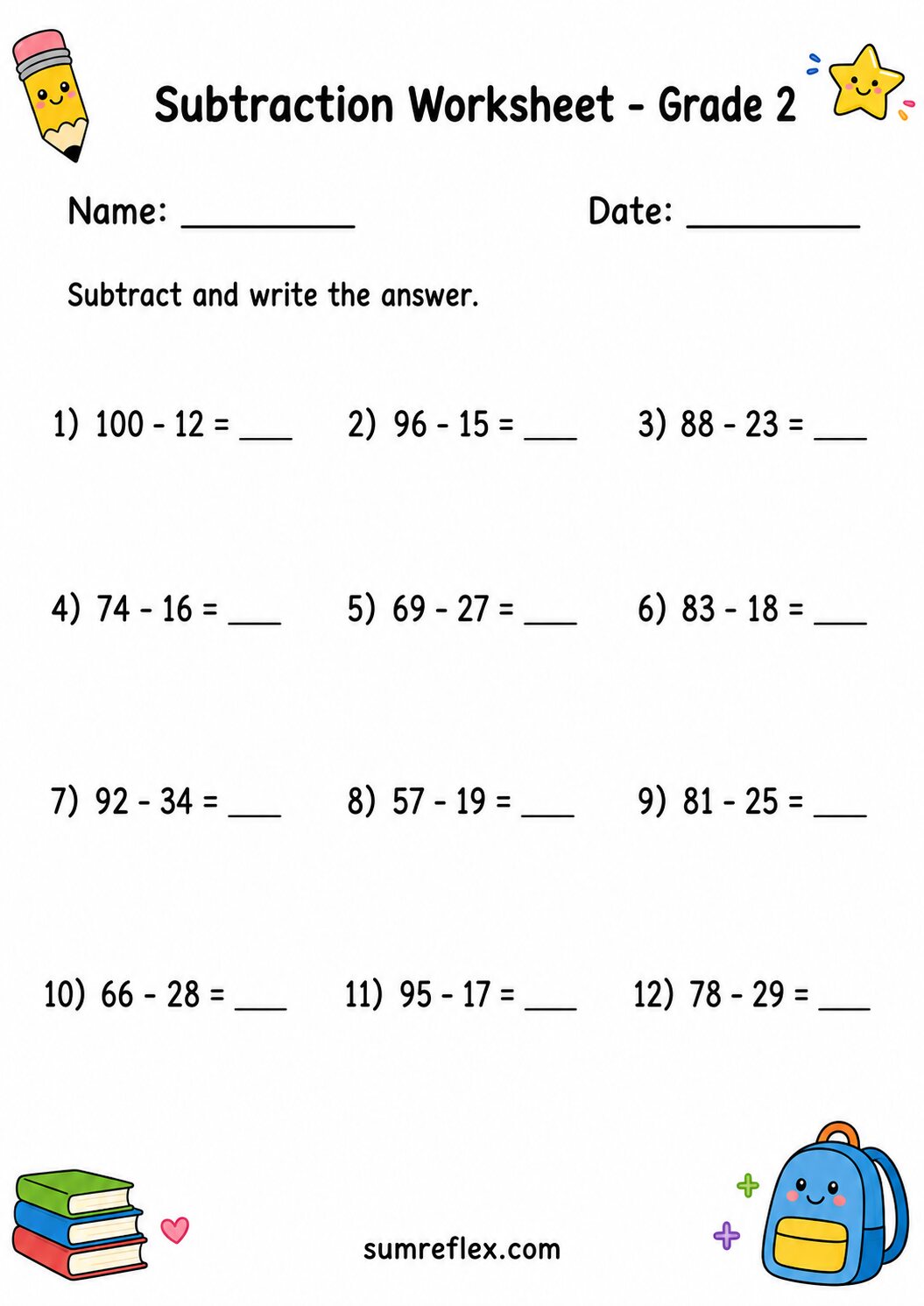
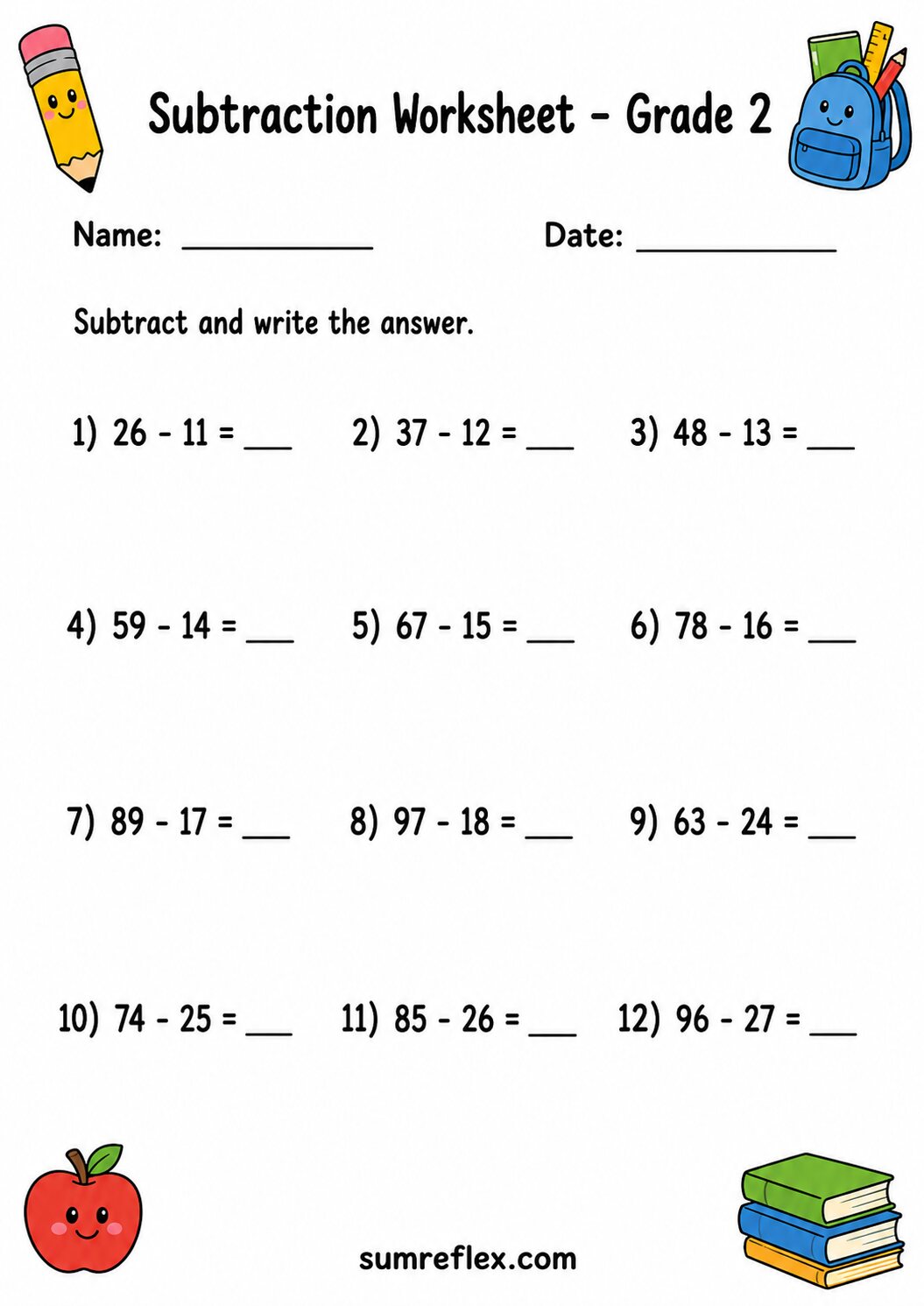
Subtraction gets stricter with two digits
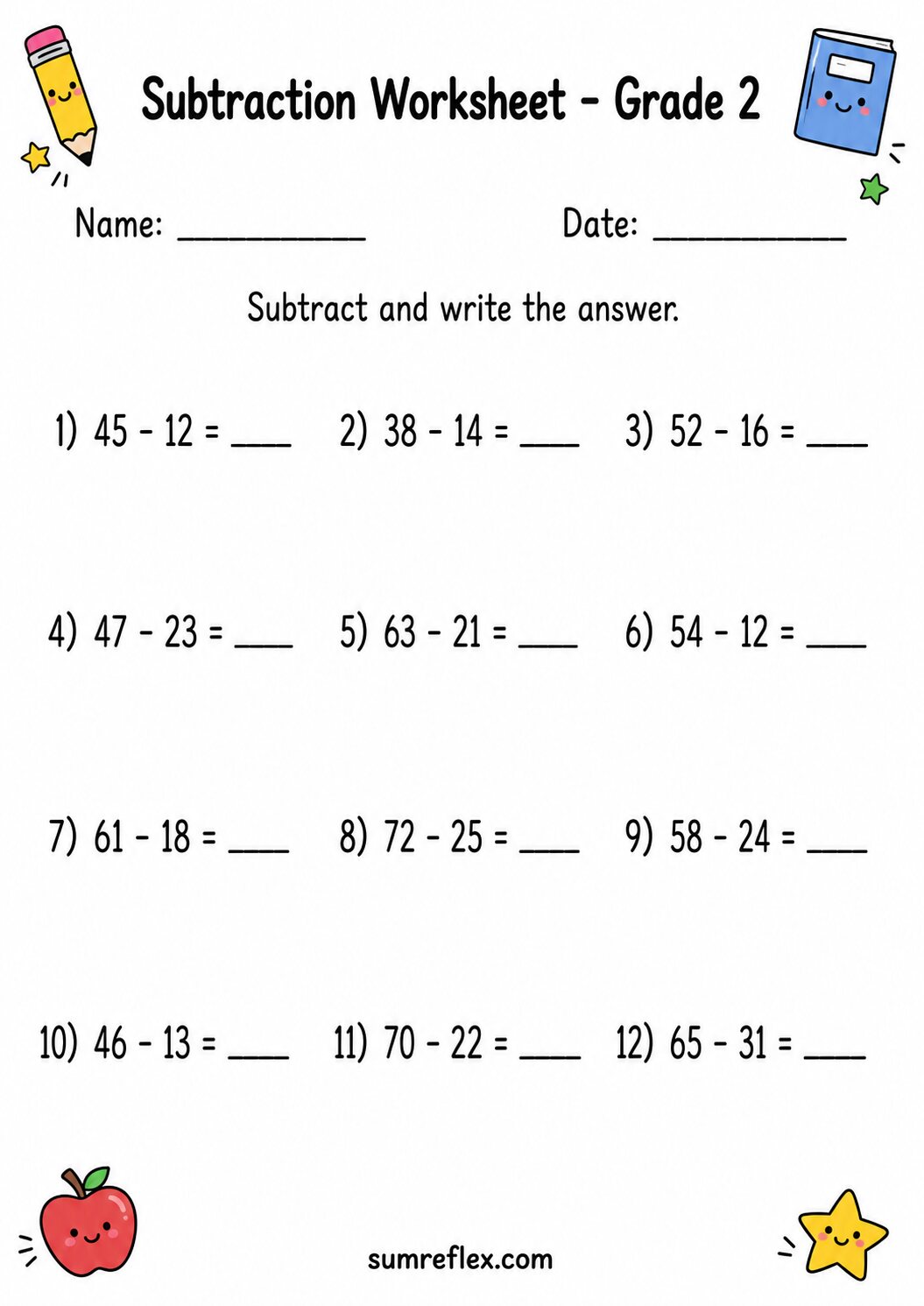
Two-digit subtraction asks students to pay closer attention to order than small facts do. The first number is the amount they start with, and the second number is what they remove or compare. If that relationship is fuzzy, larger worksheets become frustrating quickly. These pages give several difficulty levels so the starting number can grow only when the student is ready.
Read the minuend before moving
The minuend is the number being subtracted from, and students should learn to notice it even if they do not use the word yet. A simple routine helps: touch the first number, say it aloud, then decide how much is being taken away. This is especially important on mixed sheets where the problem size changes from line to line.
Borrowing readiness begins earlier
Some of these problems can be solved mentally, while others make students think harder about ones and tens. Even before formal regrouping is named, students can notice when the ones place is not enough and another method is needed. If a page produces many place-value errors, step back to a smaller range and rehearse tens-and-ones language before returning.
Adding back repairs uncertainty
A subtraction answer can be checked by adding the difference to the amount removed. If 72 - 18 is answered as 54, then 54 + 18 should rebuild 72. This check gives students a way to catch mistakes without waiting for an answer key. It also strengthens the connection between addition and subtraction.
Place easier pages with intention
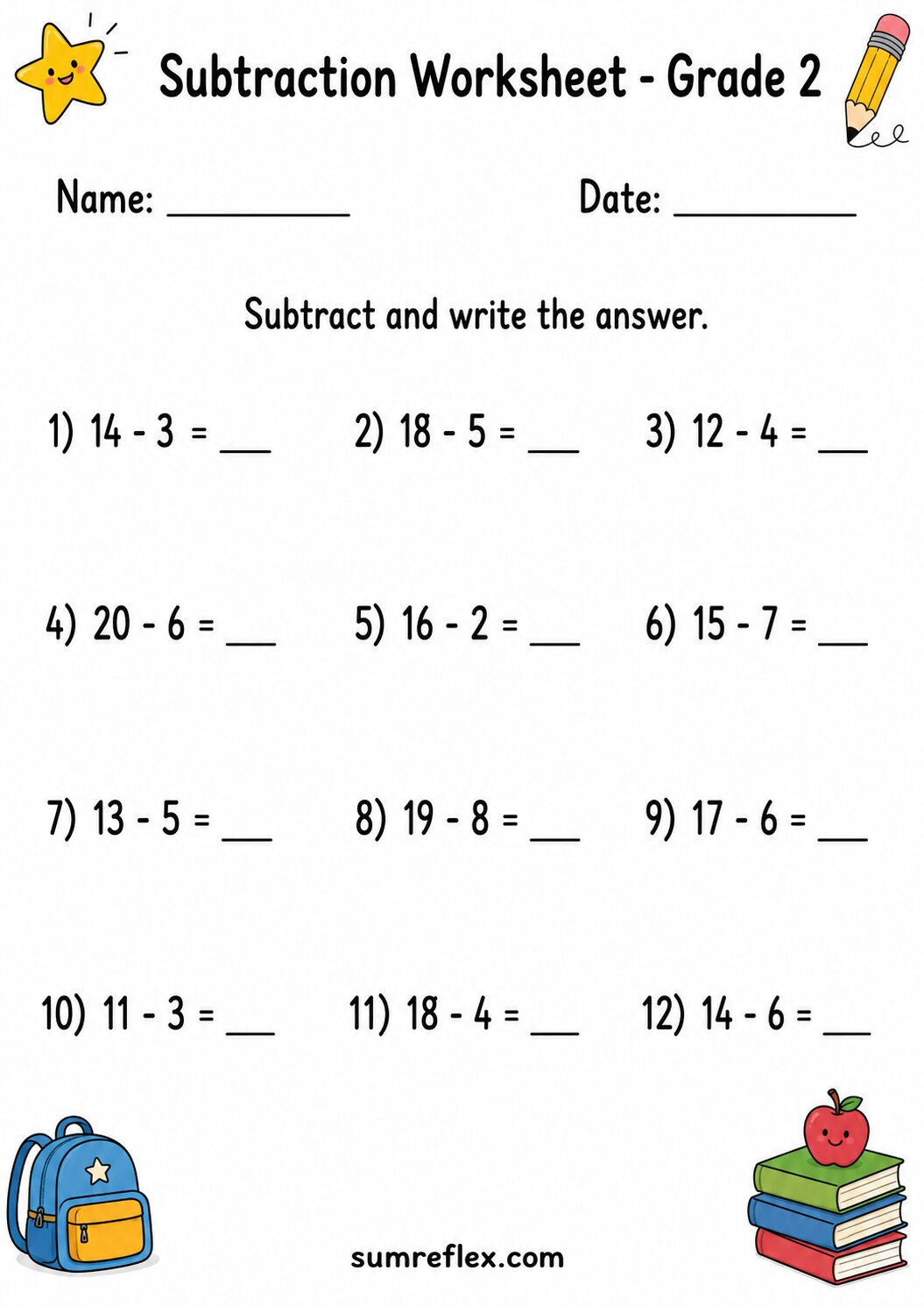
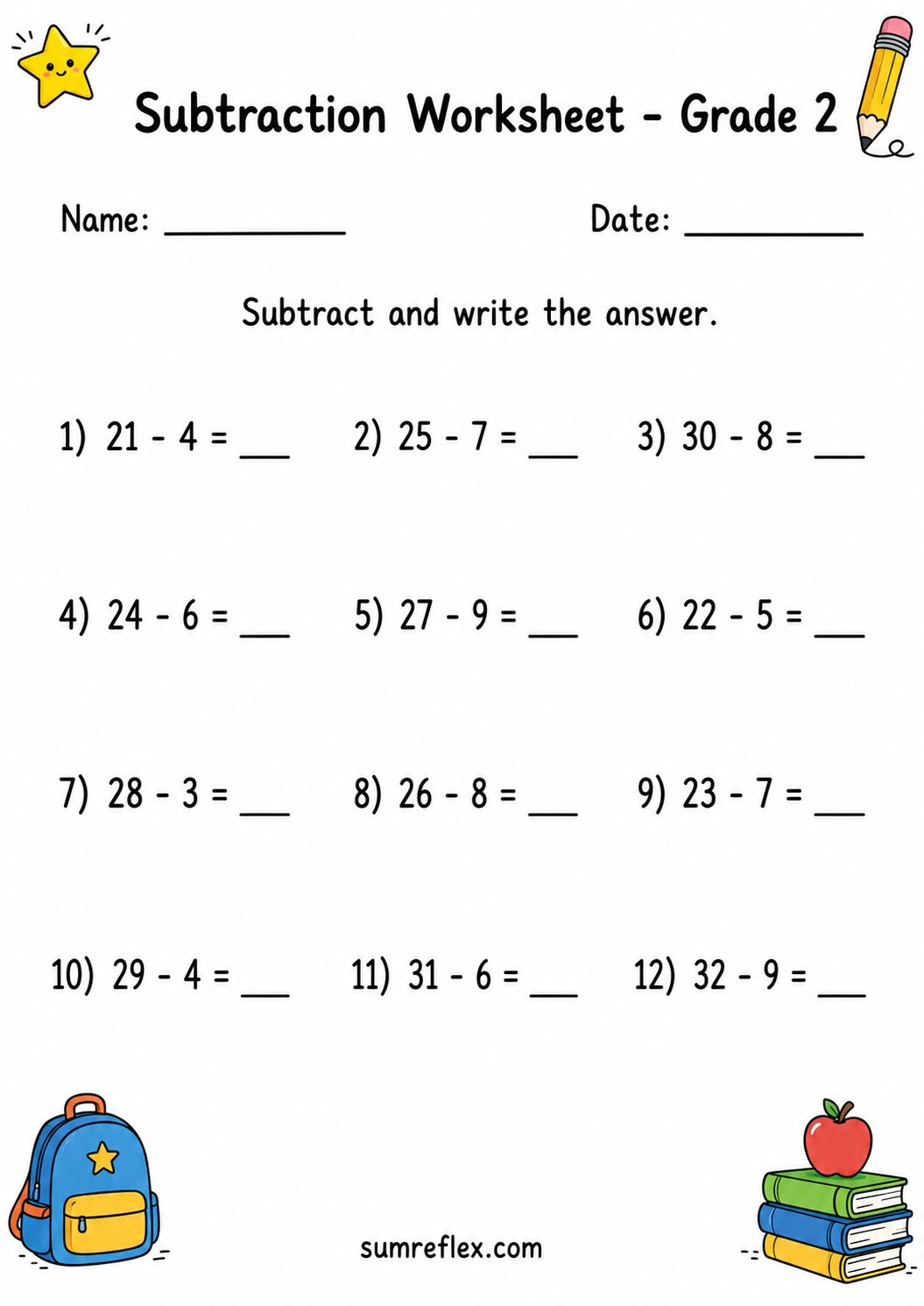
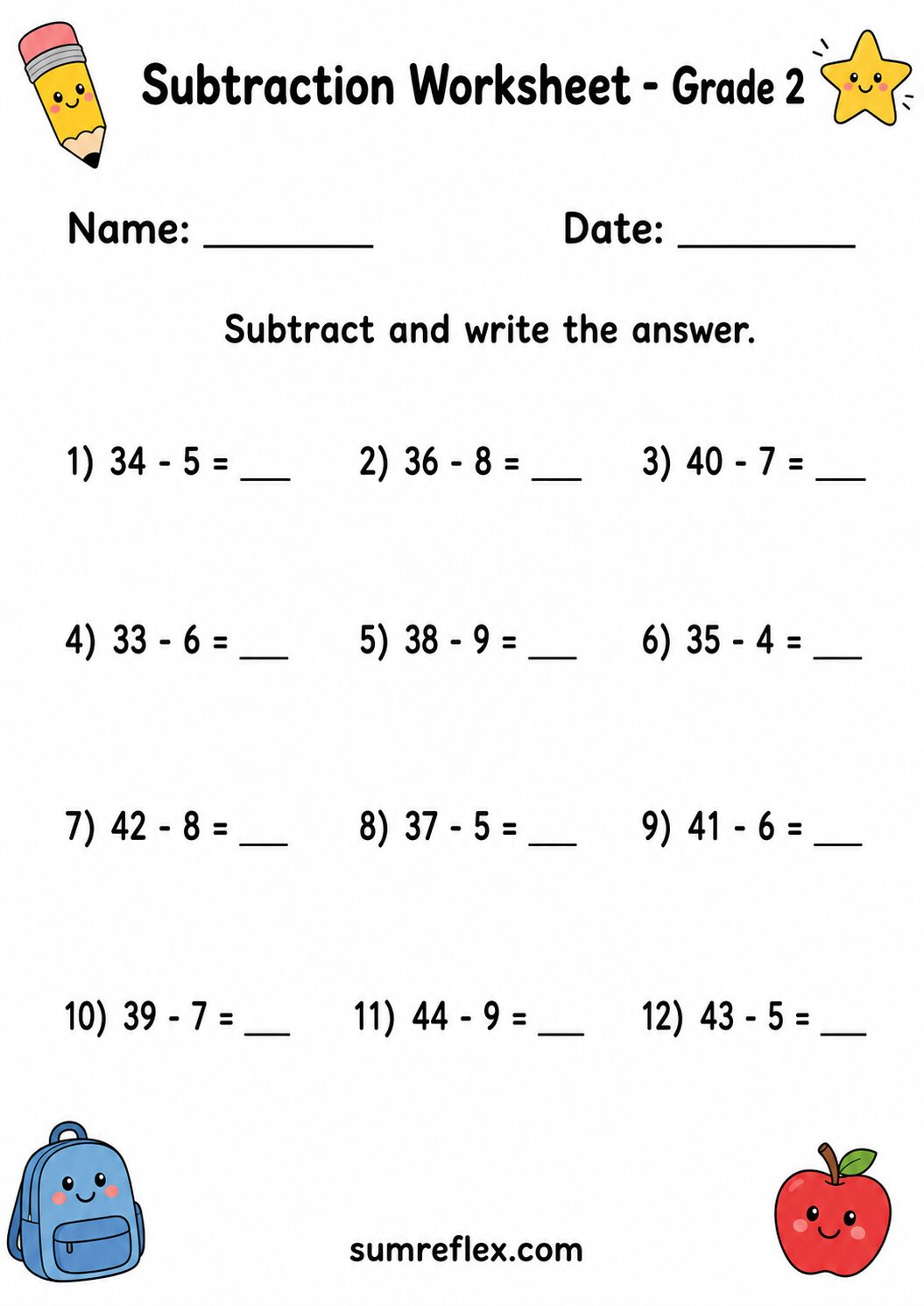
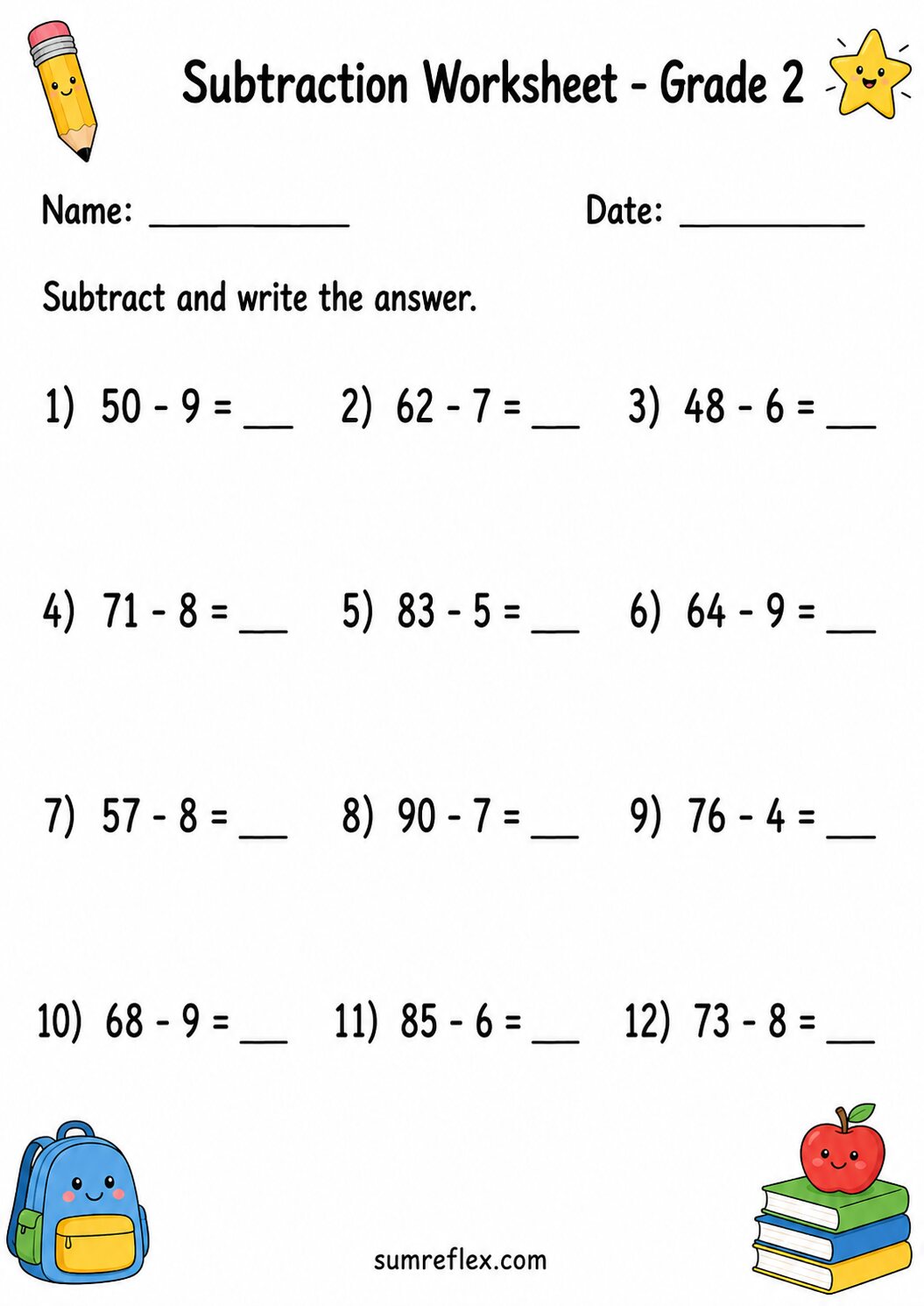
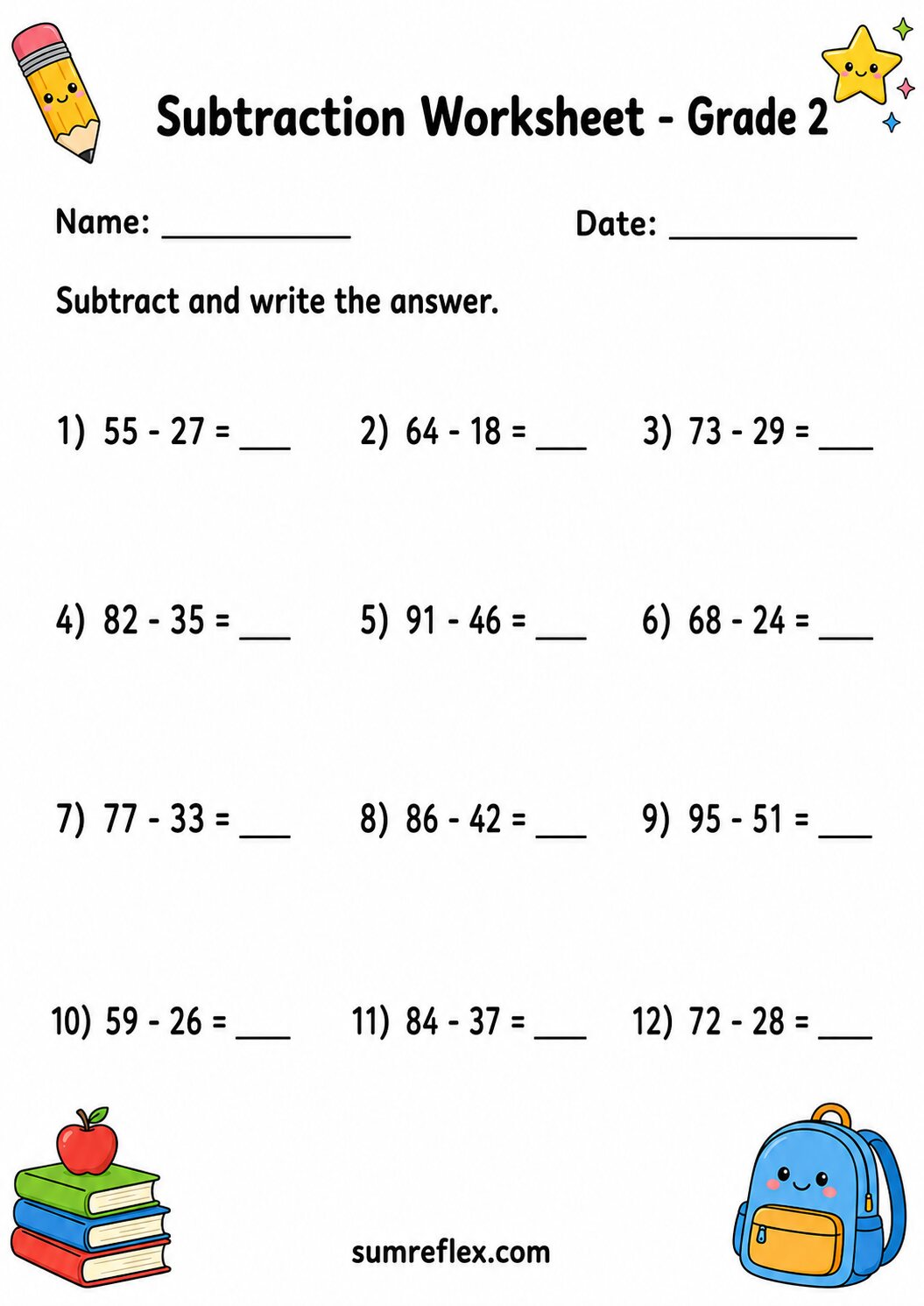
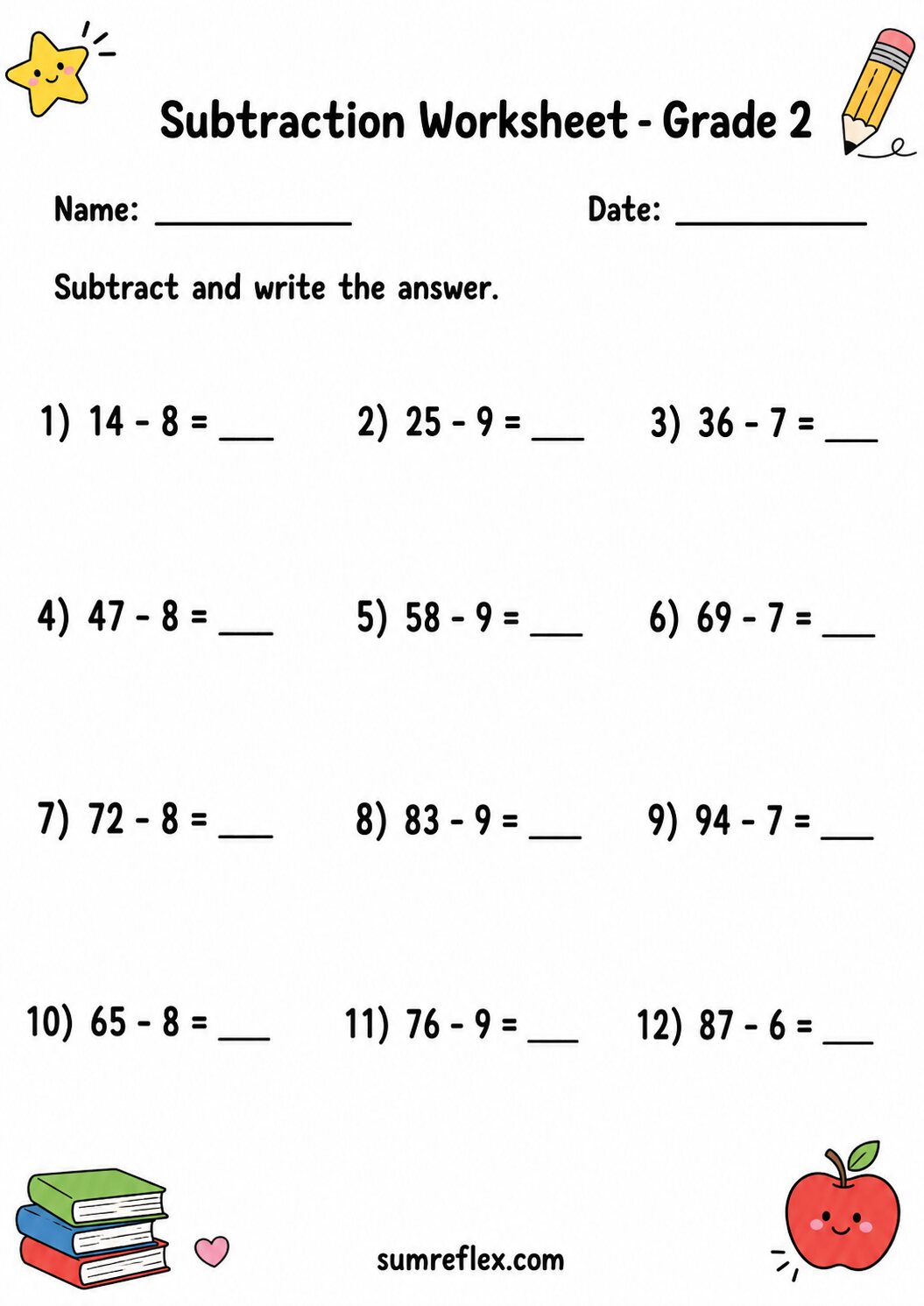
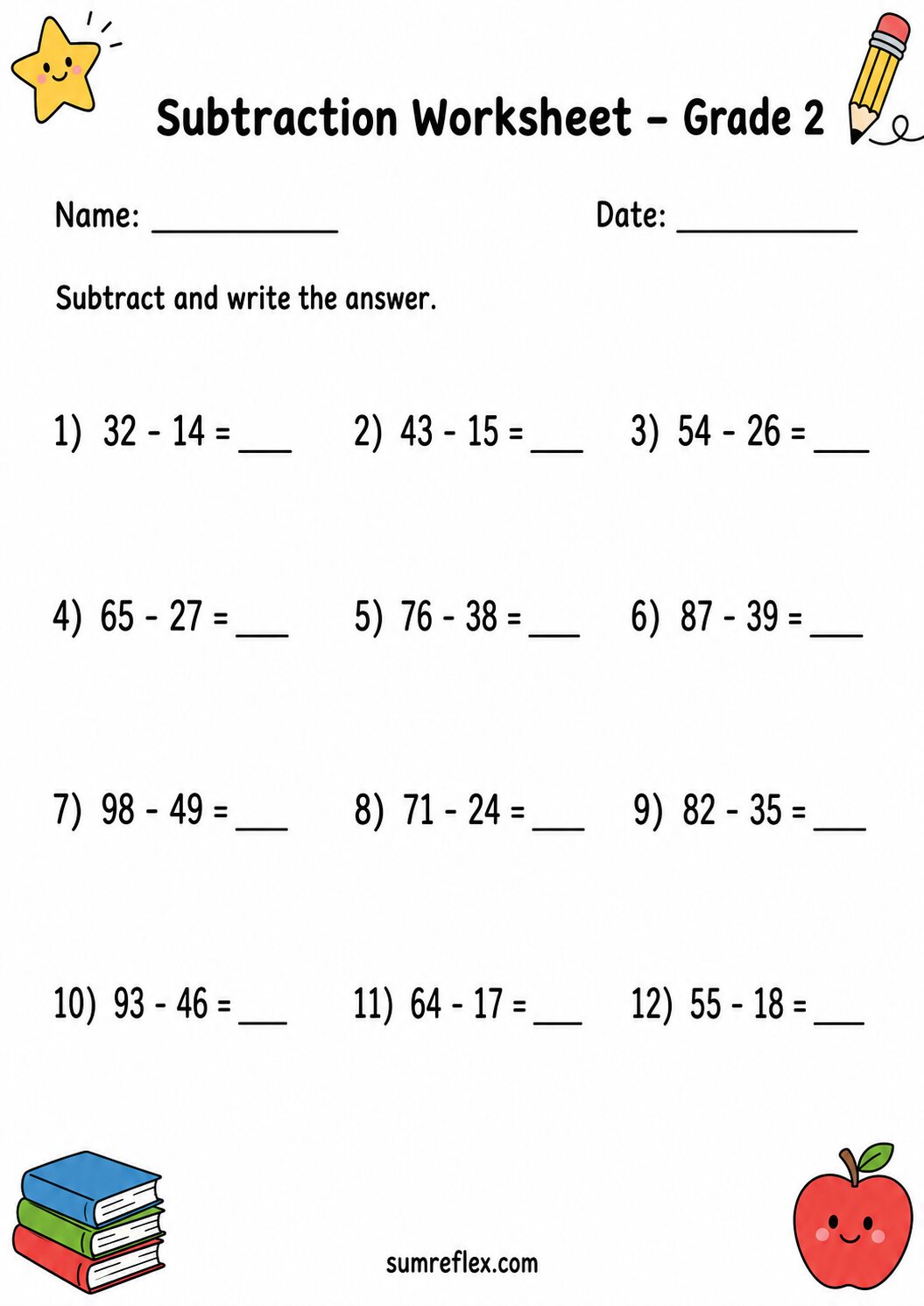
The to-40 and to-50 worksheets are not filler. They are useful when students need more two-digit subtraction but are not ready for the full within-100 range. Use those pages after a hard sheet goes poorly, or before a larger review when you want a confidence-building warmup that still uses real two-digit numbers.
Mixed sheets should come last
The mixed and fluency worksheets are strongest after the focused pages. They ask students to recognize the size of the problem, subtract accurately, and check whether the difference is believable. If a mixed sheet has scattered errors, sort the missed problems by type. That tells you whether the next page should be smaller numbers, bigger minuends, or addition-check practice.
Number lines can show distance back
A number line is useful when students are not ready to subtract entirely in their heads. Start at the minuend and count backward by ones, tens, or friendly chunks. For 65 - 12, a student might move back 10 to 55 and then back 2 to 53. That method keeps the answer connected to distance, not just a memorized rule.
Look for answers that grow
One quick way to catch an error is to ask whether the difference became larger than the starting number. In ordinary take-away subtraction, that should not happen. If 42 - 7 becomes 49, the child probably added instead of subtracted. Teach students to scan for that kind of impossible answer before the worksheet is handed in. It builds self-checking without needing a full answer key.
Missing tens show up in the check
A common two-digit subtraction mistake is losing or adding an extra ten. The answer may look reasonable at first, but the addition check usually exposes it. If 83 - 27 is written as 66, adding 66 + 27 gives 93, not 83. This kind of review teaches students that checking is not a punishment after an error; it is part of the calculation.