



Two-digit addition starts with place value
Grade 2 addition is not just bigger Grade 1 facts. Students now have to keep tens and ones organized while they work. Even when the equation is written across the page, the child should still notice which part belongs to the ones place and which part belongs to the tens place. That habit prevents answers that look close but lose a ten along the way.
Small addends are not throwaway practice
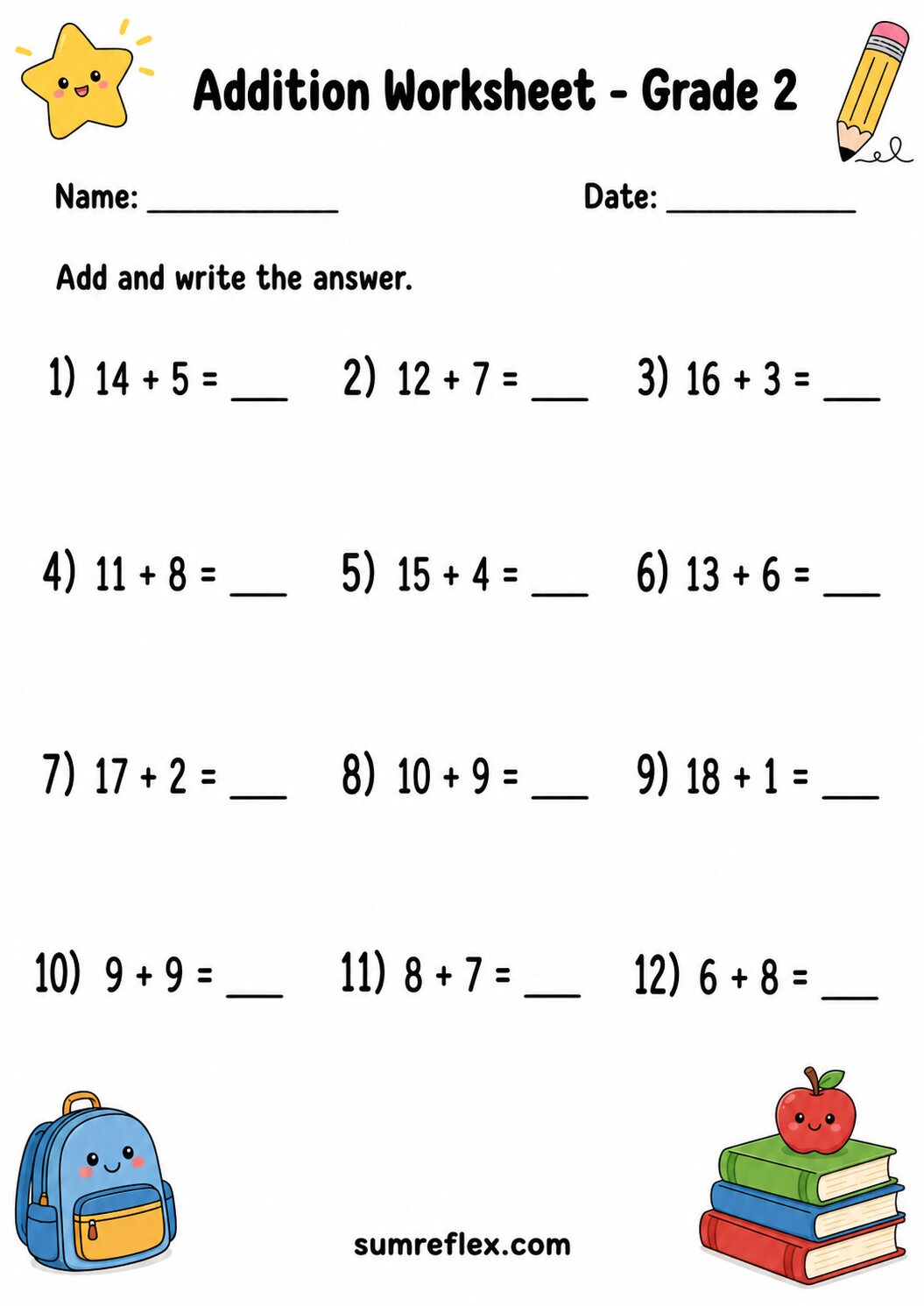
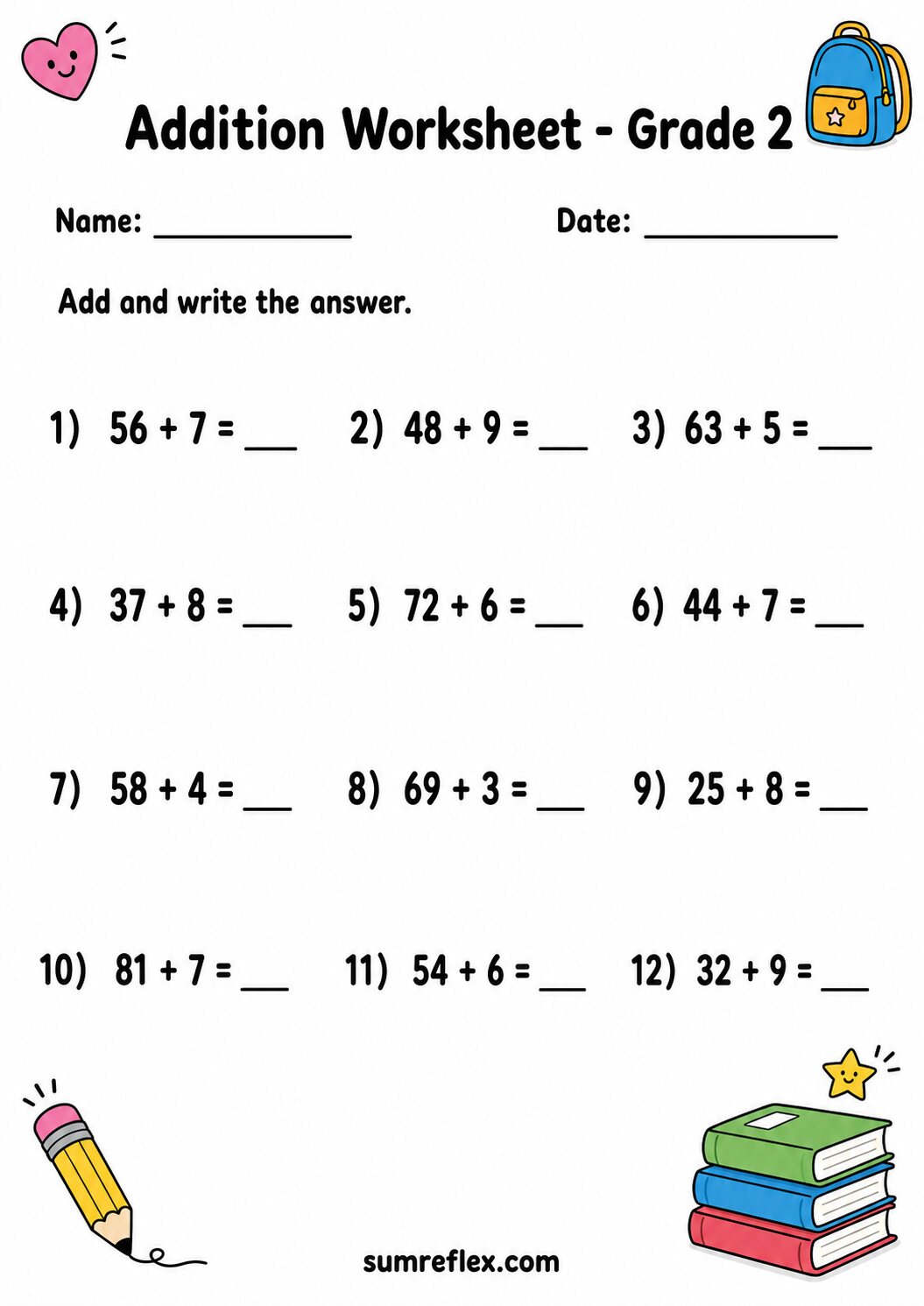
Adding a small number to a two-digit number is a powerful mental math step. For 43 + 6, the student can hold 43 and count forward six spaces. This builds a bridge between first-grade counting-on and later two-digit computation. If a child struggles here, larger addition will usually feel shaky too, so the small-addend sheet is worth using slowly.
Teen addends add two jobs at once
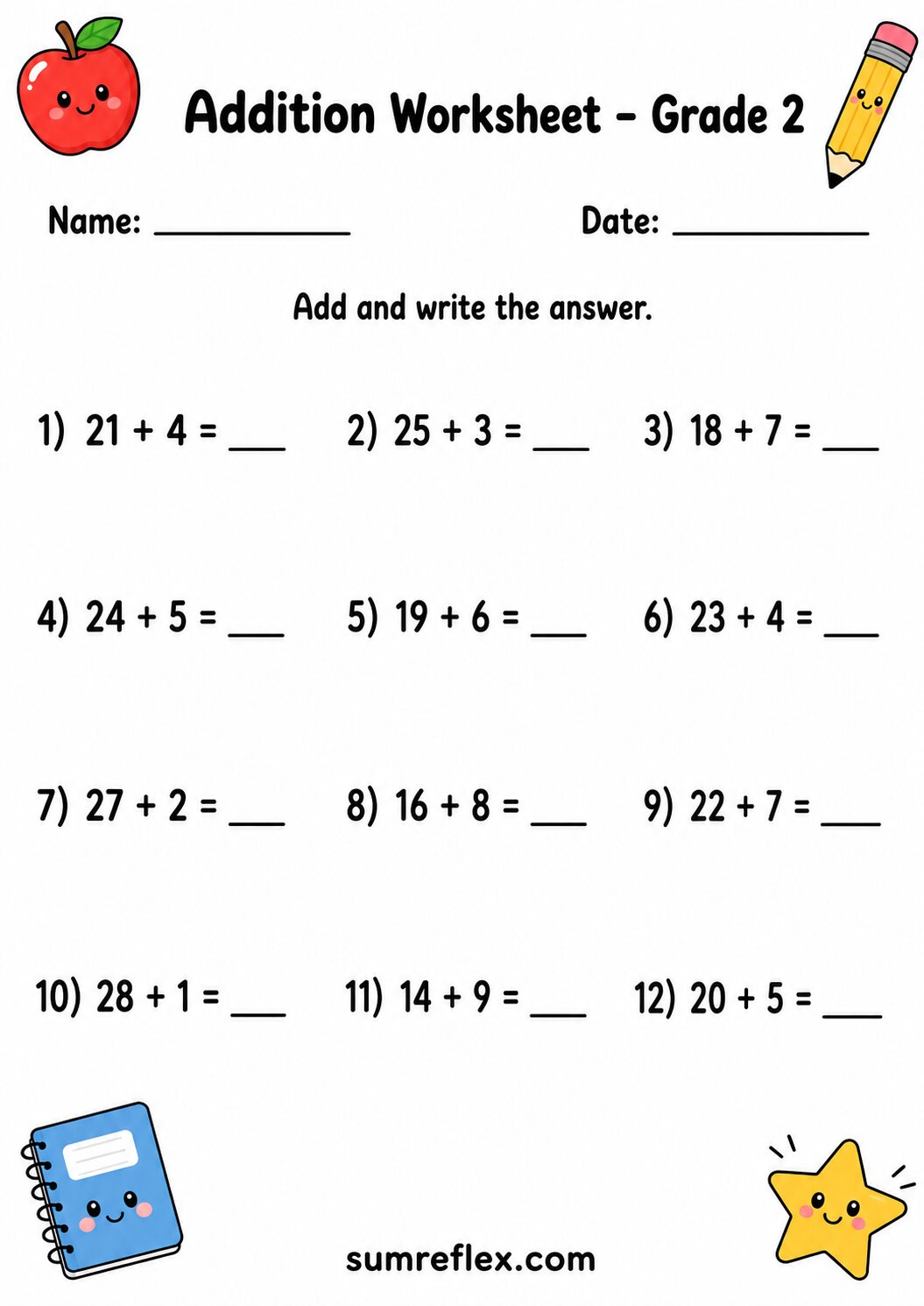
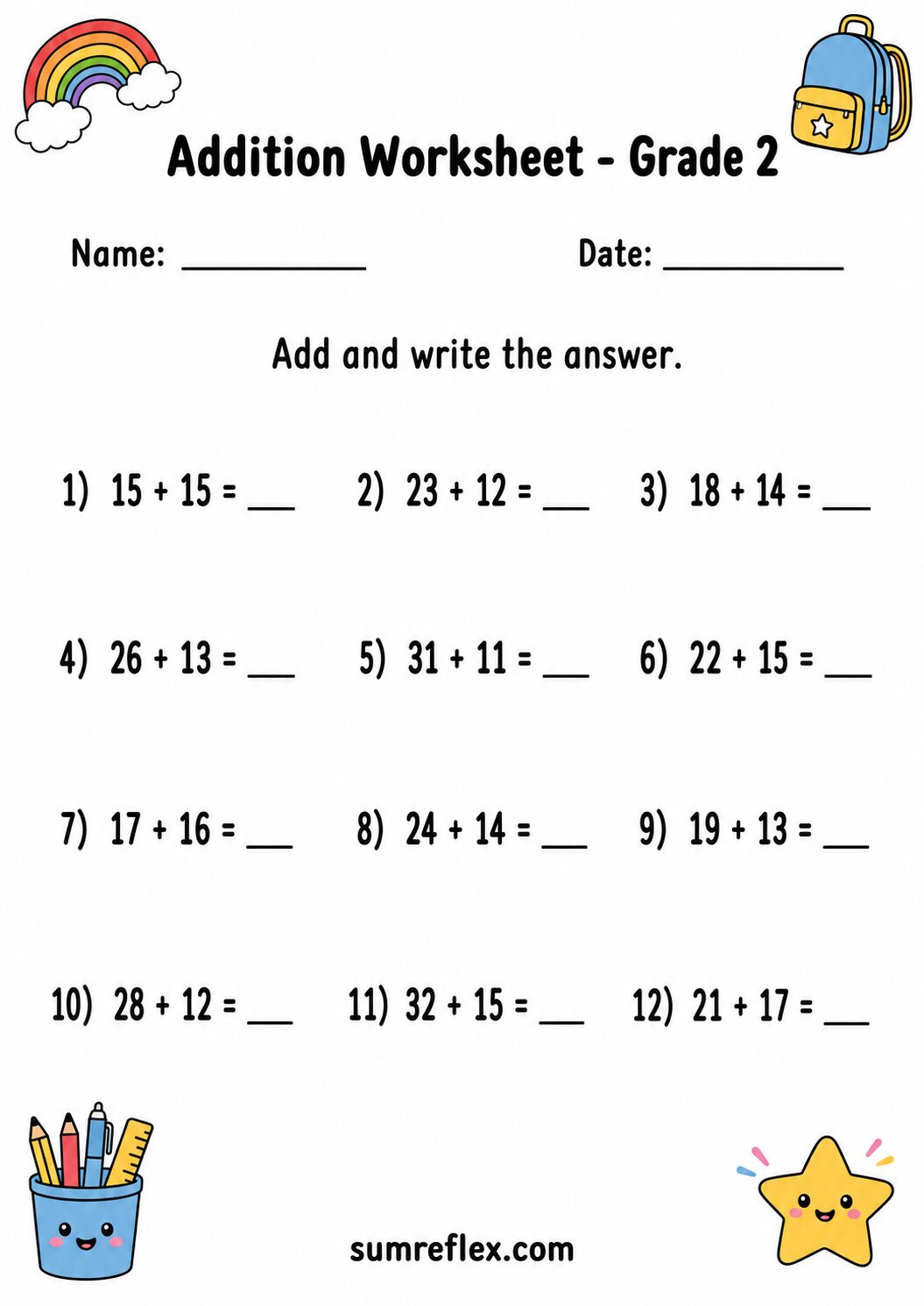
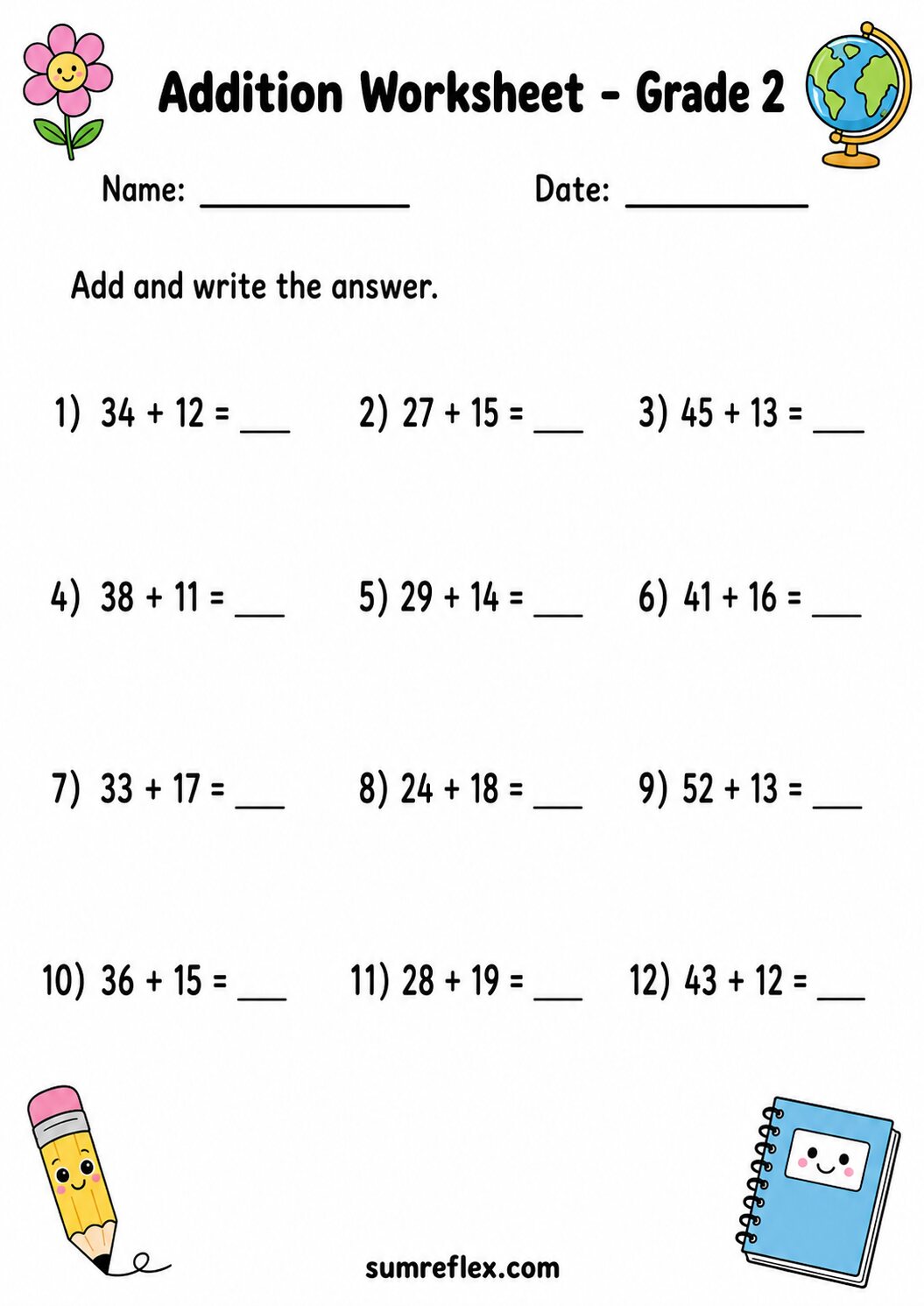
Teen numbers are useful because they contain one ten plus extra ones. A problem such as 36 + 17 can be handled as 36 + 10 + 7. That is a more thoughtful move than trying to count seventeen separate steps. The teen-addend worksheet gives students repeated practice breaking a number apart without needing a full vertical setup.
Estimation catches impossible sums
Second graders should start asking whether an answer is reasonable. If 49 + 8 becomes 147, the answer is not just a little off; it is a place-value error. Before checking with exact arithmetic, ask students to say a rough answer. Forty-nine plus about ten should be near sixty. This quick estimate makes the worksheet a reasoning task, not only a writing task.
When to use the hundred-range pages
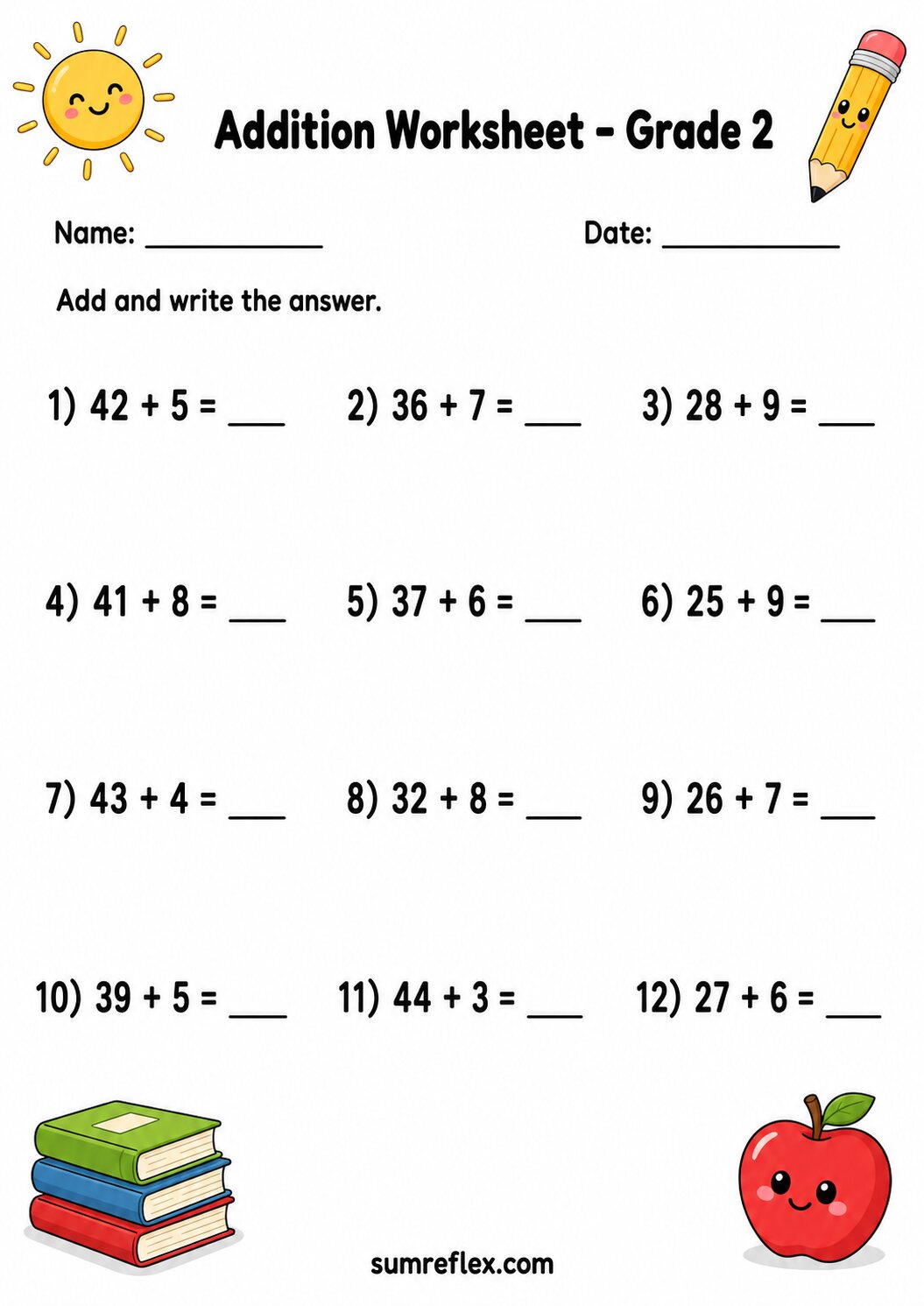
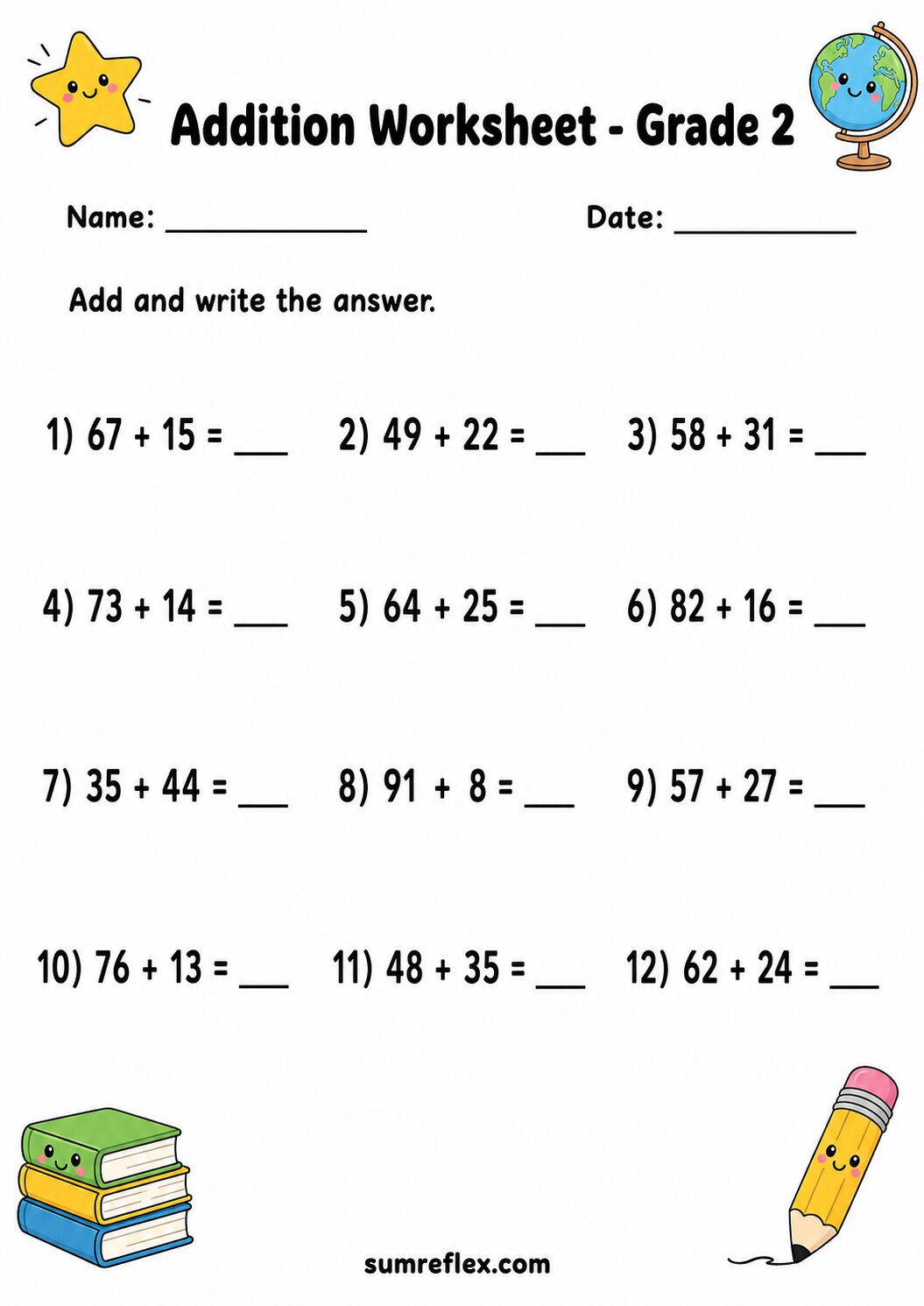
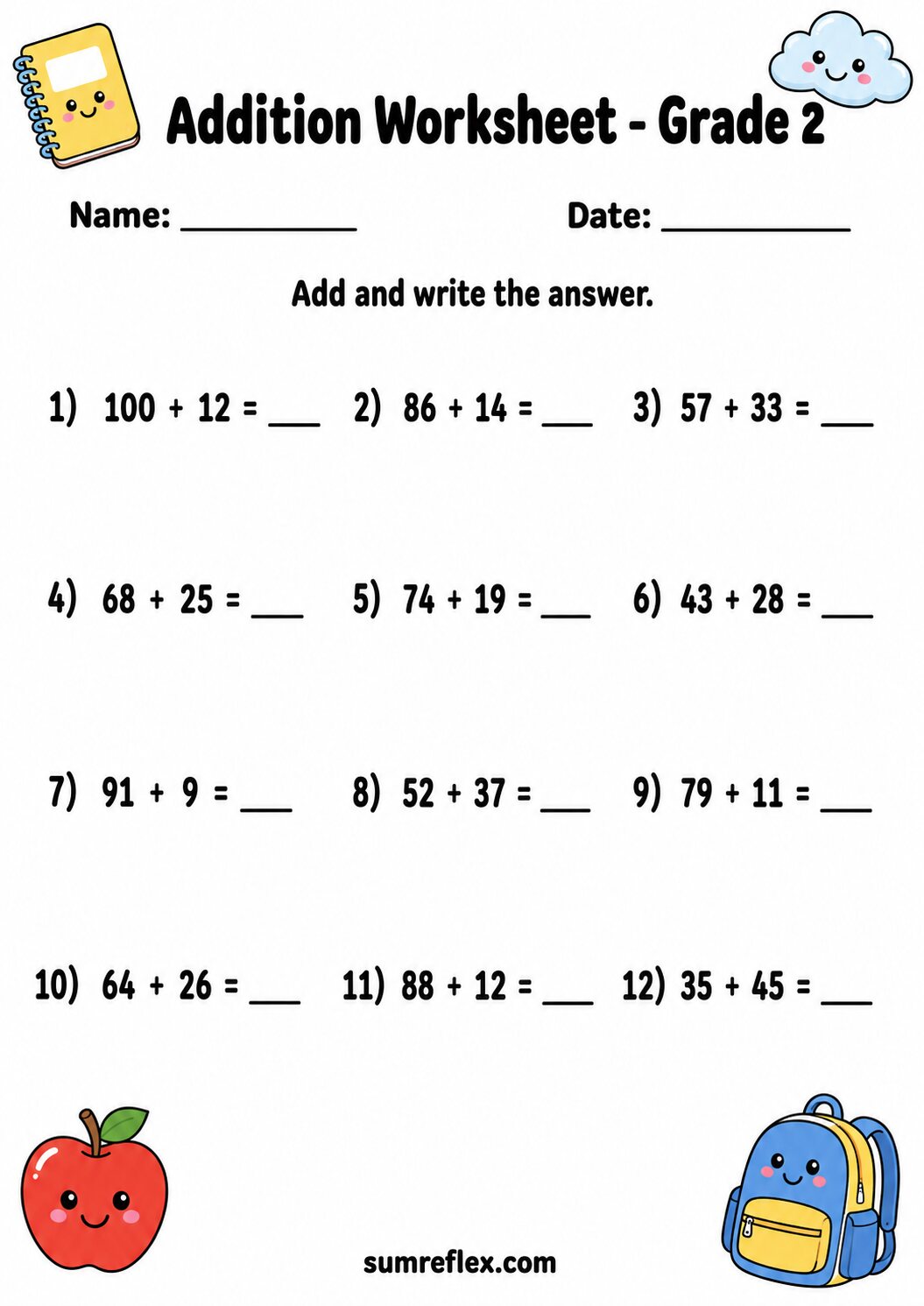
The addition-to-90 and addition-to-100 sheets should come after students are comfortable with smaller totals. Those pages are better for review, not first exposure. If mistakes cluster around regrouping or lost tens, return to a moderate-total page and rehearse the ones first, then the tens. Moving down in difficulty for one day often makes the larger page easier later.
A review routine after printing
After a worksheet is complete, choose one correct answer and one incorrect answer for discussion. Ask the student to explain why the correct answer makes sense, then rebuild the missed problem with a number line, expanded form, or tens-and-ones language. This keeps review focused and avoids turning the whole page into a long correction session.
Horizontal problems still need structure
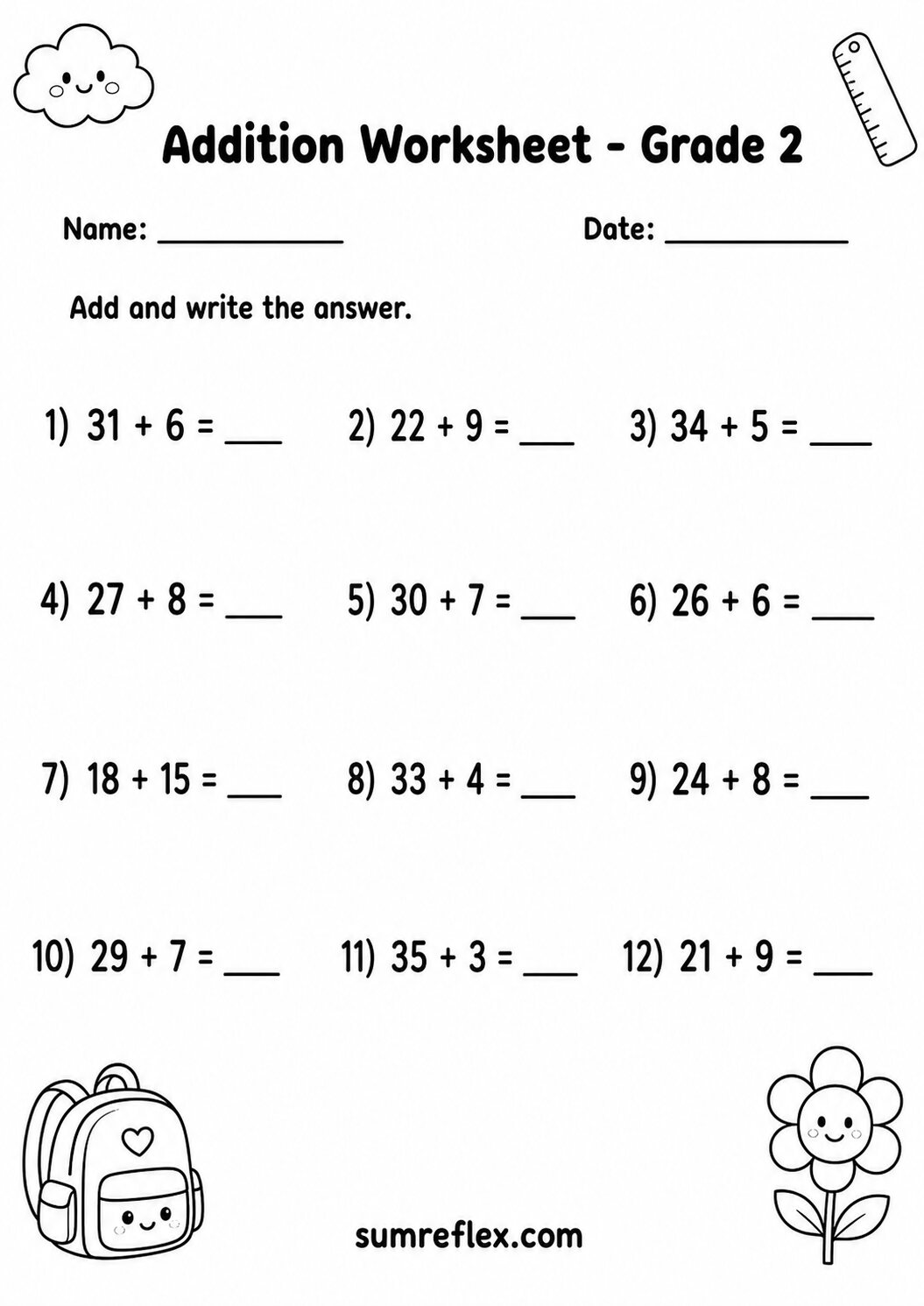
Because these worksheets use a simple horizontal format, students may be tempted to treat every problem like a first-grade fact. Encourage them to rewrite a hard problem vertically on scrap paper or split the addends into tens and ones. The page layout stays clean, but the thinking can still be organized. This is especially helpful when the sum crosses into a new ten.
What a strong explanation sounds like
A good Grade 2 answer explanation is short but specific. Instead of saying I just knew it, a student might say I added 40 and 10 first, then added the ones, or I counted on from 57 by three more. These explanations show which strategy is forming. They also make it easier to spot whether an error came from counting, place value, or copying the number incorrectly.
Expanded form can rescue hard sums
When a problem feels too large, rewrite it in expanded form. A sum like 46 + 28 can become 40 + 20 and 6 + 8. The student then combines the tens and ones instead of staring at two full numbers. This method is slower than mental recall, but it shows the structure clearly and helps repair place-value mistakes.
Use the review page as a sorting tool
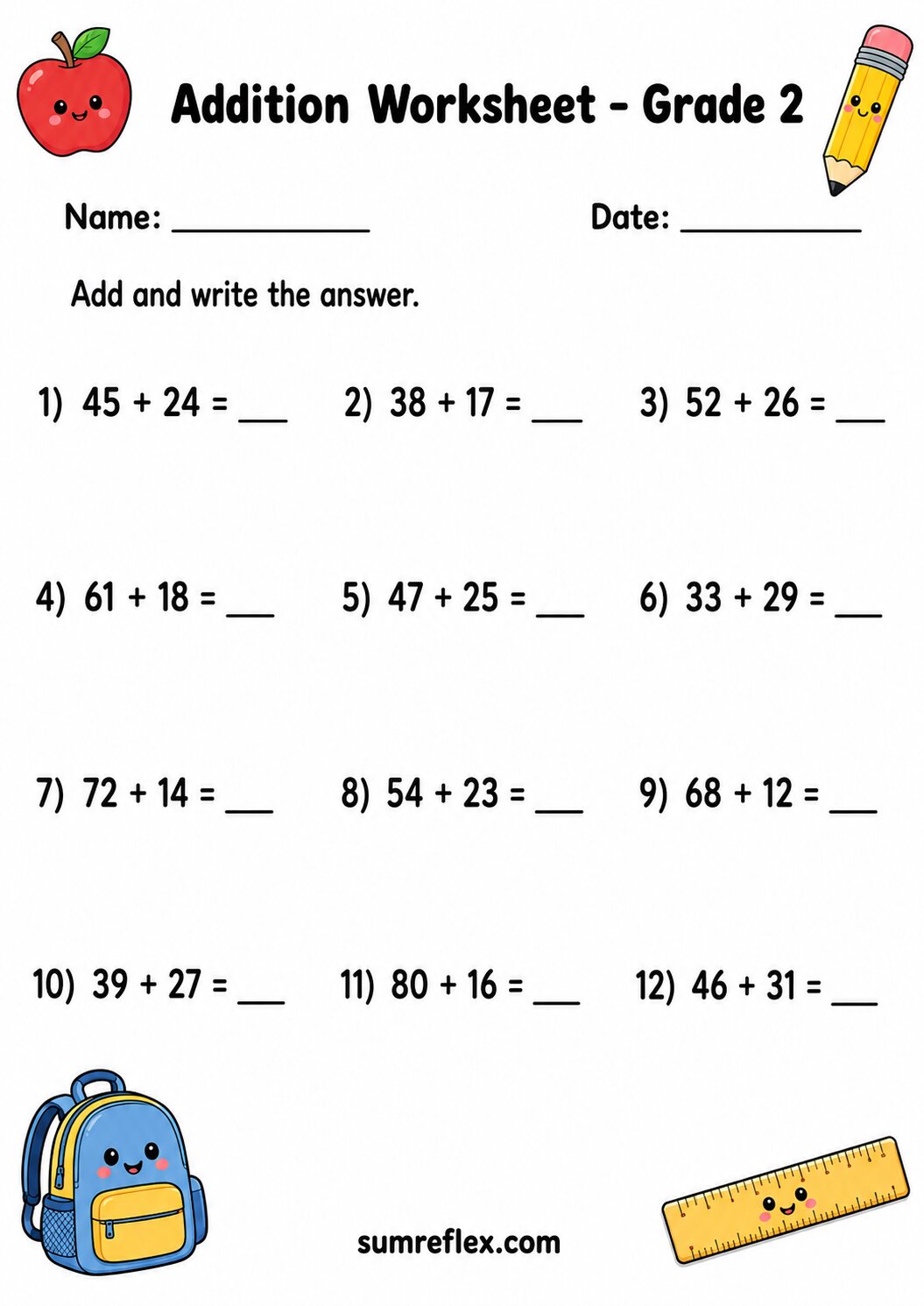
The final review worksheet should tell you what kind of practice comes next. If errors appear mostly on teen addends, return to that page. If the missed answers are close but off by ten, practice expanded form. If the student copies numbers incorrectly, slow the pace and use a ruler or finger to track each line.
Why totals near one hundred matter
Addition close to 100 prepares students for later regrouping, money work, measurement, and multi-step word problems. A child who can judge whether 58 + 37 should be near 90 or near 100 is building number sense, not just completing a worksheet. The larger pages in this set help develop that judgment gradually.