



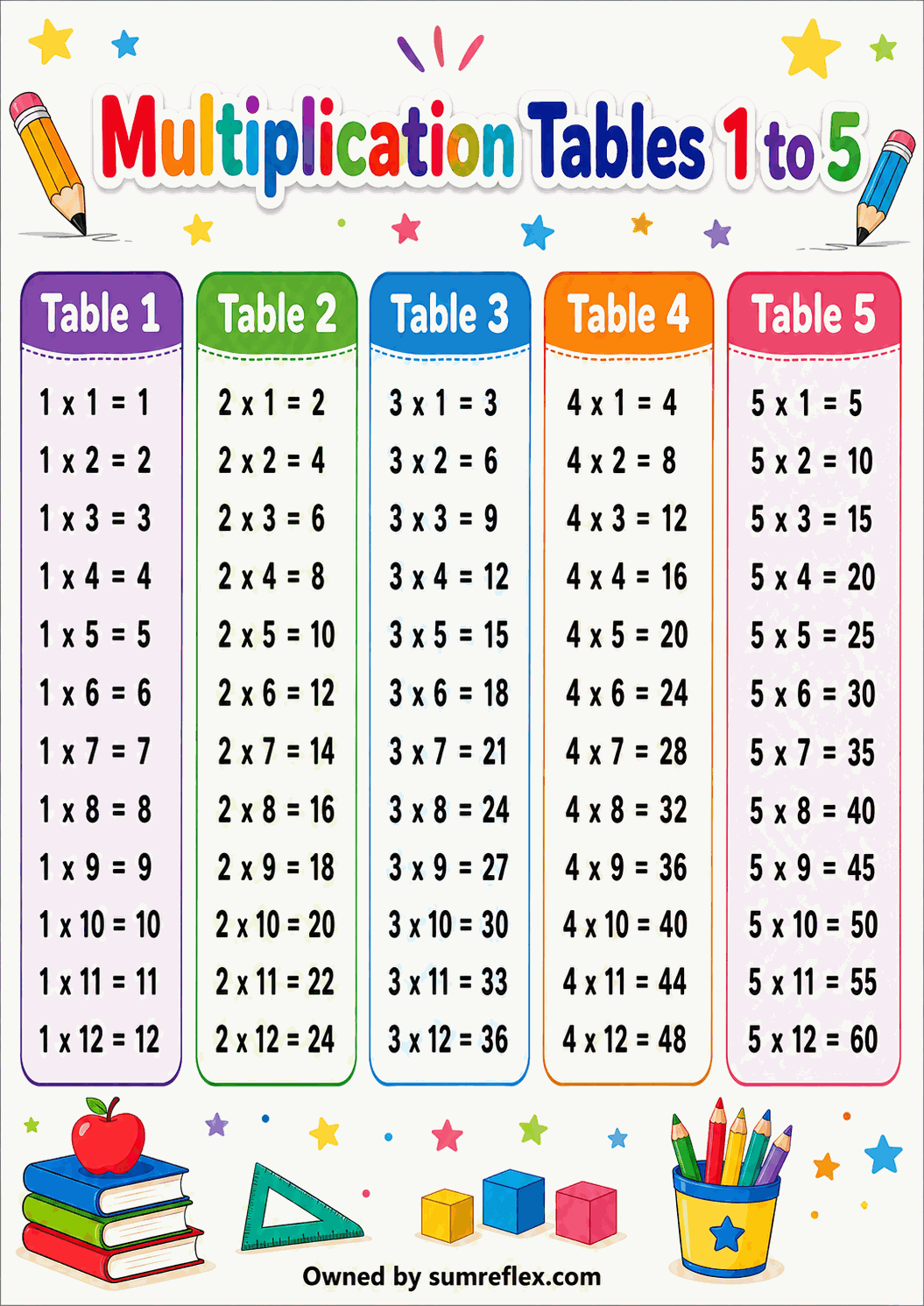
Beginner multiplication chart guide
Starting multiplication with the 1 to 5 chart
The small range keeps the page approachable
A beginner does not need a crowded grid on the first day of multiplication practice. The 1 to 5 chart gives enough structure to show rows and columns, but it keeps the products small. Students can scan the page without losing their place, which makes it useful for early confidence.
The chart includes the identity row, doubles, threes, fours, and fives. Those rows contain many of the first patterns students meet after skip counting.
The 1 row teaches identity
The 1 table may look obvious, but it gives an important idea: one group of a number is the number itself. One times 4 is 4, and one times 5 is 5. That row helps students understand that multiplication is about groups, not just making numbers larger.
Ask students to compare 1 x 5 with 5 x 1. Both products are 5, but the group stories can be different. This is an easy first step toward factor-order conversations.
Rows 2 and 4 show the doubling family
The 2 row supports doubles and even numbers. The 4 row extends that idea by doubling twice. Students can see that 4 x 6 is related to 2 x 6 because 24 is double 12. Seeing both rows on the same page makes that relationship easier to notice.
For focused row work, the 2 times table chart and 4 times table chart give more room for each pattern. This 1 to 5 chart is better for comparison.
Threes and fives add rhythm and real examples
The 3 row gives students a new rhythm after twos. The 5 row connects to clocks, nickels, and tally groups. Placing them in the same small chart helps students compare rows that feel different but still follow the same multiplication structure.
A practical activity is to choose one product from the 3 row and one from the 5 row, then write a story for each. Three bags with 4 apples and five nickels are different stories, but both use equal groups.
Use the chart before mixed worksheets
The page works well before mixed multiplication worksheets because it gives students a safe reference for the first facts. Let them use the chart during early work, then cover selected products as confidence grows. The goal is gradual recall, not sudden removal of support.
When students can use this chart comfortably, the 1 to 10 times table chart is the next broader grid.
A gentle five-day routine
On day one, read each row and talk about what the row means. On day two, cover a few products and fill them in. On day three, draw equal groups for selected facts. On day four, ask facts out of order. On day five, use the chart only to correct missed answers.
This routine keeps practice short and varied. It also helps students understand that the chart is a study tool, not just an answer sheet.
When to keep this smaller chart nearby
Keep the 1 to 5 chart nearby for students who are still learning what multiplication means. Even after they move to larger grids, this page can be useful when a mistake shows that the early facts need a quick reset.
It keeps review simple.