



Tracing is movement practice first
A tracing worksheet is not only a handwriting page. For preschool learners, it teaches the hand how to start, move, turn, stop, and stay on a path. The dots or guides reduce the planning load so the child can focus on the motion. That is why slow, careful tracing is more useful than racing through every line.
Finger tracing can come before pencil tracing
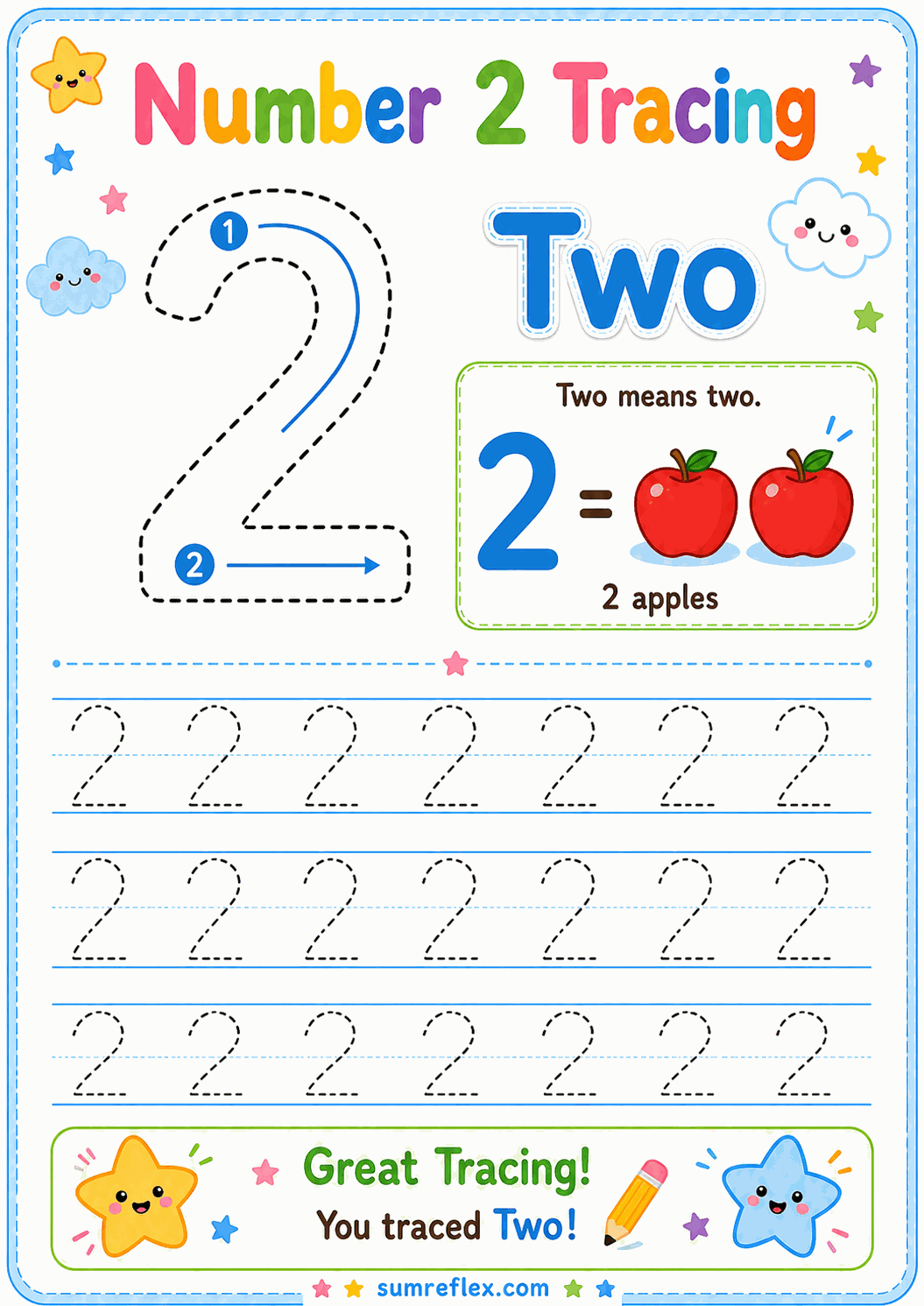
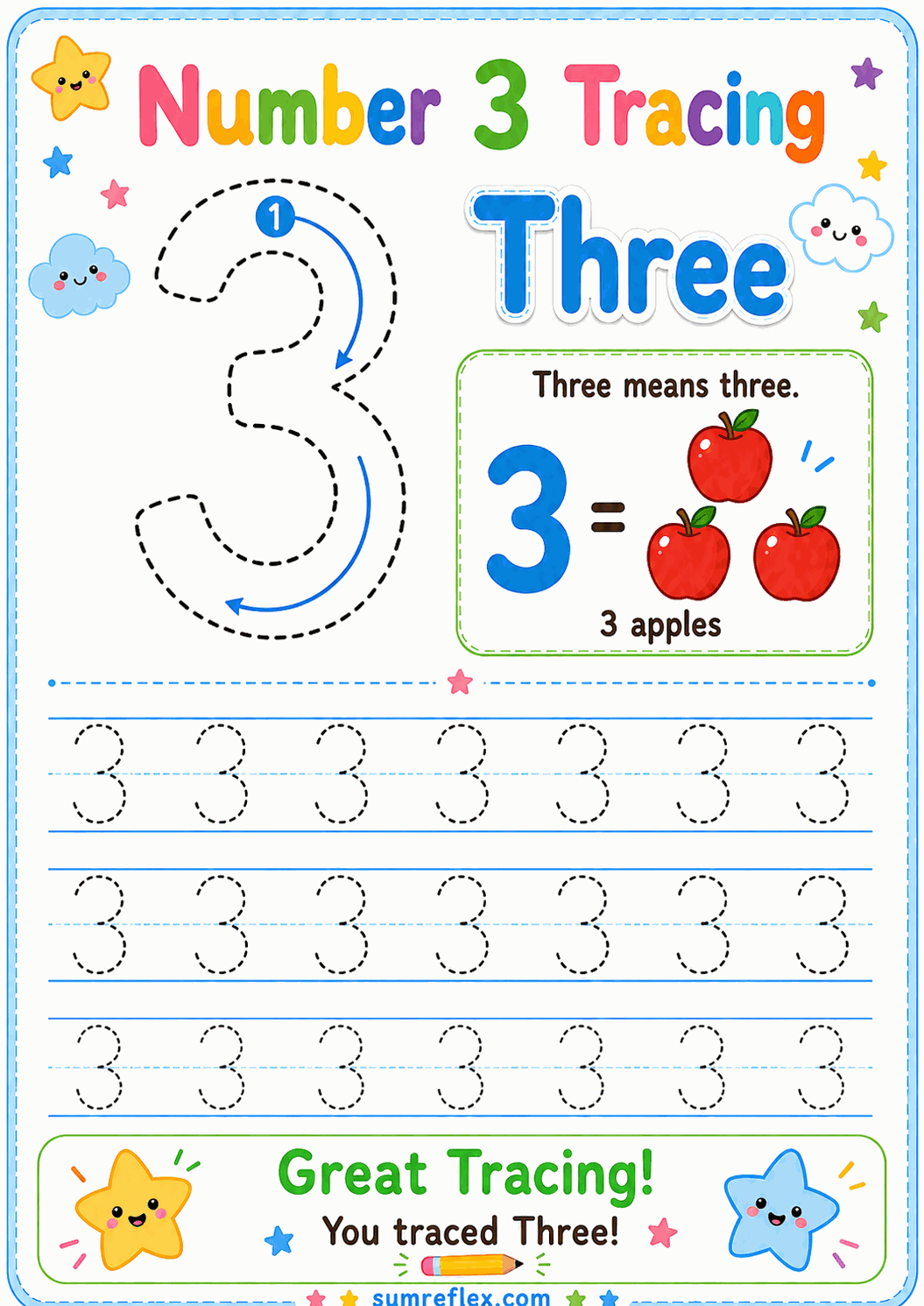
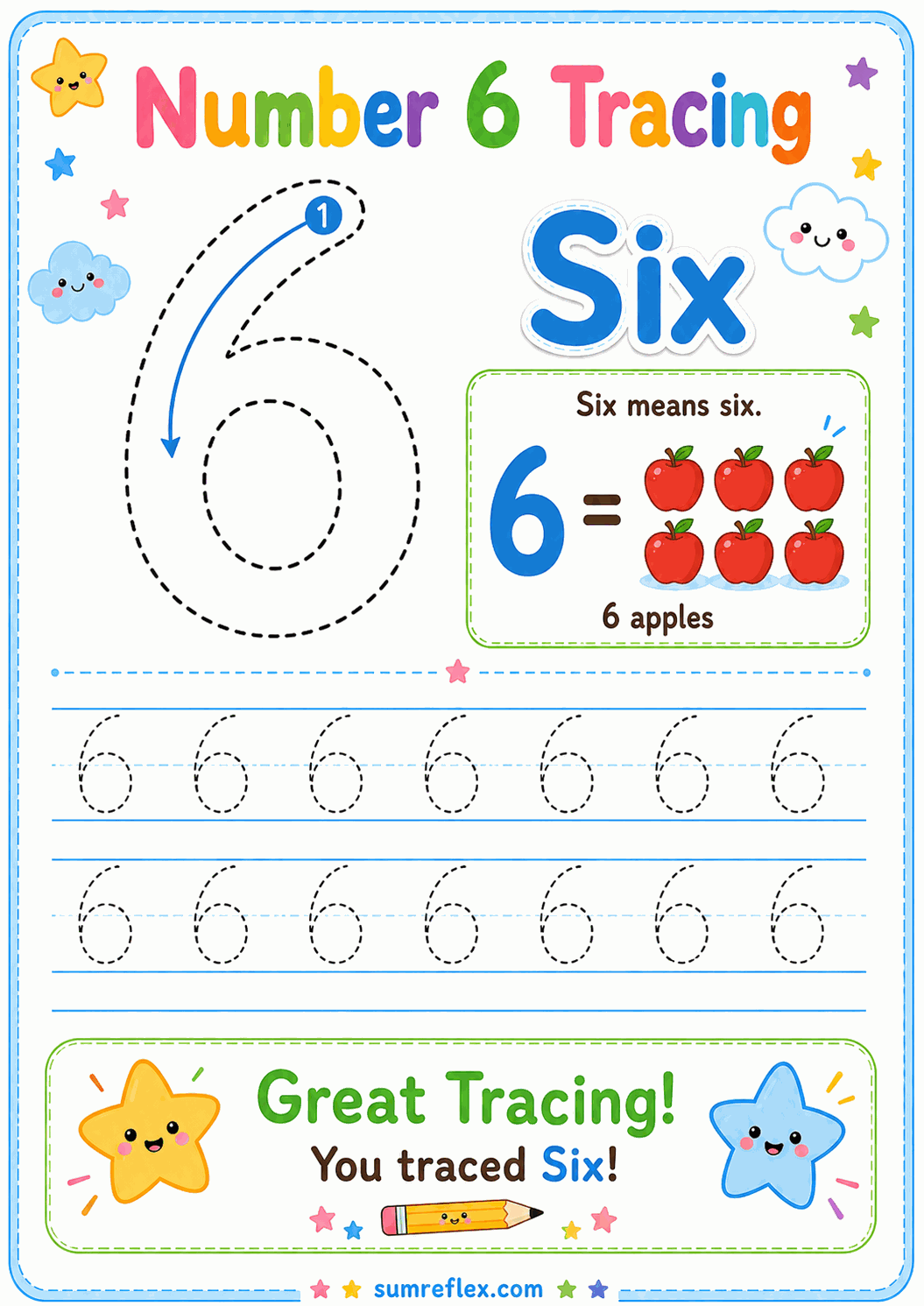
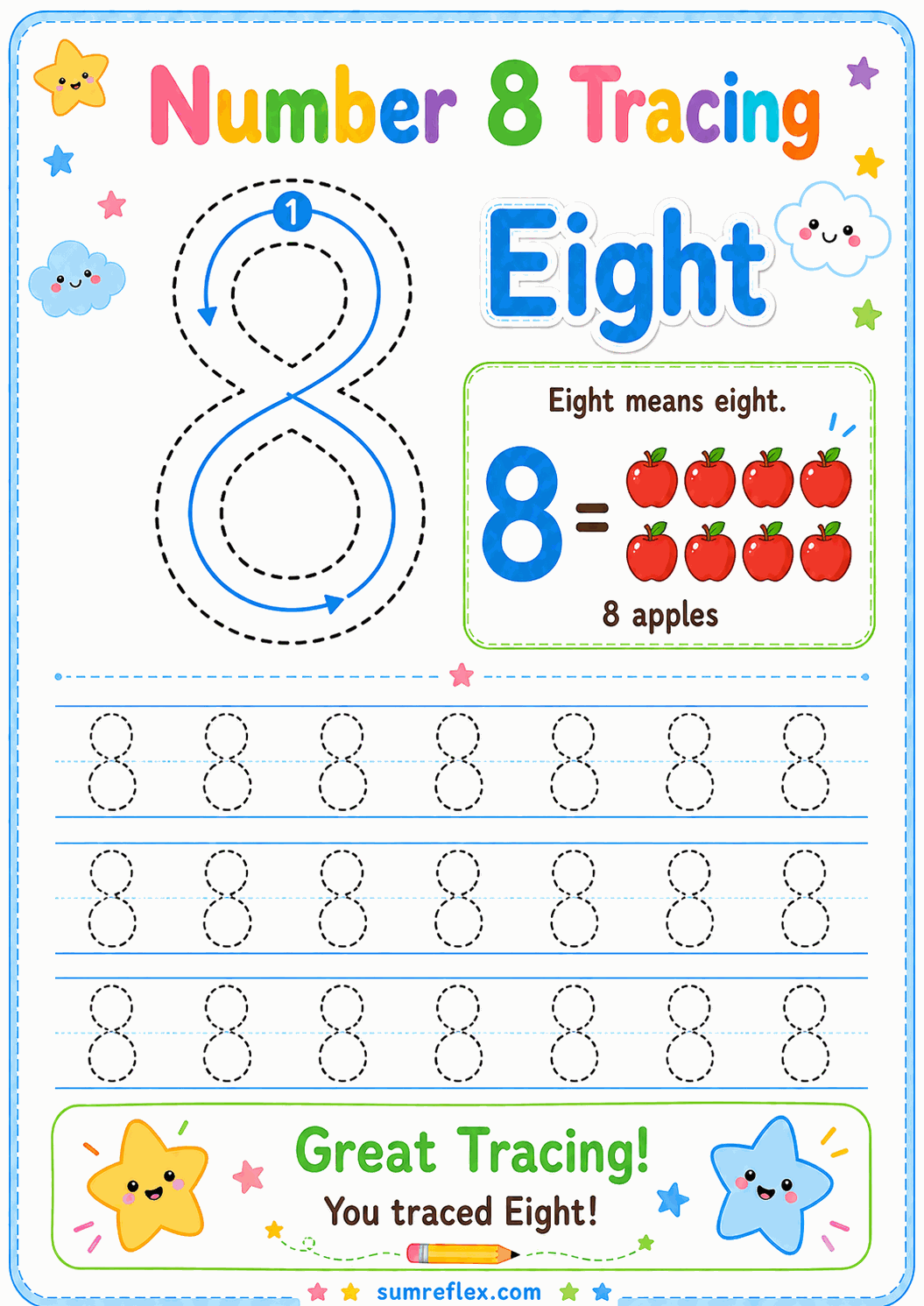
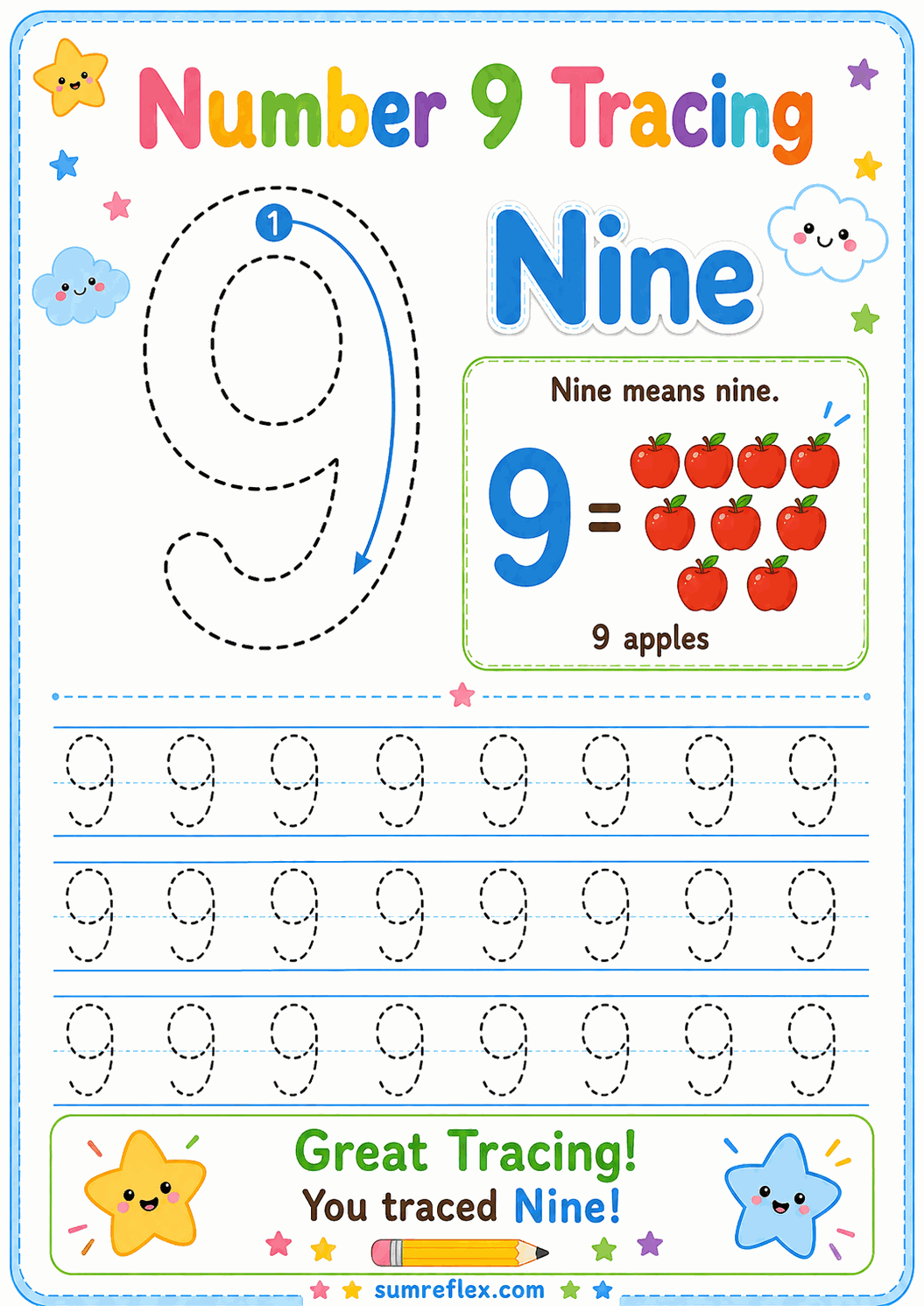
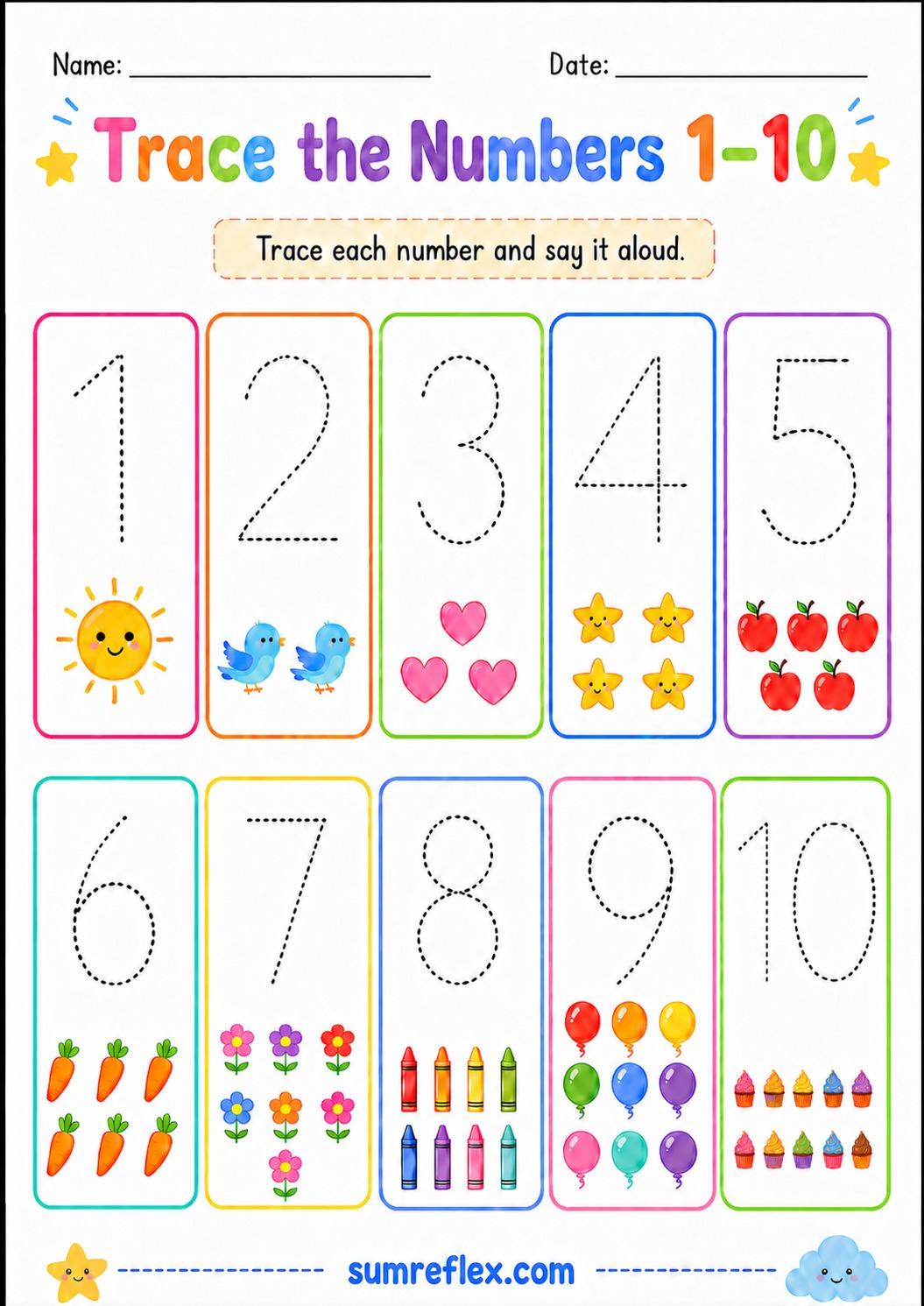
Before a pencil touches the page, ask the child to trace the largest model with a finger. This gives the hand a rehearsal and helps the eyes follow the route. Finger tracing is especially helpful for numerals with curves, such as 2, 3, 6, 8, and 9, because the movement can be felt before it has to be written.
Each numeral has a different motor problem
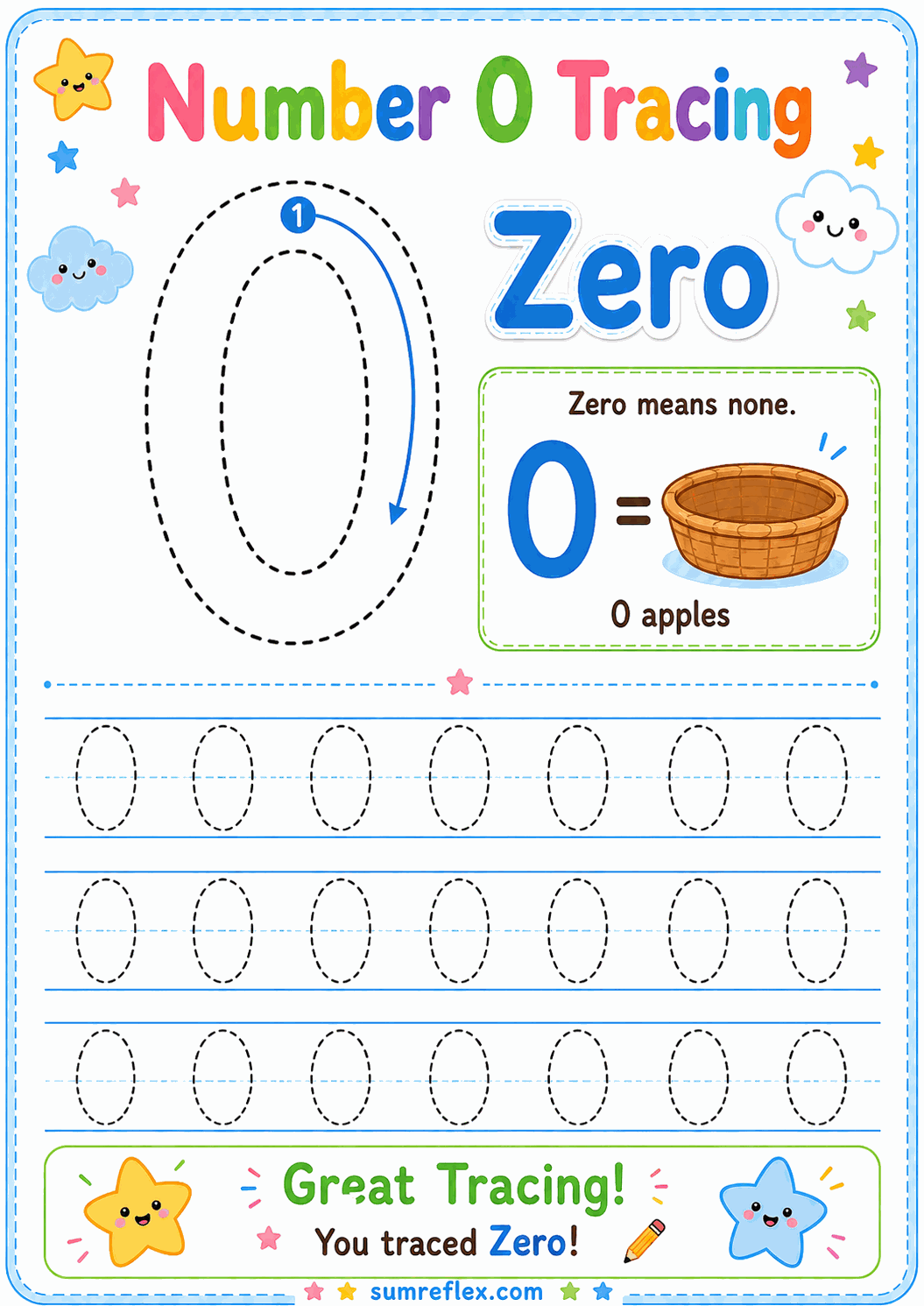
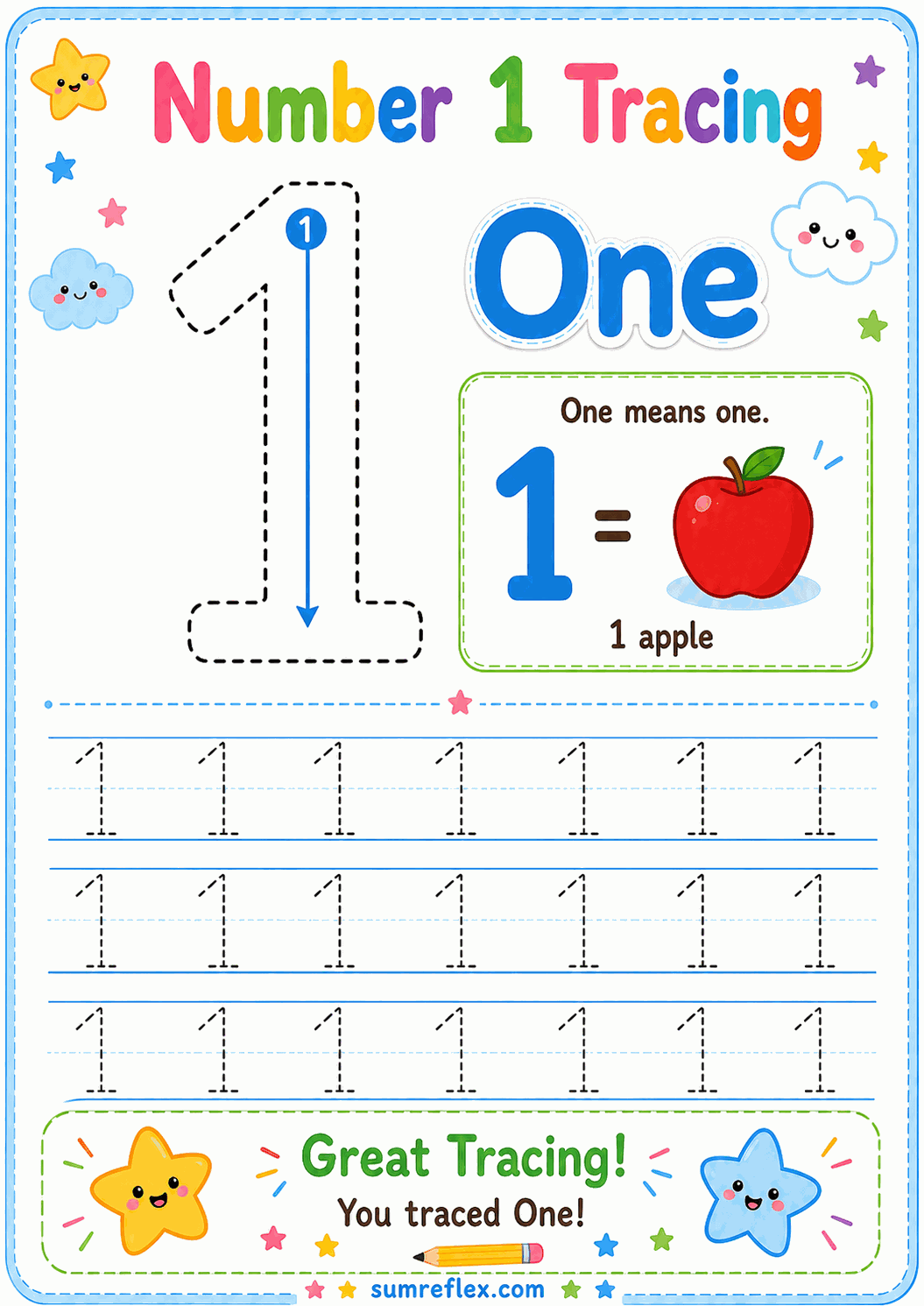
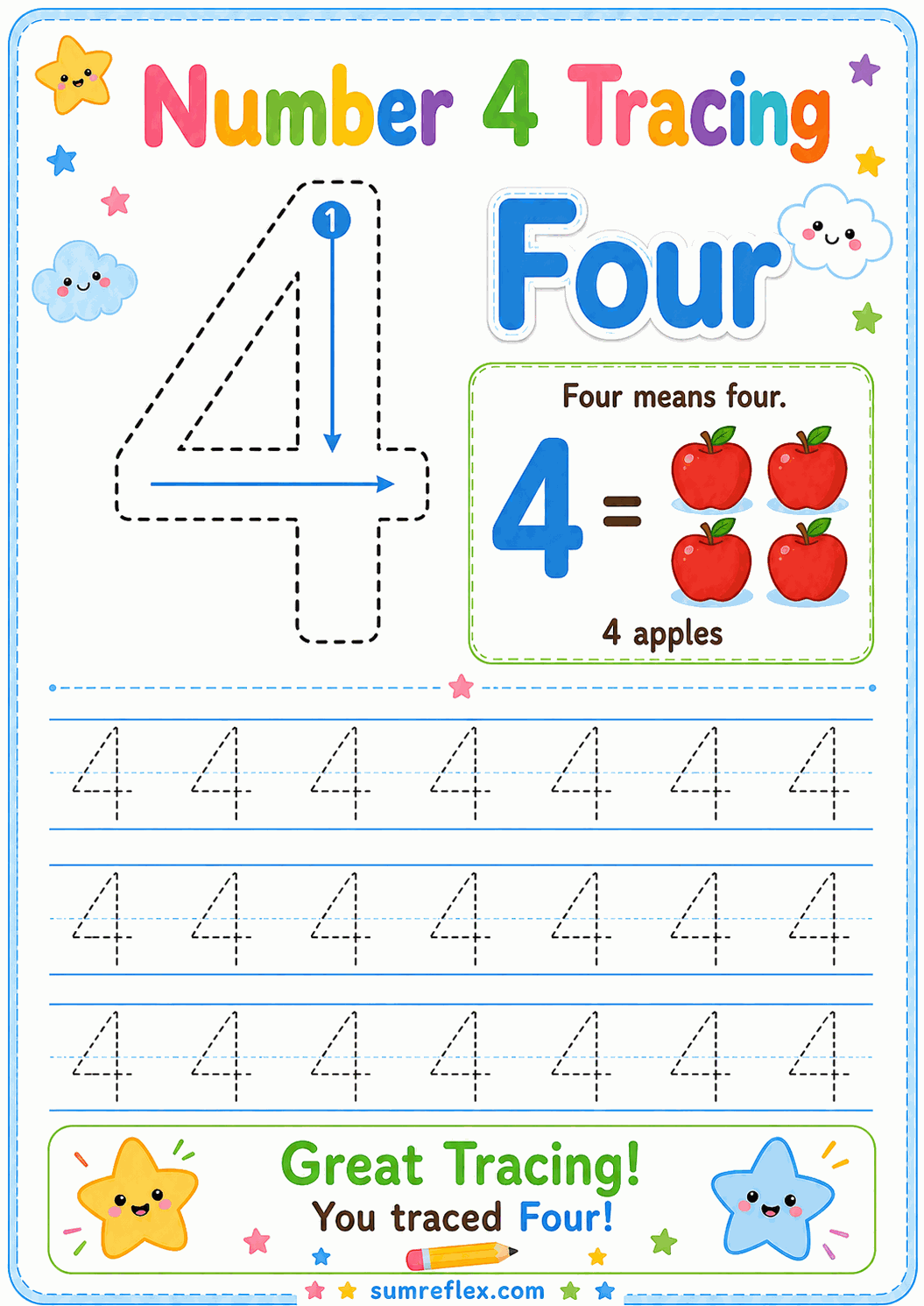
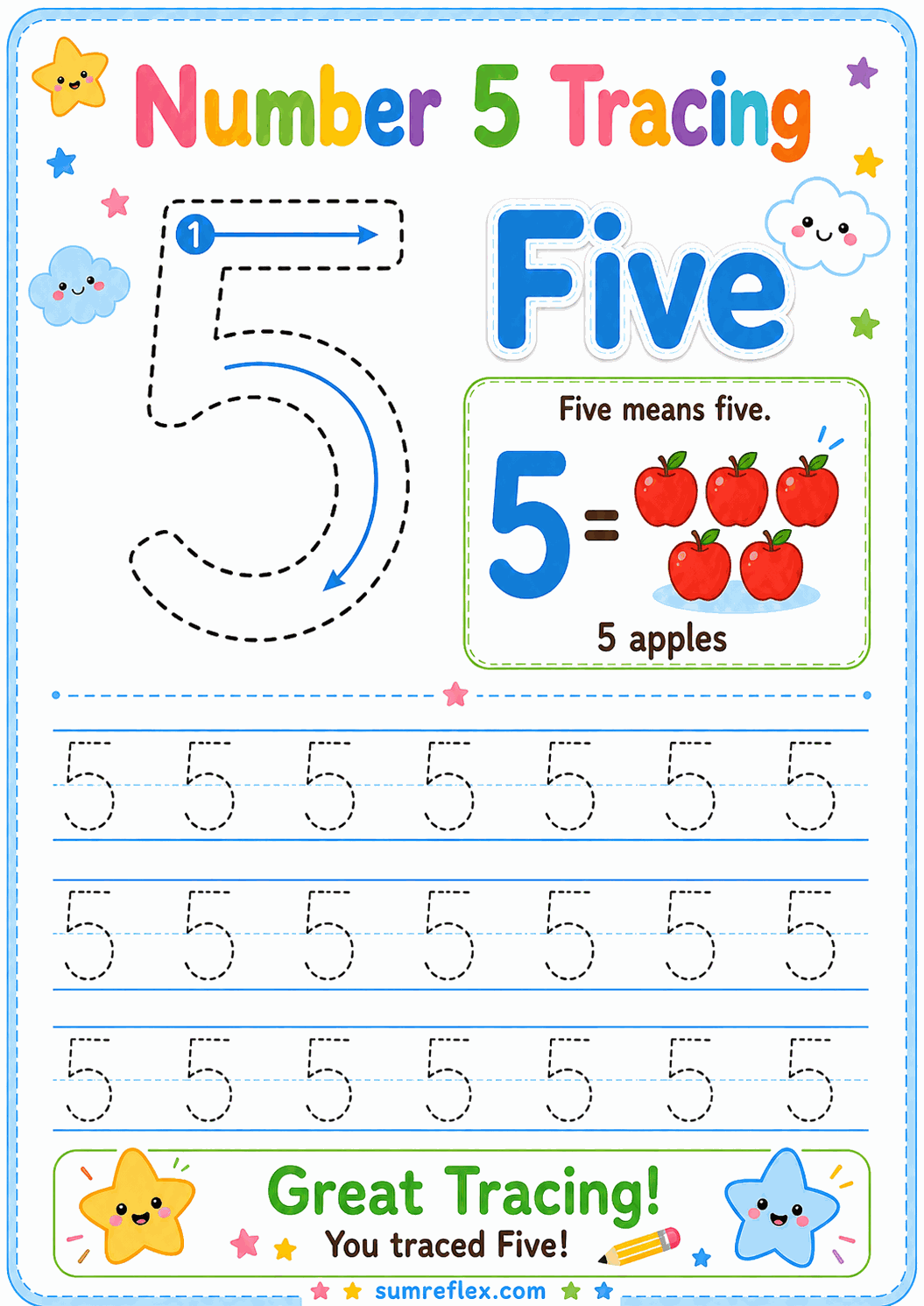
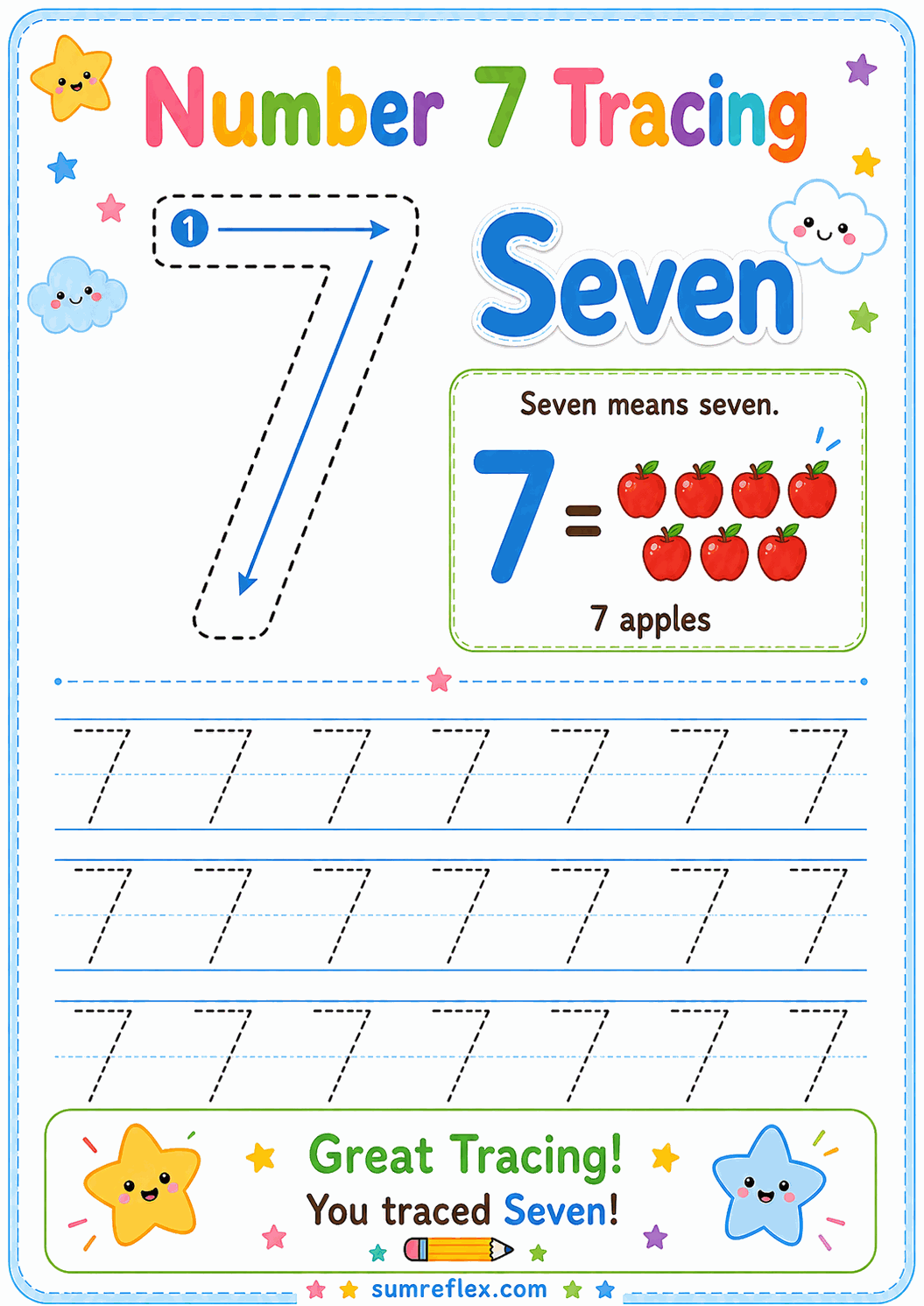
The number 1 asks for a straight line, while 0 needs a closed loop. The number 4 uses separate straight strokes, and 8 asks for controlled looping through the middle. Keeping individual number pages available lets a child practice the exact movement that is hard instead of repeating a full mixed page before the hand is ready.
Count-and-trace pages connect writing to meaning
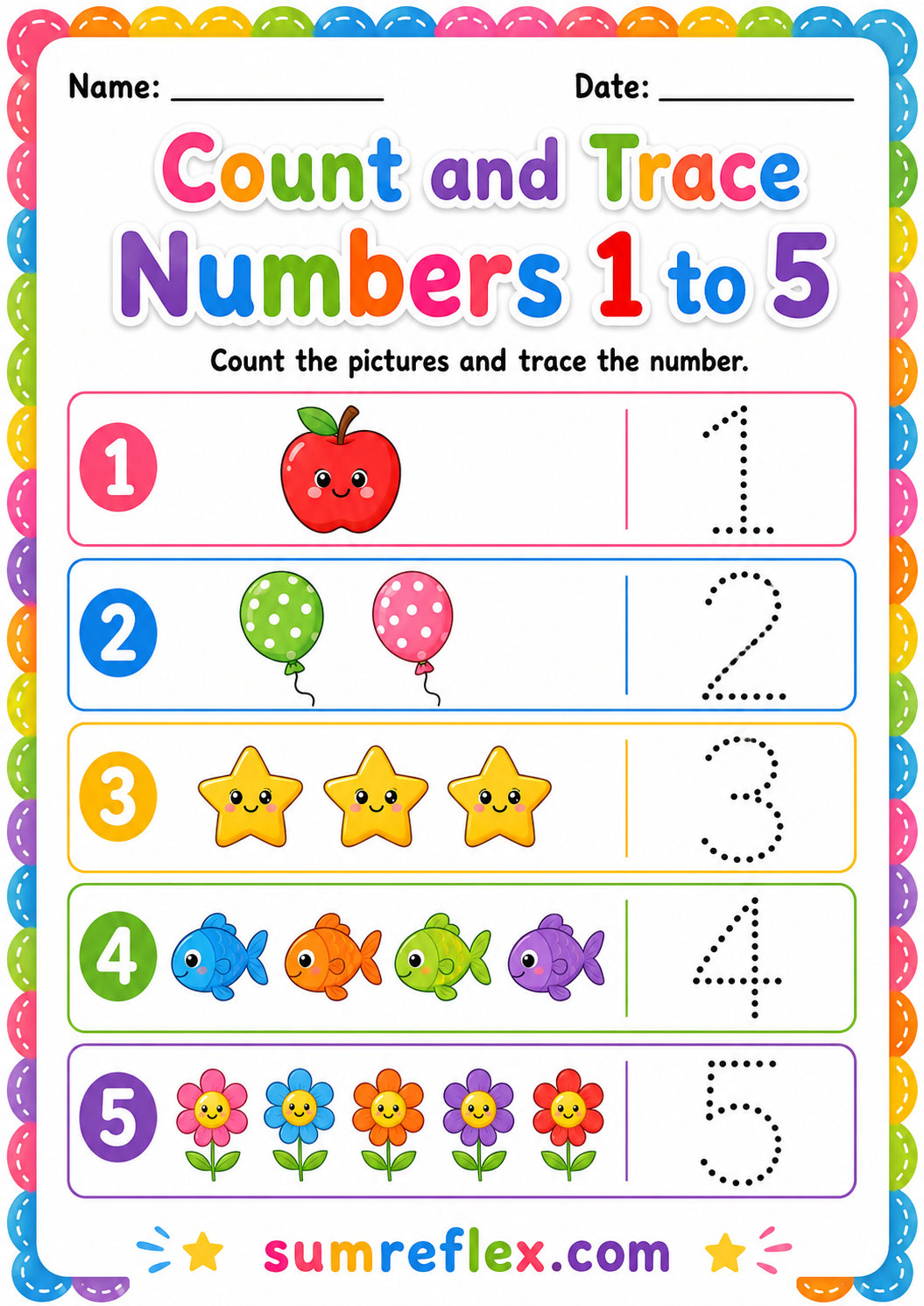
A count-and-trace worksheet is useful when the child can count a small group and then trace the matching numeral. This prevents number writing from becoming a shape-copying task only. The child sees that the symbol belongs to a quantity. That connection is important before independent number writing becomes part of math work.
Dot-to-dot work trains visual tracking
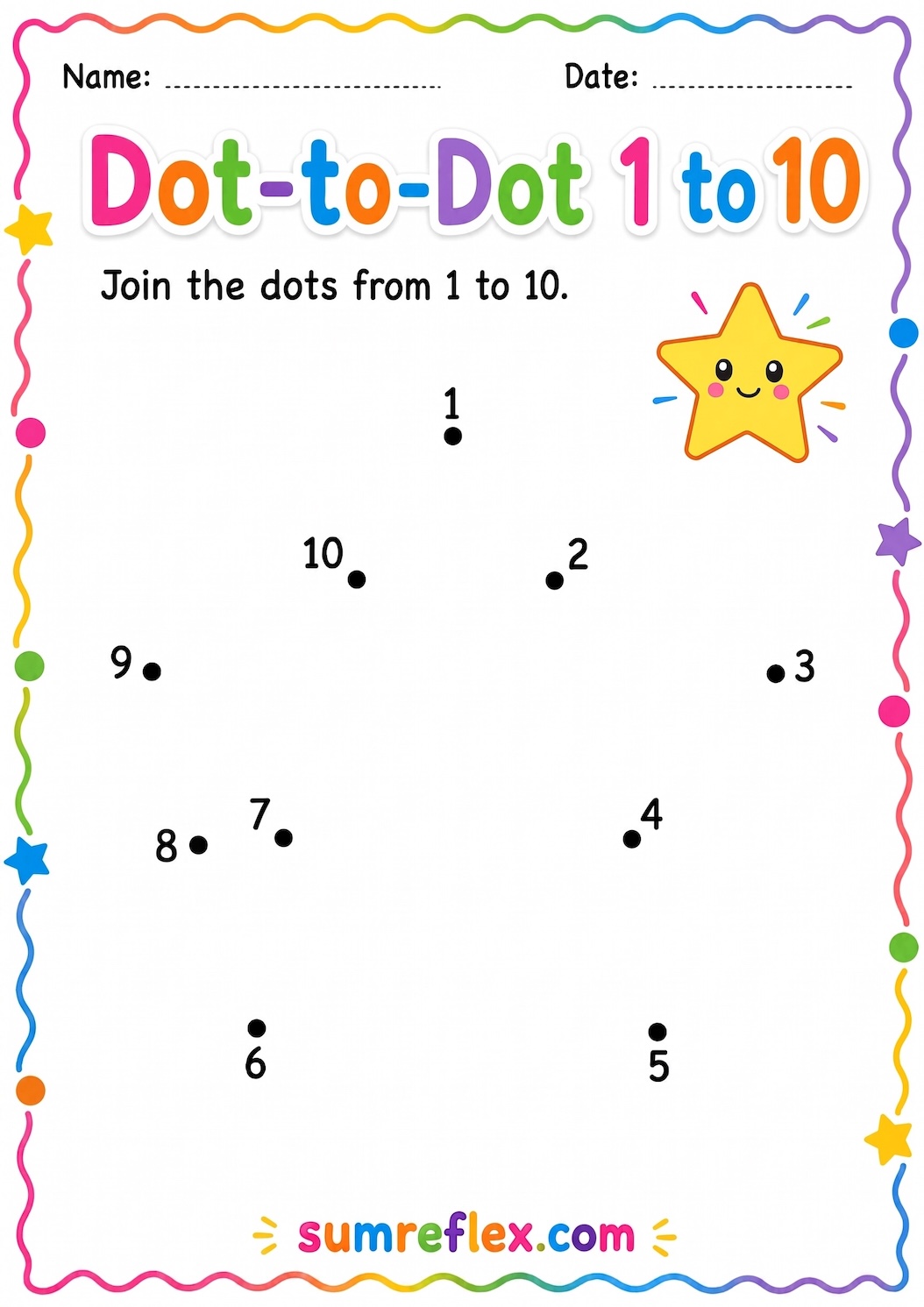
The star dot-to-dot page asks the child to move from point to point in order. That is a different skill from tracing a dotted numeral. The child has to locate the next mark, guide the pencil there, and change direction without losing the path. It is useful preparation for mazes, drawing, and later written work.
Shape tracing builds turns and corners
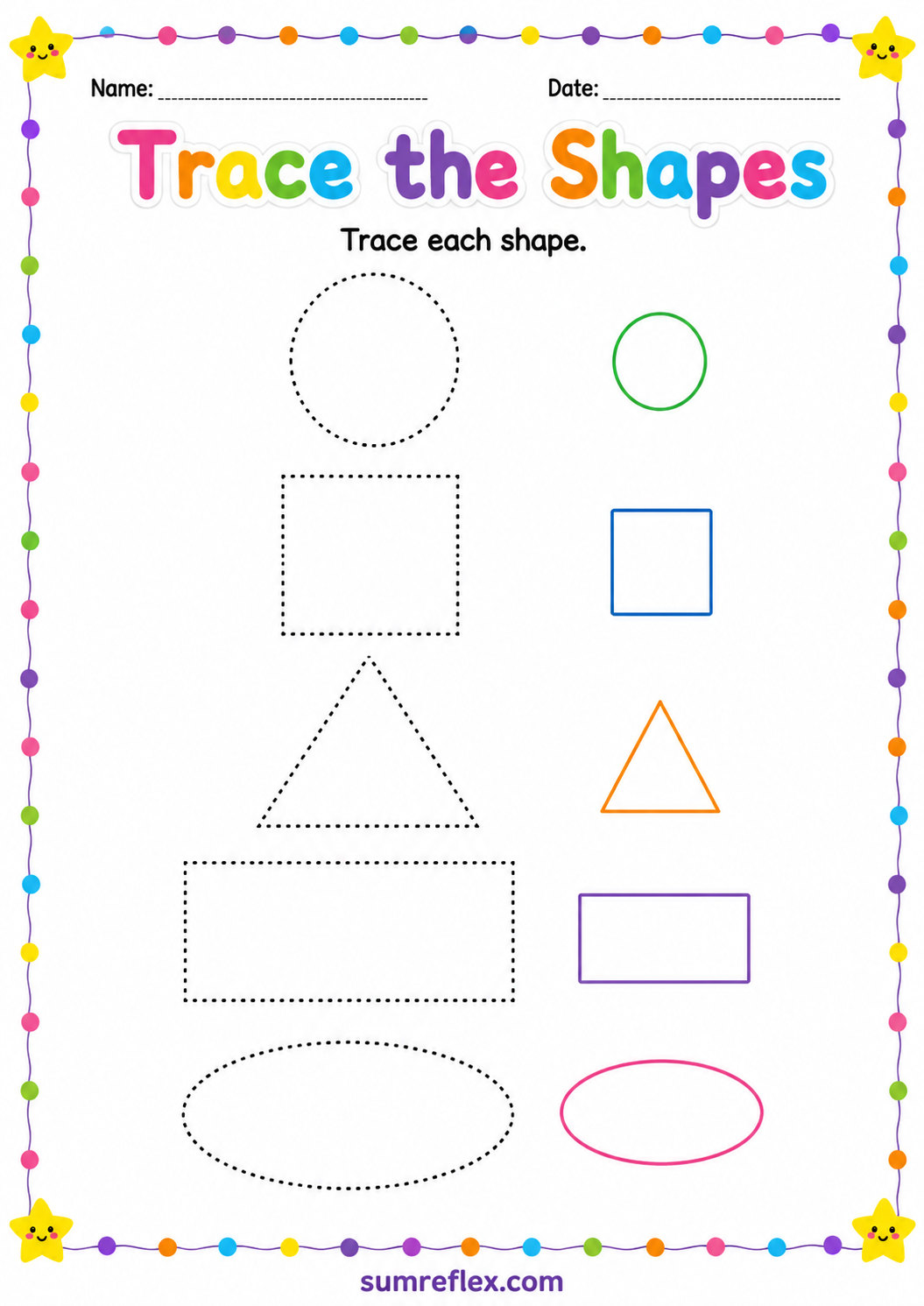
Shape pages are helpful when a learner needs practice with curves, straight edges, corners, and closed figures. A circle, triangle, square, or star gives the pencil a different route from a numeral. Naming the shape while tracing also adds geometry language without making the page feel like a formal lesson.
Watch pressure before watching neatness
If the pencil is pressed too hard, the hand may be tense. If the line is very faint, the child may not be controlling the pencil confidently. Pressure tells you a lot about readiness. Pause for a hand shake, use fewer rows, or switch to a crayon if the grip looks uncomfortable before asking for neater writing.
Use spoken movement cues sparingly
Short cues can help: start at the top, curve around, go down, close the loop. Too many words can overwhelm the child, so choose one cue for the numeral or shape being practiced. The goal is to give the movement a memory hook, not to narrate every millimeter of the page.
Stop before the hand gets tired
Early writers often show fatigue before they can explain it. Lines become rushed, grip tightens, or the child leaves the path repeatedly. Stop at that point. A few careful traces create a better habit than a full page of strained marks. The unfinished rows can be used another day.
Independent writing should be a tiny next step
After tracing, invite the child to write one numeral or shape without the dotted guide. One attempt is enough. The goal is to see whether the movement is beginning to transfer. If the independent mark falls apart, return to finger tracing and guided lines instead of pushing a full row of unsupported writing.