



Counting means matching words to objects
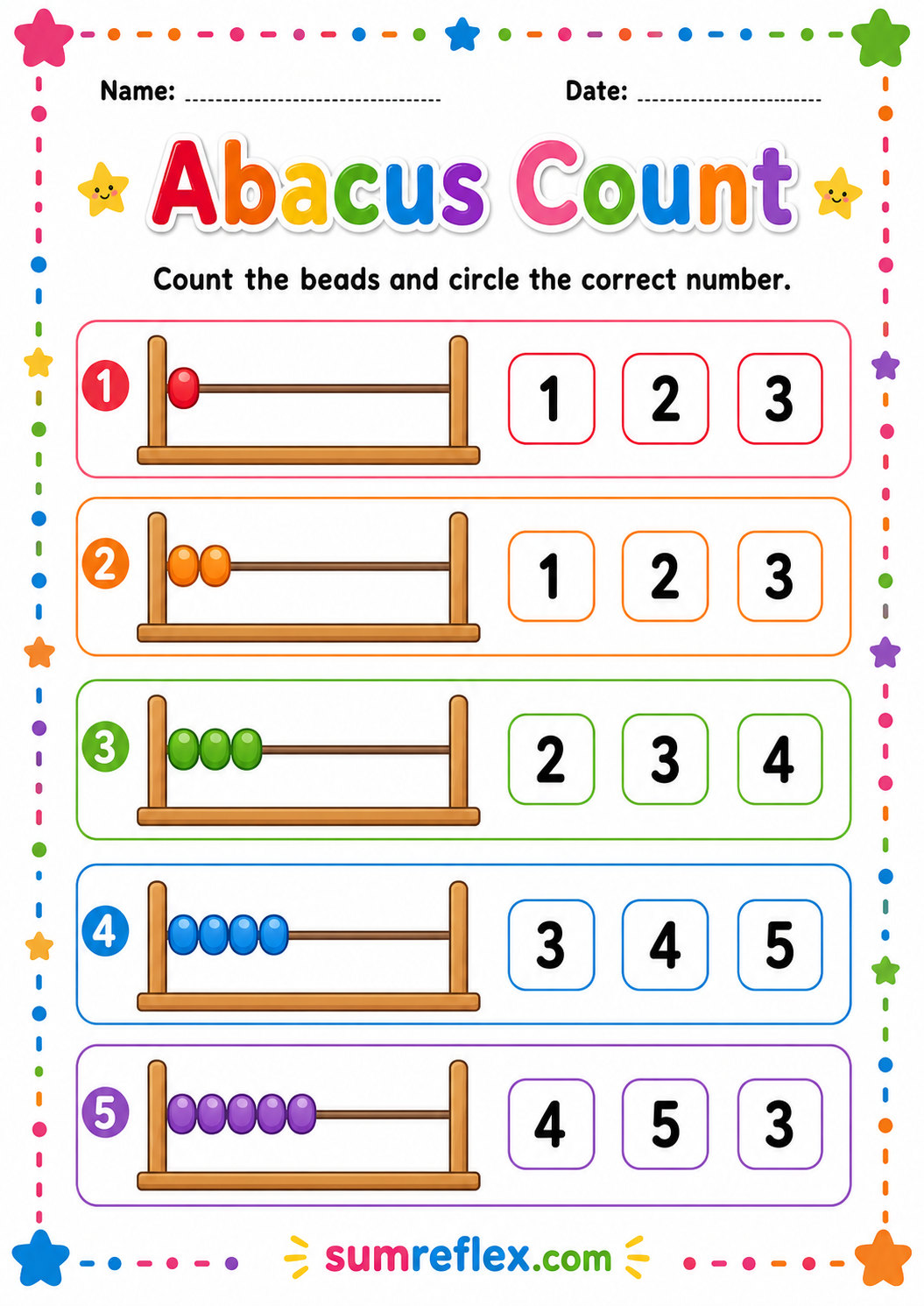
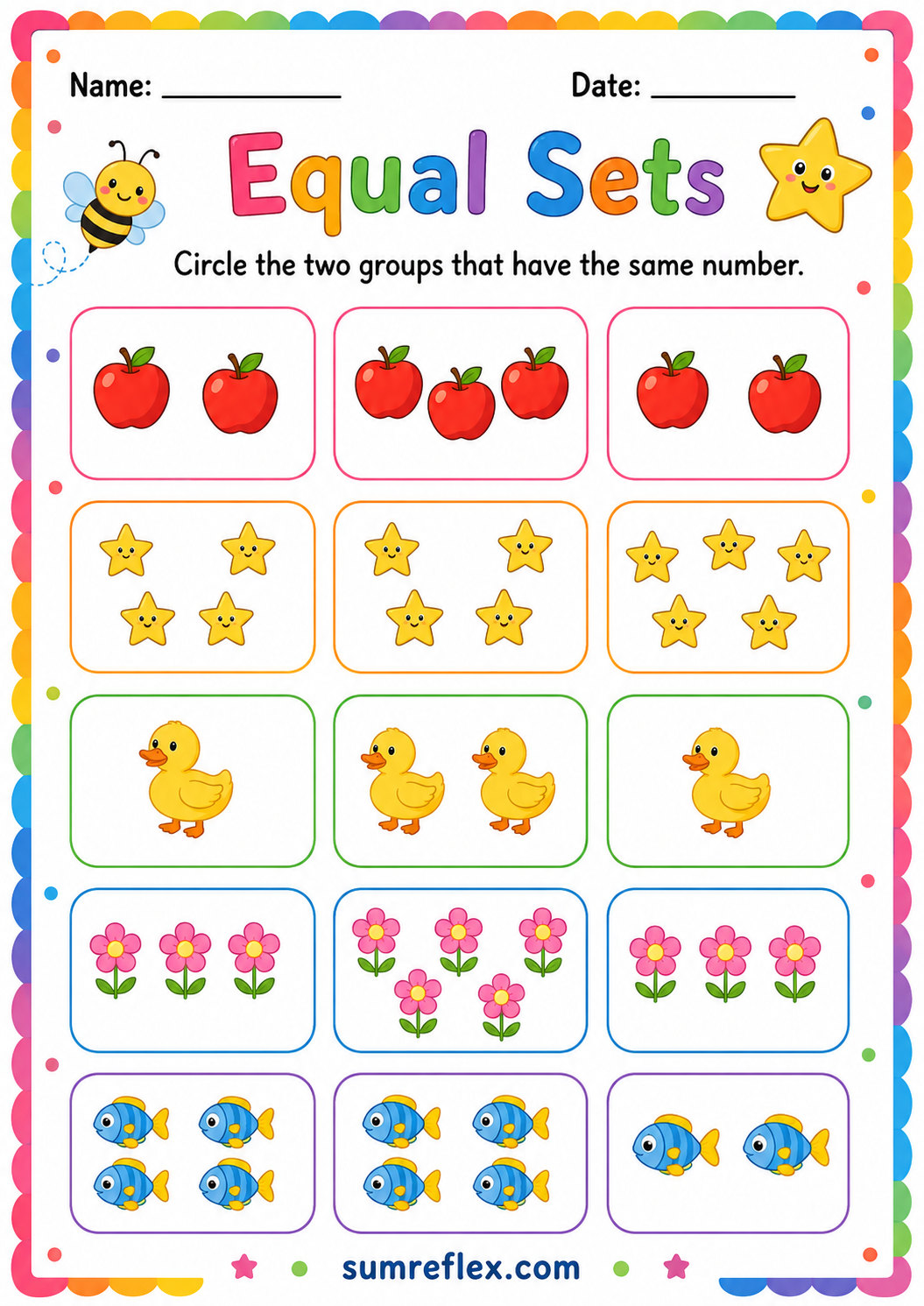
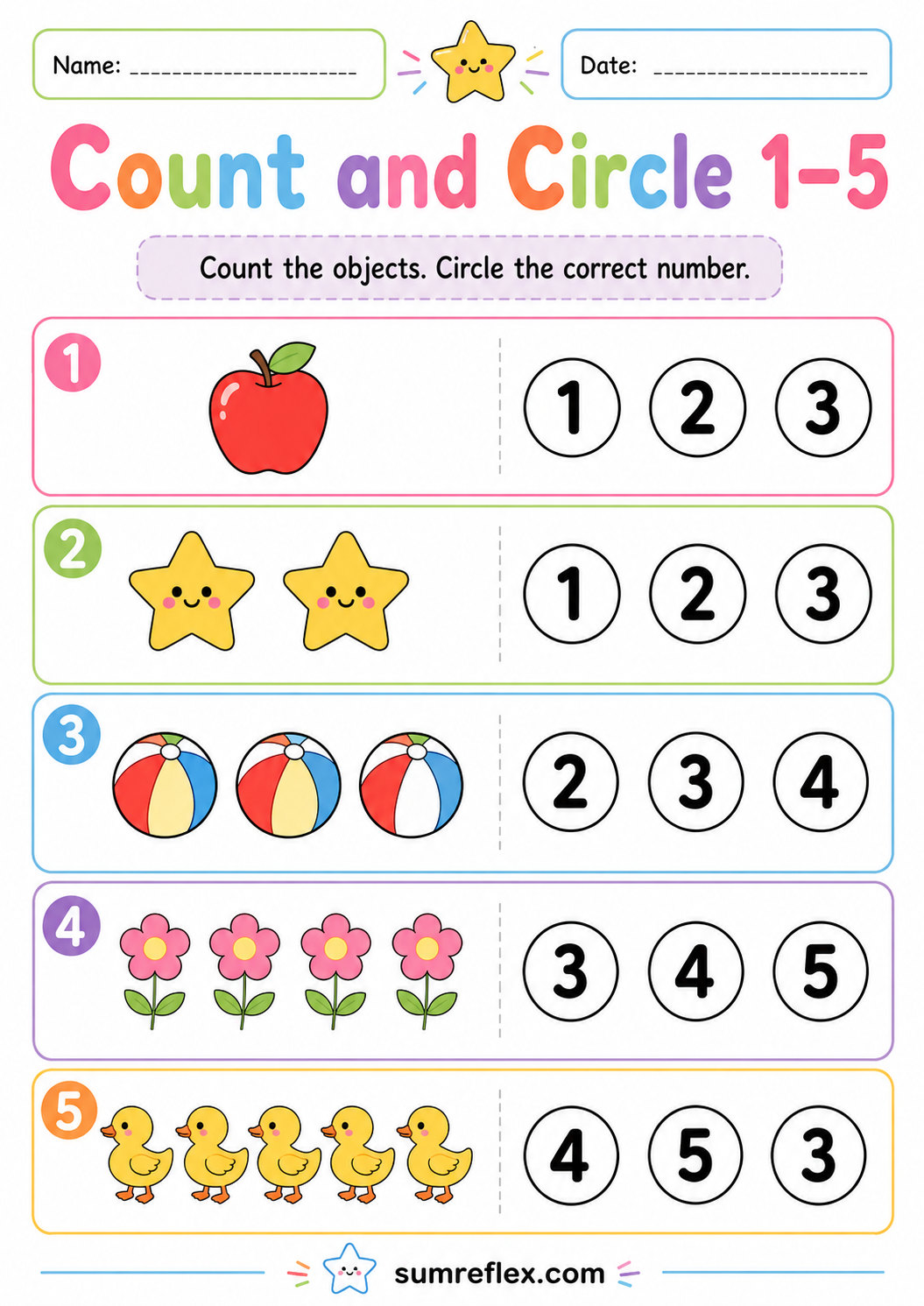
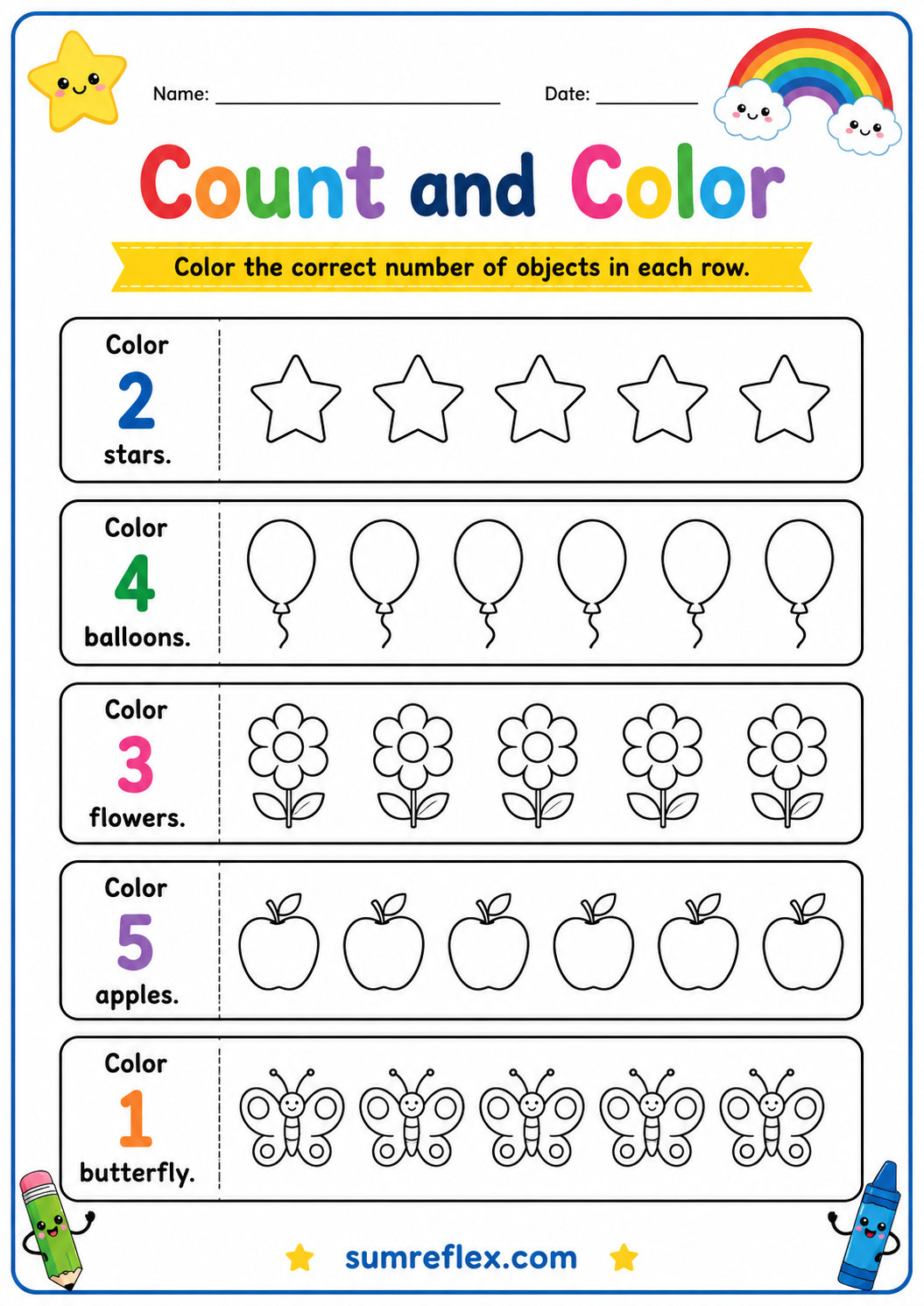
A child may recite number words and still need practice counting a real group. Preschool counting depends on matching one word to one object. These worksheets give the learner something visible to point to, touch, circle, color, or write about so the spoken count and the picture stay connected.
Pointing prevents the most common errors
Skipping an object, counting one item twice, or saying the number words too quickly are normal preschool mistakes. Ask the child to point to each object as the count is spoken. The finger slows the voice down and gives the eyes a path to follow. This habit is more important than finishing the page quickly.
Different layouts teach different tracking habits
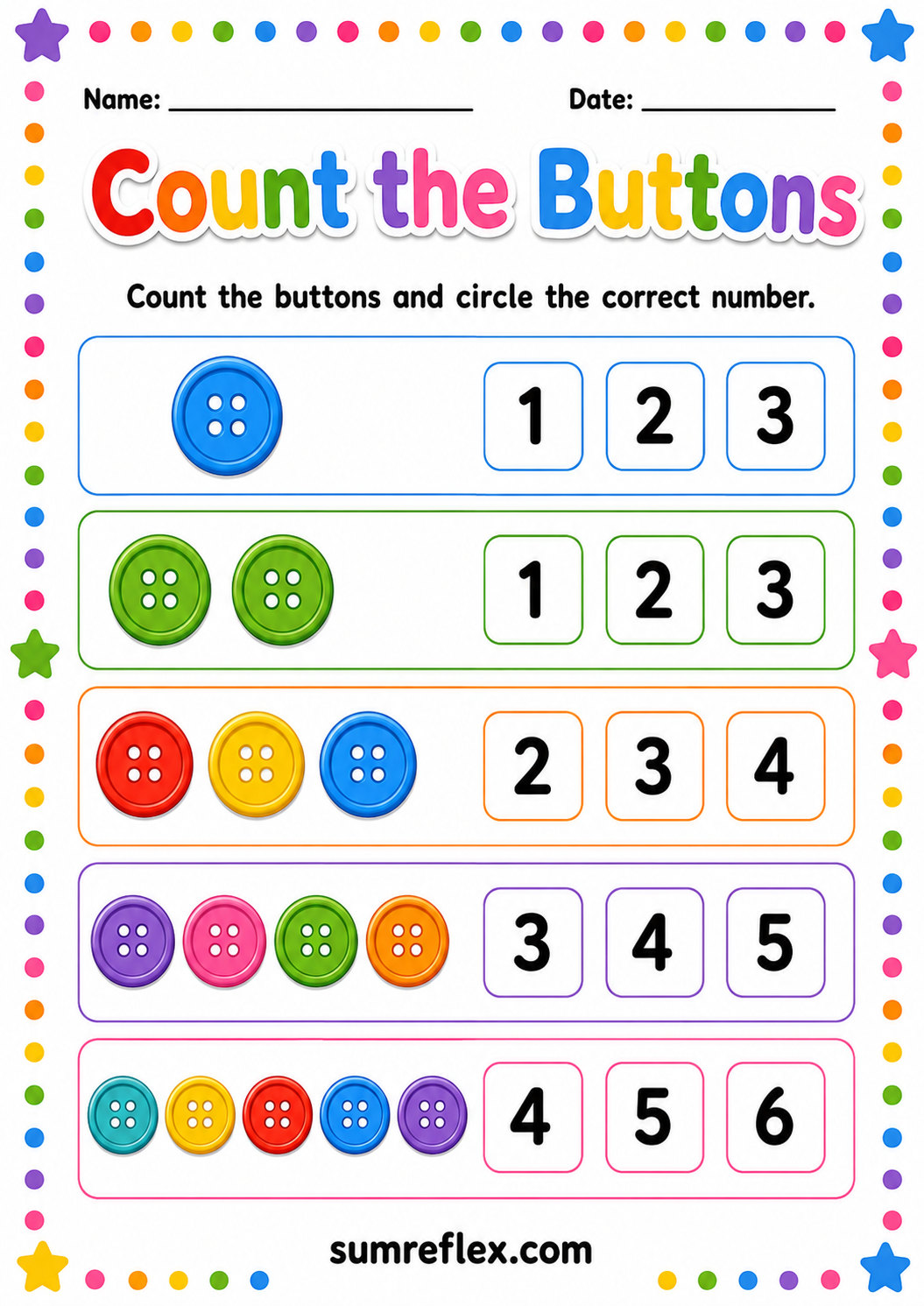
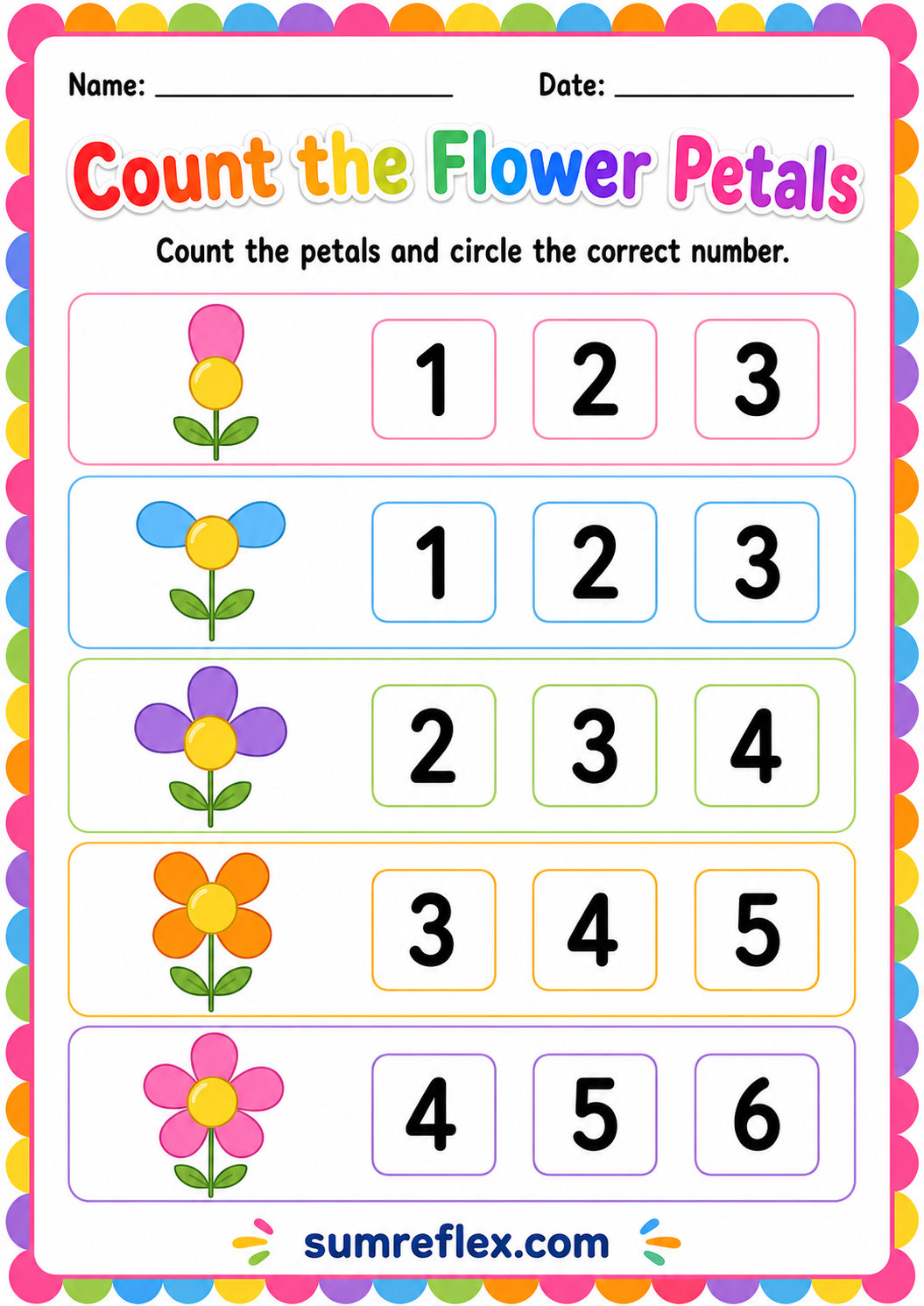
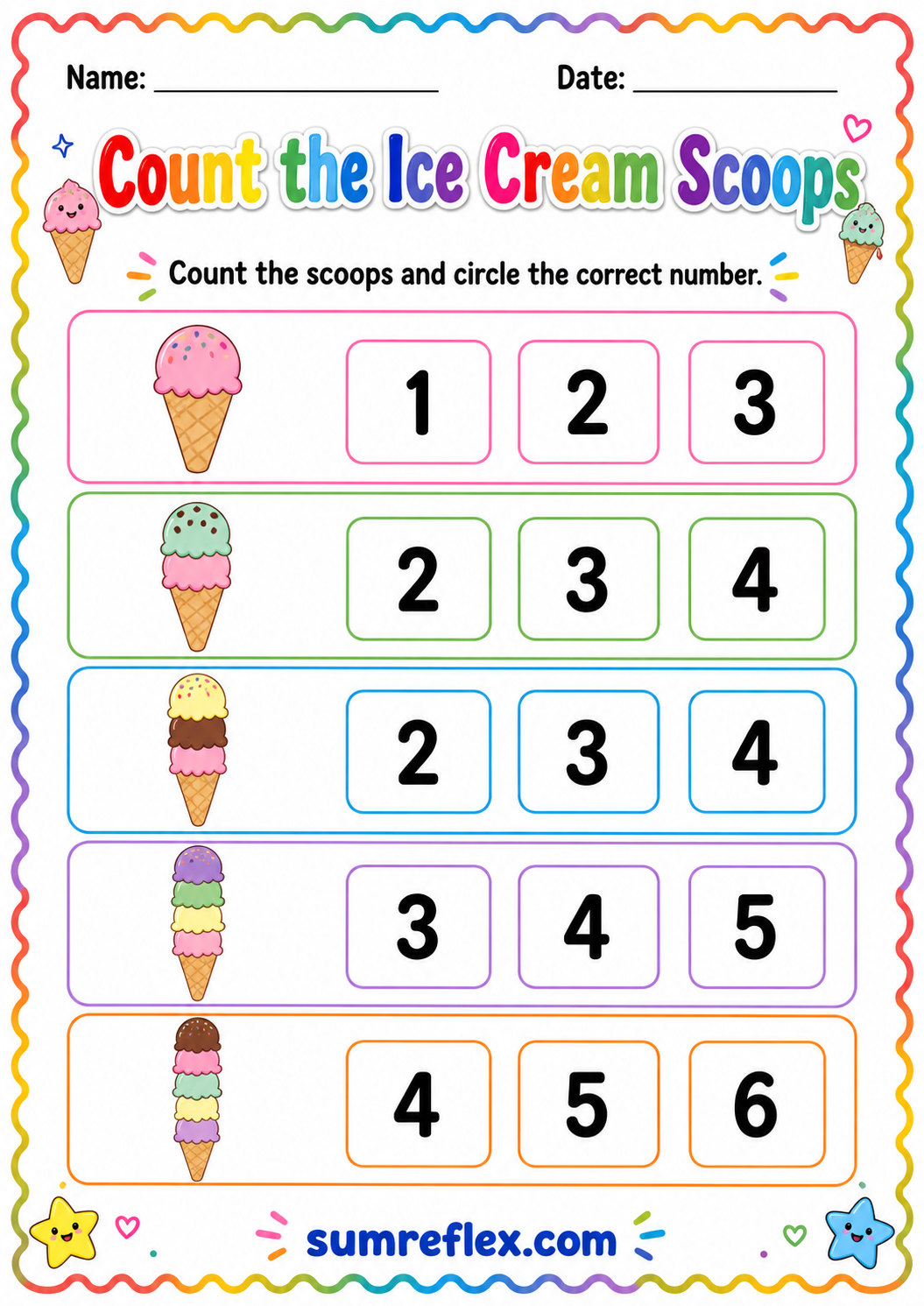
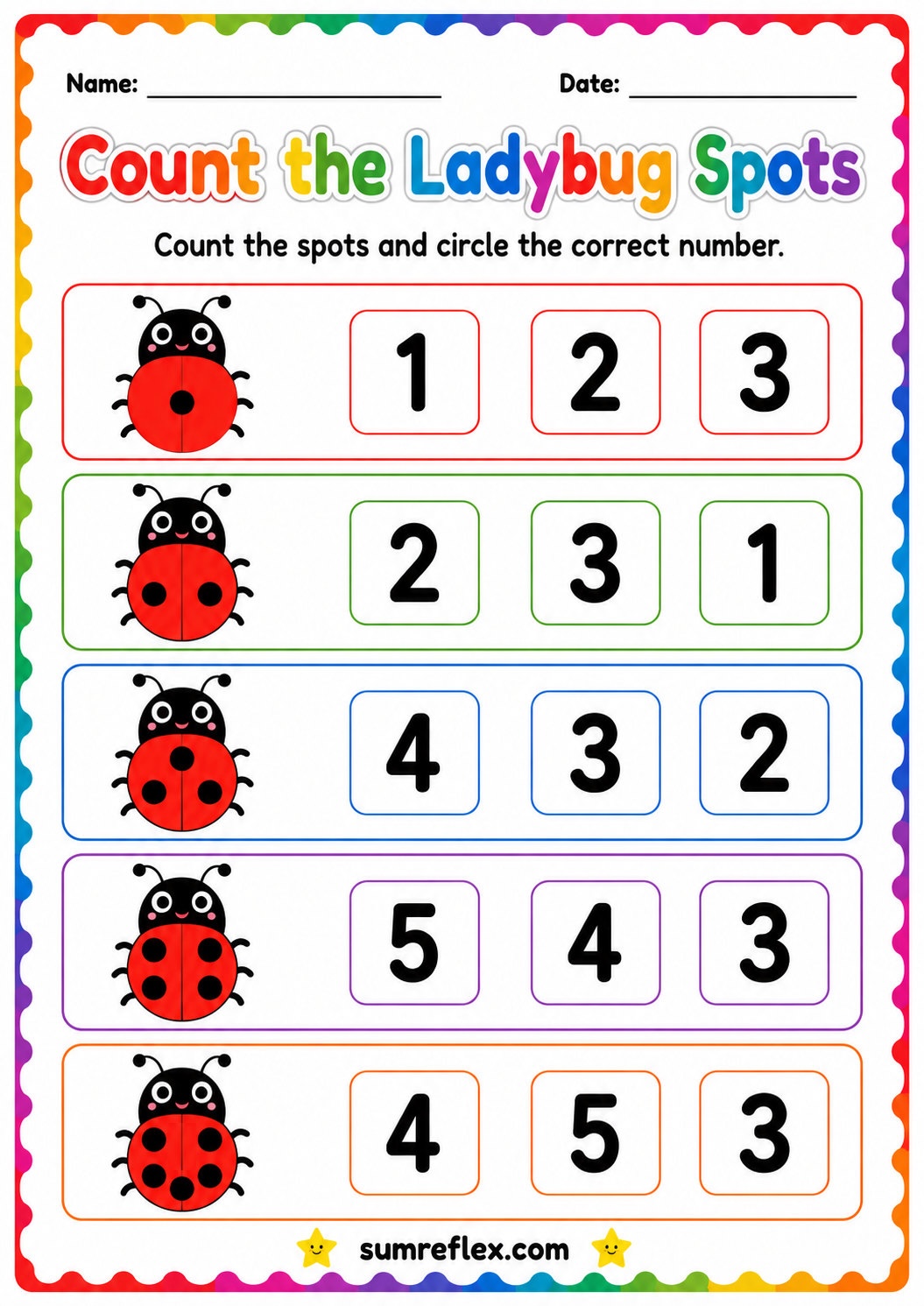
Buttons, beads, scoops, petals, ladybug spots, and picture rows do not ask the eyes to move the same way. A row of beads is organized, while petals may go around a circle. Stacked scoops move vertically, and scattered spots require careful scanning. That variety helps counting become flexible instead of tied to one layout.
Five frames and ten frames organize quantity
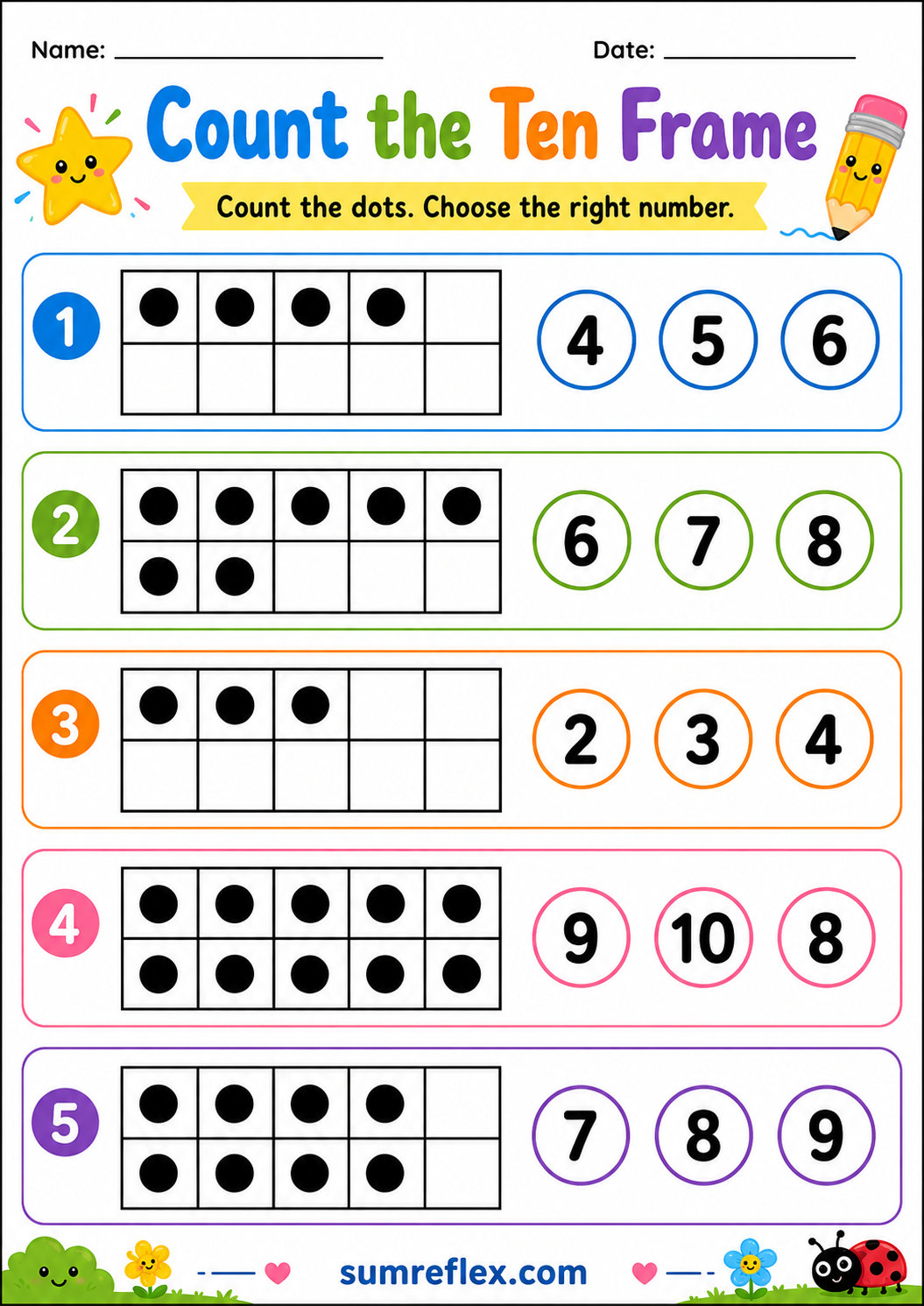
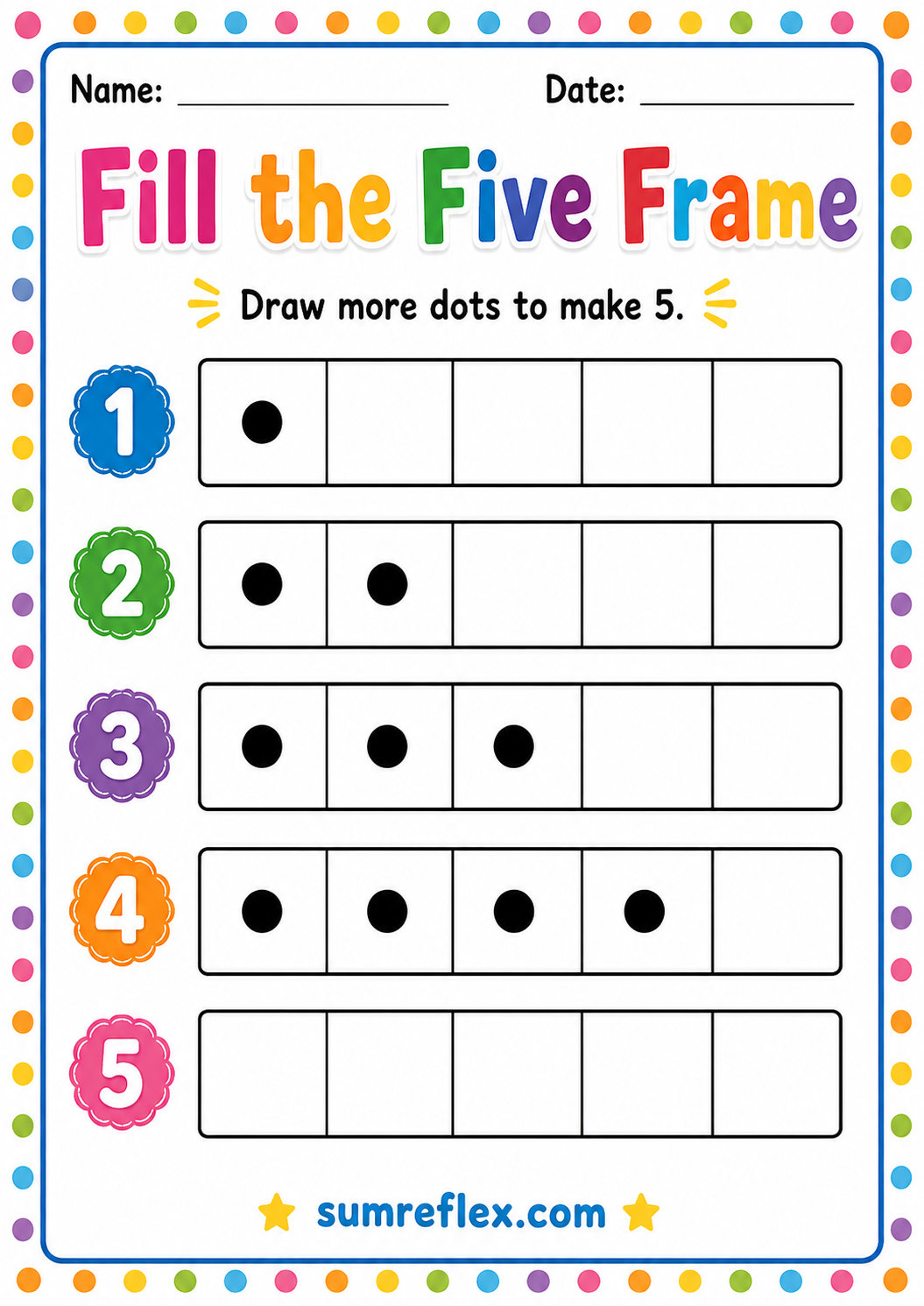
Frames help children see numbers as structured groups. A five frame keeps the range small, while a ten frame begins to show how a number relates to ten. The boxes make it easier to see filled spaces and empty spaces, which prepares children for later number sense without asking for formal addition yet.
Writing the numeral should come after the count
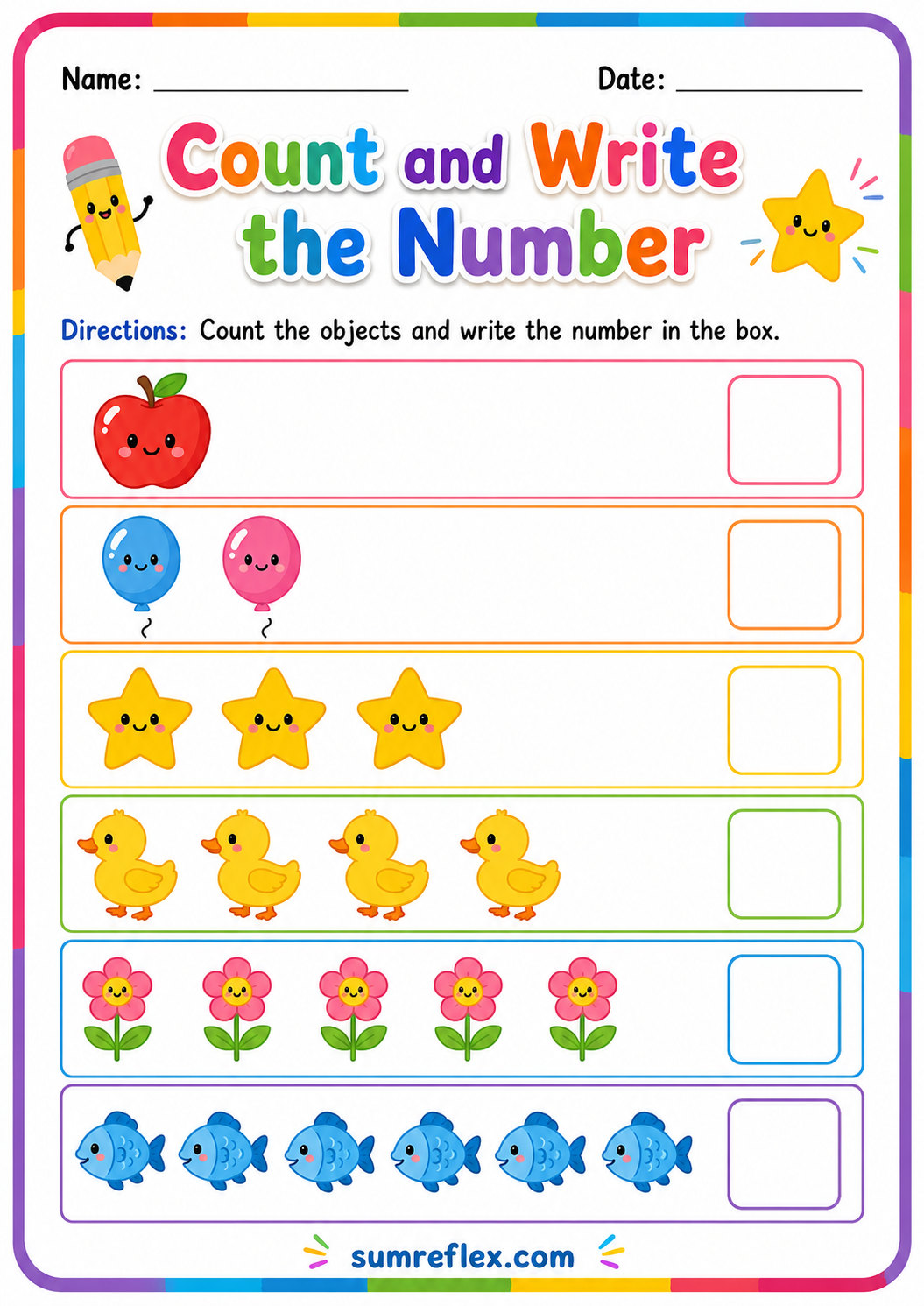
On count-and-write pages, separate the math from the handwriting. Count the group, say the total, find the numeral if needed, and then write it. If the child struggles to form the number, the counting may still be correct. Treat handwriting as the second step so the quantity idea does not get lost.
Answer choices still need a full count
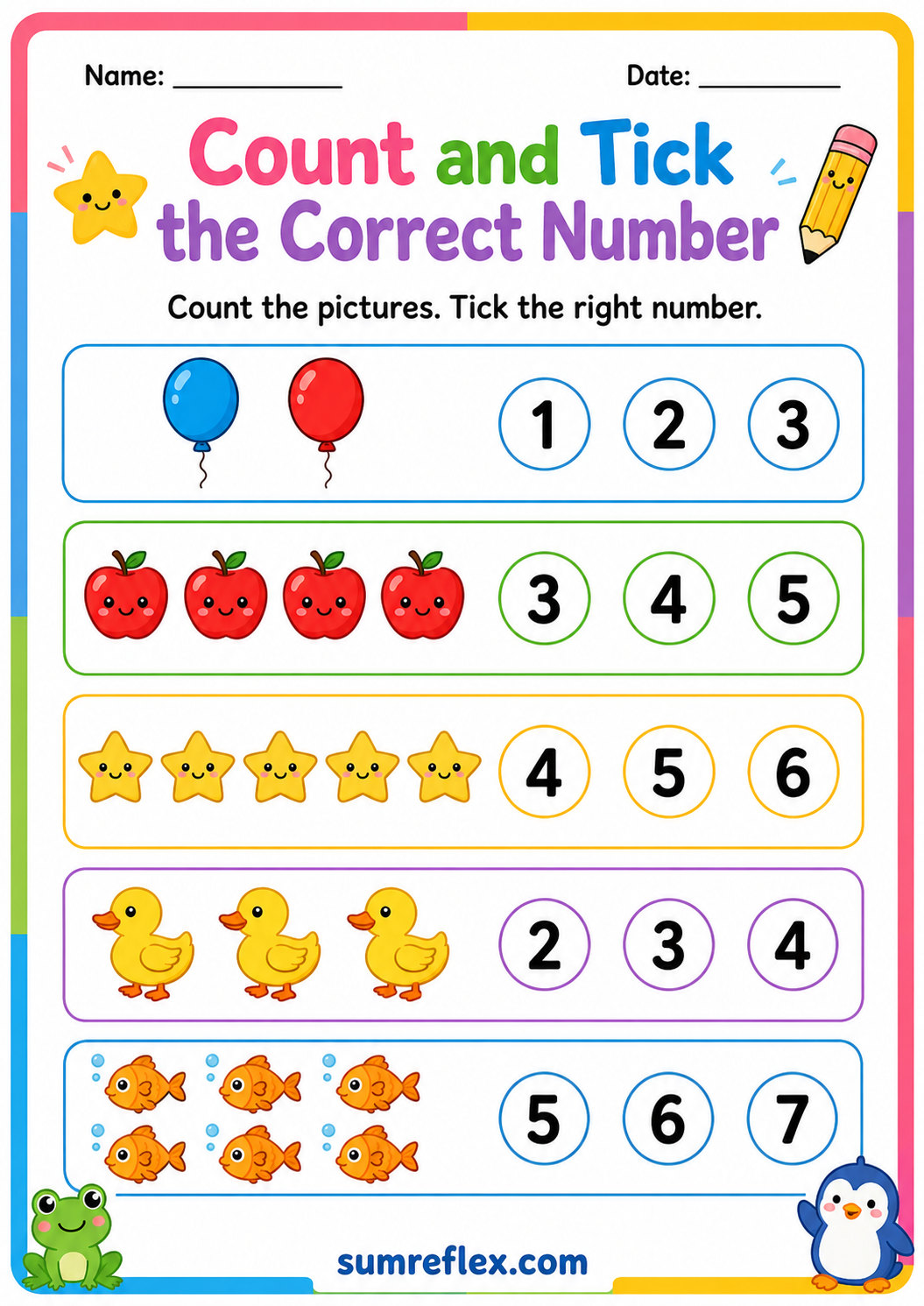
Count-and-circle and count-and-tick pages can tempt children to guess from the answer options. Cover the choices for a moment if needed. Let the child count the picture first, say the total aloud, and then uncover the options to find the match. The mark should confirm the count, not replace it.
Picture graphs add early comparison
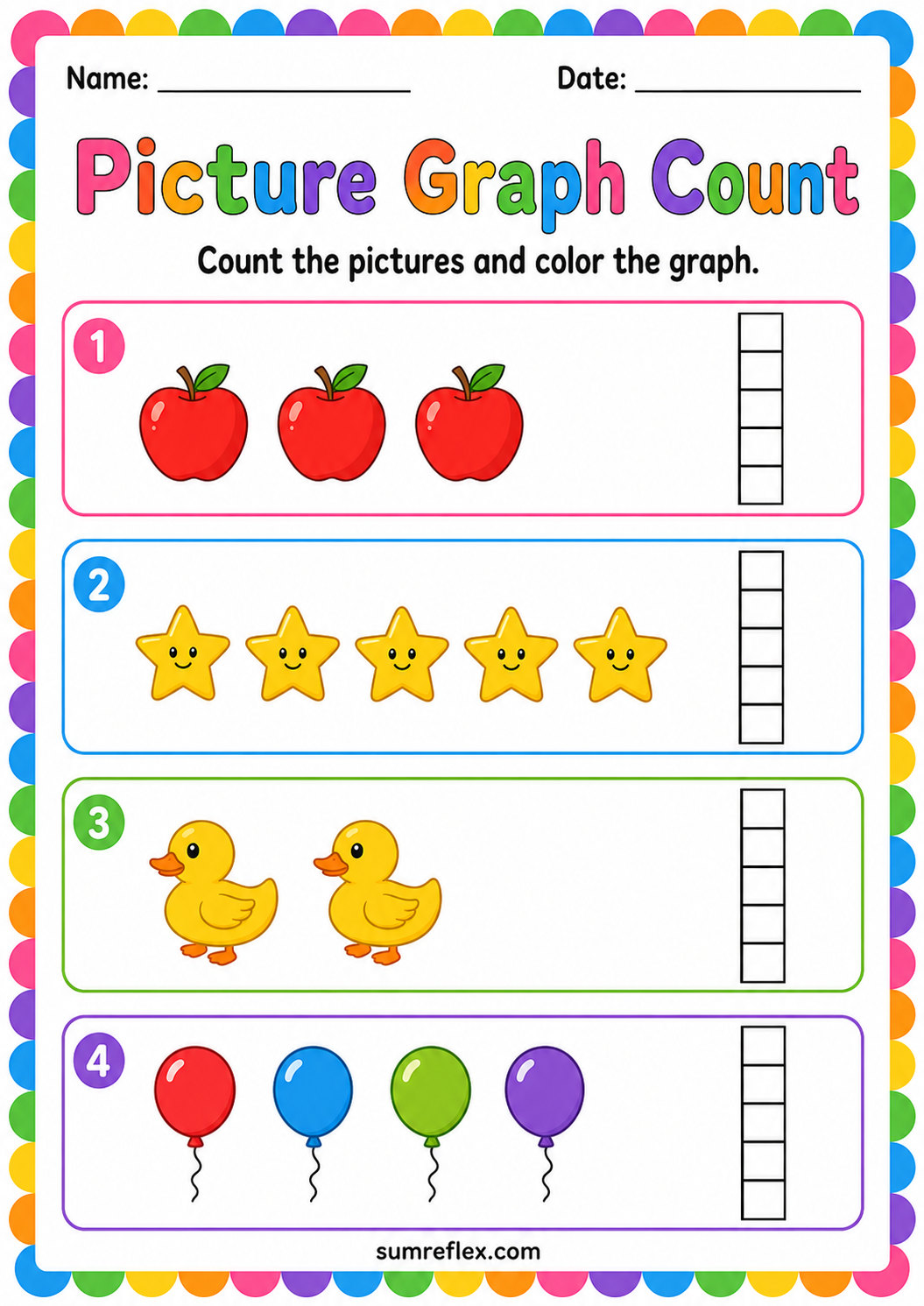
A picture graph page is still a counting activity, but it can also lead to comparison talk. After each row is counted, ask which row has more, which row has fewer, or whether two rows match. This adds meaning to the totals while keeping the task concrete and visual. The graph format also teaches children to move across one row at a time instead of jumping around the page.
Finger pages connect the worksheet to the body
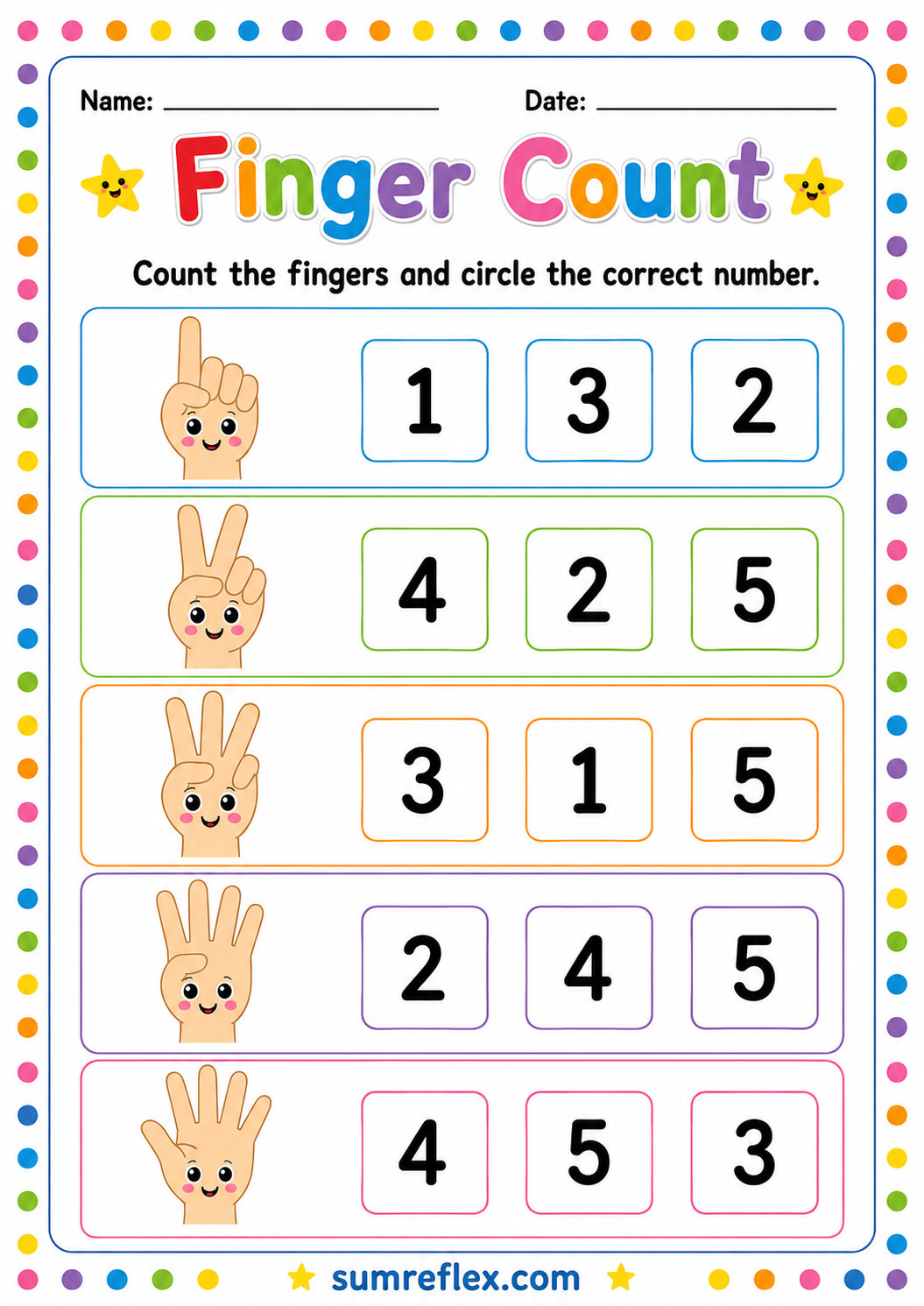
Finger counting sheets are valuable because the child already carries the model with them. A learner can look at the printed hand, copy the same fingers on their own hand, and then count. That physical match helps the numeral feel less detached from the amount it represents.
Recount from a new starting place
A strong way to check an answer is to count the same group again from a different point. For a row, start at the other end. For a circular flower, mark the first petal with a finger and go around once. Recounting shows that the total belongs to the group, not to the order chosen.
Stop counting practice before guessing begins
When preschool learners get tired, they often stop tracking and start calling out numbers. That is the signal to pause. Finish the current group carefully and leave the rest for another session. Counting accuracy grows from short, attentive practice, not from pushing through a page after the child has stopped looking.