



Subtraction begins with a visible change
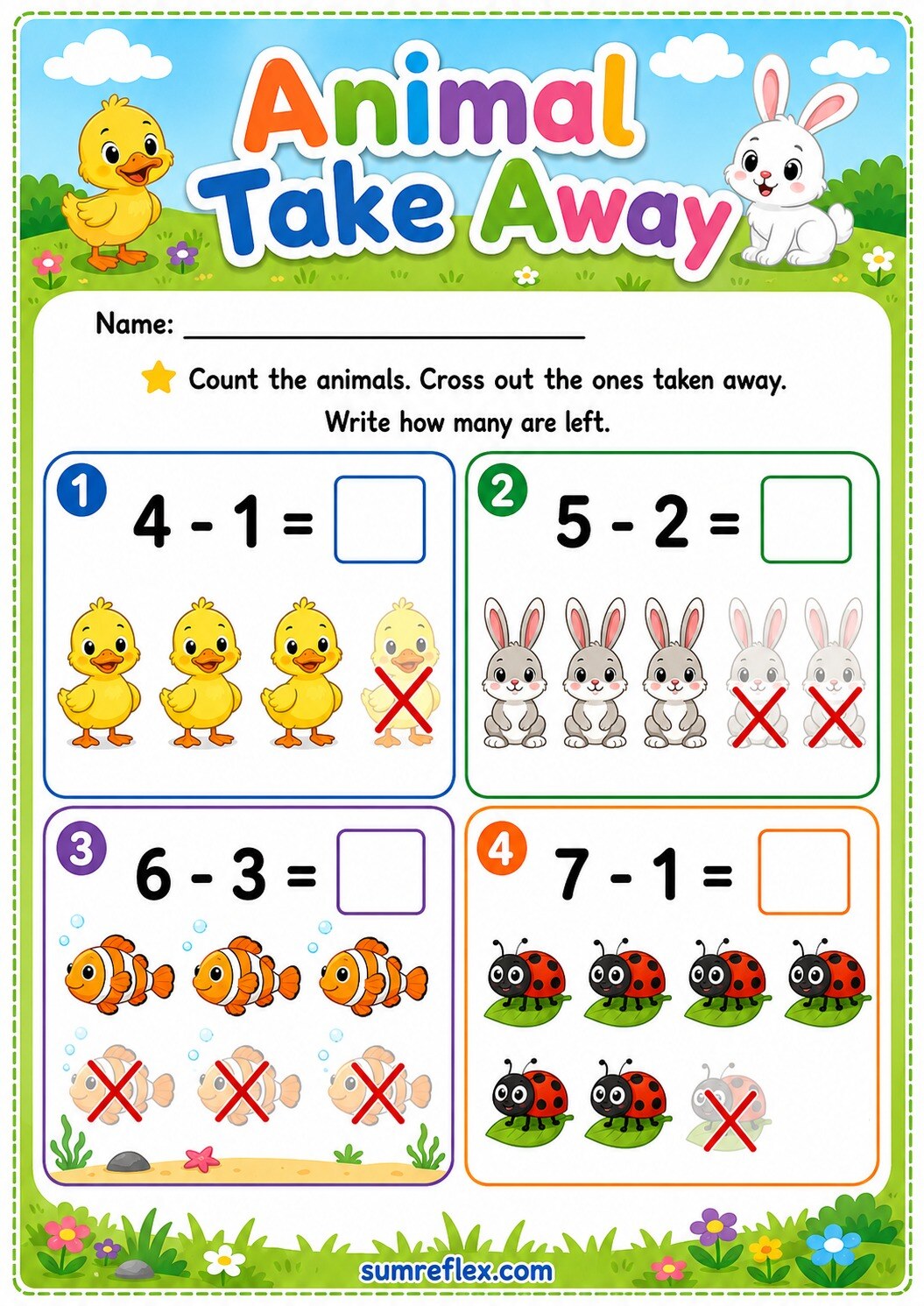
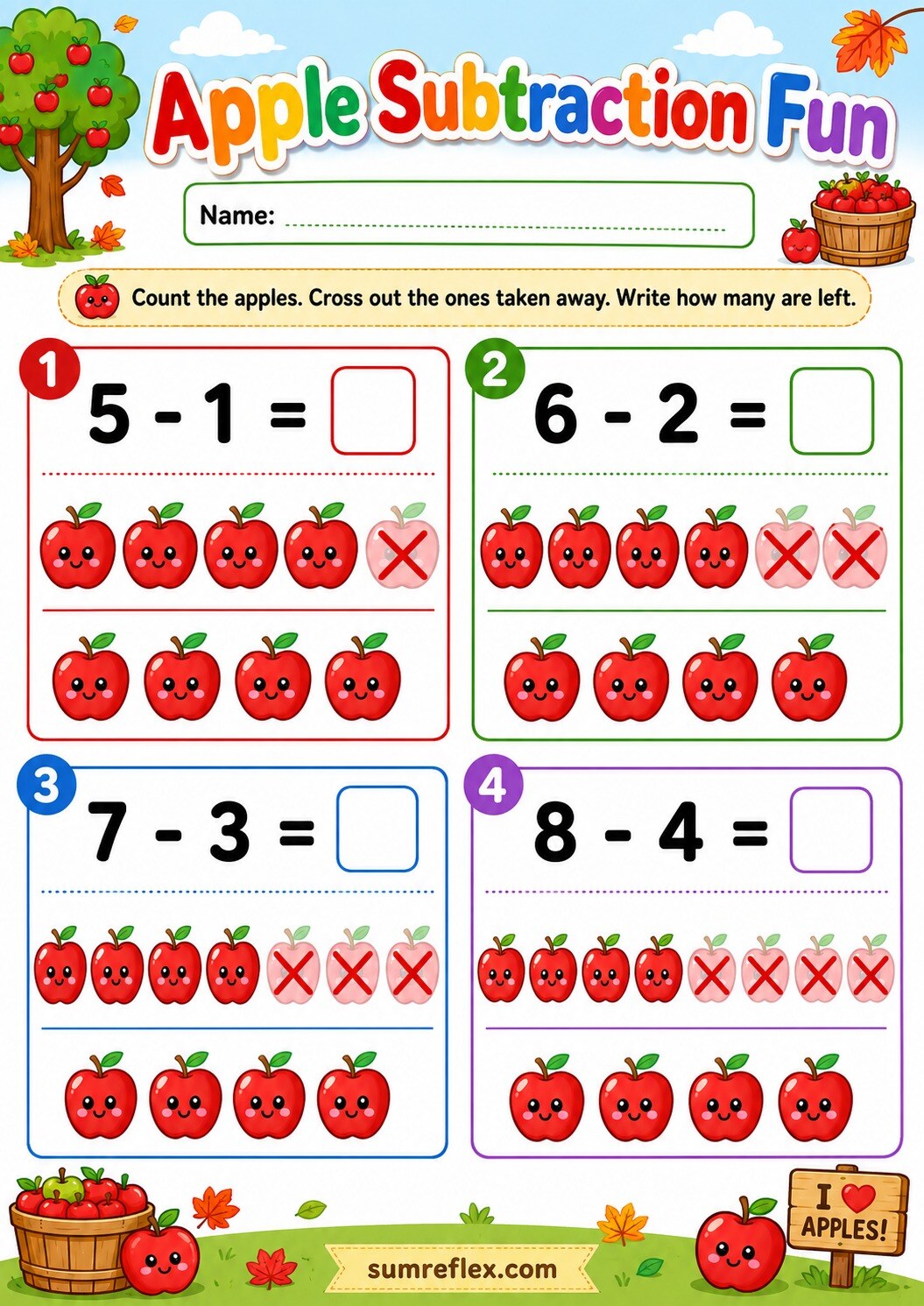
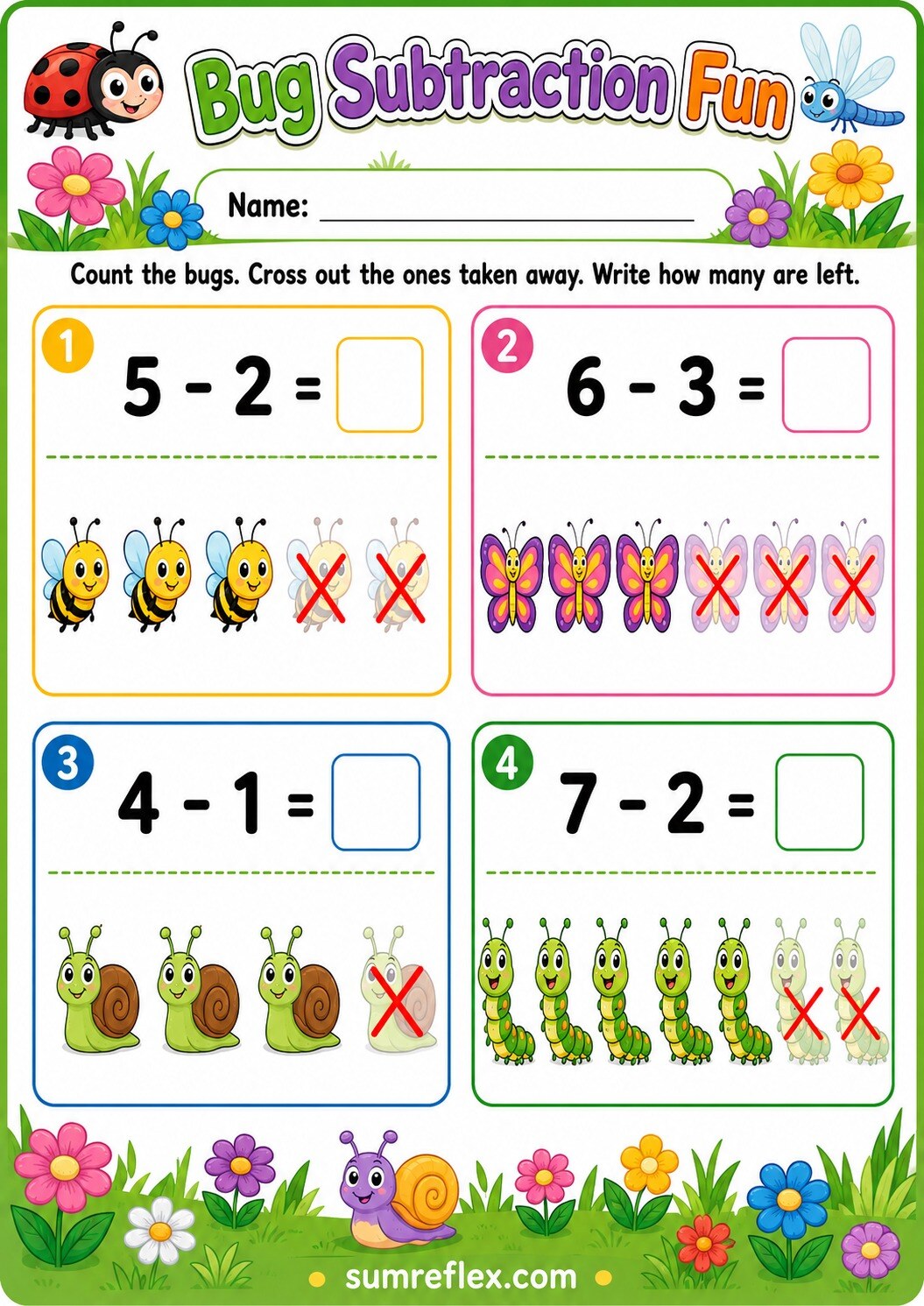
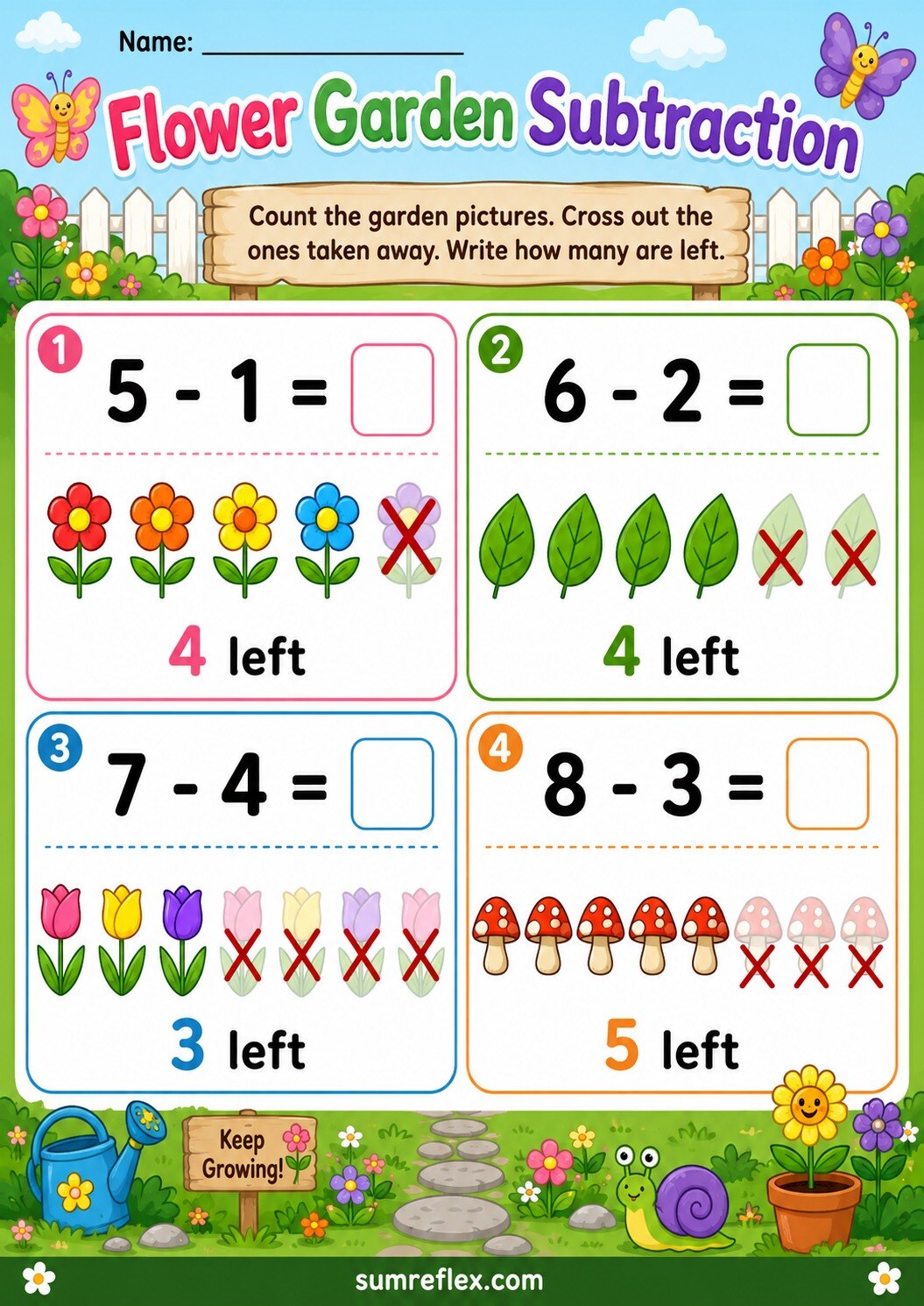
Preschool subtraction should not start as a symbol rule. It should start with a group that changes. Some objects are present, some are taken away, and the child counts what remains. These worksheets keep the objects on the page so the learner can see the change instead of trying to remember a minus fact too early.
Crossing out gives the minus sign meaning
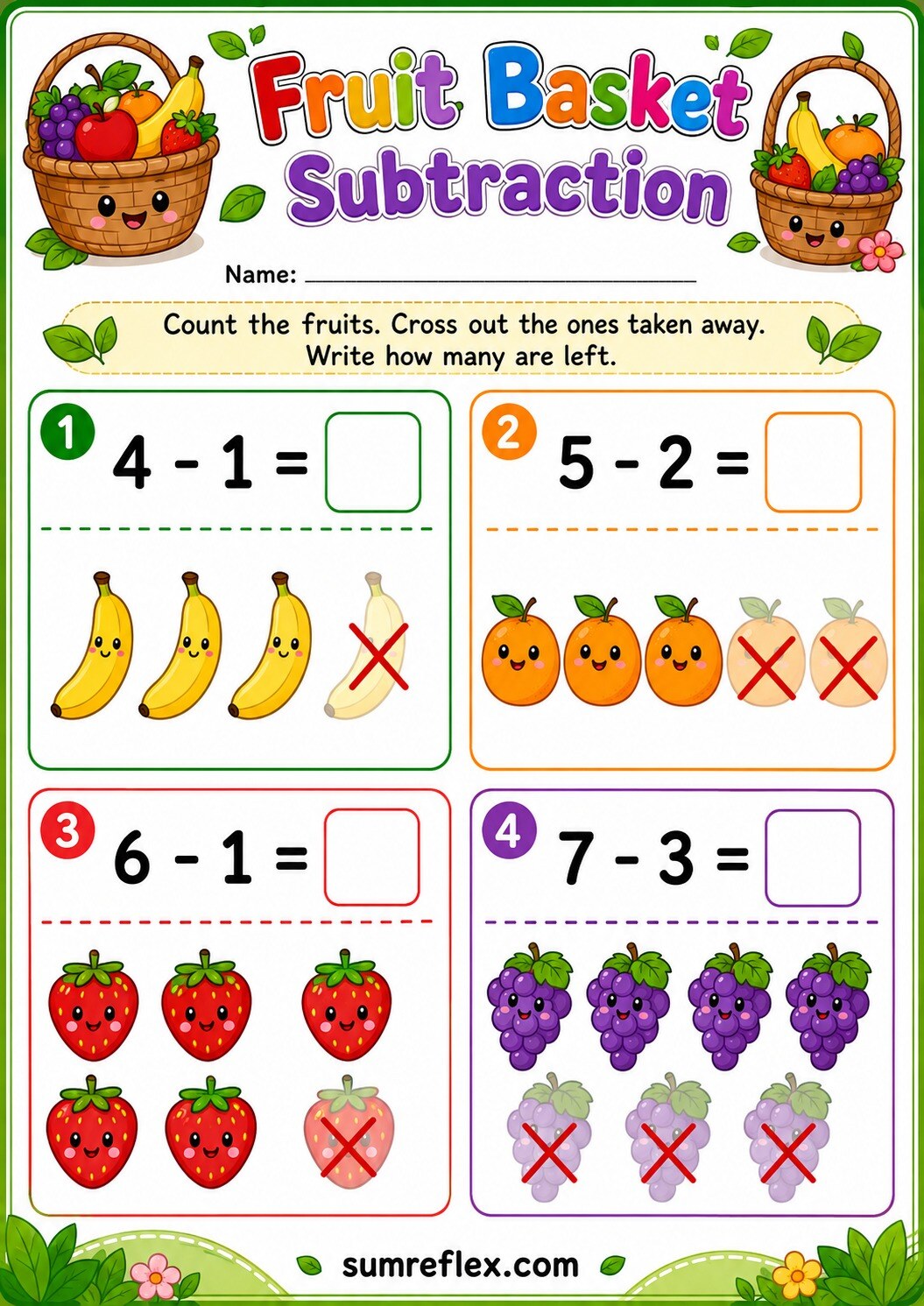
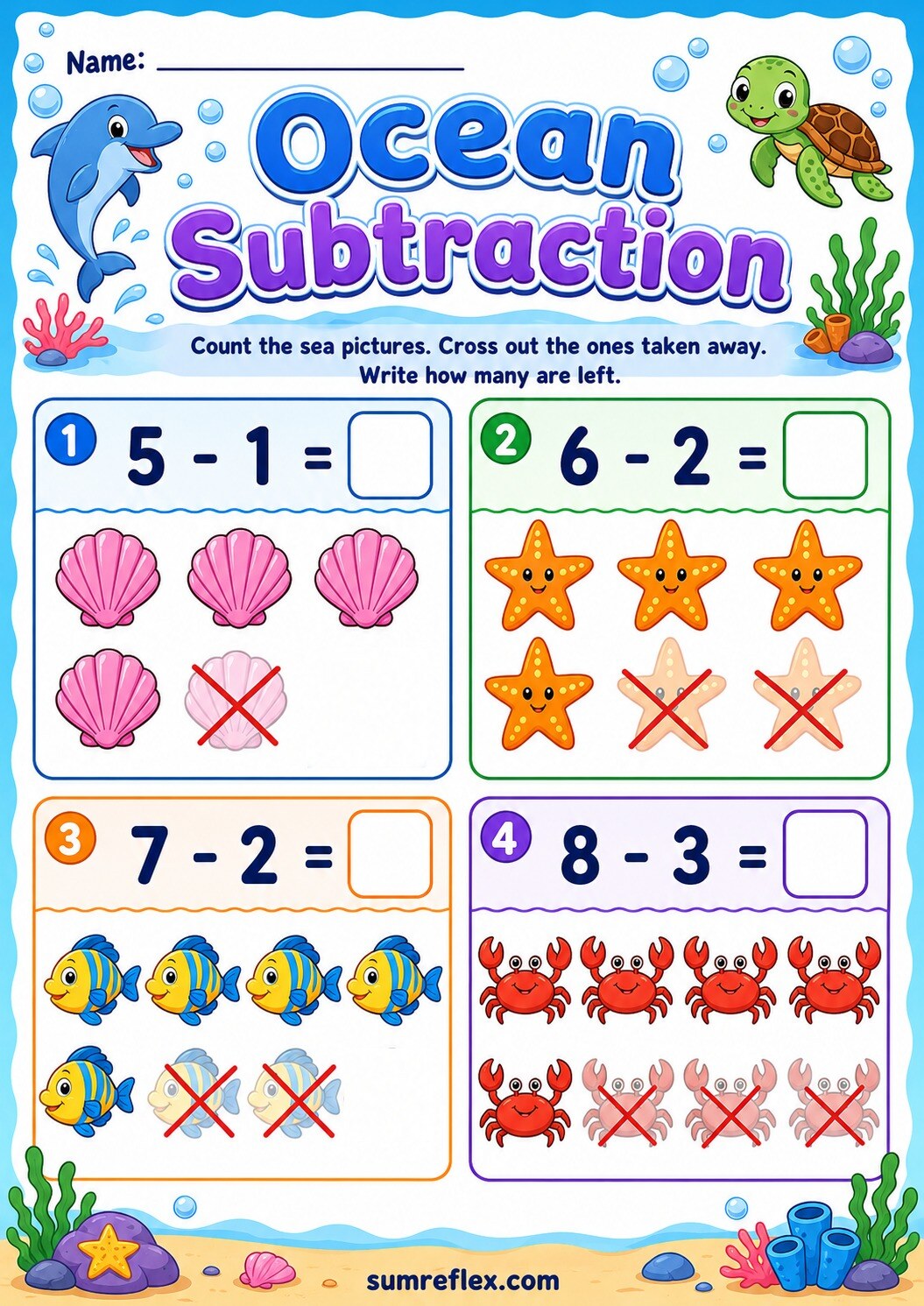
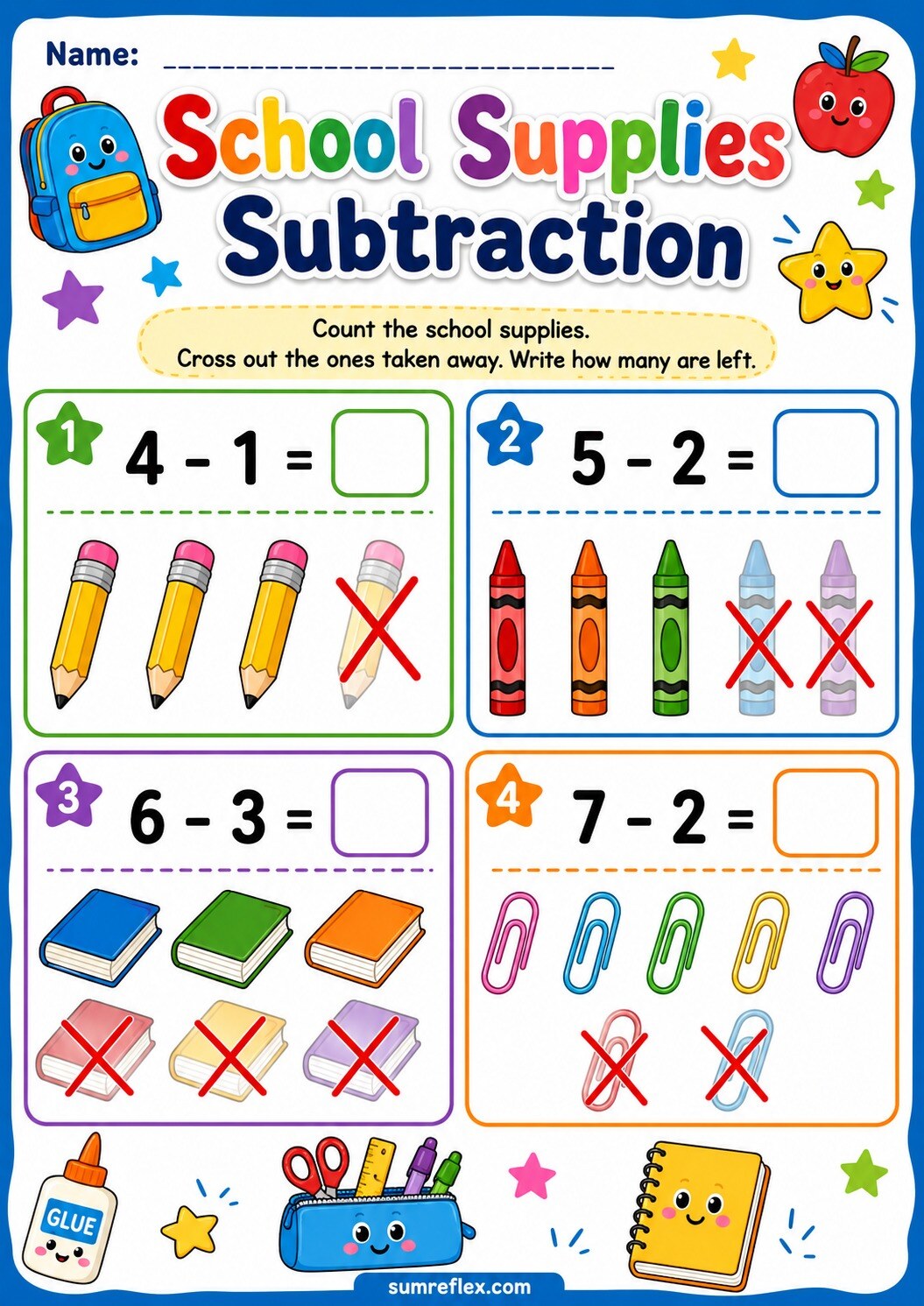
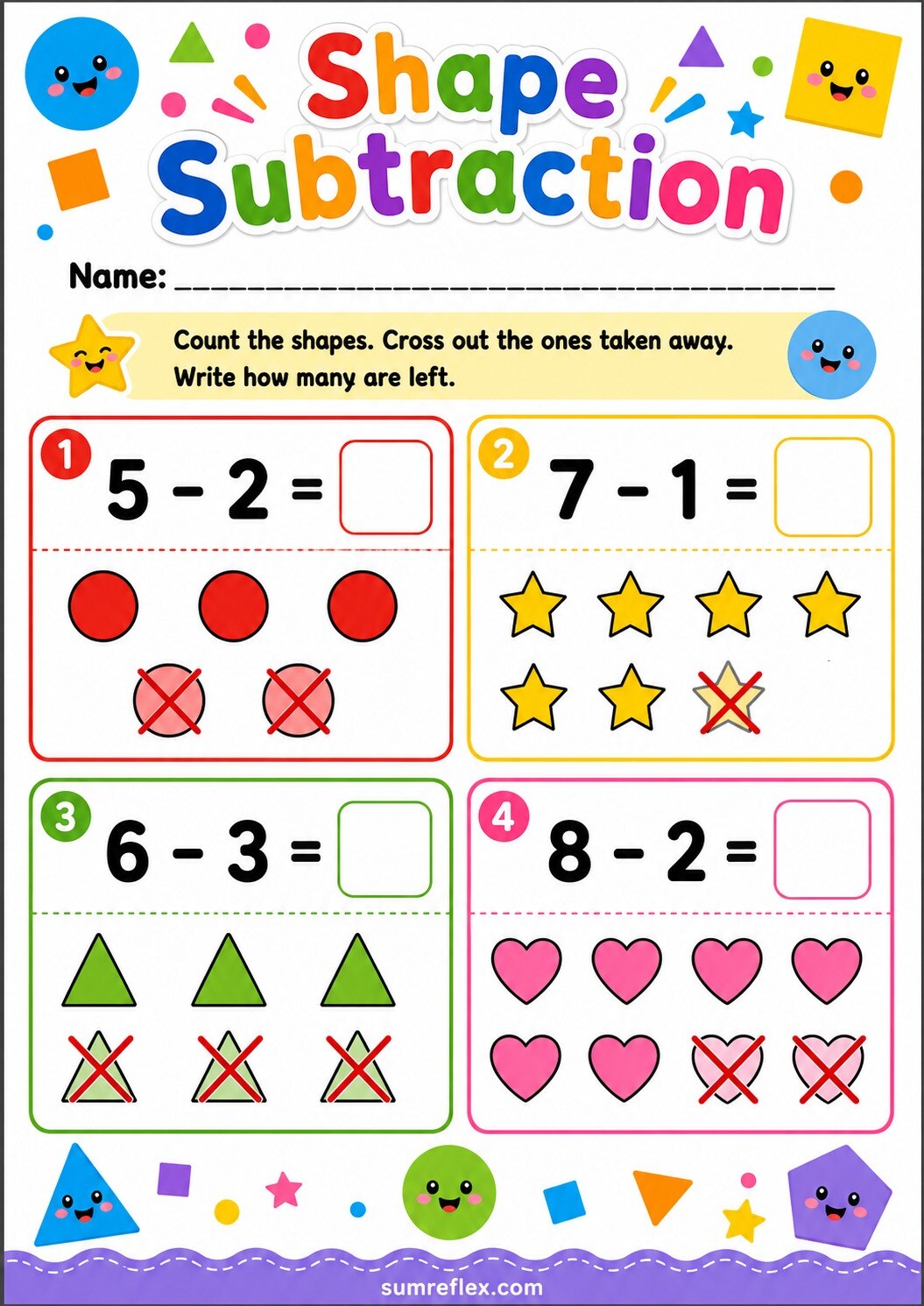
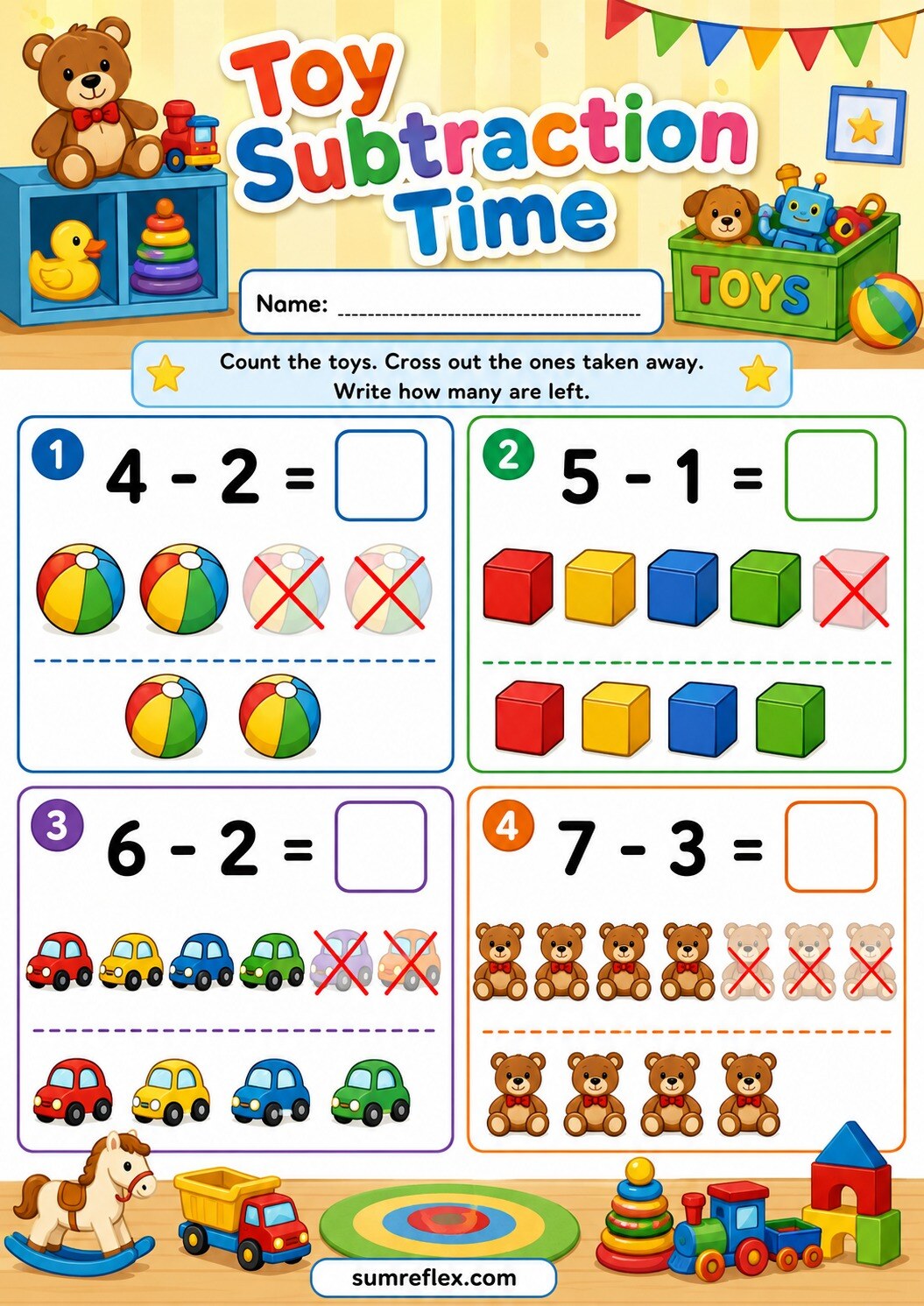
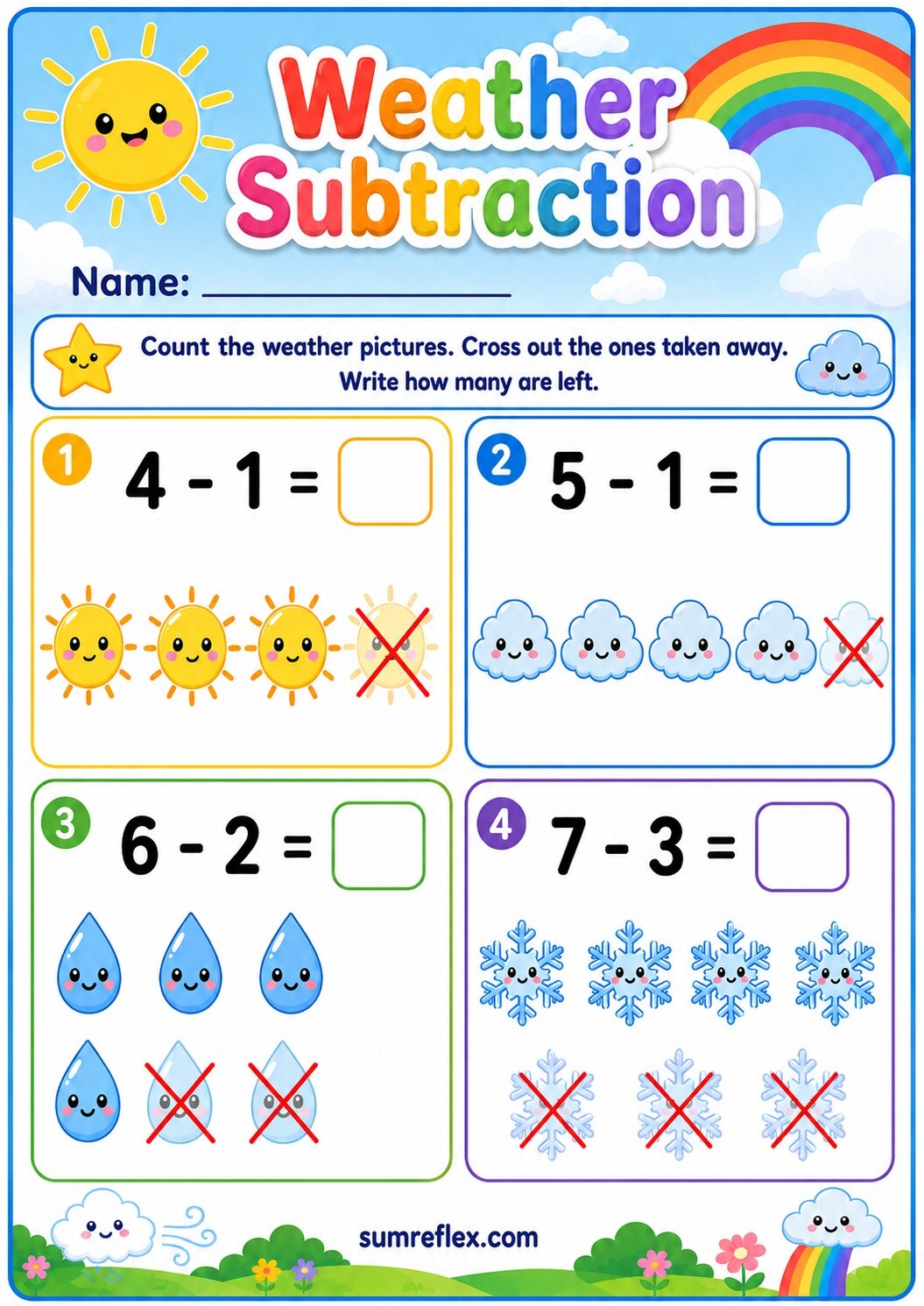
A crossed-out picture is a useful bridge between real objects and written subtraction. The child can still see the starting group, but the removed part is marked clearly. After that, the minus sign has a job: it tells the reader that part of the group leaves. This makes the written expression less abstract and easier to explain.
Name what stays, not only what leaves
Young learners often focus on the objects being crossed out because that action feels active. The answer, however, comes from the objects that remain. Ask the child to say both parts of the story: two toys went away, and three toys are still here. That second sentence is where subtraction becomes clear.
Use themes to keep the story concrete
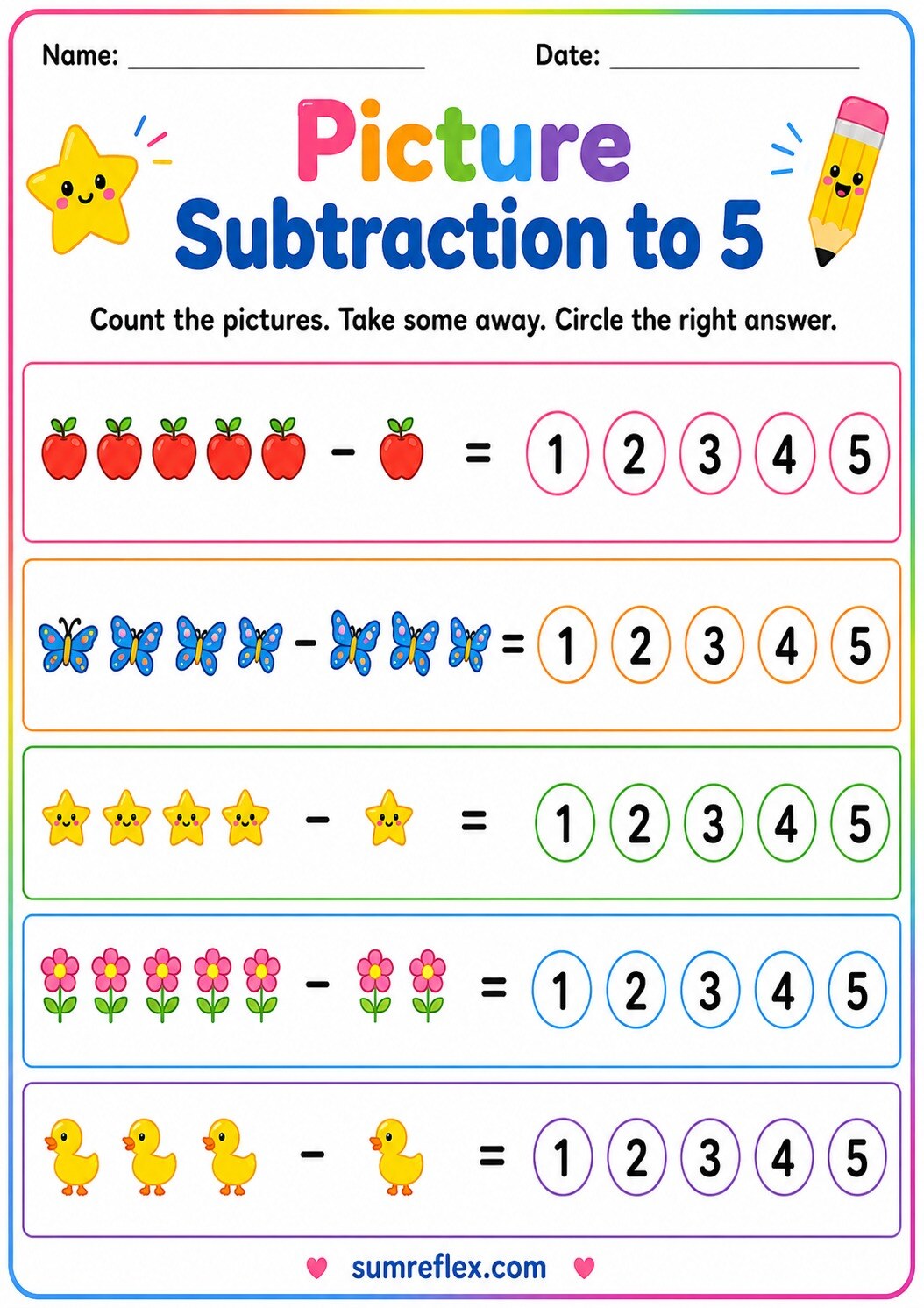
Animals, apples, bugs, flowers, fruit, ocean pictures, school supplies, shapes, toys, and weather icons all give the child something specific to remove. A familiar object name helps the learner describe the problem. The theme should support the take-away action, not distract from it, so keep the conversation short and tied to the pictures.
Act out one row before using the pencil
For a child new to subtraction, build one problem with counters or small toys before solving on paper. Put out the starting amount, move some objects away, and count what is left. Then show the matching worksheet row. The printed problem becomes a picture of an action the child already understands.
Do not rush toward mental subtraction
Preschool learners are allowed to count what remains. That is the point of the page. Mental subtraction can come later, after the child has seen enough take-away stories to understand the structure. If the child guesses without looking, return to pointing, crossing out, and recounting slowly. The answer should come from the pictures, not from pressure to be fast.
The starting amount deserves attention
Many subtraction mistakes begin before anything is crossed out. The child may not know how many objects were in the group at the start. Ask for the starting amount first, then the amount that leaves, and only then the amount left behind. This three-part routine gives the problem a clear beginning, middle, and end.
Reverse one problem to connect ideas
After a row is solved, ask what would happen if the crossed-out objects came back. This does not need to become a full addition lesson, but it helps children notice that subtraction and addition are related. The reverse story can make the remaining amount feel less random and more connected to the starting group.
End before the crossing-out gets careless
Take-away pages can become messy when a preschool child gets tired. If the marks are hard to see or the child starts crossing out too many objects, stop with the rows already done. A short subtraction session with clear marks is better than a full page where the child can no longer tell what was removed. Save the rest of the printable for another time when the child can look closely again.