



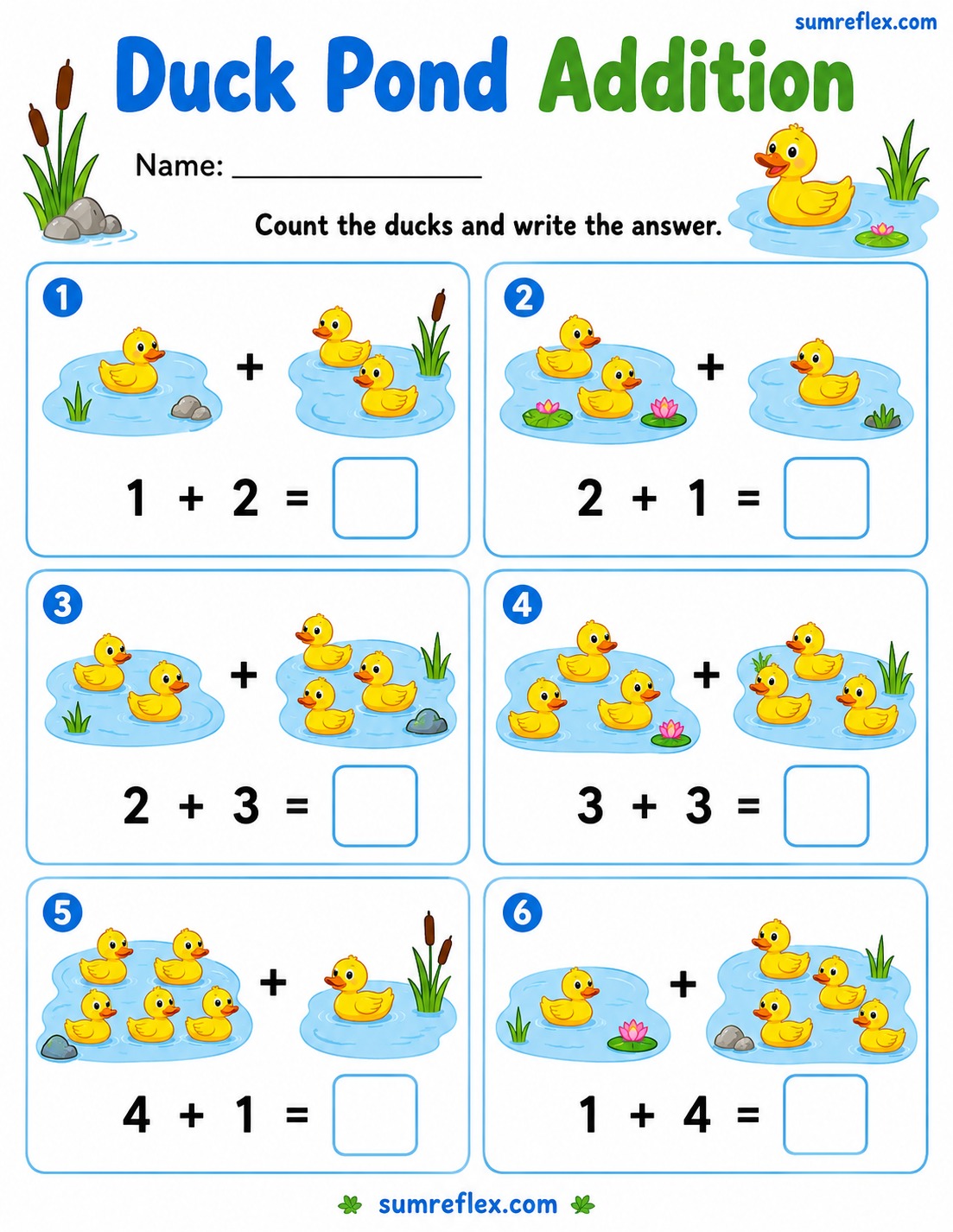
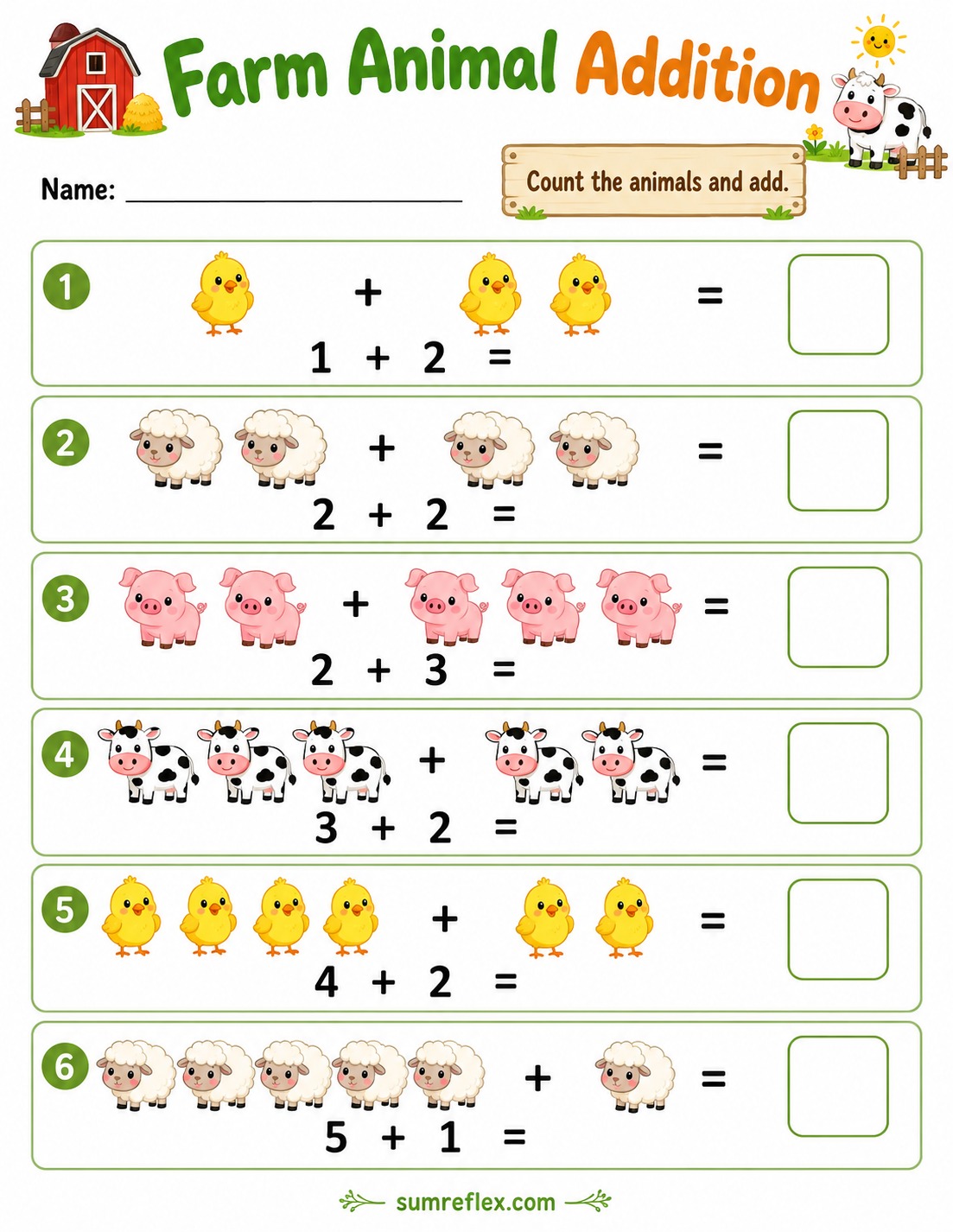
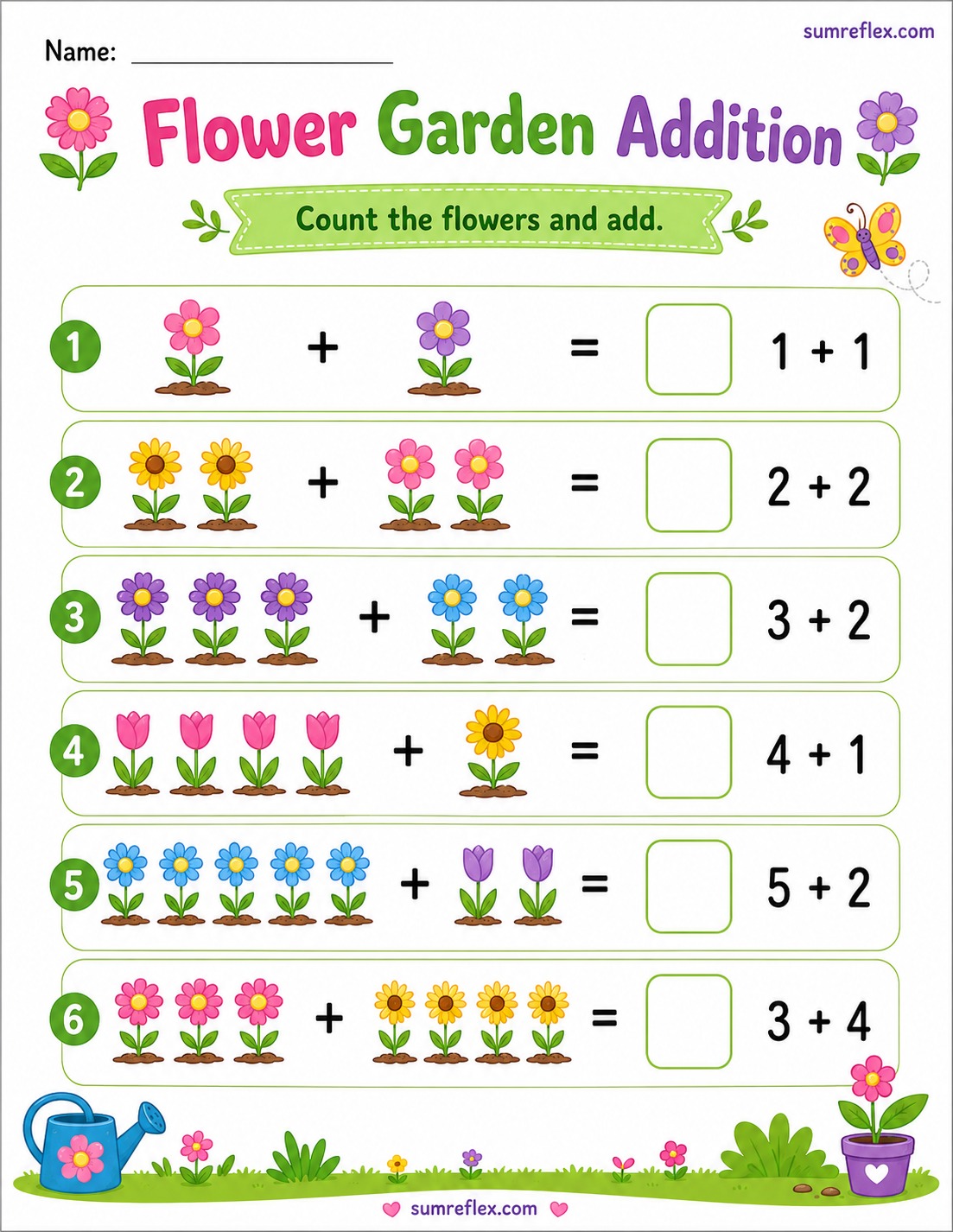
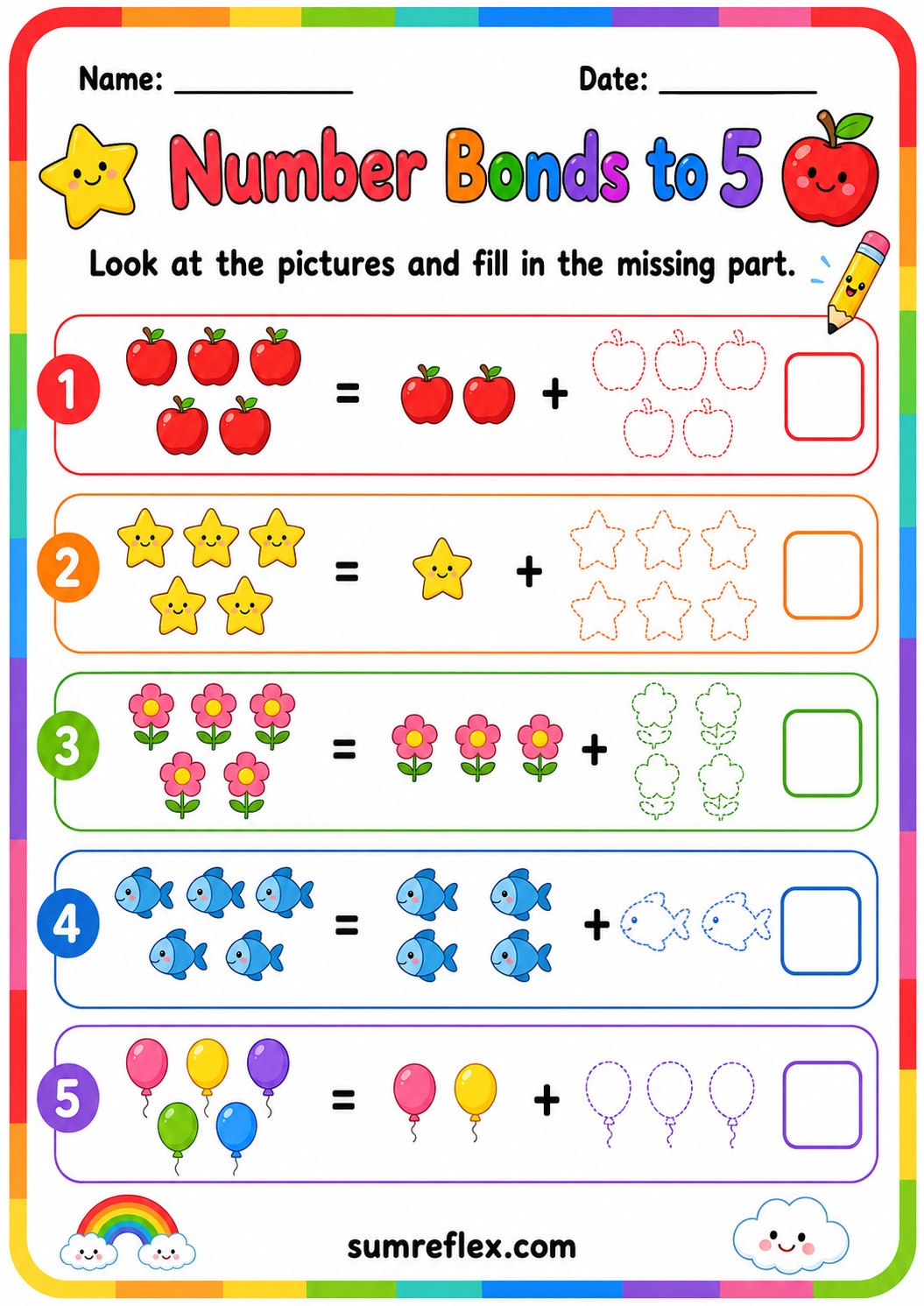
Addition should begin as a joining story
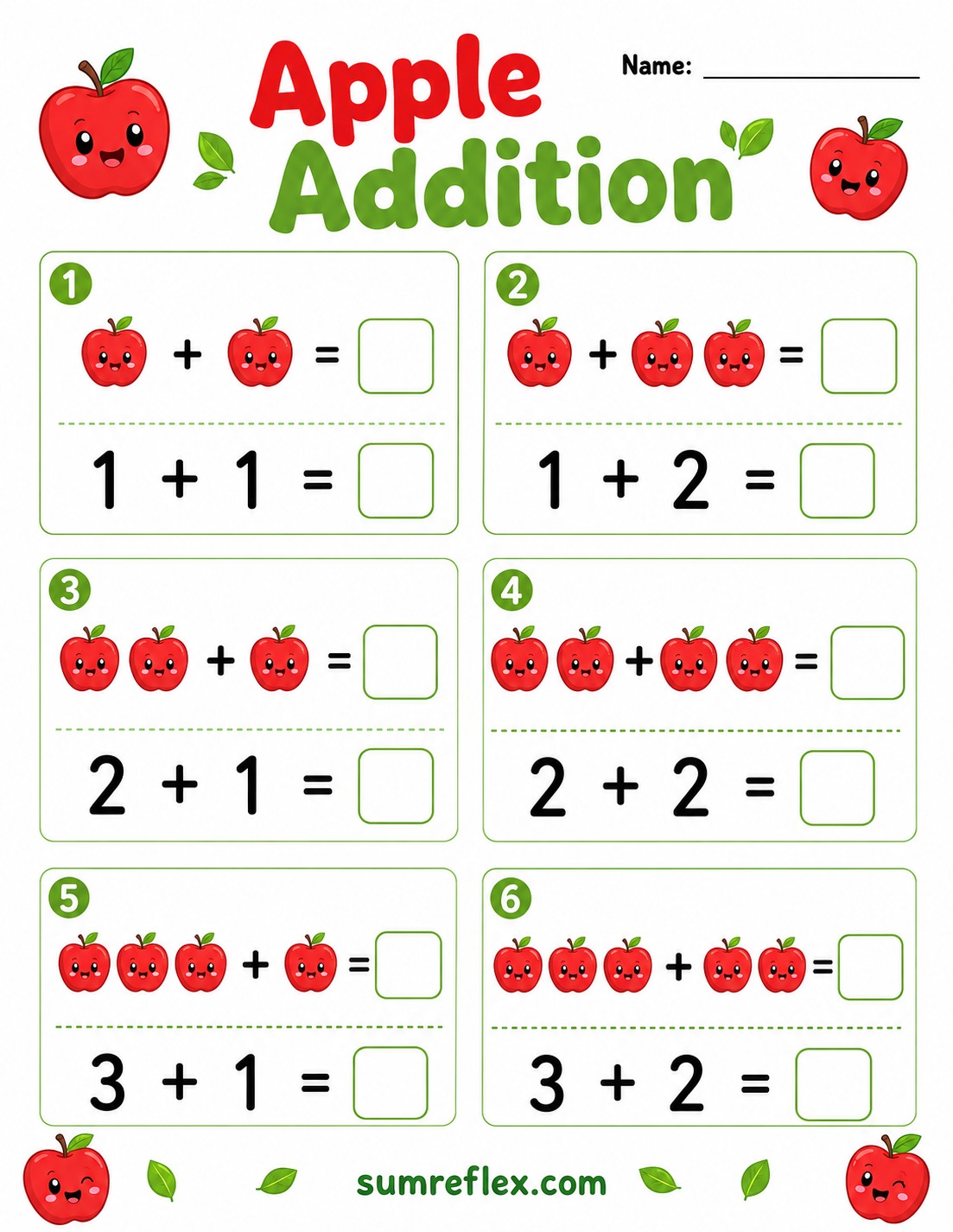
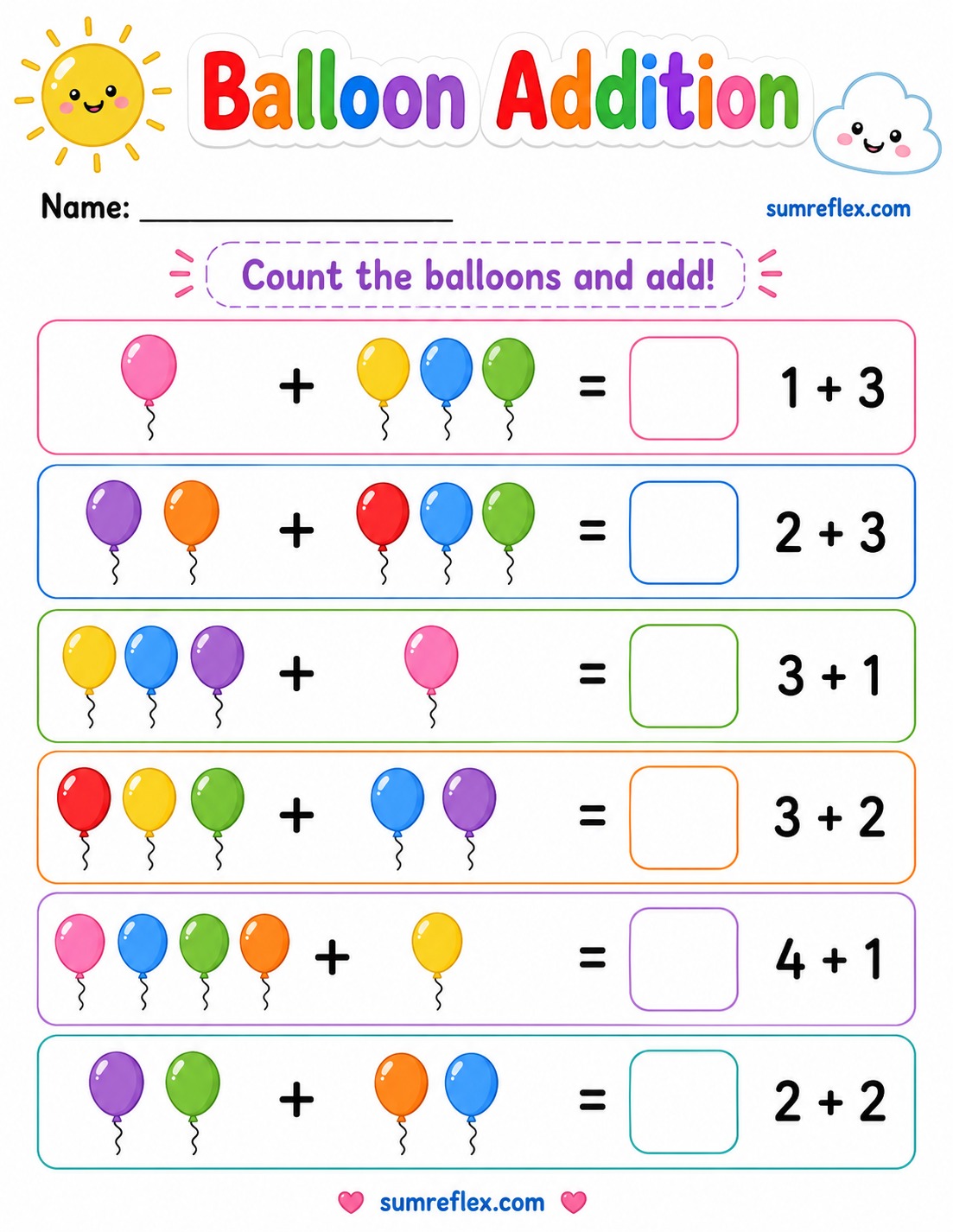
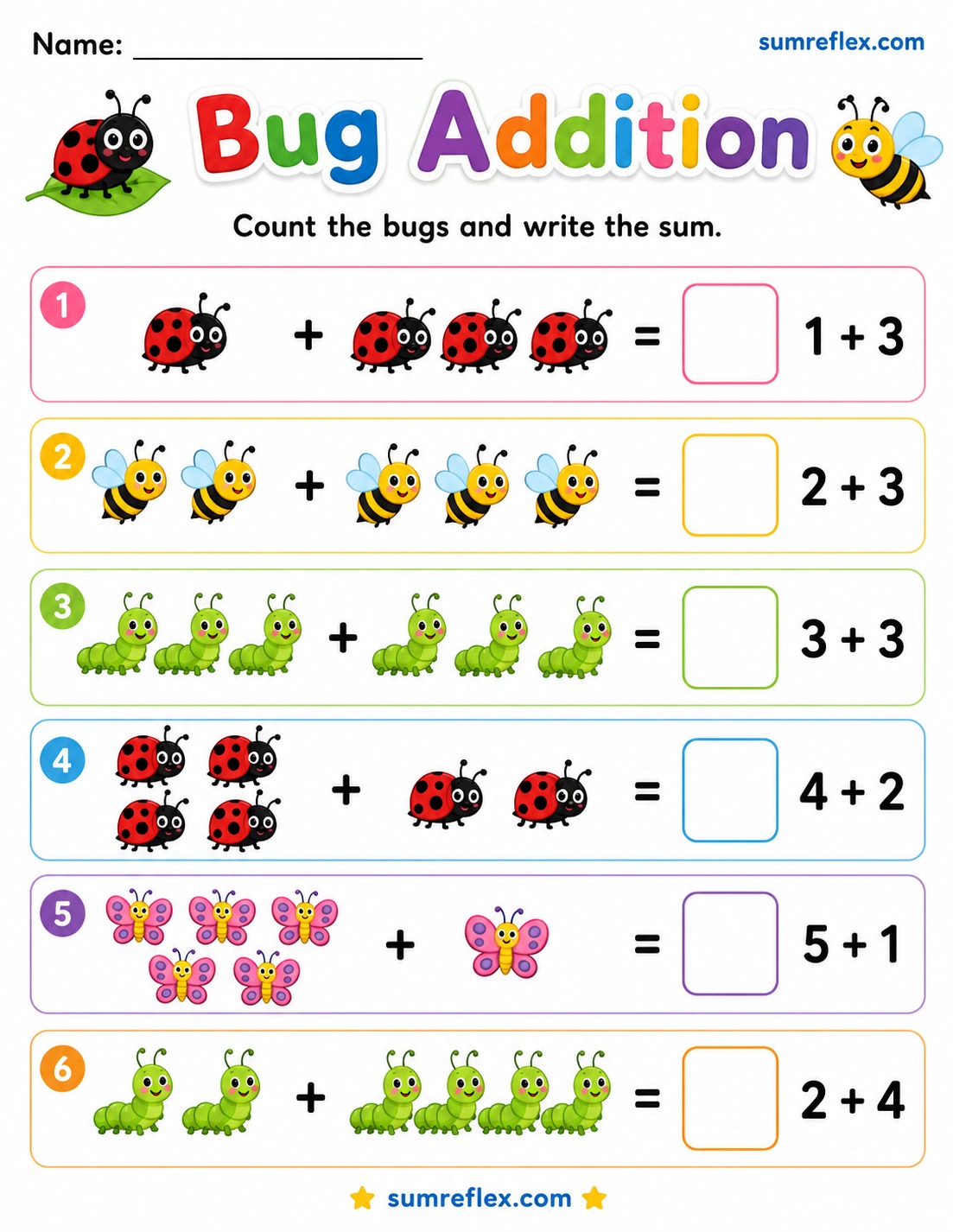
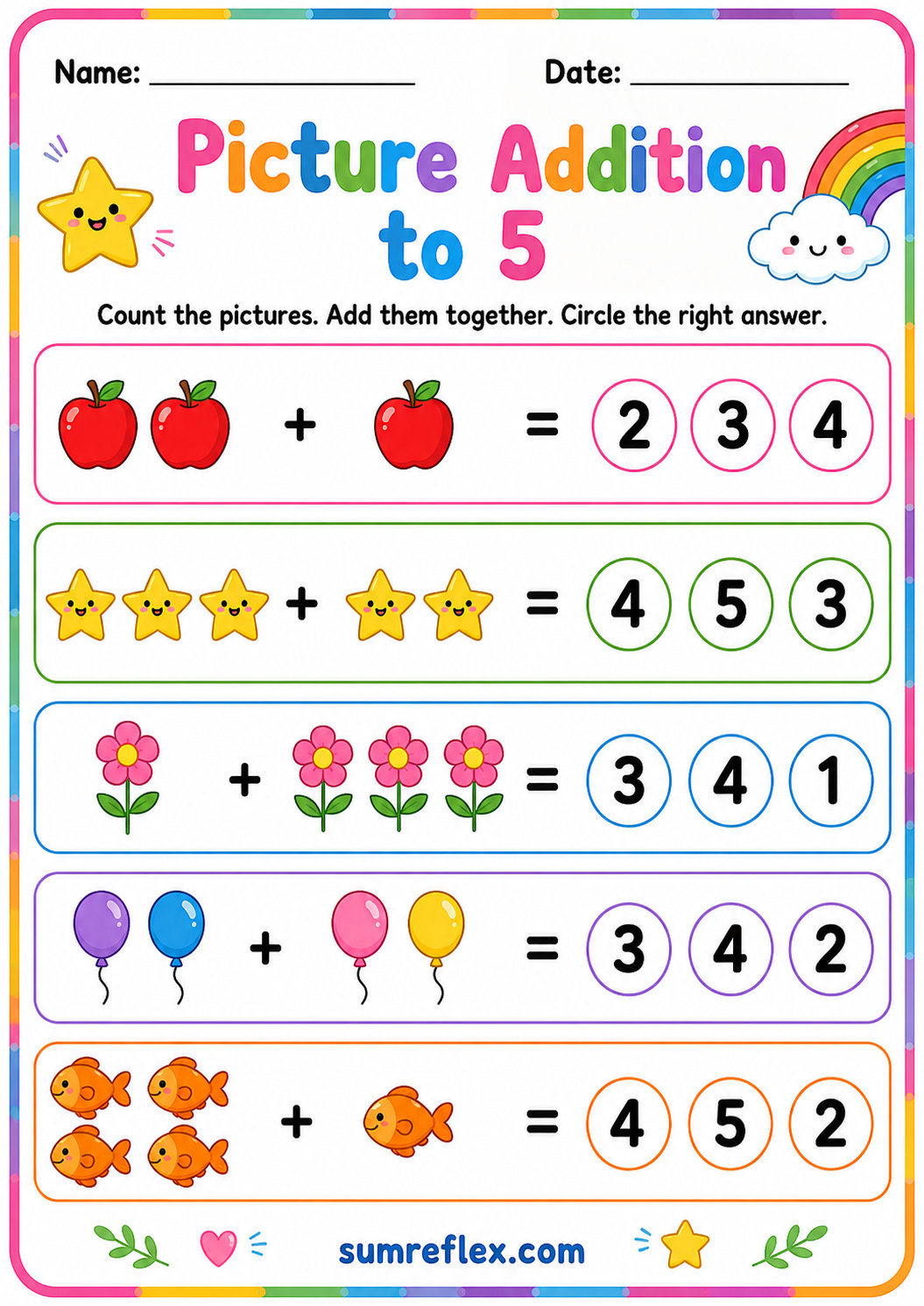
Preschool addition is not mainly about memorizing a plus sign. It begins when a child sees one small group and another small group, then understands that the groups can be counted together. These worksheets keep the objects visible so the answer is connected to something the learner can touch with a finger, name aloud, and recount if the first total is uncertain.
Ask for the two parts before the total
Before a child writes any answer, ask for the first part and the second part. The sentence can be simple: three apples and two apples make five apples. Saying the parts first prevents the worksheet from becoming a guessing task. It also helps the learner understand that the total comes from the two groups, not from a number copied from nearby.
Use picture themes as conversation anchors
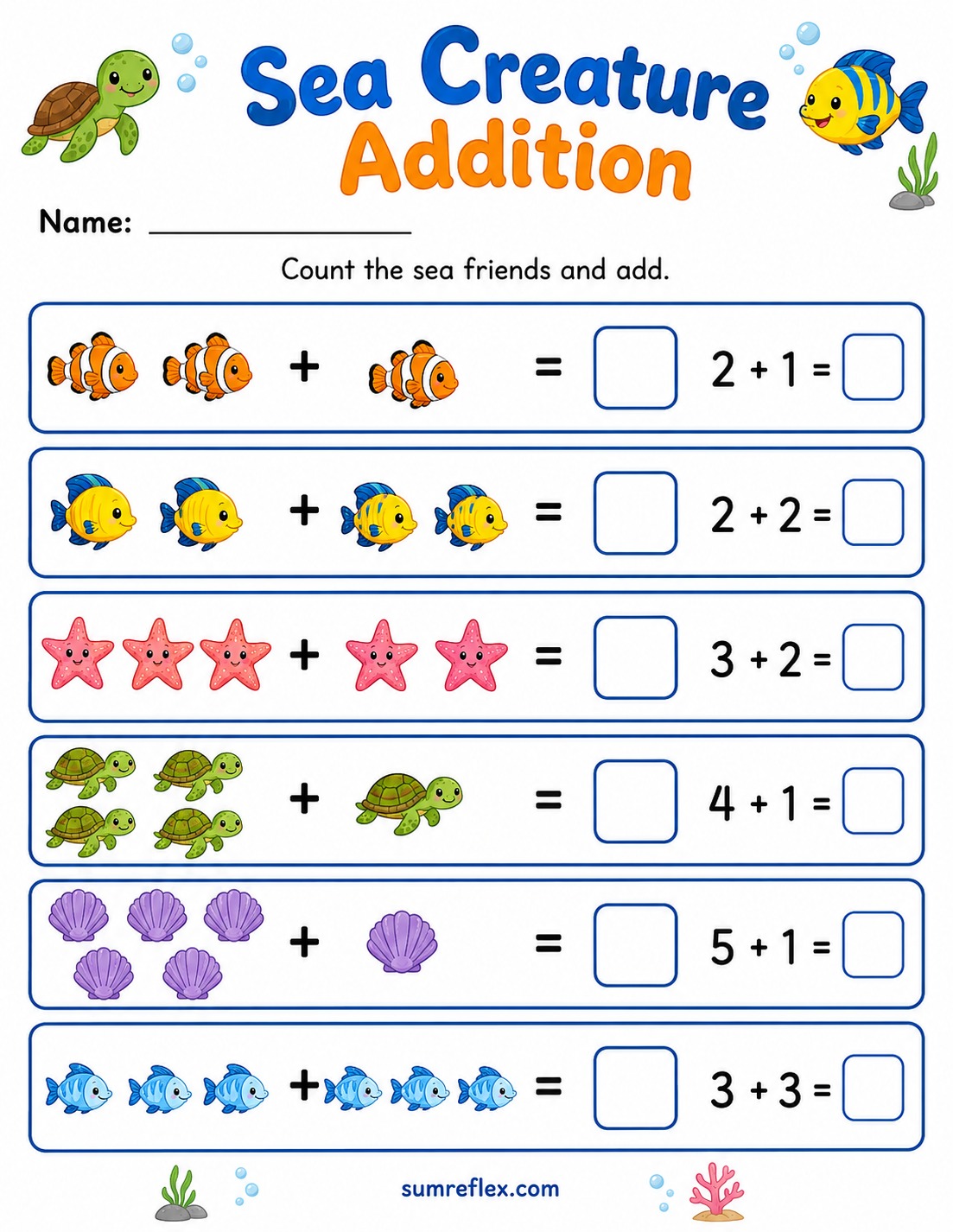
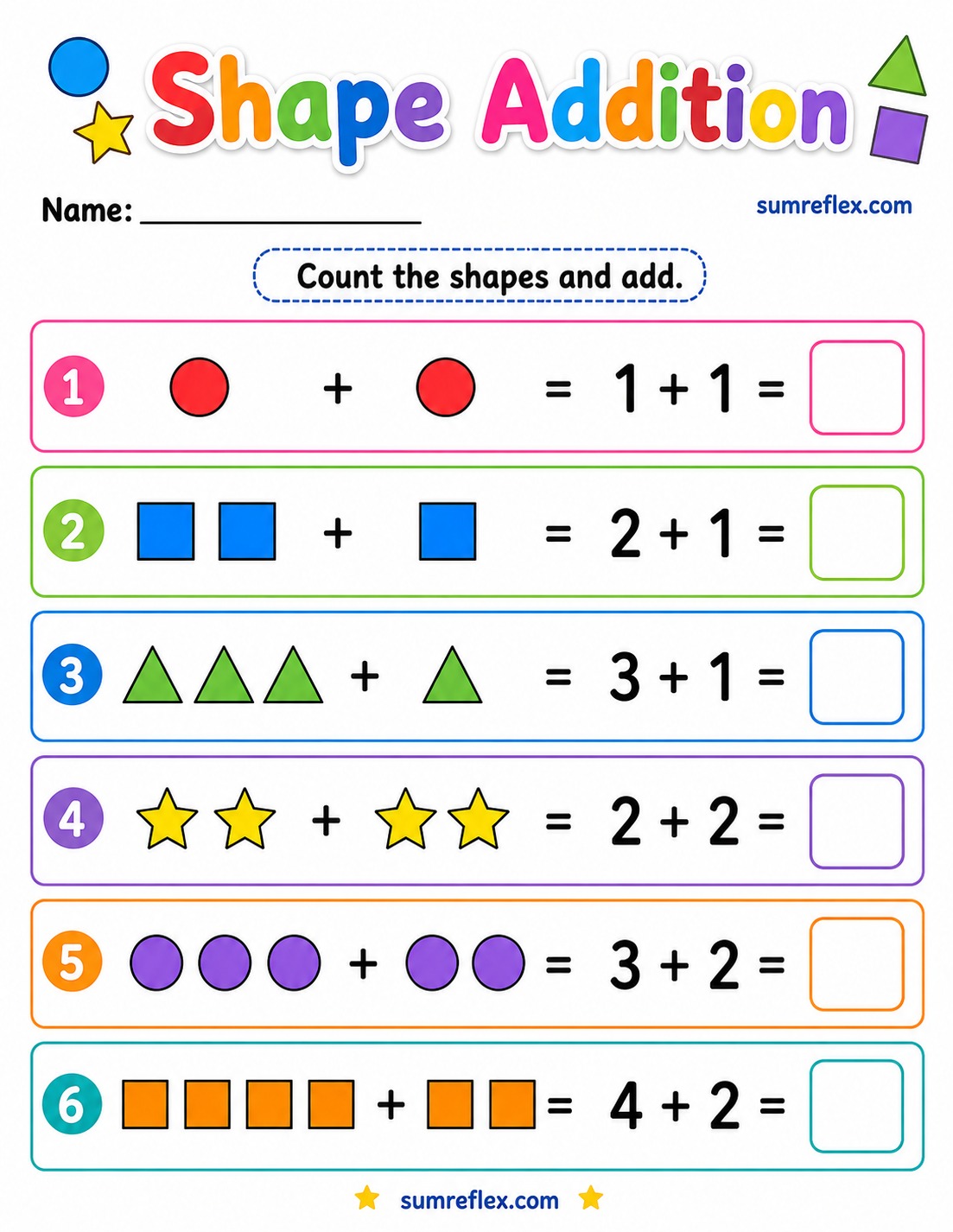
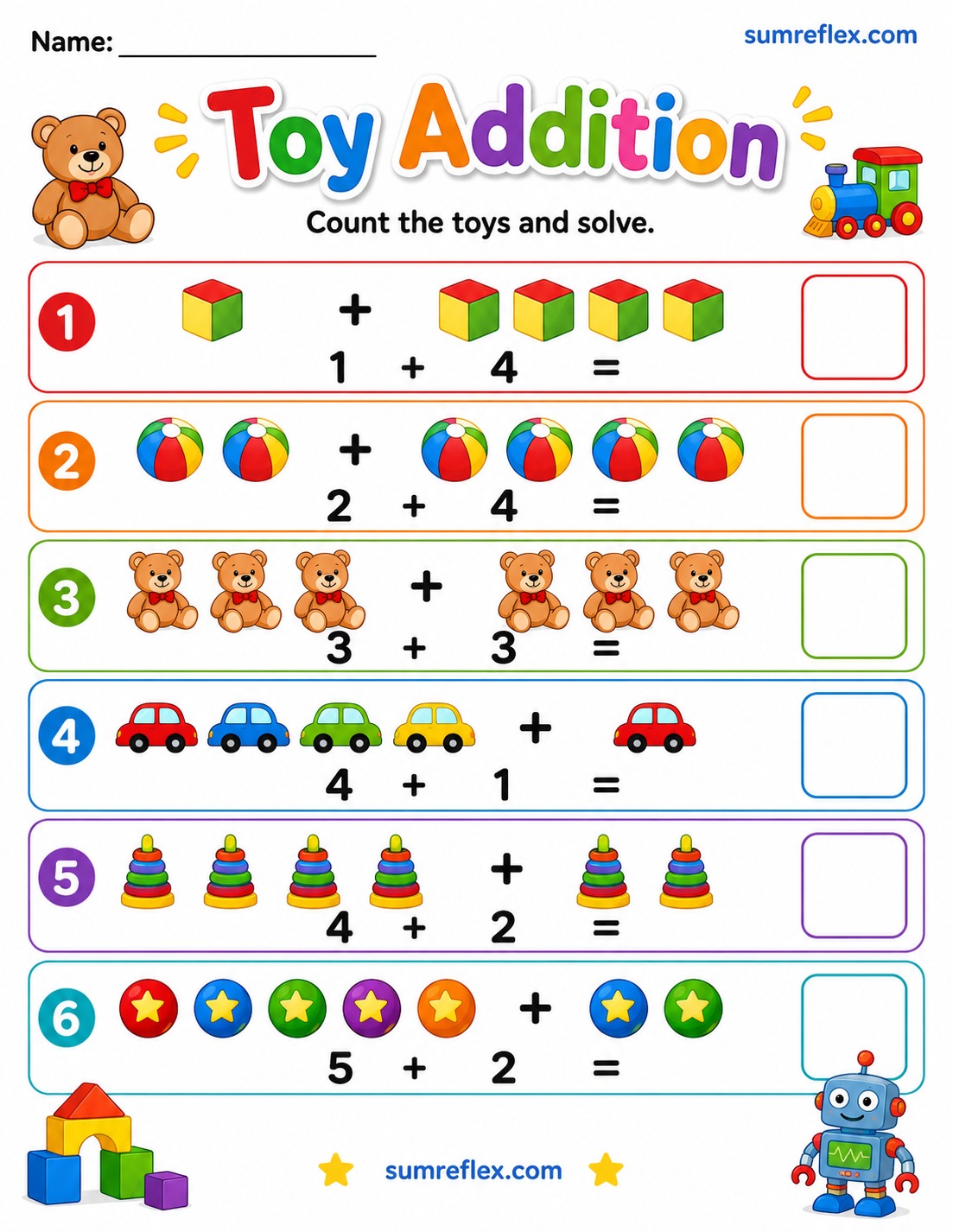
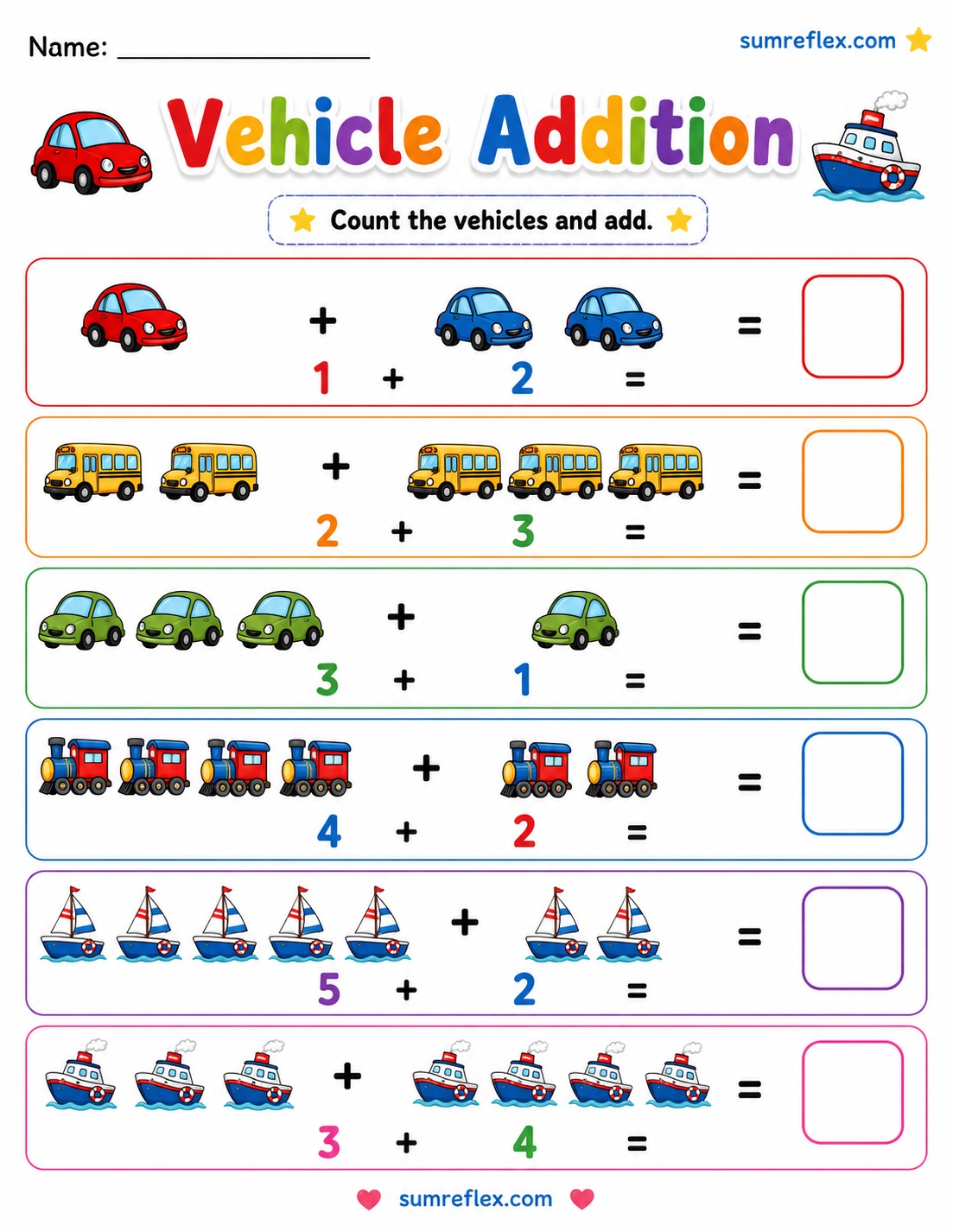
Apples, ducks, farm animals, flowers, toys, vehicles, bugs, balloons, sea creatures, and shapes all give the adult something concrete to talk about. The theme does not change the addition goal. It gives the child a familiar object name, which makes the problem easier to explain. A spoken story usually steadies the counting better than silent pointing alone.
Number bonds to five need a slower pace
The number-bond page is different from the picture-sum pages because it asks the child to think about parts and a whole. Use it after several object pages feel comfortable. Five can be shown with fingers, counters, or dots before the child fills the worksheet spaces. The goal is to notice how smaller numbers make five, not to rush into abstract facts.
Keep the plus sign tied to action
When the plus sign appears, describe it as a signal that two groups are being put together. Point to the first group, point to the sign, point to the second group, and then sweep across everything to count the total. That gesture gives the symbol a meaning the child can see, which is more useful than naming the sign without the action.
Small totals are intentional
A preschool page should stay inside numbers that can be counted accurately. If the total is too large, the learner may start chanting number words without tracking the pictures. Small sums make it possible to slow down, touch each object once, and check the answer. That careful habit will matter later when the numbers grow.
Correct one counting slip without restarting the page
If a child skips a picture or counts one object twice, do not erase the whole row immediately. Return to the first object, touch each picture in order, and let the learner hear the count again. The mistake becomes a lesson in one-to-one counting. A calm correction is better than turning the entire worksheet into a redo.
Choose one sheet for one sitting
Preschool addition practice should feel complete after a short, successful page. One themed worksheet is enough for many sessions. If the child wants more, choose a second page with a different picture setting but the same joining action. If attention fades, stop after a few rows and finish the page later with fresh focus.
End by letting the child prove one sum
After the worksheet is finished, choose one row and ask the child to prove the answer. They can touch the objects, use fingers, or move counters beside the page. This one proof matters because it shows whether the answer came from understanding the joined group. The final check should be short, specific, and connected to the picture.