

Shape work begins with noticing the outline
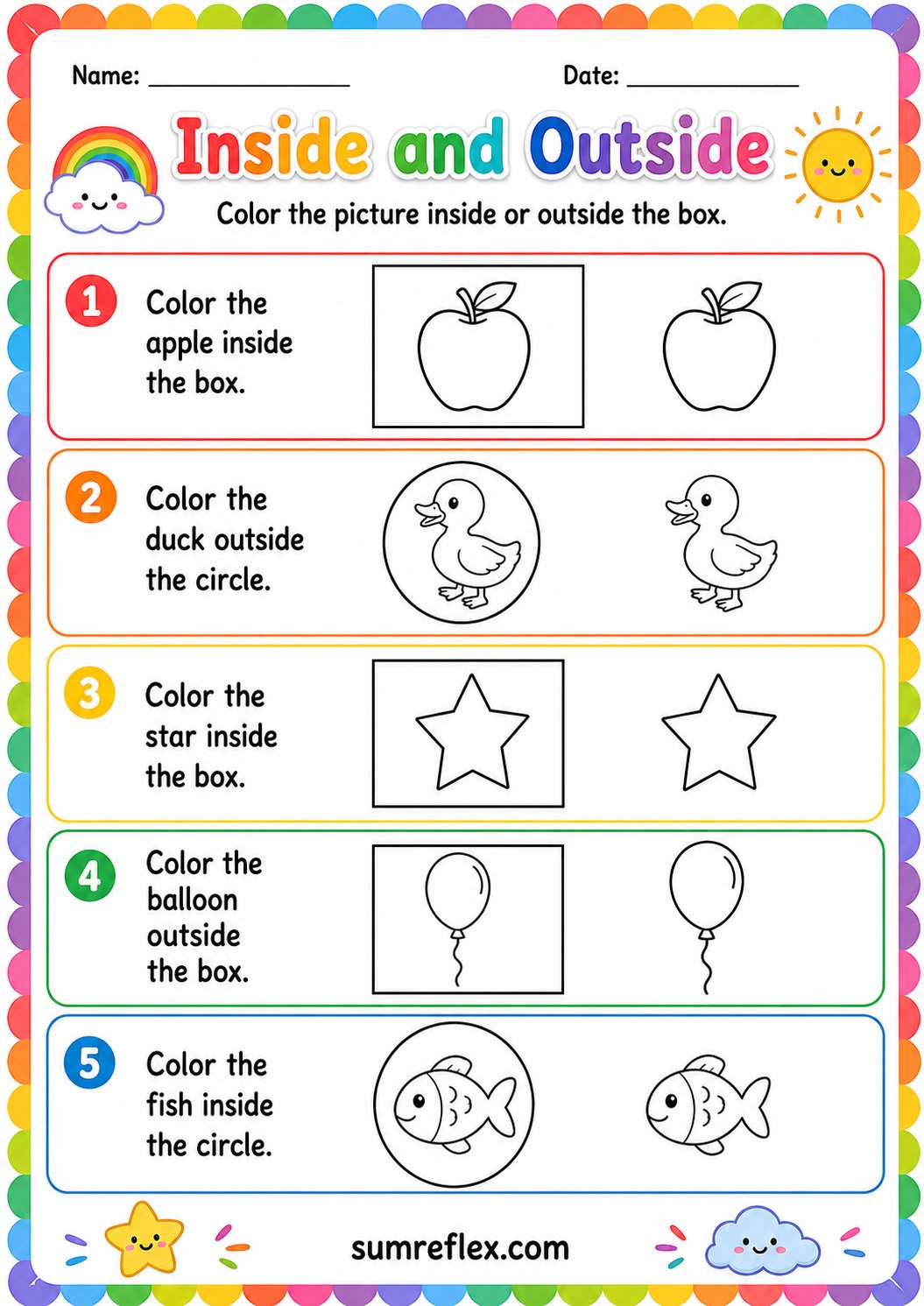
Preschool shape practice should start with what the child can see. A circle is round, a triangle has three sides, and a rectangle stretches longer in one direction. These worksheets help learners slow down and look at the outline before naming, coloring, counting, or matching the figure. The shape name should come from a visible feature, not from guessing.
Name the figure before the crayon moves
Coloring a shape is more useful when the child says the shape name first. Ask for a short phrase such as blue circle or yellow triangle before coloring begins. This keeps the page from becoming a plain art task. The color becomes a second action after the child has already recognized the figure.
Sides and corners give children evidence
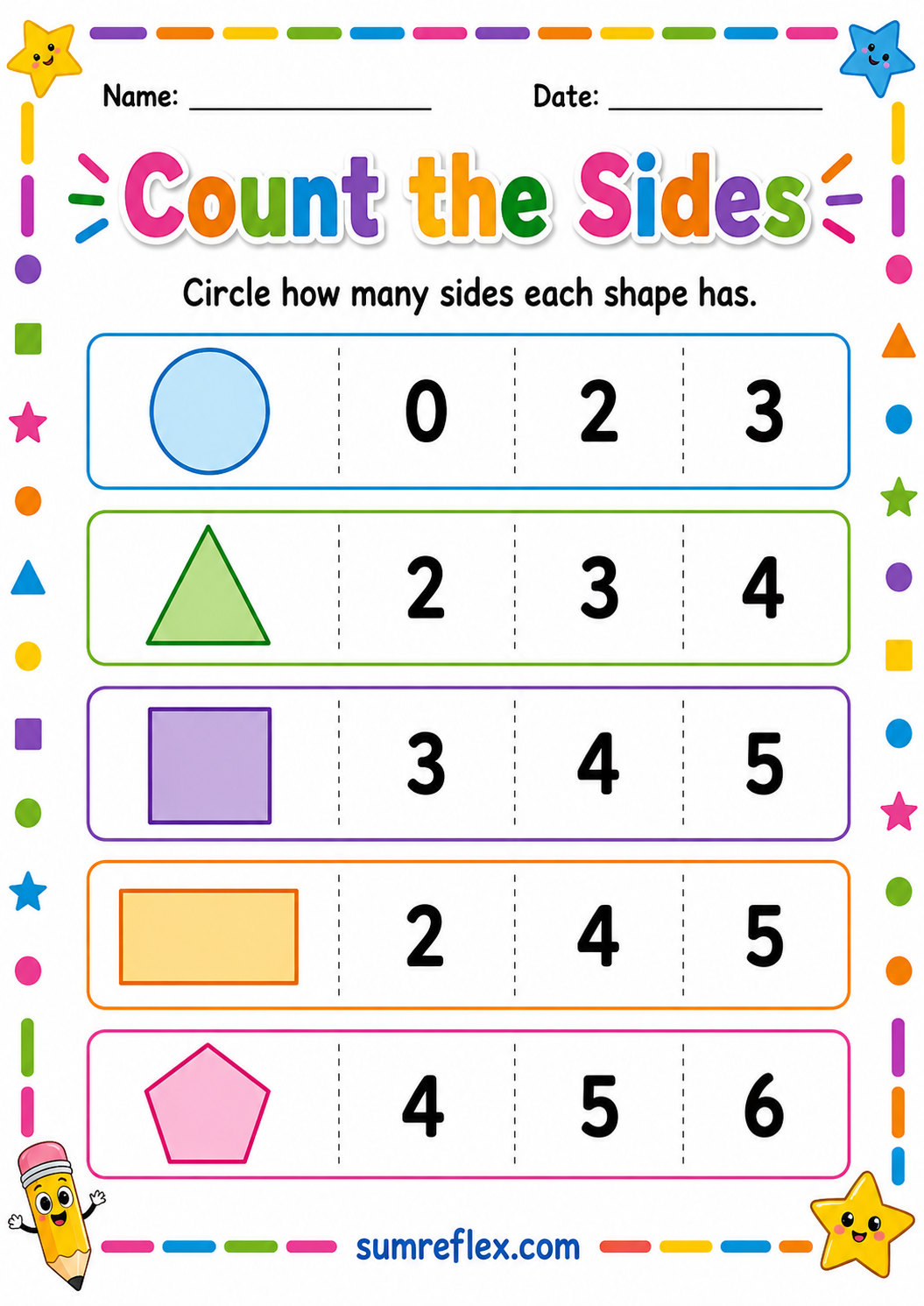
When shapes are confusing, have the learner trace around the outline with a finger. Count straight sides, pause at corners, and compare the path to another shape. A child who can explain that a triangle has three sides and a square has four is using evidence instead of memorizing the picture.
Matching shapes asks for sameness
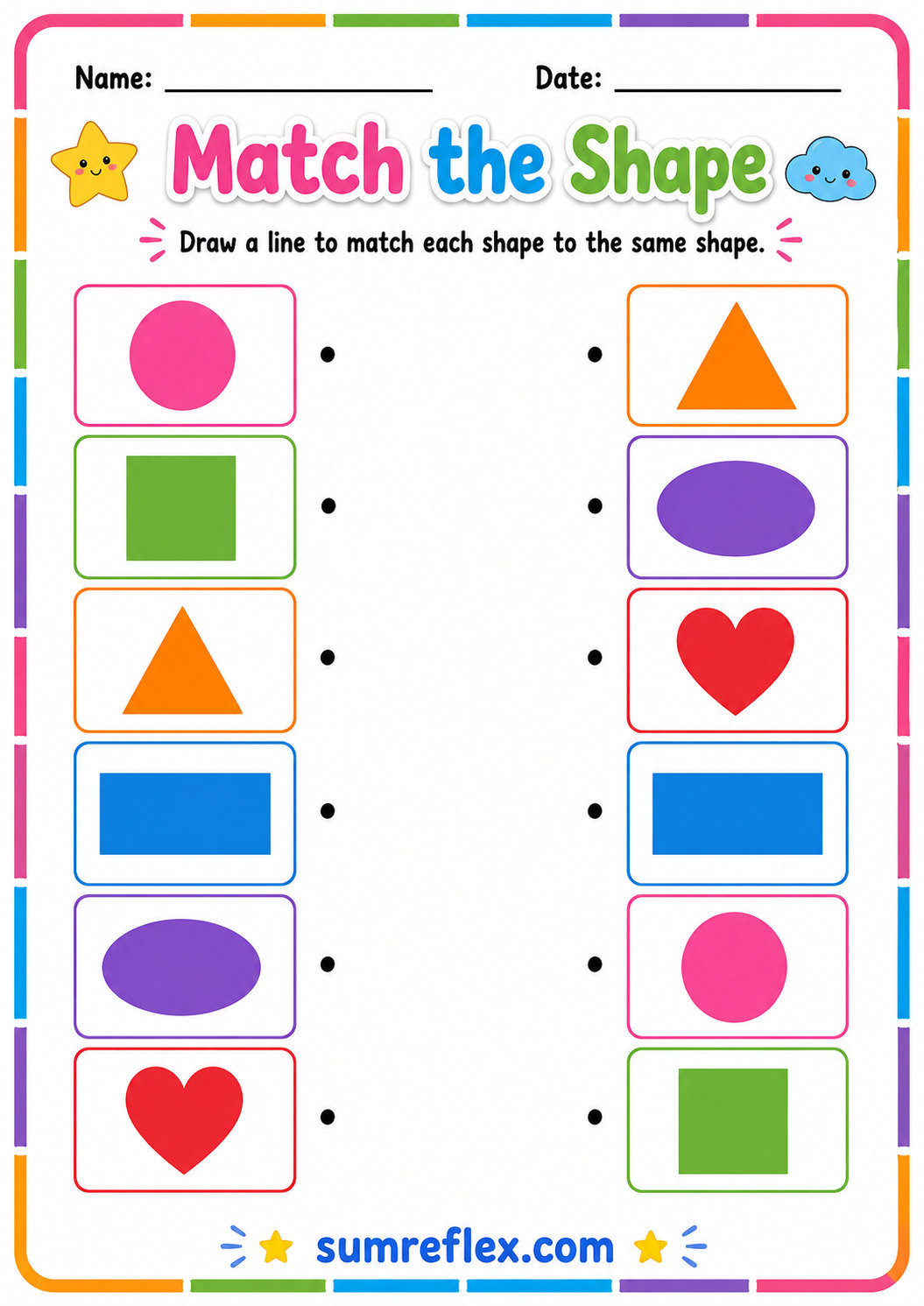
A matching page is useful because the child must decide whether two outlines are the same, even if they appear in different places on the page. This is a visual discrimination skill. Encourage the learner to look at sides, curves, and corners before drawing the match line. A clean comparison matters more than a fast line.
Counting shapes builds scanning habits
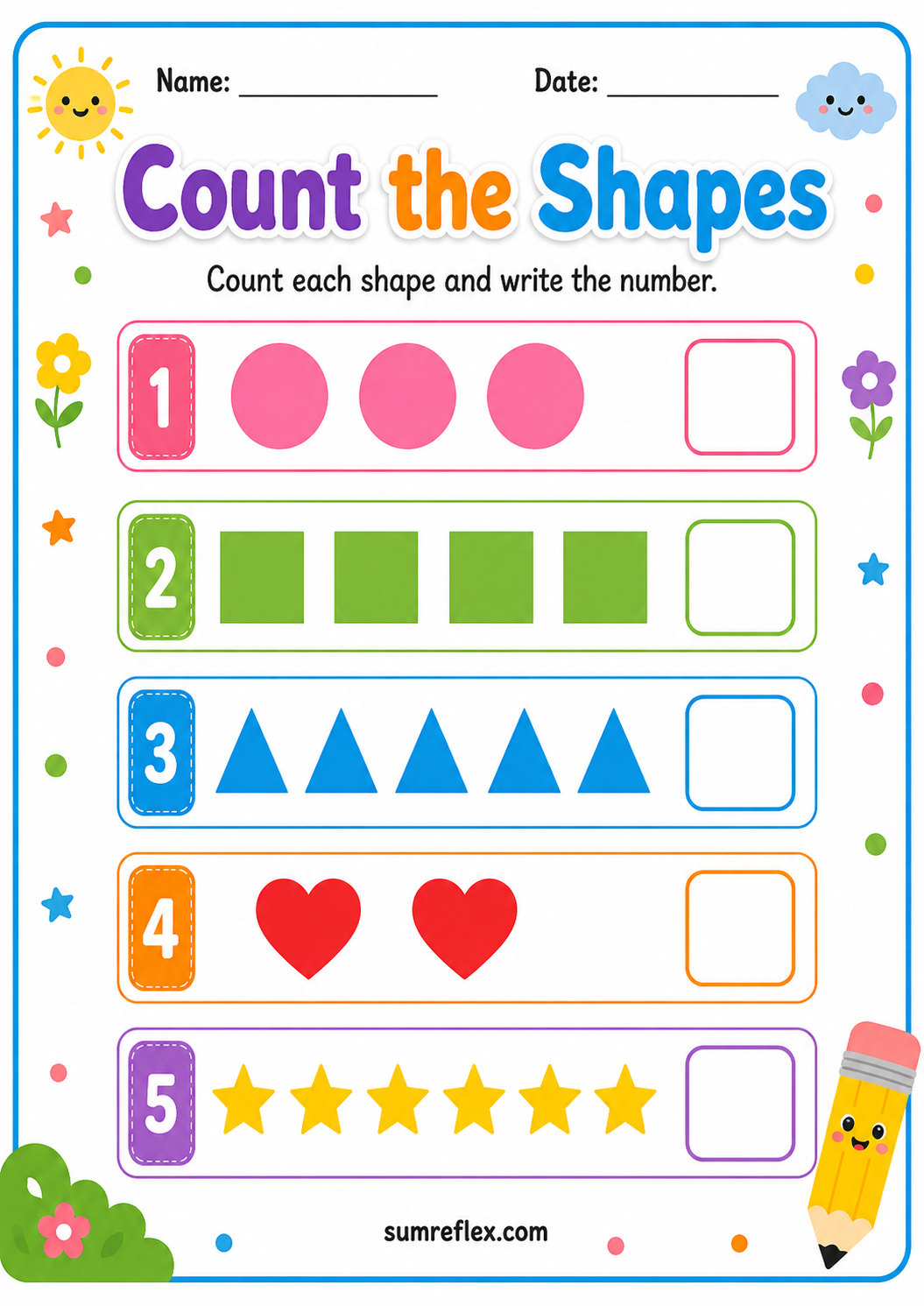
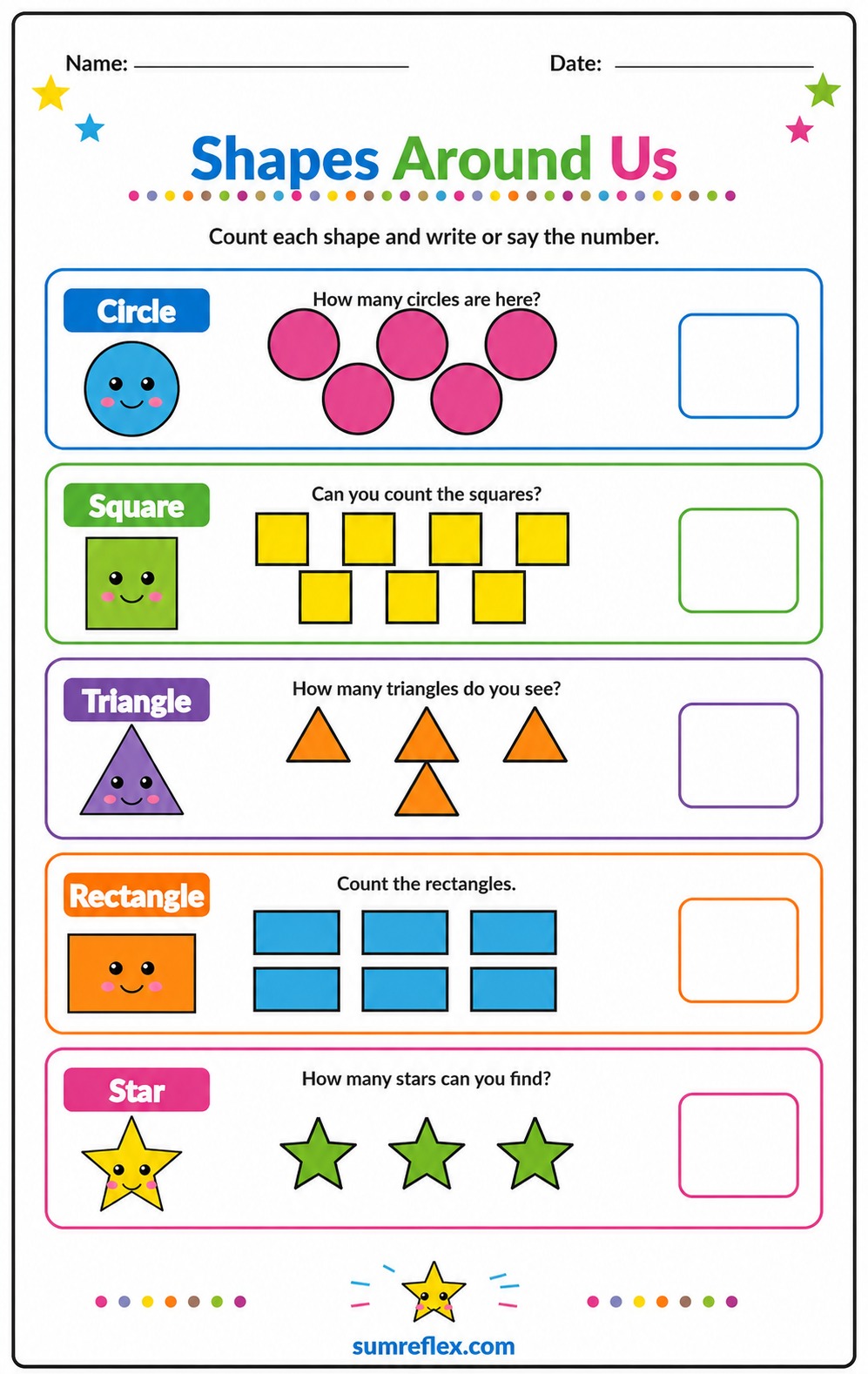
Count-the-shapes pages can be harder than they look. Children may count one shape twice or miss a small figure in a busy group. Ask them to point to each target shape, mark it lightly, or move across the page in rows. The goal is careful scanning, not only knowing the shape word.
Real objects make geometry less isolated
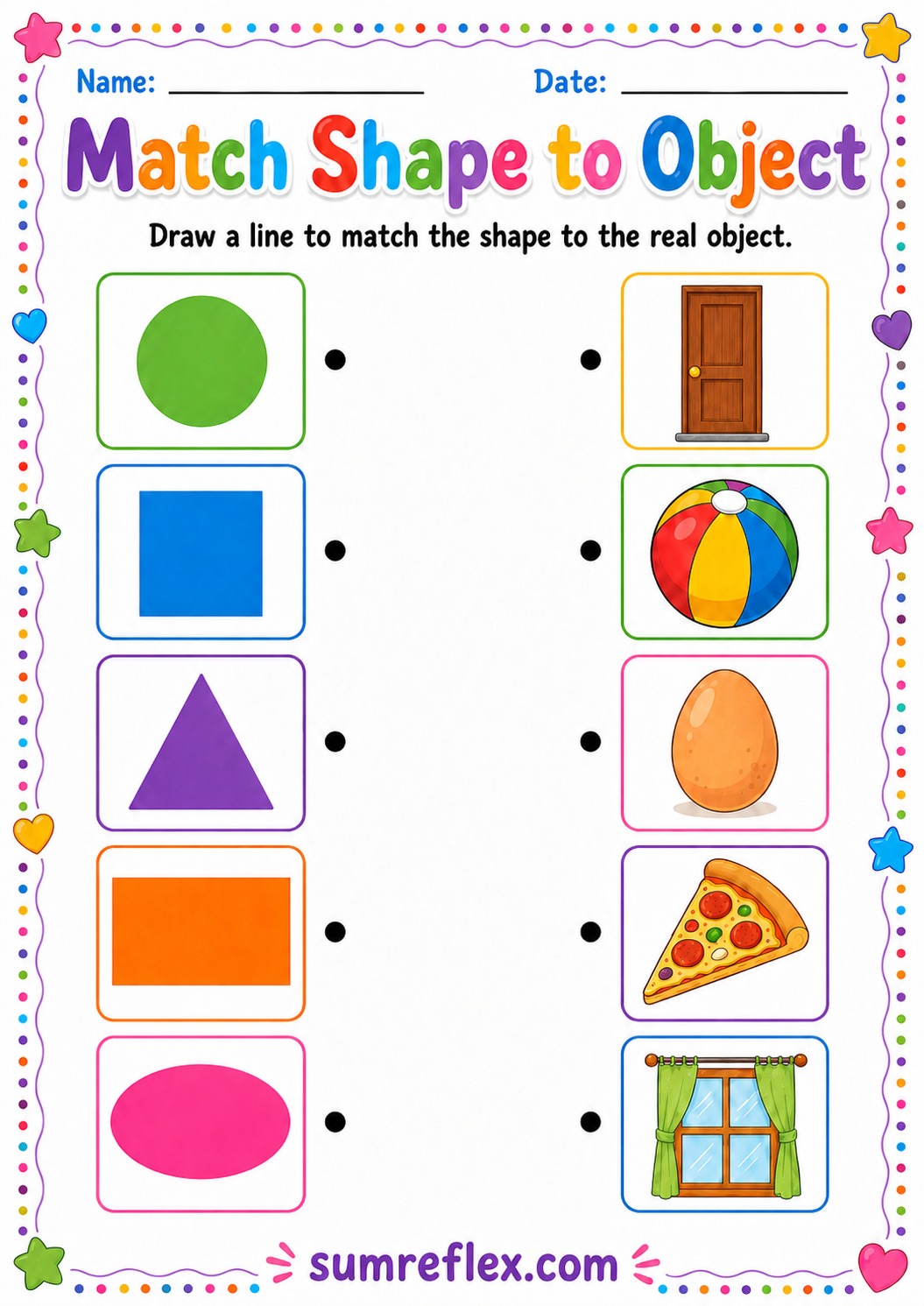
After a worksheet, look for shape examples nearby: a round plate, a rectangular book, a square tile, a triangular sign, or a heart on a sticker. This quick search helps children understand that shape words describe objects outside the printable. It also gives the adult a simple way to review without printing another page. Real examples also show that the same shape can appear in different colors, sizes, and materials.
Flat shapes should stay clear before solids
These pages focus on flat shapes, not cubes, spheres, cylinders, or cones. That boundary helps preschool learners build a strong first vocabulary. Once the child can name and compare circles, squares, triangles, rectangles, stars, and hearts, three-dimensional words can be introduced with real objects later.
Reduce choices when two shapes keep mixing
If a learner confuses rectangles and squares, or triangles and stars, cover the extra choices and compare only two figures. Ask what is the same and what is different. Too many shapes at once can turn the page into guessing. A smaller comparison often teaches more than a crowded worksheet row.
Let one explanation close the page
At the end, choose one item and ask why it is that shape. The answer can be simple: it has three sides, it is round, or it has four corners. This final explanation makes the worksheet more than coloring or matching. It shows whether the child can use a shape feature to support the answer. Keep the explanation short so the review feels natural.