



Patterns begin with the repeated chunk
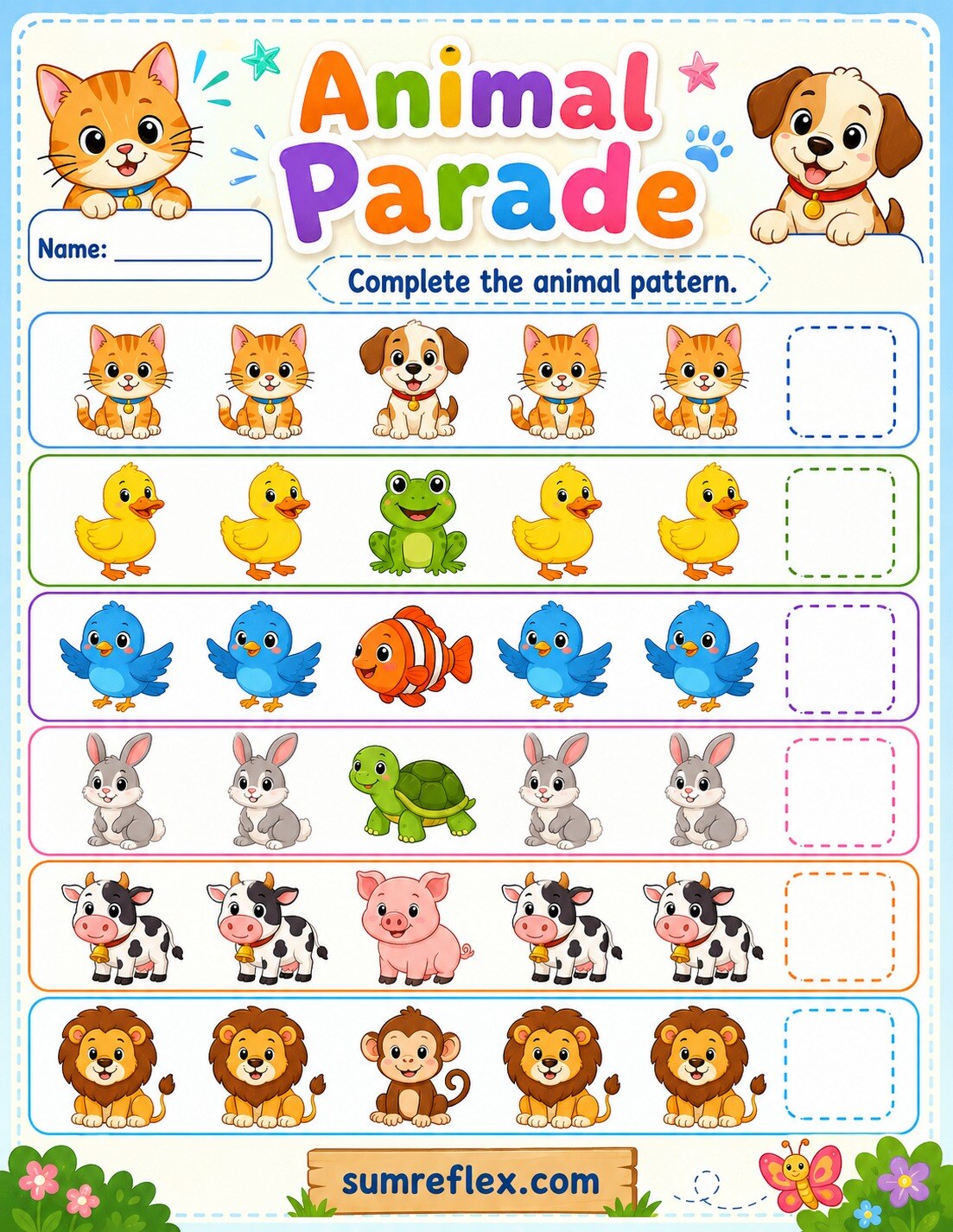
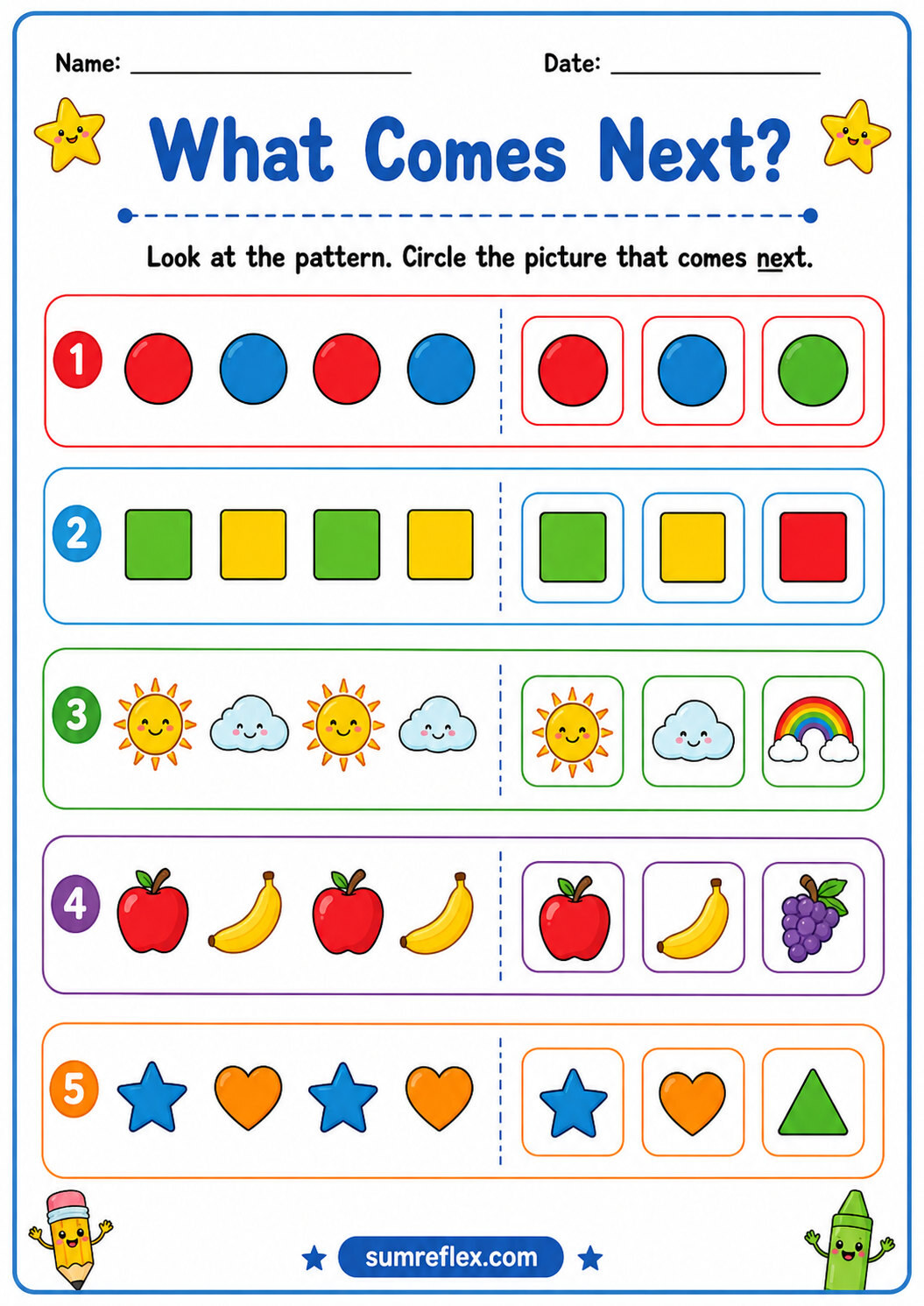
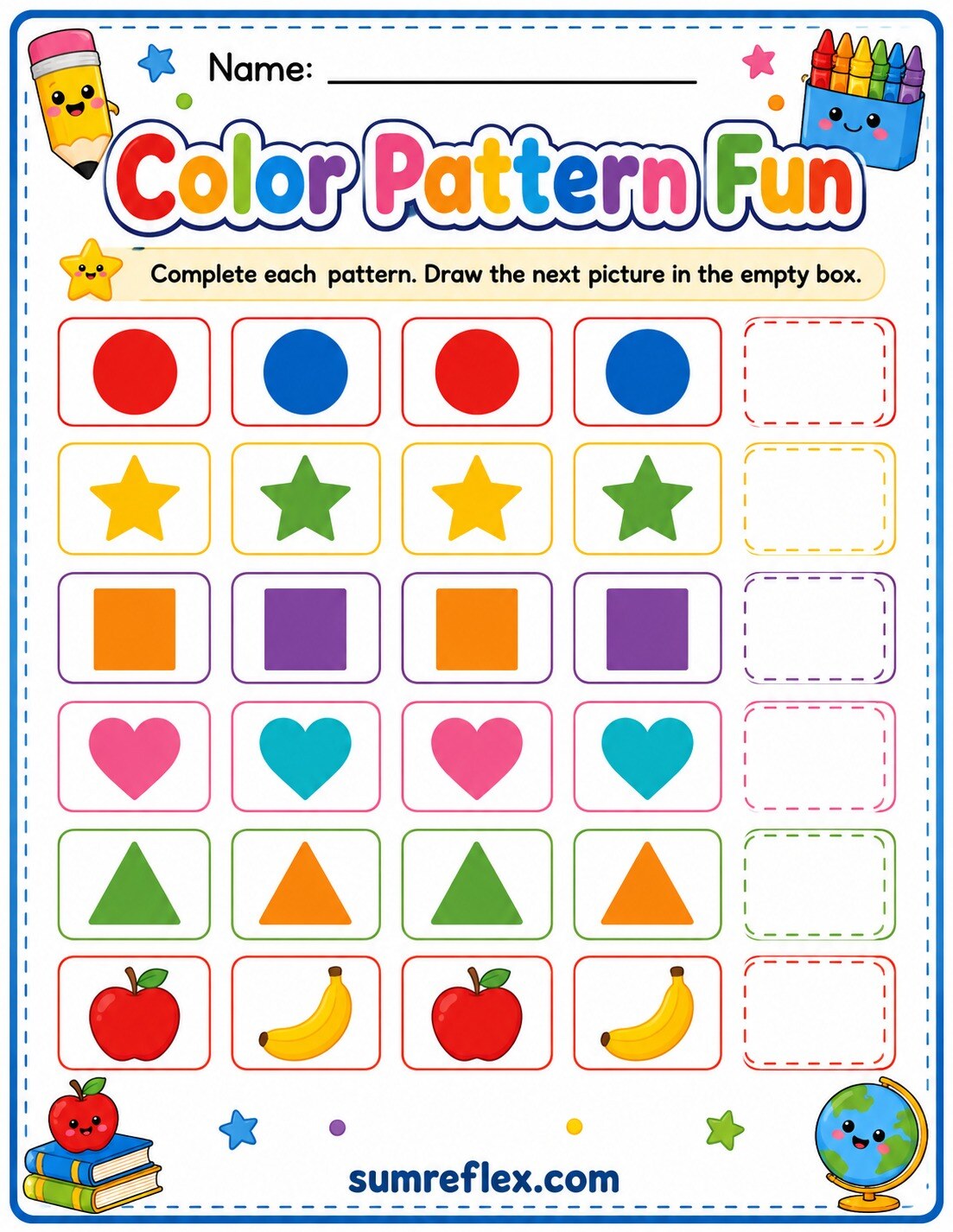
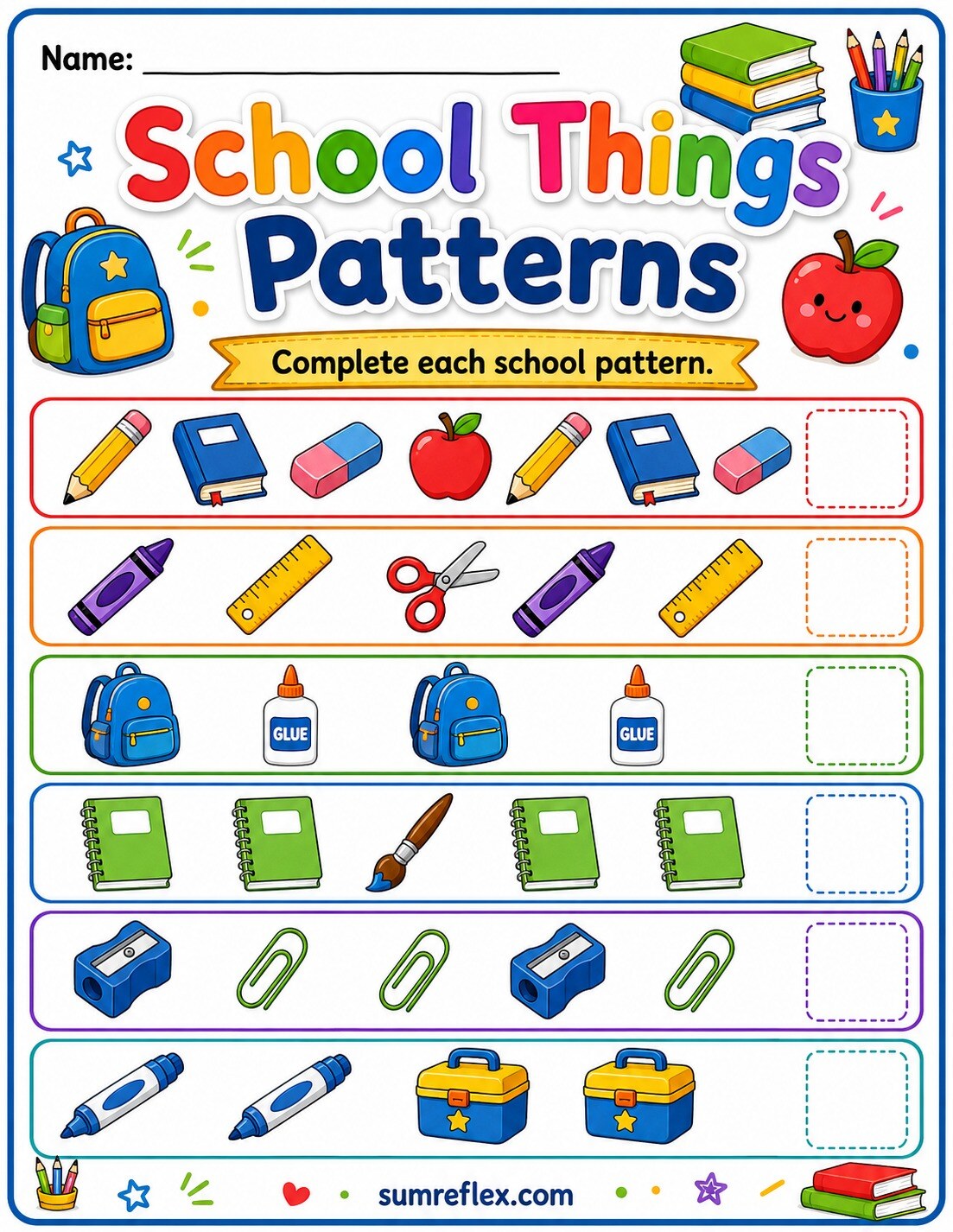
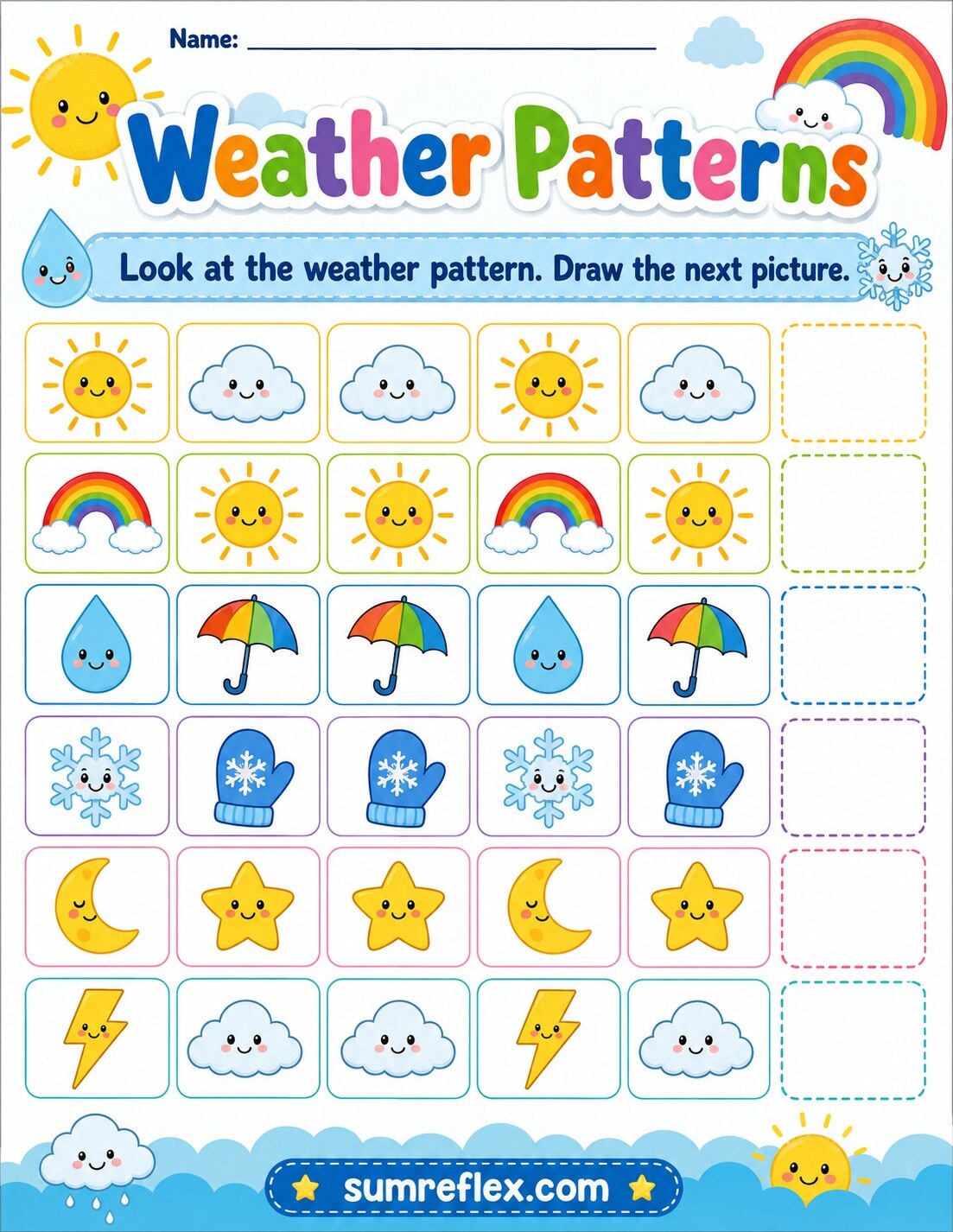
A preschool pattern worksheet is really asking one question: what part keeps coming back? The child may see colors, fruit, animals, dots, weather icons, or school supplies, but the important discovery is the repeated chunk. Once that chunk is found, the next item becomes a reasoned choice rather than a guess from the last picture.
Read the row like a rhythm
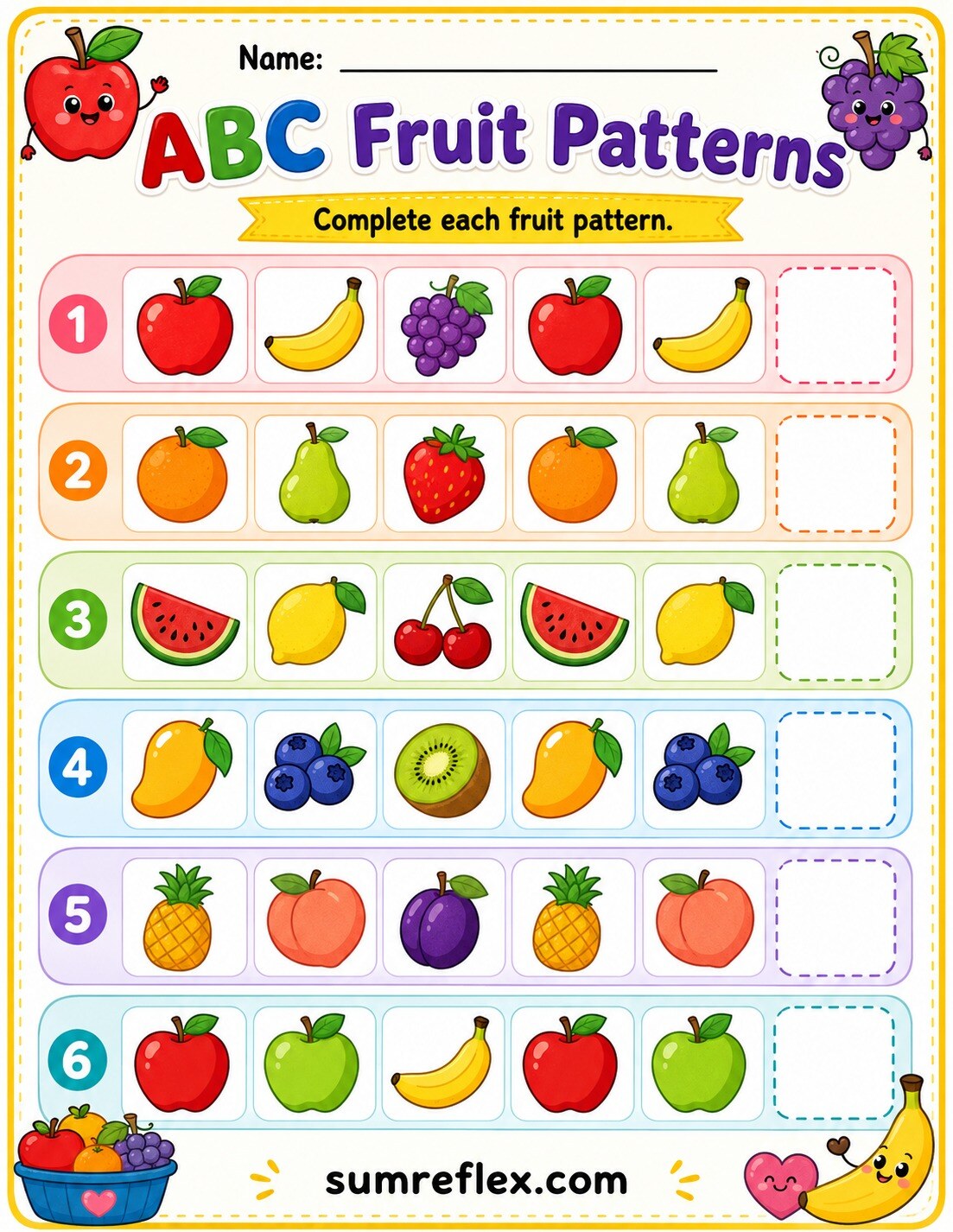
Have the learner say each item in order: apple, banana, grape, apple, banana, grape. Hearing the rhythm gives the pattern a memory. This works for colors, animal names, size words, dot counts, and weather words. A child who can chant the row accurately often notices the missing piece before they can explain the rule in formal language.
AABB and ABC ask for different attention
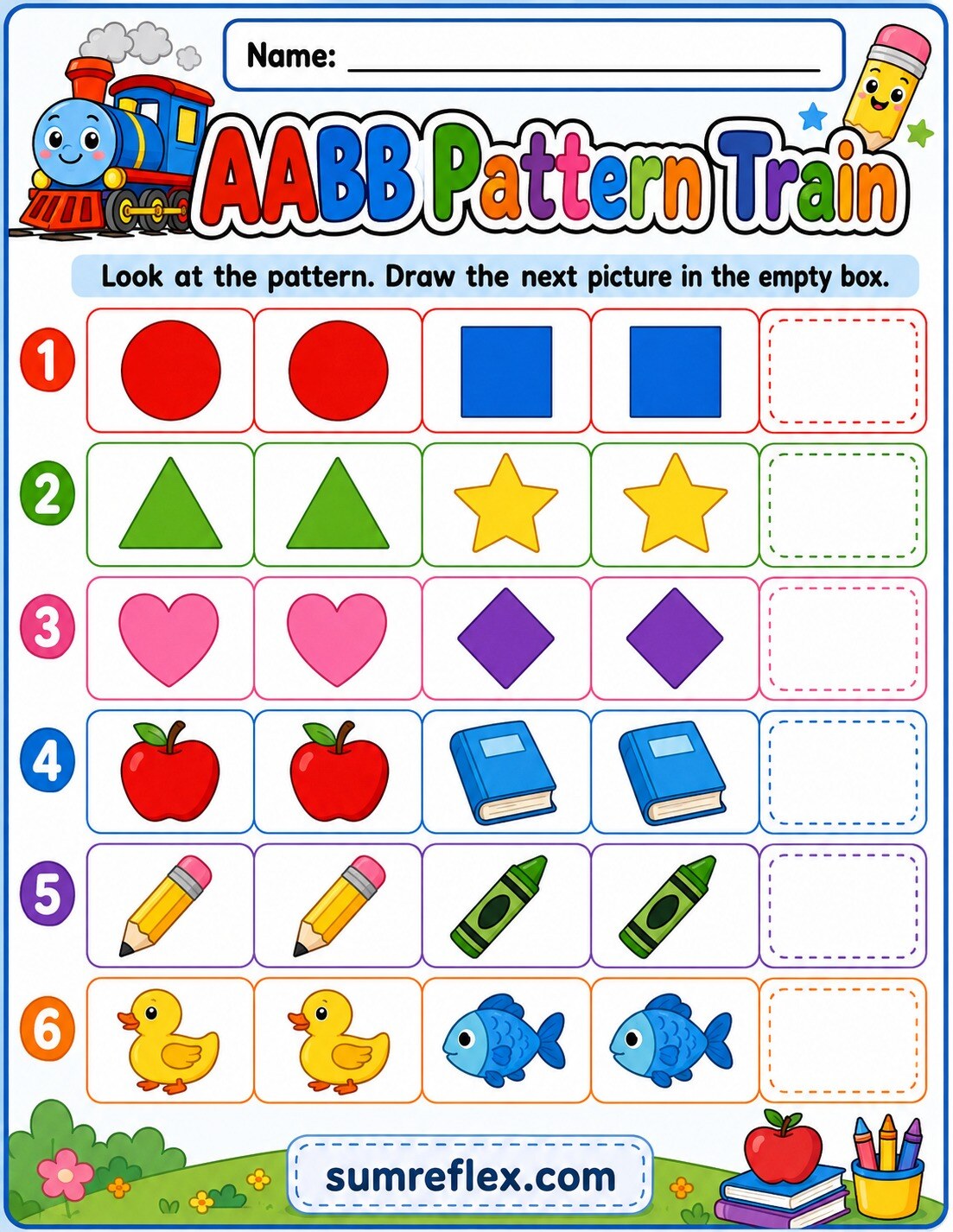
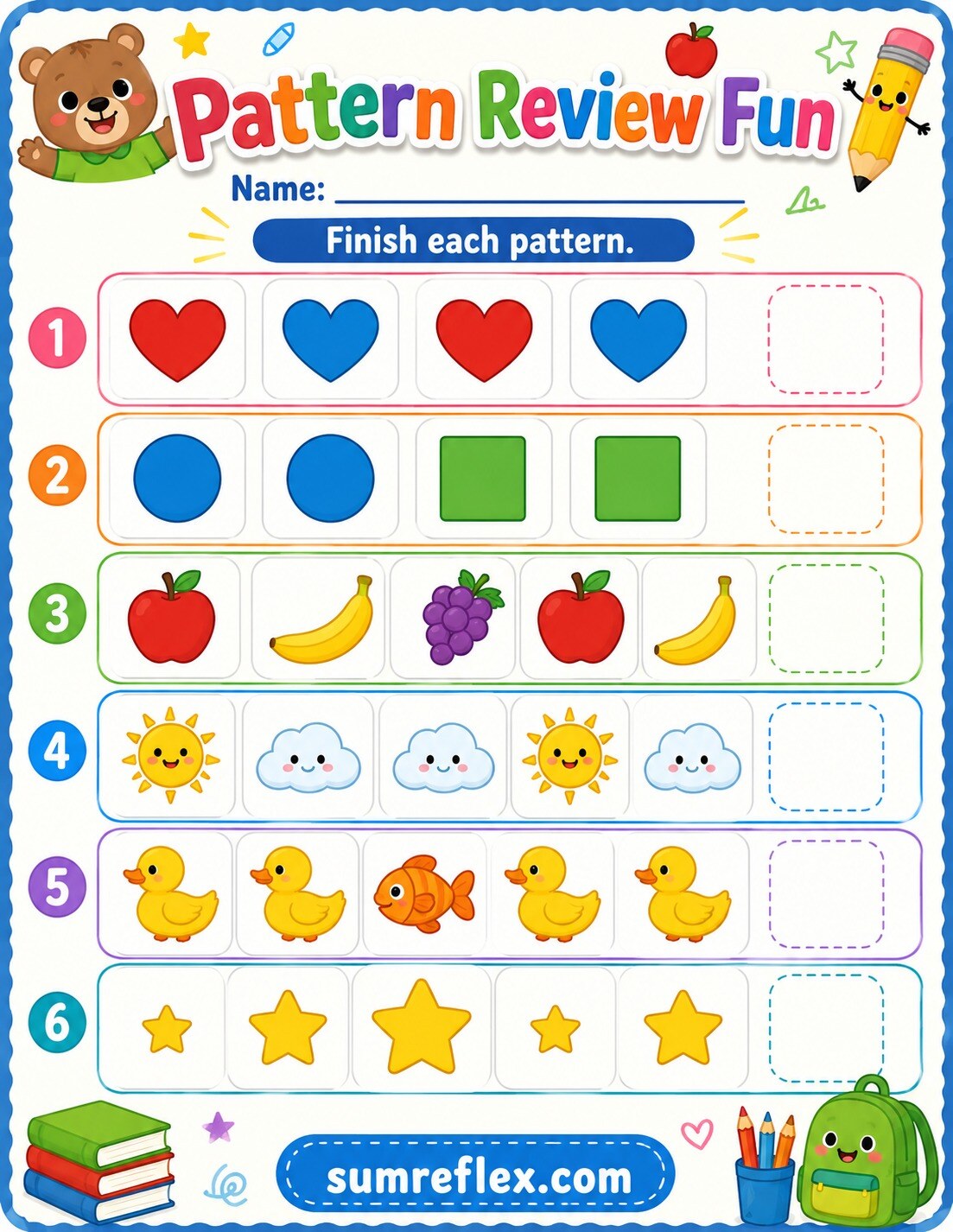
An AABB row asks the child to notice pairs. An ABC row asks the child to hold three different parts in order. Those are not the same thinking task. If ABC fruit patterns feel hard, return to a two-part color repeat or a paired train row. The worksheet choice should match the amount of sequence information the child can hold comfortably.
Size patterns need comparison words
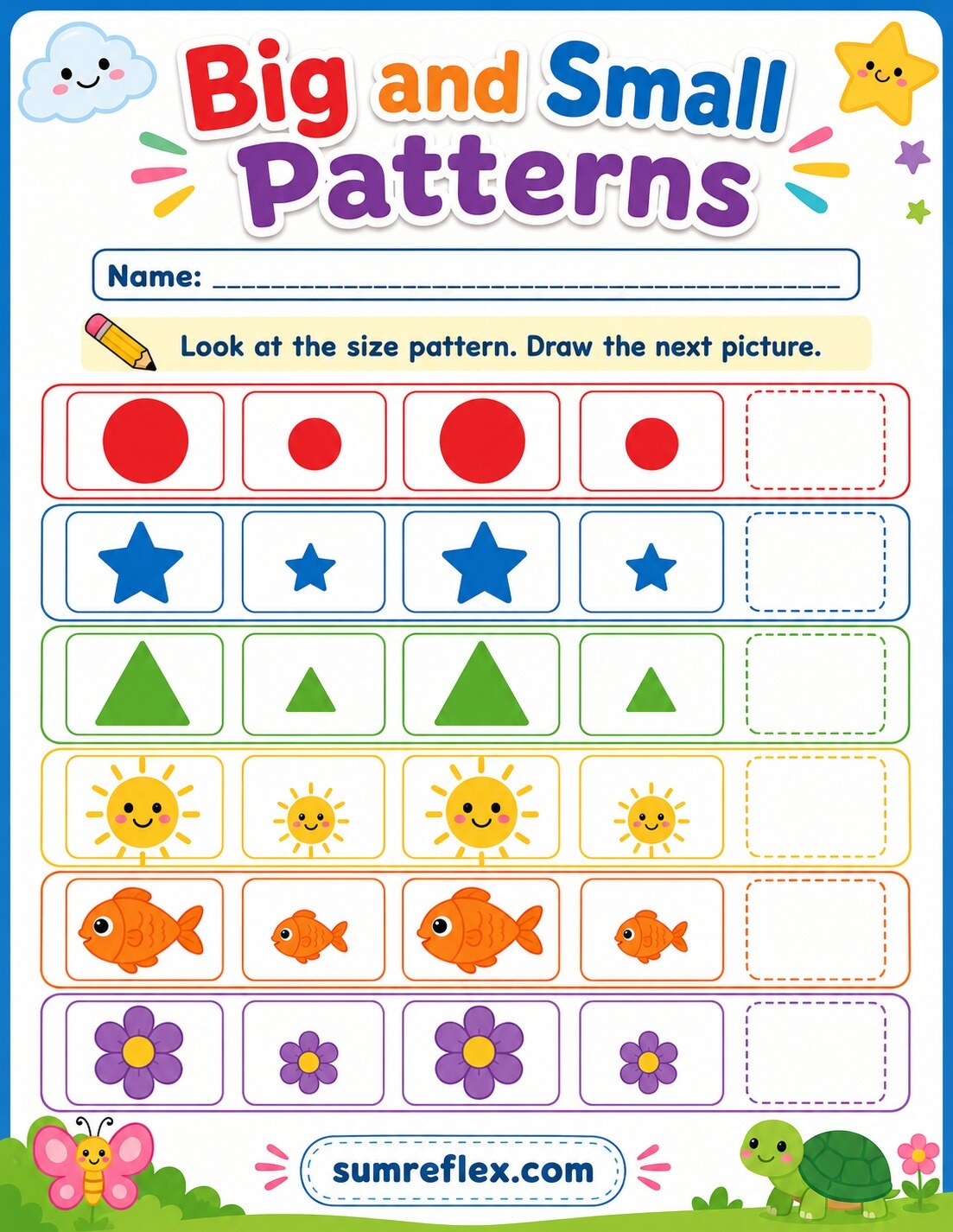
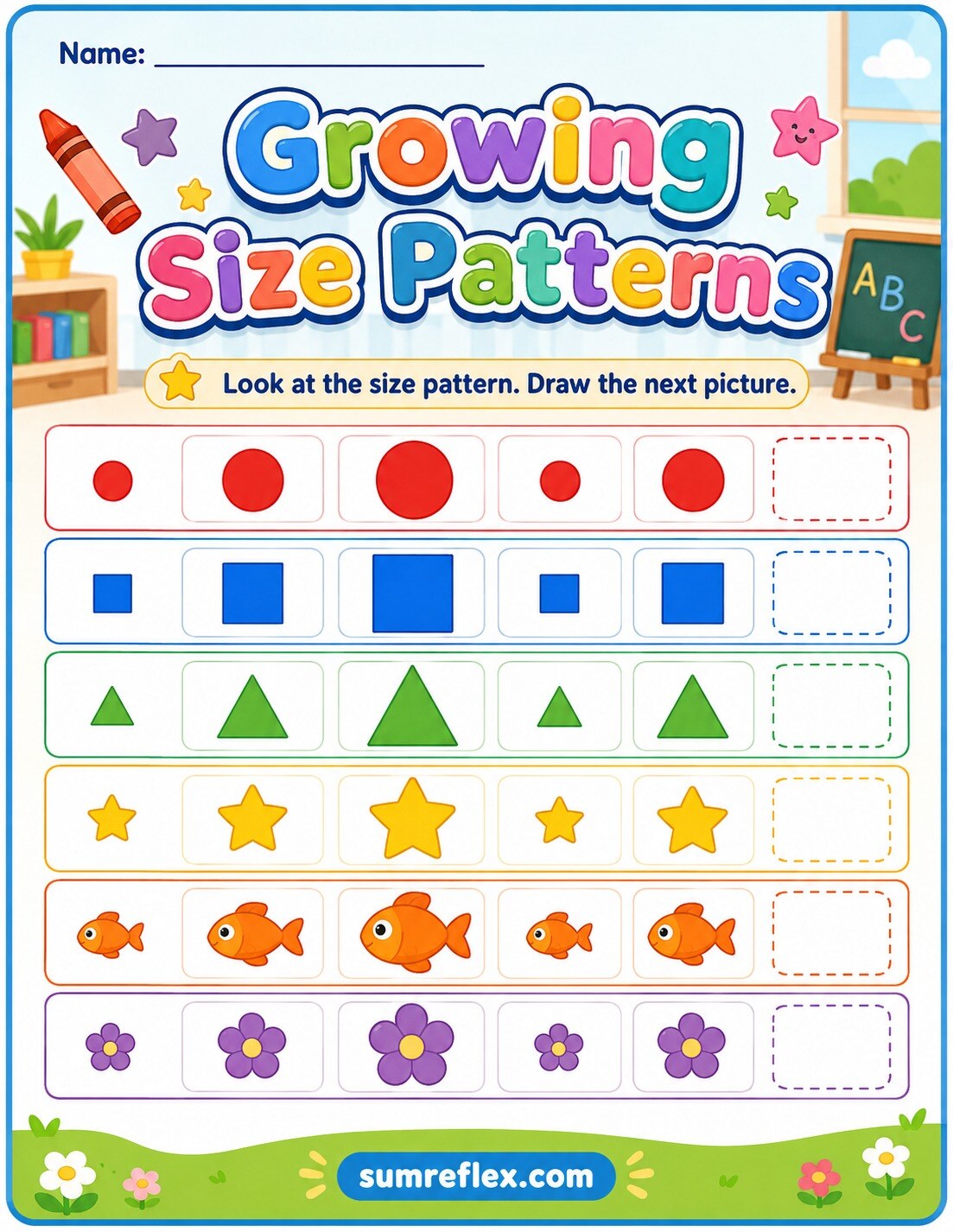
Big-small and growing-size pages are not only pattern practice. They also rely on words such as big, small, medium, larger, and smaller. Ask the child to name the size before deciding what comes next. That short comparison step keeps the learner from treating the row as decoration and helps the sequence rule become clearer.
Dot patterns connect counting to order
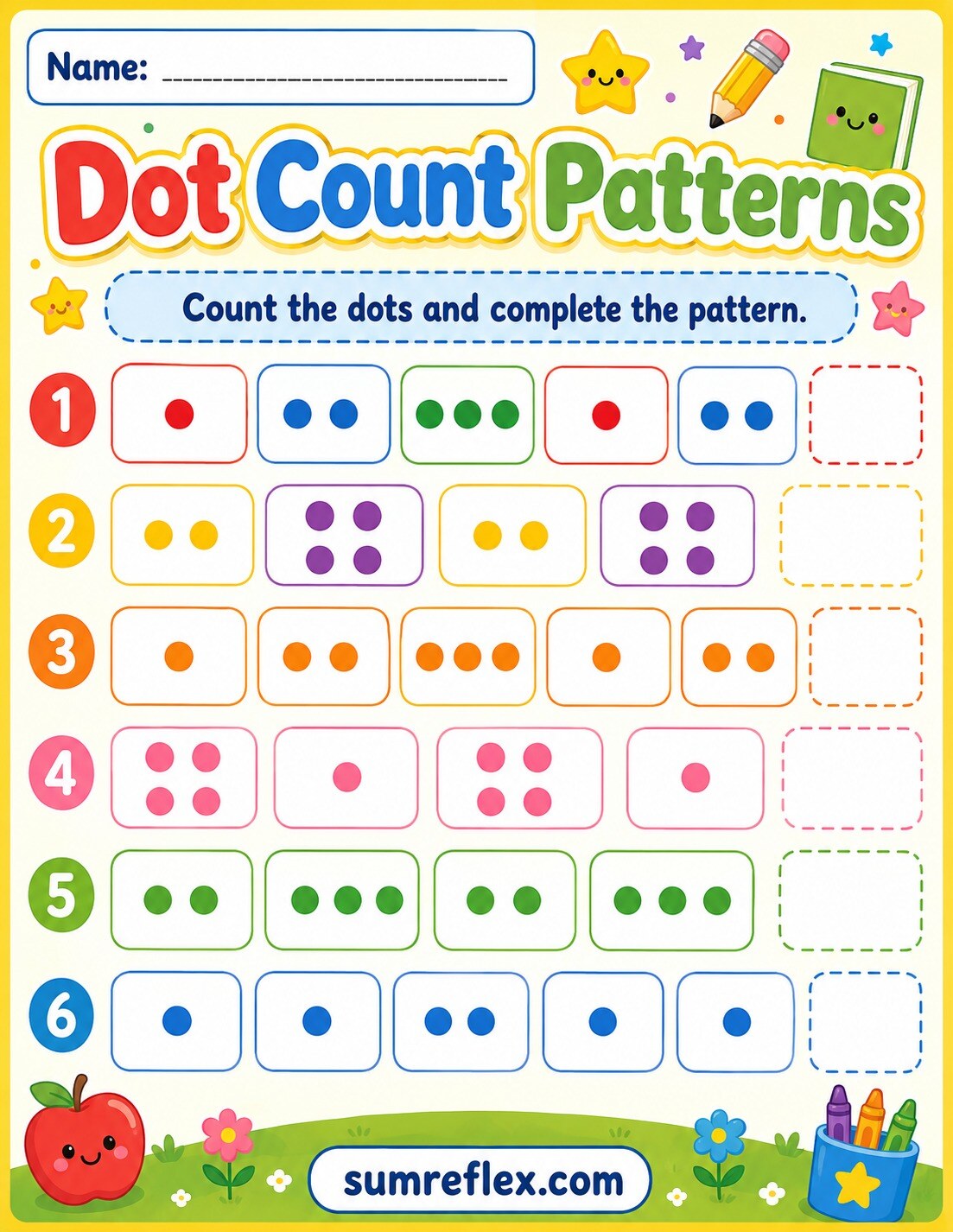
Dot-count rows are useful because they combine quantity with sequence. The child has to count the dots and then notice whether the quantities repeat. This is stronger than a plain counting page because the answer depends on both number and order. If the learner loses track, cover part of the row and rebuild the count one group at a time.
Mixed review should come after easier rows
A review page with several pattern types is best used after the child has solved simpler rows. Mixed practice asks the learner to reset the rule each time the pictures change. That flexibility is valuable, but it can overwhelm a beginner who is still learning what a repeat looks like. Use review pages as a checkpoint, not the first lesson.
Build one row away from the paper
After a worksheet row is finished, copy the same pattern with blocks, crayons, beads, or small toys. A child who understands the rule can rebuild it with new objects. If the child can only answer on the printed page, the rule may not be secure yet. Hands-on rebuilding shows whether the idea has transferred.
A wrong next picture reveals the missed rule
When the next item is wrong, ask what the child thought was repeating. They may have copied only the last picture, ignored size, or counted the wrong dot group. The mistake points to the part of the rule that was not seen. Re-reading the row from the start usually teaches more than simply telling the correct answer.
Creating a pattern is the strongest finish
Once a child can complete printed rows, invite them to make a short pattern for someone else. They can use stickers, colors, blocks, or quick drawings. Creating a pattern requires choosing a rule, repeating it consistently, and checking whether another person can continue it. That is a deeper skill than filling one blank box.