



Matching asks children to prove sameness
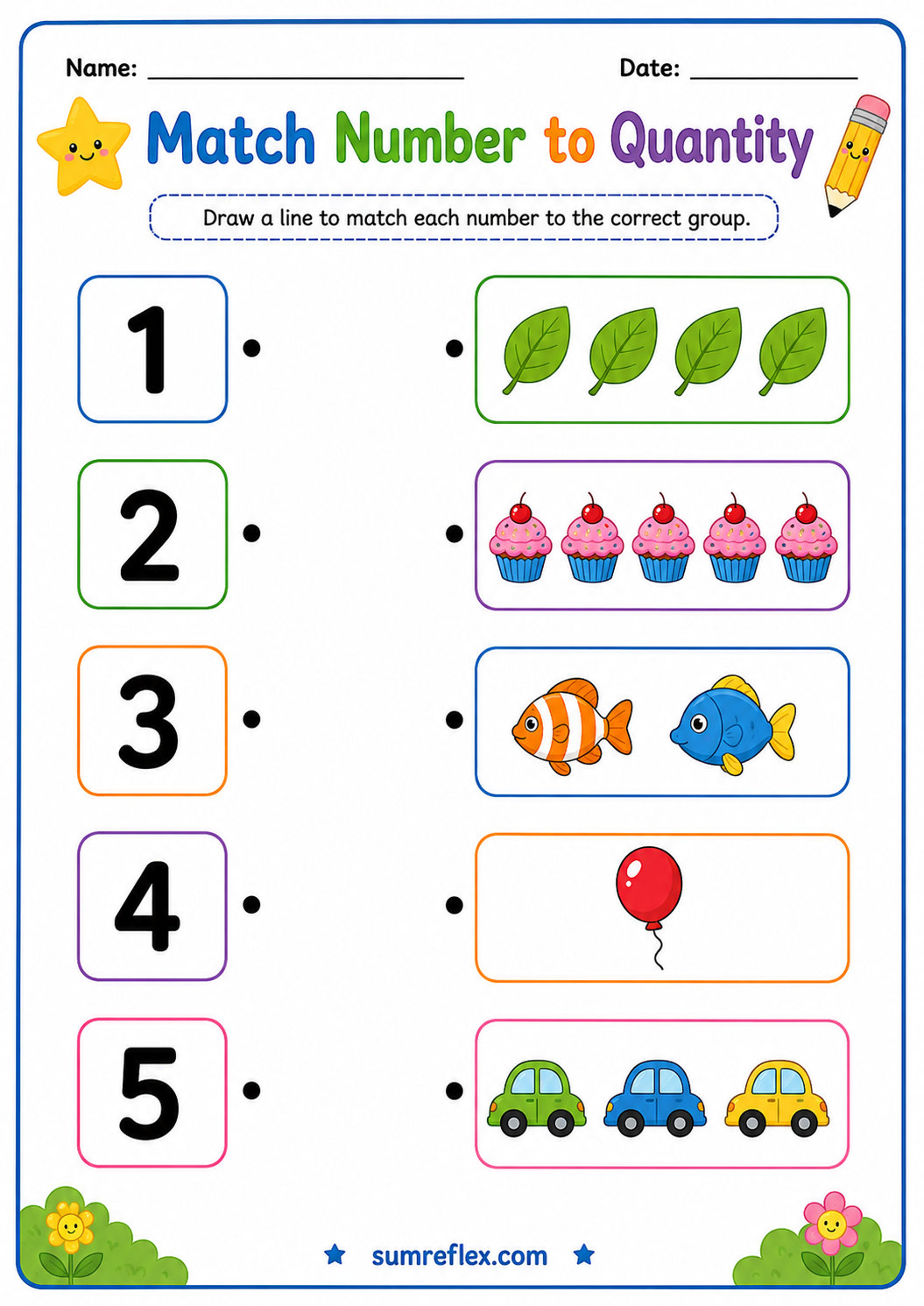
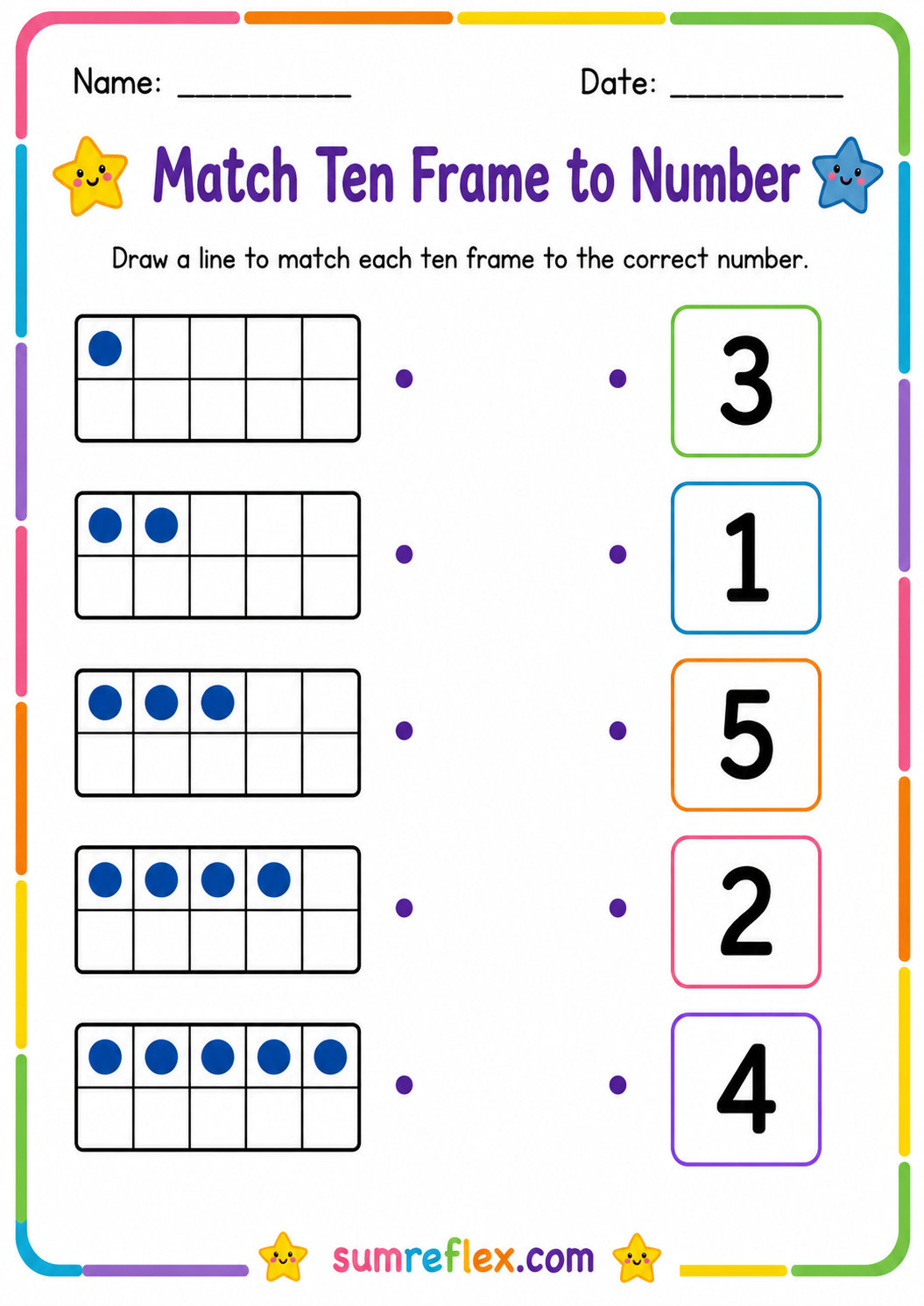
A preschool matching worksheet is not only a line-drawing task. It asks the child to decide why two things belong together. The pair may show the same number, the same shape, the same quantity, or the same representation in different forms. The match should be based on meaning, not just where the pictures sit on the page.
Count before drawing the line
For picture groups, equal sets, dice dots, and tally marks, ask the child to count or recognize the amount before drawing. This pause prevents visual guessing. A line drawn after a count is stronger than a line drawn because two items were close together. The worksheet should reward careful checking before pencil movement.
Dice dots build fast quantity recognition
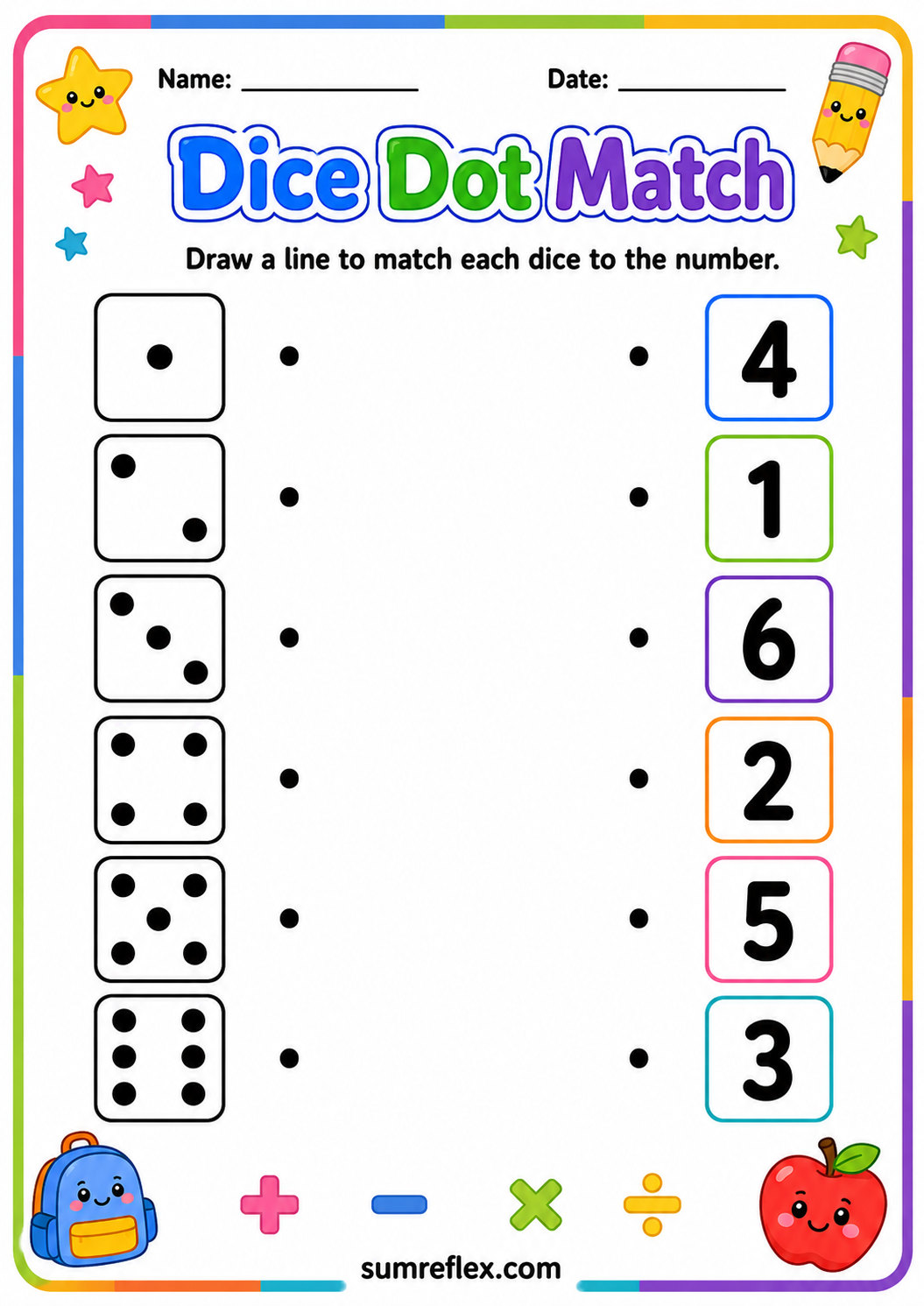
Dice patterns are useful because children may learn to recognize small amounts without counting every dot one by one. That skill, often called subitizing, supports later number fluency. If the child does not recognize the pattern yet, counting is still fine. The dot layout gives a bridge between slow counting and quick number recognition.
Tally marks introduce grouped counting
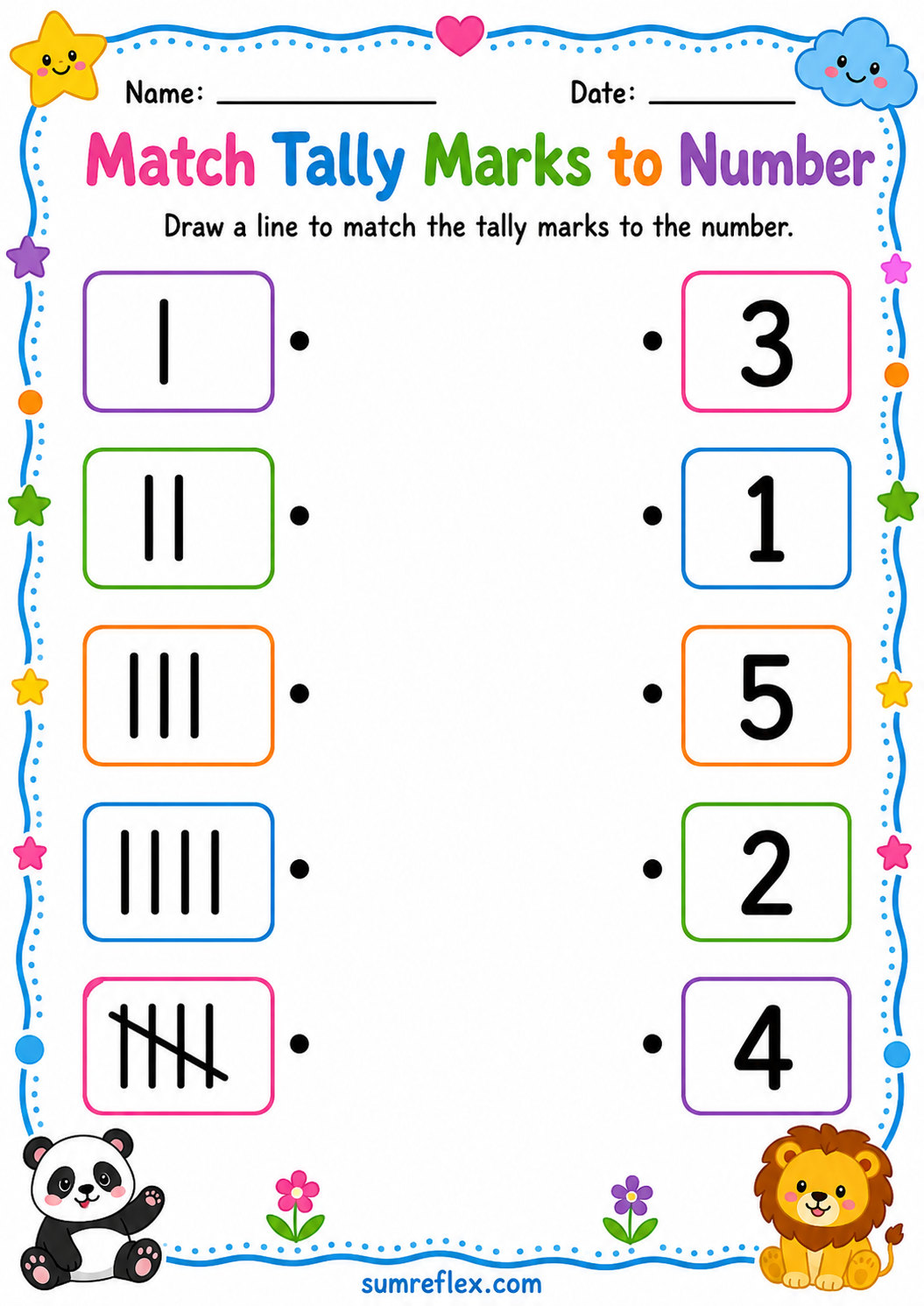
Tally marks are more abstract than pictures, so they need a slower pace. Children can touch each mark, count the group, and then find the numeral. When five-mark groups appear later, learners will already understand that marks can represent objects even though they are not drawings of the objects themselves.
Number words connect math and early reading
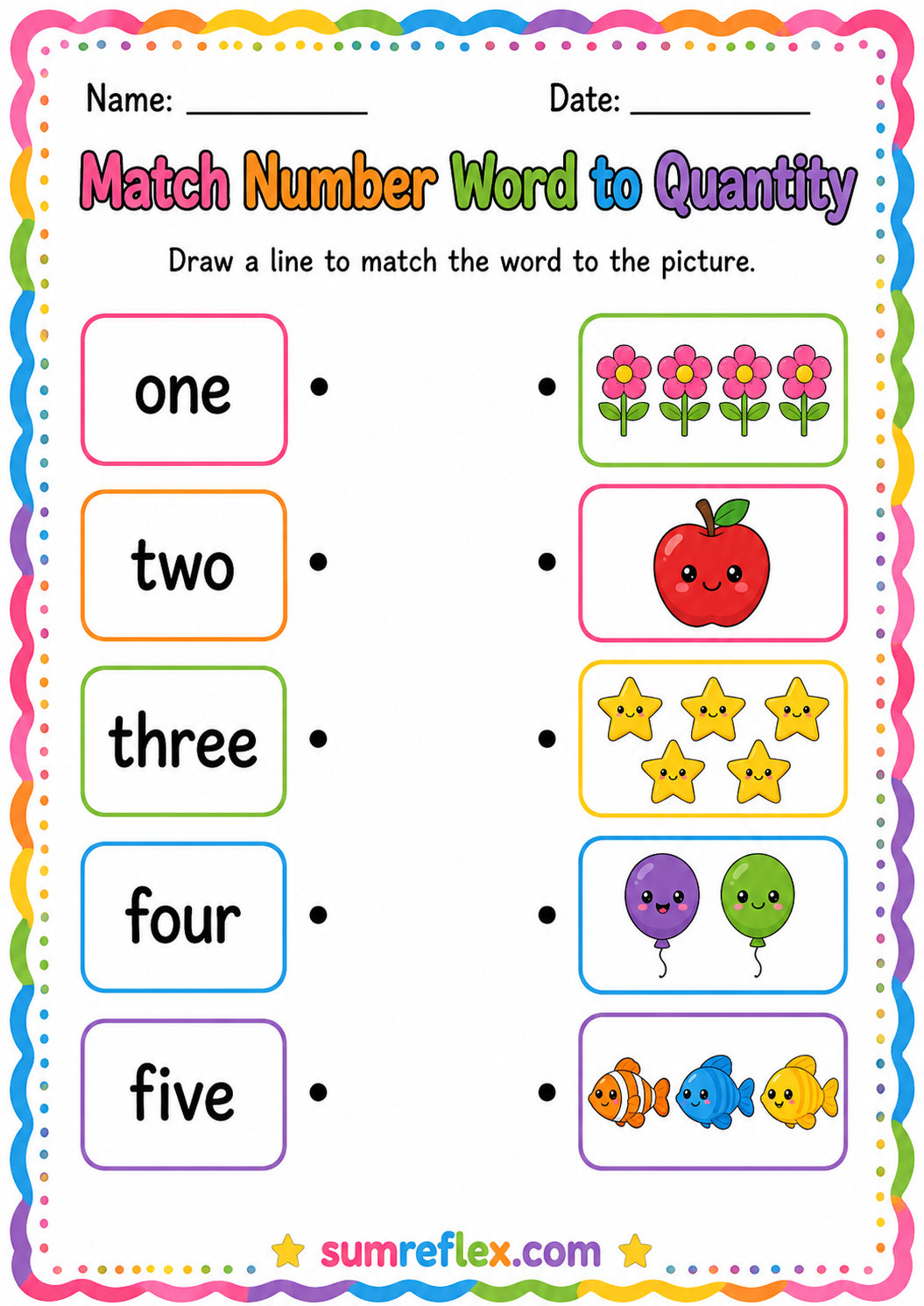
Matching number words to pictures gives children a gentle reading connection. Some preschool learners will read the word, while others may hear it from an adult and then find the group. Both uses are valid. The important point is that the written word, spoken word, and visible quantity all describe the same number. Say the word aloud again after the match so the sound and print stay connected.
Equal sets should not require identical pictures
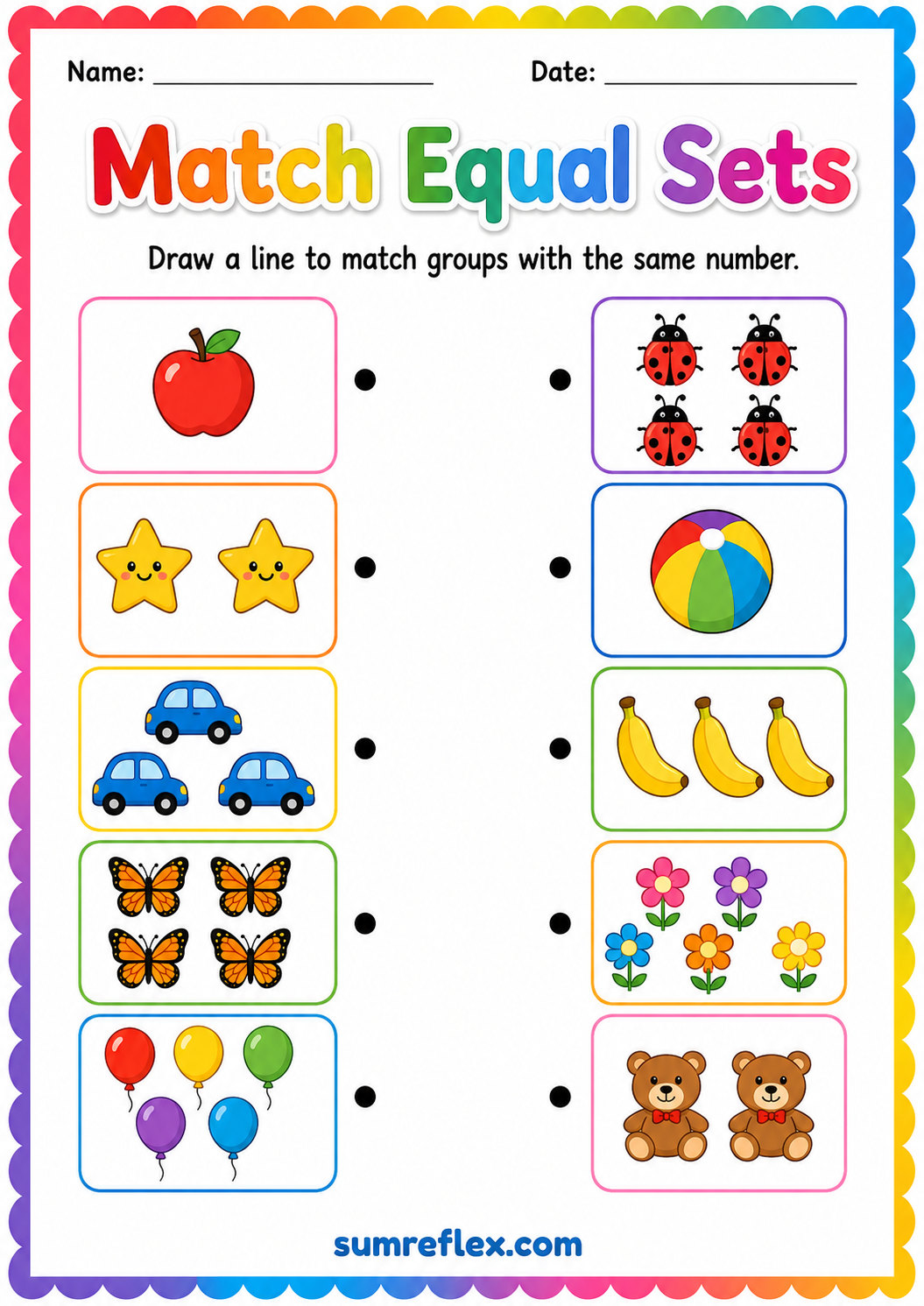
A child may think two groups match only when the objects look the same. Equal-set pages challenge that idea. Three apples and three stars match because the amount is equal, not because the pictures are identical. This is an important step toward comparing quantity instead of being distracted by object type.
Plan the line before using the pencil
Matching pages can become difficult to review when lines cross everywhere. Have the child trace the route with a finger first. Then draw one clear line. This small routine builds planning, reduces scribbles, and makes it easier to talk about the match afterward if something needs to be corrected. Clear lines also help the child review their own choices.
Ask one why question after the page
When the worksheet is finished, choose one pair and ask why it matches. A strong preschool answer can be short: both show four, this word says two, or these sets have the same amount. The explanation matters because it confirms that the child matched by relationship, not by chance.
Use mismatches without shame
If a line connects the wrong pair, count both sides together and ask what is different. Maybe the child counted too quickly, confused a number word, or matched by picture type instead of amount. The mismatch points to the next teaching move. Fixing one line carefully is better than erasing the page in frustration. The goal is a clearer comparison, not a perfect-looking sheet.