



Number sense starts after counting words
A child may recite numbers in order and still need help understanding what those numbers do. Number sense asks different questions. Which number is larger? What comes before this one? What happens if there is one more? These worksheets move beyond chanting the sequence and help children notice relationships between numbers.
Nearby numbers need a visible reference
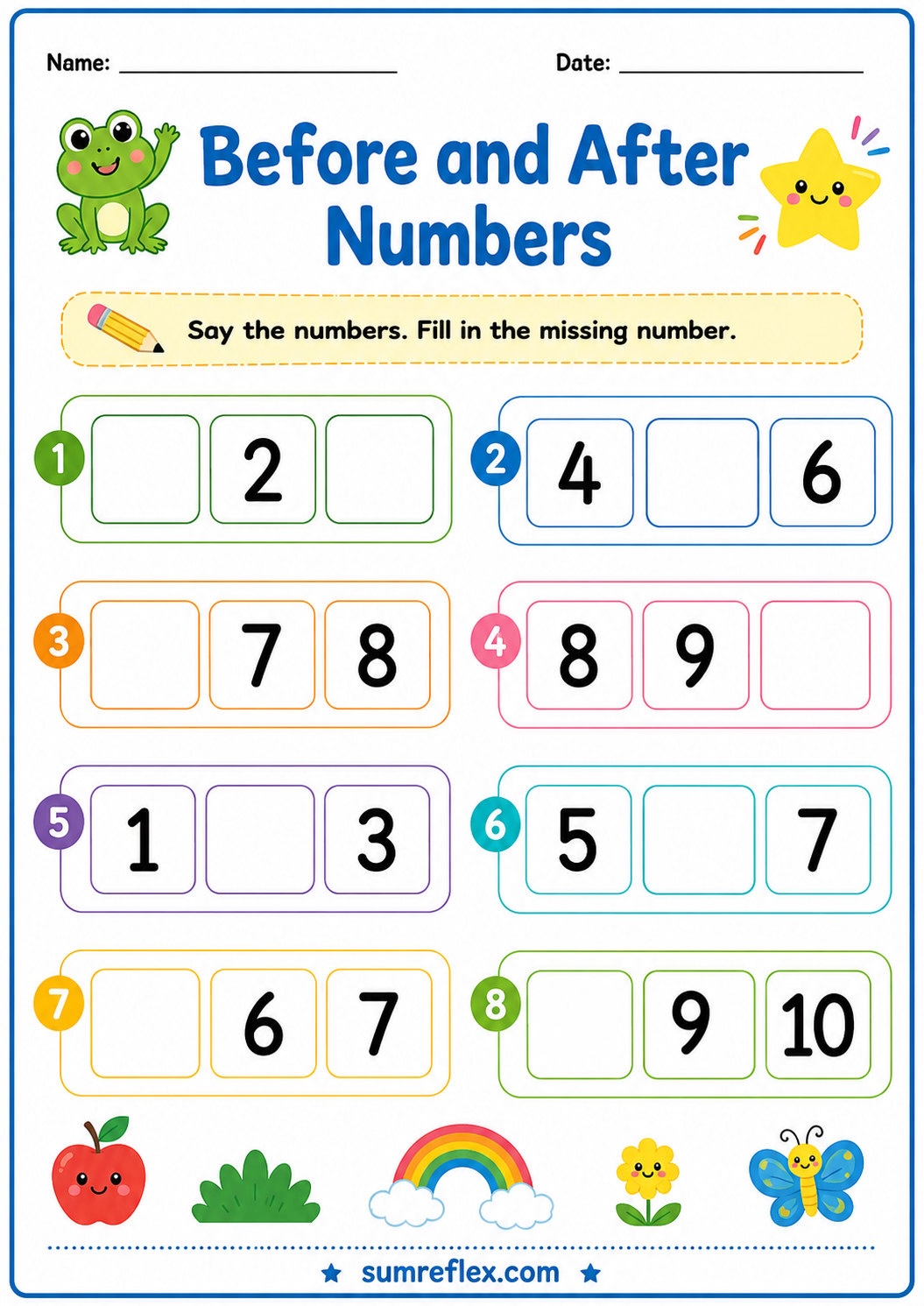
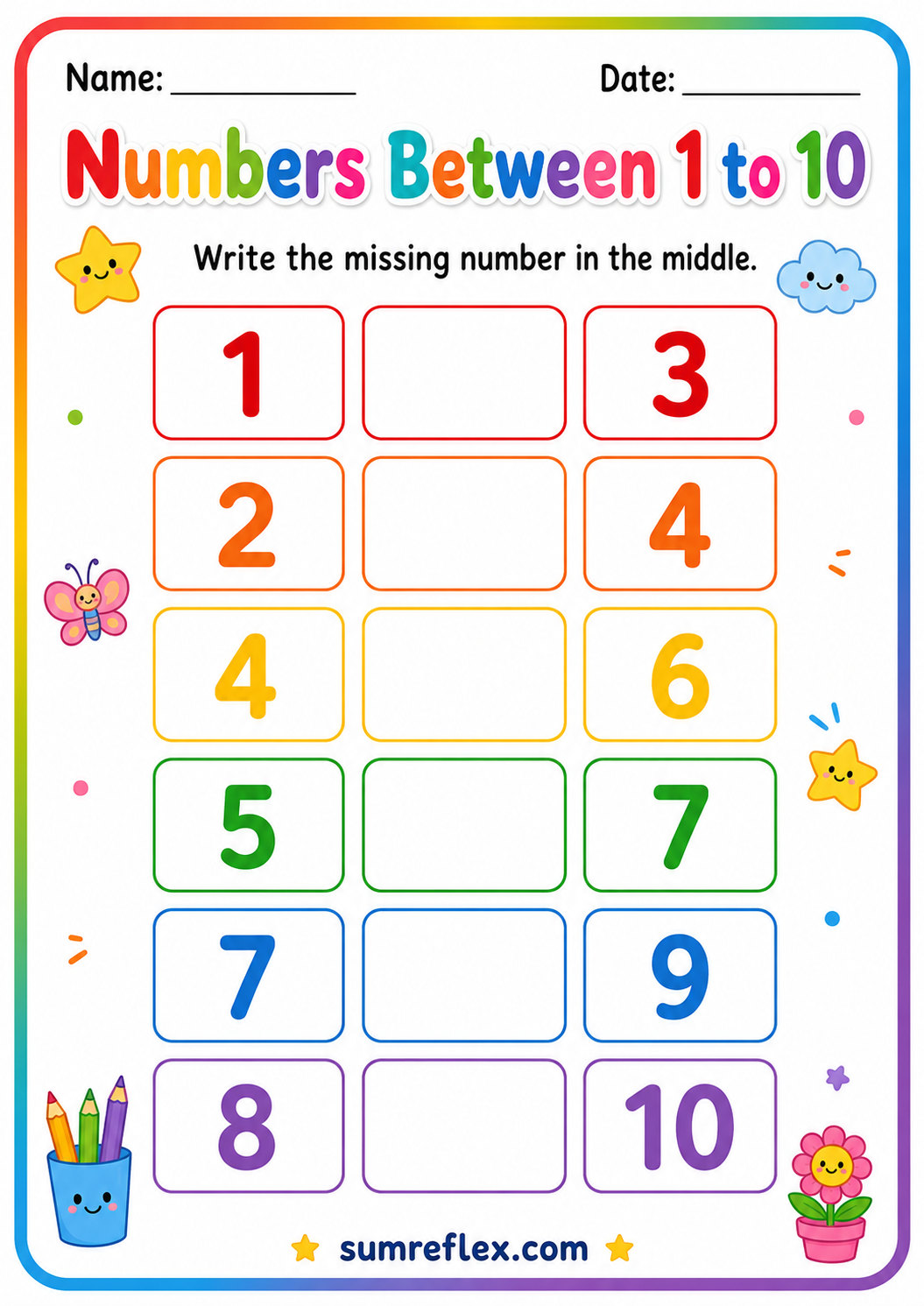
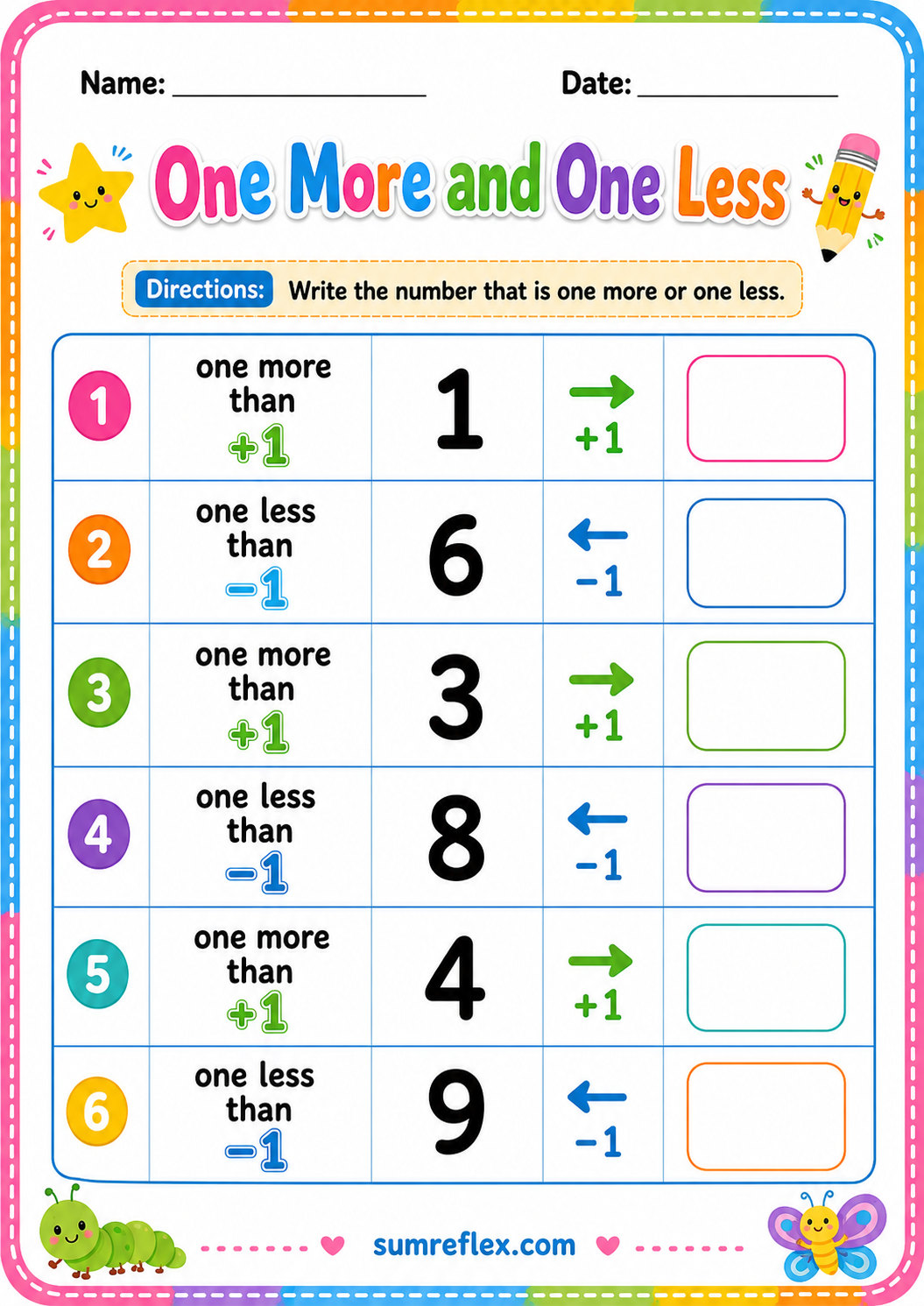
Before-and-after, missing-number, and one-more-one-less pages work best with a small number line, counting strip, or row of counters nearby. The reference is not cheating. It teaches the child how to check the sequence. Over time, the learner begins to internalize the order because the printed support has been used meaningfully.
Largest and smallest require comparison language
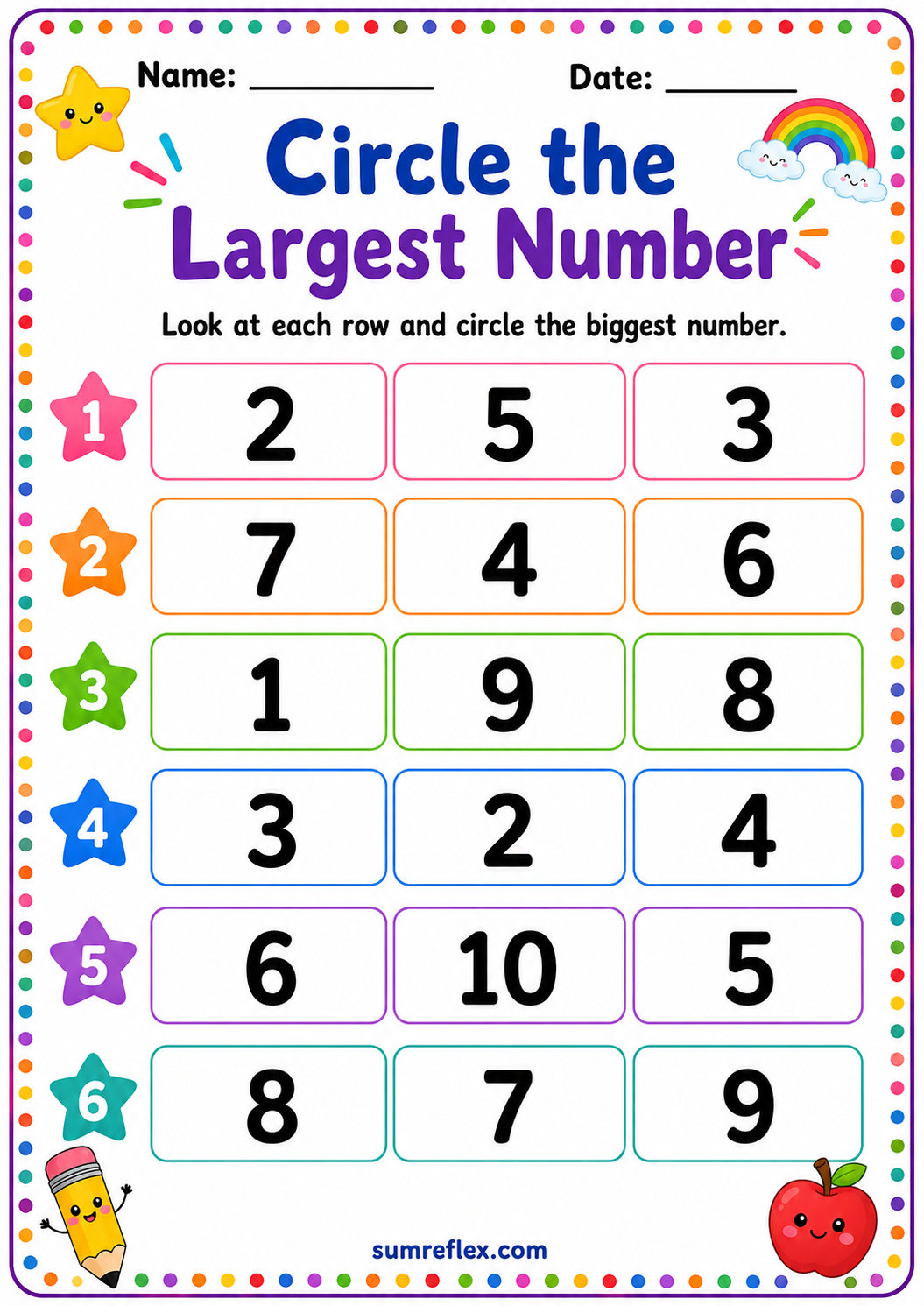
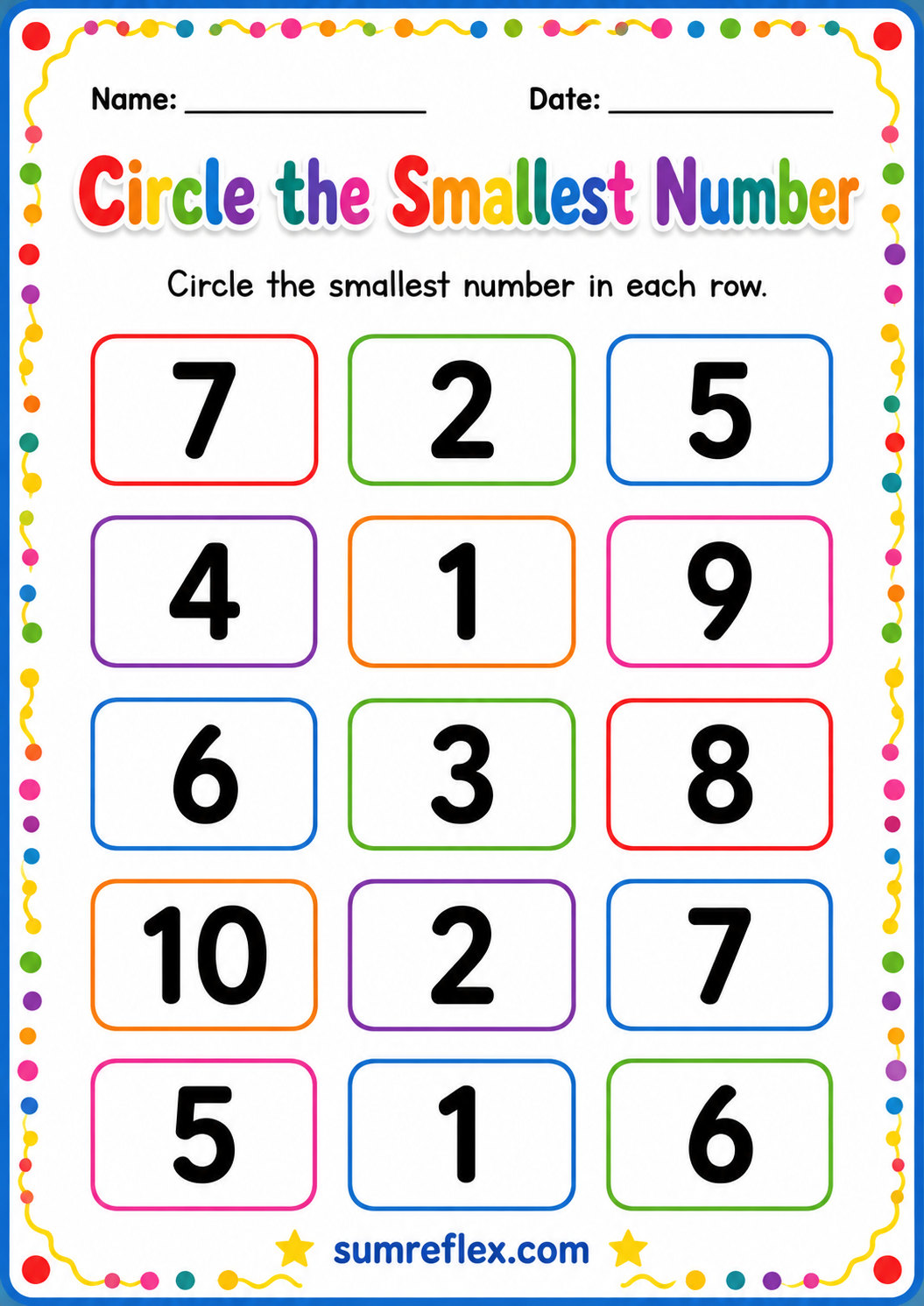
When a page asks for the largest or smallest number, pause and use the words greatest, least, more, and fewer. Preschool learners may recognize the numerals but still need help connecting them to amount. Build two quick counter groups if the child hesitates. Seeing the quantity makes the printed comparison easier to trust.
Least-to-most ordering is not the same as counting aloud
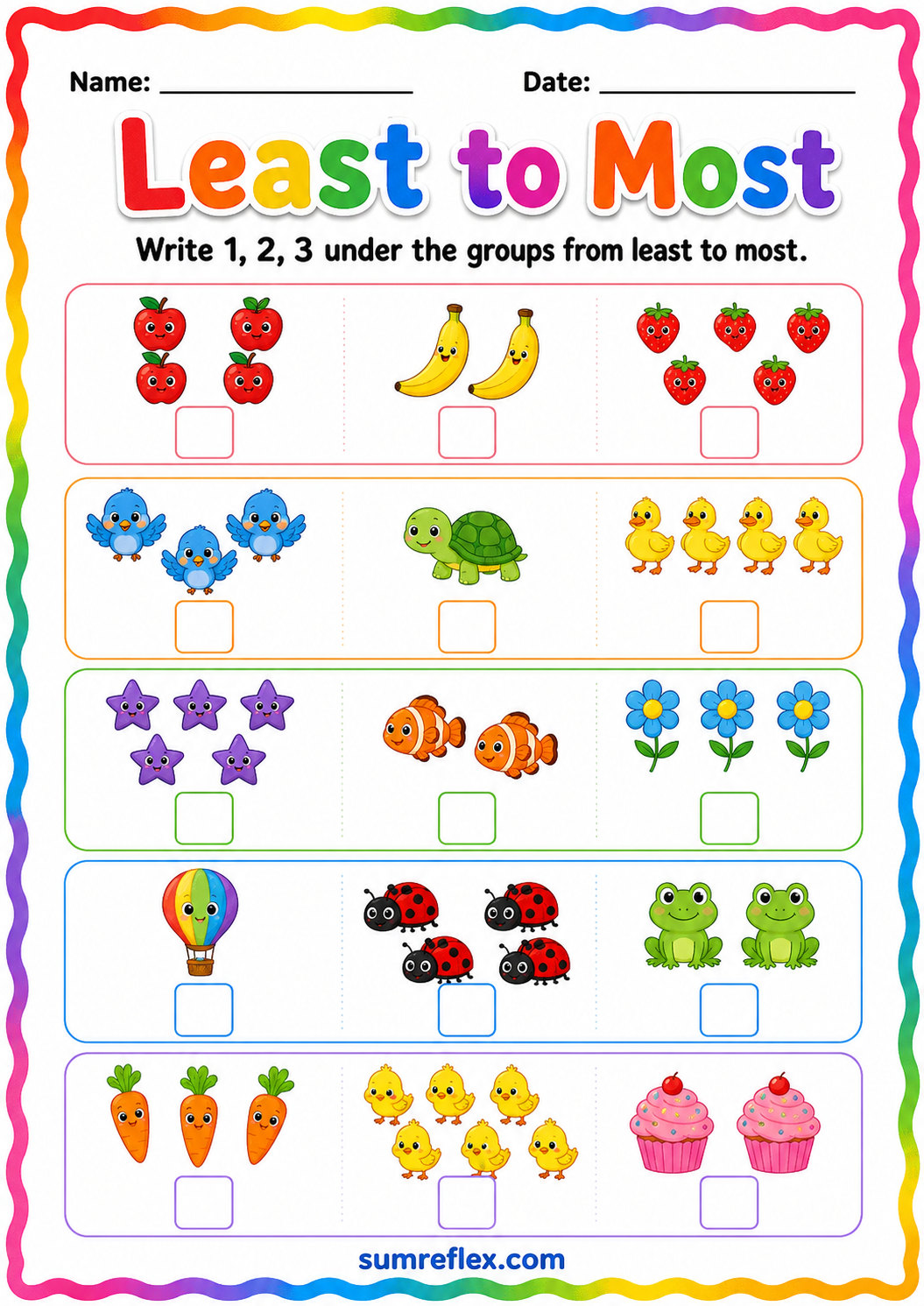
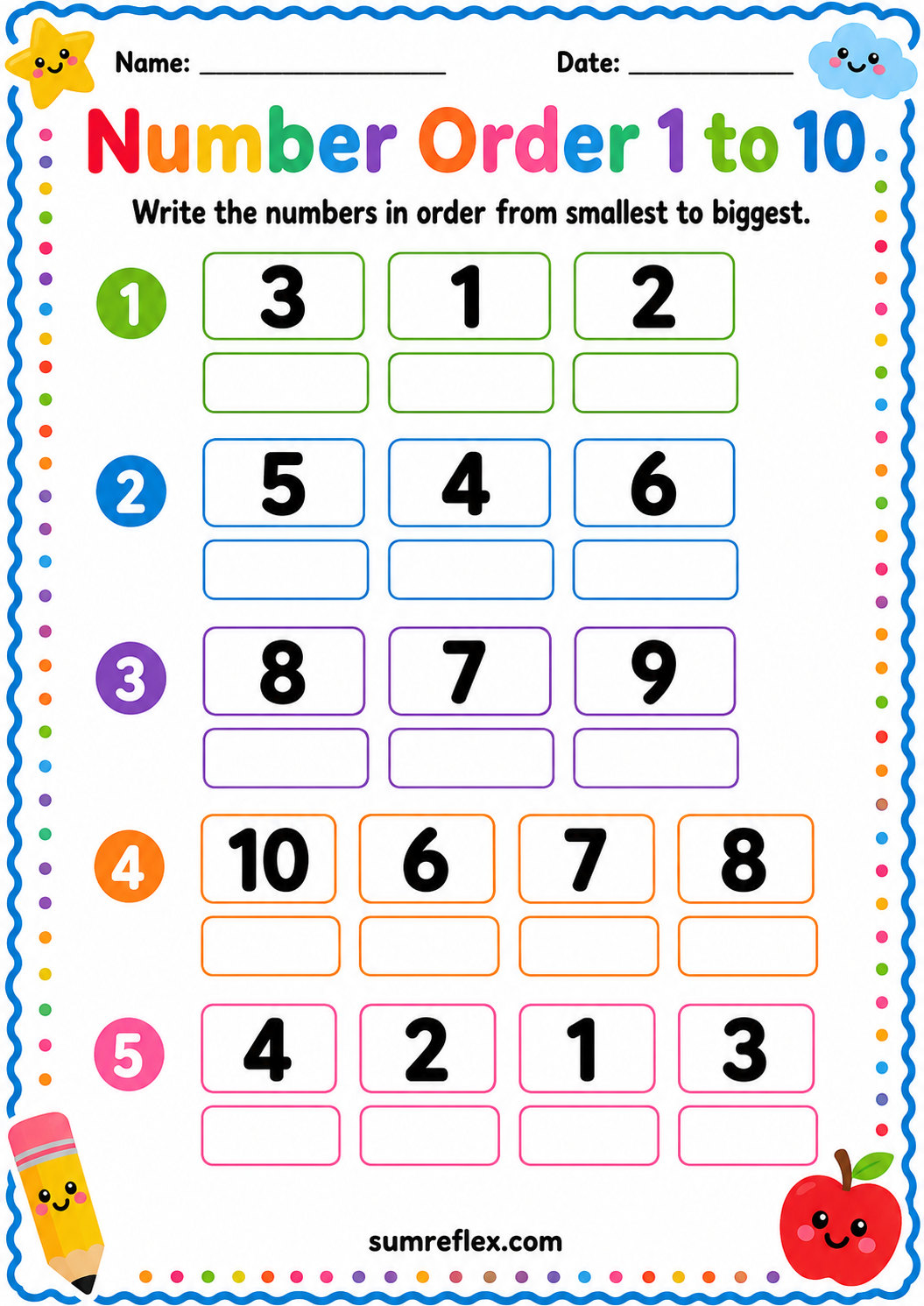
Ordering several numbers asks the child to compare values and arrange them by size. A learner might be able to count from one to ten but still struggle when the numbers appear out of order. Encourage the child to find the smallest value first, then the next smallest, rather than trying to read the row as it is printed.
Find-and-circle pages train numeral attention
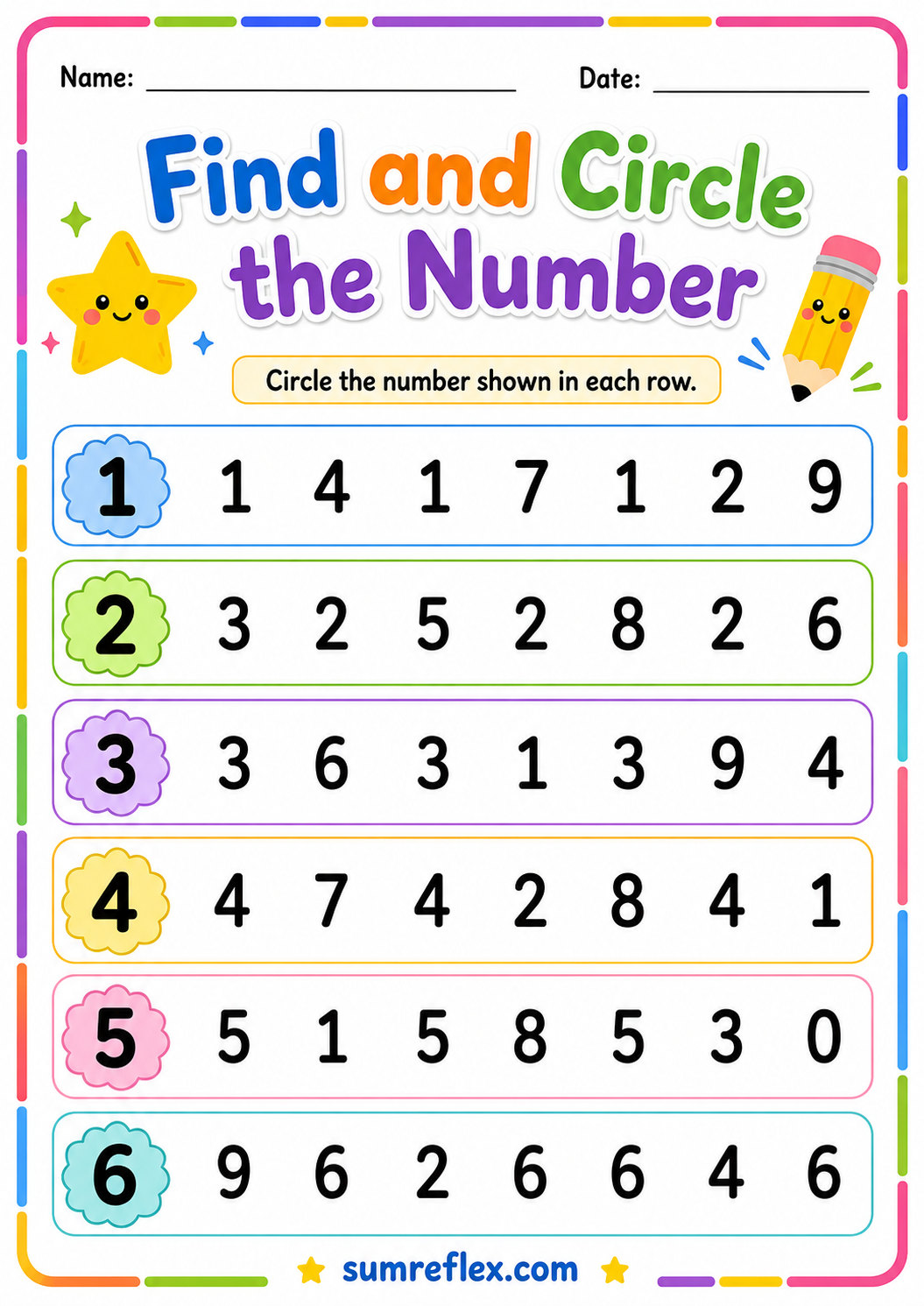
Visual search pages are useful because some numerals look similar to early learners. A child may confuse 6 and 9, 2 and 5, or 1 and 7 depending on the font and writing style. Finding one target number among several choices builds careful looking before the child has to compare or order those numbers. Slow scanning also helps the child notice the full shape of a numeral instead of reacting to one small feature.
Missing numbers show whether the sequence is stable
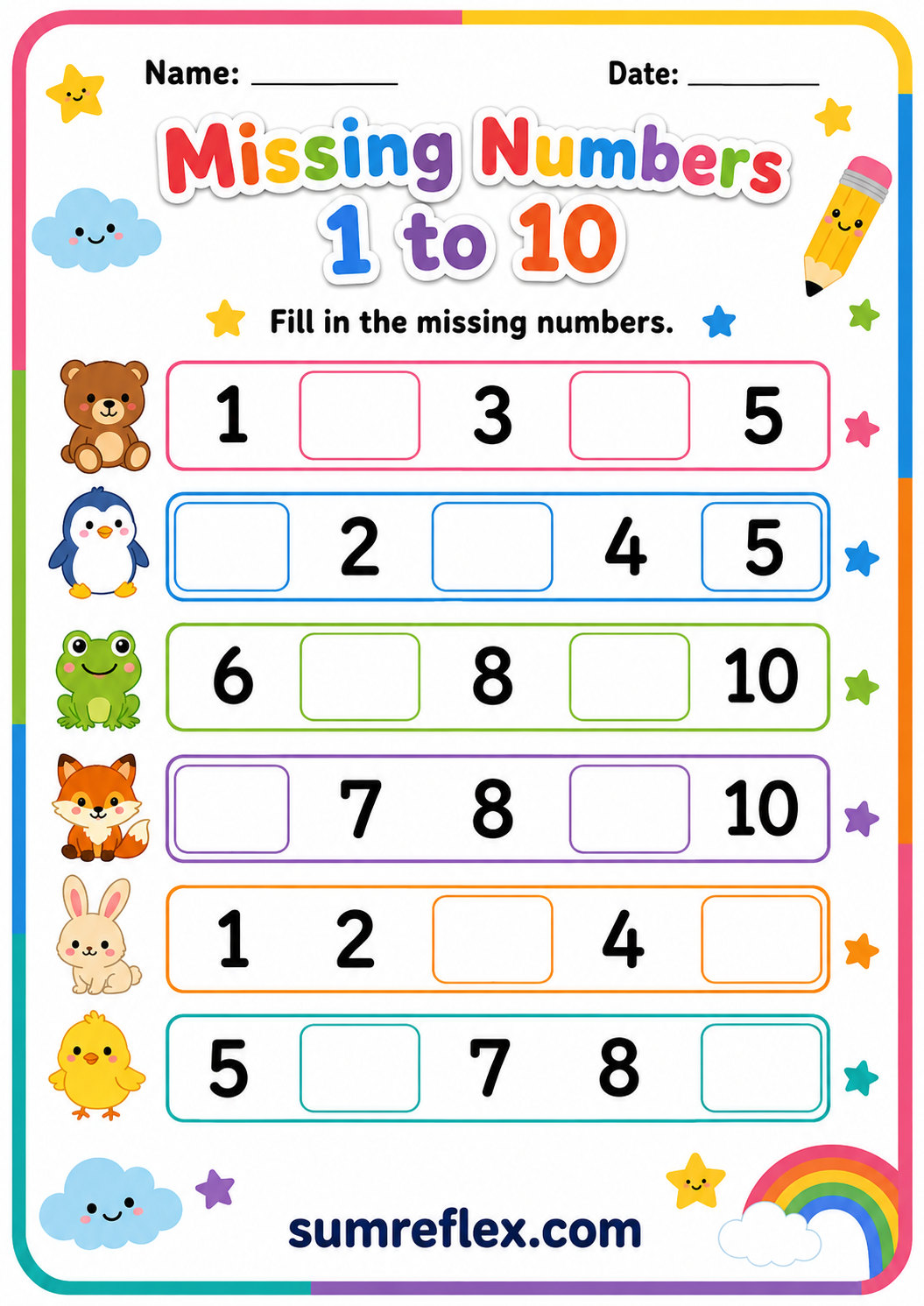
A missing-number page asks the child to hold the count in order even when part of the row is hidden. If the learner always starts again at one, that is acceptable at first. Over time, encourage them to look at the number before the blank and count forward from there. That small shift shows growing control of the sequence.
More-or-less work should include real groups
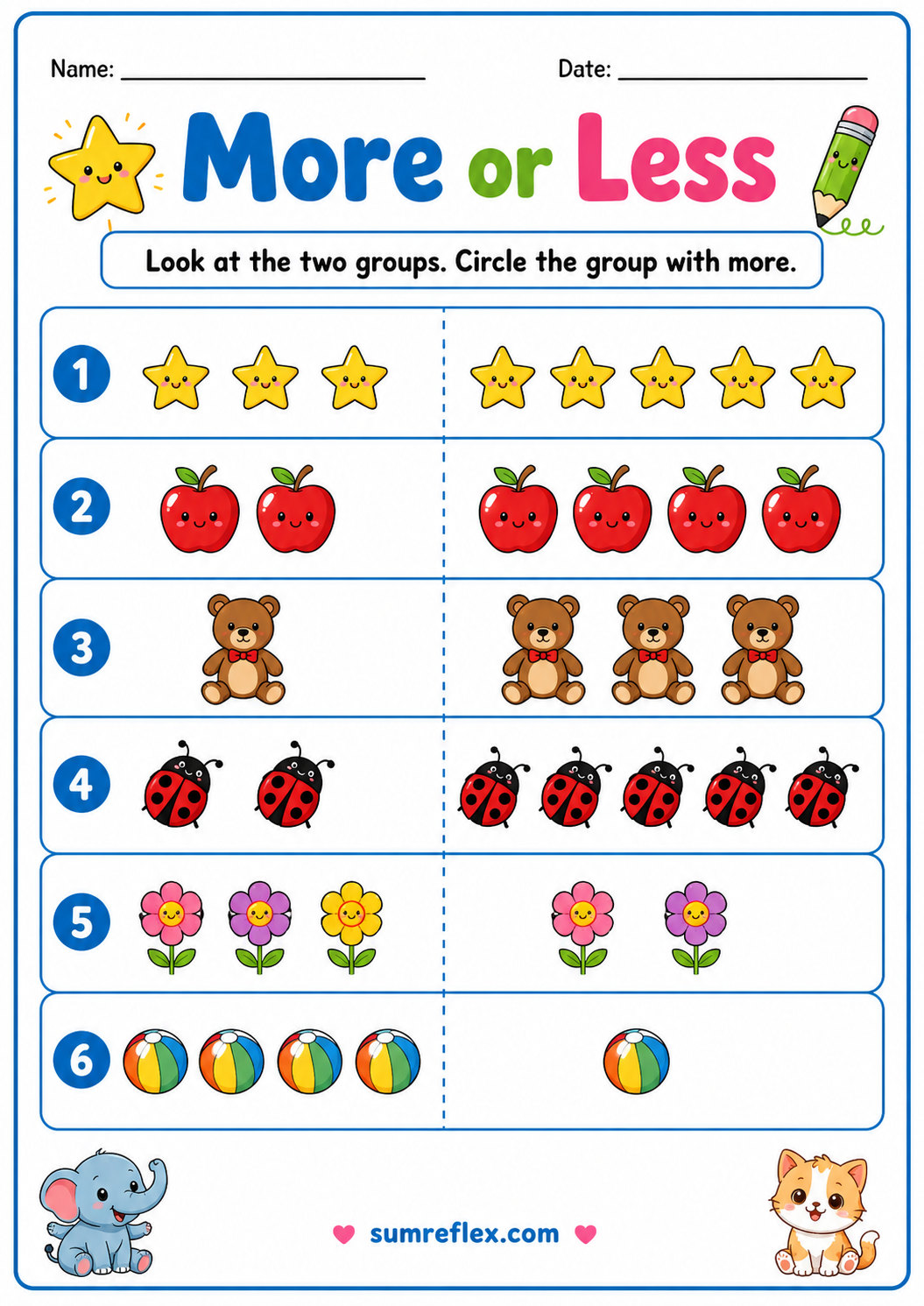
If a more-or-less page feels abstract, place small objects beside the worksheet. Build two groups, compare them, then return to the printed problem. The child should hear that more means a larger amount and less means a smaller amount. The words become clearer when the difference can be seen. This is especially useful when two written numerals are close together in value.
Mistakes show which relationship is missing
A wrong answer on a number sense page is usually specific. The child may know the sequence but not comparison, recognize numerals but not one more, or count objects but lose track when numbers are written. Identify the relationship that failed. That tells you whether the next page should use objects, a number line, or simple numeral recognition.
Ask for one explanation before moving on
After the worksheet, choose one answer and ask how the child knew. They might point to a number line, count forward, compare groups, or name the smaller number first. One explanation is enough for a preschool session. It turns the page from marking answers into reasoning about numbers.