



Math mazes make the path part of the lesson
A preschool maze is not only a puzzle. It asks the child to look ahead, make a choice, and keep a pencil line under control. When a math clue is added, the route depends on thinking before moving. That makes the page useful for number recognition, counting, comparison, tiny operations, visual tracking, and fine-motor control in one compact activity.
Choose the clue before drawing the line
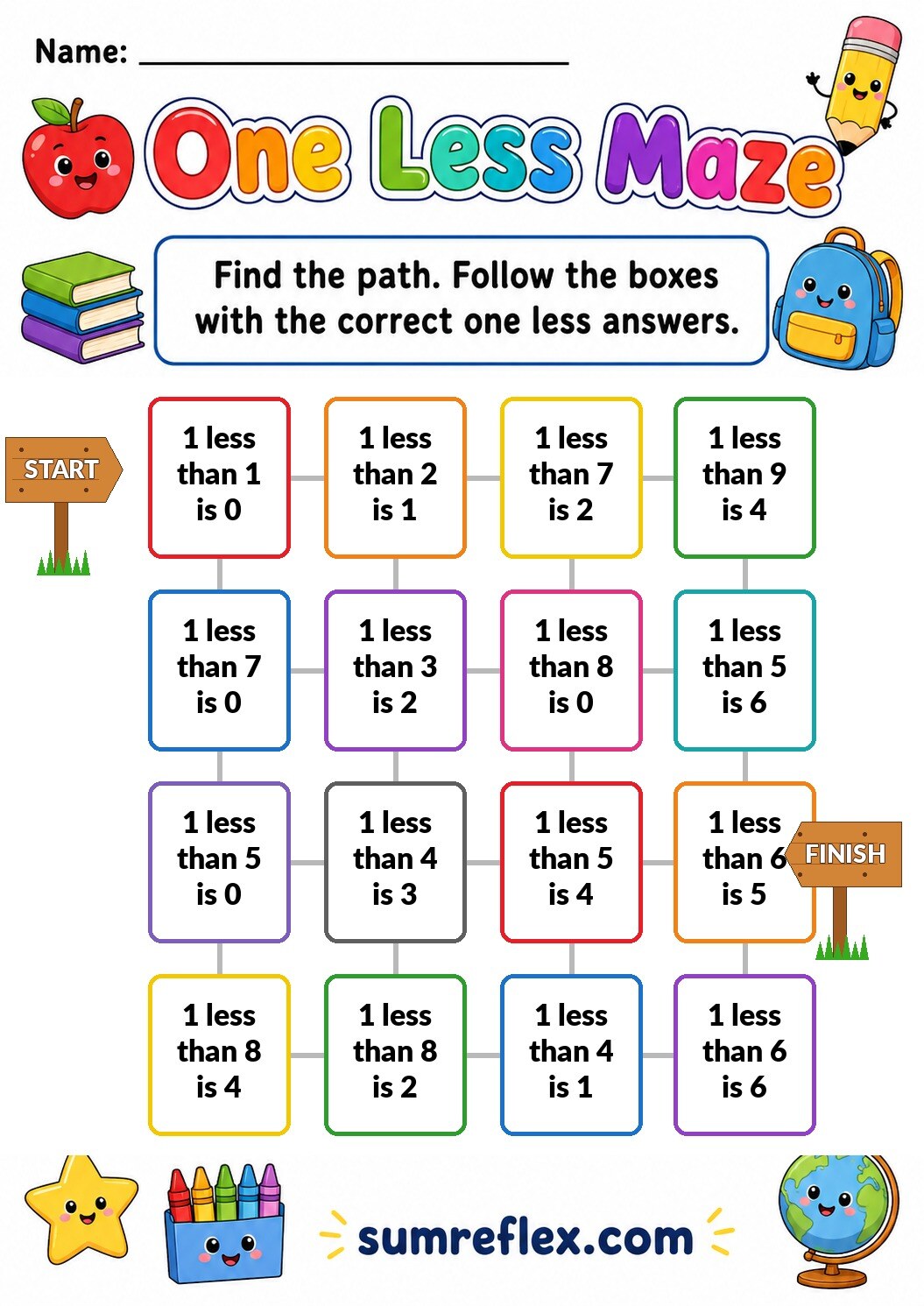
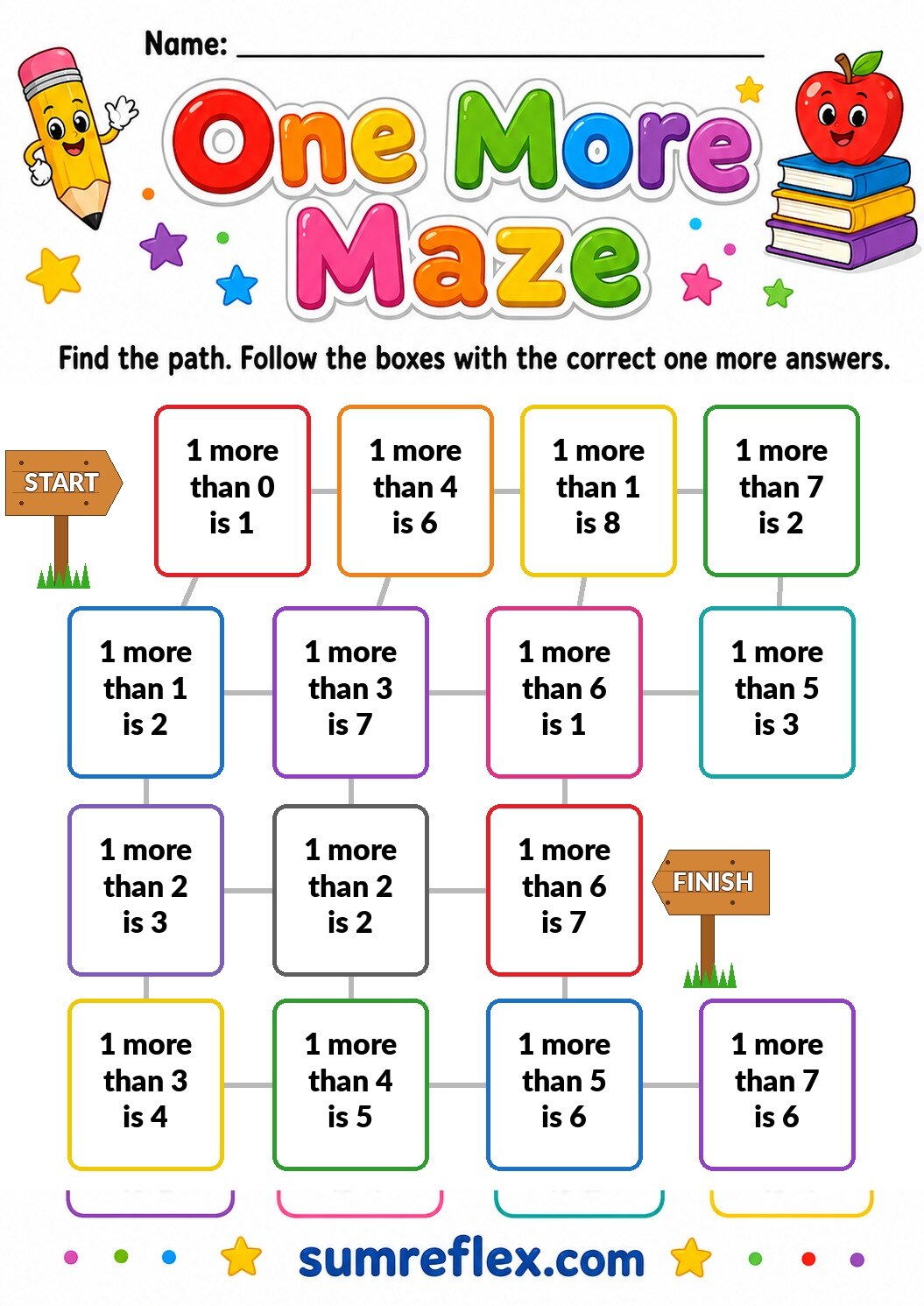
Children often want to draw through a maze immediately. For these printables, pause at each choice point and solve the clue first. Count the dots, compare the numbers, find one more, or solve the small addition fact. The pencil should move after the answer is known. This habit keeps the maze from becoming a guessing race.
Number-order paths train sequence memory
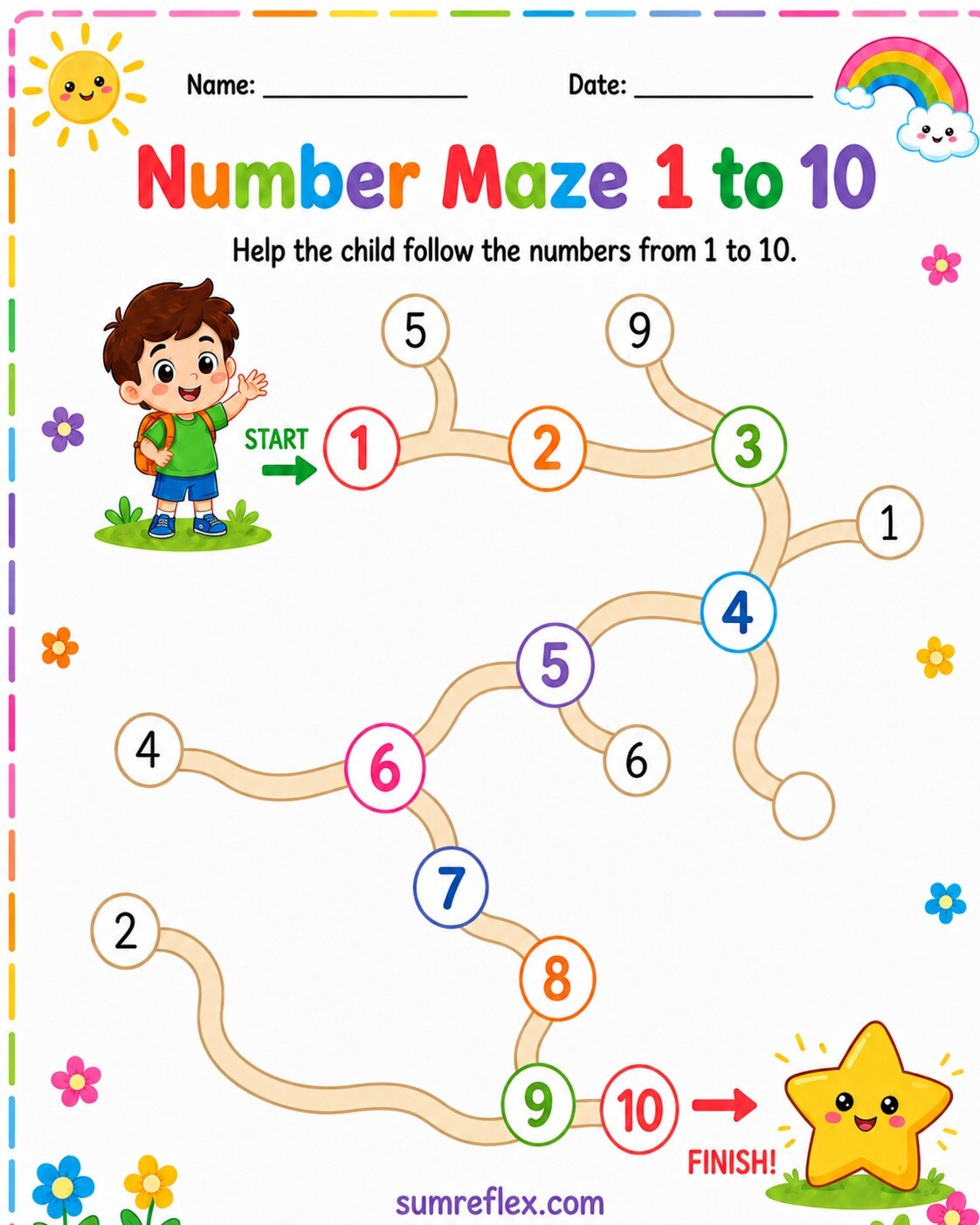
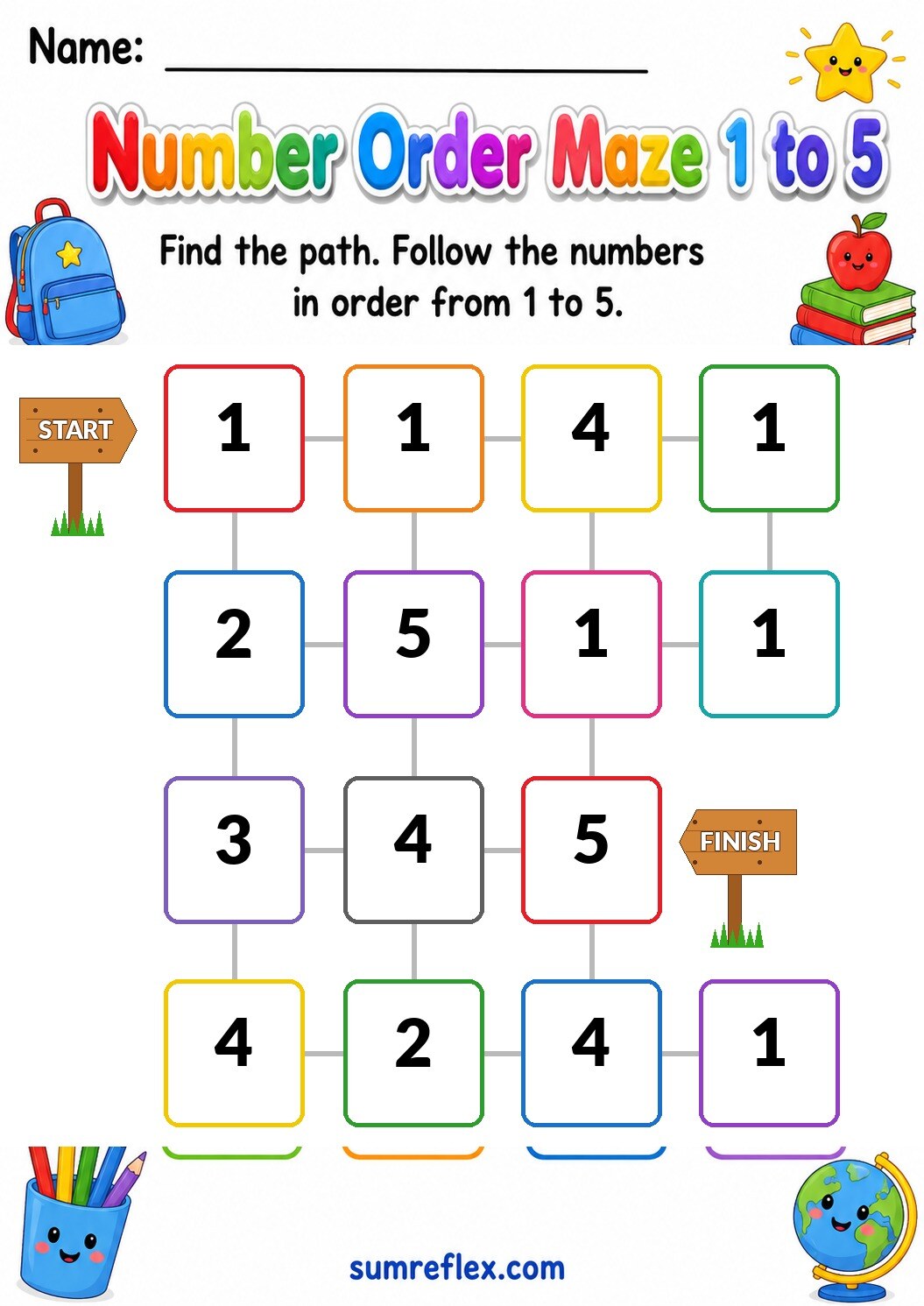
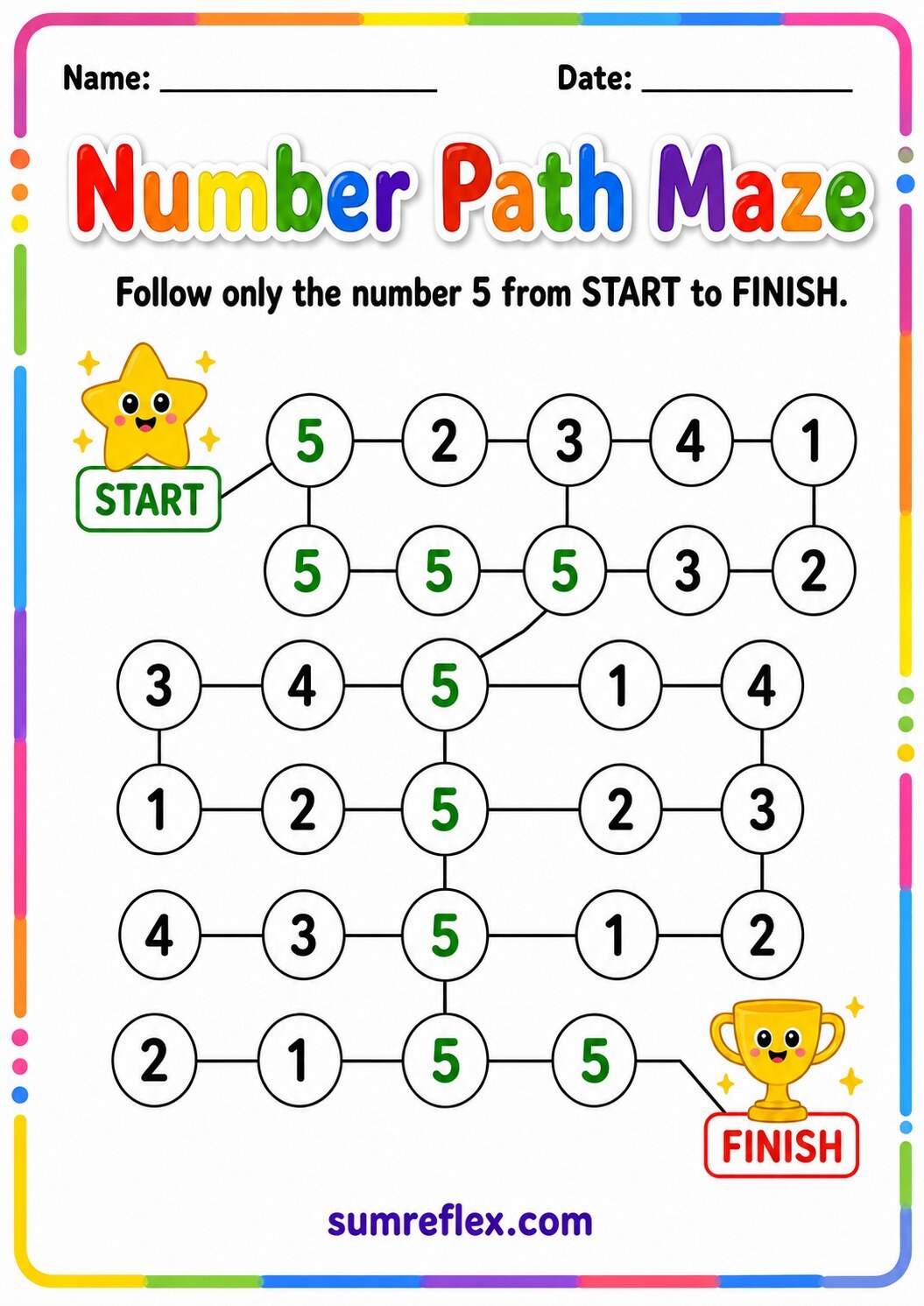
Number order mazes and rainbow paths help children follow a sequence without losing their place. The learner has to remember what number comes next and then find it visually on the page. If the sequence is not secure, keep a small counting strip nearby. The support helps the child check the path instead of wandering through openings randomly.
Comparison mazes need both choices checked
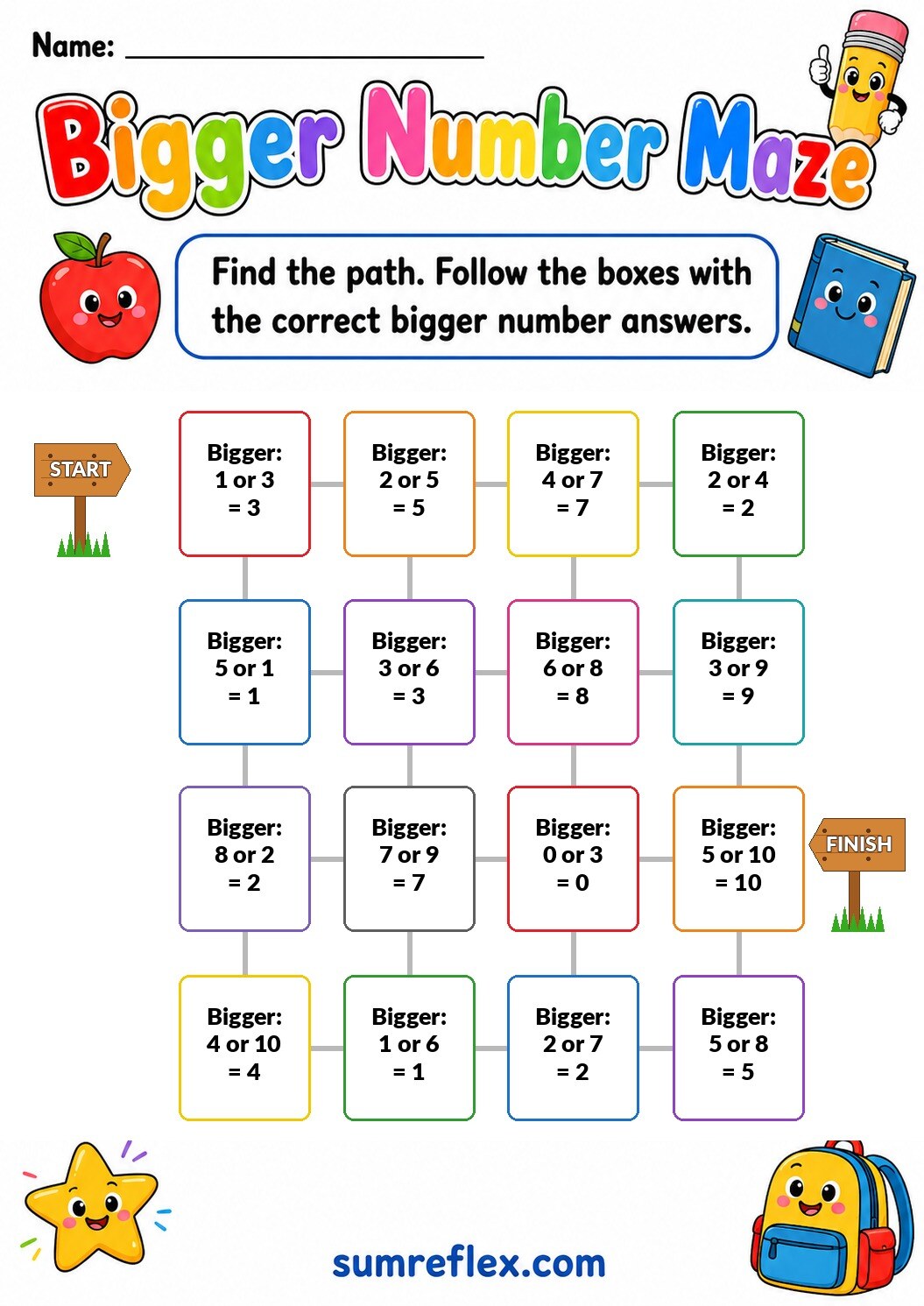
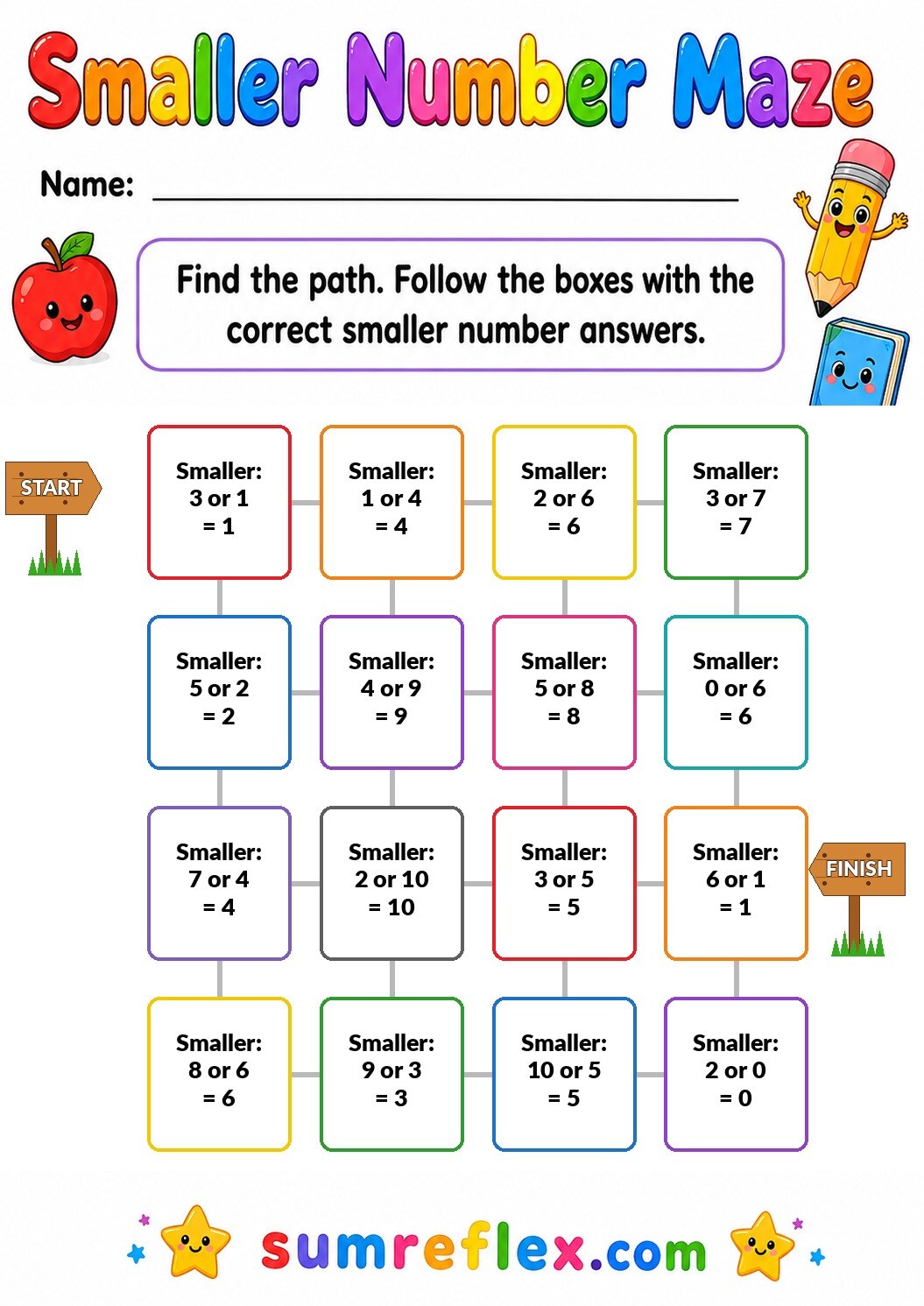
Bigger-number and smaller-number mazes are useful because they require a decision between two values. Ask the child to point to both numbers before choosing. If the numbers are close, count up from the smaller one or place counters beside the page. The comparison should be based on value, not on which number looks more familiar.
Operation mazes should stay very small
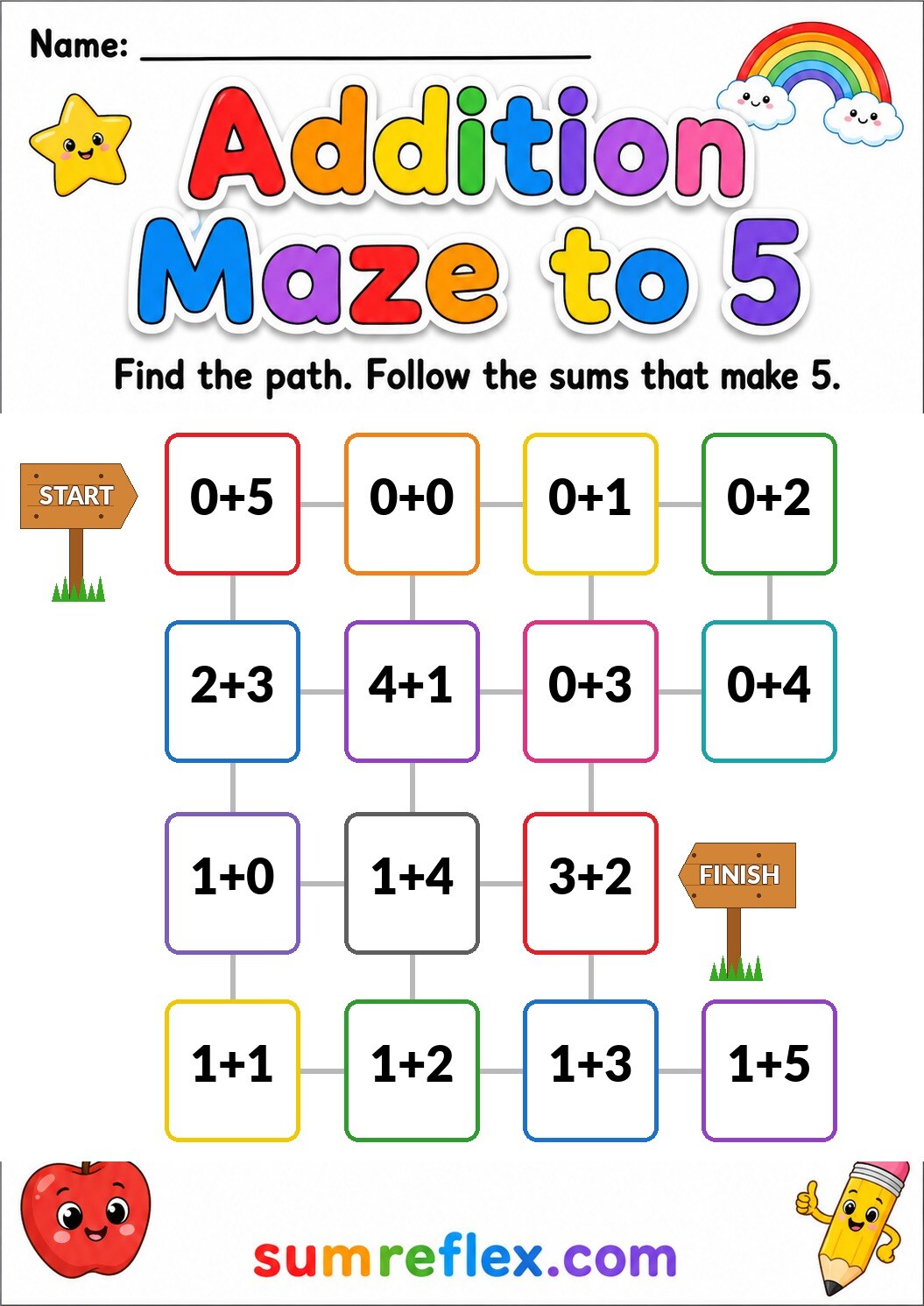
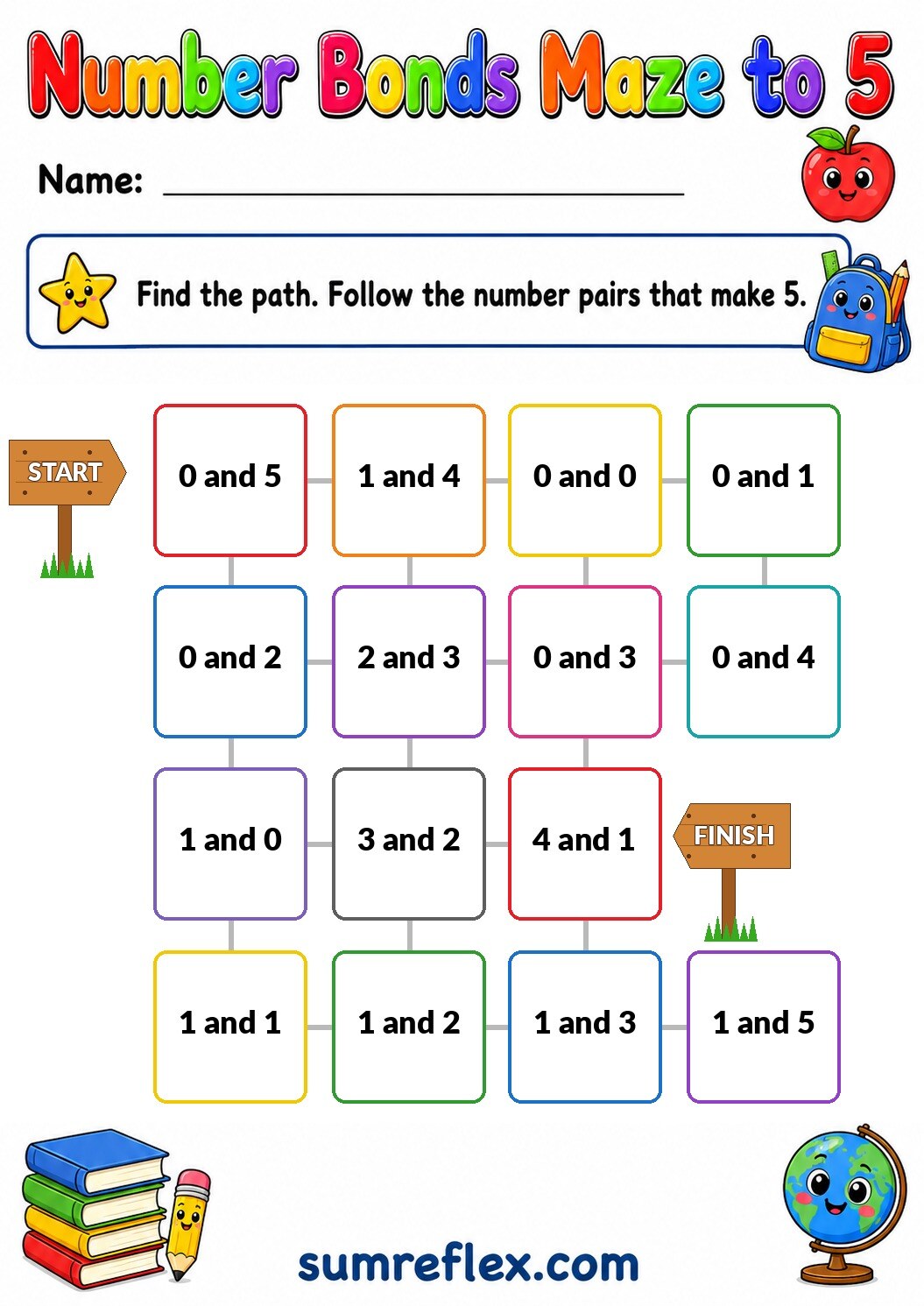
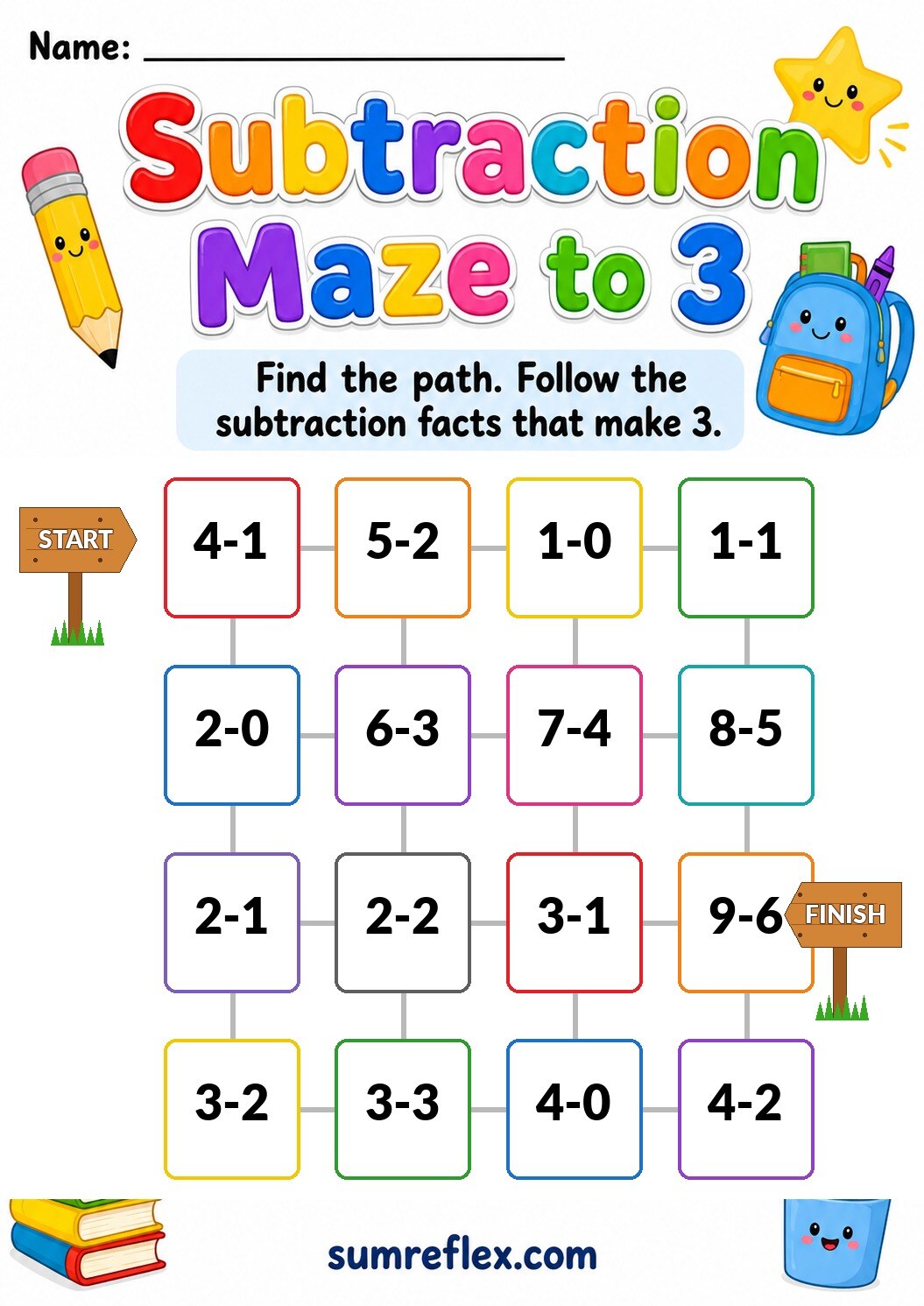
Addition to five, subtraction to three, and number bonds to five are intentionally tiny. The goal is not heavy calculation. The goal is to solve a small clue accurately enough to choose the route. Fingers, counters, or picture marks are all acceptable. A correct path with visible checking is stronger than a fast path built from guesses.
Dots and shapes slow the eyes down
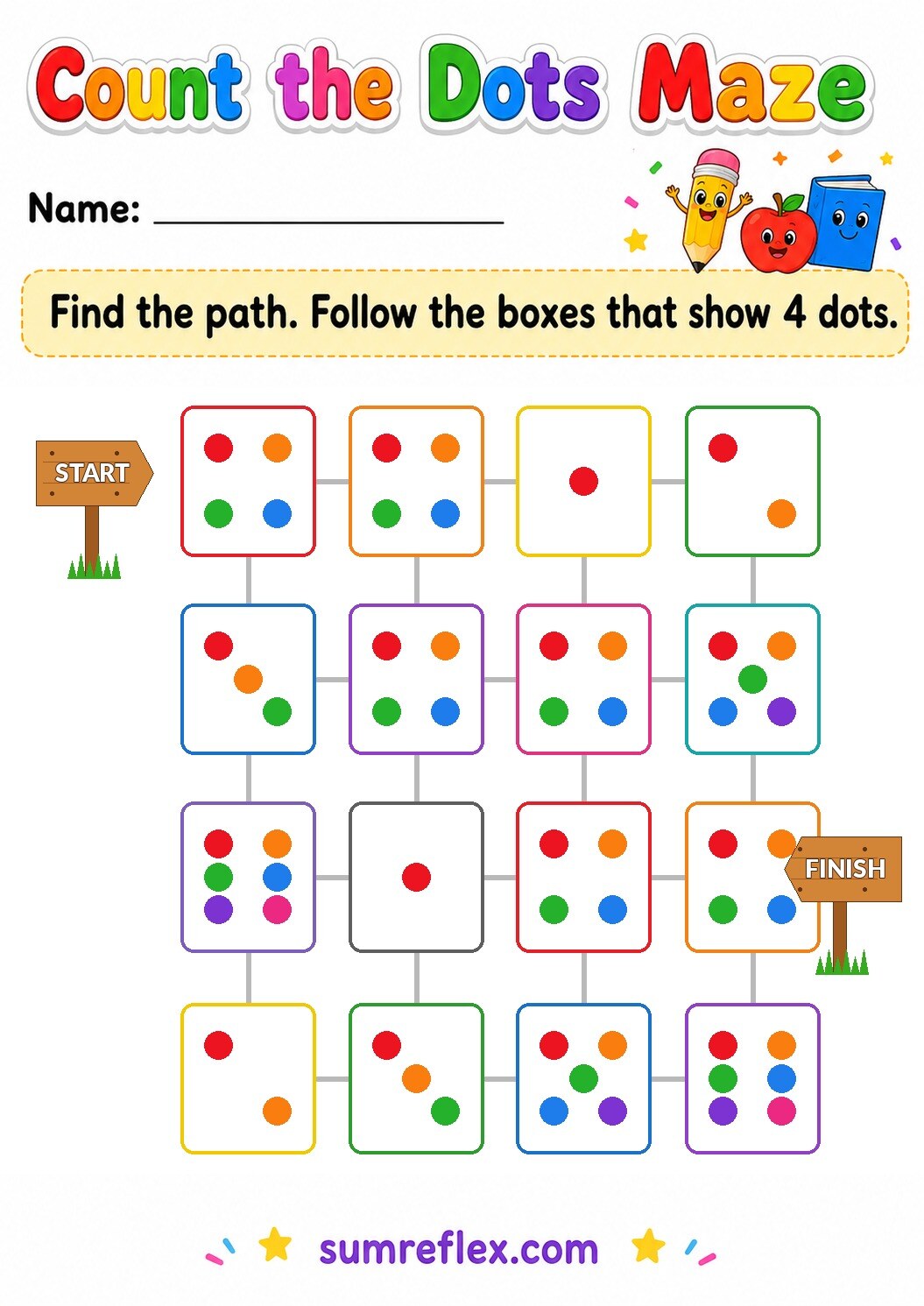
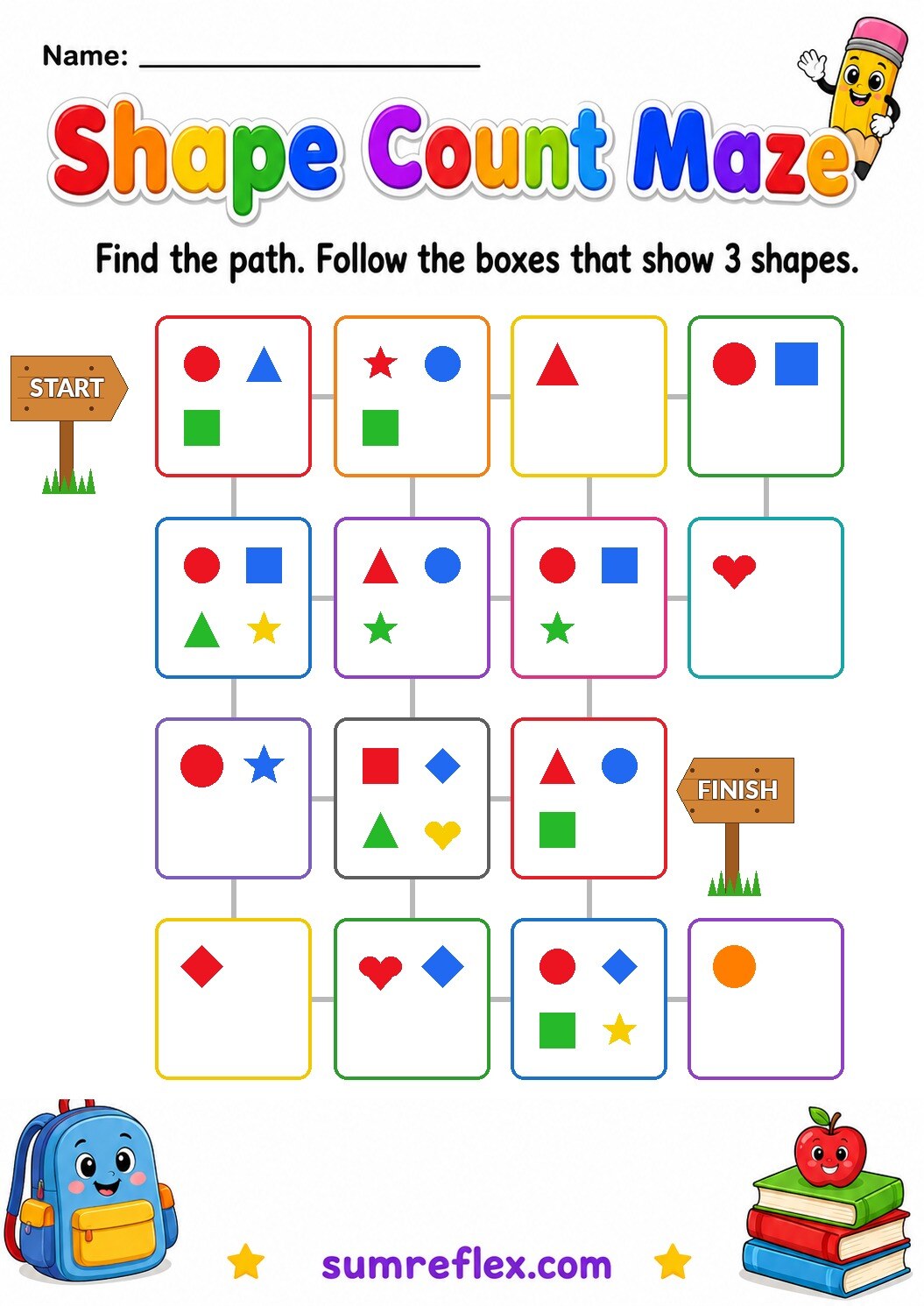
Dot-count and shape-count mazes ask children to inspect a group before moving. That helps learners who need practice tracking small visual details. For shapes, add the shape name when possible. For dots, touch each dot once. The maze gives a reason to count carefully because the next move depends on the total.
Use direction words during the route
Maze pages are good for spatial language. Ask the child to say whether the line goes up, down, across, around, through, near, or beside. These words support classroom readiness because children later need to follow directions on worksheets, books, and board work. A short route description turns silent pencil work into useful language practice.
Fine-motor control is a valid goal
Some children may understand the math but struggle to keep the line inside the path. That is still meaningful practice. Encourage a relaxed grip, slow turns, and small pauses at corners. If the page becomes messy, finish only part of the maze. A controlled route teaches more than a finished route that the child rushed through.
Repeat one maze with a new rule
If a child wants to reuse a maze, change the challenge. Ask for fewer wall touches, a quieter pencil, a spoken clue at each turn, or a finger route before the pencil route. Repetition can build confidence when the goal changes slightly. The same printable can support math, language, and motor control without feeling like a duplicate lesson.