



Coloring should have a learning job
A preschool coloring worksheet can be more than a quiet activity. The pages in this folder ask children to count, match, trace, compare, read a position word, solve a small picture sum, or inspect a shape before using crayons. Coloring becomes the final step after the thinking has happened, not a replacement for the skill.
Count-and-color pages slow the answer down
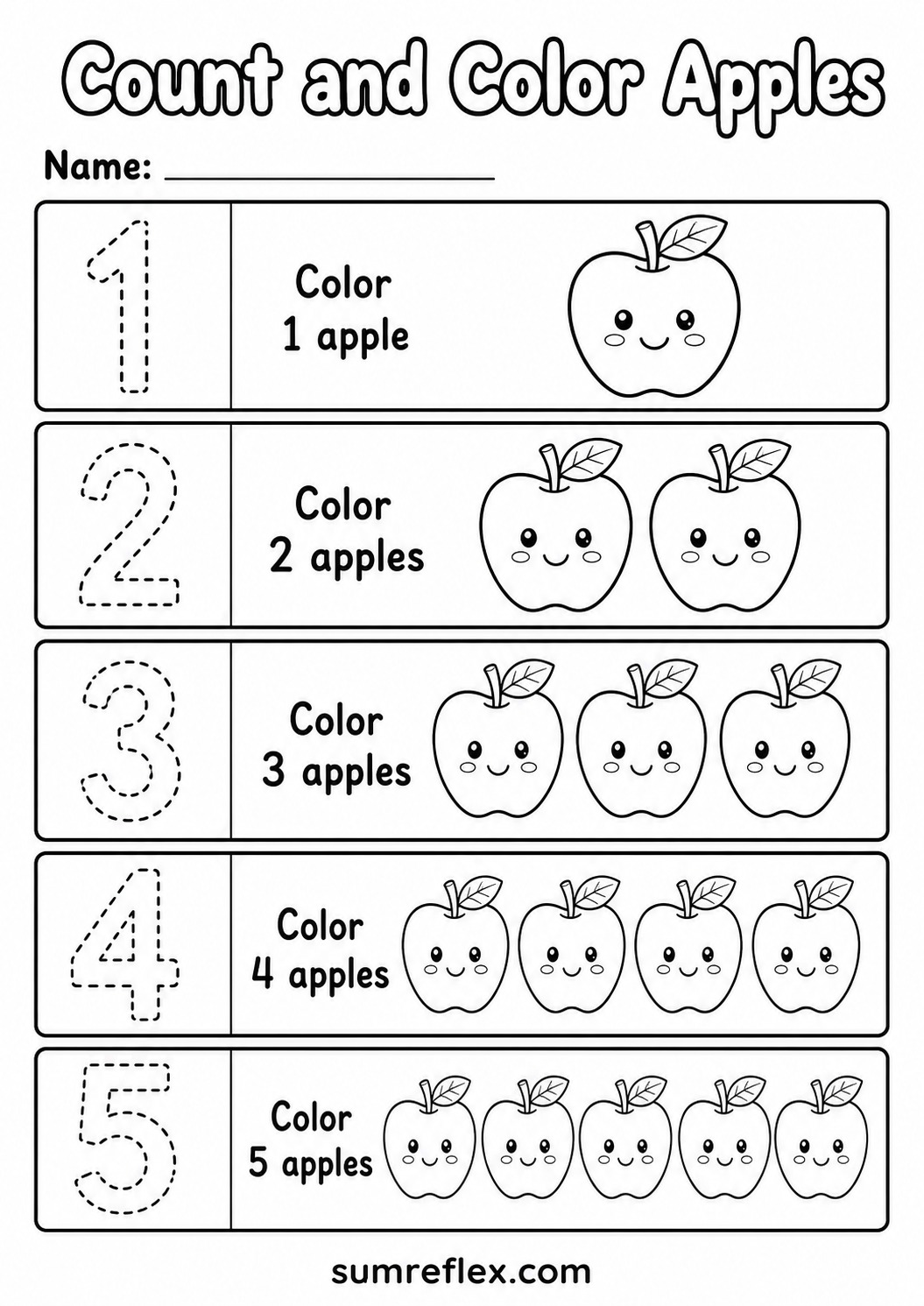
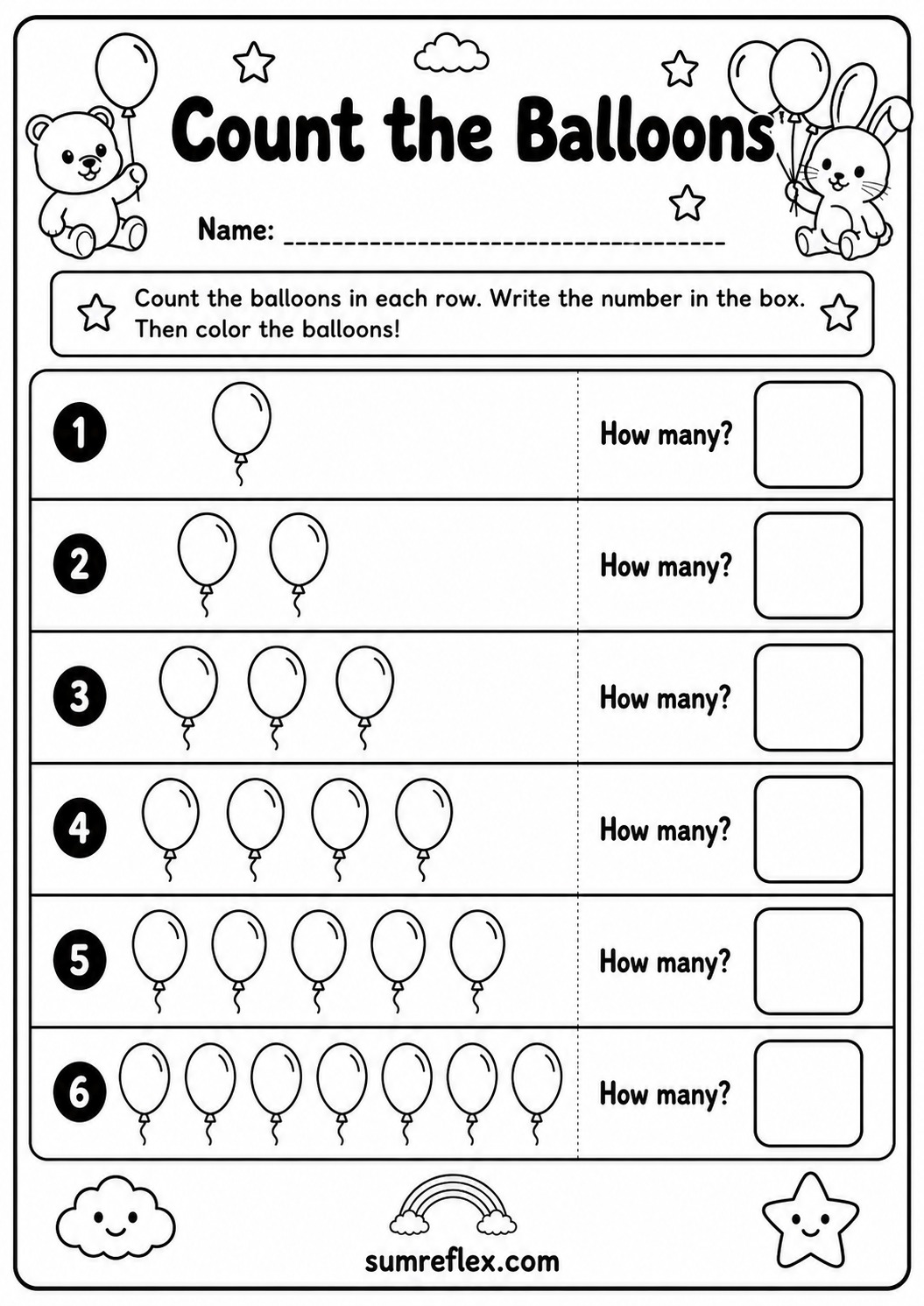
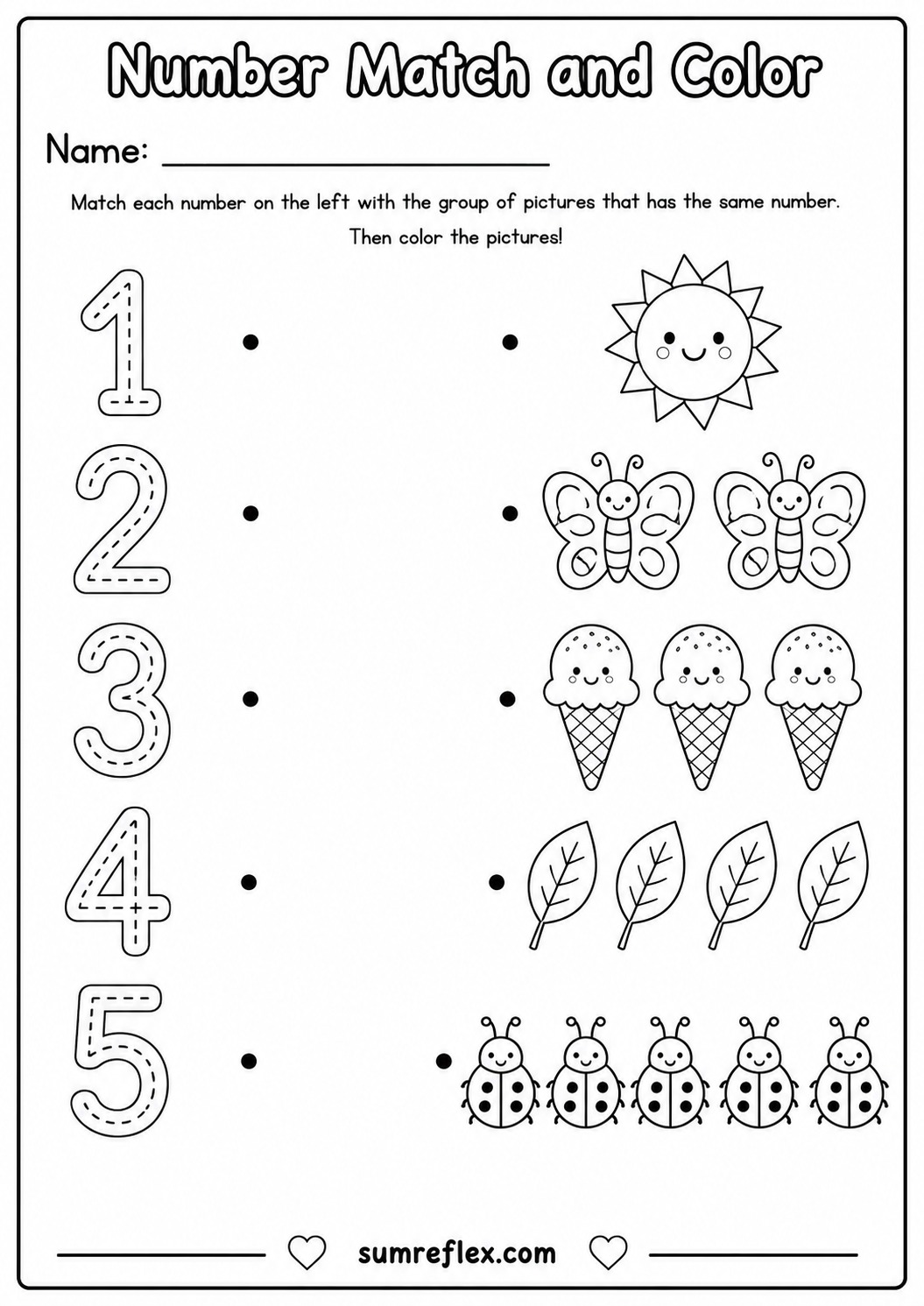
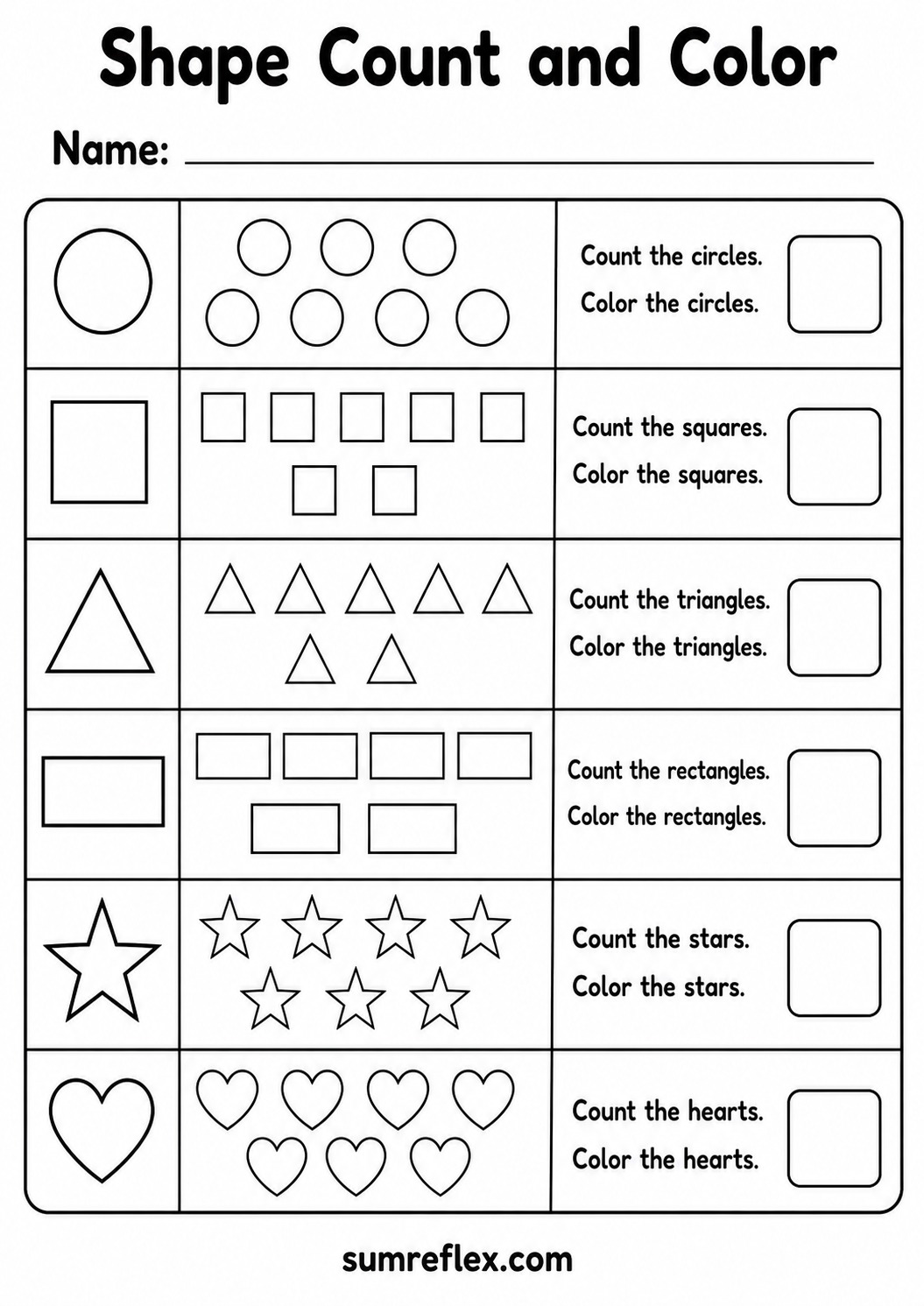
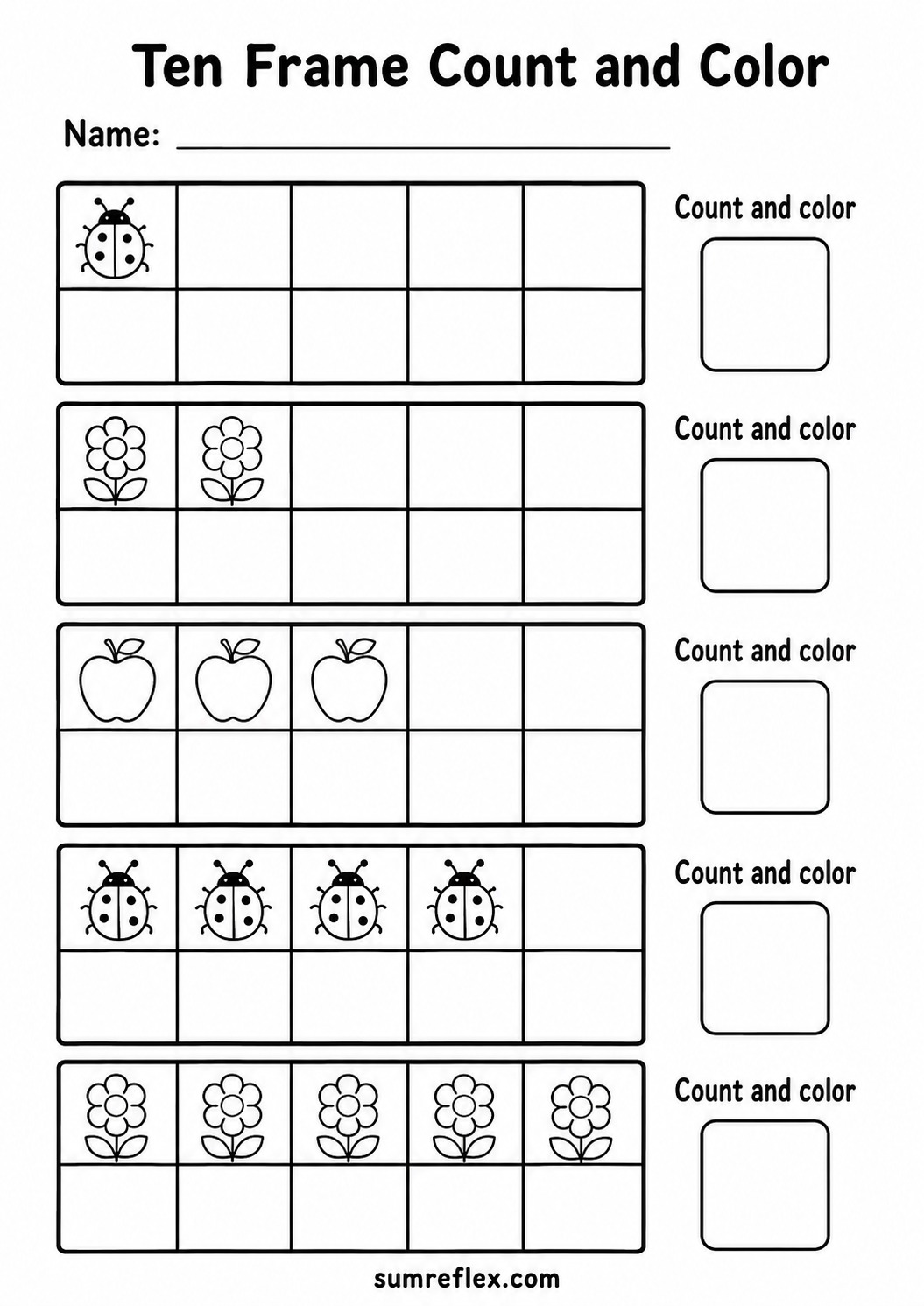
When a child counts apples, balloons, shapes, or ten-frame spaces before coloring, the crayon work gives them a second look at the same group. Ask for the count first, then the color. This order keeps the page from becoming random filling and helps the child understand that the color confirms the number.
Trace-and-color connects hand control to quantity
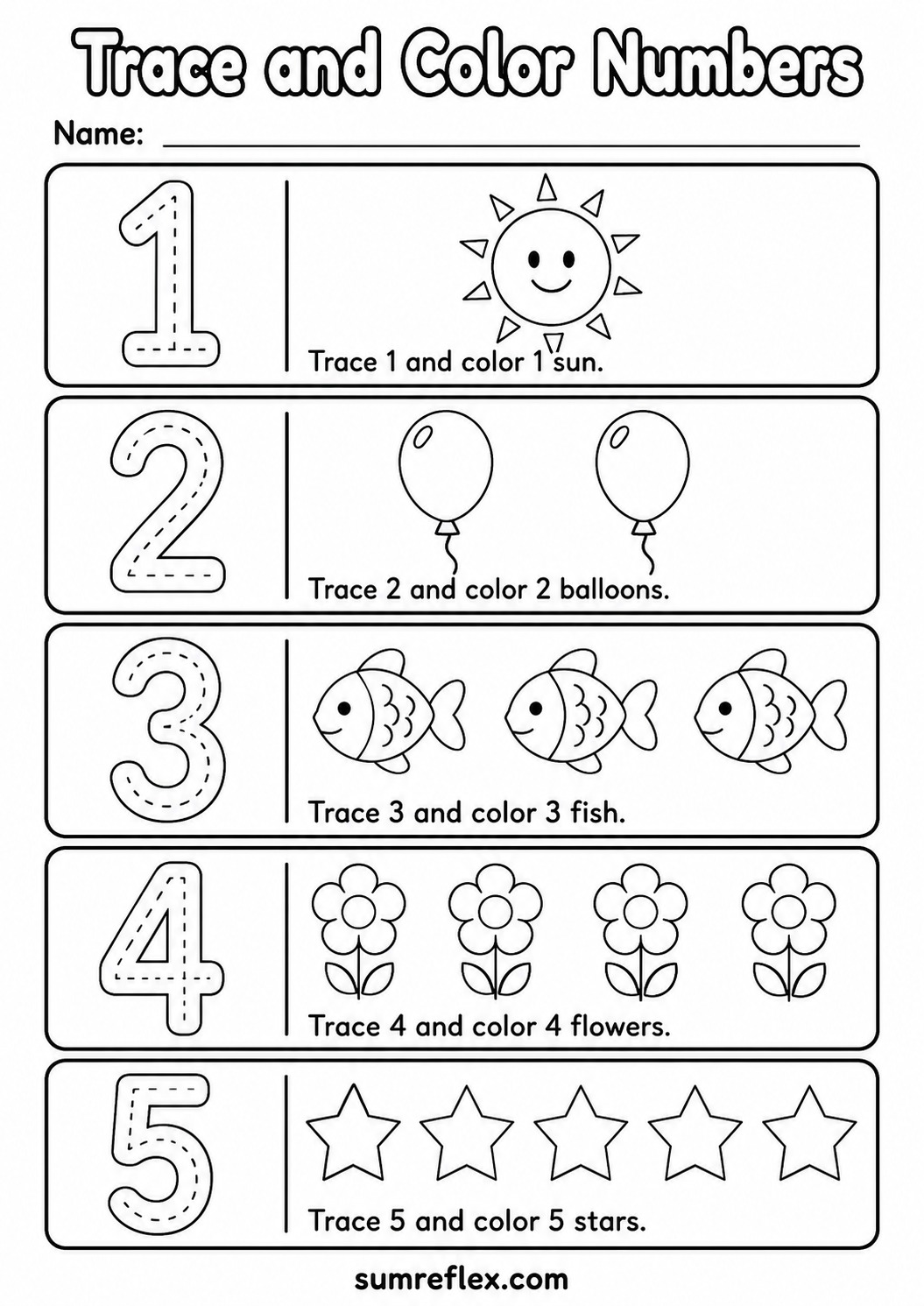
Tracing numbers before coloring picture groups is useful because it joins two readiness skills. The child practices how the numeral is formed and then sees the amount it represents. If the tracing becomes shaky, reduce the number of rows and keep the count accurate. The page should support both movement and meaning.
Color by number trains symbol attention
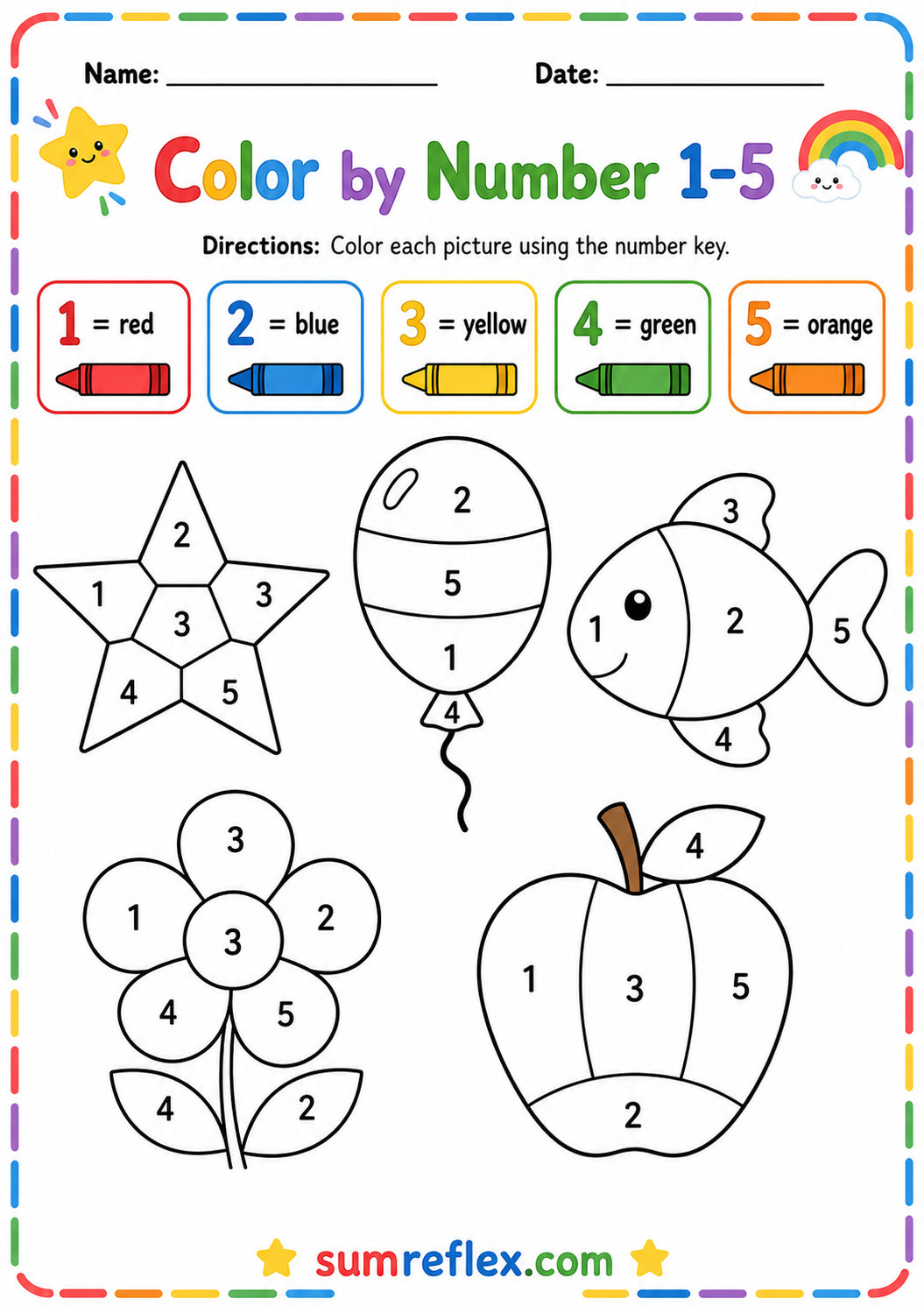
Color-by-number work asks children to read a numeral, remember the matching color, and apply that color in the correct space. That is a small executive-function task as well as a number task. If the learner colors too quickly, cover part of the page and finish one number at a time.
Comparison coloring needs the word first
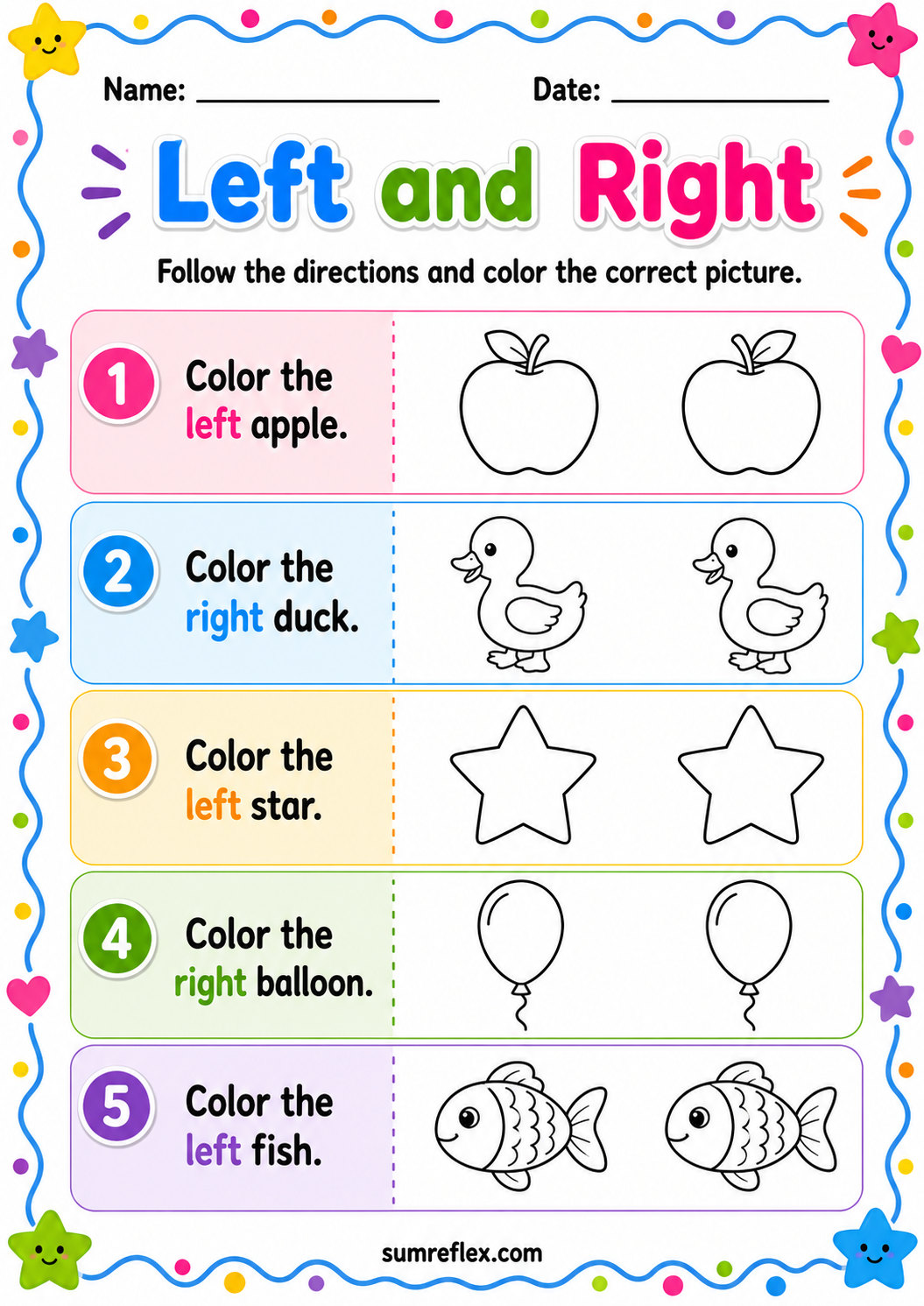
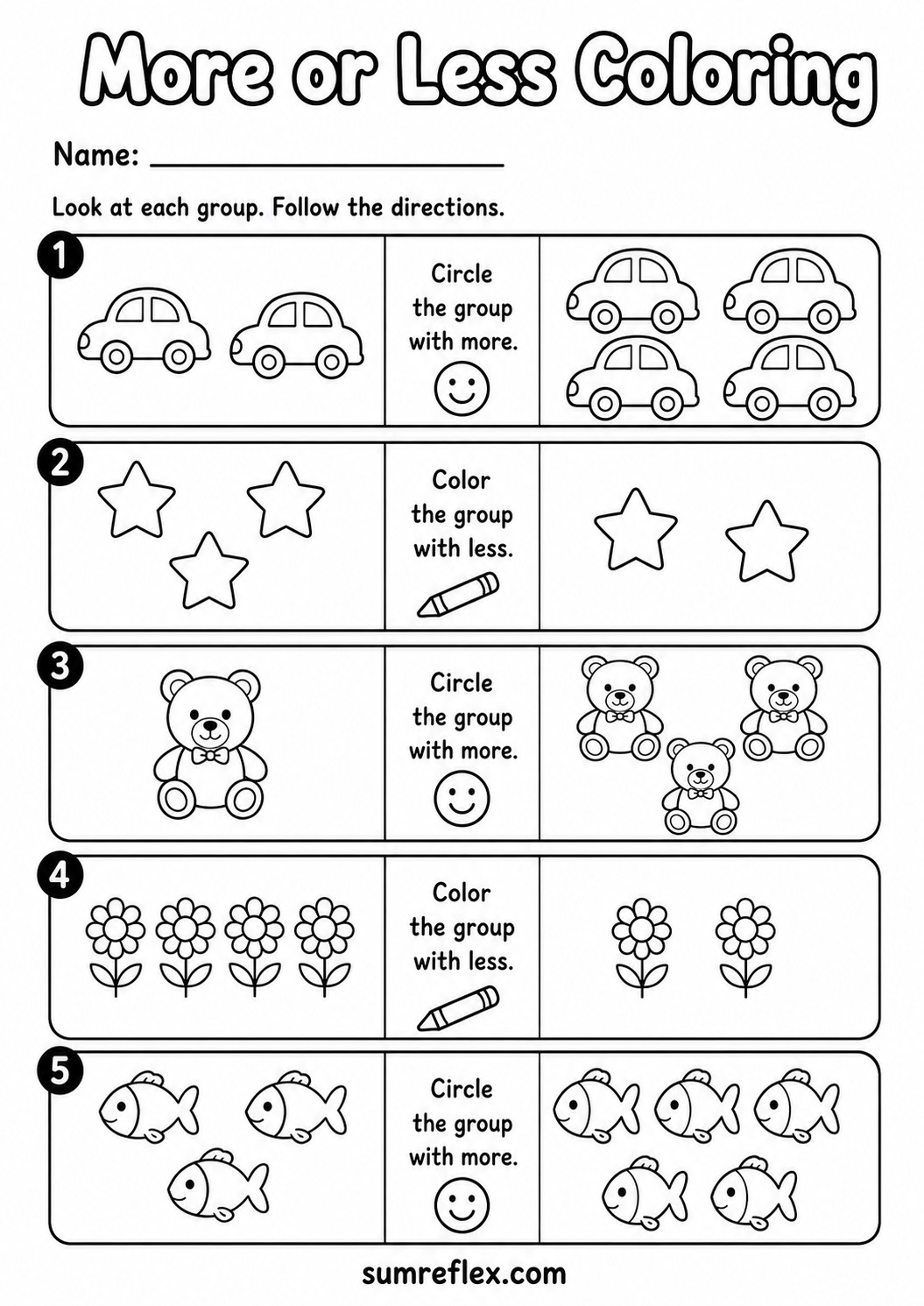
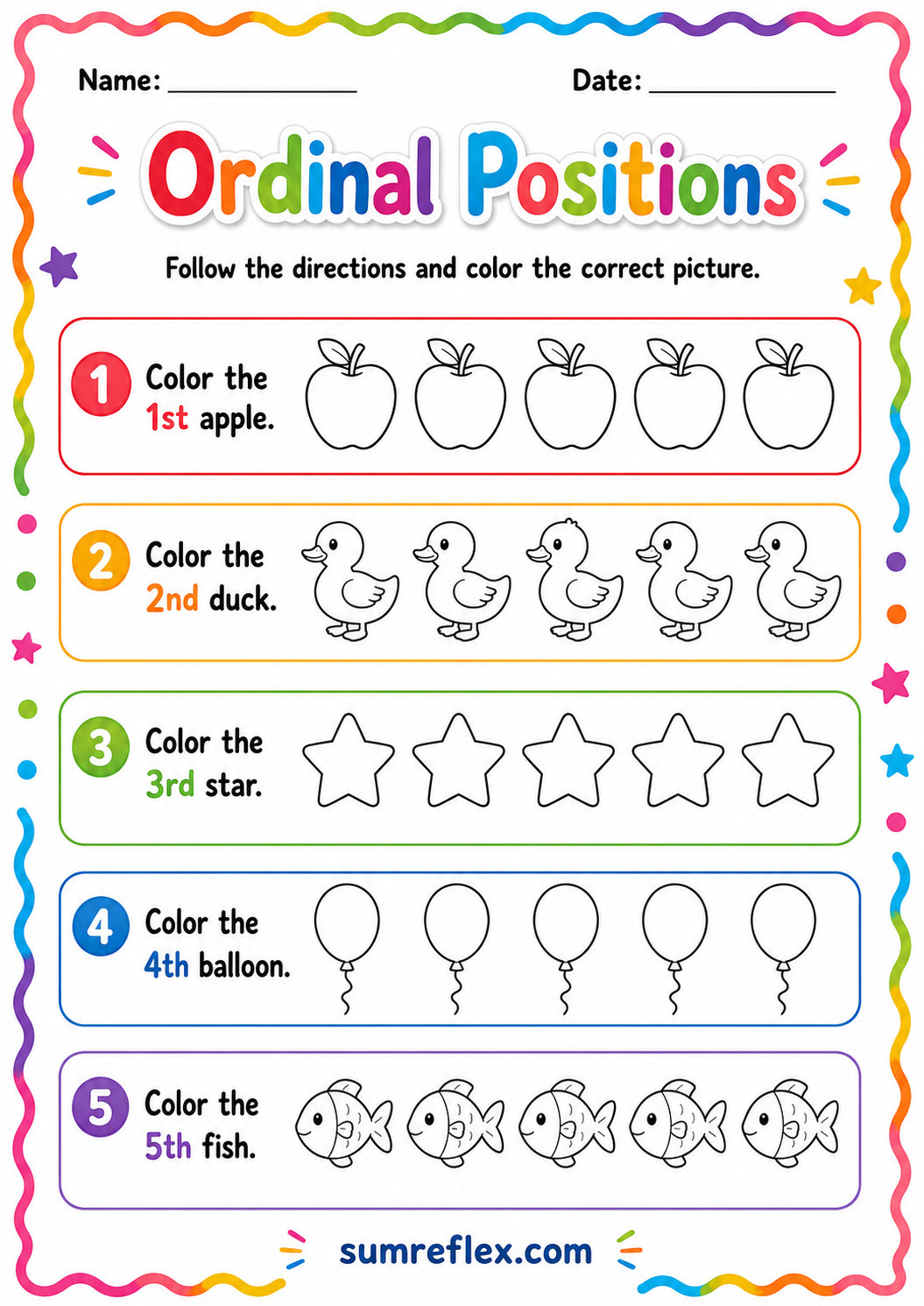
For more, less, left, right, first, middle, or last pages, read the direction before any crayon is chosen. The child should know what word is being practiced. After the correct item or group is identified, coloring can mark the answer. This keeps vocabulary at the center of the activity.
Shape coloring should include shape names
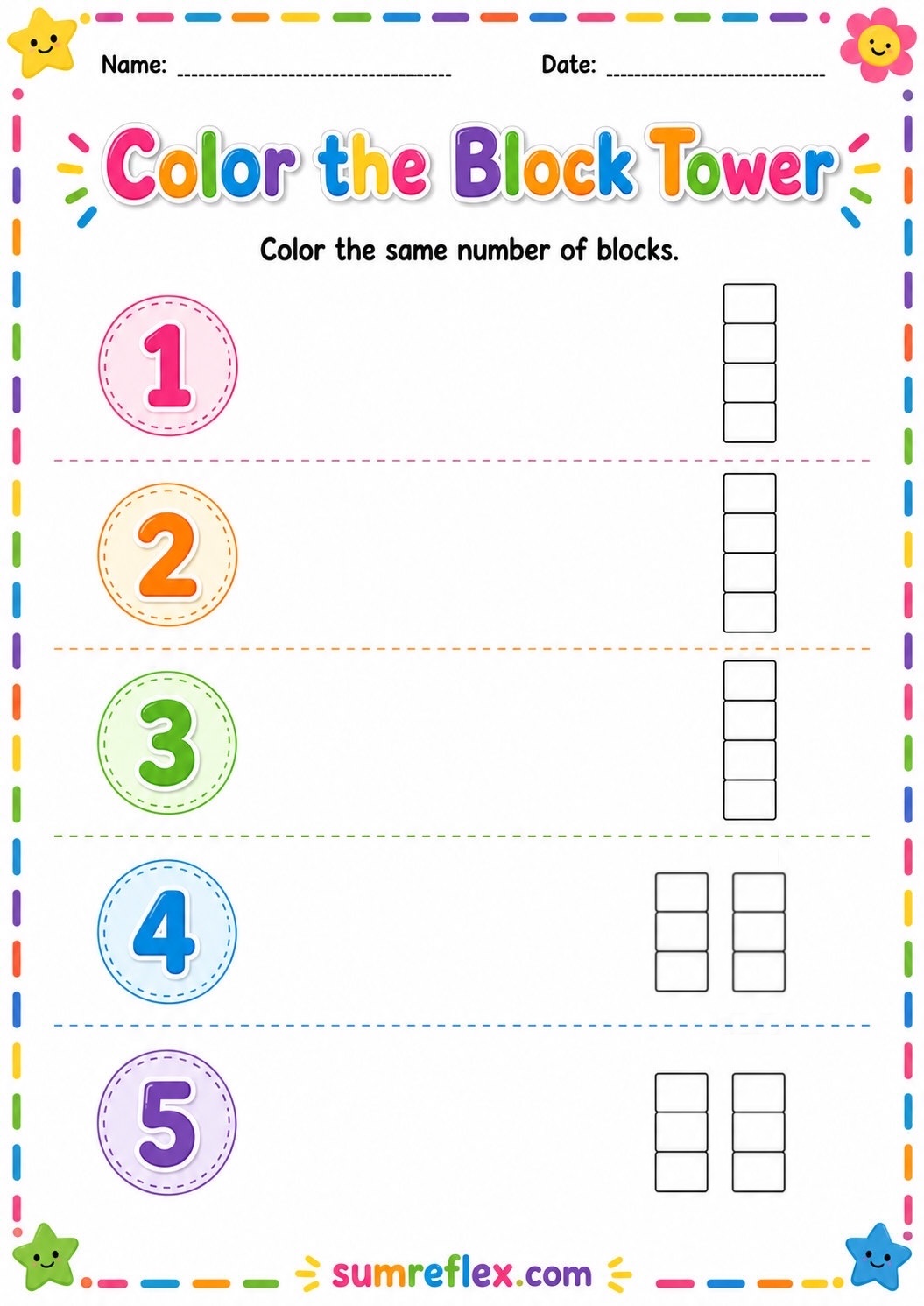
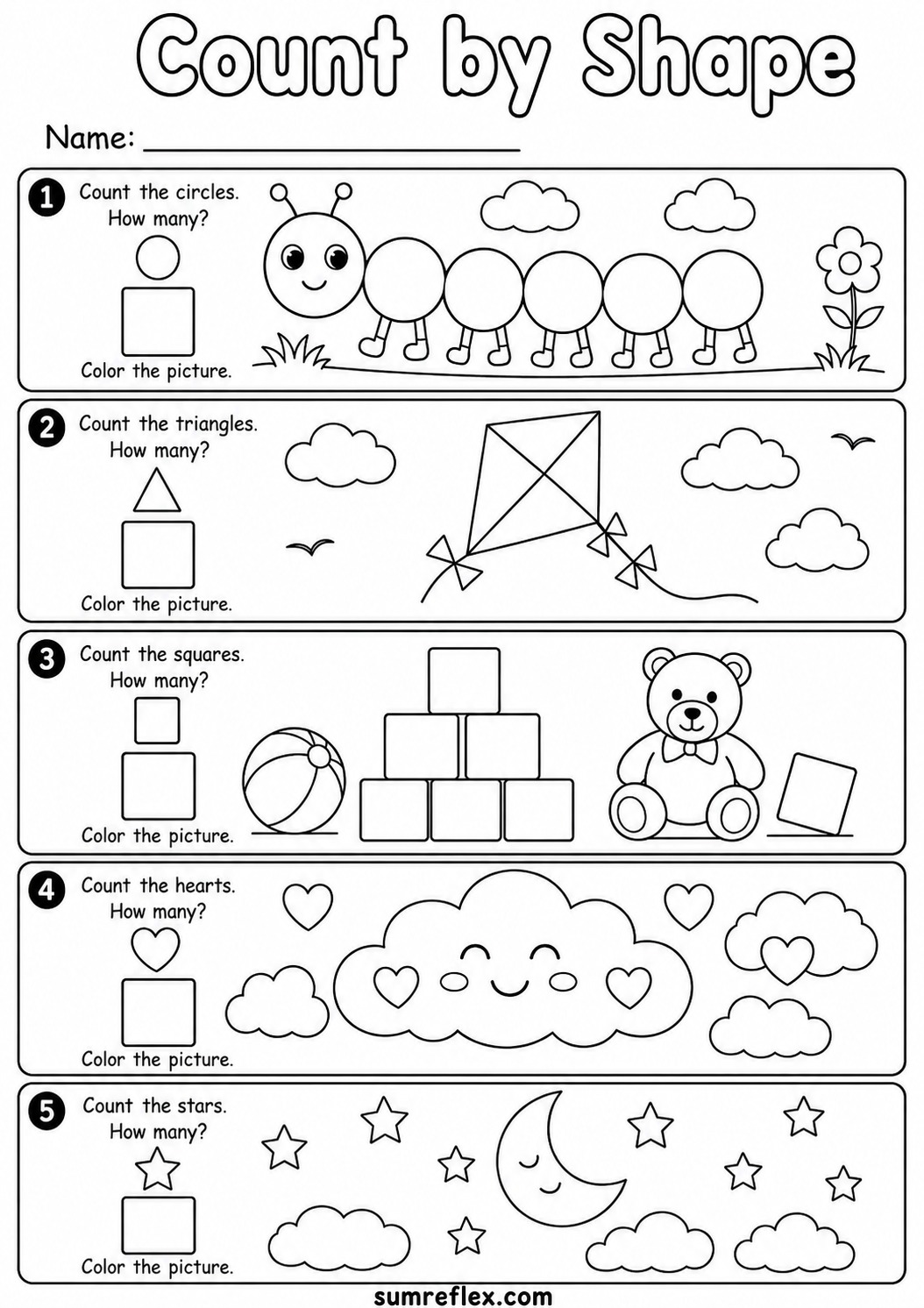
When the page uses circles, squares, triangles, rectangles, stars, or hearts, ask the child to name the shape before coloring it. Counting by shape or coloring a block tower can build geometry language when the adult keeps the question focused. Which shape is this? How many did you find? What color will mark them?
Addition coloring should wait for the total
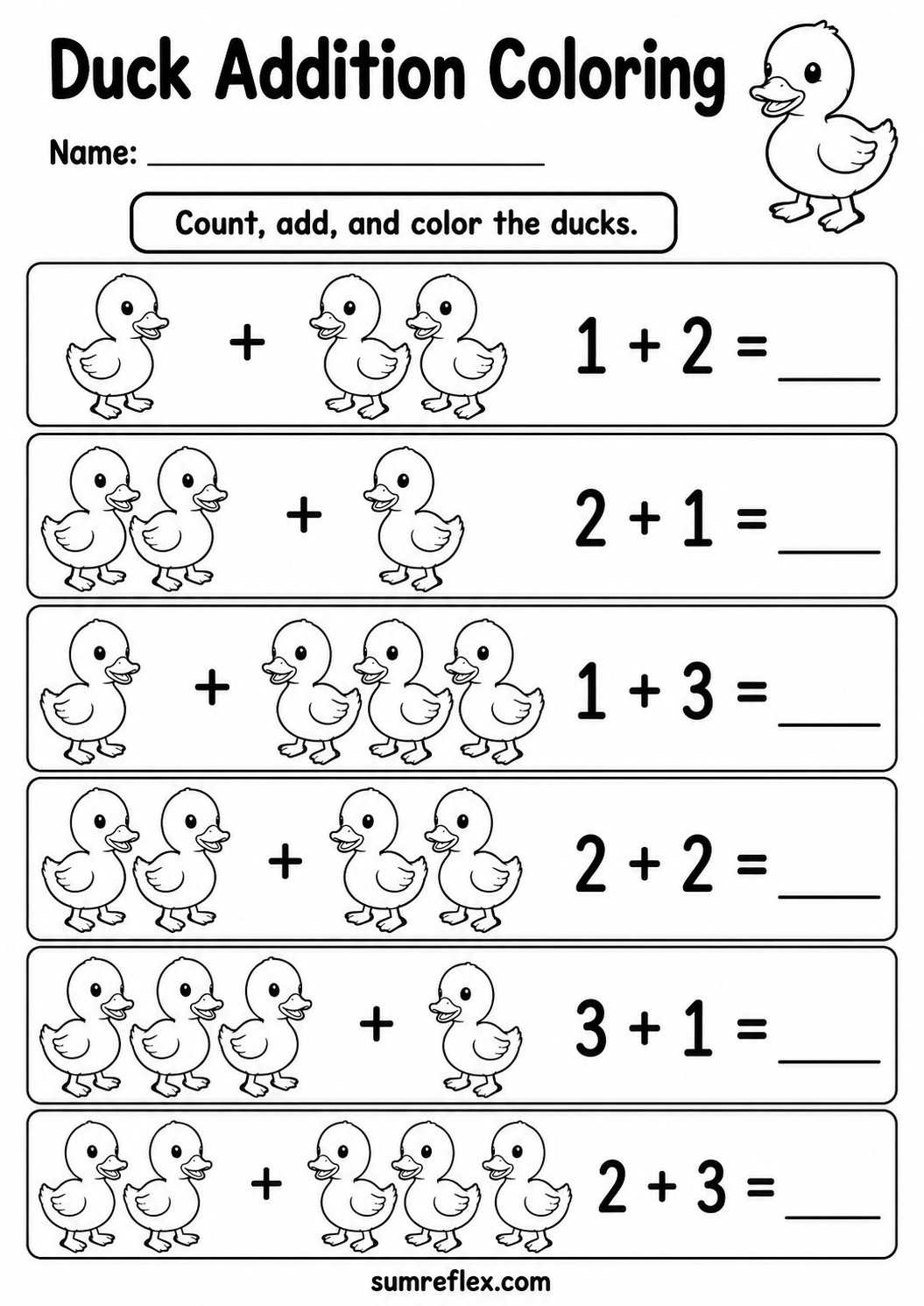
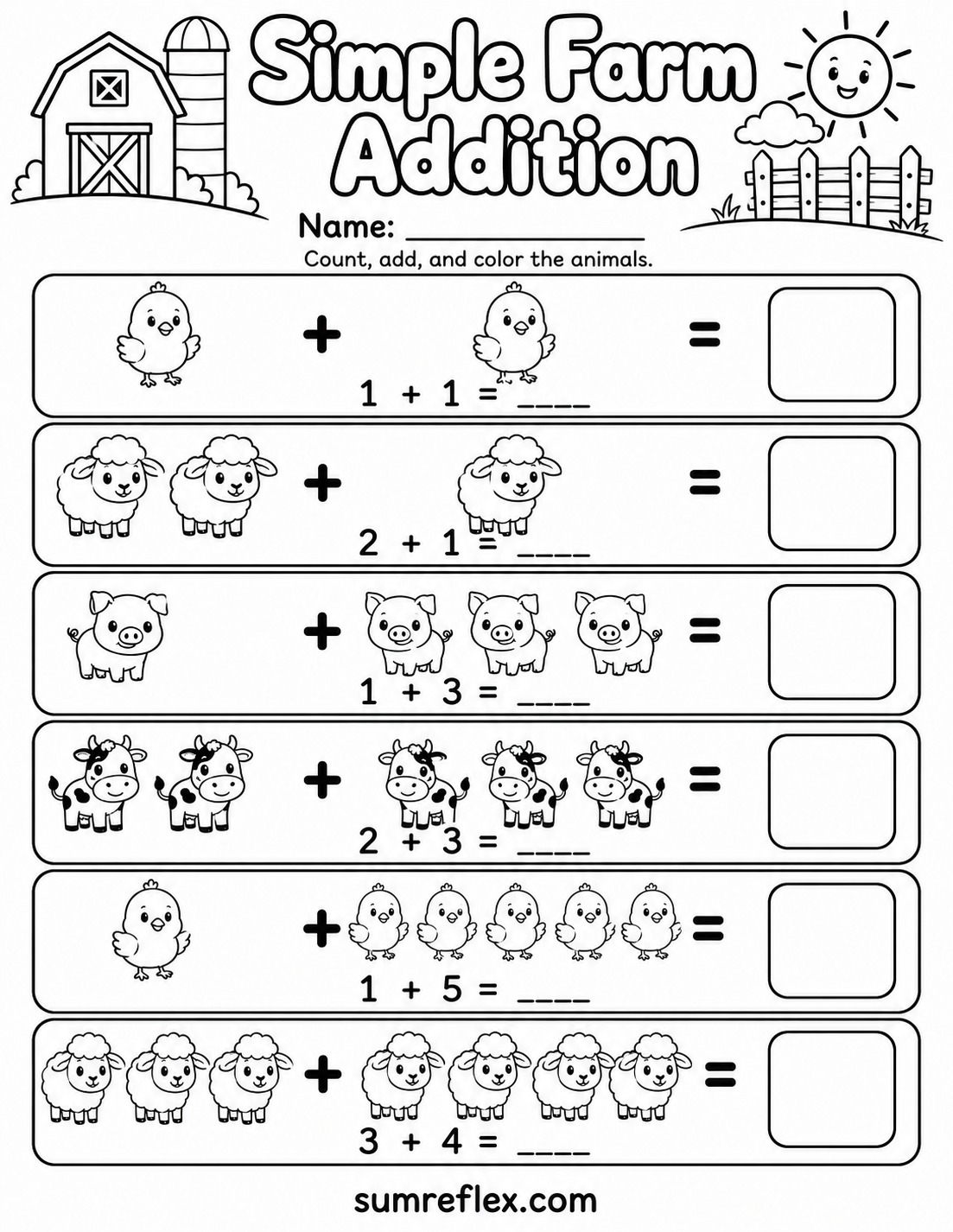
Duck and farm addition coloring pages should be solved before the picture is finished. Count the first group, count the second group, join them, and write the total. Then color the animals. This sequence helps children understand that the color is not the main goal; it is the calm finish after the addition story is checked.
Use coloring pages when focus needs a softer pace
Some preschool learners concentrate longer when a page includes coloring. That does not mean the math is weaker. The repeated crayon movement can give the child time to settle into a number, shape, or comparison task. Choose these pages when a worksheet still needs a skill goal but the session should feel calmer. A slower page can be the right choice after a busy activity.
One review question is enough
After the picture is complete, ask one question tied to the skill: how many balloons were there, which group had more, what number did you trace, or which shape did you color first? One focused question keeps the finished page connected to learning without turning a relaxed coloring task into a long quiz. The answer tells you whether the skill survived the coloring time. Then stop and review later.