



A larger top factor changes the rhythm
When students move from 2-digit by 2-digit multiplication into 3-digit by 2-digit multiplication, the method stays familiar but the rhythm slows down. There are more digits to multiply, more regrouping marks to manage, and a larger final sum to check. These worksheets give students room to keep that longer process organized.
The first row is not the whole answer
The product from the ones digit can look large enough to feel finished, especially when the top factor has hundreds. Students need to remember that this first line only answers part of the problem. The tens digit of the multiplier still has its own product row, and the final answer cannot be trusted until both rows are complete.
The tens multiplier needs a visible shift
The second row represents groups of ten, so it should move one place to the left or begin with a zero placeholder. This is the step that separates a memorized algorithm from place-value thinking. If learners can explain the shift, they are less likely to stack the two rows as if they belong to the same value.
Estimate with hundreds before adding
An estimate gives the final answer a target range. For 384 x 26, a student might think about 400 x 25, which is about 10,000. The exact answer does not need to match that estimate, but it should live near it. If the product is only a few hundred or far above one hundred thousand, the written work needs attention.
Regrouping can cross several places
With a 3-digit factor, carrying may happen through the ones, tens, and hundreds columns. Students should not squeeze every carry mark into the same crowded corner. Clear marks above each column help them remember what has already been used. A readable page is easier to correct and easier for the student to explain later.
Use one theme for stamina practice
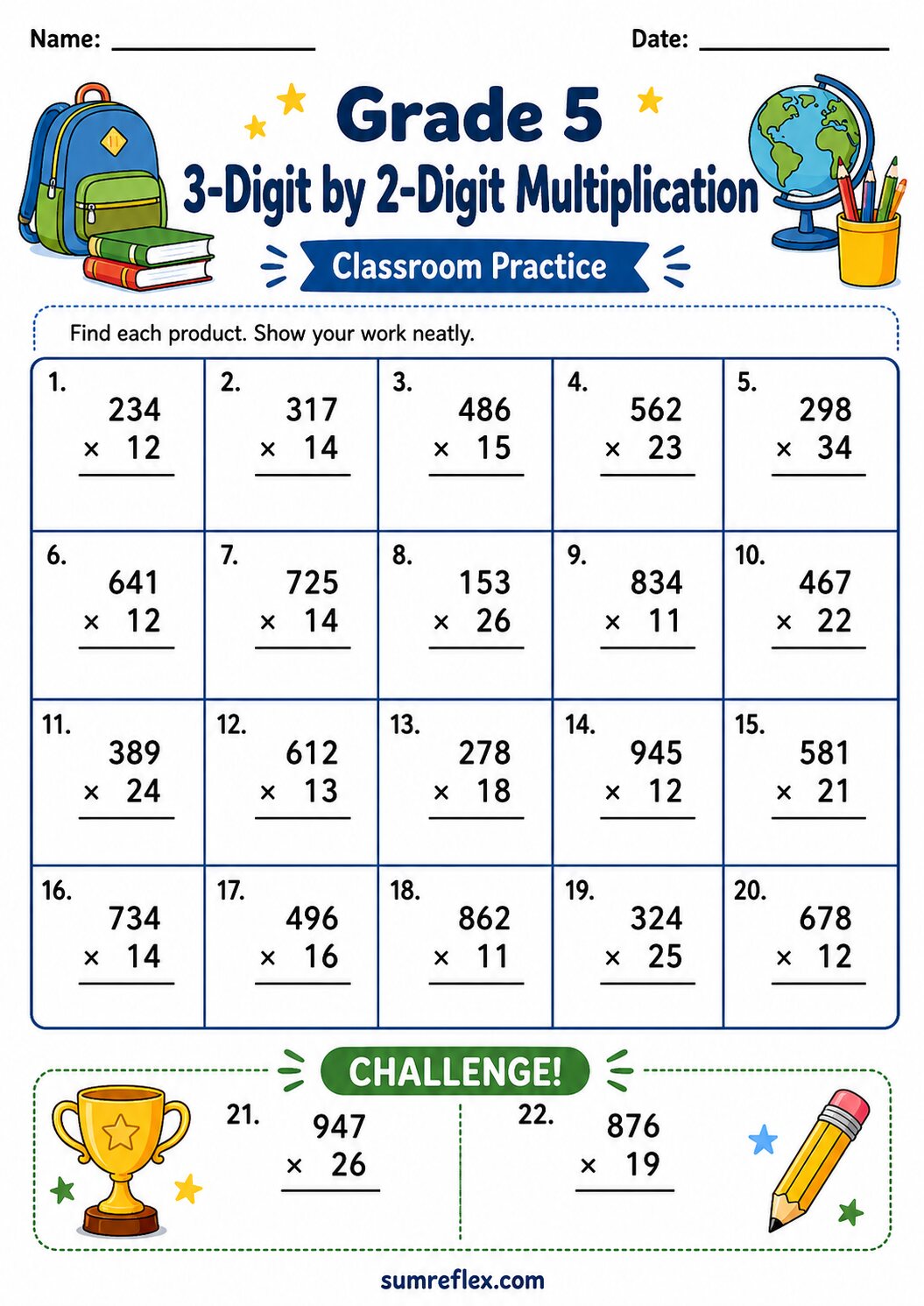
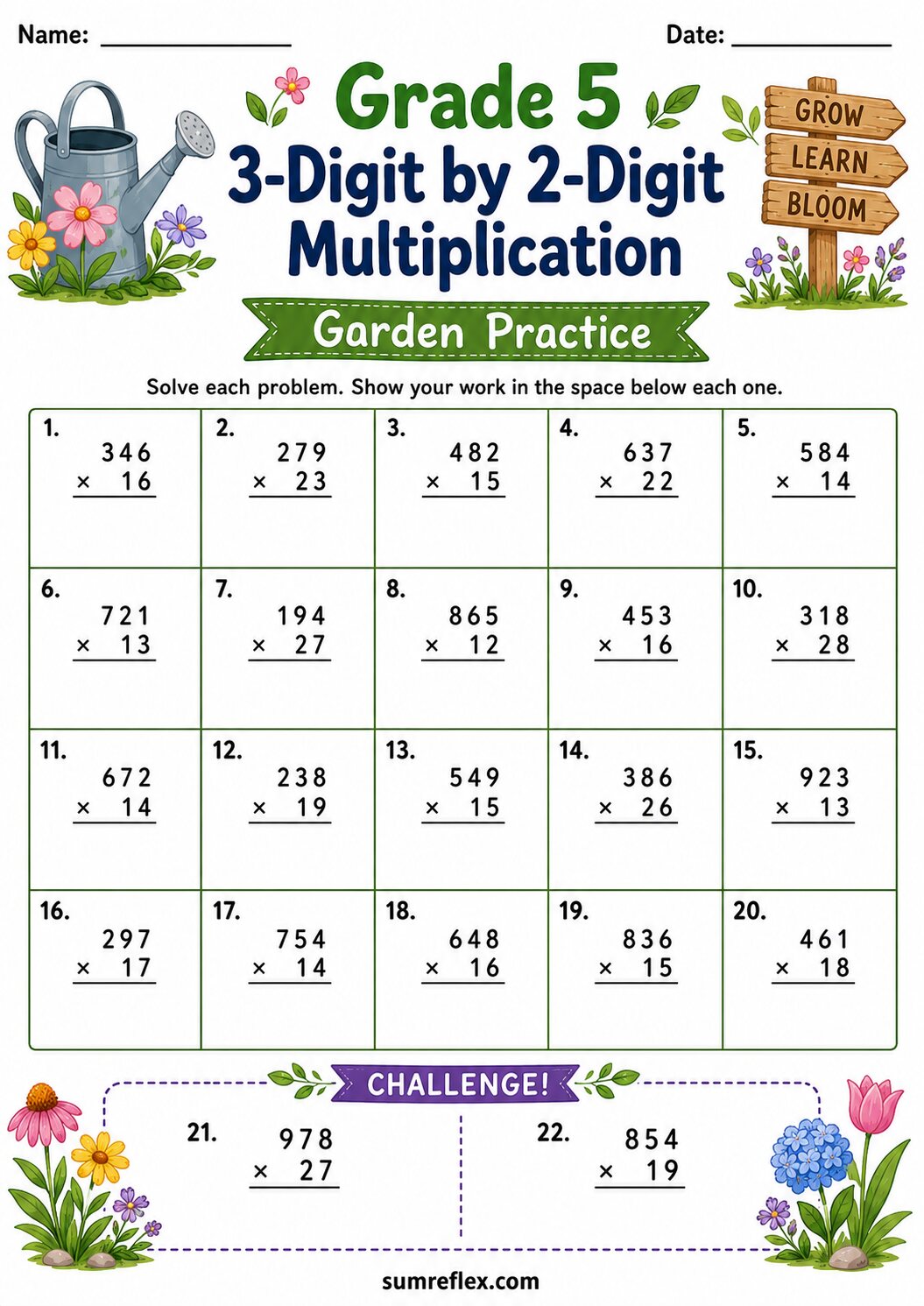
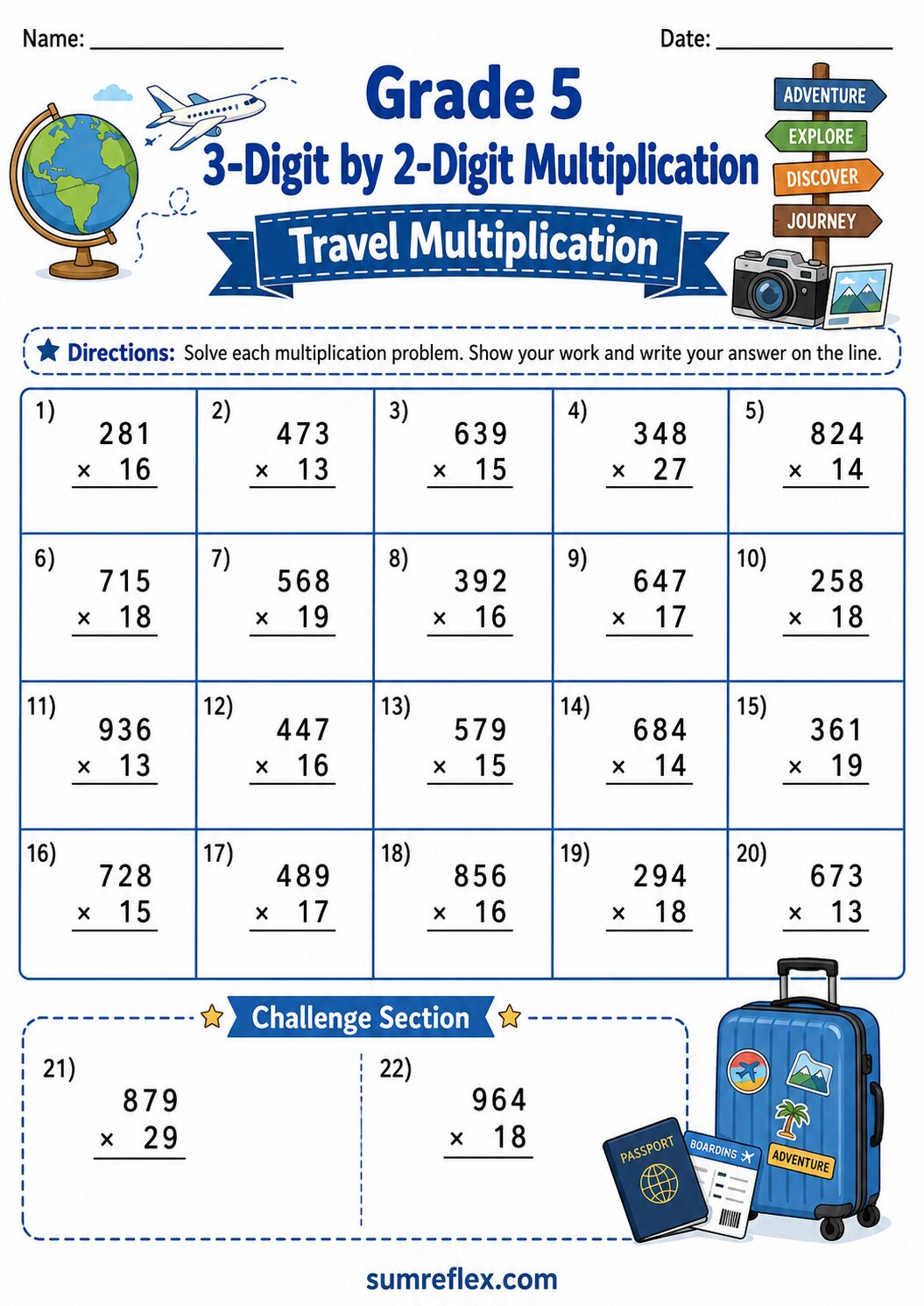
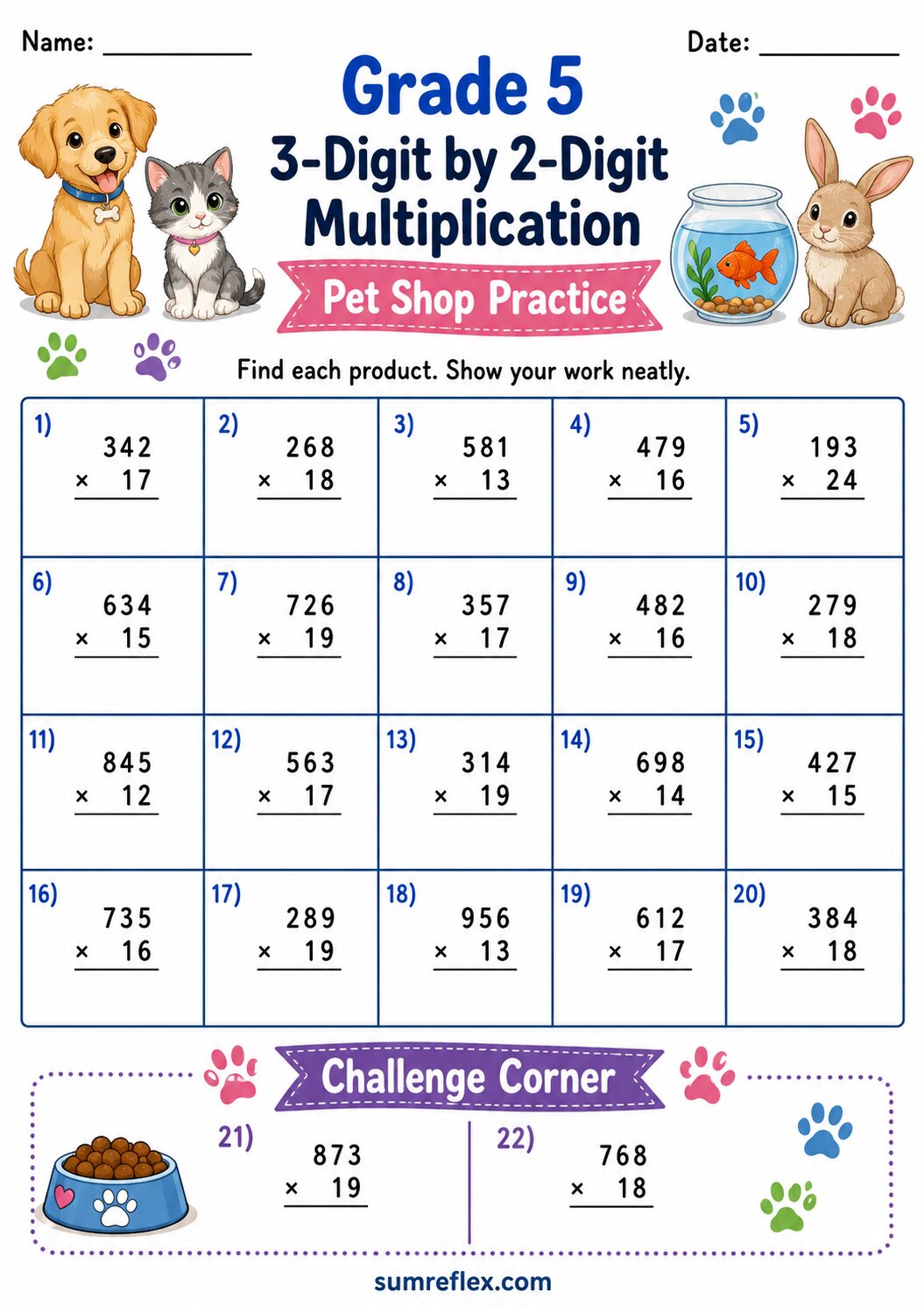
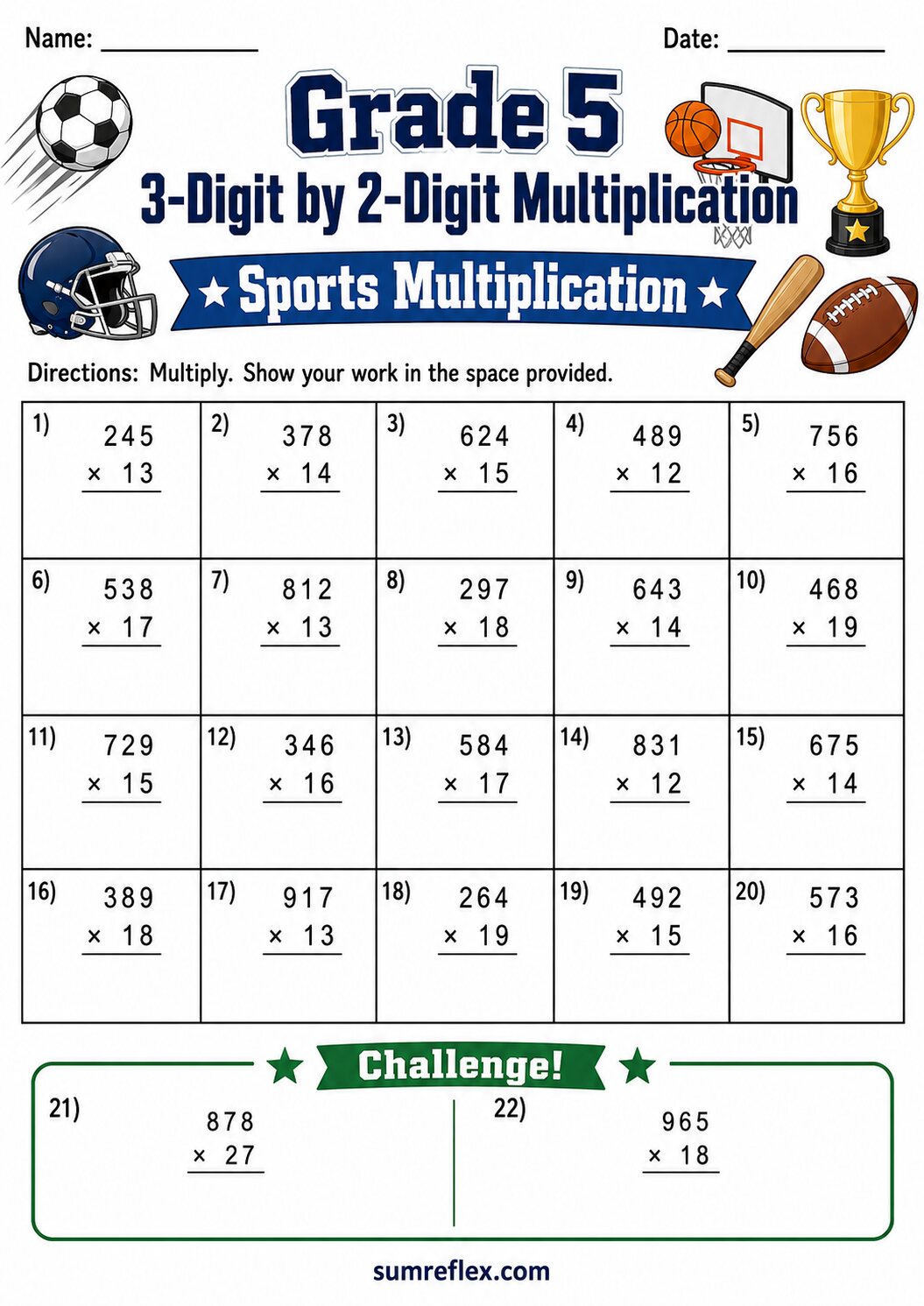
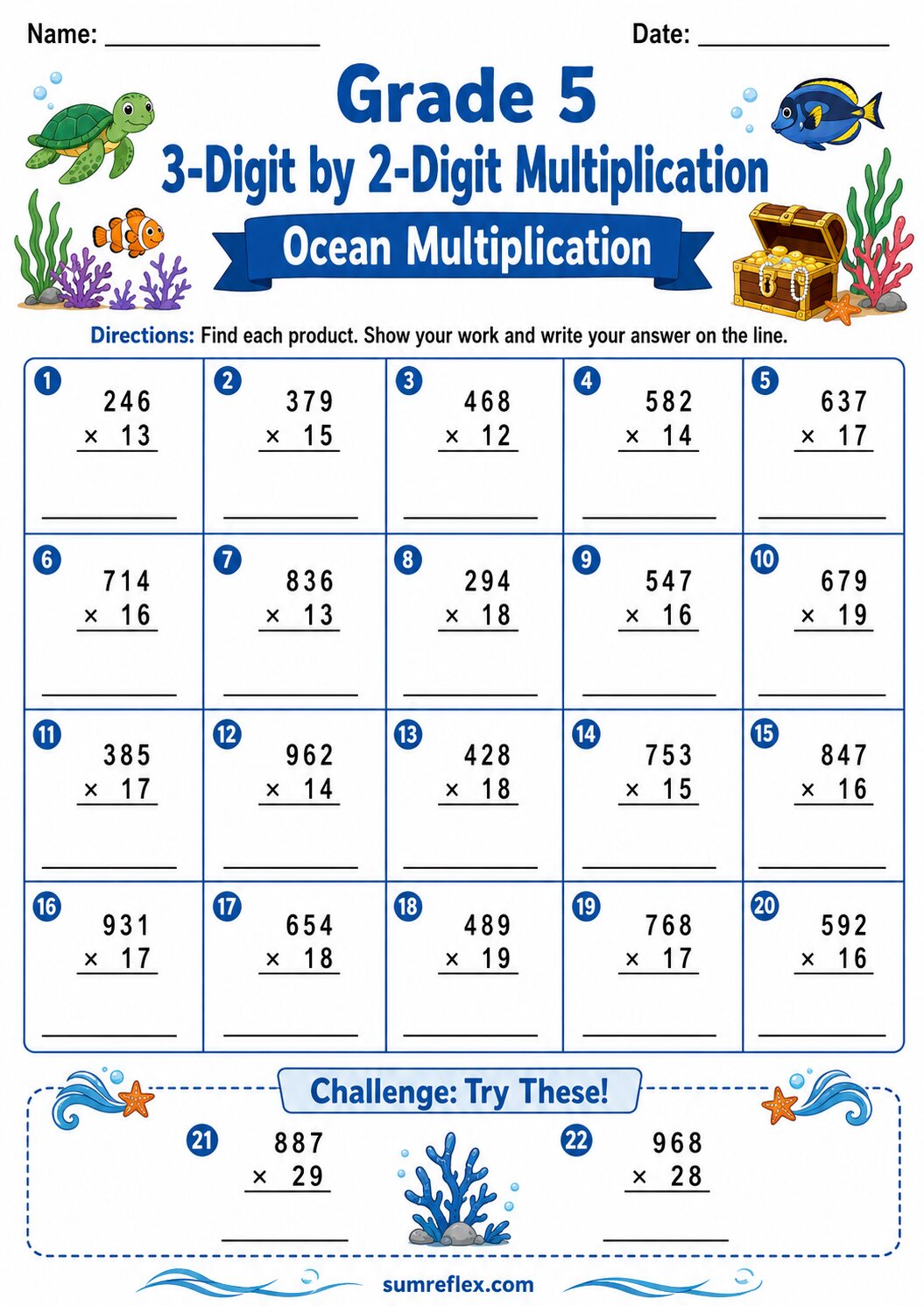
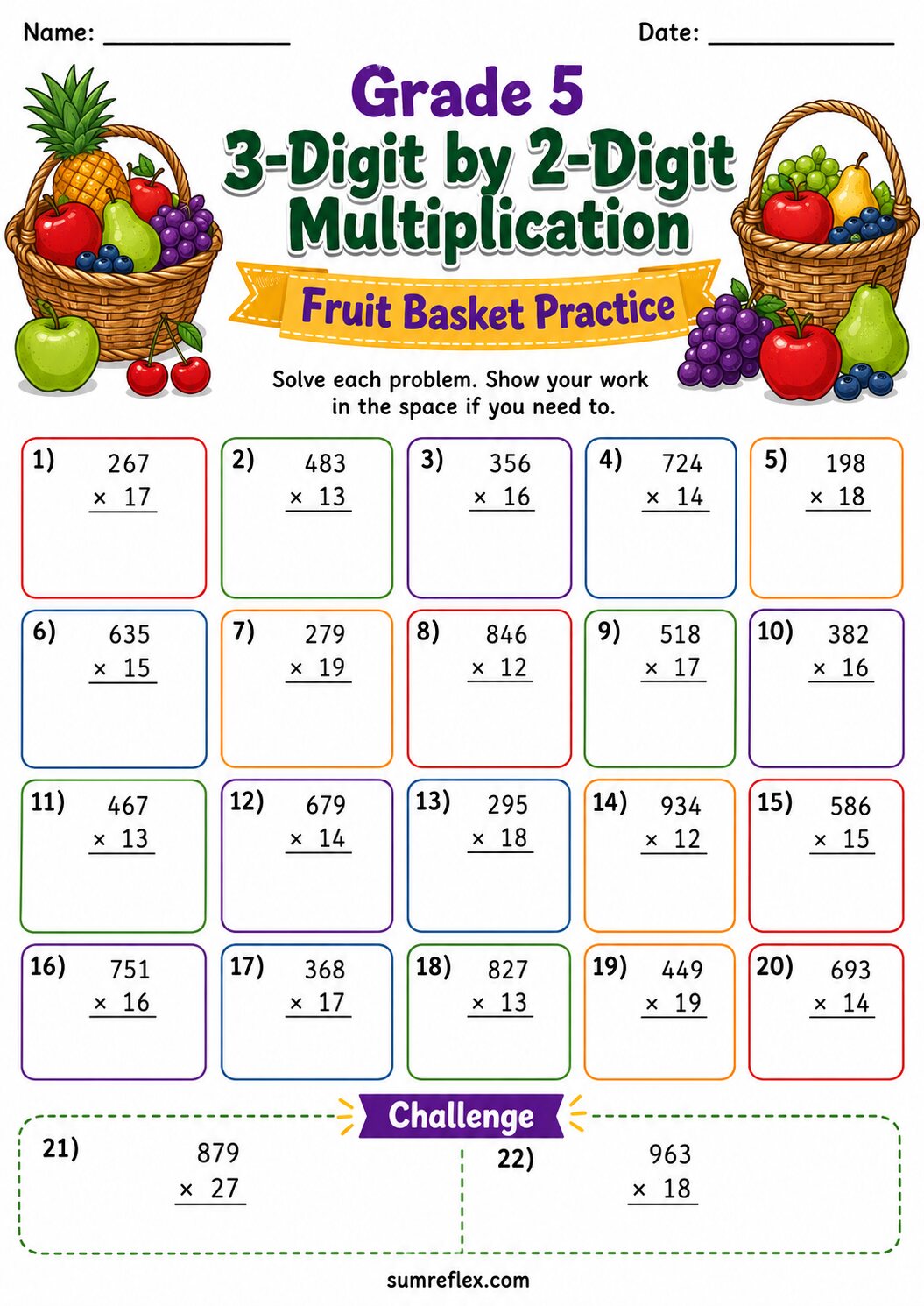
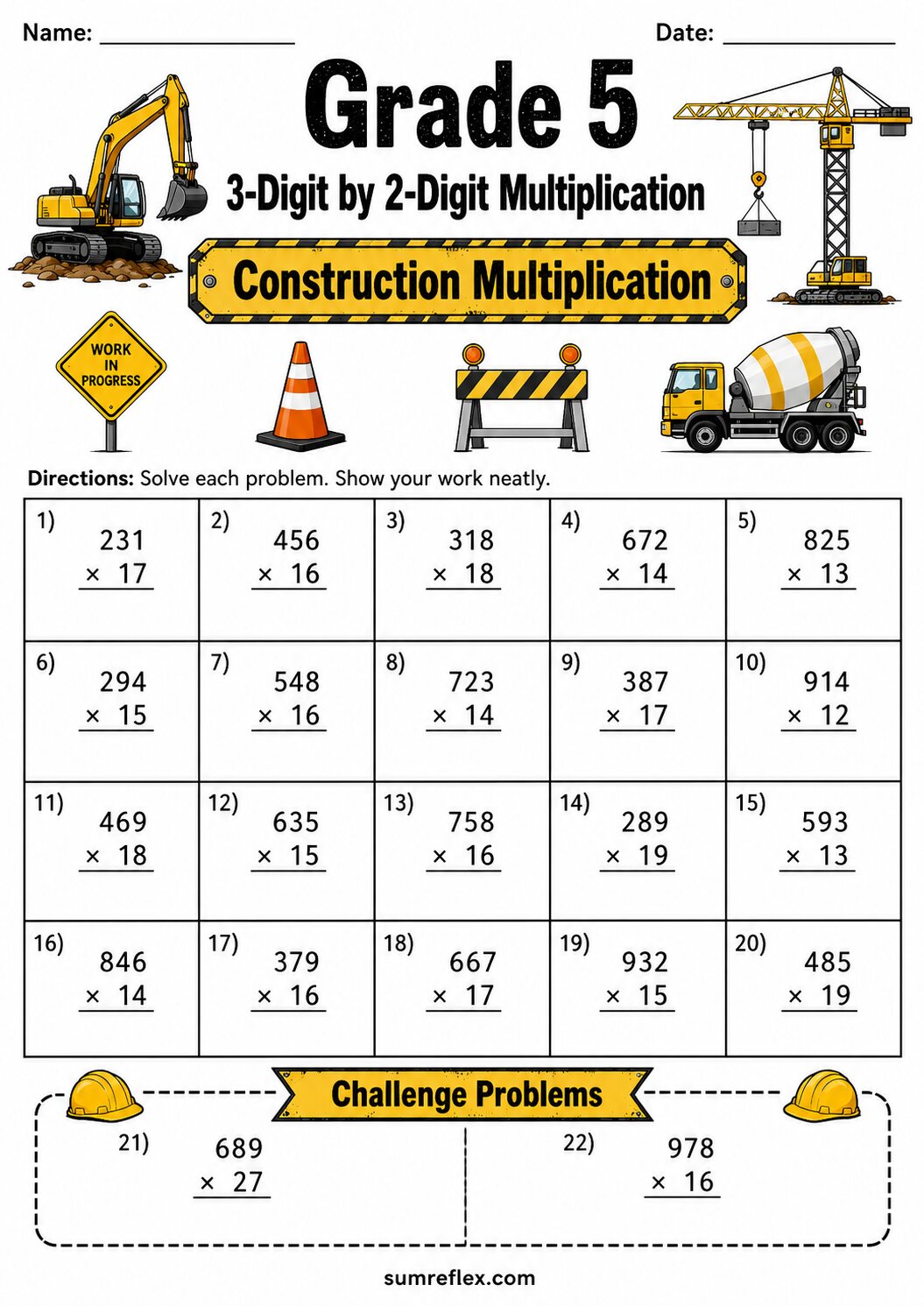
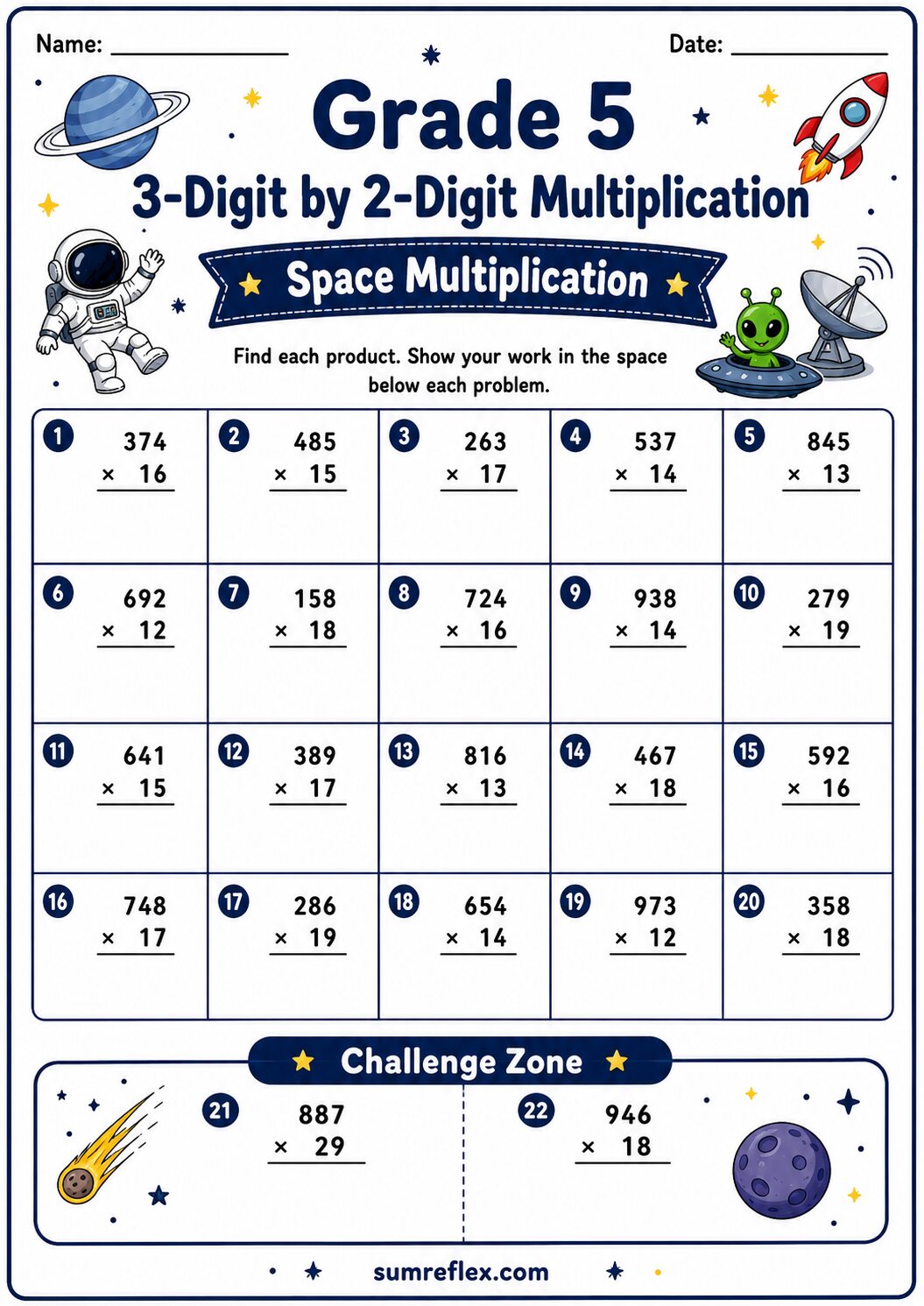
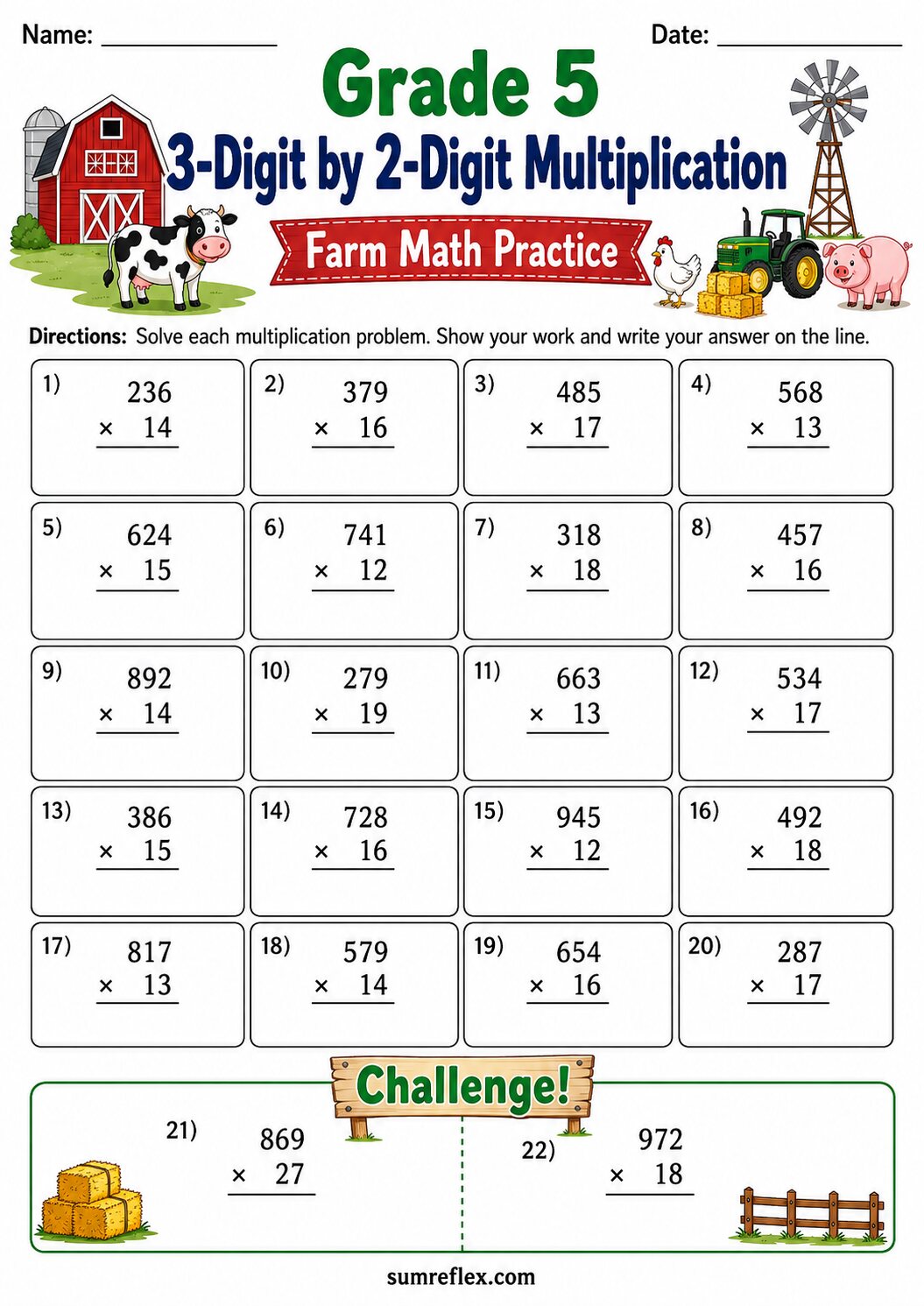
The classroom, garden, travel, pet shop, sports, ocean, fruit basket, construction, space, and farm pages all target the same calculation skill. A teacher might assign one theme for independent work and keep another for review. The different visuals create a fresh page, while the math expectation stays stable from one printable to the next.
Turn challenge rows into audit rows
When a problem is harder, students should not simply work faster to get through it. Treat the challenge row as an audit row. Ask learners to estimate first, write both product lines, add carefully, and then circle the line they checked last. That routine makes the harder section a lesson in verification, not just a longer assignment.
Review the line where size changes
If a completed answer is wrong, the best review point is often where the size changes: the second product row or the final addition. The first row may be correct while the shifted tens row is misplaced. Checking the exact line where place value changes helps students see the reason for the error instead of blaming all of the arithmetic.
Split the problem apart when students stall
A learner who freezes on 527 x 34 can split the work into 527 x 4 and 527 x 30. Writing those two meanings beside the vertical setup often restores the logic of the algorithm. Once the student sees the two smaller products, the combined answer feels less like a trick and more like organized multiplication.
Keep the algorithm connected to meaning
These worksheets are meant to strengthen the standard method, but the method should still mean something. Ask students to name what each row represents, not only what digit they wrote. When they can say that one row comes from ones and the other from tens, the longer Grade 5 products become easier to trust and easier to repair.