



Decimal products start with size sense
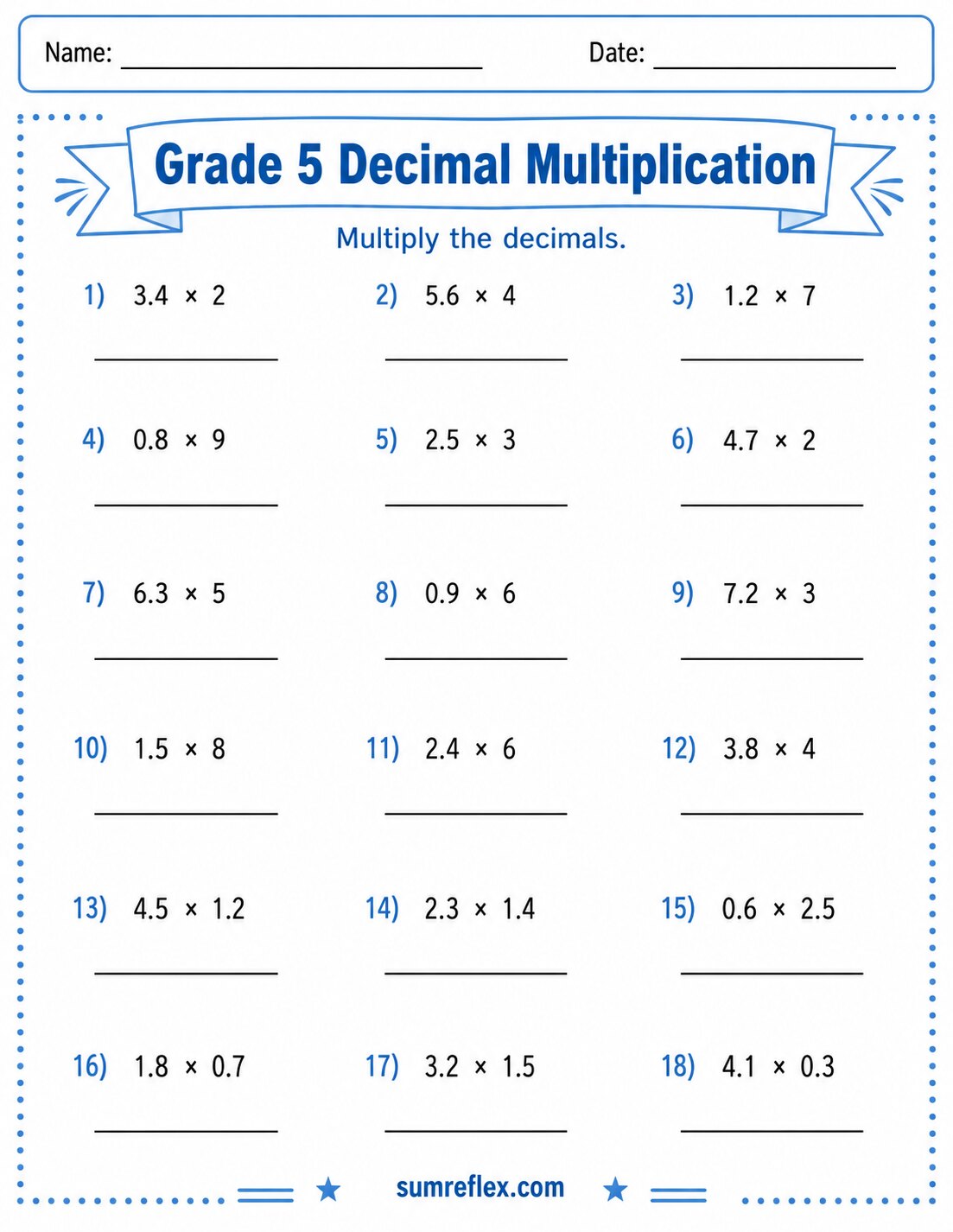
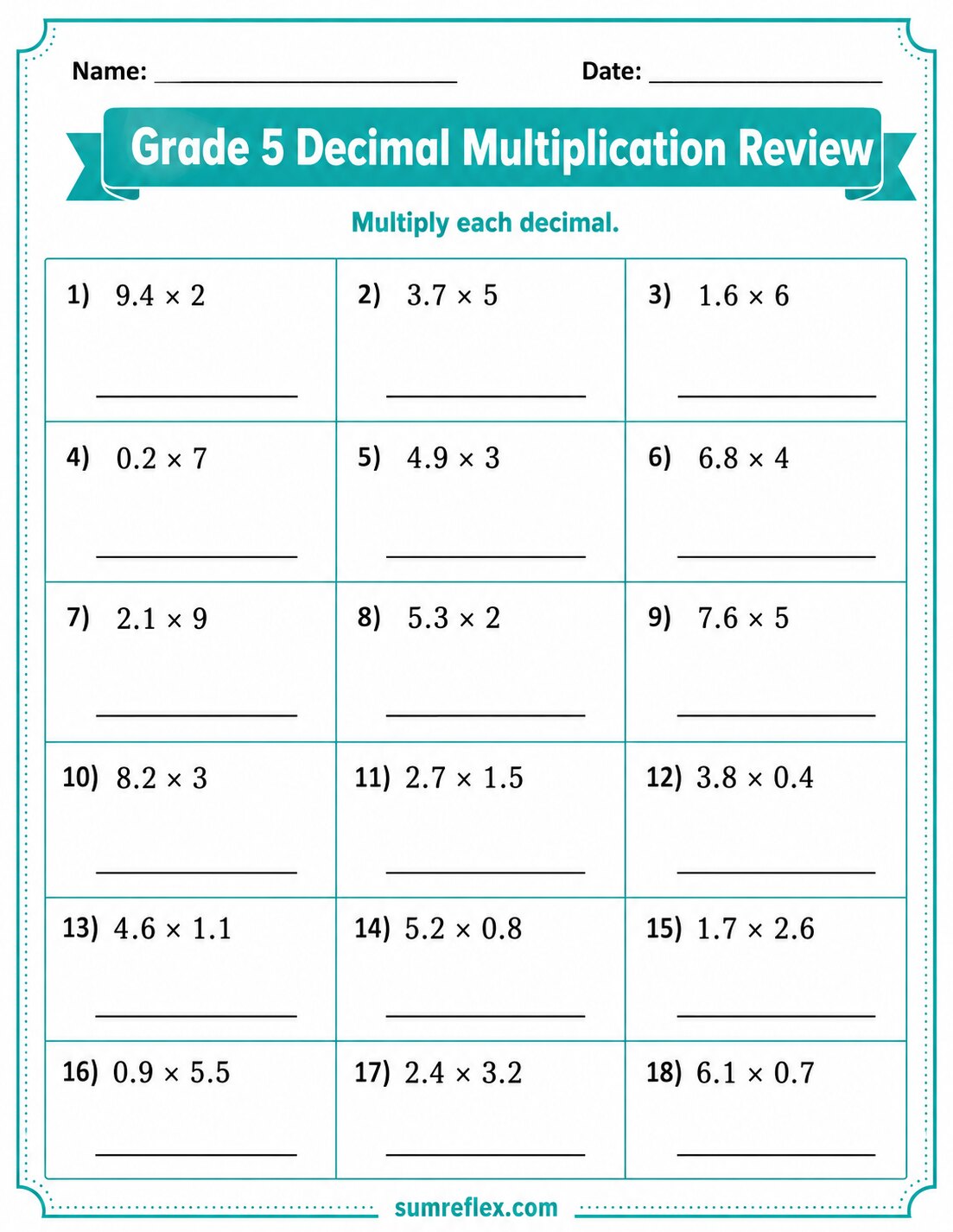
A decimal multiplication answer should not be placed by counting alone. Students first need a feel for the size of the result. If 4.8 x 3 is close to 5 x 3, the product should land near 15. That quick expectation makes the decimal point less mysterious because the final answer must fit the size of the factors.
Count places after the multiplication is done
Many fifth graders do better when they multiply the digits as if the decimals were not written, then return to the factors and count the decimal places. This keeps the arithmetic familiar while still requiring a deliberate final decision. The important part is that the decimal point is placed after checking both factors, not by copying the position from one number.
Estimate with friendly numbers
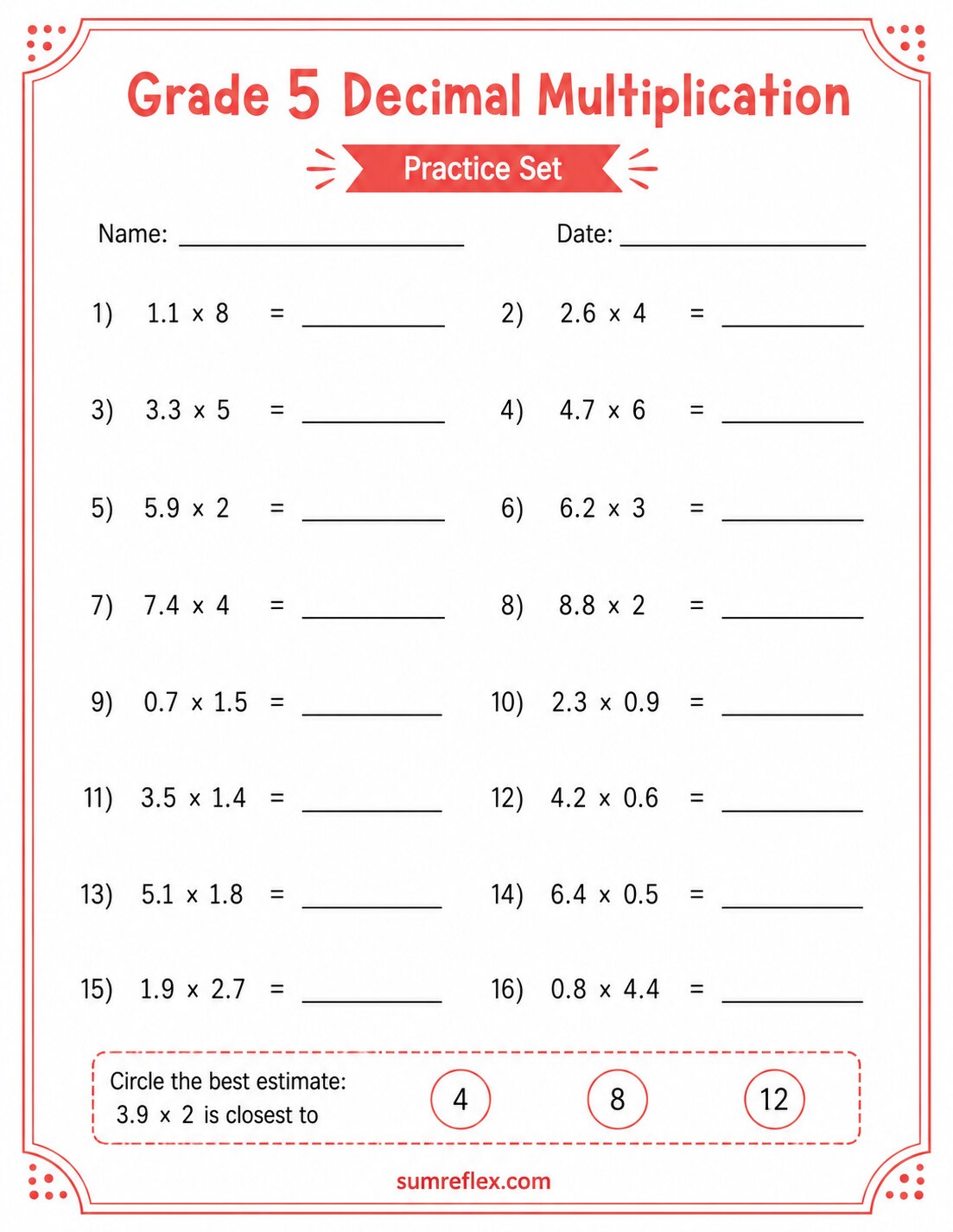
Estimation is the simplest way to catch a decimal-point error. A problem like 6.2 x 4.9 is near 6 x 5, so the answer should be near 30. If a student writes 3.038 or 303.8, the estimate shows that the digits may be usable but the point has landed in the wrong place.
Vertical setup helps only after alignment
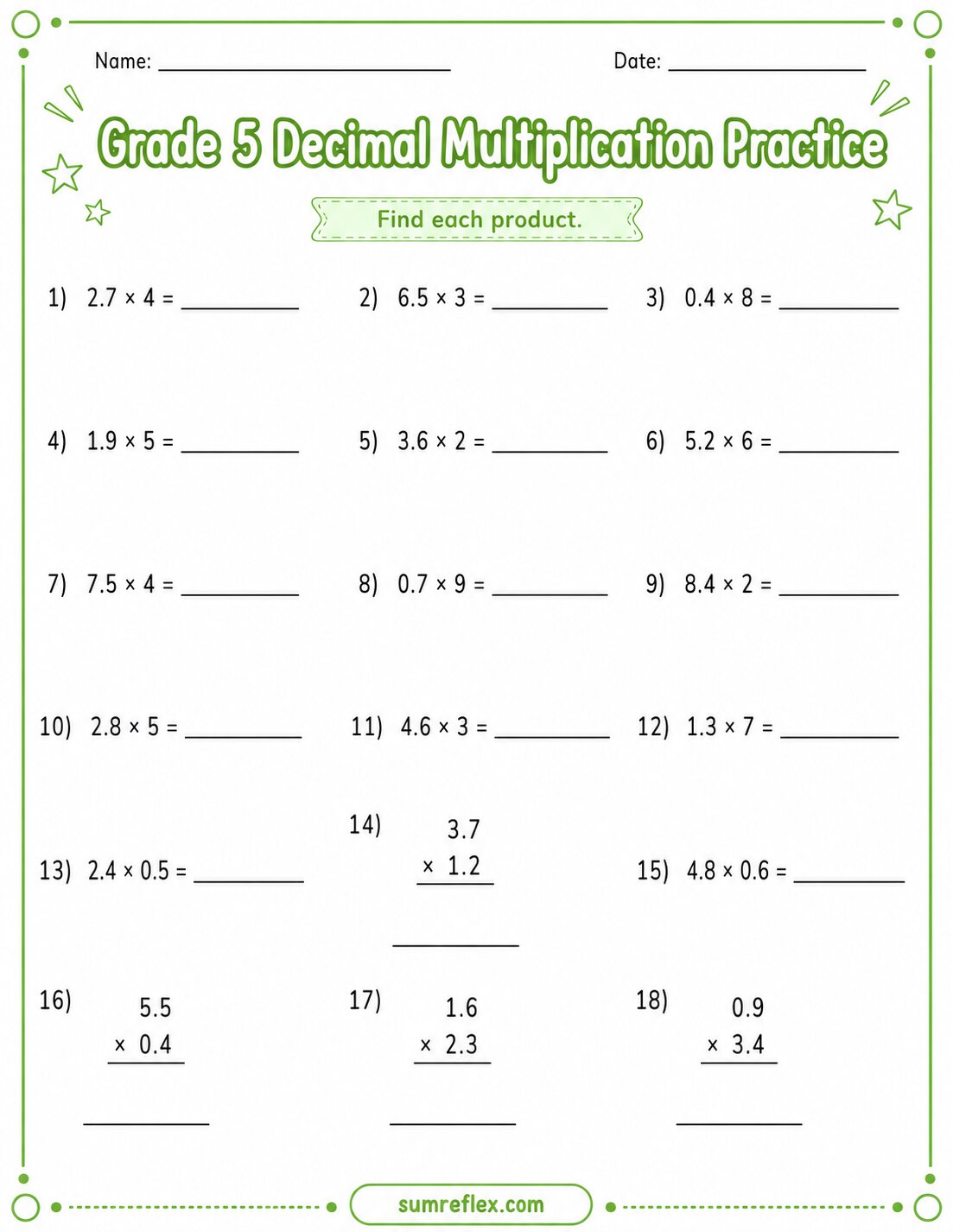
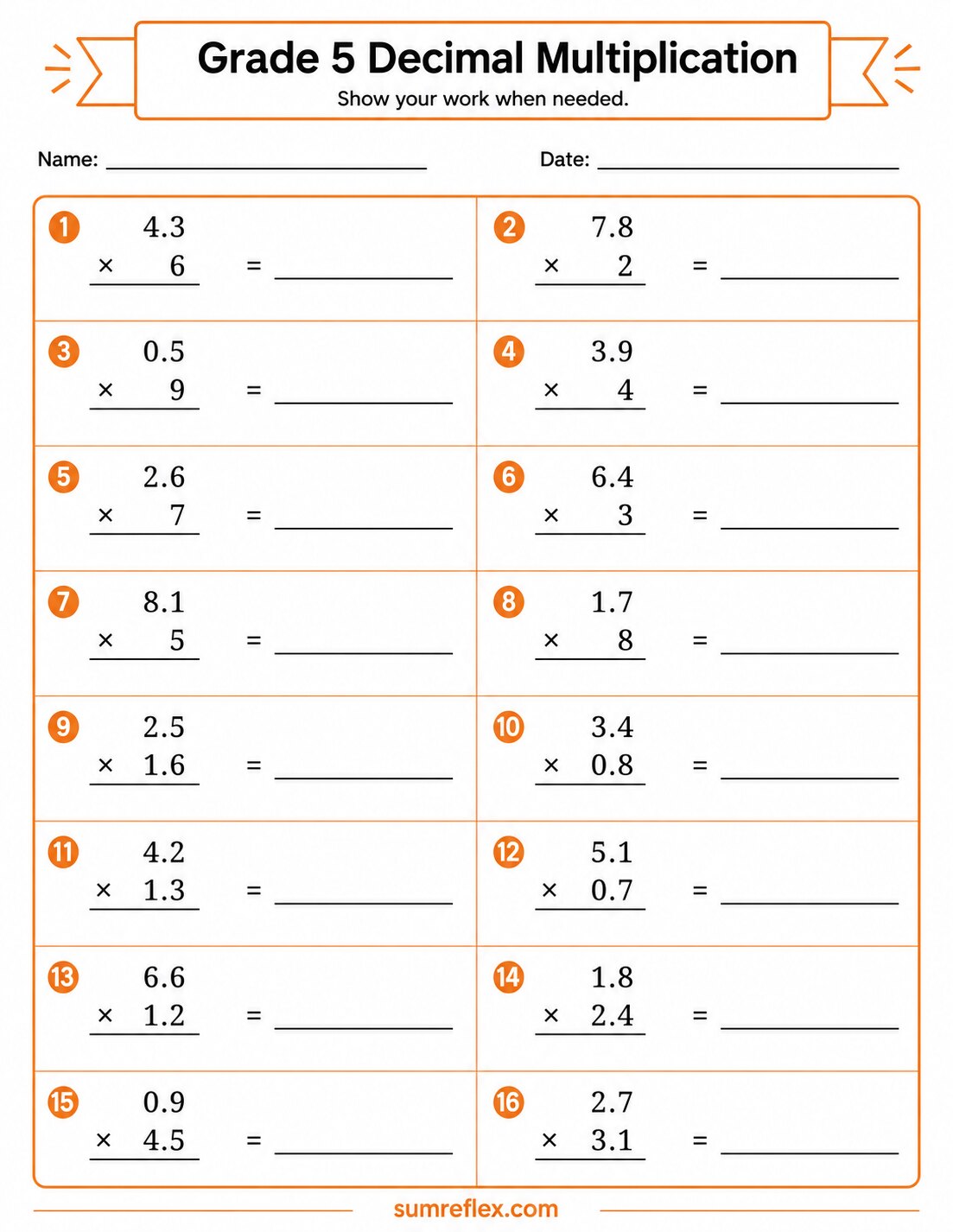
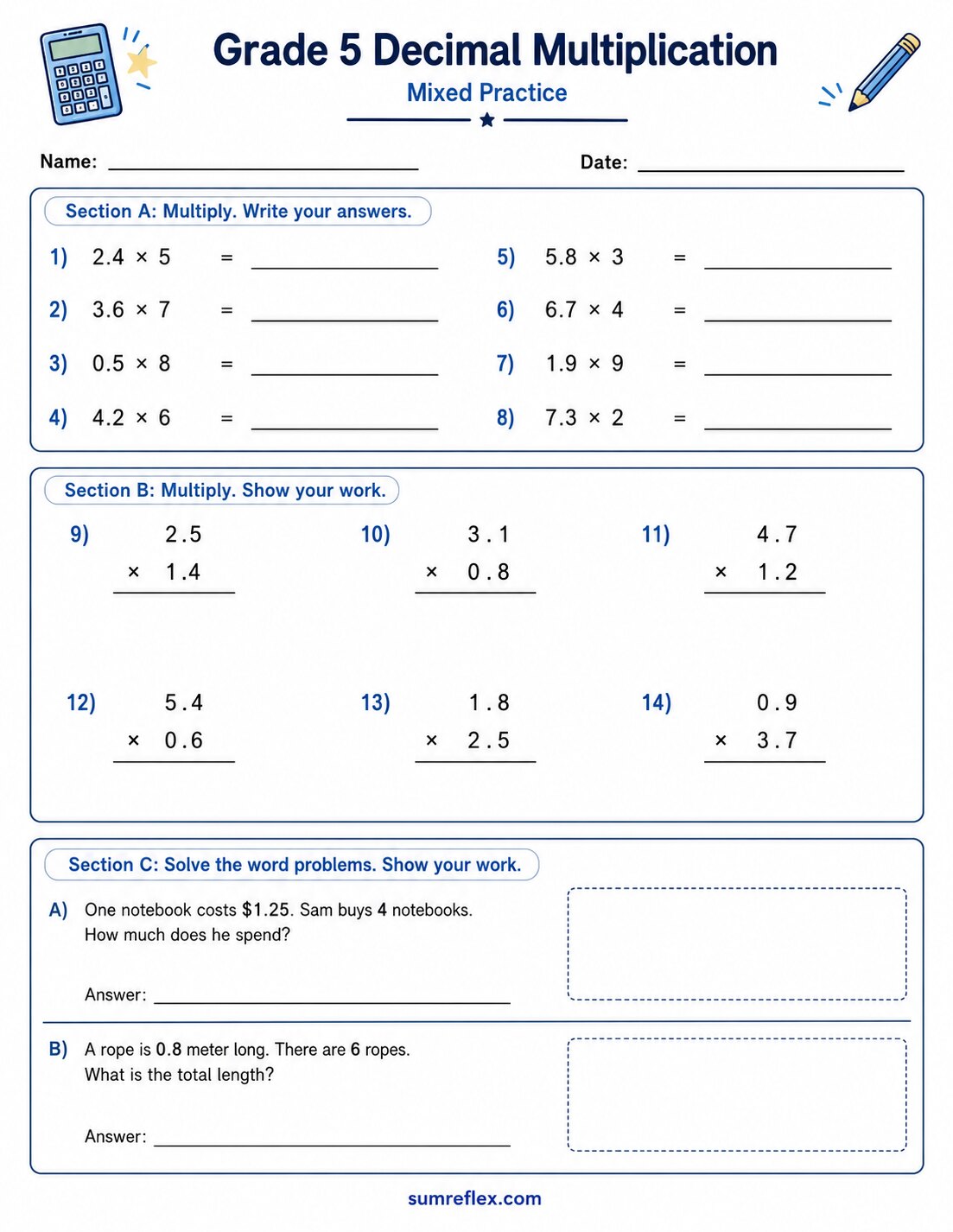
The vertical worksheet is useful because it gives every digit a clear place to sit. It does not mean the decimal points must line up the way they do in addition. In multiplication, the digits can be stacked for ease of multiplying, and the final point comes from the total decimal places in the factors. That distinction is worth saying often.
Money examples make misplaced points obvious
When students struggle to judge a decimal product, connect one or two examples to prices or measurements. Four items at $2.35 each cannot cost $0.94, and they cannot cost $940. The familiar setting gives students another reason to question an answer before accepting it because the real-world size is clearly wrong.
Standard form should be part of grading
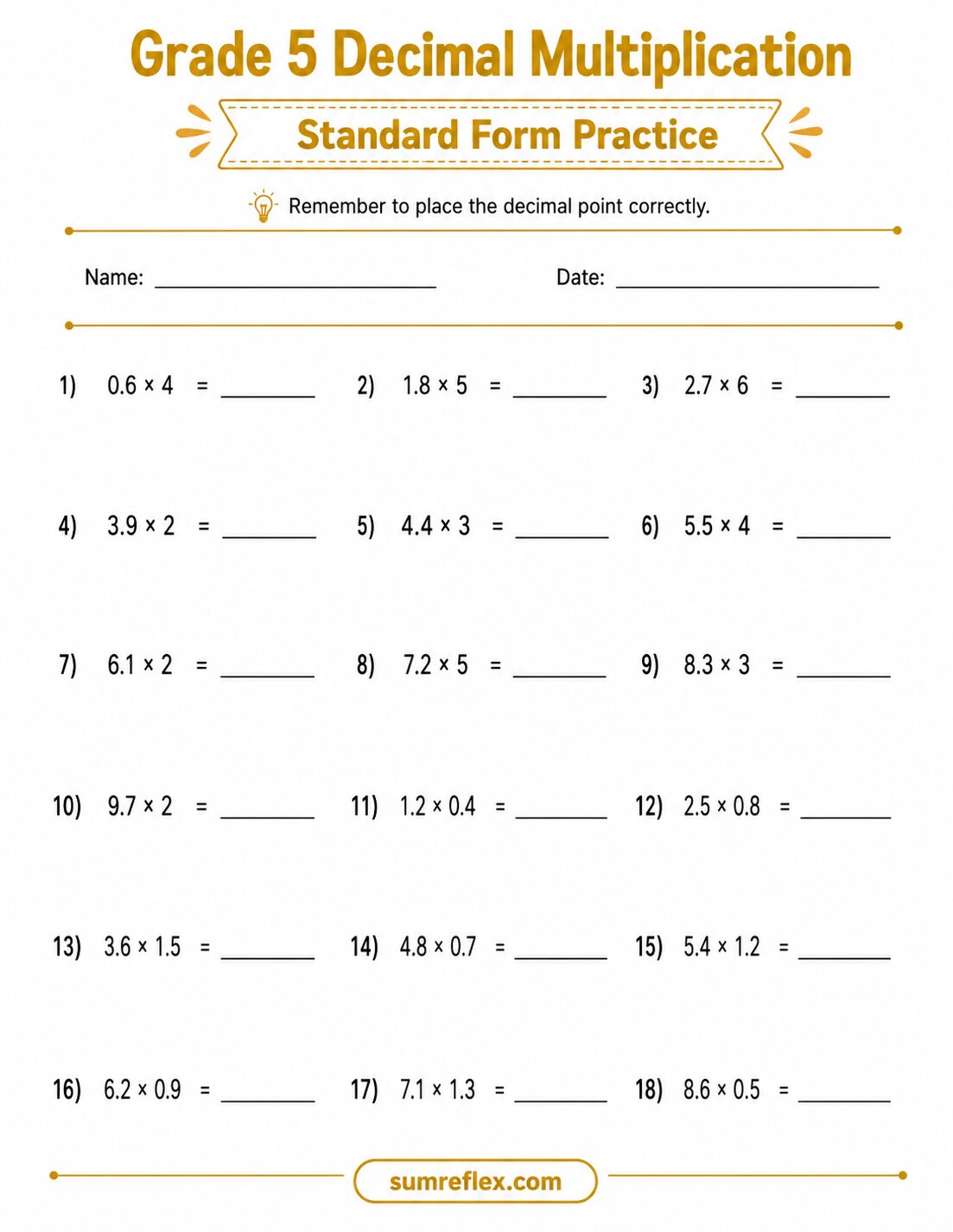
A mathematically correct product can still be written in a messy way. The standard form page reminds students to clean up final answers, remove unnecessary clutter, and make the decimal point easy to read. This is especially helpful before quizzes, where unclear notation can hide whether the student understood the calculation.
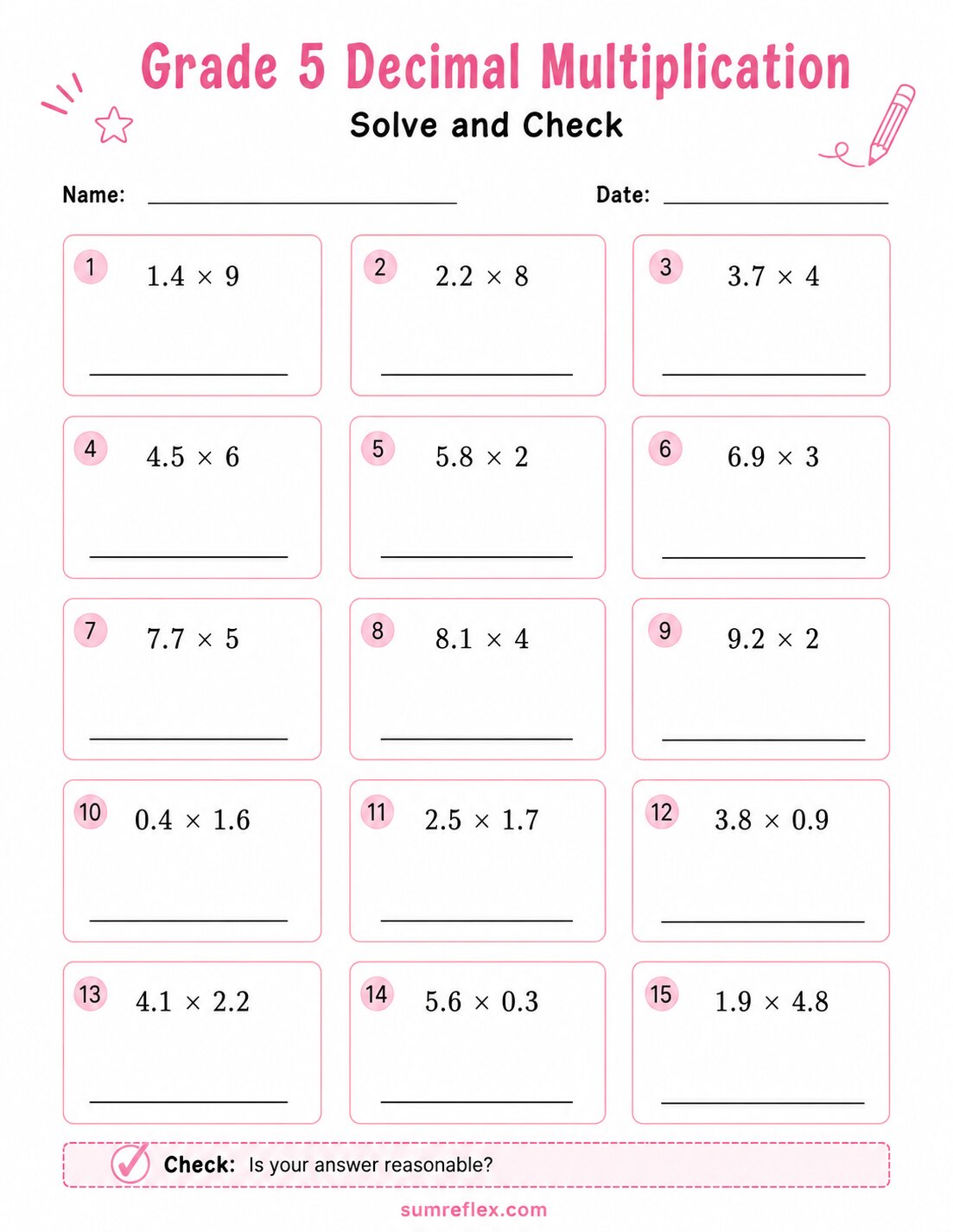
Solve-and-check work builds independence
The solve-and-check worksheet is best used after students have practiced the basic skill. It asks them to solve and then make a second decision about reasonableness. That step moves responsibility away from the teacher and back to the learner. A student who can reject an unreasonable decimal product is becoming more independent.
Do not rush mixed practice
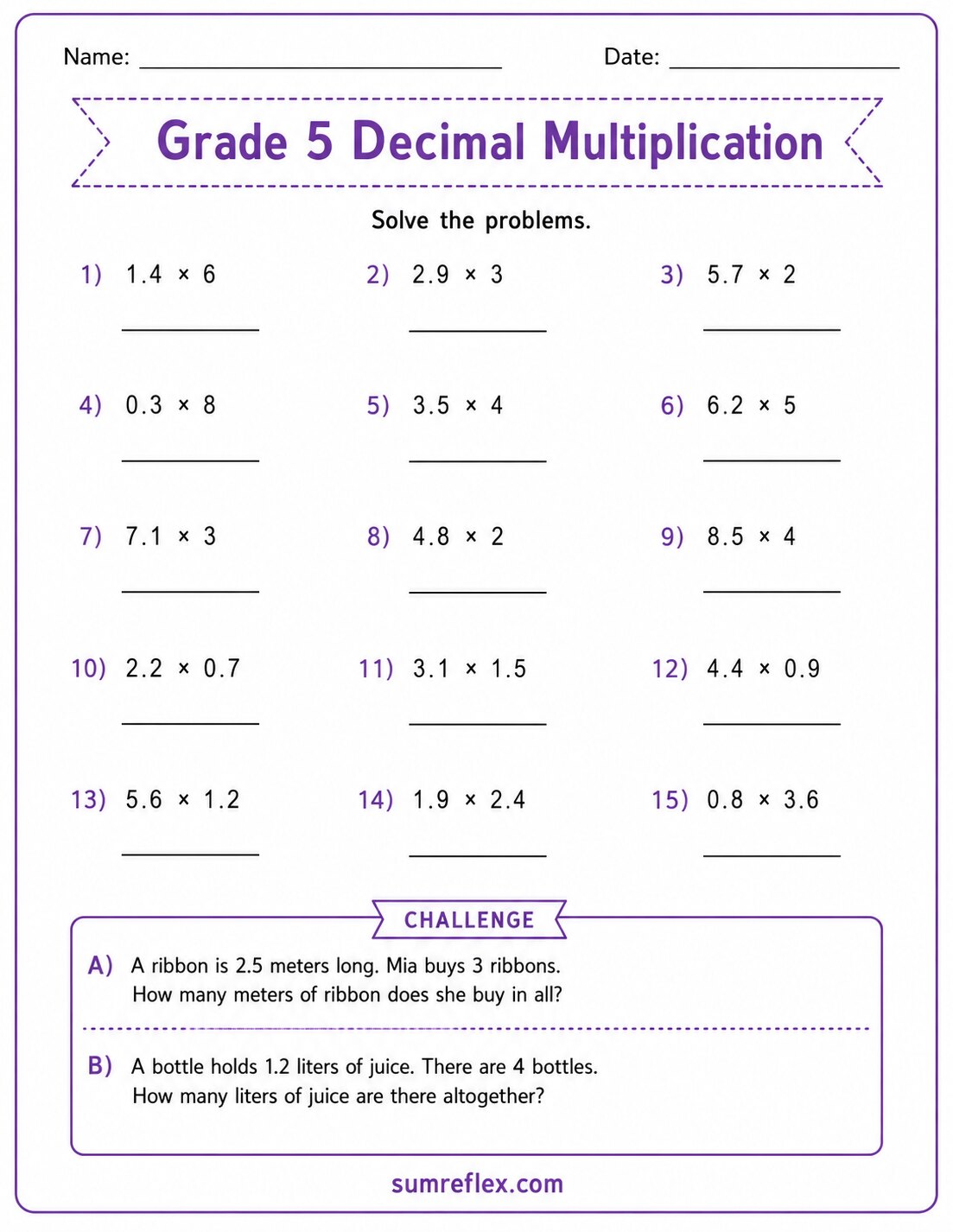
Mixed decimal pages are valuable because students cannot rely on the same problem shape every time. They may see tenths, hundredths, whole-number factors, or short word problems. Give learners enough time to identify what each problem is asking before multiplying. The pause prevents them from applying one rule without noticing the numbers in front of them.
When the decimal point keeps moving
If a student changes the decimal point after every correction, return to one example and hold it still. Ask for the estimate, the whole-number product, the count of decimal places, and the final written answer. Repeating that four-step check on fewer problems is usually better than assigning another full page of fast guesses.
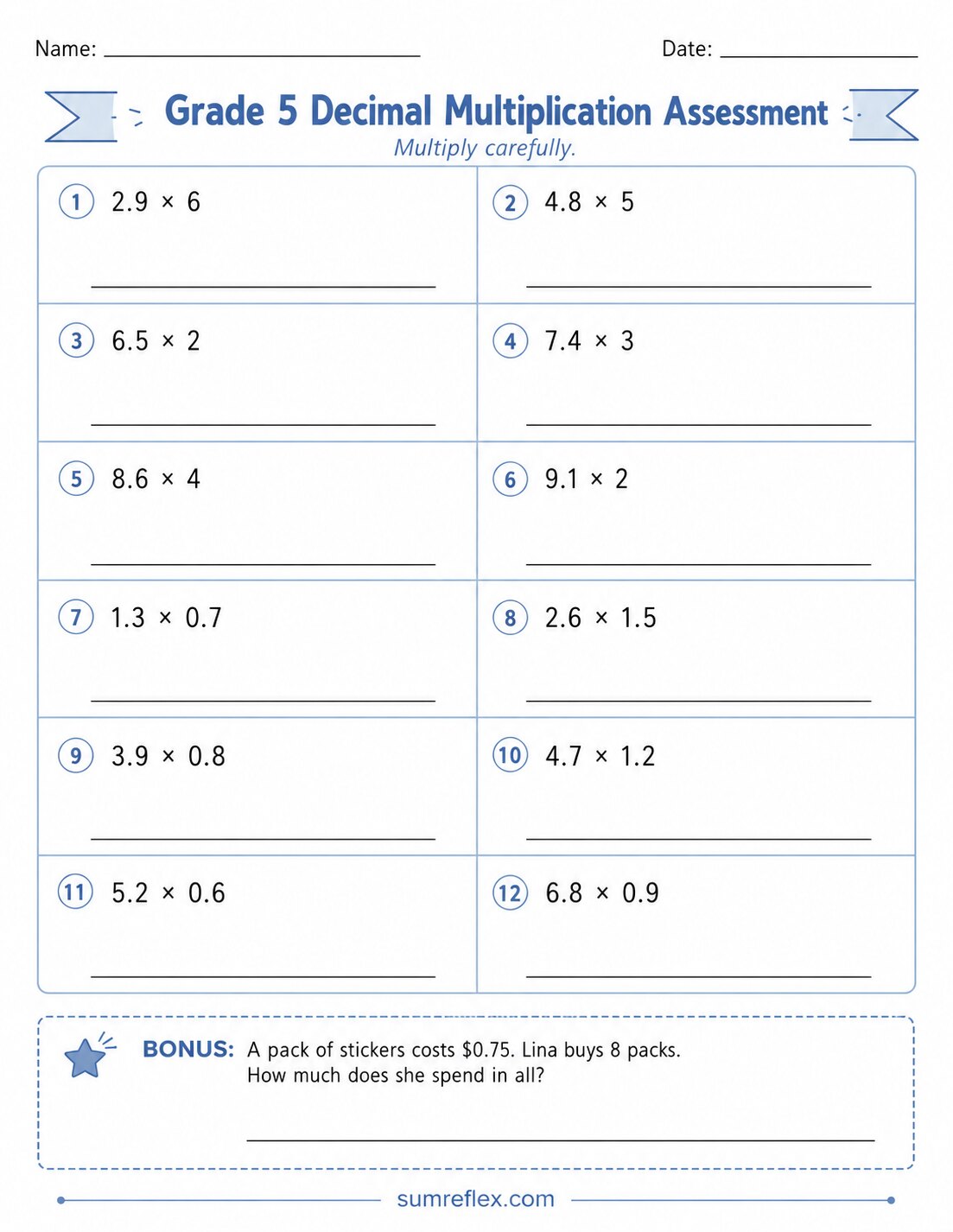
Assessment pages should ask for explanation
The assessment printable can be used as more than a score sheet. Choose one problem after the page is finished and ask the student to explain how the decimal point was placed. A correct answer with no explanation may only show a memorized procedure. A correct answer with a clear size check shows that decimal multiplication is becoming understood.