


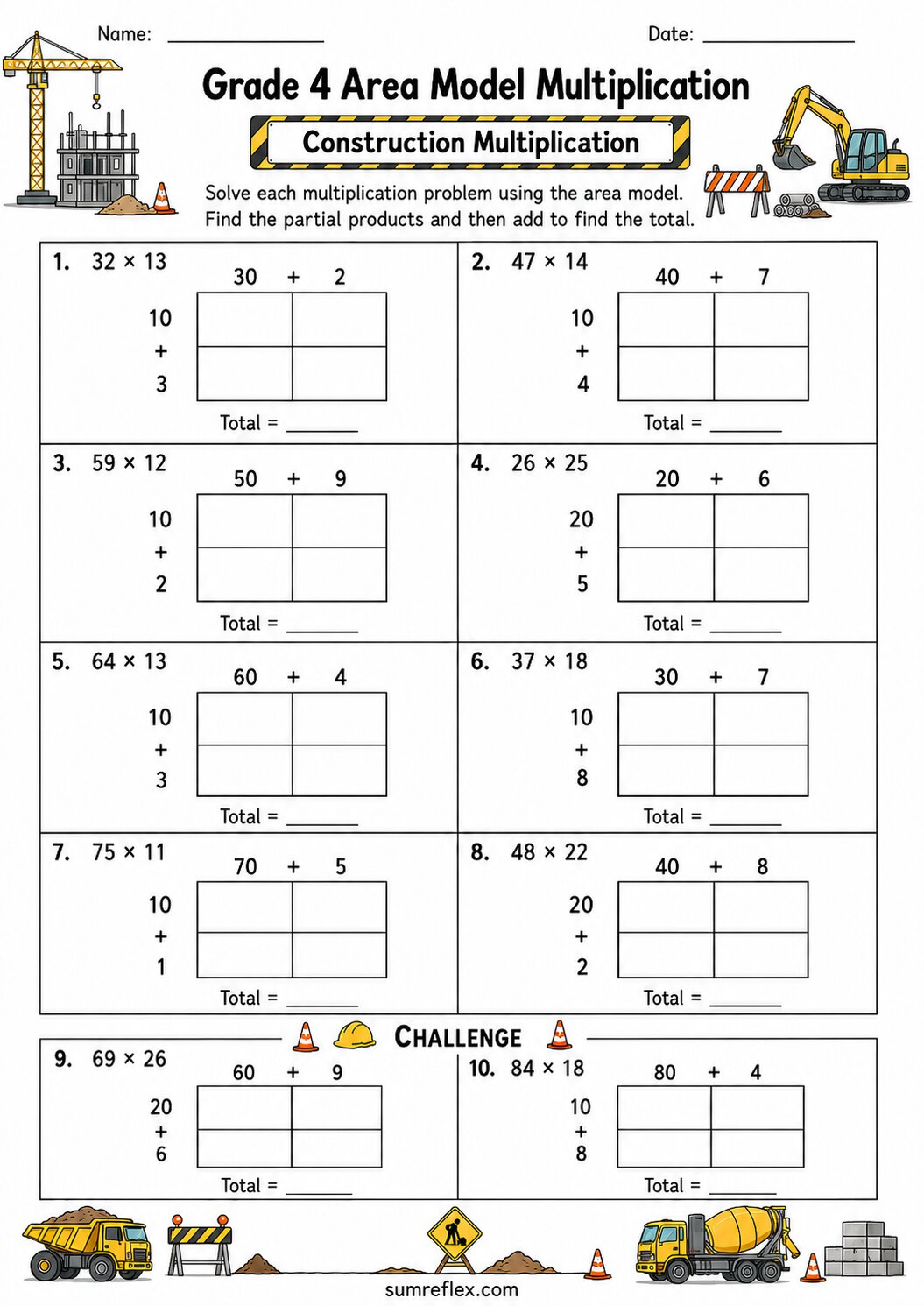
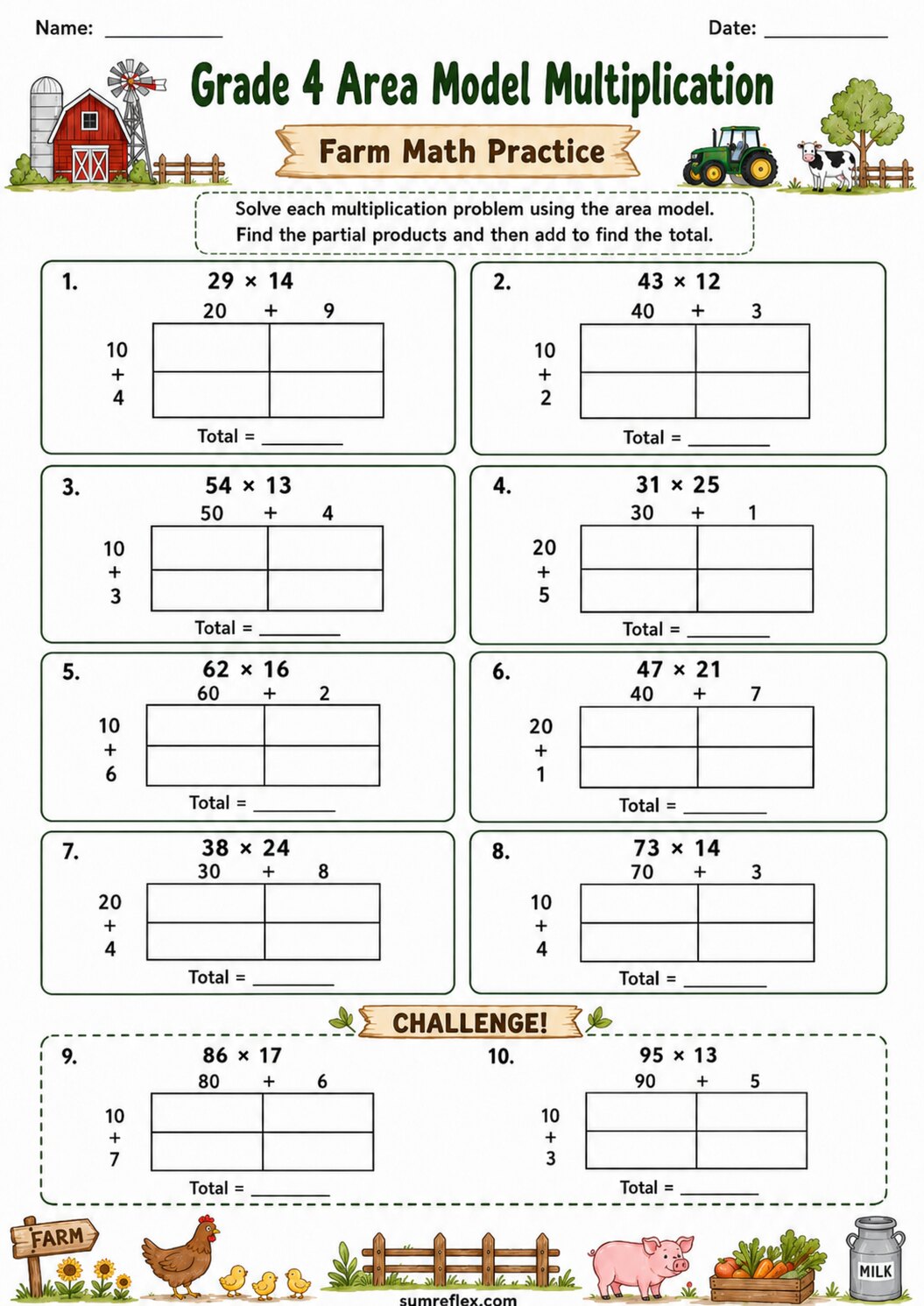
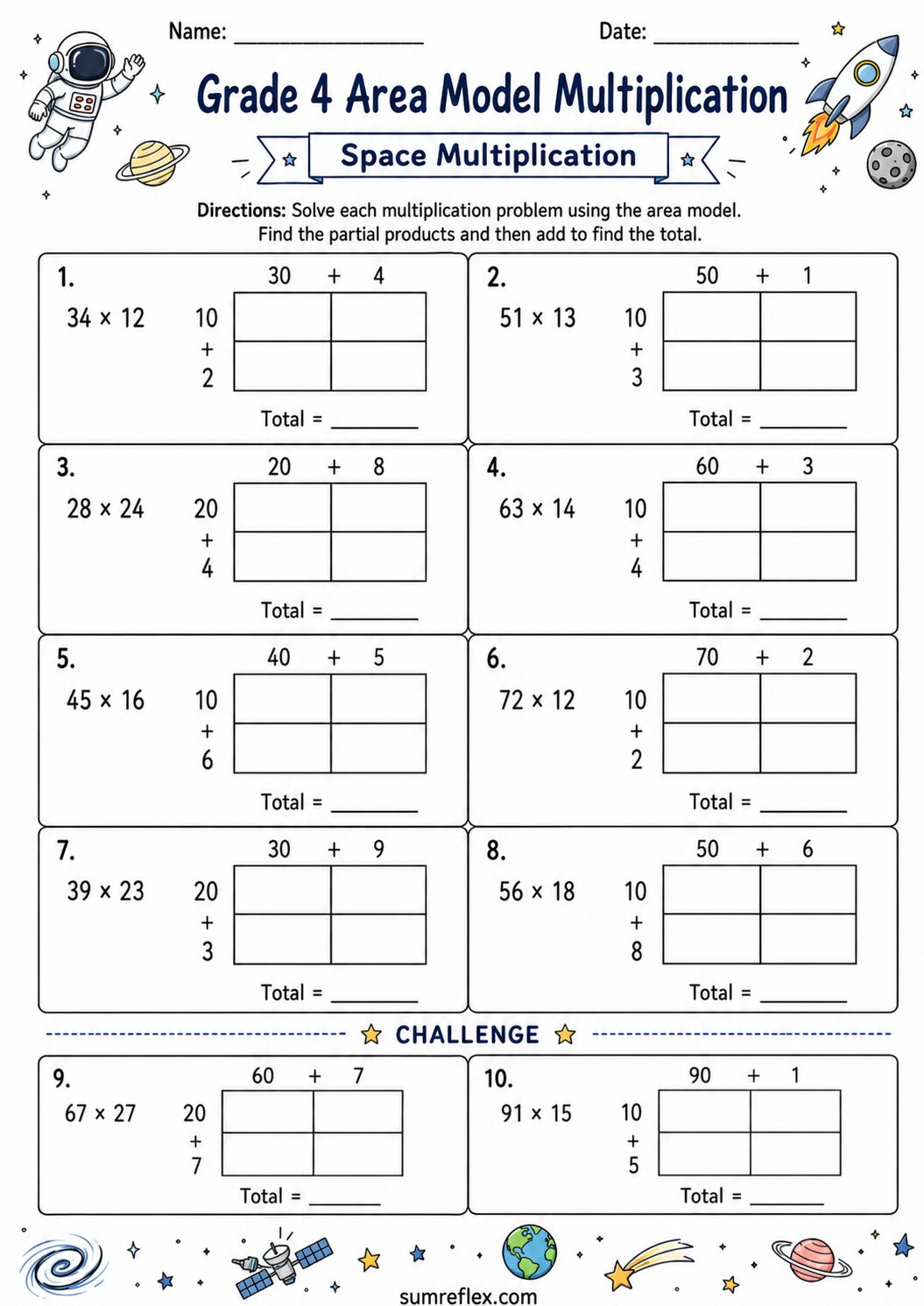
Area models make multiplication visible
These worksheets show why a two-digit by two-digit product is made of smaller products. Instead of treating the answer as one mysterious number, students split both factors into tens and ones. The area model gives each part a box. When all boxes are filled, the final answer comes from adding those partial products together.
The factor split is the main event
If the split is wrong, every box after it becomes shaky. A number like 47 should become 40 and 7, not 4 and 7. Ask students to say each split aloud before multiplying. This short pause helps them keep place value in the work and prevents partial products that are too small by a factor of ten.
Every rectangle needs its own product
A complete 2-by-2 area model has four products. Students sometimes fill the easy boxes and skip a harder one, especially when both tens and ones are involved. The worksheet should be checked box by box before the partial products are added. This makes the final total easier to trust because every piece has been accounted for.
Adding partial products is not an afterthought
The addition step deserves attention. A student can build the area model correctly and still lose the answer while adding the parts. Encourage learners to stack the partial products neatly or add them in a sensible order. The area model explains multiplication, but accurate addition finishes the problem.
Estimation keeps the model honest
Before solving, students can round the factors to make a quick estimate. If 38 x 21 is close to 40 x 20, the final product should be near 800. That estimate does not replace the area model, but it helps students notice totals that are wildly too small or too large after the boxes are added.
Use the lesson link before reteaching
If the worksheet is confusing, the connected area model lesson is a better next stop than another worksheet. The lesson can slow down the meaning of decomposing factors and connecting rectangles to multiplication. After the student sees the model explained again, return to a themed page and solve fewer problems with better attention.
Themes keep practice from feeling copied
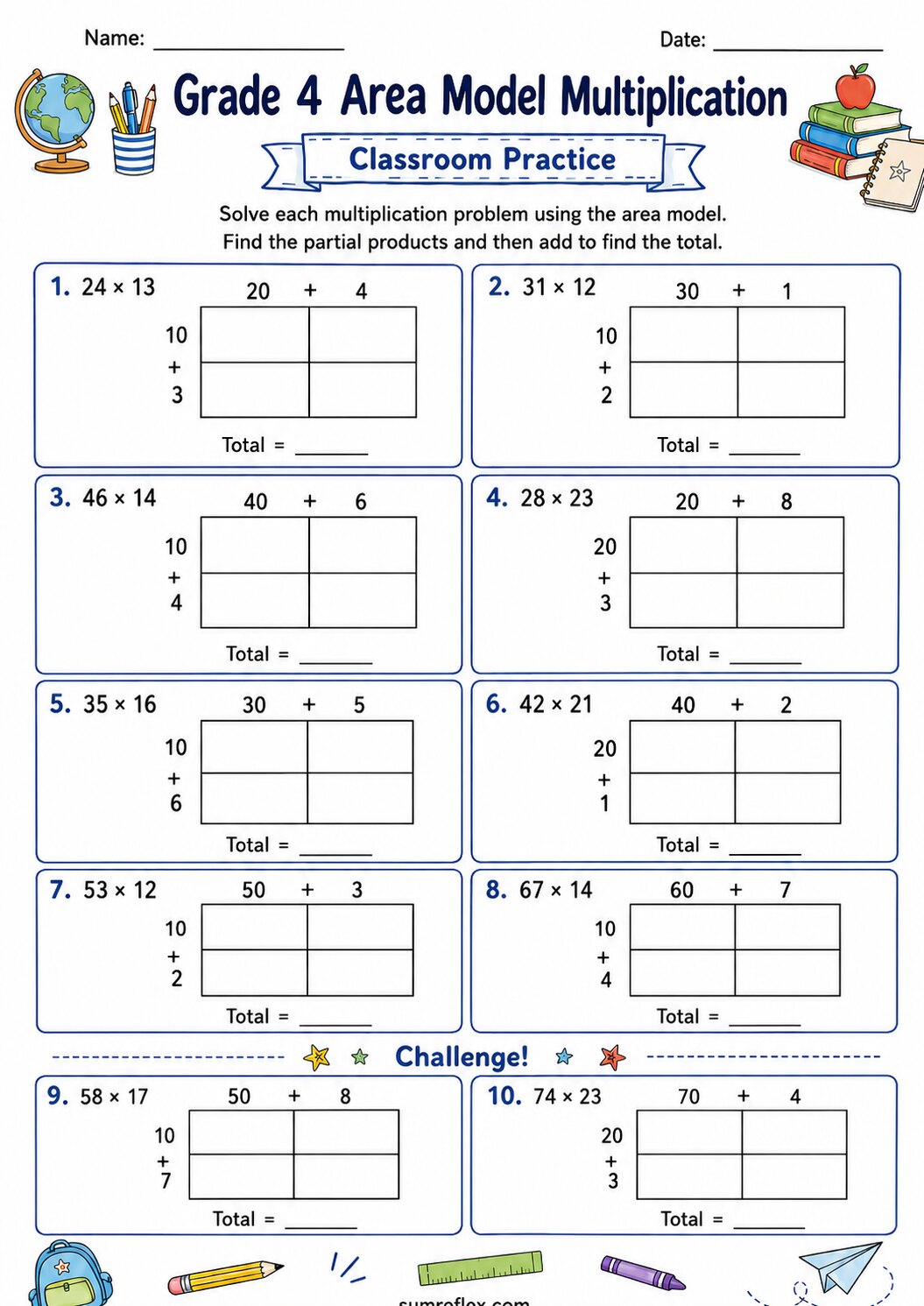
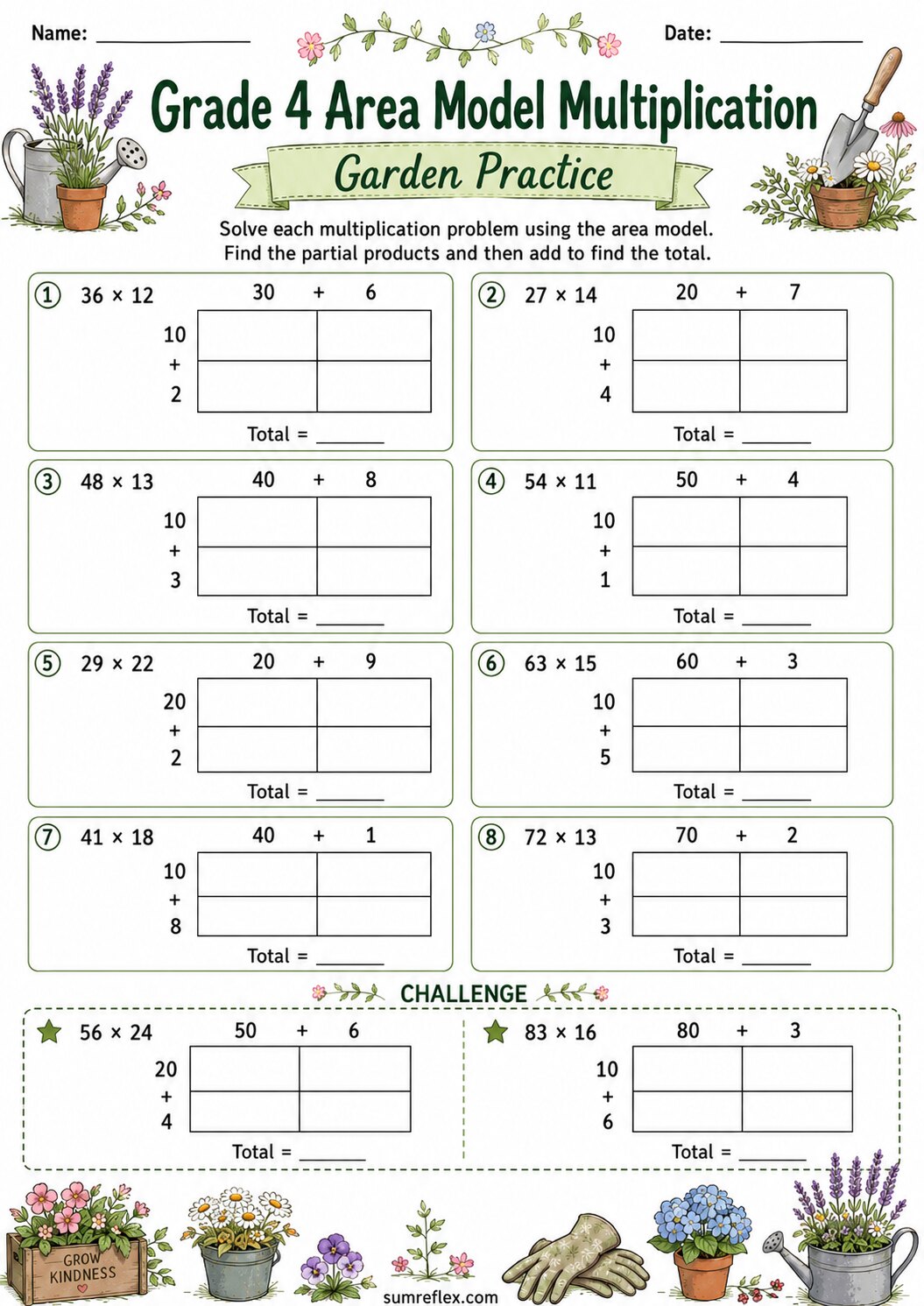
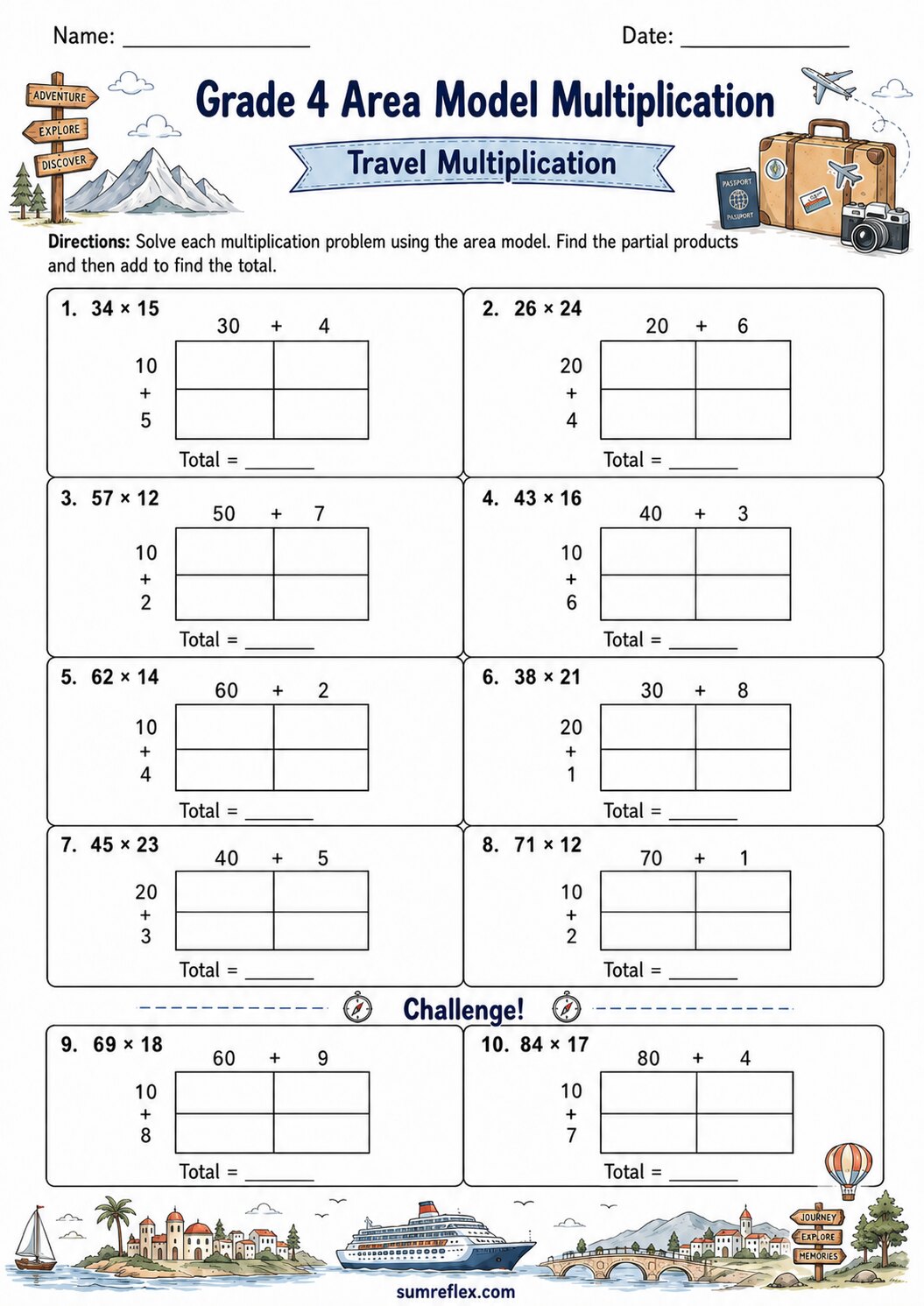
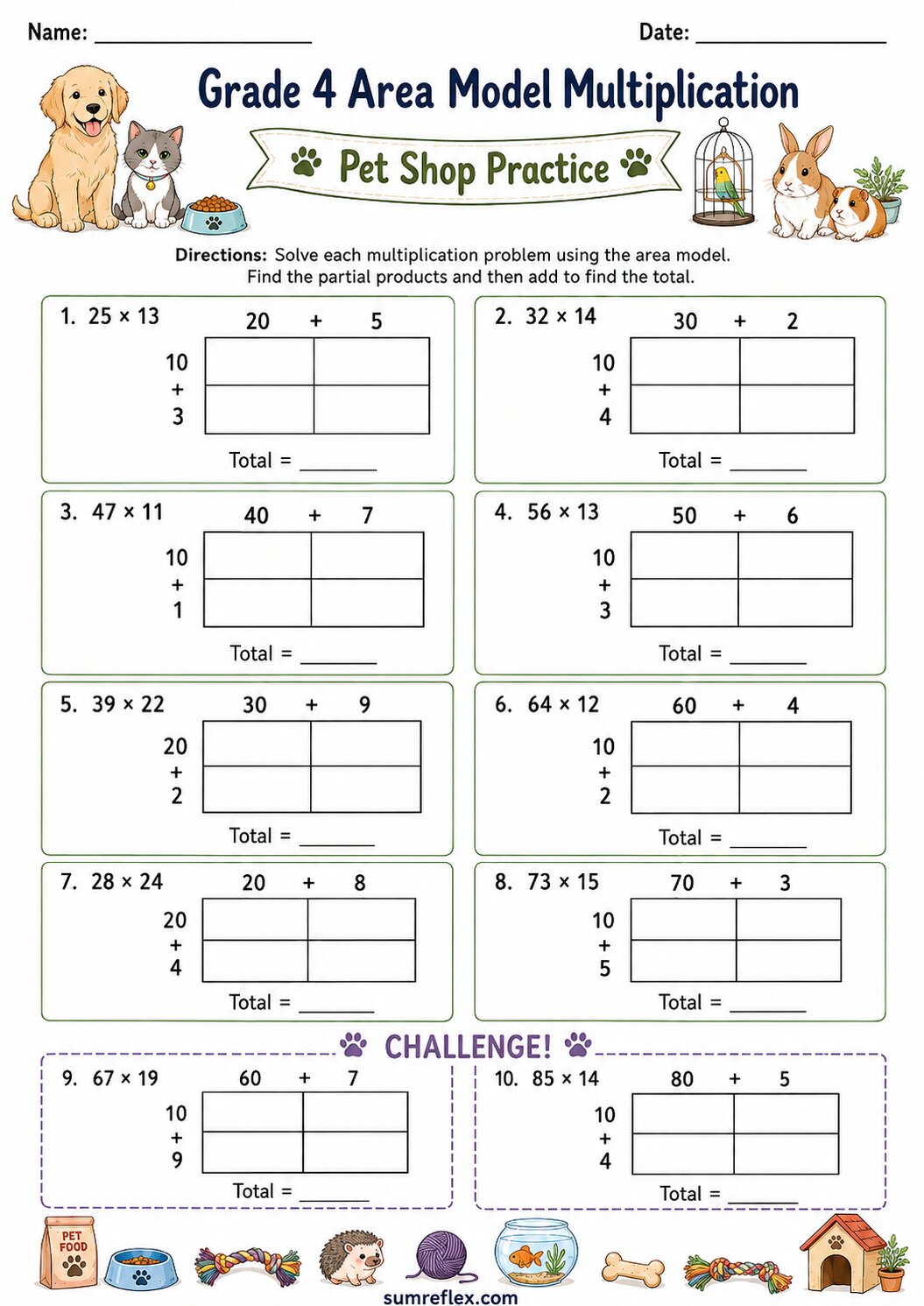
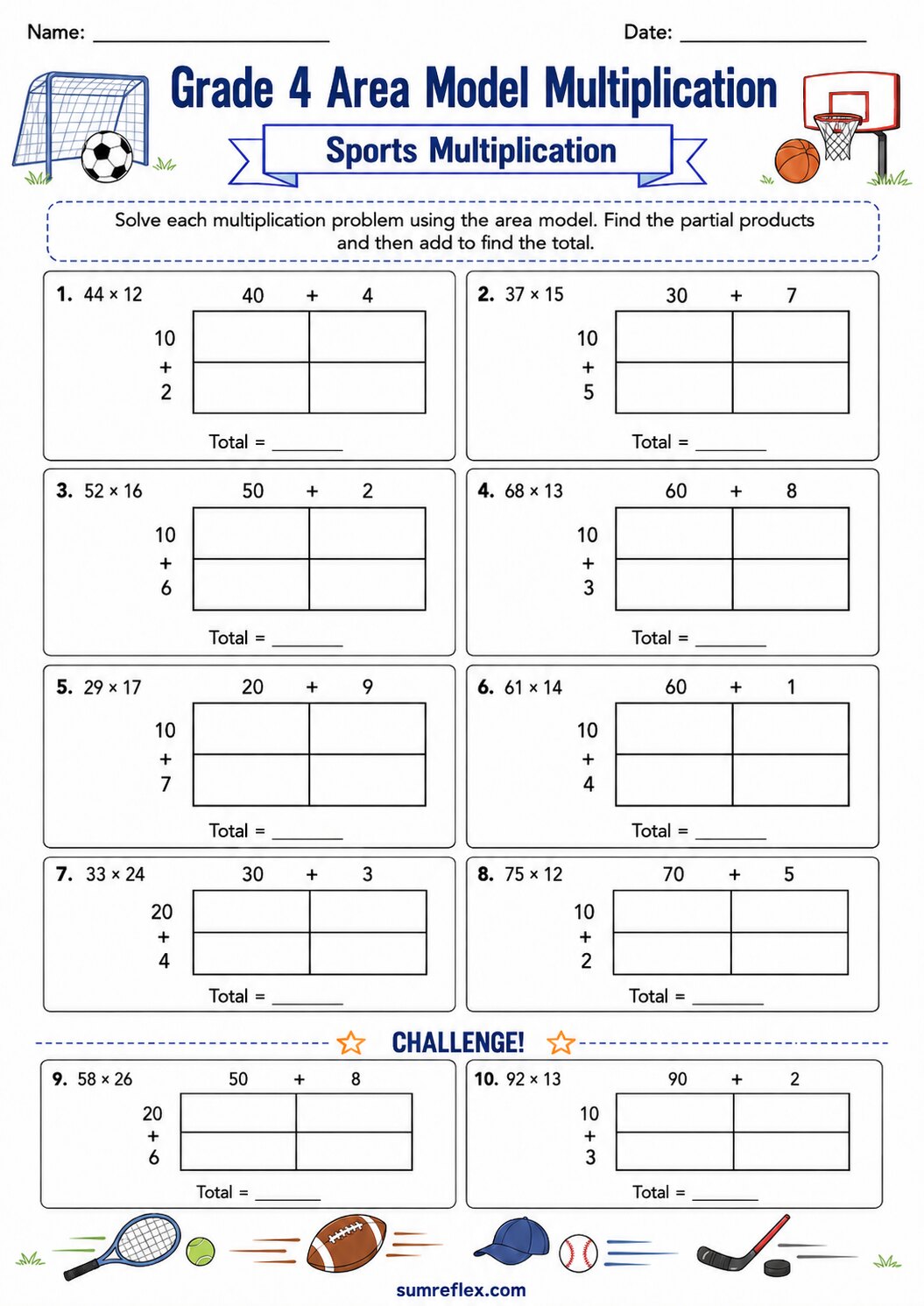
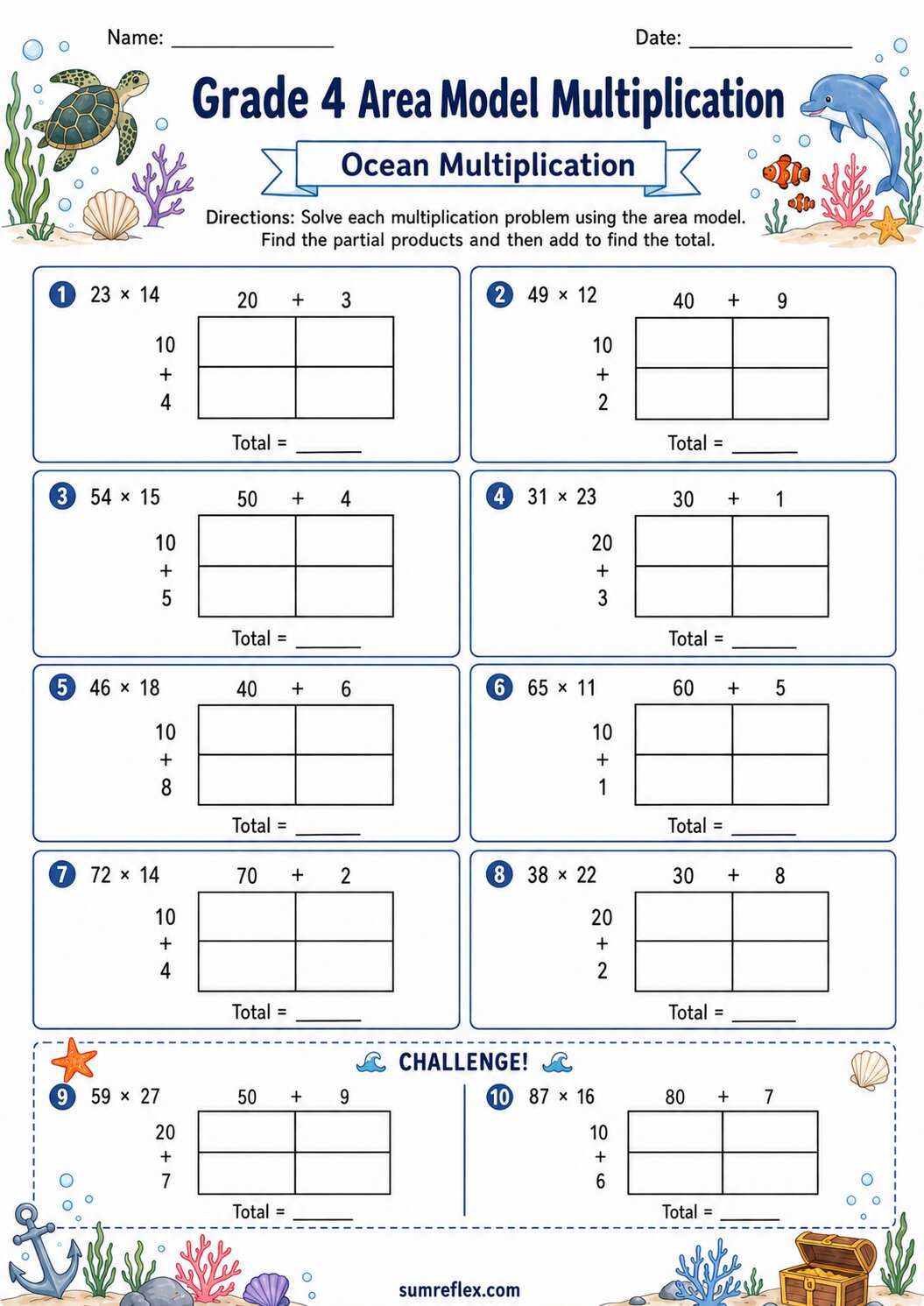
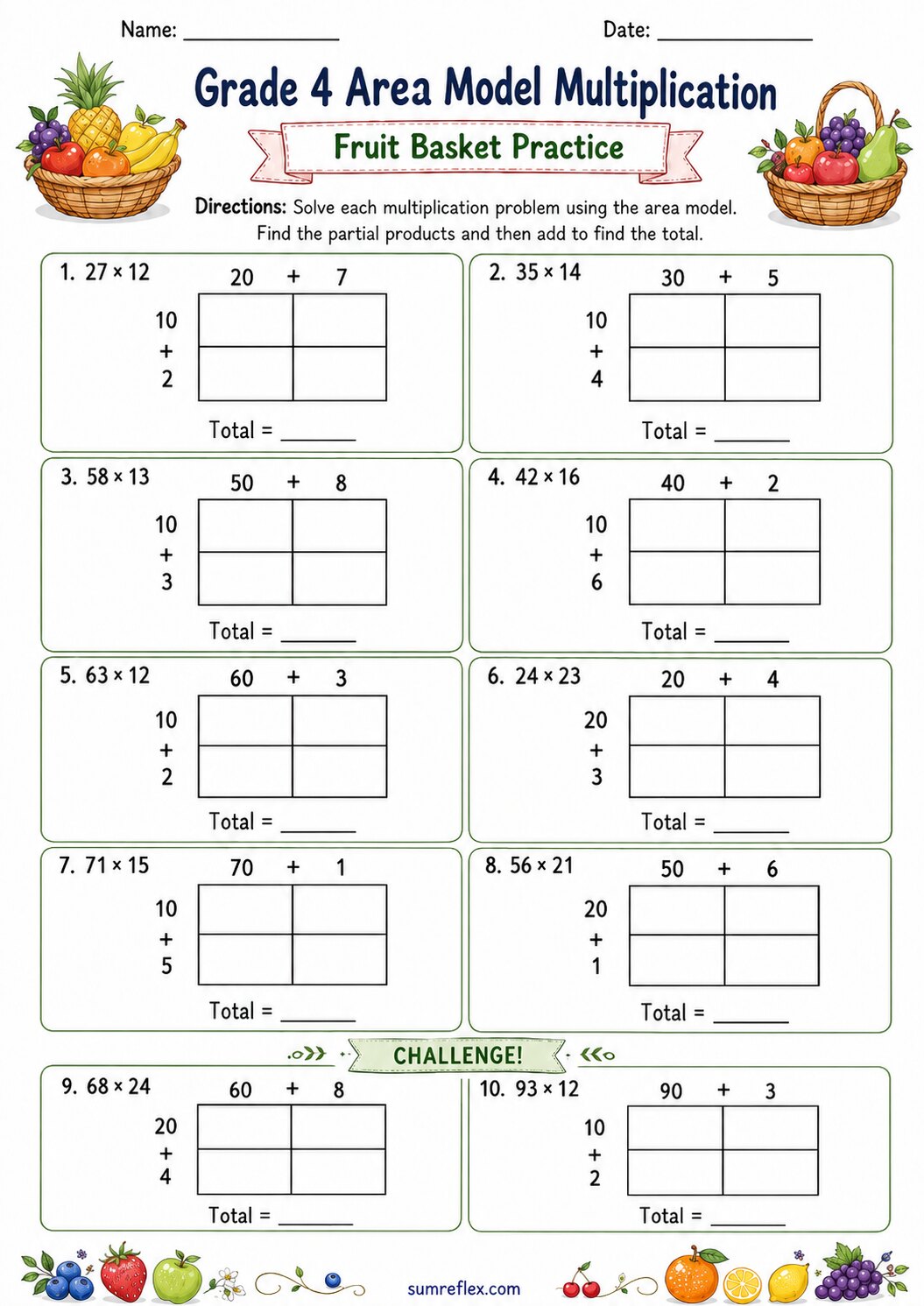
The classroom, garden, travel, pet shop, sports, ocean, fruit basket, construction, farm, and space pages all practice the same mathematical structure. The theme changes the setting so repeated practice feels fresher, but the core expectation stays the same: split, multiply each box, add the parts, and check the total.
When to leave the model behind
Students do not need the area model forever. They are ready to move toward a more compact method when they can split factors correctly, fill every box, and explain why the partial products add to the final answer. Until that explanation is steady, the model is doing important conceptual work and should stay available.
Review one box error at a time
When an answer is wrong, identify which box caused the issue. Was it 30 x 4, 7 x 20, or the final addition? Fixing one box teaches more than erasing the whole solution. This worksheet format makes errors easier to locate, so use that advantage during review.
The model explains the standard algorithm later
Area model work is not separate from vertical multiplication. It prepares students to understand why the standard algorithm has partial products and place-value shifts. When a learner later writes a compact vertical solution, the area model can still explain what each line represents. That connection prevents the algorithm from becoming a memorized trick.
Use fewer problems for deeper talk
A full page is not always necessary. Sometimes three area models with strong explanations are better than ten rushed boxes. Ask students to describe the factor split, name each box product, and justify the final sum. If they can do that, the worksheet has done its job even before every available problem is completed.