



Two 2-digit factors deserve a careful start
A problem such as 34 x 27 is not hard because the facts are unfamiliar. It is hard because there are several places to lose track of value. Students have to multiply by the ones digit, multiply by the tens digit, shift the second row, and then add. These worksheets give that whole sequence a stable space so learners can slow down and make each part visible.
The ones row and tens row have different jobs
The first product row answers the question created by the ones digit in the multiplier. The next product row belongs to the tens digit, so it cannot sit in the same place as the first row. A zero placeholder or a clear left shift helps students remember that the second line is ten times larger than it may look at first glance.
Regrouping marks should stay readable
Fourth graders often understand the method but crowd the small carried numbers until the page becomes hard to check. Ask them to write regrouping marks above the correct column and cross them out only after they have been used. A neat carry mark turns the page into a record of thinking instead of a scramble of digits.
Estimate before the pencil work gets crowded
Before solving, students can round each factor to a nearby ten. The estimate does not need to be perfect; it only needs to set a reasonable range. If 46 x 32 is near 50 x 30, then an answer around 1,500 makes sense. If the exact product is 147 or 14,720, the estimate gives the student a reason to reopen the work.
Theme changes help attention without changing the method
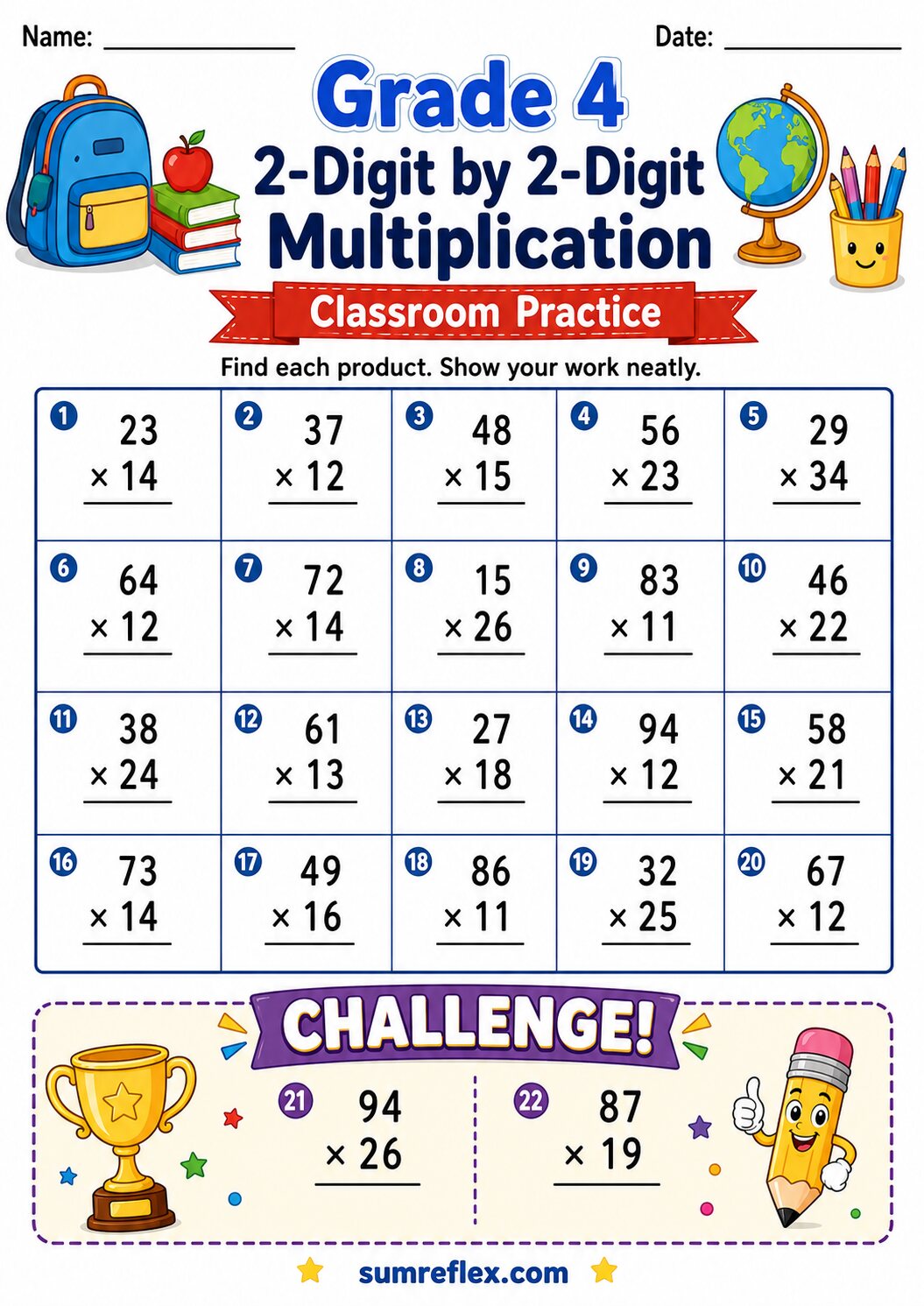
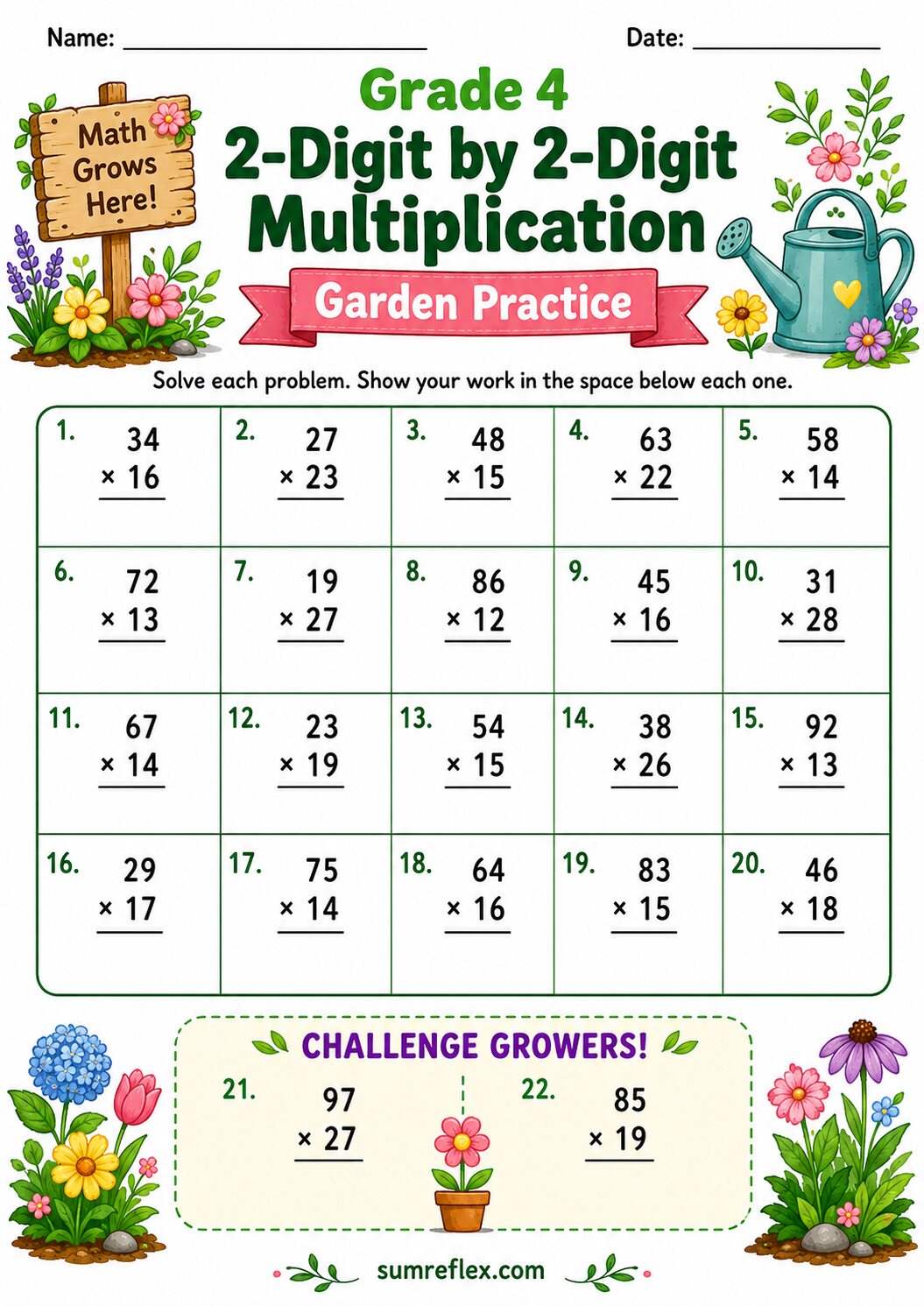
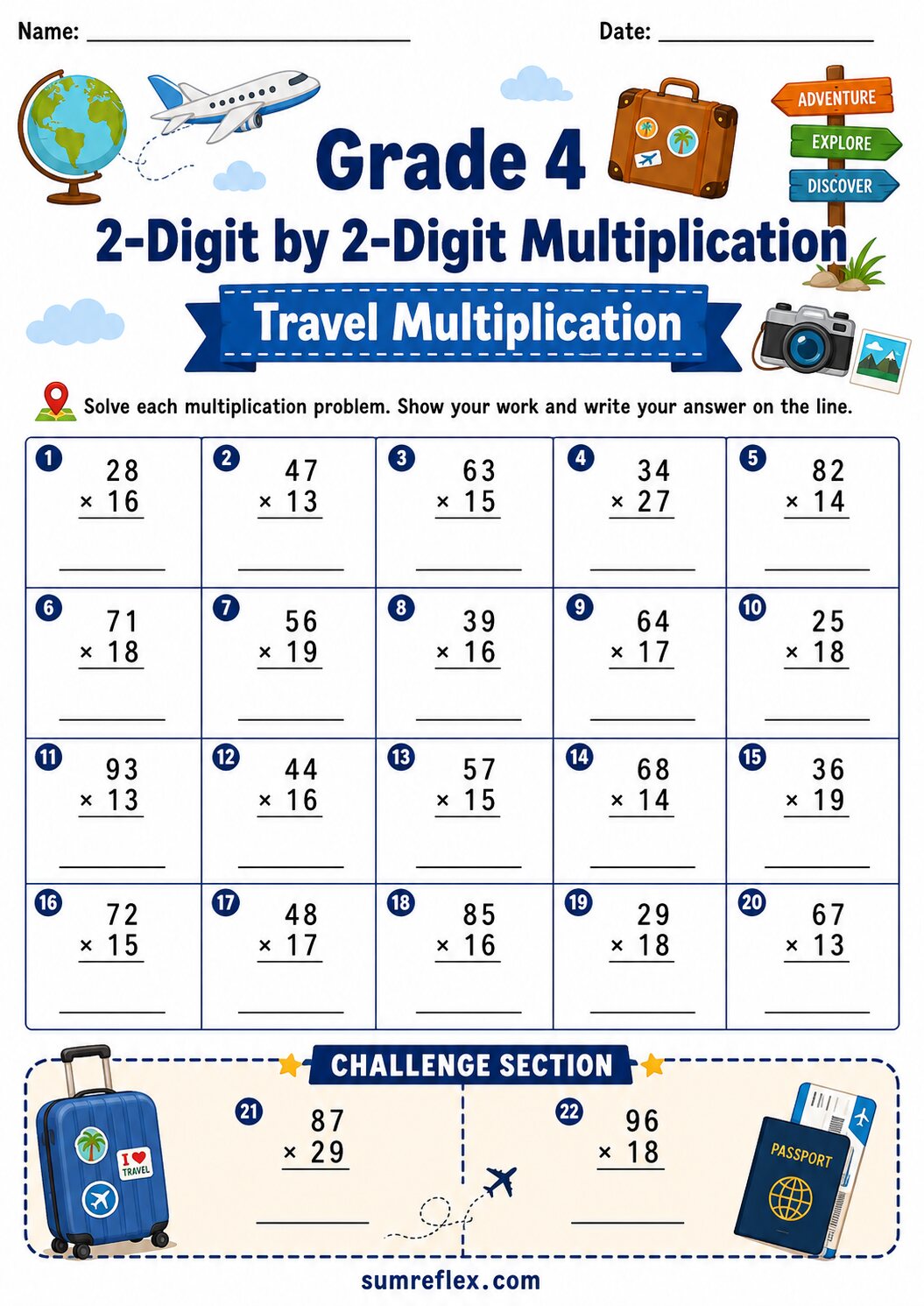
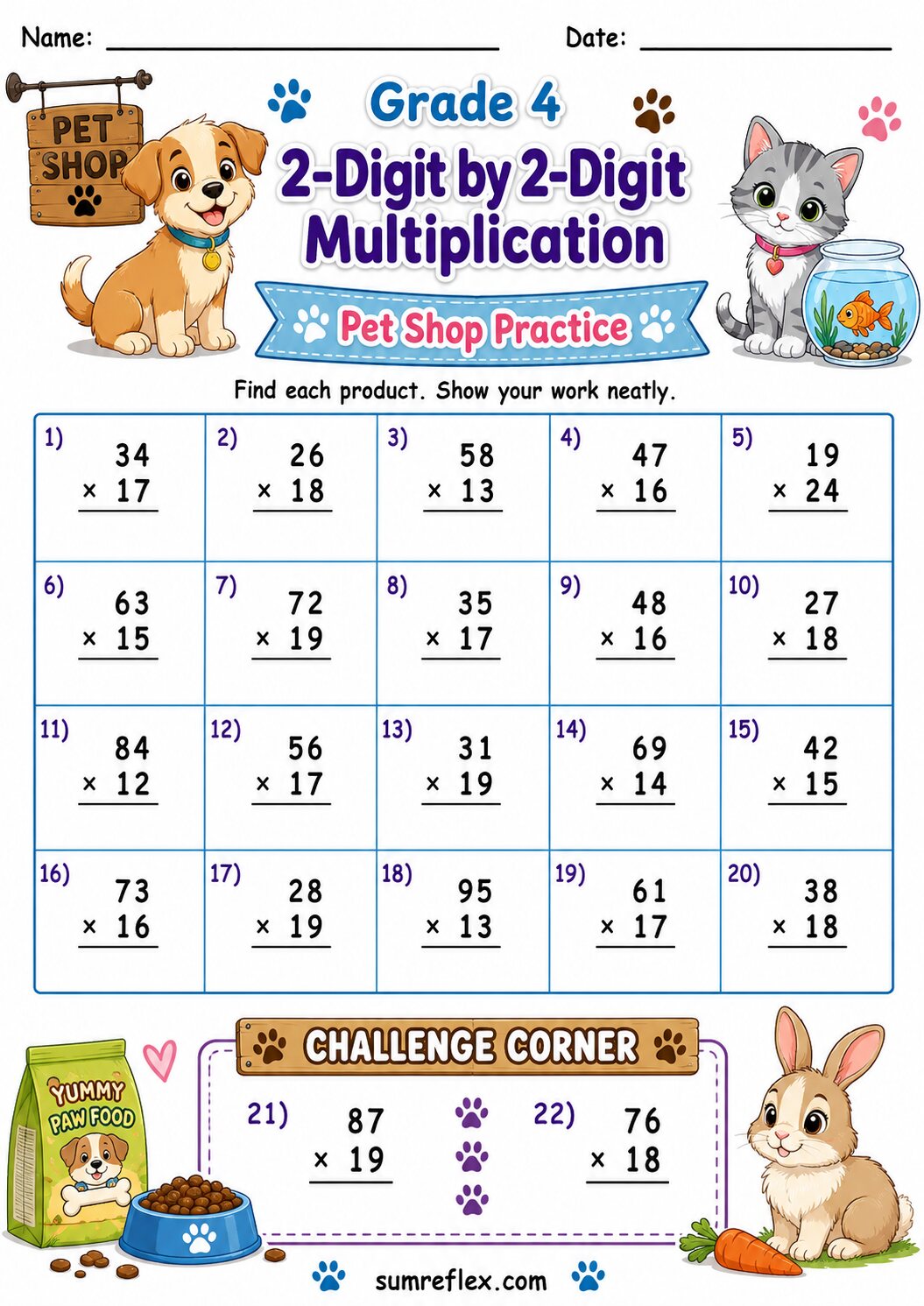
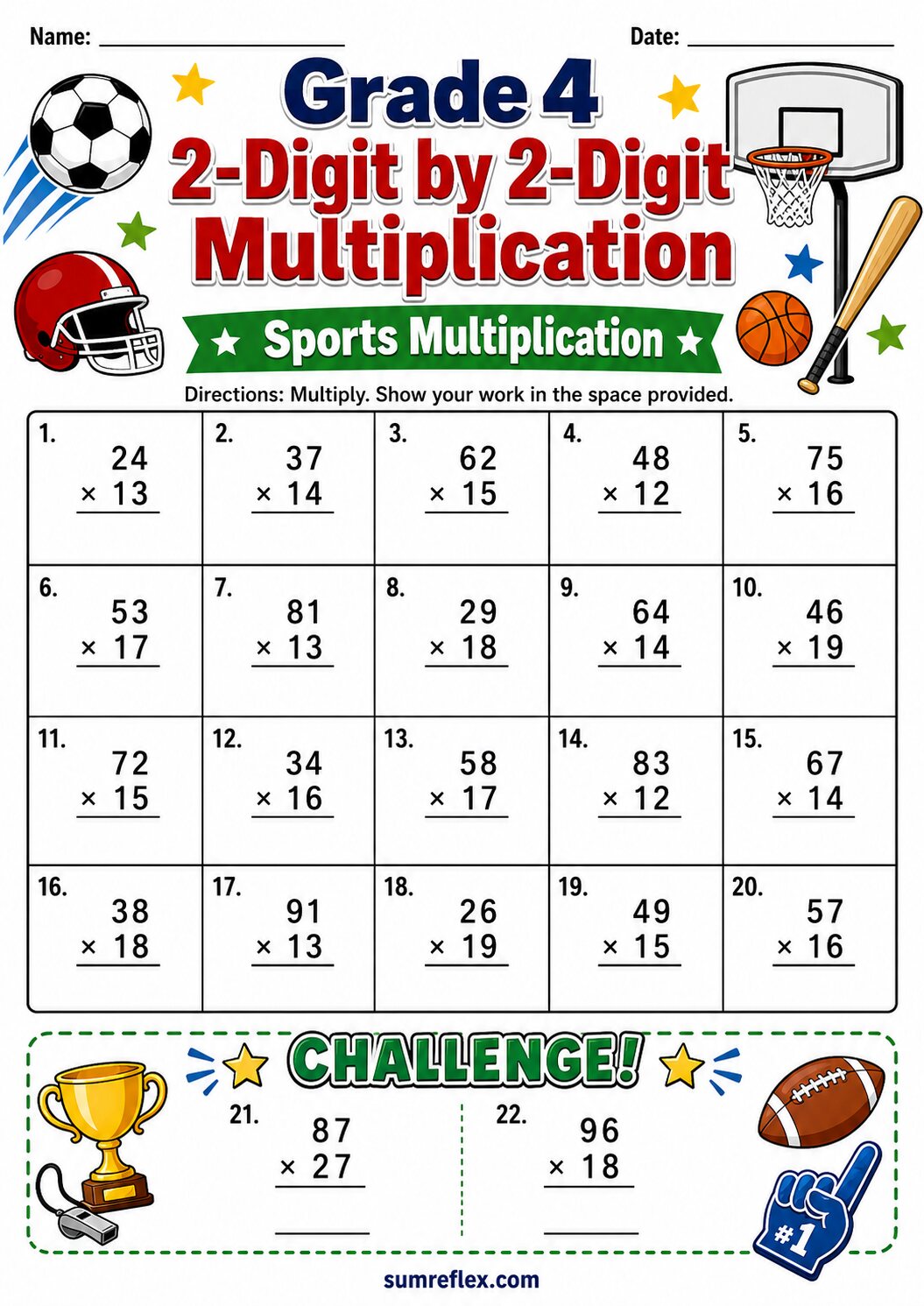
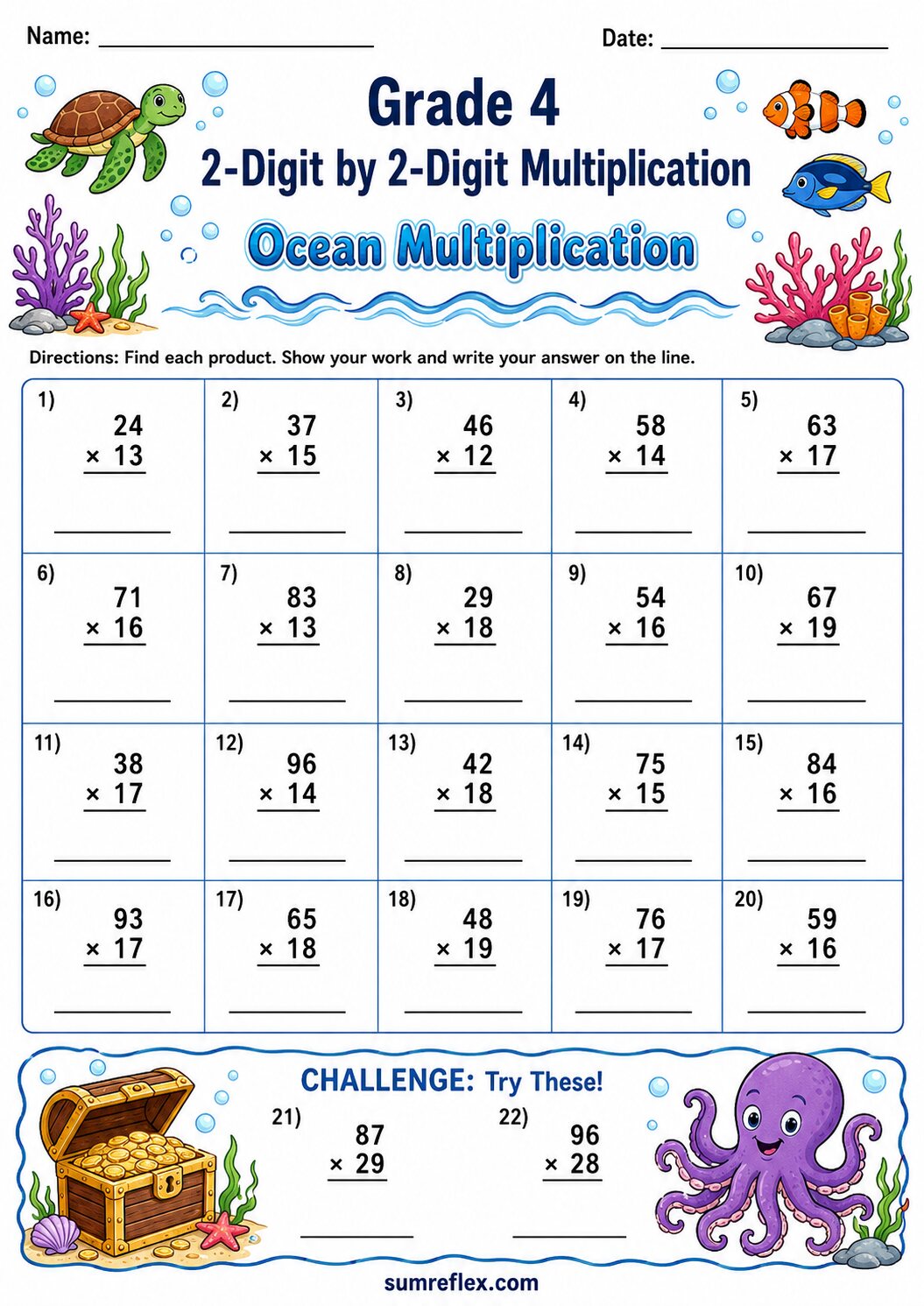
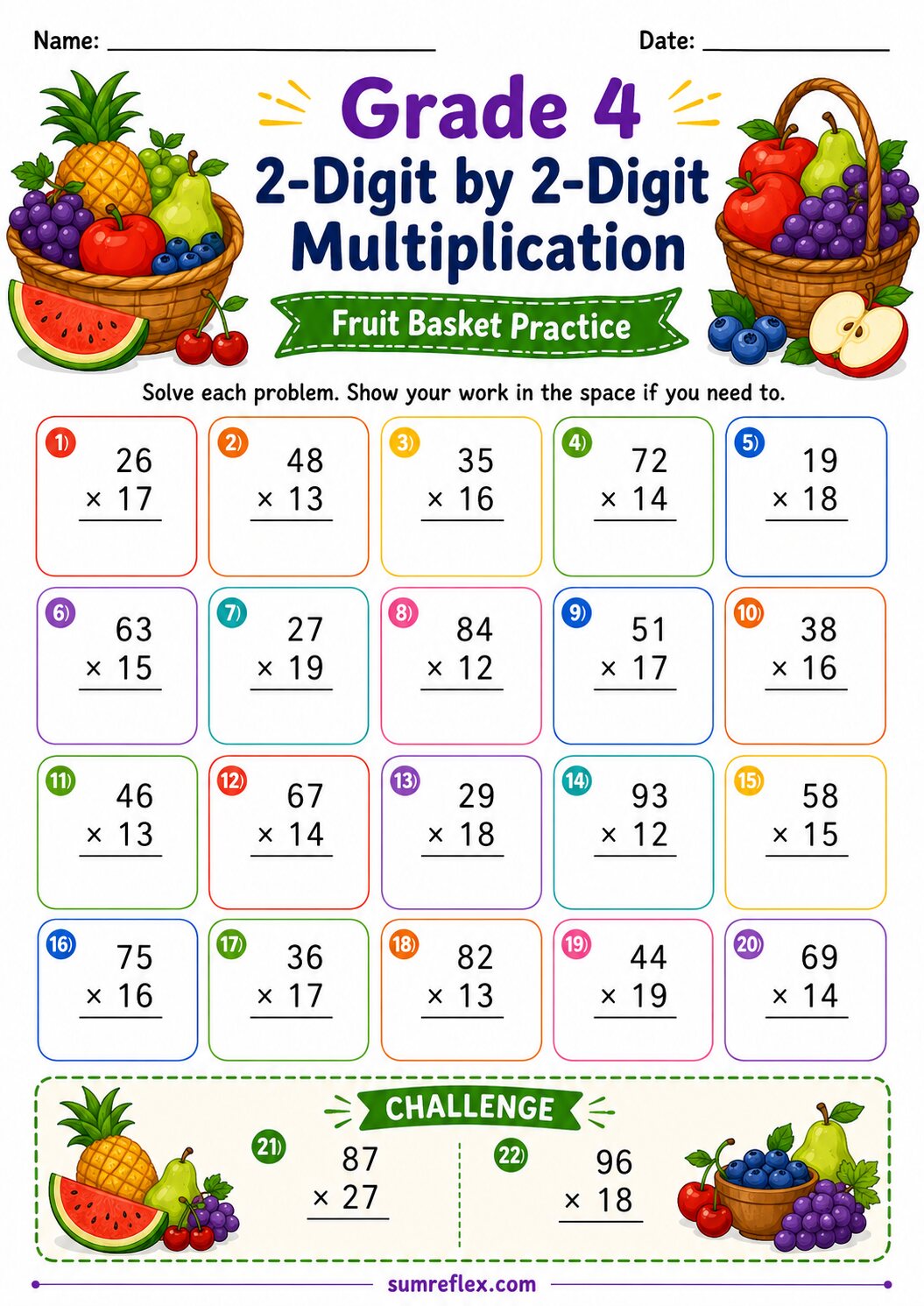
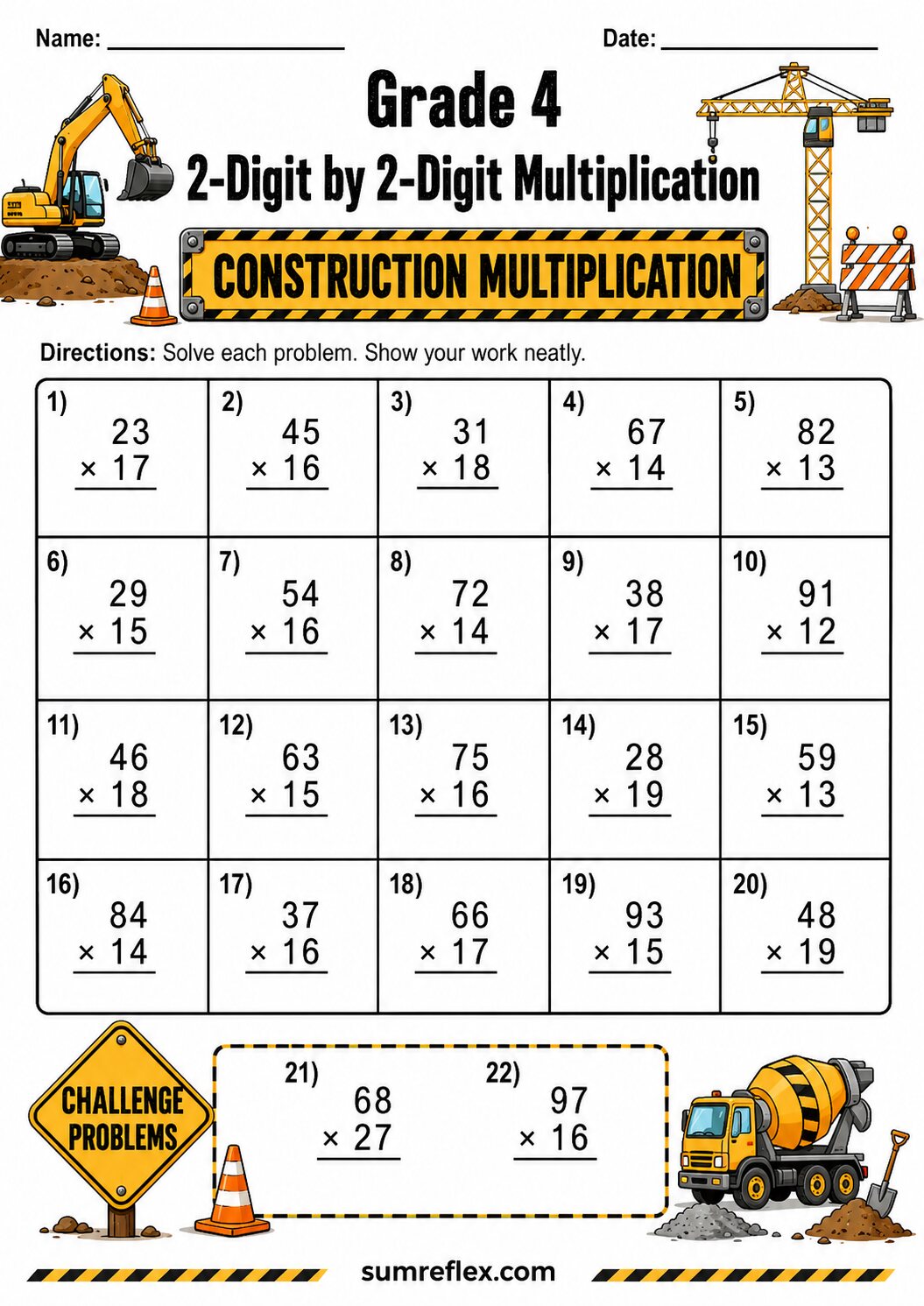
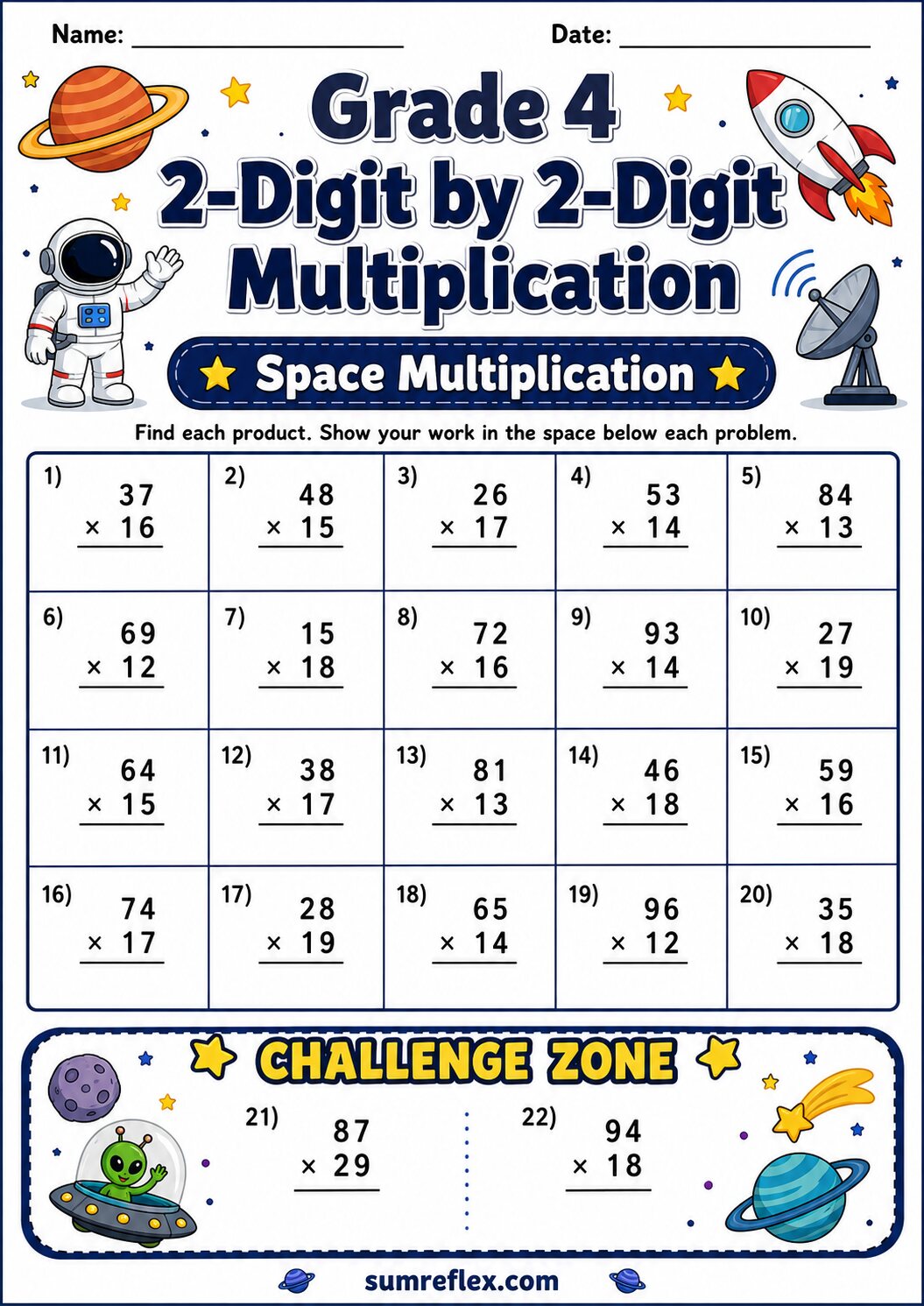
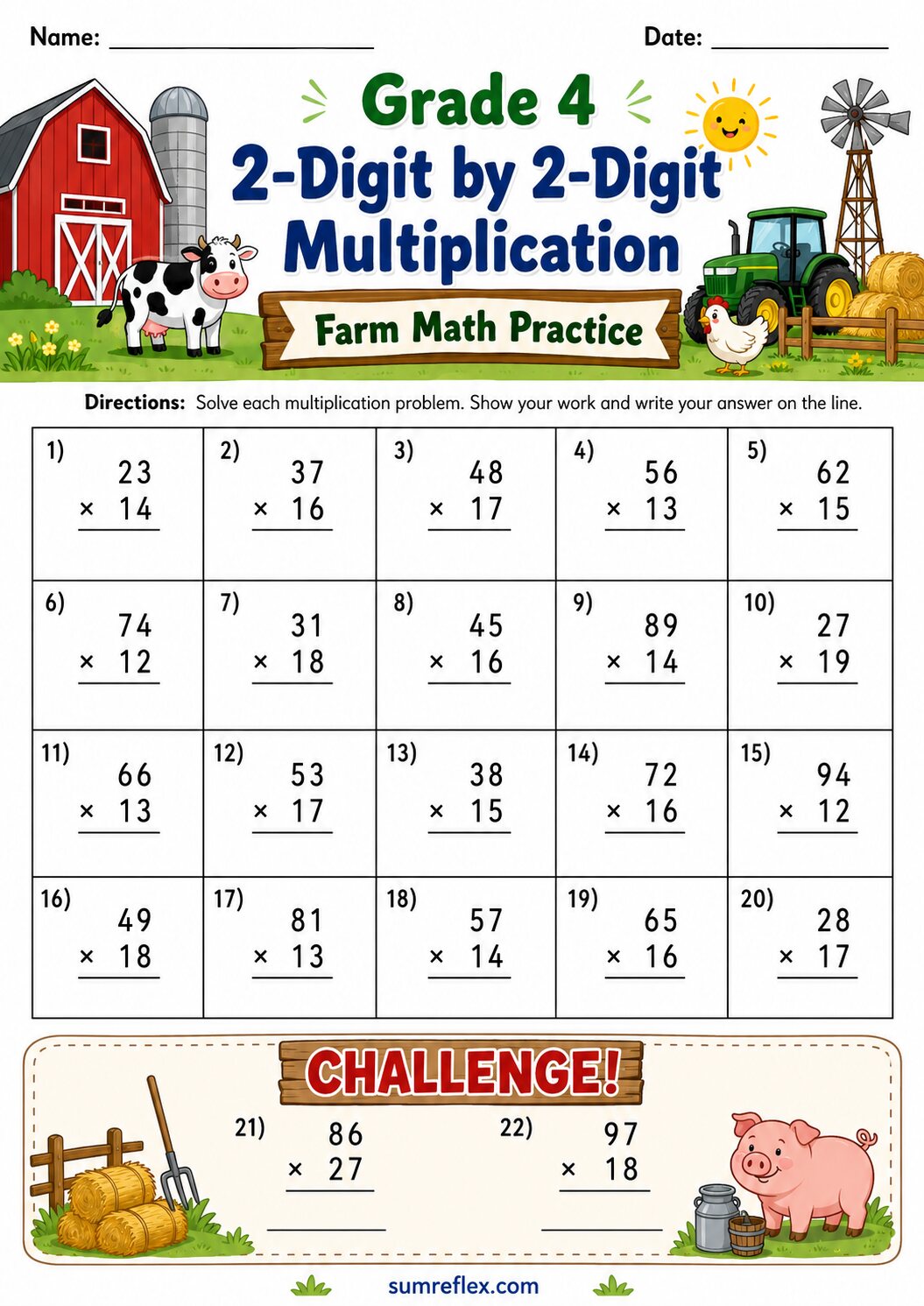
The classroom, garden, travel, pet shop, sports, ocean, fruit basket, construction, space, and farm pages all work on the same multiplication skill. The point of changing the visual setting is not to disguise the math. It gives teachers and parents a way to offer another page when repetition is needed without making the practice feel like a copied sheet.
Move from models only when the rows make sense
If a learner can explain why the second row shifts left, the vertical method is becoming meaningful. If that explanation is missing, go back to an area model for a few problems. The box model shows the tens and ones products separately, then the vertical method compresses that same thinking into fewer lines. The connection matters.
Challenge problems should be reviewed aloud
The harder examples on these pages are useful when students talk through what changed. Was the regrouping larger? Did both factors have higher tens digits? Did the final addition require carrying? A short explanation after the answer gives the challenge row a purpose beyond simply adding more problems to the bottom of the page.
A wrong answer usually has one visible cause
When the final product is incorrect, avoid erasing the entire problem immediately. Check the first row, then the tens row, then the final addition. Many mistakes come from one skipped carry or one row placed too far right. Finding the exact line that failed teaches a stronger habit than starting over without knowing what went wrong.
Use one printable page well
A full worksheet does not have to become a race. For a short lesson, choose four problems and ask for estimates, two product rows, and a final check. For independent practice, assign the full page and have students mark one answer they are least sure about. That final self-check builds the same accuracy habit the algorithm needs.