



Take-away language first
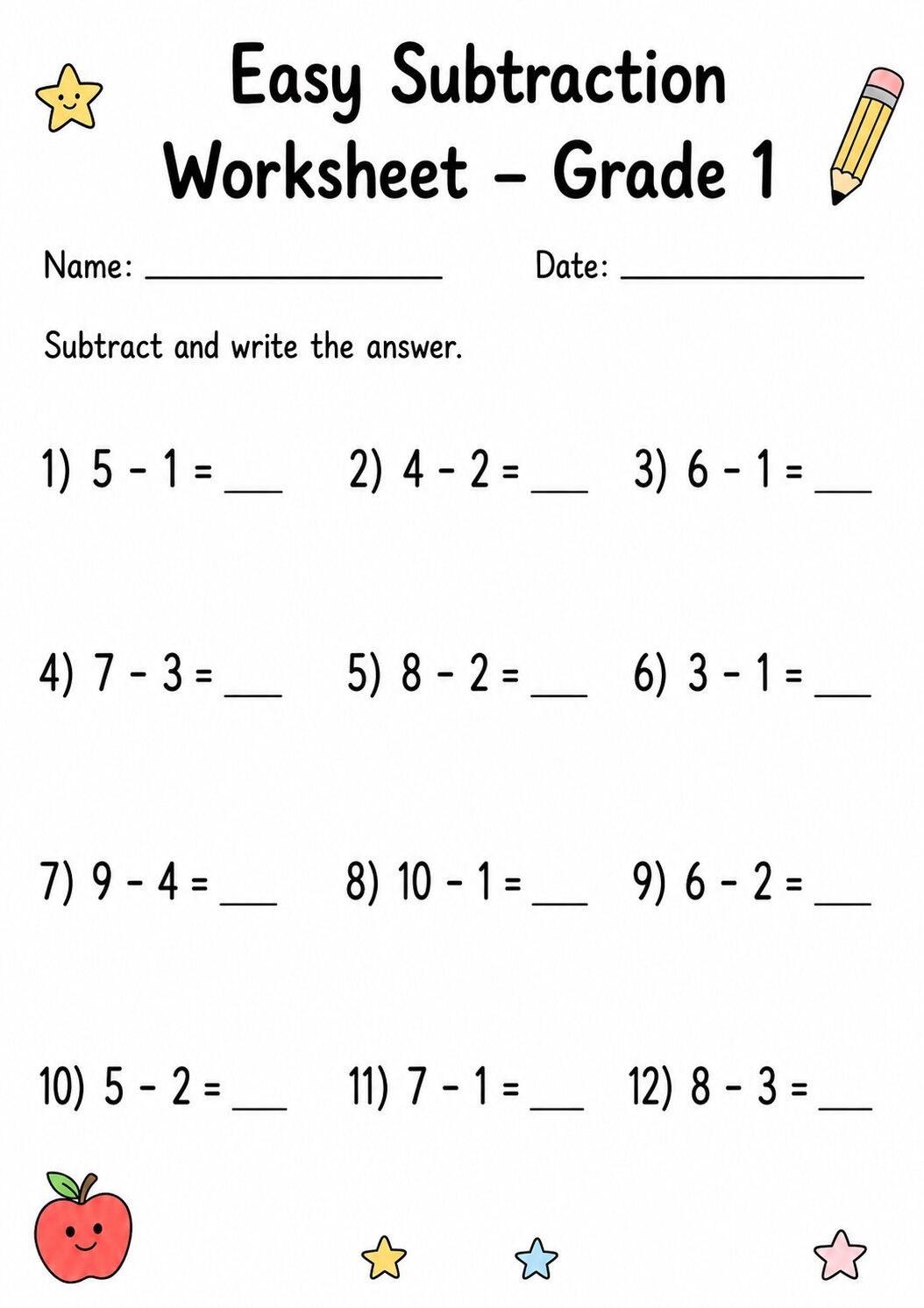
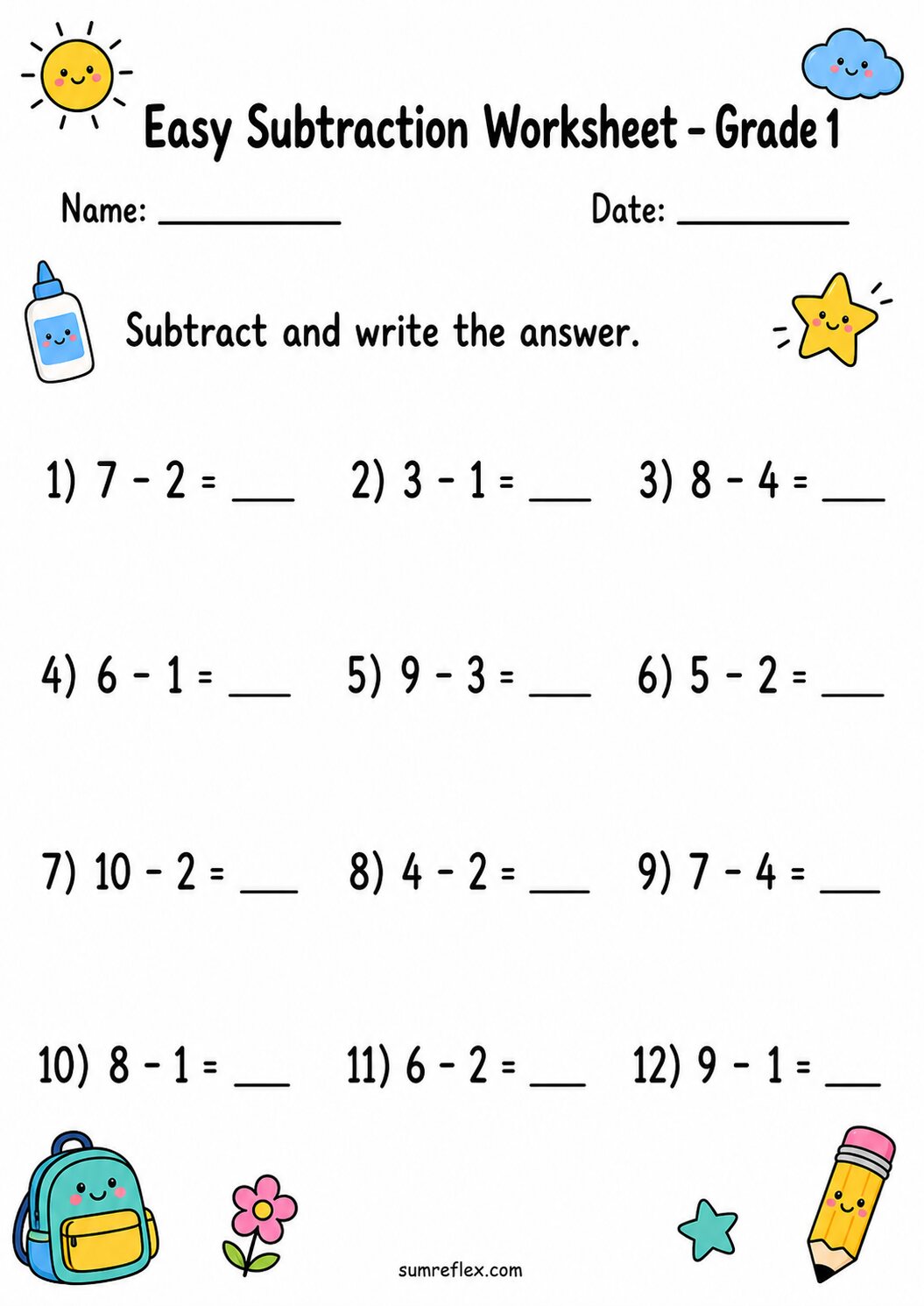
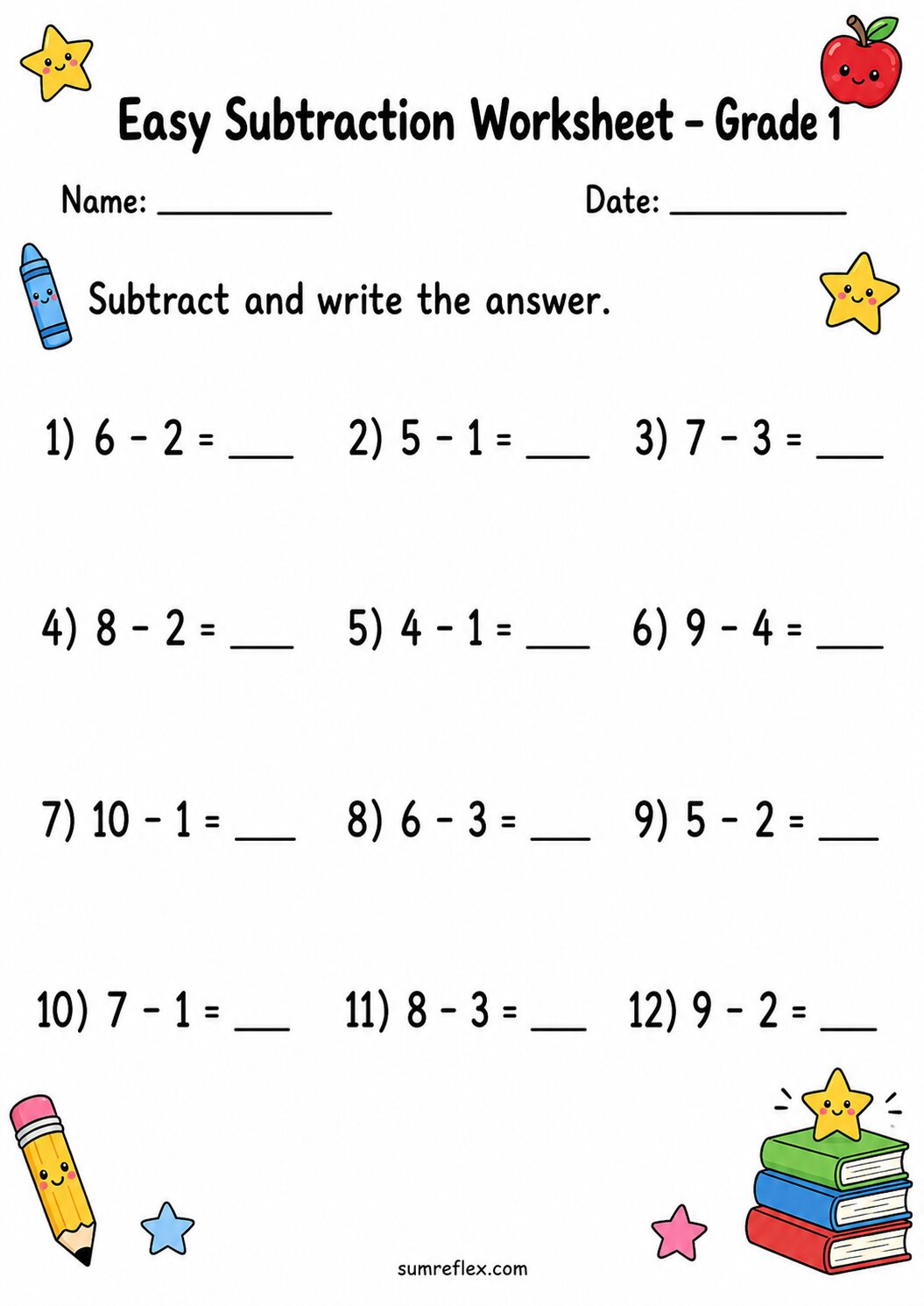
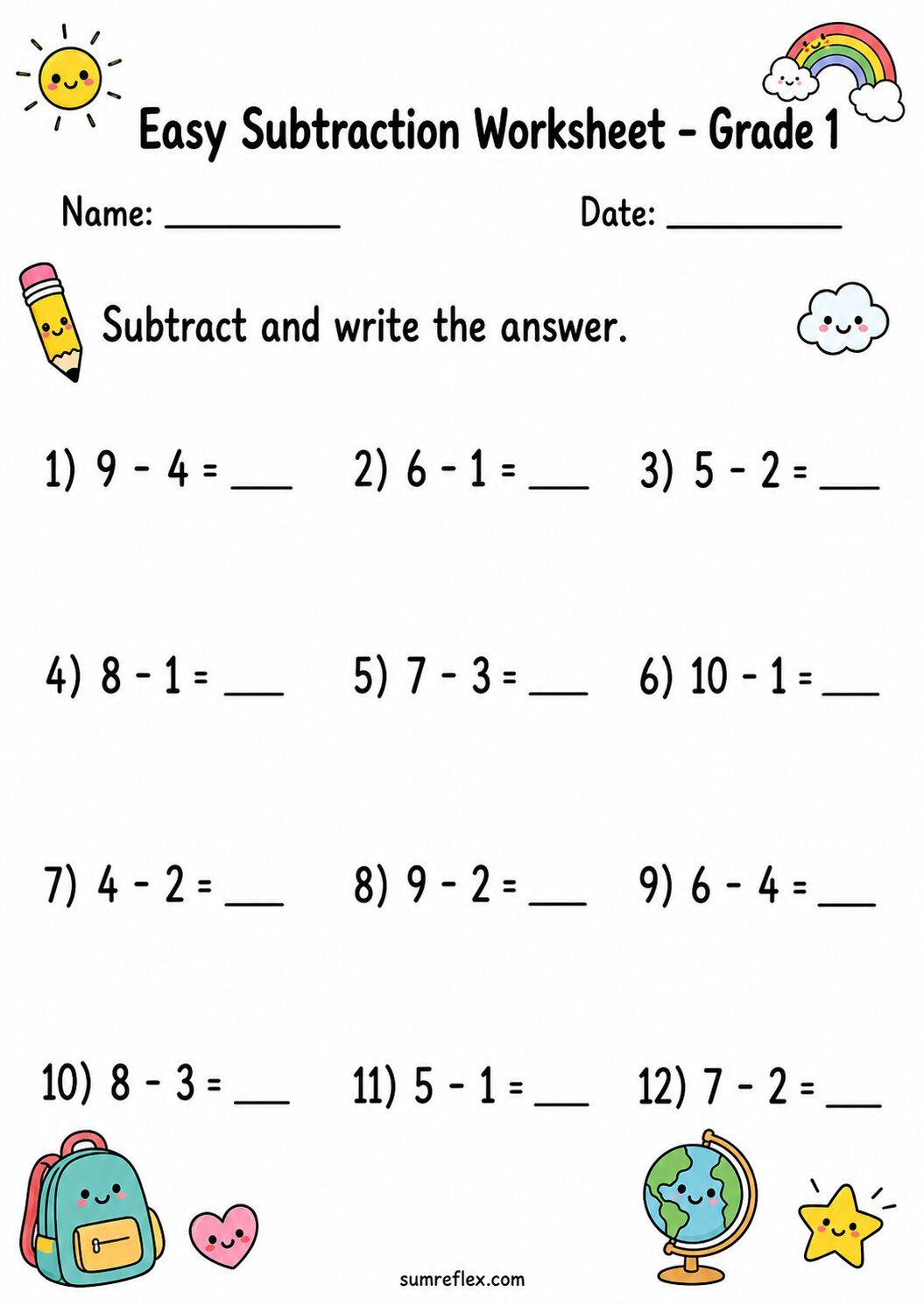
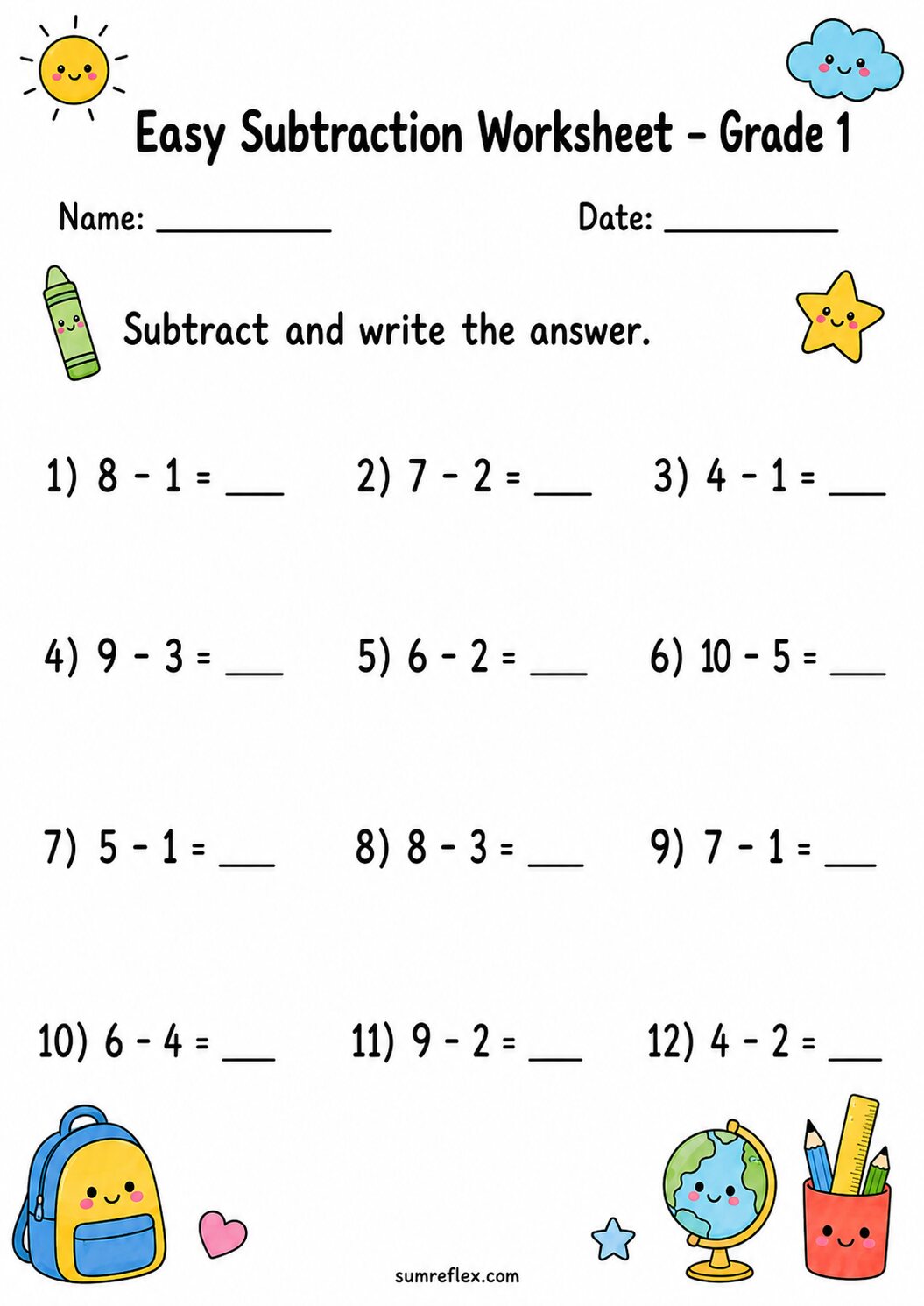
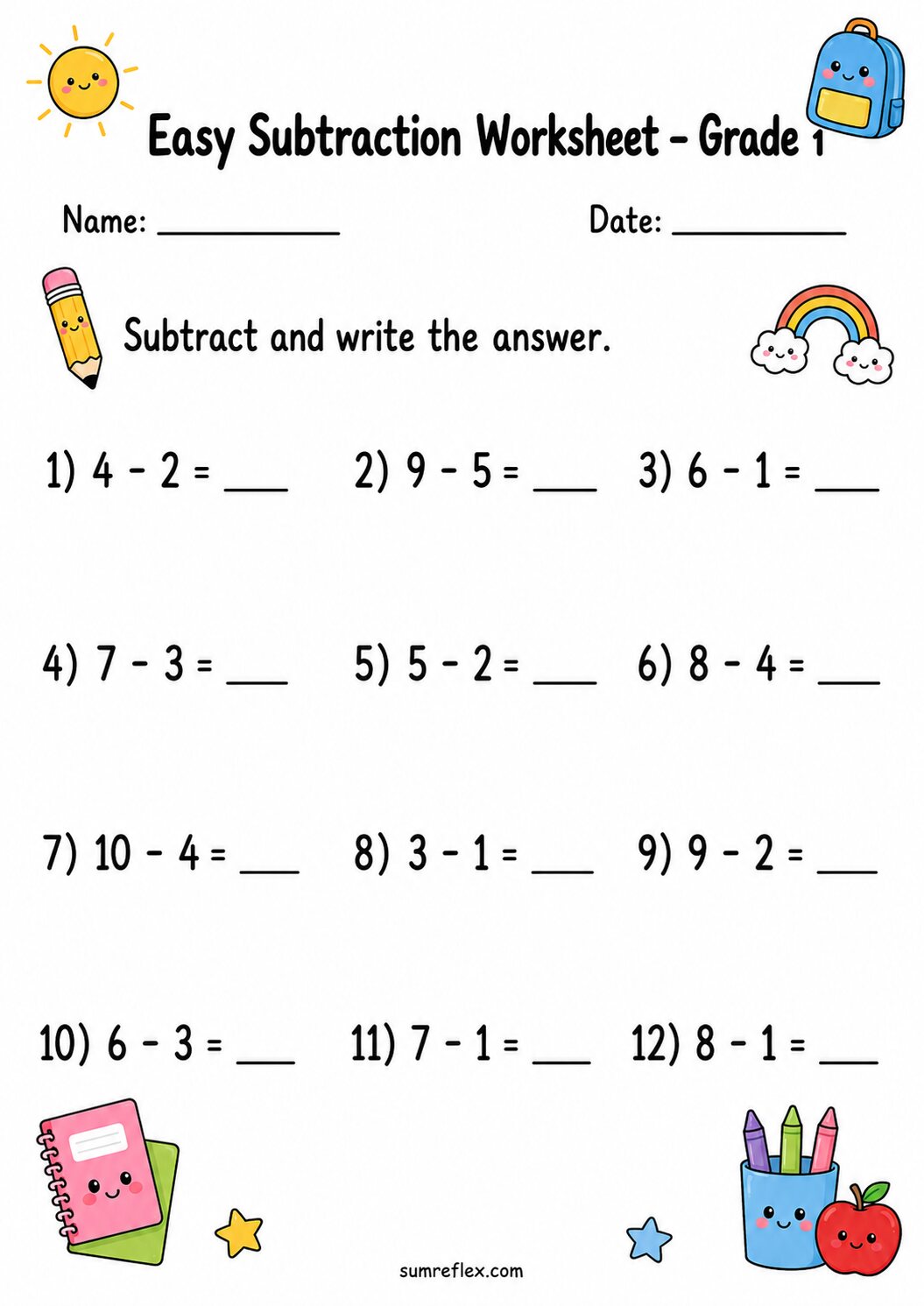
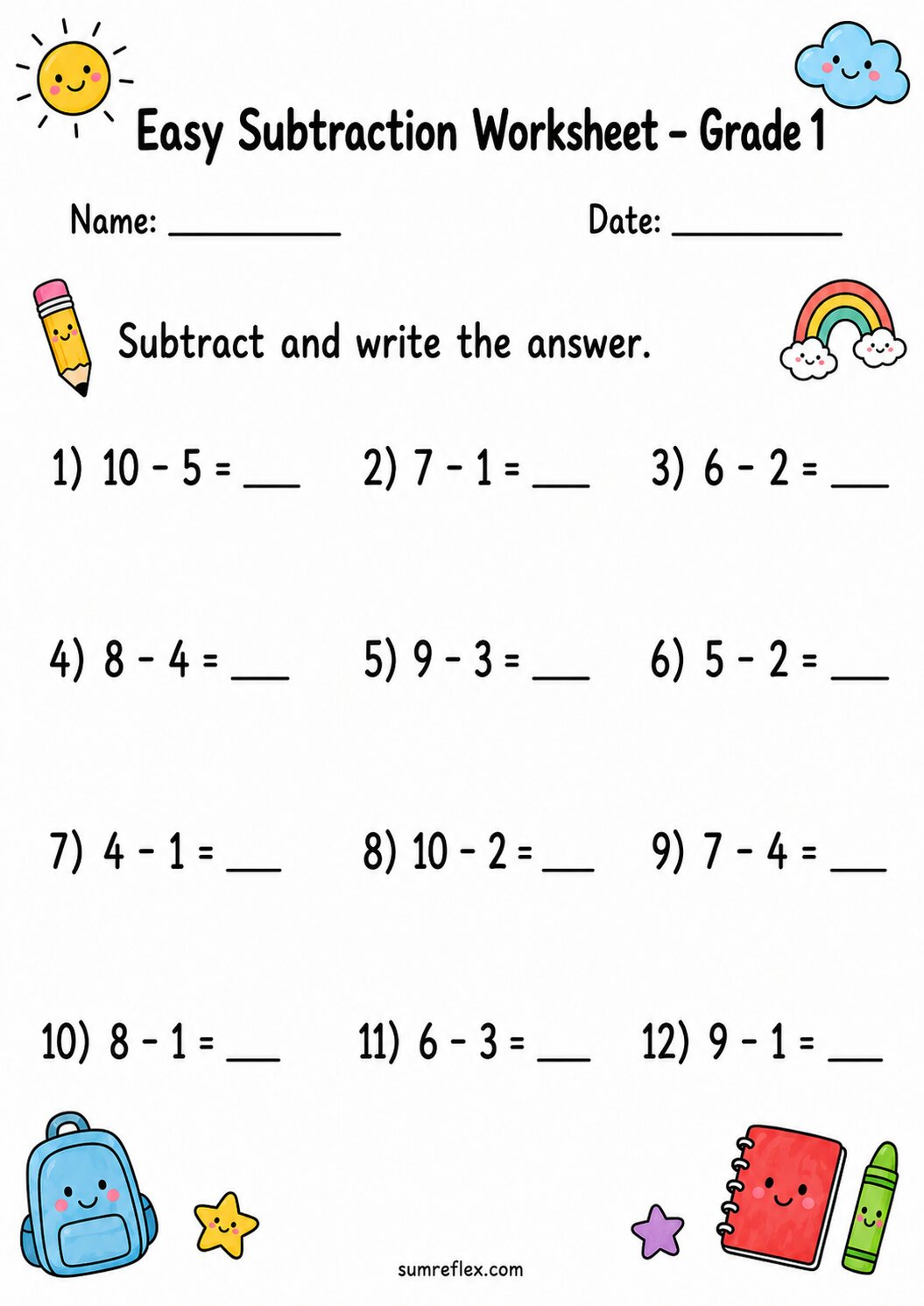
Subtraction is often introduced as taking away, and these sheets keep that language clear. A student should be able to point to the first number as the starting amount, the second number as the amount removed, and the answer as what remains. Before asking for speed, have the child say a full sentence such as nine take away two leaves seven.
The starting number controls the story
Many early subtraction errors happen because students treat the two numbers as if they can be swapped. In 8 - 3, the story begins with 8, not 3. Use a finger, pencil tip, or counter to touch the first number before solving. That small routine prevents a surprising number of wrong answers, especially on mixed review sheets.
Differences within ten are worth repeating
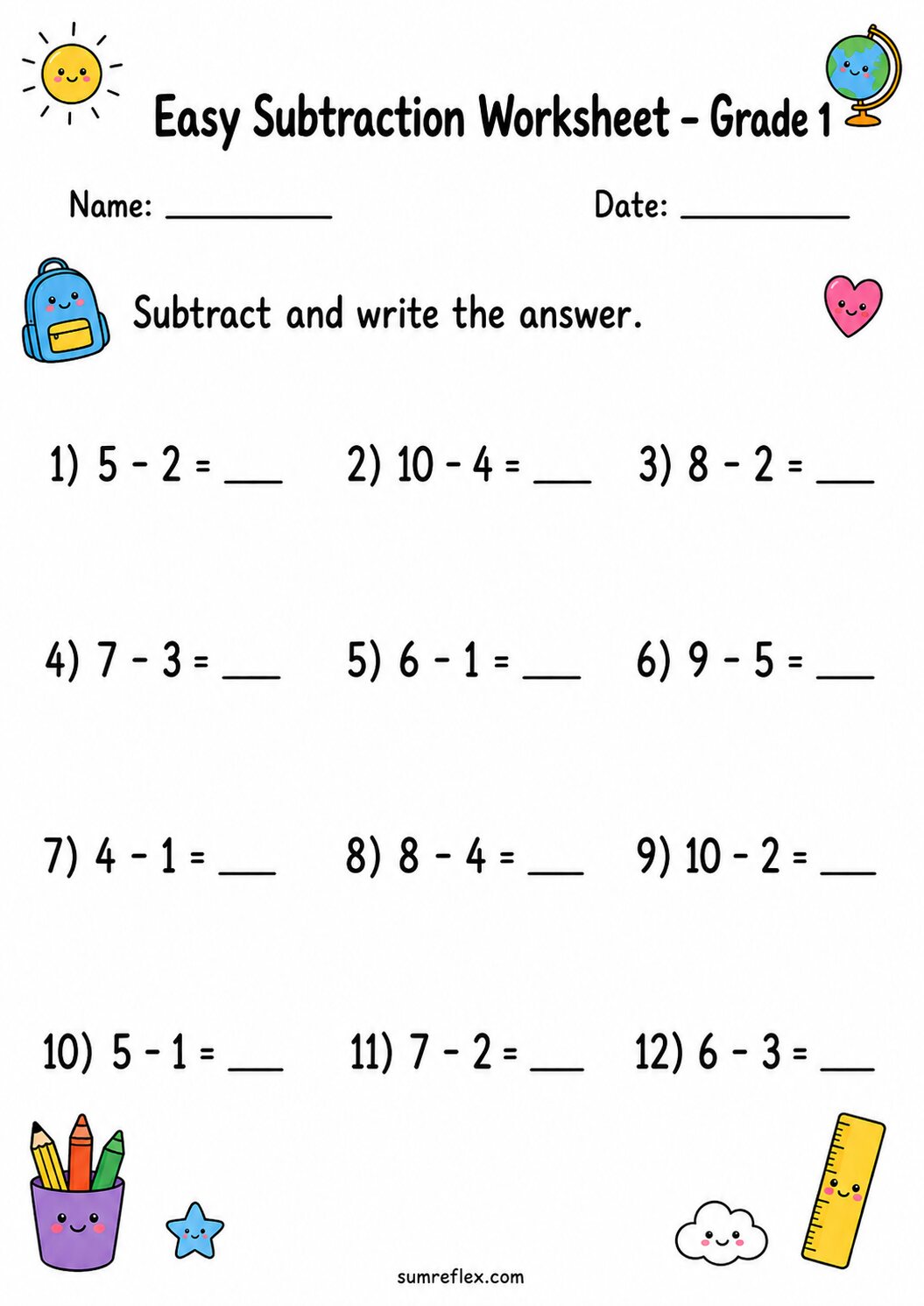
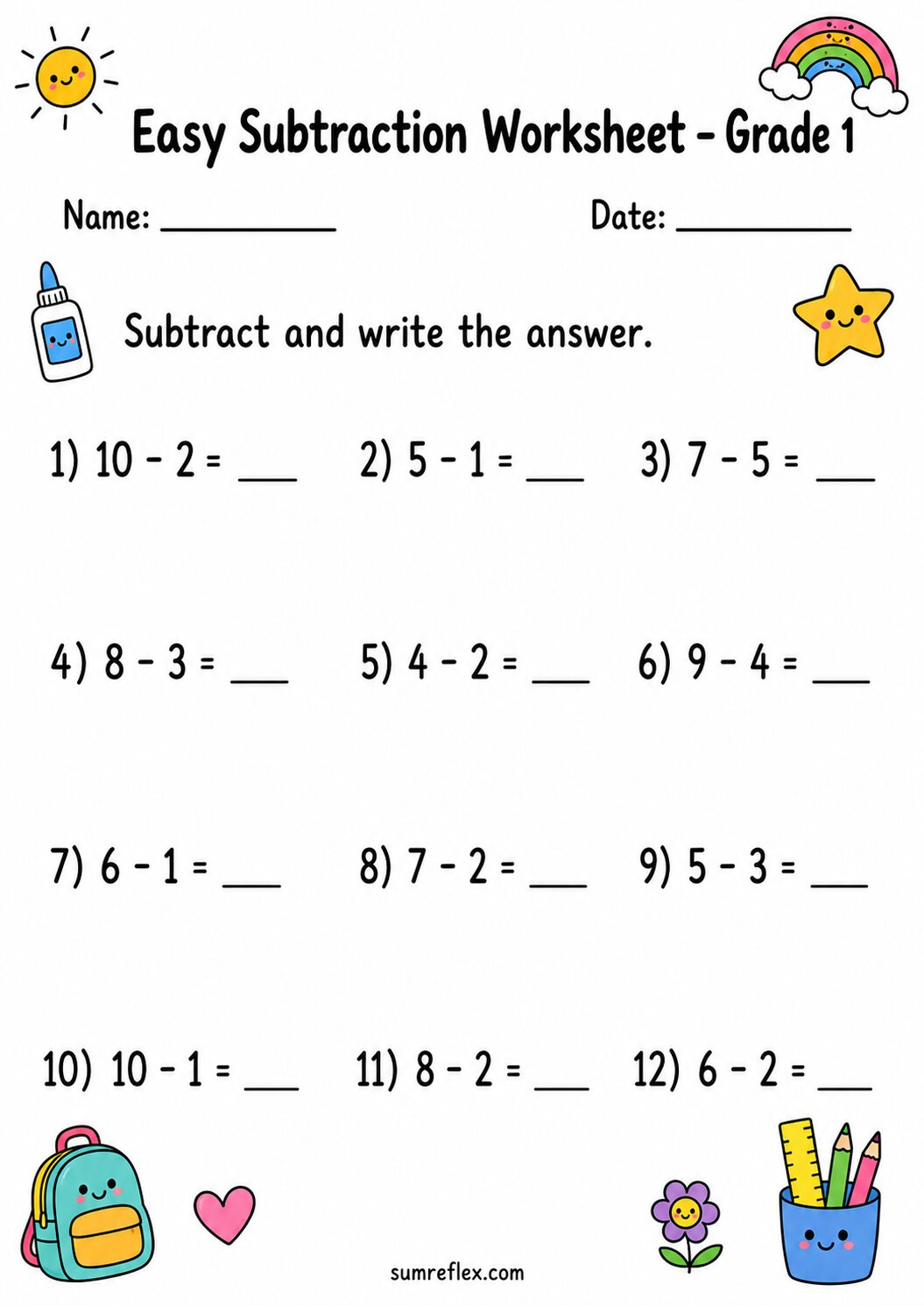
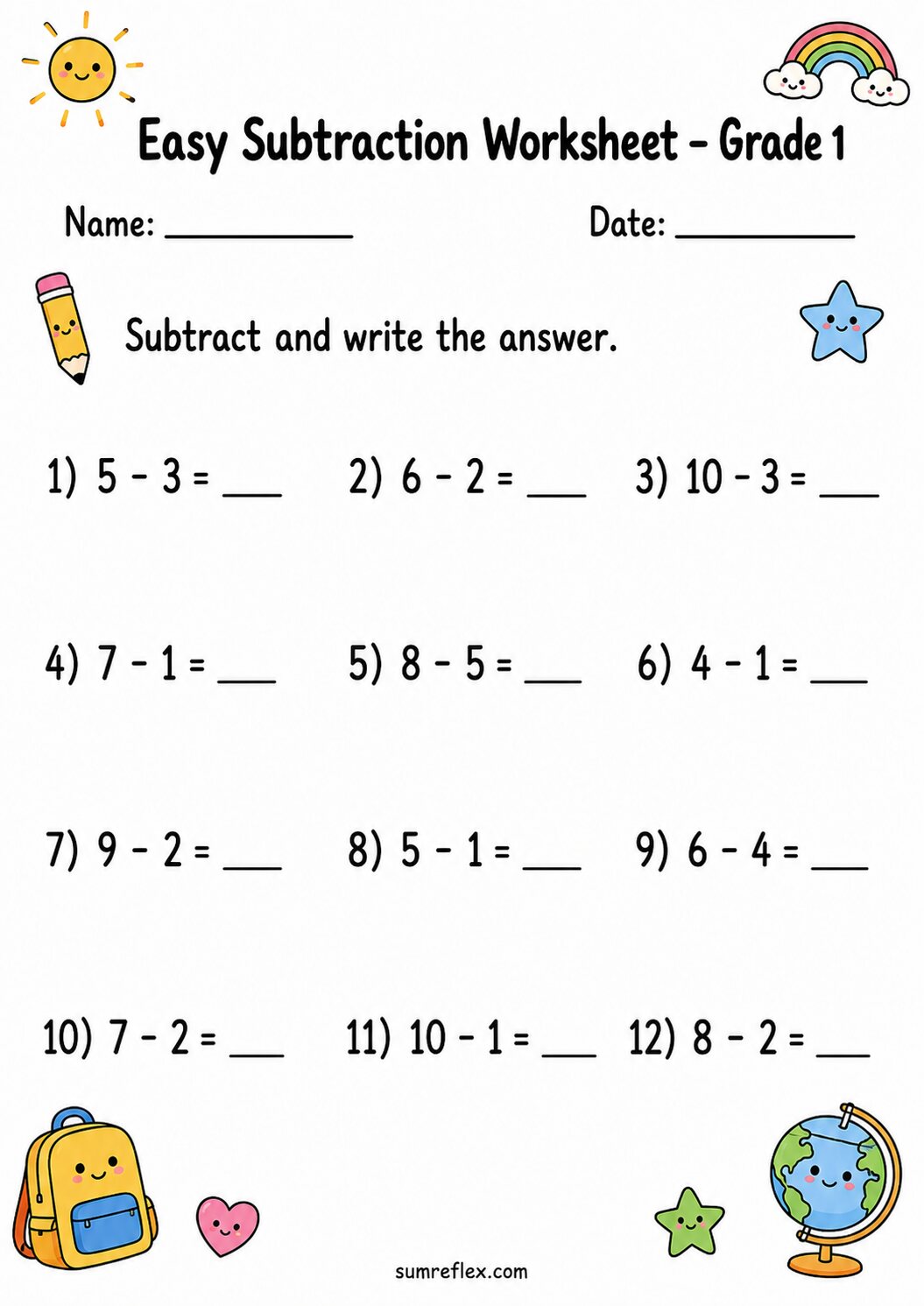
The worksheets stay mostly within 10 because that range becomes the base for later mental subtraction. A child who knows small differences well can handle larger work with less stress. If a student struggles, return to the within-9 or within-10 practice page rather than pushing into longer mixed work too quickly.
Putting back checks the answer
Addition is a helpful check after the subtraction is complete. If 10 - 4 gives 6, then 6 plus the removed 4 should rebuild 10. This check is not just a trick for answers; it shows the relationship between the two operations. Use it when a child is unsure whether the difference is too small or too large.
Counters can support independence
Objects are useful when the child is learning, but the goal is not to stay dependent on them forever. Start with counters, then move to fingers, then to quiet counting back or known facts. The short worksheets make that transition easier because the same page can be solved with support first and then repeated mentally later.
Warmups are not assessments
The warmup and practice sheets serve different jobs. A warmup should be short and comfortable so subtraction thinking returns before harder work. A review page can be used when you want to check readiness. If the review page has many mistakes, go back to one narrower sheet and rebuild the exact part that caused trouble.
Number lines make removal visible
A number line can help when counters become messy. Place a finger on the starting number, then hop backward the take-away amount. For 9 - 3, the student starts on 9 and makes three backward hops. The final landing spot is the answer. This visual keeps the direction clear and gives students a different support when physical objects are no longer needed.
What to do after a reversed problem
If a child solves 3 - 8 after seeing 8 - 3, do not only mark it wrong. Ask which number the story started with and which number was removed. Then rebuild the problem with a quick drawing or hand motions. Reversed subtraction is a meaning mistake, not just an arithmetic slip, so the correction should return to the story behind the equation.
Short oral practice before the page
Before printing, say three take-away questions aloud and let the child answer without writing. This warms up the idea of removal before pencil work begins. If the oral questions are confusing, start with the first worksheet and use objects. If they are easy, choose a review or fluency page instead.
Separate fact errors from handwriting slips
Not every wrong answer means the subtraction idea failed. Some students know the difference but reverse digits, write a 6 that looks like a 0, or copy the first number incorrectly. During review, decide whether the mistake came from the math or the recording. That keeps the next practice step accurate instead of repeating a sheet for the wrong reason.