



Small sums before speed
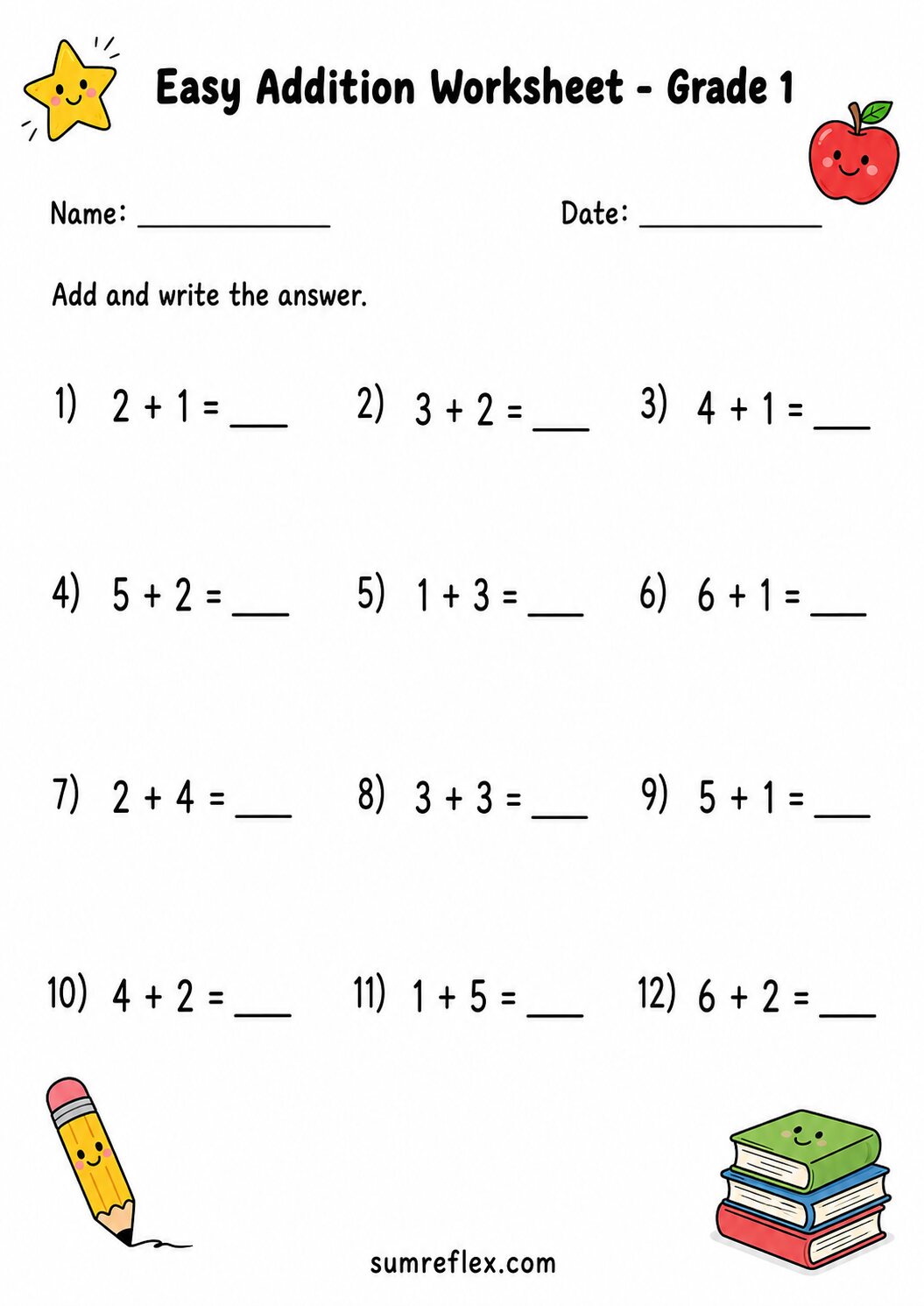
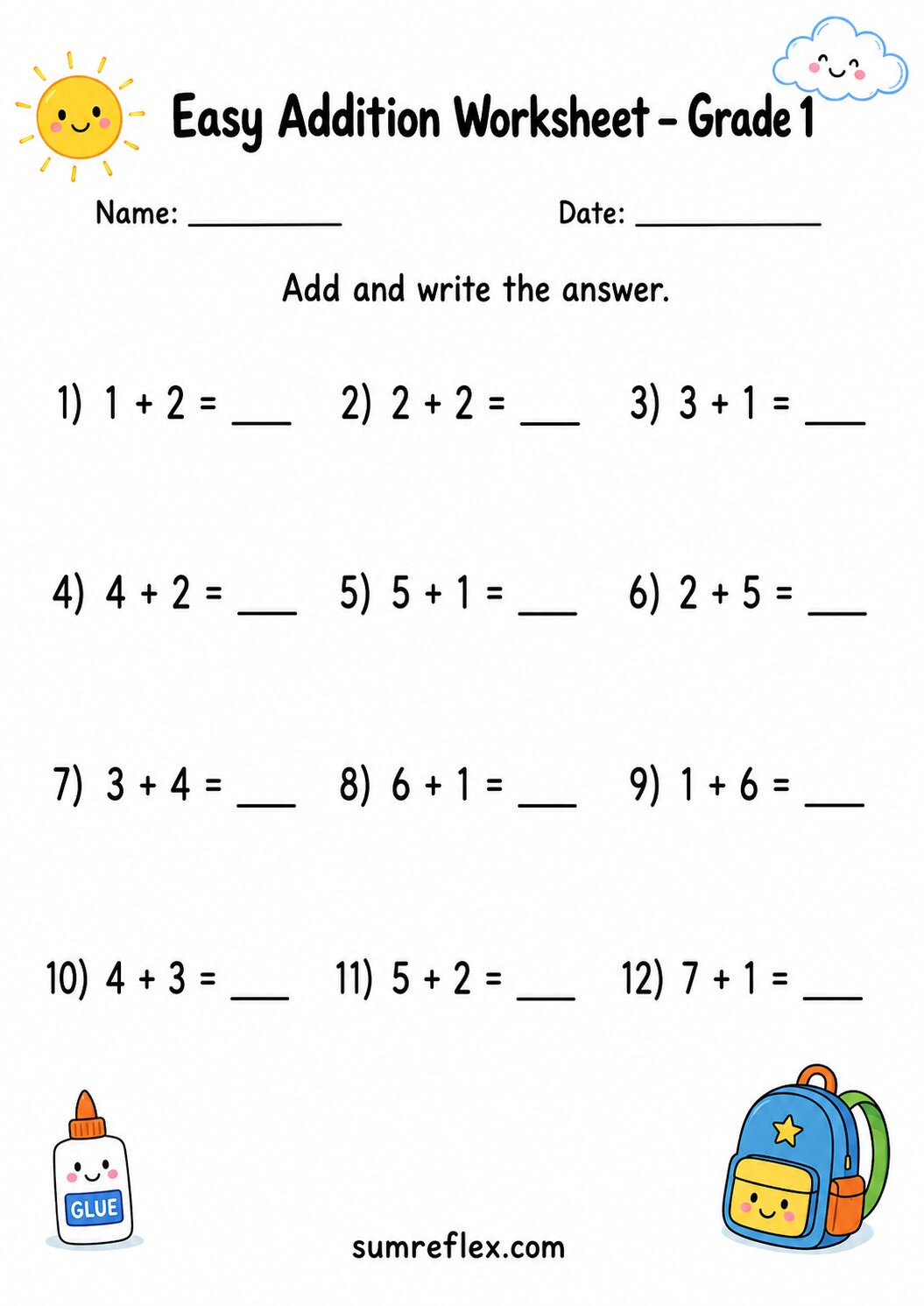
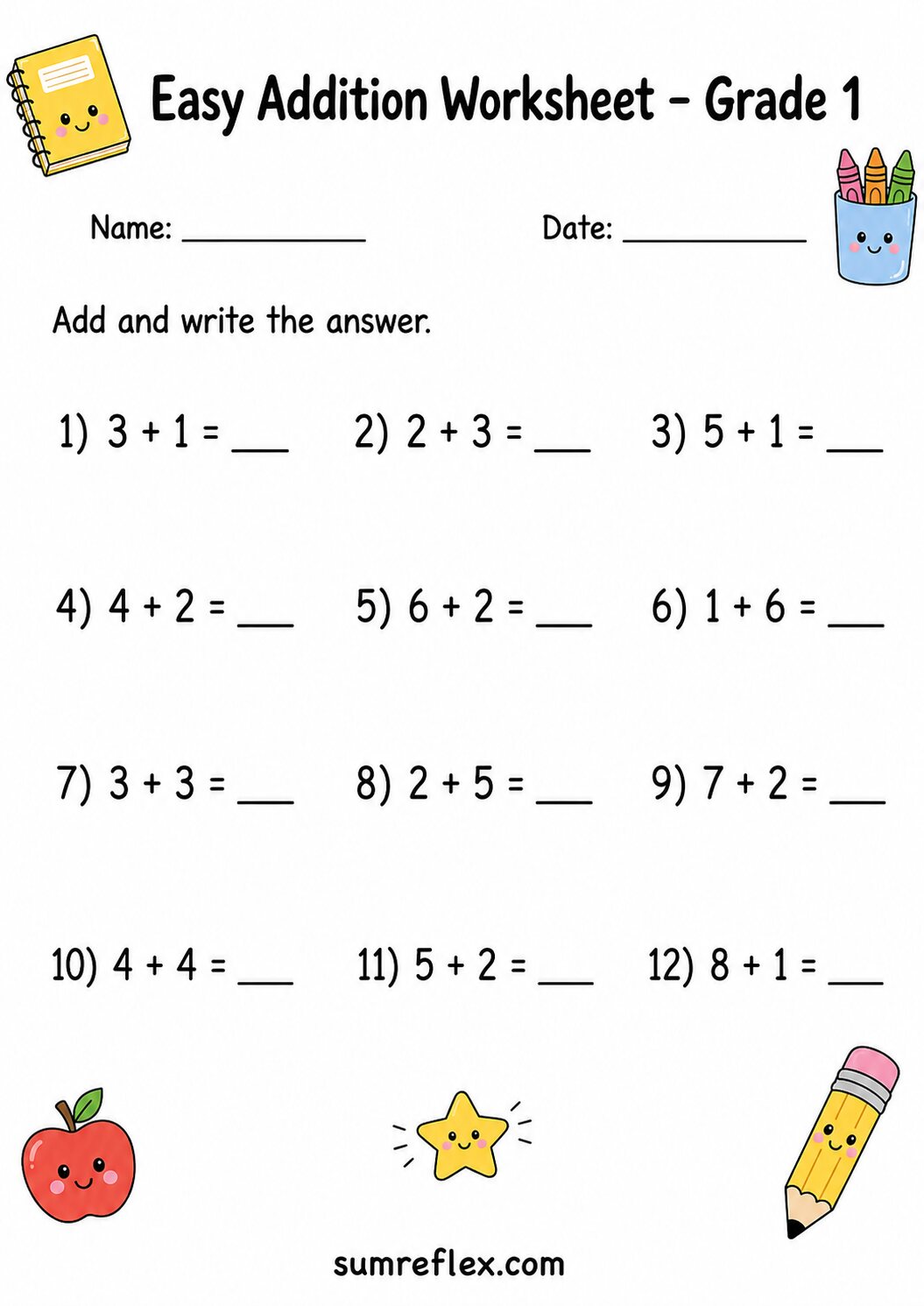
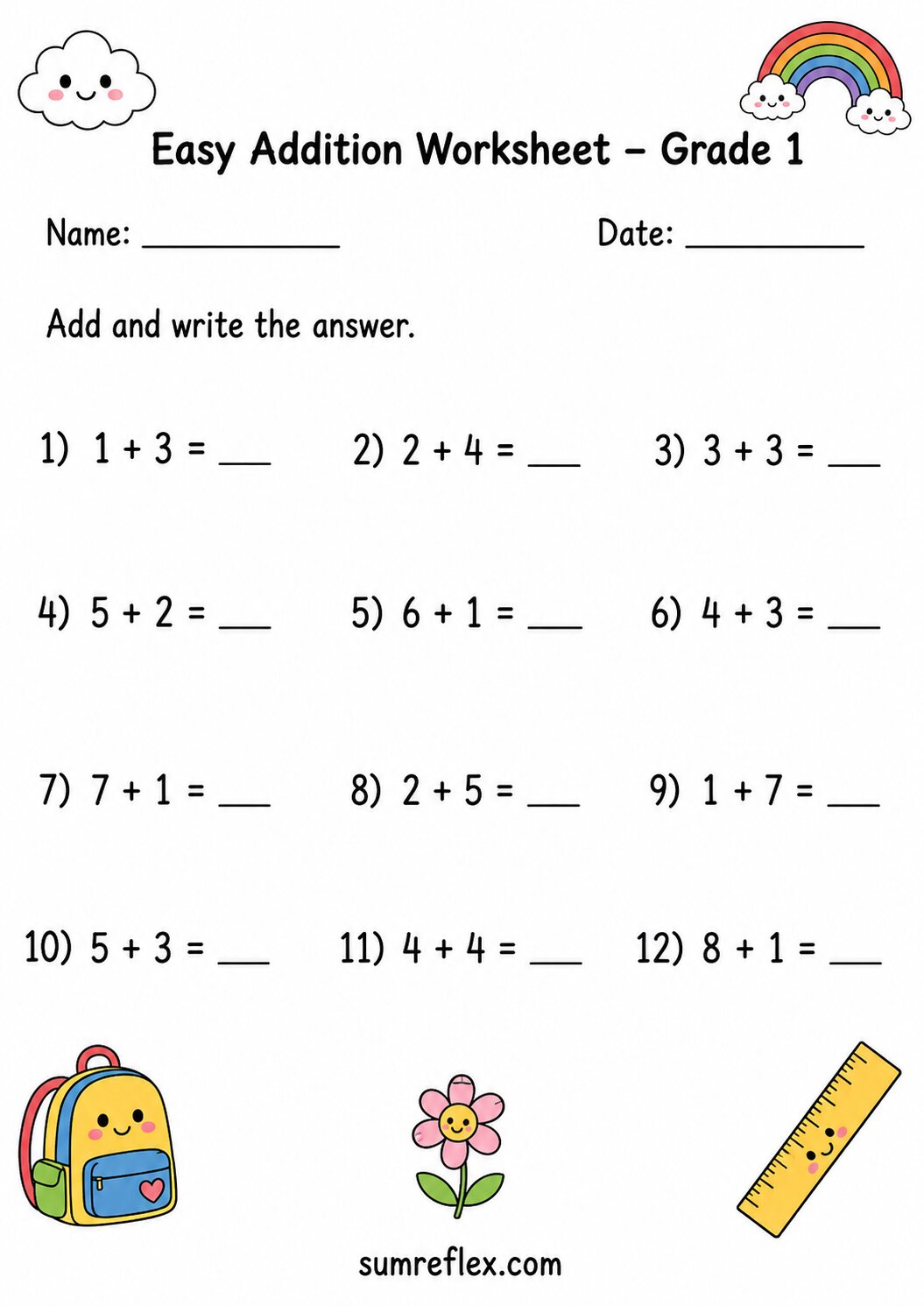
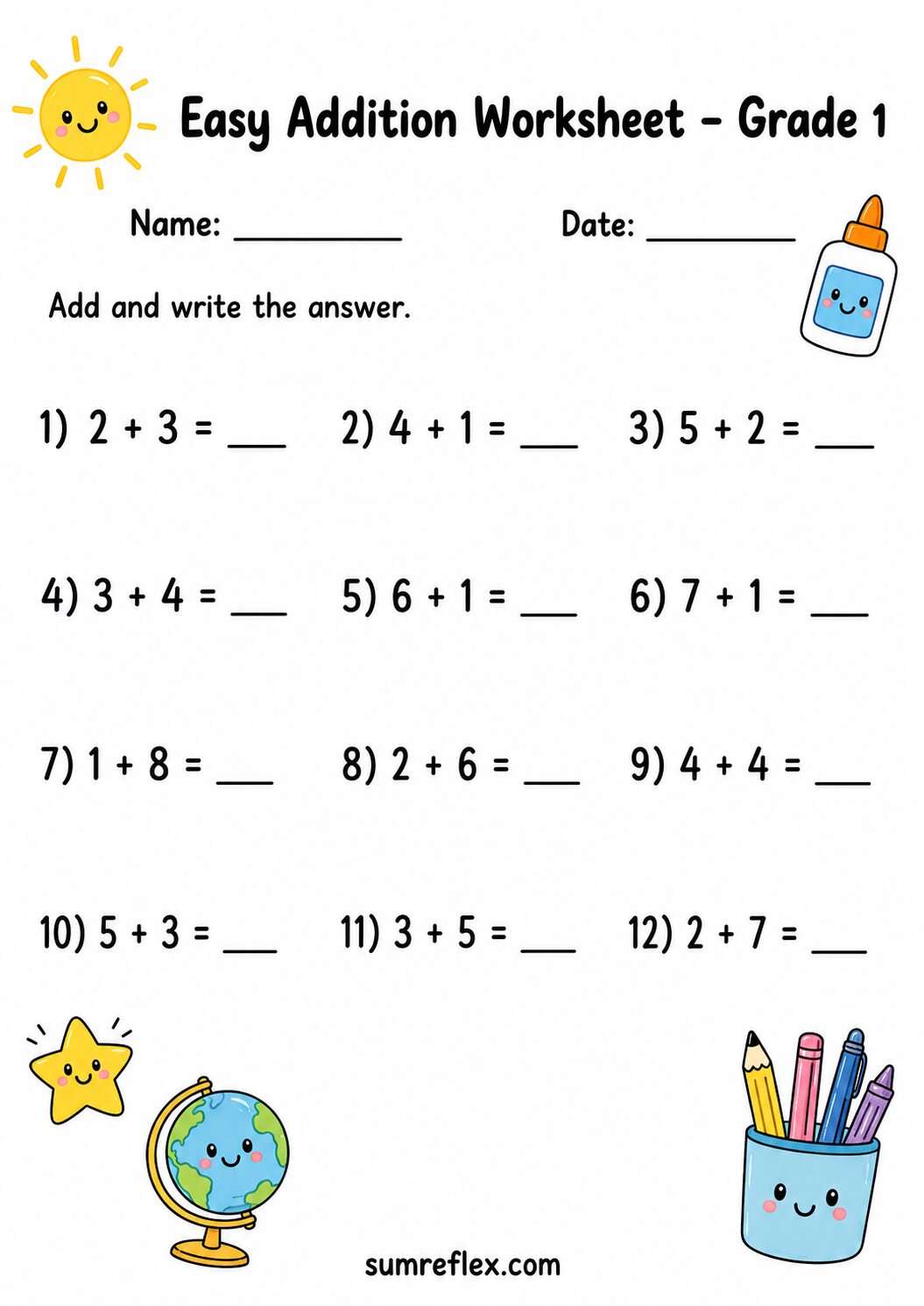
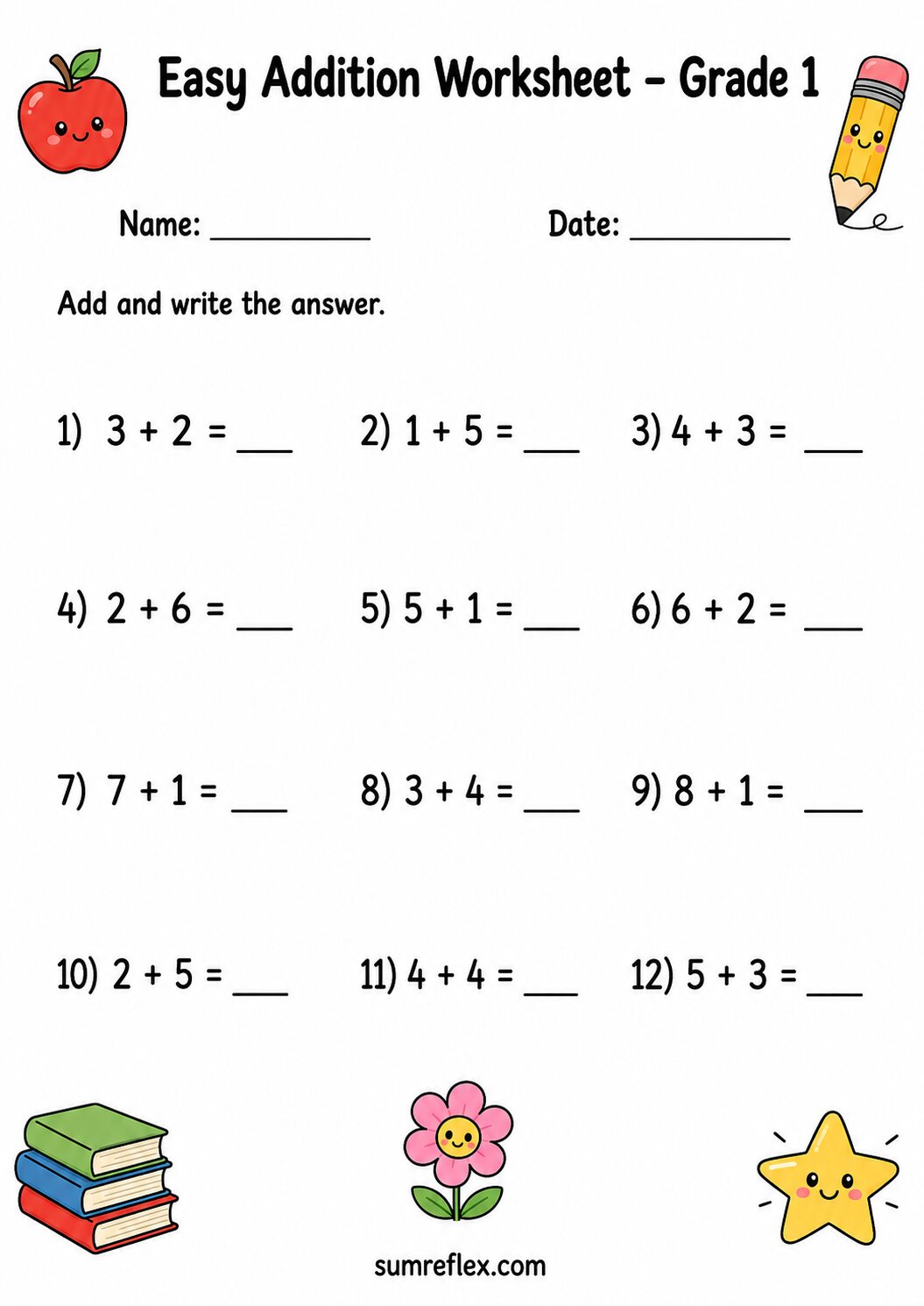
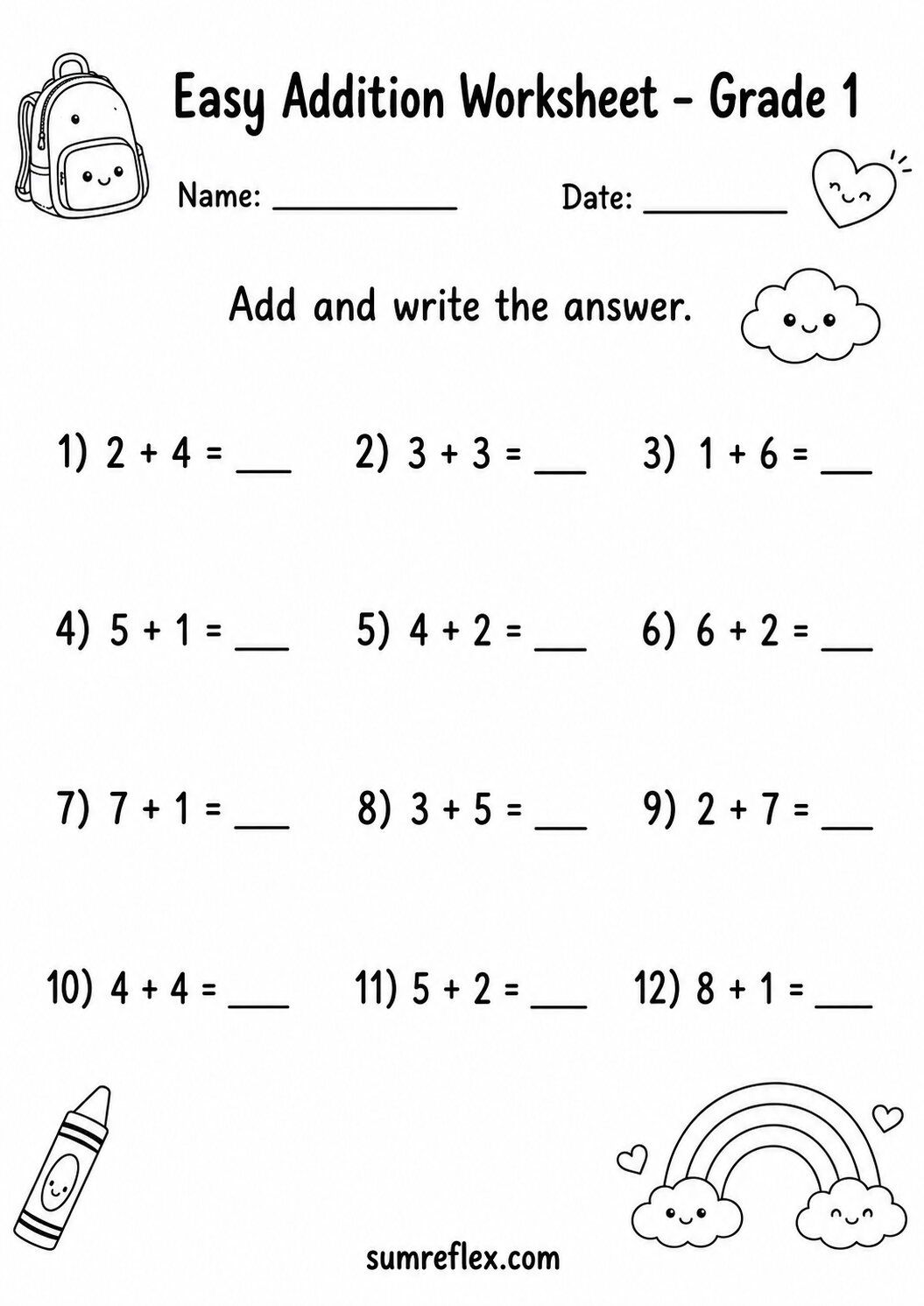
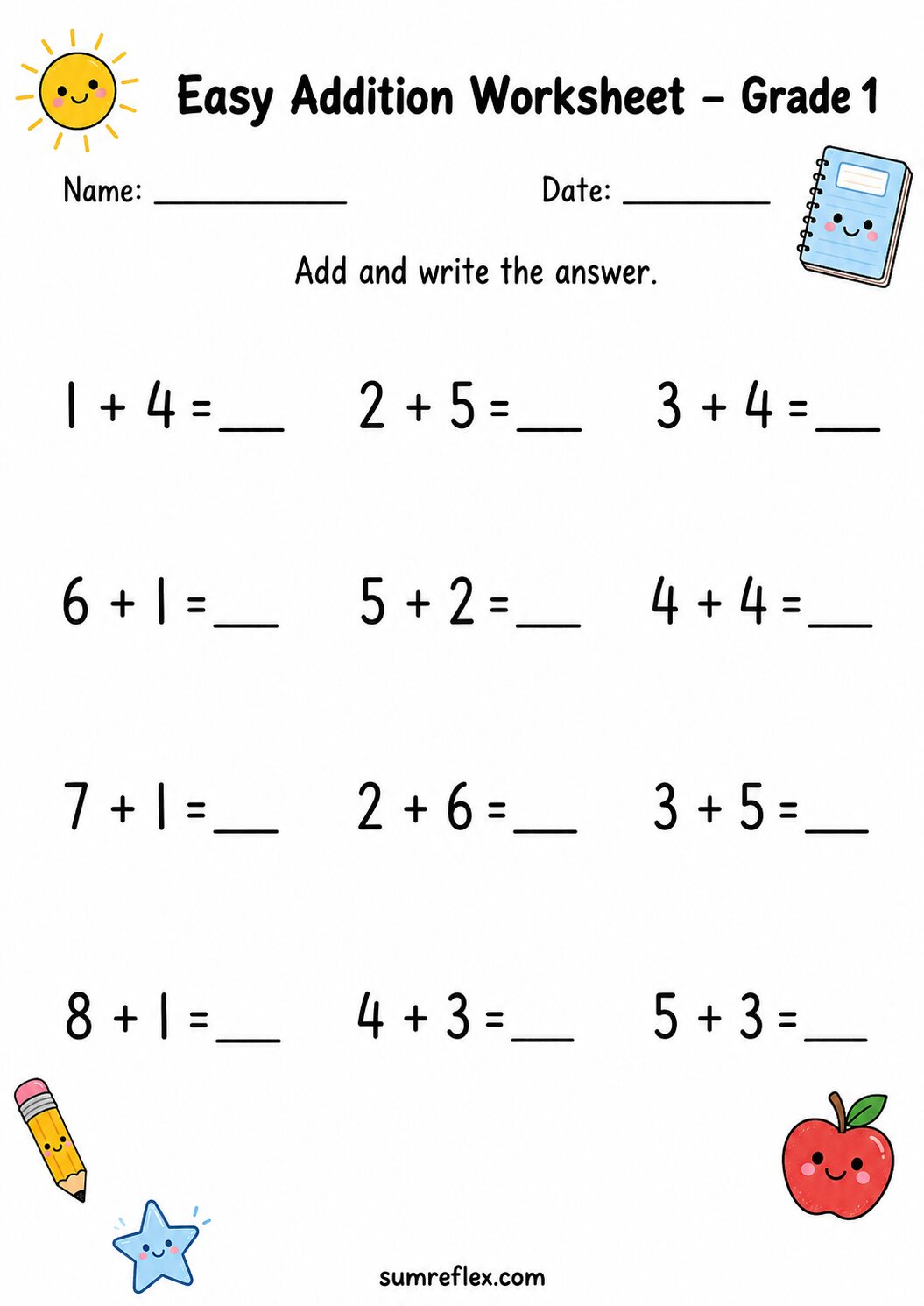
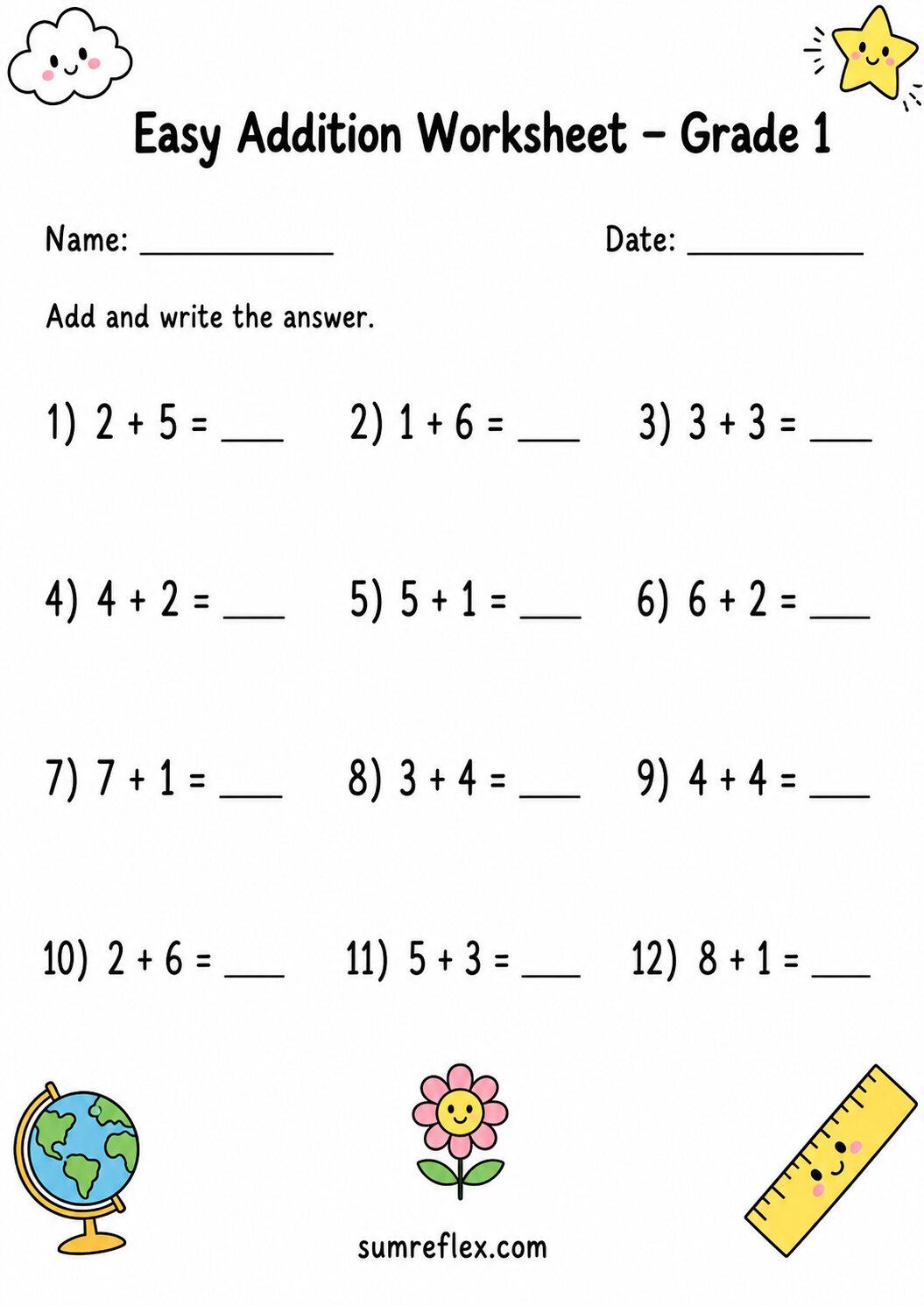
These worksheets are meant for the stage where a child is still deciding what a plus sign asks them to do. The numbers stay small so the student can focus on joining two quantities, naming the sum, and writing the answer neatly. A page does not need to be timed to be useful. In early Grade 1 addition, a clean answer with a clear strategy is better evidence than a fast guess.
Counting on without restarting
A useful habit is to begin with the larger addend and count forward only the smaller addend. For 6 + 2, the student can say 6, then 7 and 8. That is different from counting six objects, then two more objects, then recounting the whole group. The worksheets give enough short equations to repeat that routine until it feels natural.
Doubles become anchor facts
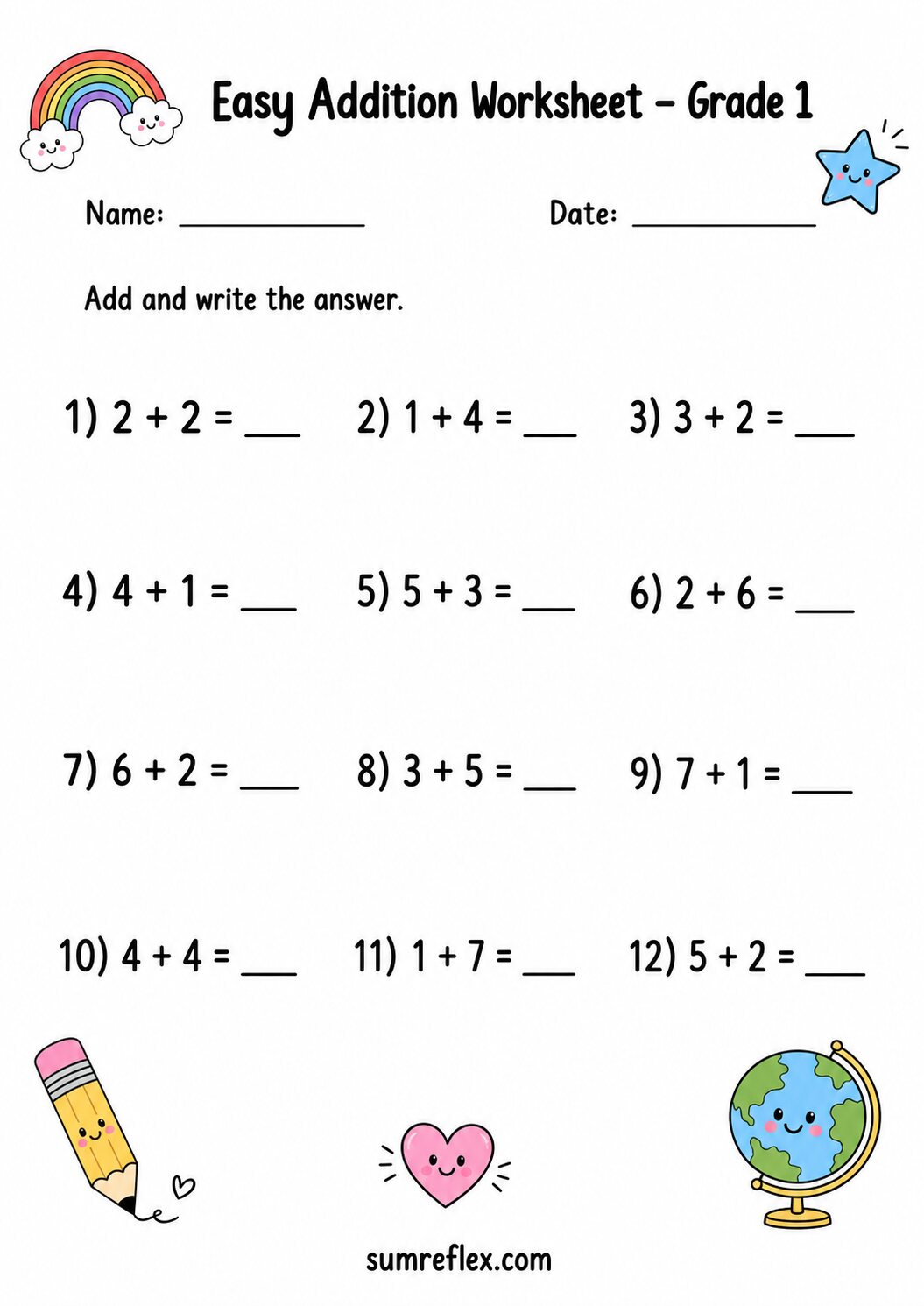
The doubles sheet deserves special attention because doubles become mental landmarks. When a student knows 5 + 5, the nearby facts 5 + 4 and 5 + 6 stop feeling separate. Ask the child to identify any double first, then explain how a near double changes by one. That conversation turns a worksheet from copying answers into a pattern lesson.
Make-ten work can stay gentle
The facts to 10 page introduces an important target without making the practice feel heavy. Ten is a friendly number in later place-value work, so students should meet it often in a calm setting. If a child misses 7 + 3 or 8 + 2, use counters or a ten frame and show how the two parts fill the whole ten.
Choosing the right sheet today
Use the first few pages when the child still needs slow counting support. Choose the doubles page when facts feel disconnected and the student needs a memory pattern. Move to mixed review only after the child can explain at least some answers without counting every object. The warmup page is best for the start of a session, not as a final assessment.
How to review the finished page
After printing, mark correct answers normally, but spend most of the review time on one or two mistakes. Ask the student to rebuild the equation with fingers, counters, a number line, or spoken counting. If the error came from writing the wrong numeral, practice the numeral. If the error came from counting too far, repeat the count-on language slowly.
When a child still counts every object
Some students will count all objects from one even after they know the numbers. That is not failure; it means the strategy is still developing. Model one problem by saying the larger number first, then tapping only the smaller addend. After that, let the child try the same language on the next problem. The worksheet gives enough short examples for that shift to happen gradually.
Use answer talks instead of long drills
A finished worksheet is more valuable when the student talks about a few answers. Choose one easy fact, one double, and one harder sum. Ask how each answer was found and whether another strategy could work. This turns a printed page into a short math conversation, which helps the child remember more than simply filling every blank and moving on.
Stop after confidence, not exhaustion
Young students do not need every addition sheet in one sitting. A page that ends with steady attention is better than three pages that end with careless answers. If the child completes one worksheet neatly and can explain several sums, stop there or switch to a different activity. The next page will be more useful when the brain is fresh again.