



Yearly calendar guide
Learning the year as an ordered set of months
Month order gives the year its structure
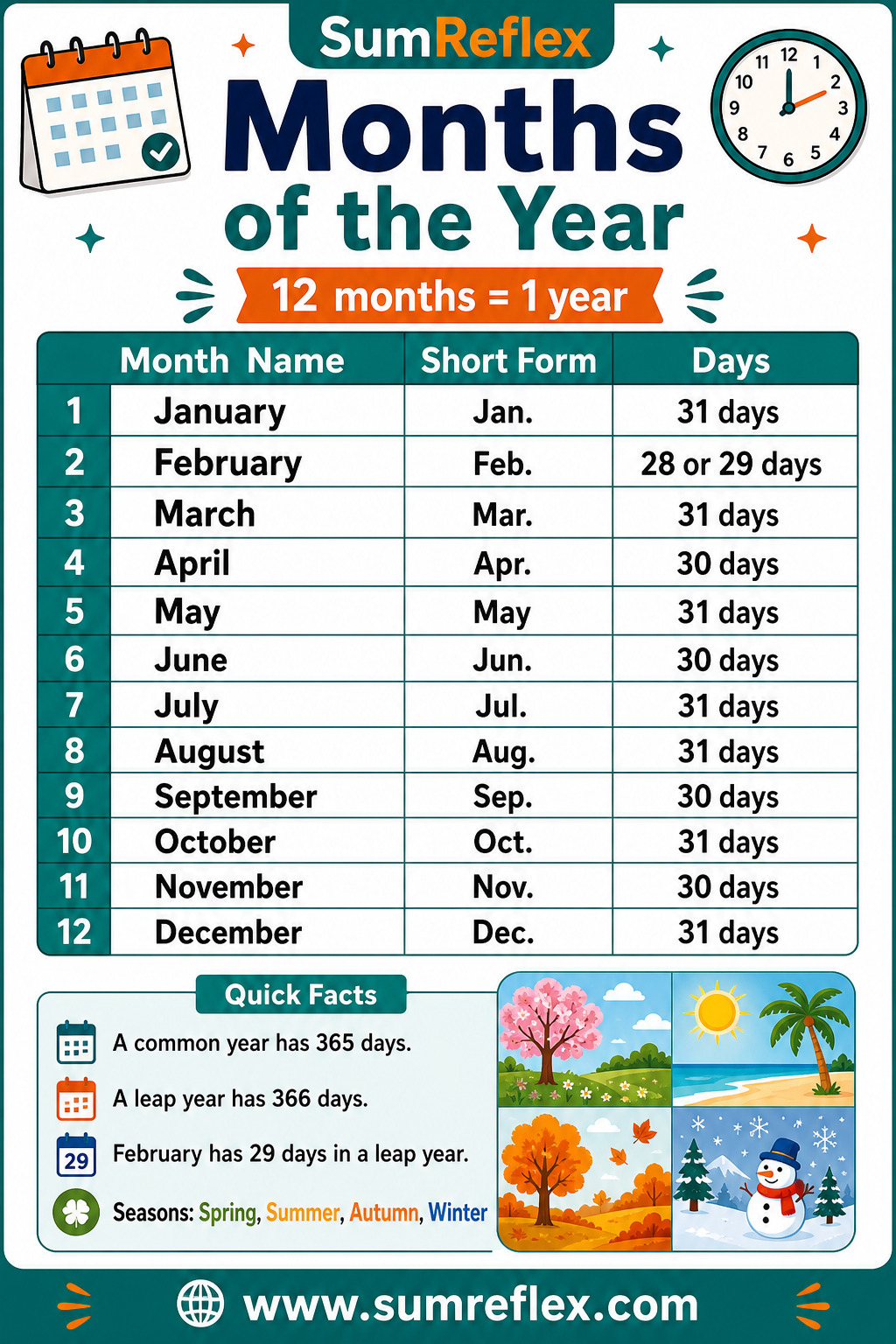
Students often learn month names as a song or chant, but calendar work requires more than reciting the list. They need to know which month comes before or after another month, which month is first or twelfth, and how a date sits inside the year. This chart gives the order from January through December with month numbers so learners can connect the spoken names to calendar position.
The order matters in practical situations. A birthday in March comes before a trip in July. A project due in November is near the end of the year. A new school term may begin in August or September depending on the calendar. When students can place months in order, they can read schedules and talk about time more precisely.
Abbreviations make real calendars easier to read
Month abbreviations appear on planners, forms, worksheets, event flyers, tickets, and digital calendars. A student who knows that Sept. means September or Oct. means October can read dates more confidently. The chart keeps the short forms beside the full names so students can learn them as pairs rather than as separate facts.
A simple activity is to give students mixed date labels such as Feb. 14, Apr. 3, Aug. 20, and Dec. 1. They identify the full month name, month number, and season. This helps them move between the compact date style used in real life and the full language used in classroom explanations.
Day counts make the chart practical
The months are not all the same length, so the chart includes day counts. Students can see that some months have 31 days, some have 30, and February changes between common years and leap years. This information is needed for calendar questions, event planning, date ranges, and checking whether a written date is possible.
For a narrower day-count reference, use the days in each month chart. That page groups the months by length. This months-of-the-year page keeps the months in yearly order, which is better when students are reading dates chronologically.
Seasons add meaning to the month list
Seasons help students connect months to weather, school routines, holidays, sports, clothing, and family plans. The exact seasonal experience can vary by region, but grouping months by seasons gives learners another way to organize the year. Instead of seeing twelve separate names, they see a year that moves through larger chunks of time.
Ask students to choose a month and name something that often happens around that time of year. They might connect December with winter holidays, July with summer break, or October with fall activities depending on local context. The chart becomes a conversation starter for time, not just a memorization page.
Building date skills from the chart
Once students know the month order, they can answer before-and-after questions, read dates, compare calendar events, and understand timelines. Pair this chart with the days of the week chart when students need both weekly and yearly order. A date uses both systems: the weekday repeats every seven days, while the month places the date inside the year.
For older or practical date questions, the Date Calculator can check intervals after students have made their own calendar reasoning. The printed chart gives the foundation: month names, order, short forms, and day counts that make those calculations understandable.